Best line weight for trout fishing
The world of fishing line can feel like a labyrinth, especially when you’re trying to dial in your setup for finicky trout in Nevada's diverse waters. Many anglers struggle with choosing the right line weight, often wondering if their light tackle is strong enough for that surprise lunker or if their heavier line is spooking every fish in the creek. This guide will cut through the confusion, helping you understand the nuances of line weight and how to select the perfect one for successful trout fishing across the Silver State.
Understanding Fishing Line Weight Basics for Trout
Choosing the right line weight isn't just about strength; it's about balance. The "weight" of a fishing line refers to its breaking strength, typically measured in pounds (lb) test. So, a 4lb test line is designed to break under approximately four pounds of pressure. But this number tells only part of the story when you're targeting trout, especially in environments as varied as Nevada's high mountain lakes, desert reservoirs, and urban ponds.
The Role of Pound Test in Trout Fishing
The pound test rating on your fishing line directly impacts several critical aspects of your angling experience. First and foremost, it’s about breaking strength. If you hook into a sizable Lahontan cutthroat trout at Pyramid Lake or a feisty rainbow in a swift mountain stream, you want a line that can handle the fight without snapping. However, a higher pound test often means a thicker diameter line, and that's where the trade-offs begin.
Thicker lines are more visible in the water, which can be a huge deterrent for wary trout that scrutinize every anomaly. In the crystal-clear waters of Lake Tahoe, for example, a heavy, visible line can make your bait or lure look unnatural. Additionally, thicker lines have more drag in the water, making it harder to cast light lures or baits accurately, especially in windy conditions or strong currents. It also impacts how naturally your presentation moves. A delicate nymph drifting in a small stream needs a near-invisible, supple line to mimic natural movement. This delicate balance between strength, visibility, and castability is what makes line weight selection so crucial for trout.
Common Line Materials and Their Characteristics
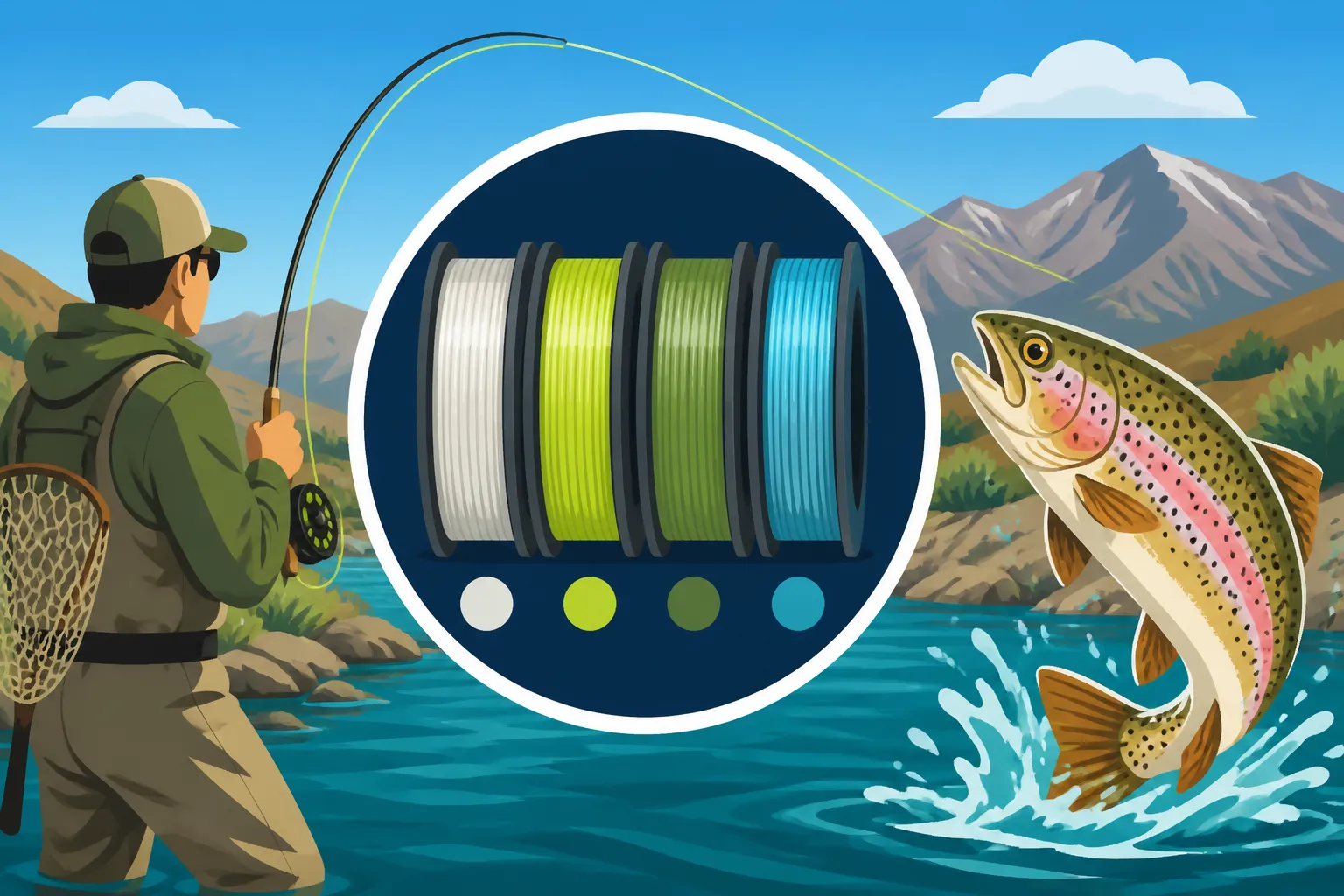
Before we dive into specific weights, it's essential to understand the different types of line materials, as each behaves uniquely and influences your pound test decision. You'll primarily encounter monofilament, fluorocarbon, and braided lines.
Monofilament (mono) is the most traditional and often the most affordable choice. It's known for its stretch, which can act as a shock absorber during sudden strikes, preventing hooks from tearing out of a trout's soft mouth. Mono is also quite buoyant, making it excellent for topwater presentations or when you want your bait to sink slowly. However, it has memory, meaning it can coil and tangle more easily, and it's more visible in clear water than other options.
Fluorocarbon (fluoro) is virtually invisible underwater due to its refractive index being very close to that of water. This makes it a fantastic choice for spooky trout in clear conditions. It's also much more abrasion-resistant than mono, a big plus when fishing around rocks or submerged brush. Unlike mono, fluorocarbon sinks, which can be an advantage for getting baits down quickly, but a disadvantage if you need a slow descent. It has less stretch than mono, offering increased sensitivity to subtle bites.
Braided line (braid) is made of multiple strands woven together, resulting in incredible strength-to-diameter ratio and virtually no stretch. This means phenomenal sensitivity – you'll feel every bump and nibble. Braid casts incredibly far, making it great for covering large areas. However, it is highly visible underwater and lacks abrasion resistance against sharp edges, meaning a leader of fluorocarbon or monofilament is almost always necessary when targeting trout. Braid is generally not recommended as a main line for direct trout fishing, but rather as a backing or for specific techniques where a leader is used. You can find a vast array of all these line types, from budget-friendly options to premium brands, at retailers like Bass Pro Shops or online at Amazon.
| Line Type | Key Characteristics | Pros | Cons | Common Nevada Trout Application |
|---|---|---|---|---|
| Monofilament | Stretchy, buoyant, good knot strength, moderate abrasion resistance | Affordable, good shock absorption, easy to cast, versatile | Visible underwater, more line memory, less sensitive than fluoro/braid | Urban ponds, stocked trout, general reservoir fishing for rainbows |
| Fluorocarbon | Low stretch, nearly invisible, sinks, high abrasion resistance | Excellent for clear water, highly sensitive, strong for its diameter | More expensive, stiffer than mono, less forgiving stretch | Clear lakes (Tahoe), rivers, targeting wary cutthroat/brown trout |
| Braided | No stretch, very thin diameter for strength, floats | Super sensitive, casts far, very strong for its diameter, long-lasting | Highly visible, poor abrasion resistance, requires leader | As a backing with a fluoro/mono leader, deep jigging, covering water |
Matching Line Weight to Nevada Trout Species and Conditions
Nevada's diverse fishing environments demand a thoughtful approach to line weight. What works for a high mountain brook trout won't cut it for a trophy Lahontan cutthroat, and vice-versa. Tailoring your line choice to the specific species and conditions you're facing is key to success.
Light Line for Finicky Trout in Clear Water
When you're fishing in places like the crystal-clear waters of Lake Tahoe for its legendary Mackinaw trout, or casting small flies and lures in a pristine high-desert stream, line visibility is paramount. Trout have excellent eyesight, and a thick, visible line can instantly send them scurrying for cover. This is where light lines, typically in the 2lb to 4lb test range, truly shine.
For small streams and creeks, where trout might not grow to enormous sizes but are incredibly wary, 2lb or 4lb test monofilament or fluorocarbon is often the sweet spot. A light monofilament offers enough stretch to prevent break-offs when a small trout makes a sudden lunge, and its buoyancy can be an advantage for delicate dry fly presentations or floating baits. If the water is exceptionally clear, such as in many of Nevada's high mountain lakes, a 2lb or 4lb fluorocarbon leader attached to a light monofilament main line can give you the invisibility you need while maintaining good knot strength and sensitivity. This setup is perfect for targeting wild brook trout or small rainbows that might only be a few inches long but fight with surprising vigor. Remember, the goal here is finesse and stealth.
Medium Line for General Purpose and Stocked Trout
Most anglers in Nevada will find themselves reaching for a medium line weight, somewhere in the 4lb to 6lb test range, for general trout fishing. This is the workhorse category, offering a fantastic balance of strength, castability, and invisibility for a wide variety of scenarios. It’s particularly effective for stocked rainbow trout in urban ponds or larger reservoirs, where the fish are often more aggressive and less line-shy than their wild counterparts.
Think about places like the Las Vegas urban ponds (e.g., Floyd Lamb Park or Sunset Park) or larger reservoirs that receive regular trout stockings, such as Wildhorse Reservoir or South Fork State Recreation Area. Here, fish are often eager biters, but you still want enough strength to handle a good-sized rainbow. A 4lb or 6lb monofilament is a popular choice for these waters. It’s easy to cast, forgiving with its stretch, and strong enough to haul in most stocked fish. If you're fishing with lighter lures or baits, a good quality 4lb monofilament will give you excellent action and presentation. For slightly larger fish, or if you're fishing around some submerged weeds or structure, bumping up to 6lb test provides a bit more insurance. Many anglers also opt for 6lb fluorocarbon as a leader in these situations, especially if the water is clear, to get the benefit of invisibility without sacrificing much strength. Nevada Trout Stocking Schedule can help you plan your trips to these areas.
Heavier Line for Trophy Trout and Adverse Conditions
While trout fishing typically leans towards lighter tackle, there are specific situations in Nevada where a heavier line weight, from 8lb to 10lb test, becomes not just advisable, but almost necessary. This is especially true when you're targeting truly large, trophy-sized trout or fishing in conditions that demand extra abrasion resistance and stopping power.
The most prominent example in Nevada is Pyramid Lake, home to the legendary Lahontan cutthroat trout. These fish can grow to immense sizes, often exceeding 10 or even 20 pounds, and they fight with incredible power. Fishing for them typically involves casting large lures or flies from shore or boat, and battles can be long and arduous. For these giants, many anglers use 8lb to 10lb test monofilament or fluorocarbon as their main line, sometimes even heavier if they’re battling massive fish from a boat in deep water. The sheer size and power of these fish, combined with the potential for rough structure or long runs, necessitates a stronger line. A heavier fluorocarbon main line or leader is often favored due to its superior abrasion resistance against rocks and its ability to sink, which can be beneficial when fishing deeper water with heavy lures or jigs.
Another scenario for heavier line is when fishing in rivers with significant current or around heavy cover. While many rivers in Nevada, like portions of the Truckee River, are suited for lighter lines for How to Fish for Trout in Nevada, if you're targeting larger brown trout hiding in heavy snags, or if the current is so strong it's creating excessive line drag with lighter options, an 8lb test can provide the muscle needed. It's a trade-off in stealth, but a necessary one to prevent immediate break-offs.
Advanced Considerations for Trout Line Selection in Nevada
Beyond basic pound test and material, several other factors can critically influence your line choice and overall success when pursuing trout in Nevada. Thinking through these details can make a noticeable difference in your catch rate.
Leader Lines and Their Importance
For many trout anglers, particularly those using braided main lines or fishing in very clear water, a leader is an indispensable part of their setup. A leader is a shorter section of line, usually 2-10 feet long, tied to the end of your main line, and then your lure or hook is tied to the leader. The primary purpose of a leader is to provide an invisible or less visible connection to your bait, fooling wary trout, while preserving the advantages of your main line.
If you’re using braided line, a fluorocarbon leader is almost always essential. Braid’s high visibility and lack of abrasion resistance make it unsuitable for direct connection to your lure in most trout scenarios. A fluoro leader of 4lb to 8lb test, depending on the conditions and target species, offers the invisibility and abrasion resistance you need, while the braid provides sensitivity and casting distance. Even with a monofilament main line, some anglers will use a lighter fluorocarbon leader in exceptionally clear water or when targeting particularly finicky fish. For example, if your main line is 6lb mono, you might tie on a 4lb fluorocarbon leader to maximize stealth. This small detail can be the difference between a successful day and going home empty-handed, especially in places renowned for their clear waters like Lake Tahoe Nevada Fishing Guide.
Matching Line to Lure or Bait Size
The size and weight of your bait or lure also play a significant role in line selection. Simply put, heavier lures require heavier lines, and lighter baits demand lighter lines for optimal performance. If you try to cast a tiny 1/32 oz Kastmaster with 10lb test, you’ll find it incredibly difficult to achieve any decent casting distance or accuracy. The heavy line creates too much drag and stiffness, hindering the lure's action.
Conversely, trying to throw a 1/2 oz spoon with 2lb test is an invitation for disaster – the line will snap on the cast, or you’ll quickly be broken off if a fish hits it. For the ultralight spinners and small jigs often used for trout, especially in streams or urban ponds, 2lb to 4lb test is ideal. It allows for delicate presentations and maximizes the lure's natural action. For larger spoons, crankbaits, or bait rigs used in bigger waters like Lake Mead or for Pyramid Lake cutthroat, 6lb to 10lb test accommodates the heavier hardware, preventing line twist and ensuring the strength needed to manage larger presentations and bigger fish. Always consider the manufacturer's recommendations for lure weights on your rod and match your line weight accordingly for the best casting and fighting performance.
Environmental Factors: Current, Structure, and Water Clarity
Nevada's diverse landscapes mean you'll encounter a wide array of environmental factors that should influence your line choice.
Current: If you're fishing a river like the Truckee, with a decent current, lighter, thinner lines can help your lure or bait sink faster and drift more naturally. A heavy line will "bow" in the current, creating excessive drag and making it difficult to feel bites or maintain a natural presentation. In these situations, a slightly heavier sinking fluorocarbon or even a braided line with a very thin diameter can be advantageous, allowing your offering to get down to the fish without being swept away immediately.
Structure: Rocky bottoms, submerged trees, and dense weed beds are common in many Nevada waters. Fishing around structure almost always calls for a line with higher abrasion resistance. This is where fluorocarbon truly shines. Its tougher outer shell can withstand scrapes and rubs against sharp objects much better than monofilament. If you know you'll be fishing around nasty cover for large trout, consider bumping up your line test slightly, even if it compromises stealth a little. An extra pound or two of breaking strength can make all the difference in pulling a big fish out of a snag.
Water Clarity: We've touched on this, but it bears repeating: clearer water demands less visible line. In the gin-clear alpine lakes or spring-fed streams, fluorocarbon is your friend. In murkier or stained water, such as some urban ponds after a rain, or certain sections of larger reservoirs, fish might be less line-shy, and you can get away with slightly heavier or more visible monofilament without impacting your success. Always adjust to what you see in the water.
Practical Tips for Spooling and Maintaining Your Line
Choosing the right line is only half the battle; properly spooling and maintaining it is crucial for optimal performance and longevity. Neglecting these steps can lead to frustrating tangles, lost fish, and wasted money.
Proper Spooling Techniques
Incorrectly spooled line is a common culprit for tangles, reduced casting distance, and overall frustration. When adding new line to your reel, pay attention to line twist. For spinning reels, place the spool of new line on the floor with the label facing up (or down, whichever allows the line to unspool naturally without twisting). Hold the rod at a slight angle and reel in slowly, keeping tension on the line. If the line begins to twist (you'll see coils forming), flip the bulk spool over. Fill your reel to about 1/8 inch from the rim of the spool. Overfilling leads to frustrating "wind knots" and tangles, while underfilling reduces casting distance.
For baitcasting reels, the process is a bit different. You'll want to run the line through the guides and tie it onto the spool, then place the bulk spool on a pencil or rod holder so it can spin freely. Apply steady tension as you reel, watching for any sign of twist. Filling these reels properly is vital for smooth retrieves and preventing backlash.
When to Change Your Fishing Line
Fishing line doesn't last forever. Exposure to UV light, dirt, chemicals, and the stresses of casting and fighting fish all contribute to its degradation. A good rule of thumb is to change your monofilament line at least once a year, and more frequently if you fish often. Fluorocarbon also degrades over time, though it's generally more resistant to UV rays than mono. Braided line is the most durable, but even it can fray or lose strength over several seasons, especially at the ends.
Pay close attention to the first 10-20 feet of line, as this section experiences the most wear and tear from casting, knots, and abrasion. If you notice nicks, fraying, discoloration, or a significant reduction in strength (test it by trying to break a piece with your hands – it should take effort), it's time to respool. Old, weakened line is a surefire way to lose that trophy fish you've been dreaming of. Regularly checking your line for wear and tear can save you a lot of heartache on the water.
Essential Line Maintenance for Longevity
Taking a few simple steps can extend the life of your fishing line and keep it performing at its best. After each fishing trip, especially if you've been in saltwater or brackish water (though less common for trout in Nevada, it's good practice), rinse your reel and line with fresh water. This removes salt, dirt, and grime that can degrade the line and reel components.
Store your fishing rods and reels out of direct sunlight. UV rays are a primary enemy of fishing line, particularly monofilament, causing it to weaken and become brittle. Many anglers keep their reels in soft cases or rod lockers to protect them. You might also consider using a line conditioner. Products designed to soften line and reduce memory can be particularly helpful for monofilament, making it cast smoother and reducing tangles. Applying a conditioner periodically can keep your line supple and reduce friction as it leaves your spool, ultimately leading to longer, smoother casts and fewer headaches. Taking these small steps can ensure your line is always ready for your next adventure chasing trout in Nevada, whether it's at Pyramid Lake Fishing Permit Guide or a local community pond.
Disclaimer
This article is for general informational purposes only and does not constitute professional advice. Laws, prices and regulations vary by location and change over time. Consult a qualified professional for guidance on your specific situation.