Braided line versus monofilament for bass fishing
For many bass anglers here in Nevada, staring at the wall of fishing line options at a place like Bass Pro Shops or even scrolling through listings on Amazon can feel like a pop quiz you didn't study for. The truth is, choosing between braided line and monofilament for your bass fishing adventures isn't just about picking a color; it's about understanding how each line performs in our unique desert waters and with different techniques. This guide is here to break down the ins and outs of both options, helping you make an informed decision so you can spend less time wondering and more time catching those feisty Nevada bass.
Understanding Your Fishing Line Options for Nevada Bass
Before we dive into the nitty-gritty, let's get a basic understanding of what monofilament and braided lines actually are. They're both designed to connect your lure to your rod, but they do it in fundamentally different ways, which has a huge impact on your fishing experience. Knowing the core characteristics of each is the first step in deciding which one is going to be your go-to for different bass fishing situations across the Silver State.
The Enduring Appeal of Monofilament Line
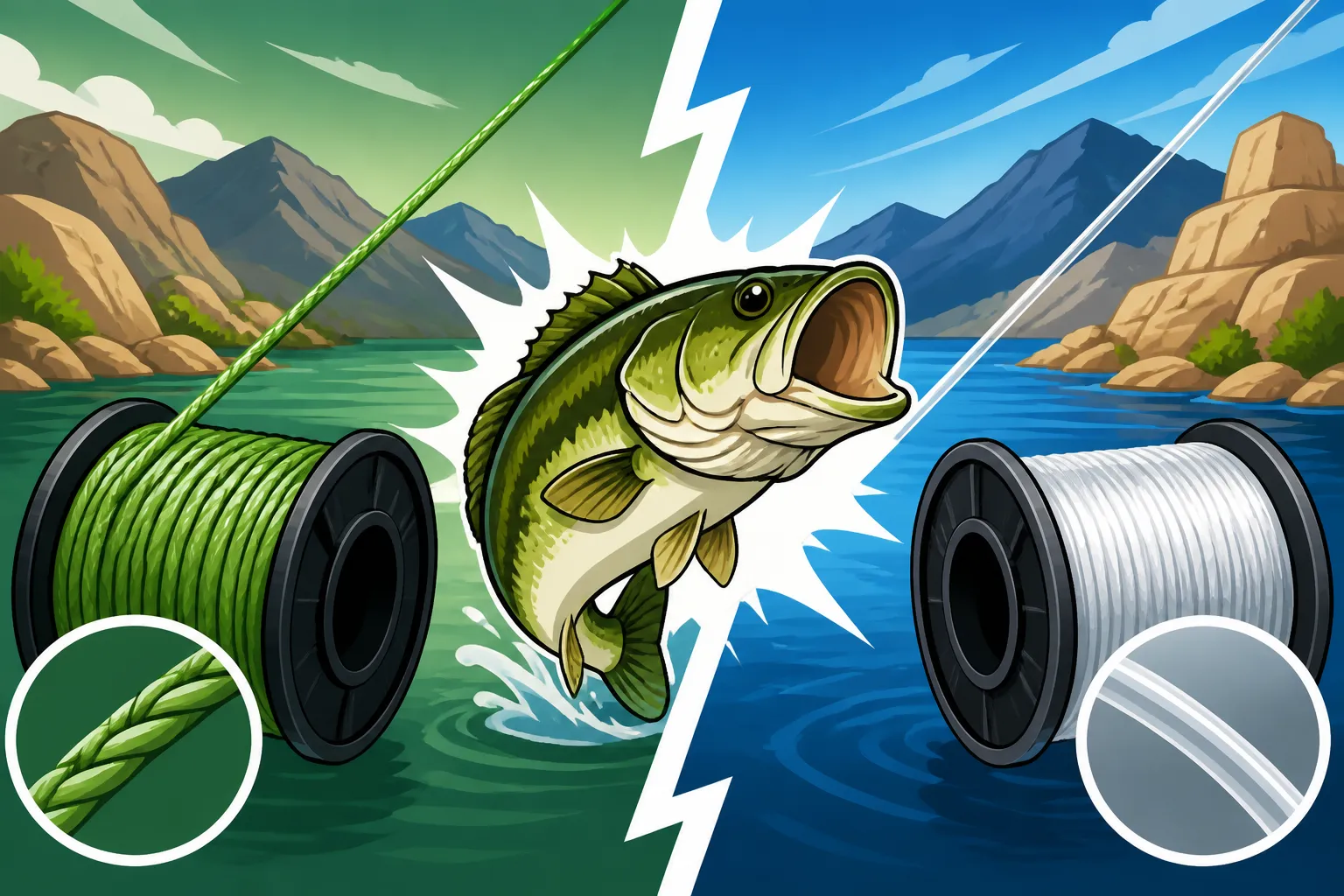
Ah, monofilament. For many of us, this was the first fishing line we ever spooled onto a reel, and for good reason. Mono, as it's affectionately called, is a single strand of nylon, and its characteristics make it incredibly user-friendly, especially for those just getting into the sport. It's got a wonderful amount of stretch, which acts like a shock absorber when a bass hits your lure hard or makes a sudden run. This stretch can be a real game-changer for protecting lighter lines and preventing hooks from tearing out of a fish's mouth.
Beyond its stretchy nature, monofilament is also renowned for its excellent knot strength. When you tie a knot with mono, it tends to cinch down securely without slipping, giving you confidence in your connection to the lure or hook. It's also generally more forgiving to tie, which is a blessing on a cold, windy morning when your fingers aren't quite cooperating. On top of that, mono is often quite buoyant, which makes it a fantastic choice for topwater lures. Imagine trying to walk-the-dog with a Zara Spook on a line that wants to sink – it just doesn't work as well! Its buoyancy allows those lures to sit high and work their magic on the surface. For anglers who are just starting out or those who love the classic feel of the fight, mono truly remains a staple in the tackle box.
The Rise of Braided Line in Bass Fishing
Braided line, on the other hand, is a completely different beast. Instead of a single strand, it's made up of multiple synthetic fibers (often Spectra or Dyneema) woven together, much like a tiny rope. This construction gives braid some incredible advantages that have made it increasingly popular, especially among experienced bass anglers targeting big fish in tough conditions. The most significant characteristic of braided line is its near-zero stretch. This means that when a bass bites, you feel it immediately, and when you set the hook, that force is transferred almost instantly to the hook point. This sensitivity is unparalleled, allowing you to detect even the subtlest of bumps or changes in bottom composition.
Another huge benefit of braid is its incredible strength-to-diameter ratio. You can get a much stronger line in a much thinner diameter compared to monofilament. This thinness means less wind resistance for longer casts and less water resistance, allowing your lures to sink faster and deeper. The lack of stretch also means greater casting distance in general, as there's less inherent friction as the line leaves the spool. For fishing heavy cover, like the flooded timber or dense weeds you might encounter in some of Nevada's reservoirs, braid is a powerhouse. It cuts through vegetation, resists abrasion from sharp edges, and gives you the brute strength needed to pull a stubborn bass out of its sanctuary. It's a true workhorse, especially when targeting those elusive giants. You might check out Best Line for Desert Reservoir Fishing for more insights on specific situations.
Diving Deeper into Performance: Monofilament vs. Braid
Now that we've touched on the basics, let's really dig into how these two line types stack up against each other in the crucial aspects of bass fishing performance. It's in these details that you'll truly start to understand why one might be preferred over the other for different techniques and conditions you might face while pursuing Largemouth Bass Fishing in Nevada or Smallmouth Bass Fishing in Nevada.
Sensitivity and Feel on the Water
When it comes to sensitivity, braided line is the undisputed champion. Because it has virtually no stretch, every little tick, thump, or change in resistance is transmitted directly up your rod and into your hand. This is incredibly advantageous when you're fishing techniques that require a keen sense of touch, such as Texas rigs, Carolina rigs, or jigs dragged along the bottom. You can "feel" the difference between a rock, a log, or the subtle pick-up of a bass. This immediate feedback often translates to more hook-ups, especially with light-biting fish. Imagine fishing a deep point on Lake Mead with a jig; with braid, you'll know exactly what your bait is doing down there.
Monofilament, with its inherent stretch, simply can't compete in terms of sensitivity. That cushioning effect, while great for shock absorption, also dampens the feel of subtle bites and bottom structure. For certain techniques, like fishing crankbaits where the rod is doing more of the work to transmit vibration, this might not be as critical. However, if you're a tactile angler who relies on feeling every nuance, mono will leave you wanting more. Many anglers will argue that the stretch in mono can even prevent you from feeling some of the lightest "pressure" bites that bigger bass are known for.
Strength, Abrasion Resistance, and Knot Tying
The strength of braided line for its diameter is truly impressive. You can comfortably fish with a 30-pound test braid that has the diameter of 8-pound monofilament, giving you incredible pulling power for battling big fish and yanking lures free from snags. Its abrasion resistance is also generally very good against rough surfaces like rocks or zebra mussels, which are present in some Nevada waters. However, it's not invincible, especially when repeatedly dragged over sharp edges. The woven fibers can fray, and if a single strand breaks, the integrity of the line is compromised. Tying knots with braid can also be a bit more challenging; due to its slick, smooth surface, some knots can slip if not tied carefully and properly cinched down. Many anglers prefer specific knots for braid, like the Palomar knot or the double uni.
Monofilament, while not as strong for its diameter, offers a different kind of resilience. Its smooth, solid surface can be quite abrasion-resistant against some obstacles, though it can get nicked or cut more easily by sharp objects like jagged rocks or submerged metal. Where mono truly shines is in its knot-tying friendliness. Most standard fishing knots hold incredibly well with monofilament, and they're generally easier for beginners to learn and tie correctly. The consistent diameter and pliable nature make it very forgiving. However, if you're constantly fishing around heavy cover, like submerged brush piles or rocky ledges in Lake Mead Largemouth Bass Coves, mono might fray and weaken faster than braid, potentially leading to lost fish or lures.
Castability and Line Management
Both line types have their quirks when it comes to casting and how they behave on your reel. Braided line, being incredibly thin and limp, casts like a dream. It flies off the spool with minimal friction, allowing for incredibly long and accurate casts, even with lighter lures. This is a huge advantage when you need to cover a lot of water or reach distant targets. However, that limpness can sometimes lead to issues like "wind knots" or "backlashes" on spinning reels, where the line gets tangled up on itself if not managed properly. Beginners, especially, might find themselves untangling more with braid initially.
Monofilament, while generally having more "memory" (it retains the shape of the spool), is often more forgiving for casting, especially for those learning the ropes. It tends to lay on the reel more predictably and is less prone to sudden tangles. While it might not achieve the same extreme distances as braid, its consistent performance and ease of handling make it a reliable choice for most casting situations. However, its thicker diameter can mean more wind resistance and less line capacity on your spool, particularly if you're using heavier test weights. Factors like reel choice and spooling technique can greatly influence the castability of both lines.
| Feature | Monofilament | Braided Line |
|---|---|---|
| Material | Single strand of nylon | Woven synthetic fibers (Spectra/Dyneema) |
| Stretch | High (15-25%) | Near zero (3-5%) |
| Sensitivity | Low to moderate | Extremely high |
| Knot Strength | Excellent, easy to tie | Good, specific knots preferred, can slip |
| Abrasion Res. | Moderate, can get nicked easily | High, can fray on sharp edges |
| Visibility | High (clear, colored options available) | Low (often thin, comes in various colors) |
| Buoyancy | Floats | Sinks (most types) |
| Castability | Good, some memory, less prone to wind knots | Excellent, very long casts, can get wind knots |
| Line Memory | Moderate to high | Very low |
| Shock Absorption | High | Low (relies on rod/reel drag) |
| Typical Uses | Topwater, crankbaits, beginner all-around | Heavy cover, jigging, punching, deep presentations |
Practical Considerations for Nevada Bass Anglers
Here in Nevada, our bass fishing opportunities are incredibly diverse, from the vast open waters and rocky coves of Lake Mead and Lake Mohave to the smaller, snag-filled urban ponds. This variety means that a "one-size-fits-all" approach to fishing line isn't always the best strategy. Thinking about the specific conditions you'll be fishing in is crucial for optimizing your setup.
Specific Bass Fishing Scenarios in Nevada
When you're out on the sprawling waters of Lake Mead, for instance, you might be targeting striped bass in the open water or largemouth bass tucked deep into submerged brush. For the latter, especially when you're punching through thick cover, the brute strength and abrasion resistance of braided line can be absolutely essential. It allows you to feel the subtle bites in dense vegetation and then haul a strong bass out without fear of breaking off. However, if you're fishing clear, open water for highly pressured bass on Lake Mohave, the low visibility of a fluorocarbon leader (attached to braid) becomes paramount. Monofilament, with its higher visibility, might spook wary fish in these pristine conditions.
Urban ponds, like those in Las Vegas, often present their own challenges, primarily an abundance of snags like submerged shopping carts, old tires, or dense aquatic weeds. Here, again, braid can be a lifesaver for its ability to cut through vegetation and pull free from hang-ups that would snap monofilament. However, for a casual afternoon targeting smaller bass with topwater frogs, monofilament's buoyancy and forgiveness can make for a more enjoyable experience. The choice really boils down to what you're trying to achieve and the particular environment you're facing on any given day. You can learn more about specific techniques in How to fish for bass in Nevada.
Cost and Longevity of Each Line Type
Let's talk about the wallet, because let's be real, fishing can get expensive! Generally speaking, monofilament is often the more budget-friendly option when you're buying a fresh spool. You can pick up a decent spool of mono for less than a comparable amount of braid. However, monofilament does have a shorter lifespan. It's susceptible to UV degradation from the sun, which can weaken it over time, especially in our bright Nevada climate. It also absorbs water, which can affect its strength and handling characteristics. This means you'll typically need to replace your monofilament line more frequently, often every few months of regular use, or at least once a season, to ensure peak performance and prevent unexpected break-offs.
Braided line, while having a higher initial cost per spool, tends to be much more durable in the long run. It's highly resistant to UV rays and doesn't degrade from sun exposure in the same way mono does. Because of its longevity, many anglers find that they don't need to replace their main braided line nearly as often – sometimes only every few years, depending on usage. While the initial sticker shock might be higher, the cost over time can sometimes balance out. Plus, many anglers only spool a portion of their reel with braid, using a backing of cheaper mono, which can help mitigate the cost. When shopping, always check the current prices at reputable retailers. You'll find plenty of options, whether you're browsing the aisles at Bass Pro Shops or comparing deals online at Amazon.
The Hybrid Approach: Leaders and Combination Setups
For many seasoned bass anglers, the ultimate solution isn't choosing either monofilament or braided line, but rather using a combination of both. This is where the concept of a "leader" comes in. A leader is a shorter section of line, typically monofilament or fluorocarbon, tied to the end of your main braided line. This hybrid approach allows you to harness the best qualities of each line type.
The most common setup involves using braided line as your main line, which gives you the exceptional sensitivity, casting distance, and brute strength. Then, you tie a fluorocarbon leader (which is virtually invisible underwater and highly abrasion resistant) or a monofilament leader (for specific actions or shock absorption) to the end of the braid. This gives you the best of both worlds: the braid provides the foundation for powerful hooksets and sensitivity, while the leader provides the stealth, specific lure action, or added abrasion resistance right where it matters most, near your lure. For instance, when fishing a crankbait in clear water, a Best Lures for Nevada Bass might be tied to a fluorocarbon leader to maintain stealth, while the braid gives you the casting distance and hook-setting power. Learning a good leader knot, like the FG knot or the Alberto knot, is a rite of passage for many bass anglers, and it truly unlocks a new level of versatility in your fishing.
Making Your Choice: Which Line is Right for You?
Ultimately, the choice between braided line and monofilament isn't about one being inherently "better" than the other. It's about suitability. It's about matching the right tool to the task at hand, considering the conditions, the technique, and even your own angling style.
When to Choose Monofilament
Monofilament is often the preferred choice for situations where stretch and buoyancy are assets. If you're consistently throwing topwater lures like poppers, walking baits, or buzzing frogs, mono's floating nature helps keep those baits on the surface, allowing them to perform their intended action beautifully. Its stretch also makes it excellent for moving baits like crankbaits or spinnerbaits, where a little give can prevent fish from tearing off. It’s also incredibly forgiving for techniques where you need a bit of shock absorption, protecting lighter gear from aggressive strikes. For beginners, the ease of knot tying and general manageability of monofilament make it a fantastic starting point. You'll spend more time fishing and less time frustrated, which is key to enjoying the sport. Consider monofilament when you're fishing for smaller bass, or if you prefer a simpler, classic setup.
When to Choose Braided Line
Braided line shines in situations demanding maximum sensitivity, strength, and minimal stretch. If you're fishing heavy cover, such as dense submerged vegetation, flooded brush, or rocky areas where you need to muscle fish out, braid is your friend. Techniques like pitching and flipping jigs or soft plastics into tight spots, punching through mats of weeds, or fishing deep-water presentations like drop shots or deep-diving crankbaits all benefit immensely from braid's immediate feedback and direct connection. Its thin diameter allows for longer casts, which can be critical for covering water on our larger Nevada lakes. Moreover, for techniques like How to fish a drop shot rig for bass, where feeling the lightest bite is crucial, braid is almost a necessity. If you're serious about feeling everything your lure is doing and want the power to control big bass, braid is the way to go, often with a leader attached.
Experimentation and Personal Preference
The best advice I can give any angler is to experiment. Every angler has their own style, their own touch, and their own preferences. What works perfectly for one person might not feel right to another. Don't be afraid to spool one reel with monofilament and another with braided line (or a braid-to-leader setup) and try them out on a few different trips to your favorite Nevada bass spots. You might find you prefer mono for topwater and braid for everything else, or vice-versa. Pay attention to how the line feels, how it casts, how well you detect bites, and how it holds up to the local conditions. Sometimes, just a slight change in presentation makes all the difference, and your choice of fishing line is a huge part of that. Happy fishing!
Disclaimer
This article is for general informational purposes only and does not constitute professional advice. Laws, prices and regulations vary by location and change over time. Consult a qualified professional for guidance on your specific situation.