Best rod setup for trolling Mackinaw trout
Trolling for Mackinaw trout in Nevada's deep, pristine lakes, especially places like Lake Tahoe, can be one of the most rewarding yet challenging angling experiences. It's frustrating to invest hours on the water only to find your gear isn't quite cutting it, or worse, you're constantly battling tangles or losing fish due to an unbalanced setup. This comprehensive guide will walk you through the optimal rod setup for trolling Mackinaw trout, helping you understand the nuances of each component to maximize your success on the water.
Understanding Mackinaw Trout and Their Deepwater Habitat
Before we dive into the specifics of gear, it's crucial to understand the target: the Mackinaw trout, also known as lake trout. These impressive fish are built for cold, deep water, and their behavior directly influences the kind of tackle you'll need. Ignoring their natural habitat and tendencies is a common mistake that leads to disappointment.
The Mackinaw's Preferred Environment
Mackinaw trout thrive in the cold, oxygen-rich depths of large, clear lakes. In Nevada, this primarily means Lake Tahoe, but they can also be found in other deep, cold reservoirs. They typically inhabit water temperatures between 40 and 55 degrees Fahrenheit, which often puts them at considerable depths, sometimes 100 feet or more, even during cooler seasons. This deep-water preference means your gear needs to be capable of handling significant line out and the pressure of working heavy terminal tackle far below the surface.
Their diet consists mainly of smaller fish, like kokanee salmon, whitefish, and even juvenile Mackinaw. This predatory nature means they're often found patrolling structure like underwater ledges, drop-offs, and submerged humps where baitfish congregate. Your trolling setup must allow you to present lures effectively at these precise depths and navigate around potential snags without sacrificing the ability to detect a bite or fight a powerful fish. Understanding Mackinaw Trout Size and Age at Lake Tahoe is also key, as these fish can grow quite large, requiring stout gear.
The Challenges of Deepwater Trolling
Deepwater trolling for Mackinaw presents unique challenges. First, getting your lure down to the desired depth requires specialized equipment, often involving downriggers, lead core line, or heavy sinkers. This adds resistance and weight to your setup. Second, the sheer amount of line in the water can make strike detection difficult, especially with traditional gear. A soft bite from a large Mackinaw might feel like nothing more than current or weed resistance if your rod isn't sensitive enough.
Finally, fighting a large Mackinaw from deep water is a significant undertaking. They are powerful fighters, and the long line means more stretch and a greater chance of pulling the hook if your drag isn't set correctly or your rod lacks the necessary backbone. The pressure changes can also affect how fish fight as they are brought up. Having the right rod setup isn't just about catching fish; it's about doing so efficiently, detecting those subtle strikes, and bringing them to the boat cleanly.
Essential Components of a Mackinaw Trolling Rod Setup
When it comes to building the ideal Mackinaw trolling setup, you're looking for a synergistic combination of strength, sensitivity, and reliability. Each component plays a vital role in the overall performance, from detecting the lightest tap to reeling in a trophy-sized laker from the depths.
Rod: The Backbone of Your Setup
The trolling rod for Mackinaw needs to be a beast, but a sensitive one. We're talking about a rod that can handle the constant strain of pulling heavy tackle at speed, detect subtle bites from deep, and provide the leverage needed to fight a large, strong fish that's probably trying to head straight back to the bottom.
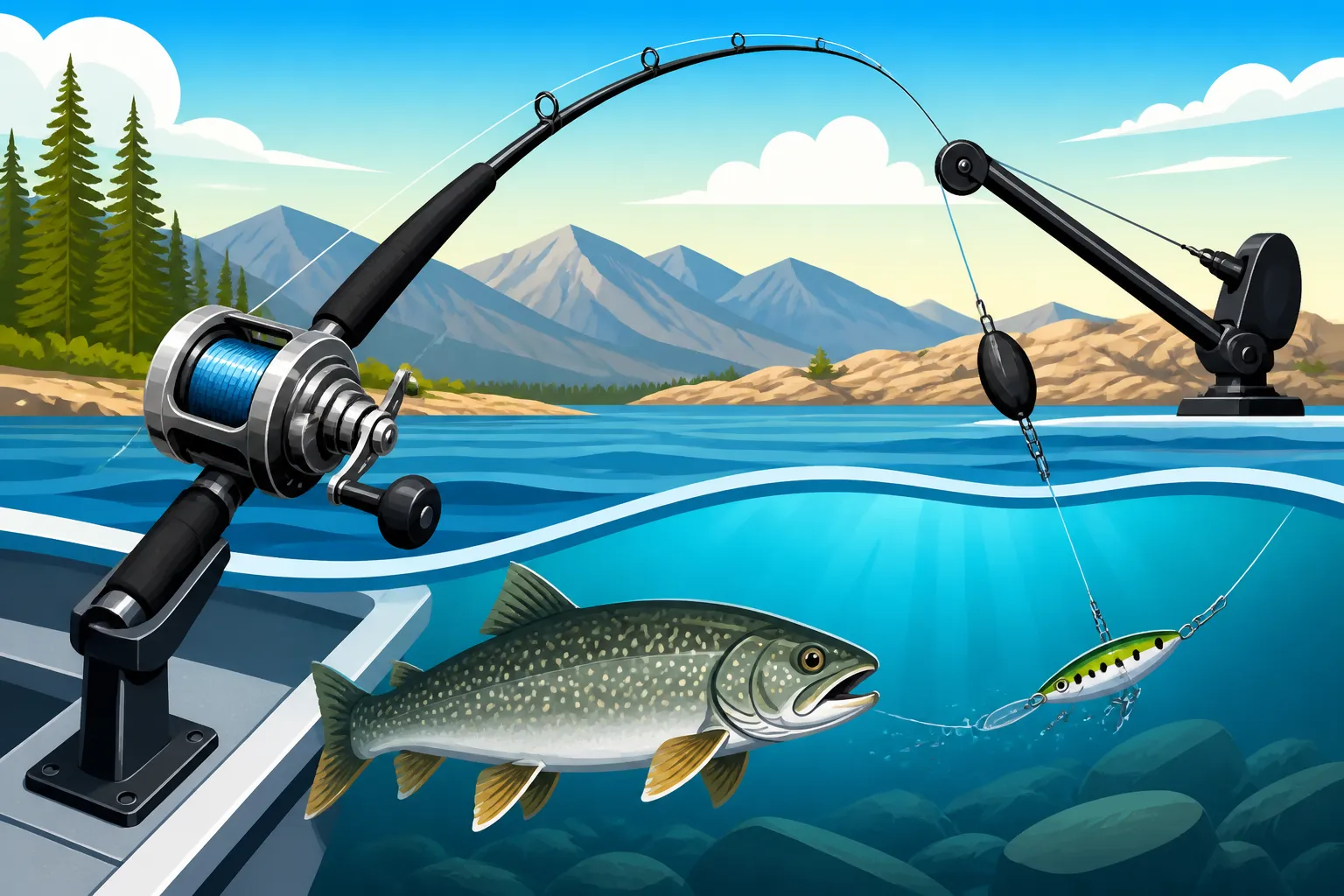
Look for rods specifically designed for trolling or downrigger fishing. These rods often feature a parabolic bend, meaning they flex throughout their entire length, not just the tip. This type of action helps absorb the shock of a strike, especially when using a downrigger, and provides a continuous power curve during the fight. A rod that is too stiff won't allow the downrigger clip to release smoothly, and one that is too flimsy will quickly wear you out. The length is also important; longer rods (7 to 9 feet) help spread your lines out, preventing tangles, and offer better shock absorption. You can find a good selection of specialized trolling rods on Amazon.
Reel: The Engine for Deepwater Battles
Your reel is the workhorse. It needs to hold a lot of line, have a robust drag system, and be built to withstand the constant stress of trolling and battling deepwater fish. Spinning reels are generally not favored for heavy-duty trolling due to their line twist issues and typically lower line capacity compared to conventional reels.
Conventional reels are the undisputed champions for Mackinaw trolling. They offer superior line capacity, which is crucial when you're letting out hundreds of feet of line. Look for models with a sturdy, smooth star drag or lever drag system that can be precisely adjusted and will not falter under pressure. A high-quality drag is paramount for fighting powerful Mackinaw, allowing the fish to take line when it runs hard without breaking off. Gear ratio is less critical than capacity and drag for trolling, but a mid-range ratio (around 4:1 to 5:1) offers a good balance of retrieve speed and cranking power. Best Trolling Rods for Lake Trout often require a robust reel to match.
Line and Leader: The Invisible Connection
The choice of main line and leader material is critical for successful Mackinaw trolling. It's the direct link between you and the fish, influencing sensitivity, depth control, and overall strength. You'll often find a combination of different line types used in a single setup to optimize for various factors.
For deepwater trolling, many anglers opt for a main line of braided superline, followed by a fluorocarbon or monofilament leader. Braided line offers incredible strength-to-diameter ratio, minimal stretch for excellent sensitivity, and allows you to pack a lot of heavy-pound-test line onto your reel without excessive bulk. The low stretch means you'll feel those subtle bumps and bites much more effectively, even with hundreds of feet of line out. However, braid is visible and has no stretch, so a leader is essential. A fluorocarbon leader (20-40 lb test) is nearly invisible underwater, provides some shock absorption, and offers good abrasion resistance against rocks or the fish's mouth. Monofilament can also be used for a leader if more stretch is desired. For specialized deep-water tactics like lead core, your main line is the lead core, which comes in different colors to indicate depth, often backed with braided or monofilament line.
Choosing the Right Rod for Mackinaw Trolling
Selecting the perfect rod for trolling Mackinaw isn't just about picking the strongest one you can find. It's about finding a balance of power, sensitivity, and action that allows you to present your lure effectively, detect subtle bites, and ultimately, land these impressive deep-water dwellers.
Rod Length and Power Considerations
For Mackinaw trolling, most anglers gravitate towards rods in the 7 to 9-foot range. This length provides several advantages: it helps spread out your trolling lines, reducing tangles when running multiple rods; the longer lever arm aids in fighting powerful fish; and it offers better shock absorption when a large Mackinaw hits a trolled lure or is brought up from a downrigger. A 7'6" to 8'6" rod is often considered a sweet spot.
In terms of power, you'll want a medium-heavy to heavy power rod. This power rating indicates the rod's lifting strength and its ability to handle heavy lures and the immense pressure of deep-diving presentations. Mackinaw can weigh well over 20 pounds, and a lighter power rod will feel overwhelmed, making it harder to control the fight and potentially leading to lost fish or even a broken rod. The rod needs enough backbone to handle a large fish without feeling like a noodle, yet still possess enough flex to absorb violent head shakes.
Rod Action for Optimal Performance
The action of a rod describes where it bends under pressure. For Mackinaw trolling, a moderate or moderate-fast action is generally preferred.
- Moderate Action: These rods bend more towards the middle of the blank. This "parabolic" bend provides excellent shock absorption, which is critical when a large Mackinaw strikes a trolled lure, especially when connected to a downrigger release clip. It also helps maintain constant pressure on the fish throughout the fight, reducing the chance of hooks pulling free. This action is forgiving and works well with a variety of trolling techniques.
- Moderate-Fast Action: These rods bend mostly in the upper third or quarter of the blank, but still have a good bend further down into the mid-section. They offer a bit more sensitivity than a purely moderate action, allowing you to better feel the throb of your lure or a subtle take. They still provide ample backbone for fighting strong fish and are a good all-around choice for many trolling scenarios.
Avoid fast or extra-fast action rods, which bend only at the tip. While great for casting and feeling light bites in shallower water, they lack the forgiving nature and deep power curve needed for heavy trolling and deepwater battles. A good general-purpose trolling rod from a brand like Okuma or Shimano can be found on Amazon.
Selecting the Ideal Reel for Mackinaw Trolling
Your reel is more than just a line holder; it's the critical link that translates the power of a Mackinaw into manageable pressure. Without the right reel, even the best rod and line combination can fall short when you're battling a deepwater giant.
Line Capacity and Line Type Compatibility
The absolute number one consideration for a Mackinaw trolling reel is line capacity. As discussed, these fish live deep, and your lures need to get down there. Whether you're using lead core, copper, or simply letting out a lot of braided line with a downrigger, you need a reel that can comfortably hold 200-300 yards of your chosen line, plus backing if necessary. For example, if you plan to run 10 colors of 18lb lead core (each color being 10 yards), you'll need at least 100 yards of lead core, plus plenty of backing. If you're using heavy braided line, a reel capable of holding 300+ yards of 30-50lb braid is ideal.
Conventional reels, specifically level-wind models, are perfect for this. Their design allows for much higher line capacities in a compact frame compared to spinning reels. They also manage heavy lines and the constant retrieve of trolling better. Ensure the reel is compatible with the type of line you intend to use; for example, some reels handle braided line better than others due to potential slippage if not properly spooled or designed.
Drag System and Gear Ratio
A smooth, powerful drag system is non-negotiable for Mackinaw trolling. When a big laker hits, it can take off with incredible speed and power, especially in the cold water. A jerky or inconsistent drag will either snap your line or pull the hook. Look for a reel with carbon fiber drag washers or similar high-performance materials that provide consistent, butter-smooth pressure even under heavy load. The drag should be easy to adjust on the fly, allowing you to fine-tune it during the fight. A good drag system helps absorb the fish's runs and protects your line.
While not as critical as capacity or drag, the gear ratio still matters. For trolling, a moderate gear ratio (around 4.0:1 to 5.5:1) is generally preferred. This offers a good balance between cranking power and retrieve speed. You're not typically rapid-fire casting and retrieving when trolling, so raw speed isn't necessary. Instead, you need the torque to steadily retrieve heavy rigs and to gain line on a powerful fish. A lower gear ratio means more power with each turn of the handle, which can be a lifesaver when fighting a monster from deep water. Many anglers find great deals on specialized reels from trusted brands on Amazon.
The Importance of Line and Leader for Deep Water Mackinaw
The line and leader system is arguably the most critical connection point between you and the Mackinaw. It's what transmits every subtle twitch, every powerful run, and ultimately, dictates whether you land that trophy fish. Choosing wisely here means the difference between a successful outing and a day of frustration.
Main Line Choices: Braid, Mono, or Lead Core
For your main line, especially if you're using downriggers, braided superline is often the top choice for its incredible strength-to-diameter ratio and minimal stretch. This lack of stretch is a double-edged sword: it offers phenomenal sensitivity, letting you feel even the softest bites from way down deep, but it also means less forgiveness if your drag isn't perfect. For downriggers, 30 to 50 lb test braid is a common choice, providing ample strength for both the fish and the pressure of the downrigger clip.
If you're opting for lead core line, remember that each "color" typically represents 10 yards and sinks to a specific depth at a given trolling speed. The line itself provides the weight to get your lure down. A full spool might have 10 colors (100 yards), often backed by 200-300 yards of monofilament or braid to fill the spool and provide extra insurance during long runs. Lead core requires a reel with massive capacity, and a sensitive rod that bends evenly to handle the weight and detect bites.
Monofilament line, while offering more stretch and being more forgiving, is rarely used as a primary trolling line for Mackinaw due to its larger diameter for equivalent strength and significant stretch, which reduces sensitivity at deep depths. However, it can serve as effective backing for lead core or braided line.
Leader Materials and Length
Regardless of your main line, a leader is almost always essential when targeting Mackinaw.
- Fluorocarbon Leaders: These are highly favored due to their low visibility underwater. Fluorocarbon has a refractive index very similar to water, making it virtually invisible to wary fish. It also offers excellent abrasion resistance, which is crucial when fishing around rocky structures or when a Mackinaw's sandpaper-like jaws are involved. For Mackinaw, a leader from 20 to 40 lb test is common, with length varying from 10 to 30 feet, depending on the specific technique and how much stealth is required. Longer leaders give a more natural presentation, especially in clear Lake Tahoe waters. Best Line for Desert Reservoir Fishing often includes strong, abrasion-resistant leaders.
- Monofilament Leaders: While less invisible than fluorocarbon, a stout monofilament leader can still be effective, particularly in stained water or during low-light conditions. It offers more stretch than fluorocarbon, which can act as an additional shock absorber during powerful runs. However, its visibility and lower abrasion resistance compared to fluorocarbon often make it a second choice for serious Mackinaw anglers.
Proper knots are critical when connecting your main line to your leader. A strong, streamlined knot like a double uni-knot, FG knot, or Albright knot will ensure your connection holds up under the immense pressure of a Mackinaw fight.
Essential Terminal Tackle and Rigging for Success
Getting your rod, reel, and line dialed in is only half the battle. The other half involves the terminal tackle—the bits and pieces at the business end of your line that actually attract and hook the fish. For Mackinaw trolling, this means everything from dodgers and flashers to your chosen lure or bait.
Dodgers, Flashers, and Attractors
Mackinaw often need a little extra enticement to find your lure in the vast depths. This is where dodgers and flashers come into play. These are metallic or colored plates that wobble, spin, or flash in the water, creating a disturbance that mimics a school of baitfish or simply attracts attention from a distance.
- Dodgers: These are typically S-shaped or flat-sided plates that impart a pronounced, erratic action to the lure trailing behind them. They don't spin but "dodge" from side to side. The size of the dodger (usually 6-10 inches for Mackinaw) affects the action and the depth you can run them.
- Flashers: These are typically rotating blades or series of blades that spin rapidly, creating a lot of flash and vibration. They can also impart action to a trailing lure, though often less pronounced than a dodger.
The distance between the dodger/flasher and your lure (the "leader length") is critical and often takes experimentation. Generally, it can range from 18 inches to several feet. You can find a wide array of dodgers and flashers on Amazon, with various colors and sizes to match your local baitfish and water conditions.
Lures and Baits for Deepwater Mackinaw
Once you've got the attractors sorted, it's time for the main event: your lure or bait. Mackinaw are primarily piscivorous (fish-eating), so your presentations should mimic their natural prey.
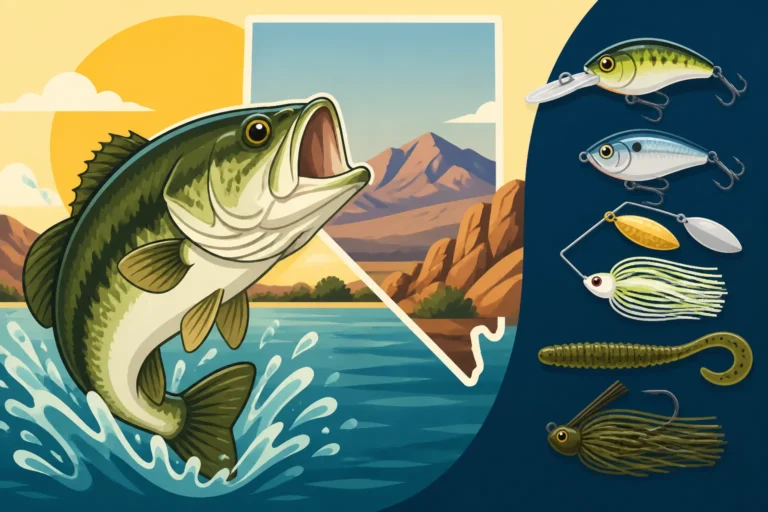
- Spoons: Large, heavy trolling spoons like those from Luhr-Jensen or similar brands are very effective. Colors mimicking kokanee, minnows, or even bright UV patterns can work. Spoons have an erratic fluttering action that Mackinaw find irresistible.
- Plugs/Stickbaits: Deep-diving crankbaits or plugs designed for trolling can also be deadly. Brands like Rapala or Bomber make models that dive to significant depths or can be run behind downriggers. Again, baitfish patterns are key.
- Jigs: While less common for trolling, heavy jigs can be used in combination with attractors, especially if you're trying to fish directly vertically or near distinct structure.
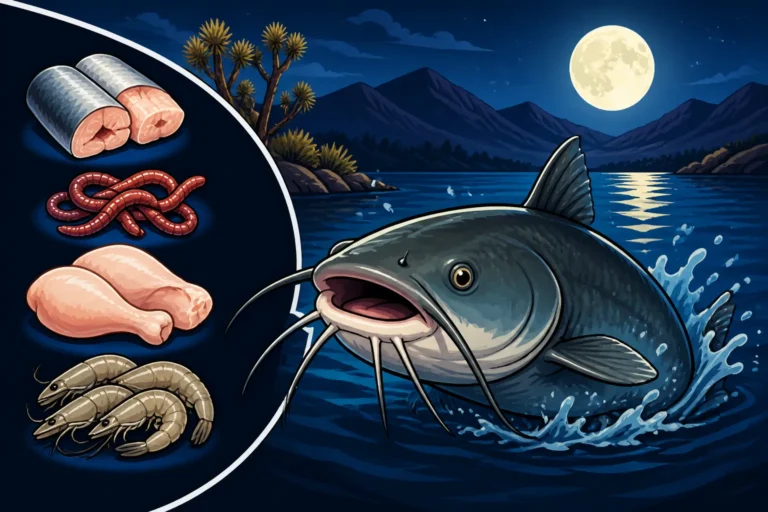
- Live/Cut Bait: For many serious Mackinaw anglers, nothing beats natural bait. Live minnows (where legal) or cut bait such as anchovies, sardines, or even pieces of kokanee are incredibly effective. These are typically rigged behind a dodger on a bait harness that allows the bait to spin enticingly. Scent is a huge factor here, and many anglers add bait oils or paste scents to their artificial lures or cut bait. Trolling Techniques for Lake Tahoe Mackinaw will often delve into specific lure and bait presentations.
Putting It All Together: A Recommended Setup
Now that we've broken down each component, let's assemble a typical, highly effective rod setup for trolling Mackinaw trout in Nevada's deep lakes. This isn't a one-size-fits-all, but a solid foundation to build upon.
The All-Around Mackinaw Trolling Setup
Imagine you're heading out to Lake Tahoe on a crisp morning, targeting those big, deep-dwelling Mackinaw. Here's a rod setup that gives you a fantastic chance at success:
- Rod: An 8-foot, medium-heavy power, moderate-fast action fiberglass or composite trolling rod. This length provides good line spread and leverage, while the moderate-fast action offers a balance of sensitivity and backbone for deep-water trolling and fighting heavy fish. It's forgiving enough for downrigger use but still lets you feel the subtle nuances of your lure.
- Reel: A conventional level-wind reel with a high line capacity, capable of holding 300+ yards of 50 lb braided line. It should feature a smooth, reliable carbon fiber drag system that can handle sustained pressure from a large fish without faltering. Look for a gear ratio around 4.5:1 for a good balance of power and retrieve speed.
- Main Line: 50 lb test braided superline (e.g., PowerPro or Sufix). The low stretch provides maximum sensitivity for feeling bites and knowing what your lure is doing far below the surface.
- Leader: 25-30 lb test fluorocarbon leader, 15 to 20 feet long. The invisibility and abrasion resistance of fluorocarbon are crucial in clear Mackinaw waters, and the length allows for a natural presentation behind any attractors.
- Terminal Tackle: A 007 or 008 size dodger (e.g., a Lake Clear Wabbler or Sep's Pro Dodger) in a silver, chrome, or iridescent pattern. Trailing about 24-36 inches behind the dodger, a Gulp! Minnow or a rigged anchovy/sardine on a two-hook harness. The specific lure choice often depends on water clarity and the predominant baitfish in the area.
This setup offers the versatility to target Mackinaw at various depths with downriggers, lead core, or even heavy snap weights, providing the sensitivity to detect bites and the power to land big fish.
Table: Essential Mackinaw Trolling Setup Checklist
Here’s a quick reference checklist for building out your Mackinaw trolling gear:
| Component | Key Characteristics | Recommended Specs | Notes |
|---|---|---|---|
| Rod | Medium-Heavy Power, Moderate-Fast Action, Trolling-Specific | 7'6" – 9'0" Length | Fiberglass or composite for durability & flex |
| Reel | Conventional (Level-Wind), High Capacity, Smooth Drag | Holds 300+ yards 50lb braid, 4.0:1-5.5:1 Gear Ratio | Carbon fiber drag washers are a plus; look for sturdy construction |
| Main Line | Braided Superline (with Downriggers) or Lead Core | 30-50 lb Test Braid OR 7-10 Colors Lead Core (18-27lb) | Braid for sensitivity; Lead Core for depth control without downriggers |
| Leader | Fluorocarbon for Stealth and Abrasion Resistance | 20-40 lb Test, 10-30 ft Length | Match length to presentation; shorter for active fish, longer for wary ones |
| Attractor | Dodger or Flasher | 007 to 009 Size | Colors: Silver, Chrome, Blue/Silver, Green/Silver. Match baitfish |
| Lure/Bait | Spoon, Plug, or Cut Bait | Mimic baitfish (Kokanee, Minnows), UV/Glow patterns | Experiment with size, color, and action based on conditions |
| Downrigger | Electric or Manual, Ball Release Clip | 10-15 lb cannonball | Essential for precise deep-water depth control |
| Rod Holders | Sturdy, Adjustable | Clamp-on or Flush Mount | Keep rods secure and at optimal angles for trolling |
Remember, while this table gives you a strong starting point, adapting to the conditions on the water, experimenting with different lures, and paying attention to things like Trolling Techniques for Lake Tahoe Mackinaw will make all the difference.
Trolling Techniques and Considerations Beyond Gear
Even with the perfect rod setup, catching Mackinaw trout consistently requires an understanding of trolling techniques and environmental factors. Gear is one piece of the puzzle; knowing how to use it effectively is another.
Depth Control and Speed are Paramount
Mackinaw are very depth-oriented. Finding the right depth where they are feeding is often the biggest challenge. This is where a good fish finder and a reliable downrigger become invaluable. Your Best Fish Finder for Reservoir Fishing will help you locate bait schools and identify thermoclines where Mackinaw often hold. Downriggers allow you to precisely position your lure at a specific depth, which is nearly impossible with just lead core or heavy sinkers in deep water. You can find detailed information on How to Catch Mackinaw Trout at Lake Tahoe which emphasizes precision.
Trolling speed is equally important. Mackinaw typically prefer slower speeds, often between 1.5 and 2.5 miles per hour. This slower speed allows your dodgers and lures to work with a more natural, enticing action. However, it's not set in stone, and varying your speed occasionally can trigger strikes from following fish. Pay attention to how your lure is performing at different speeds and adjust accordingly.
Reading the Water and Adjusting Your Approach
Mackinaw fishing isn't just about blindly trolling. It's about being observant and adapting. Pay attention to water temperature, clarity, and the presence of baitfish on your fish finder. If you're marking fish at 80 feet, that's where your lures need to be. If the baitfish are higher in the water column, Mackinaw might follow them. Wind and current can also affect your trolling path and lure presentation, so adjust your boat's direction and speed to maintain control.
It's also important to be mindful of other regulations and best practices. Always check the Nevada Fishing Regulations Explained for specific limits and rules for Mackinaw in Lake Tahoe or other waters. Catch-and-release is often practiced, especially for larger breeding fish, and knowing how to properly handle and release a deep-water fish is crucial for its survival. Having the right tools on board, such as a large net and de-hooking tools, will make the process easier and safer for both you and the fish.
Disclaimer
This article is for general informational purposes only and does not constitute professional advice. Laws, prices and regulations vary by location and change over time. Consult a qualified professional for guidance on your specific situation.