Best boat size for Pyramid Lake fishing
Choosing the right boat for a fishing trip to Pyramid Lake can feel like a daunting task, especially when you consider its sheer size and reputation for quickly changing weather. Many anglers find themselves wondering if their current vessel is up to the challenge or what kind of boat they should even consider if they're looking to invest. This comprehensive guide will help you navigate the factors involved in selecting the perfect boat size and type to make your Pyramid Lake fishing adventures safe, comfortable, and successful.
Understanding Pyramid Lake's Unique Demands
Pyramid Lake isn't your average fishing hole; it's a vast, ancient desert lake that demands respect and a well-thought-out approach, especially when it comes to boating. Its unique characteristics directly influence what kind of boat will serve you best.
The Lake's Size and Exposure to Elements
First and foremost, Pyramid Lake is enormous. Stretching roughly 20 miles long and up to 9 miles wide, it's one of the largest natural lakes in Nevada. This expansive body of water means long runs from launch ramps to prime fishing spots and a lot of open water crossing. Unlike smaller, more sheltered lakes, Pyramid Lake is incredibly exposed to the elements. The wind, which funnels down the valleys and across the desert, can whip up in a matter of minutes, turning calm waters into formidable chop. A comfortable ride over sustained choppy water is a major consideration.
Imagine heading out on a gorgeous, flat-calm morning, only to have a stiff breeze materialize from seemingly nowhere by midday. That idyllic calm can quickly transform into white-capping waves that make navigation difficult and even dangerous for smaller, less stable crafts. Anglers who have experienced this know the frustration and even fear that can set in when you're caught far from shore in conditions your boat isn't designed for. It’s not just about getting to your spot, it’s about getting back safely, too. Pyramid Lake Season and Bag Limit Rules often dictate how long you can be on the water, but conditions can cut that short.
Shoreline Access and Launching Challenges
While there's excellent fishing from shore at Pyramid Lake, especially for the famous Lahontan cutthroat trout, many of the most productive spots, or simply a desire for a different approach, necessitate a boat. However, launching a boat at Pyramid Lake isn't always straightforward. The lake's water levels fluctuate, sometimes dramatically, which can impact the usability of certain ramps. Some areas might feature gradual, sandy beaches that are easy for smaller, lighter boats, while others require more robust, paved ramps designed for larger vessels. It’s crucial to know your launch point and what kind of setup it can handle.
Many of the designated launch areas, such as those you'd find detailed in a Pyramid Lake Boat Launch Locations guide, cater to various boat sizes. But even at these official ramps, strong winds can make launching and retrieving tricky, even for experienced boaters. The angles of some ramps, combined with wind pushing against your boat, can create a real challenge. You'll often see larger boats with powerful trucks making short work of it, but smaller, lighter boats might struggle against the forces of nature, potentially leading to damaged gear or a frustrating start to your day. You're also often driving across unpaved roads to get to some of the best areas, so your towing vehicle matters as much as your boat.
Matching Boat Size to Your Fishing Style
The "best" boat size is highly subjective and depends largely on how you plan to fish Pyramid Lake. Your primary techniques and whether you typically fish solo or with a crew will steer you toward different boat types and dimensions.
Shore-Based vs. Boat-Based Angling
For many, Pyramid Lake is synonymous with ladder fishing from the shoreline, a highly effective and popular method for targeting Lahontan cutthroat trout. If your primary interest is shore fishing, then the "best boat size" is actually no boat at all! You'll save yourself the hassle of launching, retrieving, and the associated costs. However, if you want to explore beyond easy shore access, or pursue different species or techniques, a boat becomes essential.
When you transition from shore-based fishing to boat-based, you open up a whole new world of possibilities on Pyramid Lake. Suddenly, those distant points, isolated rock structures, and deeper sections of the lake become accessible. This allows for a wider range of techniques, from trolling with downriggers in open water to casting specific lures into less pressured coves. Your boat essentially becomes your mobile fishing platform, allowing you to chase the bite wherever it may lead. It’s a huge shift in how you interact with the lake and the fish, demanding a vessel that can reliably take you there and back.
Trolling and Open Water Fishing
If your goal is to troll for trophy Lahontan cutthroat trout or other species in the vast open waters of Pyramid Lake, stability and adequate space are paramount. Trolling often involves multiple rods, downriggers, and the need to move at controlled speeds, sometimes for hours. A boat that can cut through chop smoothly and provide a stable platform for managing gear is crucial.
For this type of fishing, a boat in the 18-foot to 22-foot range often hits the sweet spot. These boats offer enough length and beam (width) to handle the lake's chop comfortably, reducing pounding and spray that can make a long day unbearable. The extra deck space provides room for multiple anglers, gear, and coolers. While a smaller boat can troll, it becomes much less comfortable and safe when the wind picks up. Larger boats in this range often have higher freeboards, keeping more water out of the boat when waves inevitably crash over the bow. They also tend to track better at slow trolling speeds, which is vital for presenting lures effectively. Consider what makes a good Best Boats for Nevada Reservoir Fishing generally – stability, storage, and power are usually high on the list.
Casting, Jigging, and Exploring Coves
For anglers who prefer casting to structure, jigging, or exploring the shallower coves and points, maneuverability and ease of launch might take precedence over sheer size. This style of fishing often requires precise boat positioning and the ability to get into tighter spots.
A boat in the 16-foot to 18-foot range can be excellent for this. These boats are typically easier to launch and retrieve, especially if you're hitting less-developed access points. They are more nimble, allowing you to quietly approach shorelines or work a specific rock pile. While still providing a decent amount of stability for casting, they are lighter and often require less powerful tow vehicles. Boats like aluminum jon boats or smaller V-hull fishing boats fit this bill perfectly. They're usually equipped with a bow-mounted trolling motor for silent, precise boat control, which is essential when targeting wary fish in shallower water. You still need to respect the open water runs and keep an eye on weather, but for dedicated casting within a reasonable distance of a launch, these can be very effective.
Multi-Angler Trips and Comfort
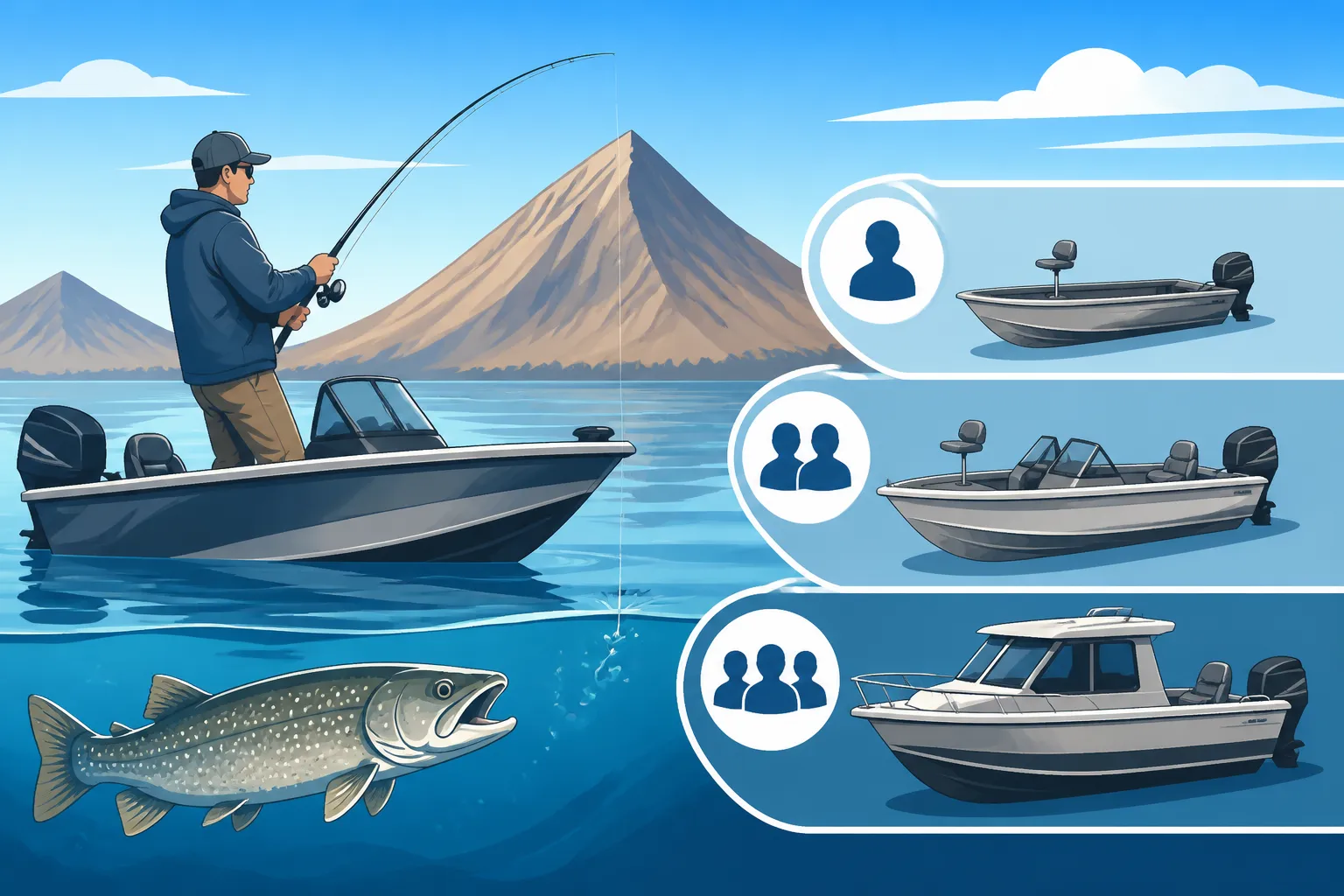
Fishing with friends or family? The number of people you plan to have on board significantly impacts the ideal boat size. Cramming too many people into a small boat is not only uncomfortable but can also be unsafe, affecting stability and limiting casting room.
A general rule of thumb is to allow enough comfortable space for each person to cast, move around, and store their gear without tripping over each other. For two anglers, a 16-18 footer might be fine. For three or more, you'll likely want something closer to 19-22 feet or even larger. This extra space not only increases comfort but also safety, as it distributes weight better and provides more freeboard. Beyond fishing, consider if you want space for coolers, tackle bags, extra layers for changing weather, and maybe even a dog. A larger boat makes for a more enjoyable day for everyone, especially if the weather turns or you're out on the water for many hours.
Types of Boats Suitable for Pyramid Lake
Pyramid Lake's challenging conditions mean that not all boats are created equal for its waters. Let's look at some common types and their suitability.
Aluminum V-Hull Boats
Aluminum V-hull boats, often referred to as utility or fishing boats, are a popular choice for many Nevada lakes, and for good reason. They are generally lighter than fiberglass, making them easier to tow and launch, and they are incredibly durable, shrugging off bumps against rocky shorelines better than fiberglass.
- Pros: Their V-hull design helps cut through chop, offering a reasonably smooth ride for their size. They are relatively low maintenance and can be quite affordable. Many come equipped with livewells, rod storage, and comfortable seats. They are also versatile enough for trolling, casting, and running across open water. Smaller models (16-18 ft) are easy to maneuver, while larger ones (19-22 ft) offer more stability and space. You can often find a good selection of these at places like Bass Pro Shops.
- Cons: While they cut through chop, aluminum boats can sometimes have a "tinnier" ride than heavier fiberglass boats, meaning they can feel a bit more bouncy in rough water and be noisier. Their shallower draft can be a benefit for skinny water, but in serious swells, you might still take some spray. Larger aluminum boats require substantial engines to move them quickly, especially when loaded.
Fiberglass Bass Boats and Multi-Species Boats
These are often the performance machines of the freshwater fishing world, designed for speed, stability, and serious angling. While traditionally associated with bass fishing, multi-species versions are built to handle larger, rougher waters.
- Pros: Fiberglass boats, especially in the 19-foot plus range, offer an exceptionally smooth, dry ride, even in significant chop. Their weight and hull design typically slice through waves rather than bouncing over them. They are incredibly stable fishing platforms with vast amounts of deck space, storage, and built-in amenities like multiple livewells, electronics, and comfortable seating. They are ideal for serious anglers who spend long hours on the water.
- Cons: These boats are heavy, requiring a large tow vehicle and more effort to launch and retrieve. They are also significantly more expensive, both to purchase and to maintain. Their deeper draft can limit access to very shallow areas, and their size can make them less agile in tight spots. Fuel consumption is also generally higher due to their weight and powerful engines.
Smaller Jon Boats and Kayaks
For those on a tighter budget or who prioritize extreme portability and stealth, smaller craft like jon boats, small skiffs, or even dedicated fishing kayaks can be considered, but with serious caveats for Pyramid Lake.
- Pros: Inexpensive, easy to transport (some kayaks can even fit on a car roof rack or in a truck bed), and highly maneuverable. They offer a unique, intimate fishing experience. Kayaks, in particular, provide quiet access to coves and areas larger boats might miss. For a quick solo trip targeting specific, close-to-shore areas, they can be fantastic. Many anglers source accessories for these smaller craft from retailers like Amazon.
- Cons: This is where the "Pyramid Lake factor" really comes into play. Small jon boats and kayaks are highly susceptible to wind and waves. A sudden chop can quickly make them unsafe, leaving you struggling to make headway or even swamping. They offer minimal storage and comfort, and the ability to cover significant distances is limited. They are absolutely not recommended for open water crossings on windy days. If you do use one, stick very close to shore, always wear a life jacket, and check the wind forecast relentlessly. Kayak Fishing Gear for Nevada will also detail many safety items.
| Boat Type | Ideal Pyramid Lake Use | Stability in Chop | Launch/Retrieve Ease | Cost (Shape) | Capacity (Avg. Anglers) |
|---|---|---|---|---|---|
| Aluminum V-Hull (16-18 ft) | Casting/Jigging, Short Trolling Runs | Moderate | Easy | Mid-range | 1-3 |
| Aluminum V-Hull (19-22 ft) | Trolling, Open Water, Multi-Angler | Good | Moderate | Mid-high | 2-4 |
| Fiberglass Bass/Multi-Species (19-22 ft) | Serious Trolling, Open Water, Performance | Excellent | Moderate-Difficult | High | 2-4 |
| Smaller Jon Boats/Skiffs (<16 ft) | Very Limited Shore Proximity, Calm Days | Poor | Very Easy | Low | 1-2 |
| Fishing Kayaks | Very Limited Shore Proximity, Calm Days | Poor | Very Easy | Low-Mid | 1 |
Important Considerations Beyond Size
Choosing the right boat isn't just about its length; several other factors play a critical role in your safety, enjoyment, and success on Pyramid Lake.
Engine Horsepower and Reliability
Pyramid Lake is vast, and covering distances can mean long runs. Having adequate horsepower isn't just about speed; it's about getting back to the launch quickly if the weather turns. An underpowered boat can struggle against strong headwind and chop, turning a 15-minute run into a grueling hour-long ordeal. Look for an engine that matches the boat's rated maximum horsepower for optimal performance and safety. Reliability is also key; the last thing you want is an engine breakdown miles from shore in remote territory. Regular maintenance on your outboard is non-negotiable for boating on such a large, exposed lake.
Essential Safety Gear
No matter the size of your boat, safety should always be your top priority on Pyramid Lake. The conditions can change so rapidly that being unprepared is simply asking for trouble. Always carry a full complement of U.S. Coast Guard-approved safety equipment. This includes life jackets for everyone on board (worn at all times, especially in smaller boats), a throwable flotation device, visual distress signals (flares or a flag), an audible signaling device (horn or whistle), navigation lights (if operating before sunrise or after sunset), and a fire extinguisher. Essential Safety Gear for Boating on Lake Mead provides an excellent overview of what's necessary for large Nevada reservoirs. A marine radio (VHF) is also highly recommended for communicating with other boaters or emergency services, as cell service can be spotty in certain areas of the lake.
Anchor Systems for Windy Conditions
Pyramid Lake is notorious for wind. If you plan to stop and fish a particular spot, a robust anchor system is vital. A small, inadequate anchor will simply drag, leading to frustration and potentially losing your prime fishing spot. Consider a heavy, fluked anchor or a claw anchor designed to dig into various bottom types. More importantly, have plenty of anchor line – at least 5-7 times the maximum depth you plan to anchor in. This scope is essential for the anchor to set properly. Many experienced Pyramid Lake anglers also carry a secondary anchor for extra security in extreme conditions, or use two anchors for a more stable hold. A quality anchor from a brand like Lewmar or a comparable option found on Amazon can make a huge difference in your ability to hold position.
Navigation and Electronics
Given the lake's size and often featureless shoreline in some areas, a reliable GPS/fish finder unit is incredibly helpful. It helps you navigate safely, find fishing hotspots, mark productive areas, and return to your launch point, especially in low light or fog. Many modern units combine these features, providing depth readings, contour maps, and even side-scanning sonar to locate structure and fish. Having a paper map of Pyramid Lake as a backup is also a smart move, just in case your electronics fail. The tribal permits for fishing Pyramid Lake, such as those covered in the Pyramid Lake Tribal Fishing Permit guide, sometimes include maps or information that can be very useful for navigation.
Trailer and Tow Vehicle Capability
Don't forget the importance of your trailer and tow vehicle. A large, heavy boat requires a robust trailer with good tires and brakes, and a tow vehicle with sufficient towing capacity. Driving across Nevada's sometimes challenging roads, especially to remote launch sites, demands reliability from your entire towing setup. Ensure your trailer's bearings are well-maintained and that your vehicle's cooling system and transmission are up to the task. Nothing ruins a fishing trip faster than a roadside breakdown before you even get to the water.
Ultimately, the best boat size for Pyramid Lake fishing is one that matches your angling ambitions while prioritizing safety and comfort in its challenging environment. Do your homework, assess your needs realistically, and invest in a boat that will allow you to enjoy all that this unique Nevada fishery has to offer.
Disclaimer
This article is for general informational purposes only and does not constitute professional advice. Laws, prices and regulations vary by location and change over time. Consult a qualified professional for guidance on your specific situation.