Best Sun Protection Gear for Desert Fishing
There's nothing quite like a glorious day out on the water, rod in hand, waiting for that next bite. But when you're fishing in Nevada's stunning, yet often brutally sunny, desert environment, the sun can quickly turn that perfect day into a painful, health-compromising ordeal. Ignoring proper sun protection doesn't just lead to a nasty sunburn; it can significantly increase your risk of long-term skin damage and even impact your enjoyment and concentration. This guide is all about equipping you with the best sun protection gear to keep you safe and comfortable, allowing you to focus on what really matters: catching fish and making memories.
The Harsh Reality of Nevada's Desert Sun
Nevada's landscape is undeniably beautiful, but it comes with a unique set of challenges for anglers, particularly when it comes to sun exposure. The clear skies, high elevation in many fishing spots, and reflective surfaces like water can amplify the sun's intensity, making adequate protection not just a recommendation, but an absolute necessity. Many folks, especially those visiting from milder climates, often underestimate just how quickly the desert sun can do its damage.
Understanding UV Exposure in High Desert Environments
When you're out on a Nevada lake like Lake Mead or even a smaller urban pond, you're not just getting direct sunlight from above. You're also bombarded by UV rays reflecting off the water's surface, which can increase your overall exposure significantly. Higher altitudes, common in parts of northern Nevada, also mean thinner atmospheric protection, leading to stronger UV radiation reaching your skin. It’s a double whammy: intense direct sun combined with reflections, and in many places, less atmospheric filtering. This is why a cloudy day can still leave you with a burn, as UV rays penetrate cloud cover. It's a persistent, often invisible, threat that demands a comprehensive defense strategy. Even during what you might consider milder Nevada Fishing Seasons by Month, the UV index can still be surprisingly high.
Think about fishing on a clear summer morning at Wildhorse Reservoir. The sun rises quickly, and within an hour or two, its rays are beating down. If you're out on a boat, that water isn't just a cooling element; it's a mirror reflecting those harmful UV rays right back at you, hitting the underside of your chin, your nose, and even the roof of your mouth if you're not careful. This constant, multi-directional assault makes simple hats and short sleeves woefully inadequate for prolonged exposure.
Common Mistakes Anglers Make with Sun Protection
It's easy to fall into the trap of thinking "just a little sunscreen" or "my old baseball cap will do." But these common mistakes can lead to serious consequences. One of the biggest errors is underestimating the length of exposure. A quick morning trip can easily stretch into an all-day affair, and suddenly, that two-hour estimate turns into six or eight hours under the sun. Another frequent misstep is neglecting sensitive areas like the back of the neck, ears, or the tops of your hands, which are almost constantly exposed while casting and reeling.
People also often forget that early morning and late afternoon sun, while feeling less intense, still carries significant UV radiation. They might skip sunscreen at dawn, only to find themselves burnt by mid-morning. Moreover, sweat and splashes from the water can quickly diminish the effectiveness of non-water-resistant sunscreens, requiring frequent reapplication that many anglers simply forget to do in the heat of the moment. It's not just about putting something on; it's about putting on the right something and maintaining that protection throughout your entire fishing adventure. Many novice anglers also overlook the importance of specific gear, thinking any long-sleeve shirt will cut it, when in reality, specialized UPF clothing offers far superior protection.
Essential Head and Neck Protection
Your head and neck are ground zero for sun exposure, constantly facing the sky and often uncovered. Protecting these areas is paramount, not just to prevent sunburn but to reduce the risk of heatstroke and skin cancer in highly vulnerable spots.
Wide-Brimmed Hats and Caps
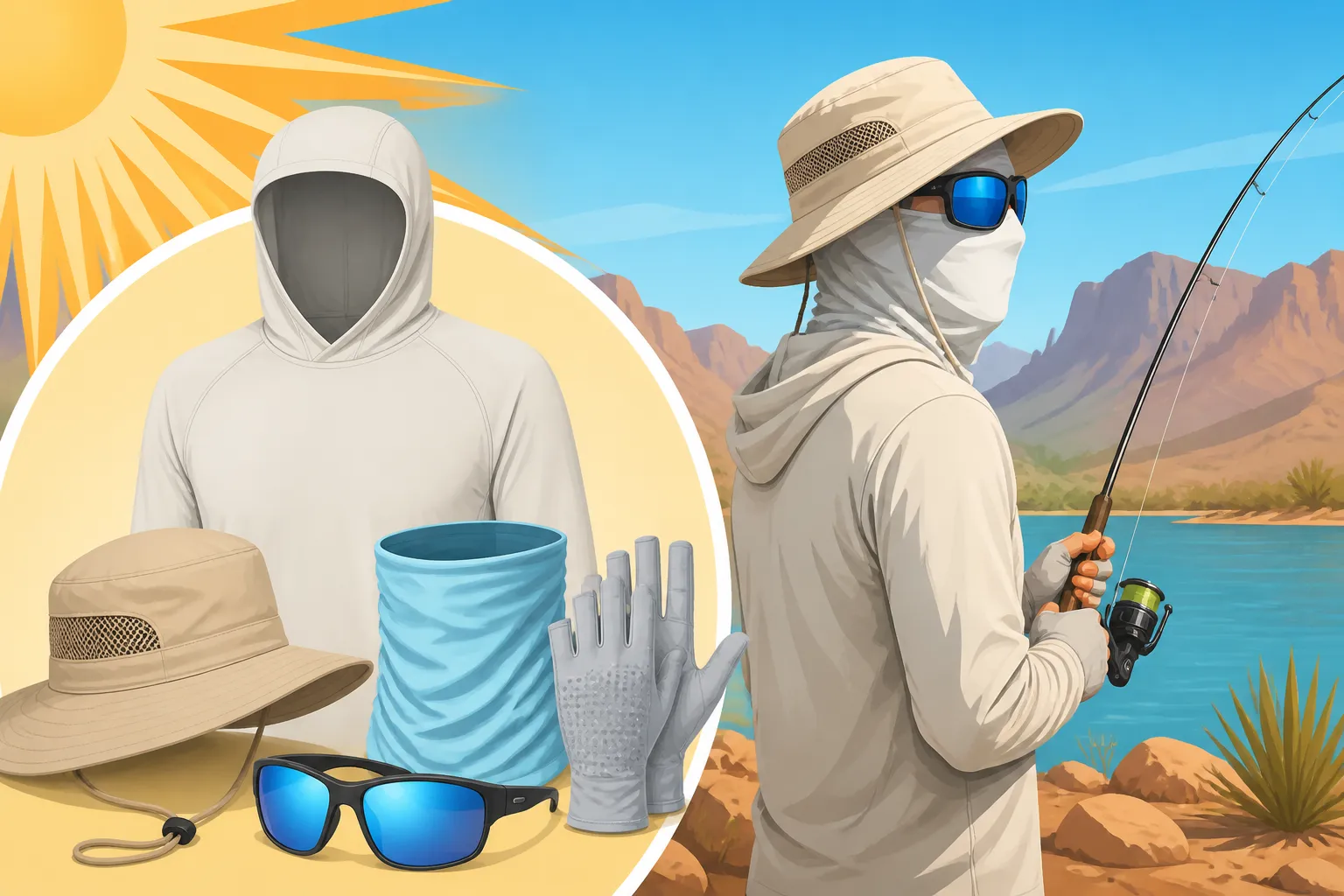
Forget the standard baseball cap for serious desert fishing. While it shades your face, it leaves your ears and neck completely exposed, which are prime targets for sun damage. For true protection, you need a wide-brimmed hat. Look for brims that are at least 3-4 inches all the way around, providing shade for your face, ears, and neck. These hats often come with a chin strap, which is a lifesaver on a windy day out on a large body of water like Lake Mohave, keeping your hat securely on your head when that unexpected gust hits.
Materials matter, too. Straw hats, while stylish, often have gaps that allow UV rays through. Opt for tightly woven fabrics like nylon, polyester, or treated cotton. Many excellent fishing hats are made from quick-drying, breathable materials with built-in UPF protection, specifically designed for anglers. These often include mesh vents to help keep your head cool, a crucial feature when the temperatures soar. You might find a wide variety of these specialized hats at places like Bass Pro Shops, where you can compare different styles and features.
Neck Gaiters and Face Shields
Even with a wide-brimmed hat, your neck and sometimes parts of your face can still be exposed, especially from reflective glare off the water. This is where neck gaiters and face shields become indispensable. These tubular pieces of fabric can be pulled up to cover your neck, chin, cheeks, and even your nose, offering seamless protection. They're incredibly versatile: wear them around your neck, pull them up over your face, or even use them as a head covering under your hat for added scalp protection.
Like hats, the best neck gaiters are made from UPF-rated, moisture-wicking, and breathable fabrics. They’ll keep you cool by wicking sweat away from your skin, and their lightweight nature means you hardly notice you’re wearing them. For example, when you're targeting Lahontan cutthroat trout at Pyramid Lake, where the sun beats down relentlessly, a good neck gaiter is invaluable for preventing a burnt neck and cheeks. They come in countless patterns and colors, so you can even express a bit of your personality while staying safe.
Clothing: Your First Line of Defense
What you wear on your body forms the largest area of your sun protection. Choosing the right clothing is crucial for preventing widespread sunburn and managing your body temperature in the desert heat. This isn't just about covering up; it's about smart, engineered fabrics.
UPF-Rated Apparel Explained
Standard cotton shirts, especially lighter colors or loosely woven ones, offer very little sun protection, often equivalent to an SPF of only 5-7. That's simply not enough for hours under the Nevada sun. Enter UPF-rated apparel. UPF stands for Ultraviolet Protection Factor, and it's a rating system for fabrics that indicates how much UV radiation (both UVA and UVB) a fabric blocks. A shirt with a UPF rating of 30 means it blocks 97% of UV rays, while a UPF 50+ rating blocks 98% or more. This is significantly more effective than traditional clothing and provides a consistent barrier that won't wear off like sunscreen.
Investing in long-sleeve shirts and pants specifically designed for sun protection is a game-changer. These shirts often feature extended cuffs with thumbholes to protect the backs of your hands, and some even have hoods for additional neck and ear coverage. While they might feel like "more" clothing, the breathable, lightweight materials are engineered to keep you cooler than a regular cotton tee by facilitating evaporation and airflow. This specialized gear is often found at outdoor retailers like Bass Pro Shops or can be ordered conveniently through online stores like Amazon. When planning a trip to places like Lake Tahoe, where the elevation adds to UV intensity, UPF clothing is a wise choice.
Material Matters: Breathability and Quick-Dry Features
In the desert, heat and sweat are constant companions. Therefore, the materials of your UPF clothing are just as important as the rating itself. Look for fabrics that are highly breathable, often incorporating mesh panels in strategic areas like the underarms or back. This allows air to circulate, carrying heat and moisture away from your body. Fabrics made from synthetic blends, such as polyester or nylon, are excellent choices because they are inherently moisture-wicking. This means they draw sweat away from your skin to the fabric's surface, where it can evaporate quickly.
Quick-drying properties are essential, especially when you're fishing near water. Accidental splashes, morning dew, or even just profuse sweating can soak your clothing. A quick-dry fabric ensures you won't be damp and uncomfortable for long, which can help prevent chafing and keep you warmer if a sudden breeze picks up. Some fishing apparel even includes anti-odor technology, which is a nice bonus after a long, sweaty day on the water. These features combine to make your time fishing more comfortable, allowing you to stay focused on the catch, whether you're chasing Nevada Largemouth Bass Fishing in Nevada or Nevada Trout Stocking Schedule opportunities.
Eye and Skin Protection Beyond Clothing
While hats and UPF clothing cover a significant portion of your body, there are still critical areas that require dedicated protection: your eyes and any exposed skin. These often-overlooked details can make a huge difference in your overall comfort and long-term health.
Polarized Sunglasses: More Than Just Comfort
Many anglers view sunglasses as simply a way to reduce glare and make it easier to see. While they certainly do that, polarized sunglasses are also crucial for protecting your eyes from harmful UV rays. Prolonged exposure to UV radiation can lead to serious eye conditions, including cataracts, macular degeneration, and even certain types of eye cancers. Standard sunglasses might darken your vision, but only polarized lenses specifically cut through glare reflected off the water, which is a major source of eye strain and additional UV exposure.
When choosing polarized sunglasses for fishing, look for lenses that block 100% of UVA and UVB rays. The color of the lens can also impact your vision in different light conditions; amber or copper lenses are often preferred for varying light and enhancing contrast, while grey lenses are great for bright, direct sun. A snug fit that prevents light from entering from the sides is also beneficial. Wearing quality polarized sunglasses not only saves your eyes from potential long-term damage but also allows you to spot fish or submerged structure more clearly, giving you a distinct advantage.
High-SPF Sunscreen and Lip Protection
Even with the best UPF clothing, there will always be some exposed skin – hands, face, ears, and neck if your gaiter slips. This is where high-SPF (Sun Protection Factor) sunscreen comes into play. Aim for a broad-spectrum sunscreen with an SPF of 30 or higher, meaning it protects against both UVA and UVB rays. For fishing, waterproof or water-resistant formulas are non-negotiable, as sweat and splashes can quickly wash away regular lotions.
Apply sunscreen generously at least 15-30 minutes before you head out, allowing it to absorb into your skin. Don't forget often-missed spots like the tops of your ears, the part in your hair (if exposed), the back of your neck, and the tops of your feet if you're wearing sandals. Reapply every two hours, or more frequently if you're sweating heavily, swimming, or splashing.
Your lips are also incredibly susceptible to sunburn and should not be overlooked. A lip balm with an SPF of 15 or higher is vital. Sunburnt lips are not only painful but can also increase your risk of skin cancer in that delicate area. Keep an SPF lip balm handy in your pocket or tackle box and reapply it regularly throughout the day. This combination of sunscreen and lip protection provides a robust defense for all remaining exposed skin.
Additional Gear for Optimal Shade and Comfort
Sometimes, even with all your personal gear, you need an extra layer of defense or a way to enhance your comfort, especially during extended periods in the Nevada sun. These additional items can turn a good day into a truly great one by significantly reducing sun fatigue.
Portable Shade Solutions for Bank Anglers
If you're a bank angler, especially at a spot without natural tree cover like many areas of Lake Mead or even some spots along the Colorado River, bringing your own shade can be a game-changer. A lightweight, portable fishing umbrella or a pop-up shade tent can provide a much-needed respite from the relentless sun. These are particularly useful if you're setting up for a long session, say, targeting channel catfish from shore, or if you have children with you who need extra protection.
Look for models that are easy to set up and take down, and stable enough to withstand moderate winds. Some fishing-specific umbrellas come with clamp attachments that can secure to a cooler or a chair, offering flexible shade. While they might seem like an extra hassle to carry, the comfort and protection they provide are often well worth the effort, preventing overheating and allowing you to fish longer and more comfortably. Consider them an essential part of your Nevada Fishing Gear Essentials if you primarily fish from shore.
Fishing Gloves and Other Small Essentials
Your hands, especially the backs of them, are almost constantly exposed to the sun while fishing. Think about all the casting, reeling, and handling fish you do. Fishing gloves are designed to offer UPF protection, often extending up the wrist, while still providing dexterity and grip. Many models feature half-fingers for better feel and knot-tying ability, but full-finger options are available for maximum protection. They also offer the added benefit of protecting your hands from nicks, scrapes, and fish scales.
Other small but mighty essentials include a wide-mouth insulated water bottle to keep your drinks cold. Dehydration can exacerbate the effects of sun exposure and heat, so staying hydrated is key. Consider bringing a small, personal fan that runs on batteries if you're particularly sensitive to heat. Even a simple cooling towel, soaked in water and draped around your neck, can provide significant relief on a scorching day. Don't underestimate the power of these seemingly minor items to enhance your comfort and safety.
Here's a quick overview of essential sun protection gear for your desert fishing adventures:
| Gear Type | Key Features | UPF/SPF Range | Best Use Case |
|---|---|---|---|
| Wide-Brimmed Hat | 3-4 inch brim, chin strap, breathable fabric | UPF 30-50+ | All-day fishing, maximum head/neck shade |
| Neck Gaiter | Moisture-wicking, seamless, versatile | UPF 30-50+ | Neck, face, ear protection; flexible coverage |
| UPF Long-Sleeve Shirt | Lightweight, quick-dry, often hooded | UPF 30-50+ | Primary body protection, wicks sweat |
| UPF Fishing Pants | Lightweight, quick-dry, durable | UPF 30-50+ | Leg protection, comfort on boat/shore |
| Polarized Sunglasses | 100% UVA/UVB block, glare reduction | Not applicable (eye protection) | Eye health, visibility, spotting fish |
| Broad-Spectrum Sunscreen | SPF 30+, water-resistant, zinc/titanium | SPF 30-50+ | Exposed skin (face, hands), reapplication crucial |
| SPF Lip Balm | SPF 15+, moisturizing | SPF 15-30+ | Lip protection, prevents chapping and burning |
| Fishing Gloves | UPF protection, grip, quick-dry | UPF 30-50+ | Hand protection, prevents sun damage and abrasions |
| Portable Shade (Umbrella/Tent) | Easy setup, stable, UV-blocking fabric | UPF 50+ | Extended bank fishing, family comfort |
Ultimately, being prepared for the Nevada sun means embracing a multi-layered approach. No single item will offer complete protection, but by combining these essential pieces of gear, you create a robust defense that allows you to enjoy the vast and beautiful fishing opportunities the Silver State has to offer without risking your health. Whether you're chasing Nevada Bass Daily Limit and Size Rules or seeking the solitude of Northern Nevada Mountain Lake Fishing, make sun safety a top priority.
Disclaimer
This article is for general informational purposes only and does not constitute professional advice. Laws, prices and regulations vary by location and change over time. Consult a qualified professional for guidance on your specific situation.