Best bobber setup for pond trout fishing
There’s nothing quite like the excitement of taking the family to a local Nevada pond, especially when it's just been stocked with feisty rainbow trout. However, if you’re finding yourself tangled in line, missing bites, or just not sure how to set up your gear for these smaller, often shallower waters, you’re not alone. This guide is all about simplifying your approach, showing you the absolute best bobber setup for pond trout fishing, ensuring those precious moments by the water are filled with more catches and less frustration.
Why Bobber Fishing is Ideal for Nevada Pond Trout
When you're targeting trout in a pond, particularly the ones that the Nevada Department of Wildlife (NDOW) regularly stocks for recreational angling, a bobber setup is often your secret weapon. These ponds, whether they're the urban oases in Las Vegas like Sunset Park Pond or more serene waters elsewhere, usually have a relatively consistent depth and the trout tend to suspend at certain levels or cruise along the bottom. A bobber allows you to present your bait exactly where the fish are, and, perhaps most importantly, provides an unmistakable visual cue when a fish decides to bite. It's a fantastic technique for beginners and seasoned anglers alike, offering simplicity and effectiveness that’s hard to beat.
The Visual Advantage of a Bobber
Imagine waiting patiently by the water, rod in hand, trying to feel every subtle nibble on your line. Now, imagine seeing a bright little float suddenly dip, dart, or disappear entirely – that’s the magic of bobber fishing. It removes a lot of the guesswork, especially for kids or new anglers who are still developing their "feel" for a bite. In the often clear waters of many Nevada ponds, trout can be finicky. Sometimes they'll just mouth the bait, and a sensitive bobber will give you that early warning, letting you set the hook before they spit it out.
Presenting Bait at the Right Depth
Trout in ponds have specific zones where they feel most comfortable feeding. Sometimes they’re cruising just a few feet under the surface, especially after a fresh stocking, while other times they might be hugging the bottom where the water is cooler or there’s more cover. Without a bobber, hitting that sweet spot consistently can be a challenge. With a bobber, you can precisely adjust your bait's depth, allowing it to hang tantalizingly in the strike zone, whether it’s six inches off the bottom or a few feet down. This controlled presentation makes a huge difference in your catch rates, ensuring your bait isn't sitting untouched above or below the fish. Many anglers check the Nevada Trout Stocking Schedule to know when new fish are introduced, as their behavior might change initially.
Understanding the Components of Your Ideal Bobber Rig
To build the best bobber setup for pond trout, you don't need a massive amount of gear, but each component plays a crucial role. We're looking for balance, sensitivity, and reliability. Think of it like building a miniature fishing machine designed to fool those hungry trout. You can find all these items readily at a local Bass Pro Shops or through online retailers like Amazon.
The Rod and Reel: Light and Responsive
For pond trout, you'll want a light spinning rod, typically in the 5-foot to 6.5-foot range, with a light to ultra-light action. This kind of rod allows you to cast lighter baits and feel those subtle tugs. Pair it with a small spinning reel (something in the 1000 or 2000 size range) spooled with 4 to 6-pound test monofilament or fluorocarbon line. Monofilament is a great all-around choice for beginners because it's easy to handle and has a bit of stretch, which can prevent small hooks from tearing out of a trout's mouth. Fluorocarbon offers more sensitivity and is nearly invisible underwater, but it can be a bit stiffer. For a good starter setup, check out a Best Rod and Reel Combo for Beginners.
Bobber Selection: Fixed vs. Slip
This is where things get interesting! There are two main types of bobbers suitable for pond trout:
- Fixed Bobbers (Clip-On Bobbers): These attach directly to your line with a spring clip. They're super simple to use, which makes them great for kids or when you're fishing in very shallow water (less than 5 feet) where you don't need to cast far. The main drawback is that the bobber's position on the line dictates how far your bait is from the surface, and if your bait is set too deep, casting can become awkward as the bobber and bait are far apart.
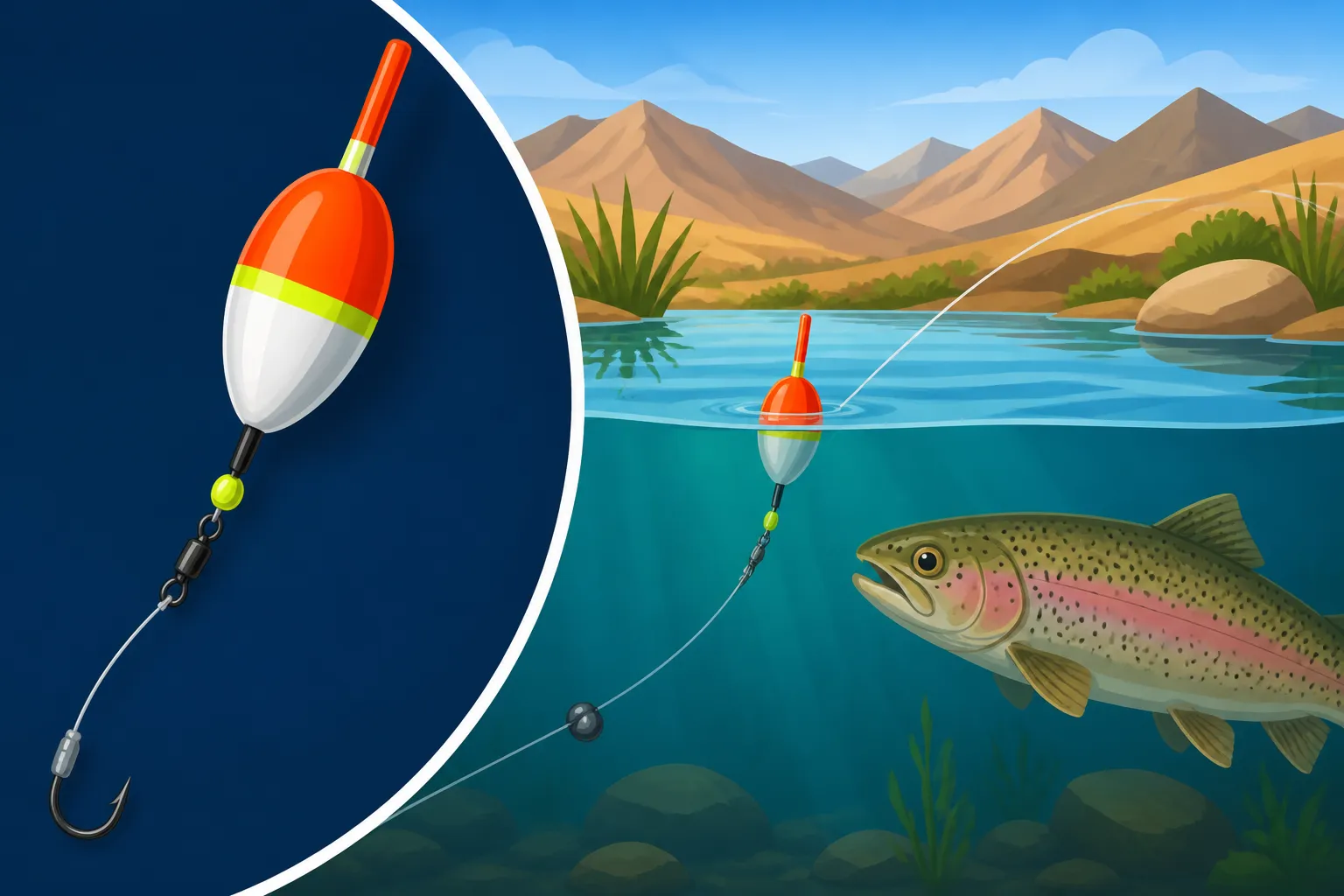
- Slip Bobbers: Ah, the slip bobber. This is often the best option for pond trout, especially if you want to fish deeper than your rod length or achieve longer, smoother casts. A slip bobber has a hole running through its center, allowing your line to "slip" through it. You use a small "bobber stop" (a tiny piece of string or rubber) on your line to set the depth, and a bead to protect the knot. This setup allows your bobber to slide all the way down to your bait, making casting much easier and letting you fish at virtually any depth without tangles.
| Bobber Type | Pros | Cons | Ideal Use Case |
|---|---|---|---|
| Fixed | Very easy to use; quick setup | Limited depth control; awkward for deep fishing/long casts | Shallow water (under 5 ft); beginner-friendly |
| Slip | Excellent depth control; easy, long casts | Slightly more complex to rig; requires bobber stop & bead | Deeper water (over 5 ft); more versatile; any skill level |
Sinkers, Hooks, and Swivels
These tiny but mighty components complete your rig:
- Split Shot Sinkers: These small, lead-free weights simply crimp onto your line. Their purpose is to get your bait down to the desired depth and keep your bobber upright. You want just enough weight to make your bobber stand up straight, but not so much that it's pulled deep underwater or sacrifices sensitivity. A few small split shots are better than one large one, as they create a more natural fall for your bait.
- Hooks: For pond trout, small, sharp hooks are key. Size 10 or 12 treble hooks are popular if you're using dough baits, but many anglers prefer a size 8, 10, or even 12 single bait holder hook. Single hooks are generally better for catch-and-release and can be easier to remove from a trout's mouth. Make sure they are "sticky" sharp – a dull hook will result in missed bites. Best hook size for stocked trout often depends on the bait.
- Swivels: A small barrel swivel (size 10 or 12) between your main line and your leader (the piece of line where your hook is tied) can help prevent line twist, especially if you're using bait that spins in the water or if you're reeling in and casting a lot. This also makes it easy to quickly change out your leader and hook if needed.
Step-by-Step Guide to Assembling Your Bobber Rig
Alright, let's get down to the nitty-gritty and build this thing! Whether you're at home preparing for a weekend trip to a local urban pond or setting up right there on the bank, this step-by-step process will get you fishing in no time. For more general information on how to fish for trout, check out our How to Fish for Trout in Nevada guide.
The Fixed Bobber Setup: Quick and Easy
This is the fastest way to get a line in the water, perfect for those impatient little anglers (or even ourselves!).
- Attach Your Hook: Start by tying your chosen hook (a size 8 or 10 single bait holder is great for PowerBait or worms) directly to the end of your main line using a reliable fishing knot like an improved clinch knot.
- Add Split Shot: About 6 to 12 inches above your hook, pinch one or two small split shot sinkers onto your line. You want enough weight to cast easily and keep your bait down, but not so much that it overwhelms your bobber.
- Attach Your Bobber: Now, clip your fixed bobber onto the line. You’ll want to adjust its position. If you're fishing in 4 feet of water, start by setting your bobber so your bait is about 3 feet down. You can adjust this depth by sliding the bobber up or down the line. Remember, the bobber should be far enough above your bait that your lure can still reach the fish without the bobber touching the bottom.
The Slip Bobber Setup: Versatility and Precision
This setup gives you far more flexibility and is my personal preference for most pond trout fishing situations. It's especially useful when you need to fish deeper water, perhaps targeting those wary trout holding in the middle of the pond.
- Thread Your Bobber Stop: First, slide a bobber stop onto your main line. These little pieces of string or rubber usually come on a small plastic sleeve; just thread your line through the sleeve, slide the stop off, and then gently pull the sleeve off the line. This stop is what will determine your fishing depth. Many anglers find convenient pre-packaged bobber stops at Bass Pro Shops.
- Add a Bead: Immediately after the bobber stop, thread a small plastic bead onto your line. This bead protects the knot of your bobber stop from getting sucked into the bobber itself and allows the bobber to slide freely.
- Thread Your Slip Bobber: Next, thread your slip bobber onto the line. The line should go through the small hole in the top and out the bottom.
- Attach a Swivel (Optional but Recommended): Tie a small barrel swivel (size 10 or 12) to the end of your main line, below the bobber. This helps prevent line twist and makes changing leaders simple.
- Add Your Leader and Hook: To the other end of the swivel, tie a length of fluorocarbon or monofilament leader material, typically 12 to 24 inches long. This lighter leader can be less visible to the fish. At the end of the leader, tie on your hook.
- Attach Split Shot: Pinch one or two small split shot sinkers onto your leader, usually 6 to 10 inches above your hook. Again, you want just enough weight to make the bobber stand up properly in the water. For a huge variety of sinker weights and styles, Amazon offers countless options.
Tips for Success and Common Pitfalls to Avoid
Setting up your bobber rig is just the first step. To truly excel at pond trout fishing in Nevada, you need to understand how to use your rig effectively and what common mistakes to avoid. This isn't just about catching fish; it's about enjoying the entire experience and developing your skills.
Adjusting Your Depth: The Golden Rule
The most crucial aspect of bobber fishing for trout is finding the right depth. Trout are often cruising at a specific level, and if your bait isn't there, you won't get bites.
- Start Shallow, Go Deeper: When you first arrive at a pond, especially if you haven't fished it before, start by setting your bait relatively shallow, perhaps 2-3 feet deep. Fish actively stocking a pond will often be higher in the water column.
- Work the Water Column: If you don't get bites after 15-20 minutes, gradually increase your depth by a foot or two at a time. Continue this until you either hit bottom or start getting bites. Many anglers find that fishing just off the bottom (6-12 inches) is often very effective, as trout forage for invertebrates there. Our guide on Best pond depth to target right after stocking offers more specific advice.
- Watch for Clues: Pay attention to other anglers who are catching fish. Note their setup and the depth they're fishing. Also, observe if fish are jumping or swirling at the surface, indicating they might be feeding higher up.
Baiting Your Hook for Trout
The right bait, presented correctly, makes all the difference. For pond trout, consistency is key.
- PowerBait & Dough Baits: These are perennial favorites for stocked trout. Mold them around your hook, completely concealing it, in a small, compact ball. You want it to float just off the bottom if using enough split shot to keep it down, or present naturally suspended.
- Worms: Nightcrawlers or mealworms are excellent natural baits. Thread a small piece of worm onto your hook, leaving a lively tail to wiggle. Don't overdo it; a small piece that covers the hook point is often more effective than a giant wad.
- Corn or Marshmallows: Believe it or not, these can be surprisingly effective. A few kernels of corn or a tiny marshmallow threaded onto a hook often work well. They also float, which helps keep your hook upright. For more on what these fish like, read our Best Bait for Nevada Trout article.
When to Set the Hook
This is often where new anglers struggle. Seeing the bobber disappear is exciting, but a premature hook set can mean a missed fish.
- Fixed Bobbers: If the bobber dips sharply, pulls sideways, or disappears completely, give the fish a second or two to really take the bait, then gently but firmly lift your rod tip to set the hook.
- Slip Bobbers: With slip bobbers, sometimes the bobber will lay flat on the water if a fish takes the bait and swims toward you. Other times, it will shoot sideways or simply vanish. Wait until the bobber is clearly moving with intent or fully submerged before setting the hook. There’s a sweet spot between waiting too long (and the fish swallowing the hook deeply) and setting too early (and pulling the bait away). It takes practice!
Common Pitfalls to Avoid
- Too Much Weight: If your bobber is barely floating or being pulled underwater, you have too much split shot. This makes your rig less sensitive and less appealing to the fish. Remove some weight until your bobber sits upright with just the tip showing.
- Too Large a Bobber: A large bobber creates more resistance when a fish tries to pull it down, often causing the trout to spit the bait. Use the smallest bobber that can still support your bait and sinker and be easily seen.
- Dull Hooks: Always check your hook point! A dull hook will struggle to penetrate a trout's mouth. Carry a small hook sharpener or be prepared to replace hooks regularly.
- Wrong Depth: As mentioned, this is critical. If you're not getting bites, always try adjusting your depth before moving to a new spot or changing bait. Many anglers overlook the impact of Nevada Fishing Regulations Explained which often detail specific restrictions even in urban ponds.
- Impatience: Fishing, especially for trout, requires patience. Give your spot and your depth adjustment time to work before changing things up again. Remember, the goal is a relaxing day by the water, even if the fish are playing hard to get!
Fishing with a bobber is a time-tested method for a reason. It's effective, intuitive, and incredibly rewarding, especially when you see that bobber plunge under the surface, signaling a lively Nevada trout on the other end of your line. So gear up, head out to your favorite local pond, and enjoy the beautiful experience of fishing in the Silver State.
Disclaimer
This article is for general informational purposes only and does not constitute professional advice. Laws, prices and regulations vary by location and change over time. Consult a qualified professional for guidance on your specific situation.