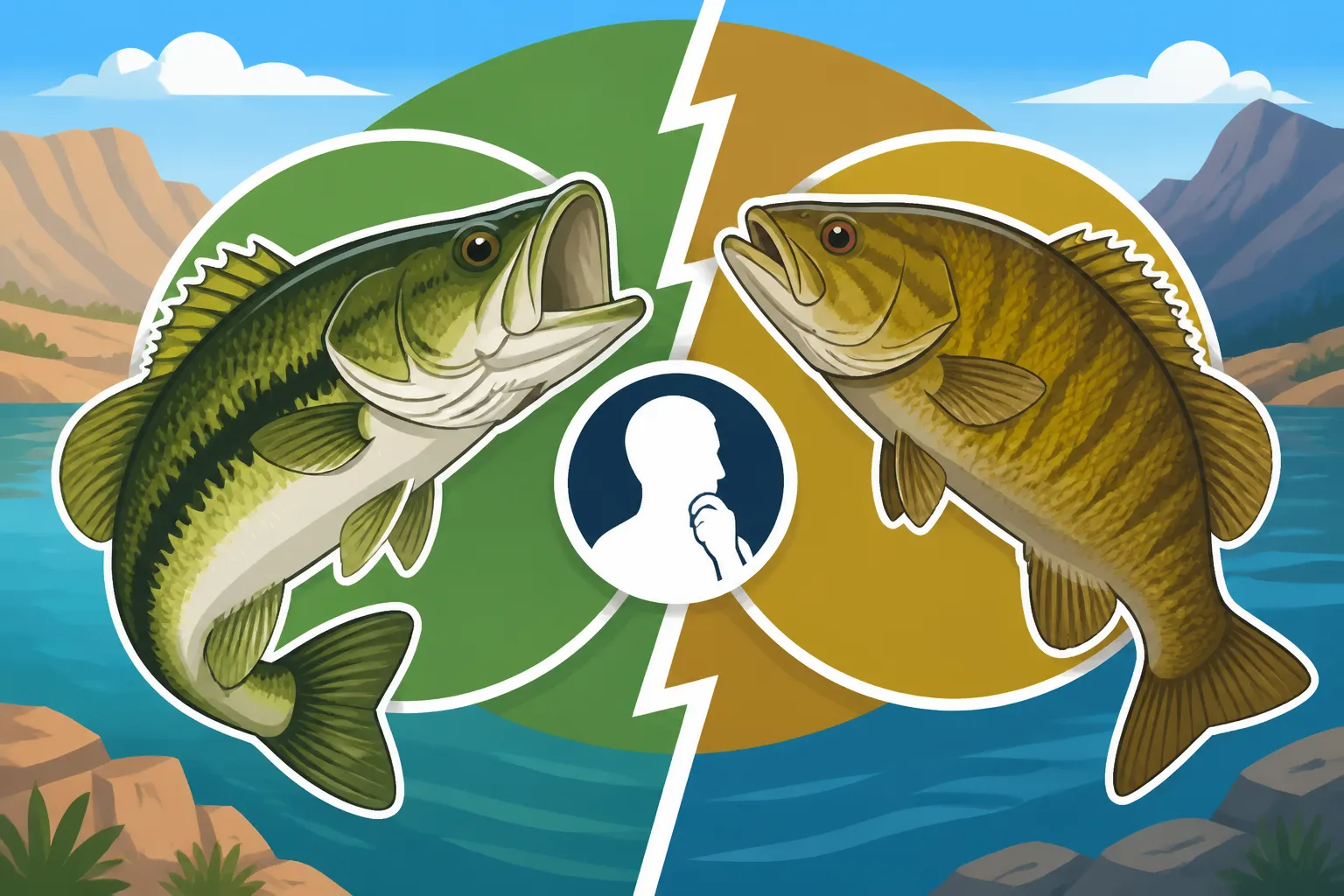
How to tell largemouth and smallmouth bass apart
It’s a scene many of us anglers in Nevada have encountered: you're out on the water, reeling in a feisty bass, and as it gets closer, you start wondering, "Is that a largemouth or a smallmouth?" The confusion is real, and it’s a question that pops up time and again, especially when you consider different fishing regulations or just want to brag about catching a specific species. This guide is here to clear up that mystery once and for all, helping you confidently identify the differences between these two beloved bass species in Nevada's waters.
Understanding the Nevada Bass Scene: Why Identification Matters
Nevada might be known for its vast deserts, but it's also home to some fantastic bass fishing. From the sprawling depths of Lake Mead to the clear, cool waters of Lake Tahoe, anglers across the state eagerly pursue both largemouth and smallmouth bass. While they share the "bass" moniker, these two species are distinct, and knowing how to tell them apart isn't just a fun fact – it's crucial for a successful and compliant fishing trip.
The Importance of Correct Identification for Anglers
Think about it: have you ever been out on the water, caught a decent bass, and then hesitated because you weren't sure if it met the legal size limit or if you could even keep it? This is a common frustration, and it's precisely why accurate identification is so vital. Different bass species often have different regulations regarding minimum size, daily limits, and even seasonal restrictions. For example, Nevada Bass Daily Limit and Size Rules can vary, and what's legal for a largemouth might not be for a smallmouth.
Beyond just the regulations, knowing which species you're targeting or have just caught profoundly impacts your fishing strategy. Largemouth bass and smallmouth bass have different feeding habits, prefer different types of habitat, and respond to different lures and presentations. If you're mistakenly trying to catch a smallmouth using techniques best suited for largemouth, you're likely to end up frustrated with an empty livewell. Understanding the nuances between them allows you to fine-tune your approach, increasing your chances of success and enjoyment on the water. It’s all about being a more informed and effective angler.
Where Largemouth and Smallmouth Bass Thrive in Nevada
Nevada's diverse aquatic environments provide homes for both largemouth and smallmouth bass, though they tend to inhabit different niches within these waters. You'll find largemouth bass dominant in the warmer, more vegetated, and structured areas of large reservoirs like Lake Mead and Lake Mohave, as well as many of our urban ponds. These fish love their cover! For a deeper dive into their preference, check out Largemouth Bass Habitat at Lake Mead.
Smallmouth bass, on the other hand, typically prefer cooler, clearer waters with rocky bottoms, gravel, and submerged structure. They are often found in the deeper sections of these same large reservoirs, particularly around ledges, points, and humps. They're also prevalent in the Nevada side of Lake Tahoe, which is known for its cold, clear depths. Understanding these general preferences gives you a head start on where to look for each species, even before you cast a line. Knowing the environment you're fishing in can often give you a strong clue as to which type of bass you're likely to encounter.
Dissecting the Distinct Physical Features: Largemouth vs. Smallmouth
When you've got a bass in hand (or in your net, safely!), there are a few tell-tale physical characteristics that will help you distinguish between a largemouth and a smallmouth. Forget the old wives' tales; these are the scientifically recognized features that experienced anglers use every single time. It's like learning to identify different bird species; once you know the key markers, it becomes second nature.
The Jawline: The Ultimate Giveaway
This is arguably the most reliable and easiest way to tell the two apart, so let's start here. Take a close look at the bass's mouth, specifically how far back the upper jaw extends.
For a largemouth bass, the upper jaw (maxilla) extends significantly past the rear edge of the eye when the mouth is closed. Imagine a straight line dropping down from the back of the eye; the largemouth's jaw will typically go past that line. It’s a very prominent feature that gives the largemouth its name. This large gape allows them to gulp down substantial prey, which is why they are often found ambushing larger baitfish or even small birds and frogs.
A smallmouth bass, true to its name, has a much smaller mouth opening. Its upper jaw will usually only extend to about the middle of the eye, or perhaps just slightly beyond it, but rarely past the rear edge. If you draw that same imaginary line from the back of the eye, the smallmouth's jaw will not reach it. This more compact mouth is adapted for feeding on smaller prey, such as crayfish, insects, and tiny baitfish, which are common in their preferred rocky habitats. This distinction is usually clear even in juvenile fish, though very small fry can sometimes be a little harder to definitively identify until they've grown a bit.
Body Shape, Coloration, and Markings
While the mouth is the primary identifier, the overall body shape, coloration, and markings provide excellent secondary clues. These can vary somewhat based on the specific water body, diet, and even the clarity of the water, but general patterns hold true.
A largemouth bass typically has a more stout, football-shaped body, with a noticeable greenish hue that can range from bright olive to almost black, often with a white or yellowish belly. The most defining marking is a prominent, often broken, dark horizontal stripe or series of blotches running along its lateral line from gill plate to tail. This lateral line can sometimes appear almost solid, resembling a dark band. This camouflage helps them blend into the vegetated, often stained, waters they prefer. They tend to be more laterally compressed, meaning they are flatter from side to side than a smallmouth.
The smallmouth bass, by contrast, is generally more streamlined and torpedo-shaped, giving it a more muscular and athletic appearance. Their coloration is usually a bronze, brown, or golden-brown hue, often with a lighter, creamy belly. Instead of a horizontal stripe, smallmouth bass typically display several dark, vertical bars or blotches along their sides, which helps them disappear against rocky backgrounds. Their eyes also tend to be a reddish-brown color, which can be a subtle but helpful additional clue. They are usually more rounded in cross-section than a largemouth, giving them a thicker feel for their length.
Dorsal Fin Anatomy: A Subtle But Crucial Detail
This characteristic might require a closer look, but it's another reliable indicator once you know what to spot. The dorsal fin is the fin located on the fish's back. Both largemouth and smallmouth bass have two dorsal fins, but how they connect is key.
The largemouth bass has two dorsal fins that are almost completely separated by a deep notch, appearing as two distinct fins rather than one continuous fin. Imagine pushing your finger down along the top of their back; you'd feel a clear, deep dip between the spiny front portion and the soft-rayed back portion. This almost complete separation is a unique feature.
For a smallmouth bass, the two dorsal fins are connected, forming a single, continuous fin. While there might be a slight dip or indentation in the middle, it's not a deep notch that separates the fins entirely. It looks much more like one long fin. This subtle difference is a consistent anatomical trait that won't change regardless of water clarity or diet, making it a very dependable identifier. It’s a detail you'll notice easily once you know to look for it, perhaps after buying a good field guide on Amazon or checking out some detailed illustrations online.
Beyond the Visual: Habitat, Behavior, and Fishing Clues
Sometimes, just looking at the fish isn't enough, especially if it's a quick catch-and-release, or if environmental factors have altered its typical appearance. That's when understanding their preferred habitats and behaviors becomes incredibly useful. The "where" and "how" you catch them can often provide strong hints about "what" you've caught.
Habitat Preferences: Where Each Bass Calls Home
Knowing the typical hangouts of each bass species is like having an extra layer of identification, even before you cast your first line. They truly are creatures of habit when it comes to their homes.
Largemouth bass are the ultimate ambush predators, and their ideal home reflects this. They absolutely love dense cover and structure in warmer, often shallower water. Think thick beds of submerged weeds, lily pads, fallen timber, brush piles, docks, and rocky shorelines with plenty of nooks and crannies. They thrive in lakes, slow-moving rivers, and reservoirs where they can lurk undetected, waiting for unsuspecting prey to swim by. Places like the expansive coves of Lake Mead and the brushy areas of Lake Mohave are classic largemouth territories. They prefer slightly warmer water temperatures than smallmouth, often between 68-75 degrees Fahrenheit, which is why they are so prevalent in many of Nevada's lower-elevation reservoirs and ponds. If you're fishing a weedy cove at Sunset Park Pond, chances are good you're going for largemouth.
Smallmouth bass, often called "bronze backs," have a completely different preference. They are built for speed and chasing, and they favor cooler, clearer, deeper water with rocky, gravelly, or sandy bottoms. You'll find them patrolling around submerged rock piles, natural ledges, deep points, offshore humps, and current breaks in rivers. They don't typically hide in dense vegetation; instead, they relate to hard structure where crayfish and baitfish congregate. The cooler, deeper waters of Lake Tahoe are prime smallmouth country, as are the main lake basins of Lake Mead and Lake Mohave, particularly around their many rocky islands and canyon walls. They prefer water temperatures usually between 60-70 degrees Fahrenheit. If you're working a deep drop-off with a rocky bottom at Lake Mead, there's a good chance you're encountering smallmouth. For more details on their preferred spots, check out Smallmouth Bass Habitat at Lake Mead.
Behavioral Differences and Fishing Approaches
The distinct habitats preferred by largemouth and smallmouth bass directly influence their behavior and, consequently, the best fishing techniques to catch them.
Largemouth bass are often solitary, territorial fish that will hold tight to cover. They are ambush predators, meaning they burst out from their hiding spots to engulf prey. This behavior lends itself well to techniques that put a lure right in front of them or mimic fleeing baitfish near structure. Think flipping jigs or soft plastics into dense cover, working a Texas-rigged worm along a weed line, or throwing a topwater frog over lily pads. They often respond aggressively to noisy, attention-grabbing lures. If you're consistently picking up fish by targeting heavy cover with a weedless presentation, you're likely on a largemouth pattern. Best Lures for Nevada Bass will give you some excellent starting points for these tactics.
Smallmouth bass, in contrast, are often more schooling and actively hunt for their food in open water or along rocky contours. They are renowned for their powerful fights, making acrobatic leaps and strong dives. Because they're less tied to heavy cover, they're often caught with presentations that cover water or imitate the baitfish and crayfish found in their rocky domains. This includes casting crankbaits along rocky points, dragging tube jigs or Ned rigs on the bottom, or working jerkbaits and swimbaits over submerged humps. They tend to be a bit more finicky, sometimes requiring finesse techniques. If you're catching fish by fan-casting a clear, rocky point with a small jig and feeling that distinctive, powerful tug, you're probably hooked into a smallmouth. Many anglers stock up on these versatile lures through online retailers like Amazon to ensure they're ready for any smallmouth encounter.
A Side-by-Side Comparison for Quick Reference
Sometimes you just need a cheat sheet, especially when you're out on the water and need a quick refresher. This table summarizes the key differences we've discussed, making it easy to quickly cross-reference a fish you've just caught.
Key Distinctions at a Glance
| Feature | Largemouth Bass | Smallmouth Bass |
|---|---|---|
| Upper Jaw | Extends past the rear edge of the eye | Extends to or slightly beyond the middle of the eye |
| Body Shape | More stout, football-shaped, laterally compressed | More streamlined, torpedo-shaped, rounded body |
| Coloration | Green to olive green, often with a white/yellow belly | Bronze, golden-brown, or brown, with a creamy belly |
| Markings | Prominent, often broken, dark horizontal stripe/blotches | Several dark, vertical bars or blotches on sides |
| Dorsal Fins | Nearly separated by a deep notch, appearing as two fins | Connected, forming a single continuous fin (slight dip) |
| Eye Color | Generally golden or yellow | Often reddish-brown |
| Habitat | Warm, shallow, vegetated areas (weeds, logs, docks) | Cool, clear, deeper waters (rocks, gravel, ledges) |
| Behavior | Ambush predator, prefers cover | Active hunter, often schools, relates to hard structure |
Putting Your Knowledge to the Test: Practical Scenarios
Let's imagine a couple of scenarios you might encounter while fishing in Nevada and see if you can apply your newfound knowledge.
Scenario 1: You're on Lake Mead, working a Texas-rigged plastic worm into a thick bed of submerged hydrilla in a shallow cove. You feel a strong thud, set the hook, and after a good fight, you boat a chunky green fish with a prominent dark, wavy stripe along its side. Its jaw extends well past its eye, and its dorsal fin has a distinct break in the middle. What did you catch?
- Answer: That's almost certainly a largemouth bass. The habitat (shallow, weedy cove), the lure choice (Texas-rigged worm in hydrilla), the green coloration with a distinct horizontal stripe, and especially the jaw extending past the eye and the separated dorsal fin all point to a largemouth. You might want to refer to Largemouth Bass Fishing in Nevada for more tips!
Scenario 2: You've moved to a different part of Lake Mohave, fishing a deep, clear point with a gravel bottom, dropping a small tube jig. You feel a tap-tap, set the hook, and immediately the fish goes on a powerful run, pulling hard before jumping clear out of the water. You finally get it to the boat: a bronze-colored fish with subtle vertical bars, a compact mouth that barely reaches the middle of its reddish eye, and a dorsal fin that's clearly one continuous piece. What did you catch?
- Answer: You've landed a feisty smallmouth bass! The deep, clear, rocky point habitat, the tube jig presentation, the bronze coloration with vertical bars, the smaller jaw, and the continuous dorsal fin are all classic smallmouth characteristics. These bronze beauties offer an incredible fight, and you can learn even more about targeting them in Smallmouth Bass Fishing in Nevada. You might even find specialized smallmouth tackle on Amazon that's perfect for those rocky retreats.
Learning to distinguish between largemouth and smallmouth bass is a rewarding skill that will make you a more confident and effective angler in Nevada. It's not just about compliance with regulations, but about truly understanding the fish you're pursuing and appreciating their unique characteristics. So next time you're on the water, take an extra moment to observe your catch closely. You'll be a pro at bass identification in no time!
Disclaimer
This article is for general informational purposes only and does not constitute professional advice. Laws, prices and regulations vary by location and change over time. Consult a qualified professional for guidance on your specific situation.