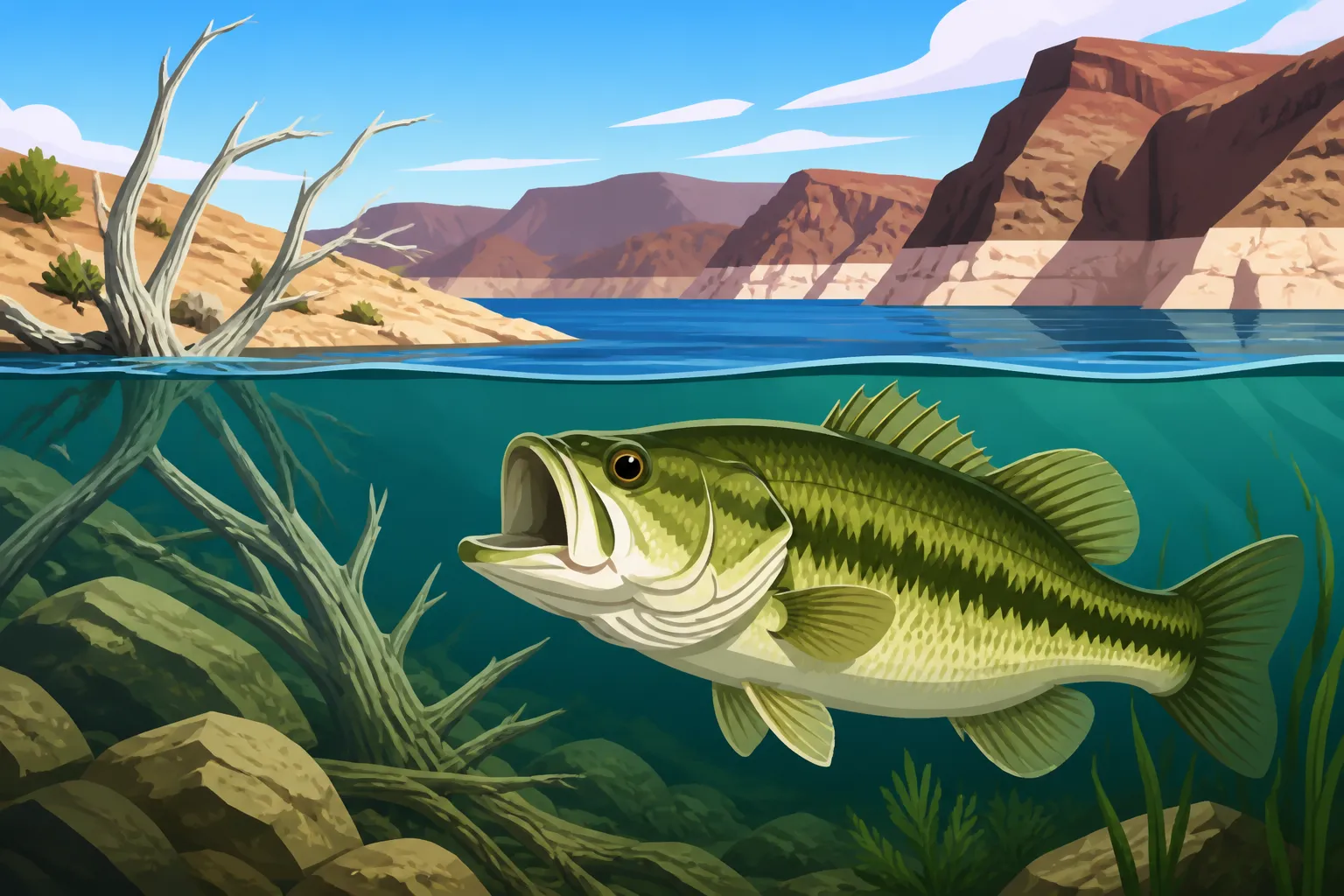
Largemouth Bass Habitat at Lake Mead
It's incredibly frustrating when you head out to Lake Mead, full of anticipation, only to find the largemouth bass seem to have vanished into thin air. You know they're there, but finding where they're hanging out in such a massive and ever-changing body of water can feel like trying to find a needle in a haystack. This comprehensive guide will peel back the layers of Lake Mead's dynamic environment, helping you understand precisely what makes a prime largemouth bass habitat and how to consistently locate these prized fish.
Understanding Lake Mead's Unique Environment for Largemouth Bass
Lake Mead isn't your average fishing hole; it's a vast, ever-evolving desert reservoir with a personality all its own. What makes it such a challenging yet rewarding place to chase largemouth bass is the sheer scale and the constant flux of its conditions. Before you even think about casting, really grasping the environmental forces at play here is crucial for understanding why bass choose one spot over another.
The Fluctuating Water Levels and Their Impact
Anyone who has spent time on Lake Mead knows that its water levels are in a constant state of ebb and flow. This isn't just a minor inconvenience; it's perhaps the single most impactful factor dictating largemouth bass habitat. When water levels drop, areas that were once prime submerged structure or weed beds become dry land. This forces bass to relocate, often concentrating them into smaller, deeper pockets where cover and food are still available. It's a game of hide-and-seek where the "playing field" is always being redrawn.
Conversely, when water levels rise, new areas become inundated. Terrestrial vegetation, such as mesquite bushes and tamarisk trees, gets submerged, creating incredible new cover for bass. These newly flooded areas are often rich in nutrients and provide a buffet for baitfish, which in turn attracts the bass. Experienced anglers know that keeping a close eye on these fluctuations, sometimes even revisiting spots you haven't fished in years, is key to success. You might find a previously barren bank now teeming with life because of a foot or two of new water. Understanding these cycles is fundamental to figuring out How to read a reservoir for bass structure.
Water Clarity and Temperature Dynamics
Lake Mead's water clarity can vary significantly from one arm of the lake to another, and even within the same cove. Some areas, particularly closer to the main channel or after heavy winds, might be stained or turbid. Other coves, especially those protected from wind and runoff, can be crystal clear. Largemouth bass, while adaptable, generally prefer water with a certain level of clarity that allows them to ambush prey effectively without feeling too exposed. In very clear water, bass tend to hold deeper or tighter to cover, using the shadows and structure for concealment. In stained water, they might be more aggressive and willing to venture out, relying less on sight and more on lateral line vibrations.
Temperature is another critical factor influencing where largemouth bass will stage. Bass are cold-blooded, so their metabolism and activity levels are directly tied to water temperature. They have a preferred temperature range for optimal feeding and comfort. In the cooler months, they'll seek out warmer, often deeper water. As summer heats up, they'll look for cooler, oxygen-rich zones, which could be found in deeper water, near springs, or in shaded areas. This constant search for their comfort zone means that if you can pinpoint the ideal temperature bands, you're well on your way to finding the fish. You can learn more about this by researching Best water temperature for bass fishing.
Lake Mead's Ecological Role for Bass
Beyond the physical factors, Lake Mead's entire ecosystem plays a vital role in shaping largemouth bass habitat. It's a complex food web where everything is interconnected. The availability of baitfish, the prevalence of aquatic insects, and even the presence of other species like carp or sunfish all influence where and how largemouth bass will thrive. The lake, despite its desert surroundings, supports a vibrant aquatic community that provides the necessary sustenance for a healthy bass population.
The sheer size of Lake Mead means that it offers a diverse array of micro-habitats. From the vast open waters of the main basin to the intricate coves and canyons, there's a niche for every stage of a bass's life cycle. Shallow spawning flats, deep-water wintering holes, and expansive foraging grounds are all present, making it a truly dynamic fishery. When considering Largemouth Bass Fishing in Nevada, Lake Mead truly stands out for its unique blend of challenges and opportunities.
Key Structural Elements That Attract Largemouth Bass
When you're out on Lake Mead, one of the first things you learn is that largemouth bass are creatures of structure. They love anything that breaks up the bottom contour, offers ambush points, or provides shade and protection. This isn't just about cover; it's about efficiency for a predator. They want to expend the least amount of energy for the greatest reward, and good structure provides that advantage.
Rock Piles, Ledges, and Drop-offs
The rocky, canyon-like terrain that defines much of Lake Mead is a dream come true for largemouth bass. Rock piles, natural ledges, and sharp drop-offs are absolute magnets. Bass use these features for several reasons: they provide excellent ambush points from which to dart out at unsuspecting baitfish, they offer protection from predators (though adult bass have few in the lake), and they create thermal refuge, allowing bass to move up and down the water column to find their preferred temperature.
Imagine a submerged boulder field: bass might sit behind a large rock, hidden from view, waiting for shad to swim by. A steep ledge provides a vertical highway, allowing bass to quickly change depths as light conditions or boat traffic dictate. Drop-offs, where shallow flats suddenly plunge into deep water, are particularly productive, as they offer both feeding opportunities in the shallows and immediate access to security in the depths. These transitions are key.
Canyons and Washes: Submerged Highways
Lake Mead was formed by flooding the Colorado River canyon and its numerous side washes. What were once dry canyons and riverbeds are now submerged channels and ravines, serving as underwater highways for fish. These features often have distinct bottom compositions, varying depths, and sometimes even remnants of terrestrial vegetation, all of which create complex habitat.
Bass will patrol these channels, especially during migration patterns or when actively foraging. The edges of these submerged canyons, where they meet shallower flats or points, are particularly hot spots. Think of them as underwater highways with off-ramps – bass use the main highway to travel, but they'll pull off into the "side streets" (coves and points) to feed. These areas can be fantastic for finding concentrations of fish, particularly when they are actively moving between different feeding grounds or deeper wintering holes. Many anglers find these to be excellent Lake Mead Largemouth Bass Coves.
Man-Made Structures: Docks, Buoys, and Debris
While Lake Mead boasts abundant natural structure, don't overlook the man-made elements. Largemouth bass are opportunistic and will use anything that offers cover, shade, or an ambush point. This includes fishing docks, submerged remnants of old construction, boat ramps, and even discarded debris. Anything that creates a shadow line or a vertical element in the water can hold bass.
Docks, in particular, are fantastic. The pilings provide vertical cover, the pontoons offer shade, and often there's brush or other debris collected underneath. Bass will hang out here, waiting for prey to swim by. Buoys and other markers, while seemingly small, can sometimes attract baitfish, and a lone bass might set up shop nearby. Even old tires or pieces of concrete, if submerged in the right depth, can become a home for a territorial bass. These structures are especially good for targeting fish from shore or for kayak anglers who can silently approach.
Vegetation and Forage: The Lifeblood of Largemouth Habitat
You simply cannot talk about largemouth bass habitat without discussing vegetation and their primary food sources. While Lake Mead isn't known for expansive, dense weed beds like some other lakes, the aquatic vegetation that does exist, along with the forage base, is absolutely critical to the bass population. It's where they hide, where they hunt, and what keeps them thriving.
Understanding Aquatic Vegetation Growth
Because Lake Mead has fluctuating water levels and a generally rocky bottom, widespread, dense aquatic vegetation is less common than in some other reservoirs. However, certain areas, especially protected coves and shallow flats, can develop patches of submerged grass, cattails, or other aquatic plants. These areas are goldmines for largemouth bass. Vegetation provides essential cover, acting as a nursery for baitfish and a camouflage for bass. It also oxygenates the water and offers protection from intense sunlight.
Anglers often target the edges of these weed lines, the pockets within the vegetation, or isolated clumps. These are prime ambush points where bass can lie in wait. Even sparse vegetation, if it's the only cover available in an otherwise barren area, will attract and hold fish. When water levels rise, previously dry terrestrial brush – like mesquite or salt cedar – becomes submerged, creating incredible temporary habitat that bass will immediately move into. These "new" brush lines are often bursting with life.
The Importance of Baitfish and Crawfish
A bass is a predator, and a predator needs prey. The forage base in Lake Mead is extensive and includes various species of shad (gizzard and threadfin are common), sunfish, and notoriously, crawfish. The presence and abundance of these food sources directly dictate where largemouth bass will concentrate. Bass will follow their food. If the shad are schooling in a certain area, the bass won't be far behind.
Crawfish are a particularly important food source, especially for larger bass. They provide a high-protein meal and are often found in rocky areas, under logs, or in cracks and crevices. Many of the most effective lures for Lake Mead bass mimic these crustaceans. Understanding the life cycles and movements of these baitfish and crawfish throughout the year is crucial for predicting where the bass will be. You might consider using a variety of baits, from those mimicking shad to those that imitate crawfish, to see what the fish are keying in on. For specific ideas, check out Best Lures for Nevada Bass.
Impact of Invasive Species on the Food Chain
Like many large bodies of water, Lake Mead has seen the introduction of various non-native, or invasive, species. These can have a significant impact on the delicate balance of the food chain and, consequently, on largemouth bass habitat. For example, the presence of quagga mussels has dramatically increased water clarity in some areas, which, as discussed earlier, can change how bass use cover. These mussels filter vast amounts of water, affecting the entire ecosystem.
Other invasive species might compete with native baitfish for food, or even become a food source themselves. Understanding these shifts, and how they alter the availability and behavior of prey, can give you an edge. Anglers constantly adapt their techniques and target areas based on how these ecosystem changes influence the bass. It's a testament to the resilience of both the fish and the anglers who pursue them.
Seasonal Changes and How They Impact Bass Habitat
Lake Mead, despite its desert location, experiences distinct seasons, and each one brings significant changes to largemouth bass behavior and, by extension, their habitat preferences. Fishing the same spot with the same technique year-round simply won't cut it. Understanding these seasonal shifts is fundamental to consistent success.
Spring Spawning and Shallow Water Reliance
Ah, spring! This is when the largemouth bass in Lake Mead really start to get active and move shallow. As water temperatures begin to rise, typically when they hit the high 50s to low 60s Fahrenheit, bass will migrate from their deeper wintering grounds to shallow coves and protected flats to spawn. This is a critical time of year, and understanding the bass's instinct to reproduce will help you find them.
During the pre-spawn phase, bass will be aggressively feeding to build up energy for spawning. They'll often be found staging on points or breaks leading into spawning coves. Once the water warms sufficiently, they move onto the beds, typically in water from 2 to 10 feet deep, often near some type of cover like a rock, a submerged bush, or a log. Post-spawn, the fish can be a bit lethargic immediately after their efforts, but they'll quickly resume feeding, often cruising the same shallow areas before eventually moving deeper as summer sets in. If you're targeting bass during this time, consider reviewing Best time to fish the spawn for bass for more detailed strategies.
Summer Heat and Deep Water Retreats
When the intense Nevada summer arrives, Lake Mead's surface waters can get incredibly warm. Largemouth bass don't appreciate this extreme heat and will seek refuge in cooler, more oxygenated waters. This usually means a migration to deeper areas, often concentrating around the thermocline if one forms. They'll relate to deep structure: sunken islands, deep ledges, submerged canyon walls, and offshore humps.
During the hottest parts of the day, bass might be found as deep as 30-60 feet or even more, particularly larger fish. Early mornings and late evenings, when surface temperatures are cooler and light penetration is less intense, they might briefly venture into shallower depths to feed. Night fishing for bass can also be incredibly productive during the summer. Look for shaded areas, deep water adjacent to quick drop-offs, or areas with current where oxygen levels are higher. This is a great time to deploy tactics discussed in Best time of day to catch bass in summer heat.
Fall Feeding Frenzies and Transition Zones
Fall is often considered one of the best times to fish for largemouth bass on Lake Mead. As the scorching summer heat gives way to cooler temperatures, the entire lake begins to cool down. This invigorates the bass, and they go on a major feeding binge to pack on weight for the upcoming winter. They become incredibly active, often chasing schools of shad.
During the fall, bass will be found in transition zones – areas where they can easily move between deeper water and shallower feeding flats. Points, secondary humps, and the mouths of coves are prime locations. They might be shallow in the mornings and evenings, pushing baitfish against banks, and then retreat to slightly deeper water during midday. This is a time when active presentations that mimic fleeing baitfish can be incredibly effective. Understanding Seasonal Movement of Fish in Reservoirs will give you a significant advantage.
Winter Patterns and Slow Presentations
Winter fishing on Lake Mead can be challenging but incredibly rewarding for those who brave the colder temperatures. Largemouth bass become more lethargic as the water cools, and their metabolism slows down considerably. They will typically move to deeper, more stable water where temperatures are less prone to fluctuation. Main lake points, deep creek channels, and the deepest sections of coves with significant structure are prime winter habitat.
During this time, bass will often suspend over deep water, or hold tight to prominent submerged features like rock walls or ledges. They won't chase prey as aggressively, so slow, subtle presentations are key. Think finesse techniques: drop-shot rigs, slow-rolled Alabama rigs, or jigs fished painstakingly slowly along the bottom. The bite can be light, but if you find a school of winter bass, you can often pick off several quality fish. You definitely need patience, but the rewards of a big winter bass are worth it.
Finding the Best Largemouth Bass Spots in a Dynamic Lake
Successfully finding largemouth bass in a sprawling, ever-changing environment like Lake Mead isn't about luck; it's a combination of preparation, observation, and leveraging technology. You need to approach it like a detective, putting together clues from the environment to piece together the puzzle of where the fish are hiding.
Using Topographical Maps and Sonar
Before you even launch your boat, topographical maps of Lake Mead are your best friend. These maps, whether paper charts or digital versions on your boat's electronics, reveal the underwater landscape: old river channels, submerged contours, humps, points, and drop-offs. By studying these maps, you can identify potential bass holding structures before you ever get on the water. Look for areas where contours quickly change, indicating a drop-off, or where submerged points extend far out into the lake.
Once on the water, your boat's sonar (fish finder) becomes an indispensable tool. Modern side-imaging and down-imaging units can paint a remarkably detailed picture of the bottom. You can spot submerged rock piles, brush, ledges, and even individual fish or schools of baitfish. Learning to interpret these images takes practice, but it's crucial for understanding what lies beneath the surface. Always be on the lookout for vertical structures and baitfish schools, as bass won't be far away. Investing in good electronics is like having x-ray vision into the lake, and models like those from Humminbird or Lowrance (available on Amazon) are popular choices among serious anglers.
Observing Environmental Cues and Patterns
The lake itself often provides clues if you pay close enough attention. Keep an eye out for surface activity: birds diving, baitfish schooling or jumping, or even subtle ripples where a bass might have just busted a shad. These are all indicators of an active feeding zone. Also, note the wind direction and intensity. Wind can push baitfish into certain coves or against specific banks, concentrating them and, by extension, the bass.
Water clarity changes are another important cue. If you notice a sharp line where clear water meets stained water, bass will often hold on that transition. Pay attention to how the bass bite in certain conditions – if they're hitting a specific lure at a particular depth on a cloudy day, that pattern might hold true across similar spots on the lake. Keeping a fishing log can help you track these patterns over time, making you a more effective angler.
Focusing on Known Productive Areas
While exploring new water is always exciting, don't overlook areas that are historically known to be productive for largemouth bass on Lake Mead. These spots are often popular for a reason: they consistently hold fish. Such areas might include the mouths of major coves, prominent main lake points, or specific canyon sections. While fishing pressure can be a factor, these areas often reload with fish over time.
Examples of such areas might be certain sections of the Boulder Basin, or the various coves and islands within the Overton Arm, though conditions here can vary dramatically with water levels. The key is to understand why these areas are productive – is it the depth, the presence of specific structure, the access to baitfish? Once you understand the underlying reasons, you can then seek out similar, less-pressured areas elsewhere on the lake. Learning about specific areas can often be found by searching for Where to catch largemouth bass at Lake Mead.
Gear and Techniques for Targeting Lake Mead Largemouth
Having the right gear and knowing how to use it effectively is non-negotiable for success when chasing largemouth bass on Lake Mead. This isn't just about having expensive equipment; it's about having reliable tools suited to the unique challenges of this desert reservoir.
Recommended Rods, Reels, and Line
For Lake Mead largemouth, versatility is key, as you'll be using a wide range of techniques. Most anglers will carry a selection of rods and reels.
- Rods: A good all-around medium-heavy casting rod, typically 6'6" to 7'6" in length, is essential for pitching jigs, casting heavier plastics, and handling crankbaits. For finesse techniques like drop-shotting or shaky heads, a medium-light to medium power spinning rod, around 7 feet, offers better sensitivity and casting distance for lighter baits. Brands like Ugly Stik or St. Croix (available on Amazon) offer excellent options for various budgets.
- Reels: For casting setups, a high-quality baitcasting reel with a gear ratio that matches your technique (faster for topwater/jigs, slower for deep crankbaits) is ideal. For spinning rods, a smooth, reliable reel in the 2500-3000 size range is perfect.
- Line: Line choice is crucial. Many anglers opt for braided line as a main line due to its strength and sensitivity, often with a fluorocarbon leader for invisibility and abrasion resistance, especially around Lake Mead's rocky structure. For certain techniques, straight fluorocarbon or monofilament might be preferred. A general rule of thumb for largemouth is to use 10-20 lb test line, adjusting for cover and lure size. Check out Best line weight for desert reservoir fishing for more details.
Effective Lures and Baits for Lake Mead Bass
The effective lures and baits for Lake Mead largemouth can be incredibly diverse, ranging from classic plastics to various hard baits.
- Soft Plastics: These are arguably the most versatile and productive baits. Senkos, plastic worms (Texas-rigged or Carolina-rigged), creature baits, and swimbaits are all highly effective. Colors that mimic local forage like shad (silver, white, clear with fleck) or crawfish (greens, browns, purples, reds) are excellent choices. Many anglers rely on specific soft plastic brands like Yamamoto or Strike King (widely available on Amazon). You can dive deeper into this topic with Best Soft Plastics for Bass Fishing.
- Jigs: Flipping jigs and football jigs are fantastic for targeting bass around rocky cover, brush, or deep structure. Pair them with a crawfish-imitating trailer.
- Crankbaits and Lipless Crankbaits: These are excellent for covering water and triggering reaction strikes, especially in fall and spring. Choose diving depths appropriate for the water you're fishing. Shad colors are usually a safe bet.
- Topwater Lures: During low-light conditions or when bass are actively chasing bait on the surface, topwater poppers, walk-the-dog baits, and frogs can provide explosive strikes.
- Spinnerbaits and Chatterbaits: These baits offer a lot of flash and vibration, making them great for stained water or for fishing through sparse cover.
- Live Bait: While less common for dedicated largemouth anglers, live shad or crawfish can be incredibly effective, especially when the bite is tough. Always check Nevada Fishing Regulations Explained for rules on live bait.
For a deeper dive into specific tackle strategies, explore Best Tackle for Nevada Bass Fishing.
Essential Electronics and Navigational Tools
Modern electronics have revolutionized bass fishing on large reservoirs like Lake Mead.
- Fish Finders/Sonar: As mentioned earlier, a high-quality unit with side-imaging, down-imaging, and 2D sonar is vital for locating structure, identifying baitfish, and marking individual bass. Features like GPS mapping allow you to save waypoints of productive spots and navigate safely.
- GPS Mapping: Integrated into most fish finders, GPS with detailed mapping helps you understand the underwater topography and get back to those honey holes. This is particularly important on Lake Mead, where many features are submerged.
- Trolling Motor: A reliable electric trolling motor with GPS Spot-Lock technology is a game-changer. It allows you to hold your boat precisely on a spot, even in windy conditions, freeing you up to focus on fishing. Minn Kota and MotorGuide offer popular models.
Having these tools, and knowing how to effectively use them, greatly increases your chances of finding and catching largemouth bass by helping you systematically break down the vastness of Lake Mead into manageable, fishable zones.
Disclaimer
This article is for general informational purposes only and does not constitute professional advice. Laws, prices and regulations vary by location and change over time. Consult a qualified professional for guidance on your specific situation.