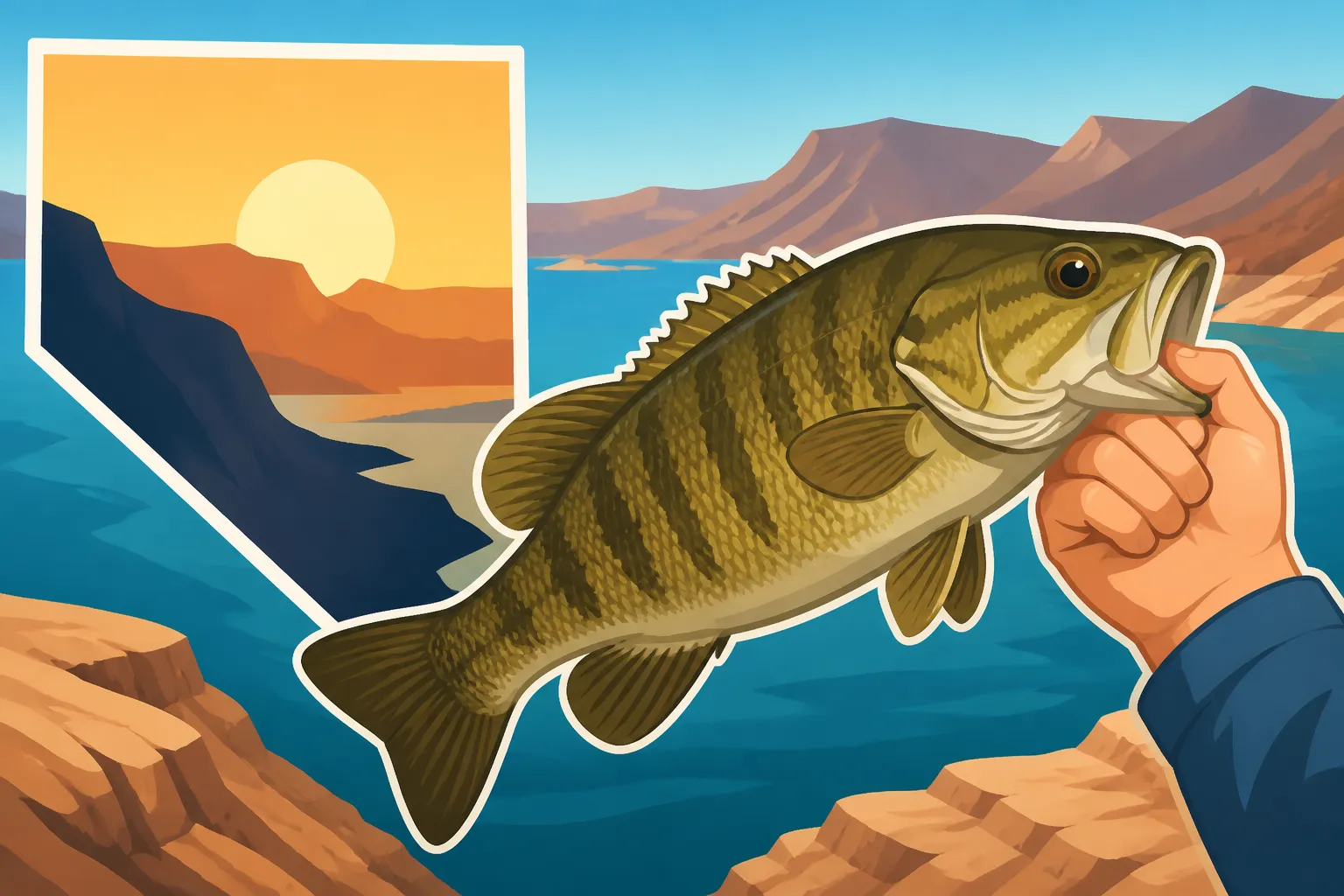
Smallmouth bass size at Lake Mead
Oh, Lake Mead! It’s a vast, challenging, and incredibly rewarding body of water, and if you’re anything like me, you’ve probably spent countless hours dreaming of those hard-fighting smallmouth bass that call its rocky depths home. One question I hear all the time from anglers, both new and seasoned, is about the typical smallmouth bass size you can expect to catch out there. It’s a fair question, because knowing what to anticipate helps you set realistic expectations and even fine-tune your techniques. This guide is all about breaking down the average and trophy sizes of smallmouth bass in Lake Mead, along with the factors that make them grow and how you can target them.
Understanding Smallmouth Bass Growth at Lake Mead
Fishing Lake Mead for smallmouth bass is an adventure, but understanding what makes these fish tick, particularly concerning their size, can really elevate your game. It’s not just about luck; it’s about understanding the ecosystem.
The Lake Mead Ecosystem and Smallmouth Development
Lake Mead is a fascinating, ever-changing environment, and that directly impacts the smallmouth bass that live there. These fish thrive on structure and forage, and Lake Mead offers plenty of both, though conditions can fluctuate. The primary food sources for smallmouth in Mead include threadfin shad, crayfish, and various insects and invertebrates. When these forage populations are abundant, smallmouth bass grow faster and can reach impressive sizes. Conversely, when forage is scarce, growth rates can slow down.
Water levels in Lake Mead also play a massive role. During periods of higher water, new shoreline habitat becomes inundated, offering fresh cover and feeding grounds. This can lead to boom years for smallmouth, as they have more places to hide, ambush prey, and reproduce successfully. Lower water levels, however, can concentrate fish but also reduce available cover, potentially increasing predation and competition for food. Understanding these cycles, even generally, gives you a huge leg up in figuring out where the fish might be and how they’re feeding. Nevada Fishing Seasons by Month can give you an idea of how the year progresses, which ties into these ecosystem changes.
Average Size Expectations for Lake Mead Smallmouth
Alright, let's get down to the brass tacks: what's a typical smallmouth bass from Lake Mead look like? Most anglers hitting Lake Mead regularly will tell you that a "keeper" smallmouth, a good solid fish, often falls into the 12 to 15-inch range. These are robust, healthy fish that put up a fantastic fight and are incredibly satisfying to catch. They generally weigh anywhere from 1 to 2.5 pounds, sometimes a bit more if they're particularly well-fed and chunky.
Now, Lake Mead definitely produces bigger fish, too. Anglers frequently land smallmouth in the 3 to 4-pound class, which are absolute tanks and a true joy to battle. These fish typically range from 16 to 19 inches, displaying powerful shoulders and a girth that screams "trophy." Anything above 4 pounds is considered an exceptional catch and is often in the 20-inch range or even longer. While they might not reach the massive sizes of some northern smallmouth fisheries, the fight they put up in the warm, clear waters of Lake Mead is legendary. Don't go expecting to break state records every trip, but definitely know that a truly memorable, big smallmouth is always a possibility.
Where and How to Find Lake Mead's Smallmouth Bass
Finding smallmouth bass in a massive body of water like Lake Mead can feel like looking for a needle in a haystack, but these fish are creatures of habit. Knowing their preferred hangouts and how to approach them makes all the difference.
Prime Smallmouth Habitats and Structures
Smallmouth bass are structure-oriented fish, meaning they love anything that offers cover, ambush points, or changes in depth. In Lake Mead, this translates primarily to rocky environments. Think about those steep canyon walls, submerged rock piles, natural ledges, and even artificial structures like riprap along causeways or bridge pilings. Smallmouth Bass Habitat at Lake Mead goes into even more detail on this topic.
I've found that prime spots often have a mix of deeper water access nearby, allowing fish to retreat when the sun gets high or water temperatures fluctuate, and shallower feeding flats where they can ambush baitfish or crayfish. Look for transition areas – where a sandy bottom meets rocky shelves, or where a gradual slope drops off sharply. Areas with scattered brush or submerged timber, while more commonly associated with largemouth, can also hold smallmouth, especially if there's a rocky bottom beneath. Pay close attention to points and humps that rise up from deeper water; these are classic smallmouth magnets where they can intercept schooling baitfish.
Effective Techniques for Different Sizes
The way you fish can definitely influence the size of smallmouth you're catching. For the average 12-15 inch fish, a variety of techniques work incredibly well. Drop-shotting a small finesse worm or creature bait is a fantastic choice, especially in clearer water and around those rocky ledges. Small crankbaits that mimic shad or crawfish, jerkbaits, and even spinnerbaits can entice aggressive strikes. These methods appeal to a wide range of smallmouth, from eager smaller fish to solid keepers.
If you're really trying to target those bigger, trophy-sized smallmouth, you might need to adjust your approach. Larger fish often prefer larger meals, so up-sizing your baits can be a good strategy. Swimbaits, football jigs with bulky trailers, and even bigger jerkbaits can appeal to the more dominant, hungrier fish. Sometimes, slowing down your presentation, letting a jig sit longer on the bottom, or working a bait meticulously around a specific rock pile can trigger a strike from a cautious leviathan. Patience is definitely a virtue when chasing giants. Remember that bigger fish are often deeper or holding tighter to cover, so precise casting and thorough working of key spots are crucial. You might also find some helpful tips in How to Fish for Bass in Nevada.
Current Regulations and Conservation for Smallmouth
It’s crucial for every angler to know and respect the rules that govern our beloved sport. This isn't just about avoiding a ticket; it's about protecting the fishery for generations to come.
Nevada Smallmouth Bass Size and Bag Limits
Nevada has specific regulations in place to manage its fish populations, and smallmouth bass in Lake Mead are no exception. These rules are designed to ensure healthy populations and sustainable fishing. For Lake Mead, anglers need to be aware of both bag limits (how many fish you can keep) and any size restrictions. Generally, there's a daily limit on the number of bass (including largemouth and smallmouth) you can retain, and there may be a slot limit or minimum size requirement for certain species or bodies of water. For instance, sometimes a regulation might state that bass under a certain length must be released, or only one fish over a certain length can be kept.
These regulations can change, so it's absolutely vital to always check the most current Nevada Department of Wildlife (NDOW) fishing regulations booklet before you head out. This booklet is your bible for what's legal and what's not. You can usually find the most up-to-date information on the NDOW website or pick up a physical copy wherever you buy your fishing license. Ignoring these rules not only puts you at risk of fines but also harms the very fish populations we all want to enjoy. For more general information, check out Nevada Fishing Regulations Explained and Nevada Bass Daily Limit and Size Rules.
Practicing Responsible Catch and Release
Catch and release is more than just a phrase; it's a vital practice, especially if you're targeting those larger, older smallmouth bass. These bigger fish are often the best spawners and contribute significantly to the health and future of the fishery. When you practice responsible catch and release, you're helping ensure that Lake Mead continues to produce quality smallmouth for years to come.
Here are a few tips for successful catch and release:
- Minimize Fight Time: Bring the fish in as quickly as possible to reduce stress.
- Handle With Care: Use wet hands when touching the fish to protect its slime coat. Avoid squeezing its belly or gills.
- Use Barbless Hooks: Crushing the barb on your hooks or using barbless hooks makes removal much easier and less damaging.
- Proper Hook Removal: Use a de-hooking tool or pliers to quickly and gently remove the hook. If the fish is deeply hooked, it’s often best to cut the line as close to the hook as possible.
- Support the Fish: When releasing, support the fish gently in the water, allowing it to recover its strength before swimming off. Don't just toss it back.
By taking these extra steps, we can all contribute to a thriving smallmouth bass population in Lake Mead. It's truly a win-win: you get the thrill of the catch, and the fish gets to live to fight another day, perhaps growing even bigger!
Essential Gear for Lake Mead Smallmouth Angling
Having the right tools for the job can make a significant difference in your success and enjoyment on the water. When it comes to Lake Mead smallmouth, selecting appropriate gear is key to maximizing your chances.
Recommended Rods, Reels, and Line
For smallmouth bass in Lake Mead, you're often dealing with clear water, rocky structure, and fish that can be a bit spooky. This means finesse techniques are often quite effective, but you still need enough backbone to pull a feisty smallmouth away from cover. A good all-around setup would be a medium-light to medium power spinning rod, typically 6'6" to 7' long, with a fast action tip. This setup provides the sensitivity to detect subtle bites with lighter lures and the power to set the hook and control the fish. Many anglers find excellent options for such rods on Amazon, offering a wide range of choices to fit various preferences and budgets. For more ideas, check out Best Rods for Nevada Lakes.
Pair this with a reliable spinning reel in the 2000-3000 size range. Look for a smooth drag system, which is crucial when a smallmouth makes those powerful runs. For line, 6-10 lb fluorocarbon is a popular choice due to its low visibility and abrasion resistance against those rocky bottoms. Alternatively, you could use 10-15 lb braided line with a fluorocarbon leader for added sensitivity and casting distance. The leader provides the stealth, while the braid gives you the strength. Best Spinning Reels for Trout Fishing might seem like it's for trout, but the principles of smooth drag and balanced setup apply just as well to smallmouth.
Top Lures and Baits for Success
Smallmouth bass are opportunistic feeders, and they respond well to a variety of presentations. In Lake Mead, with its clear waters, natural-looking baits and lures often perform best. Here are a few reliable choices:
- Jigs: Football jigs (1/4 to 1/2 oz) with crawfish-imitating trailers are deadly, especially when fished slowly along rocky points and ledges. Small hair jigs or Marabou jigs can also be very effective for a more subtle presentation.
- Soft Plastics: Drop-shot worms, senkos, creature baits, and tube jigs rigged on a jig head are phenomenal. Colors like green pumpkin, watermelon red, and various brown/craw patterns are consistently productive. Fishing these with a gentle twitch and pause can provoke strikes from even hesitant fish.
- Crankbaits and Jerkbaits: Shallow-to-medium diving crankbaits in shad or crawfish patterns are great for covering water and triggering reaction strikes, especially when fish are actively feeding. Jerkbaits, retrieved with a "twitch, twitch, pause" cadence, are also incredible, particularly in cooler water or when fish are suspended.
- Topwater Lures: In the early mornings or late evenings, or during overcast conditions, smallmouth will often explode on topwater lures like poppers, walking baits, or prop baits. Few things are as exciting as a smallmouth smashing a surface lure!
You can find a huge assortment of these lures and baits on Amazon, making it easy to experiment and stock your tackle box. For a deeper dive into what works, be sure to read Best Tackle for Nevada Bass Fishing and Best Lures for Nevada Bass. Having a diverse selection in your tackle box means you're prepared for whatever mood the Lake Mead smallmouth are in.
| Smallmouth Bass Size Category | Typical Length Range | Typical Weight Range | Angler Expectation |
|---|---|---|---|
| Average Catch | 12-15 inches | 1-2.5 pounds | Common, great fighters |
| Good Quality Fish | 15-18 inches | 2.5-3.5 pounds | Frequent, strong, memorable |
| Trophy Potential | 18+ inches | 3.5+ pounds | Less common, highly sought-after |
Fishing for smallmouth bass on Lake Mead is an incredibly rewarding experience. These aggressive, hard-fighting fish thrive in the lake's rocky, clear waters, offering anglers consistent action and the chance at a true trophy. By understanding their preferred habitats, dialing in your techniques, and respecting the regulations, you’ll be well on your way to a successful and enjoyable day on the water. Every cast brings the potential for that next big tug, that unmistakable smallmouth battle, and another fantastic memory made under the Nevada sun.
Disclaimer
This article is for general informational purposes only and does not constitute professional advice. Laws, prices and regulations vary by location and change over time. Consult a qualified professional for guidance on your specific situation.