Wiper Hybrid Bass Identification
There's nothing quite like the thrill of feeling a strong tug on your line in the vast, beautiful waters of Nevada. But then you reel in your catch, and a common question pops up: "What exactly is this fish?" For many anglers, especially when it comes to the bass family, distinguishing between species can be surprisingly tricky. This guide is here to help you confidently identify one of Nevada's most exciting and hard-fighting fish – the wiper hybrid bass – so you can understand your catch better, follow regulations, and simply appreciate the unique characteristics of this remarkable fish.
What Exactly is a Wiper Hybrid Bass?
Before we dive into the nitty-gritty of identification, let's clear up what a wiper hybrid bass actually is. It's not a naturally occurring species you'd find swimming up a river that drains into a secluded lake. Instead, the wiper is a deliberate creation, a fish born from the cross-breeding of two different species, specifically designed for certain characteristics that make them a favorite among anglers and fisheries managers alike. Understanding their lineage is the first step to truly appreciating these robust fish.
The Striper-White Bass Connection
At its heart, the wiper is a mix, a hybrid of a female striped bass (often called a "striper") and a male white bass. Think of it like a mule, which is a hybrid of a horse and a donkey—it combines traits from both parents but isn't quite either one. This genetic cocktail gives the wiper its unique blend of strength, size, and fighting spirit. Striped bass are known for their immense power and schooling behavior, often growing to impressive sizes, while white bass are smaller, feistier, and prolific in many waterways. The result of this cross is a fish that typically inherits the best of both worlds: the fighting tenacity and impressive growth rate of a striper, combined with some of the hardiness and accessibility of the white bass. When fisheries biologists make these crosses, they're looking for a fish that is sterile, meaning it cannot reproduce, which allows for controlled stocking without the risk of overpopulation or competition with native species. This sterility is a key component of their management strategy.
Why Wipers are Stocked in Nevada
So, why would Nevada fisheries invest in stocking a hybrid fish? The reasons are quite compelling, benefiting both the ecosystem and the angling community. Wipers are renowned for their aggressive feeding habits and rapid growth, making them excellent sportfish. They grow much faster than white bass and can reach sizes comparable to smaller striped bass, offering a formidable challenge on the line. In many reservoirs, including some of Nevada's larger impoundments, wipers act as a superb predator, helping to control populations of smaller forage fish like shad. This biological control can lead to a healthier overall fish population by preventing smaller species from dominating the food chain and outcompeting other desirable game fish. Plus, because they are sterile, their populations can be precisely managed through stocking programs, ensuring a consistent and exciting fishery without the ecological unpredictability of a naturally reproducing non-native species. For anglers, this means more opportunities to hook into a hard-fighting fish that provides a memorable experience.
Key Physical Characteristics of a Wiper
Now for the fun part: how do you actually tell one apart when you've got it flopping on the deck of your boat or struggling at the end of your line? While they share similarities with their parent species, wipers have distinct features that, once you know what to look for, make them relatively easy to identify. It's all about paying close attention to the details, especially the patterns and structural elements of their body.
Body Shape and Coloration
When you first lay eyes on a wiper, you'll notice a robust, football-like body shape that's somewhat intermediate between the torpedo-like form of a striped bass and the deeper, more compressed body of a white bass. They tend to be thicker and deeper-bodied than a pure striper of similar length, but not quite as deep as a white bass. Their overall coloration can vary depending on the water clarity and diet, but generally, they exhibit a silvery-white to yellowish-gold hue on their sides, fading to a lighter belly. The back is typically a darker, grayish-blue or olive green. This iridescent shimmer often makes them quite beautiful catches, especially when fresh out of the water. Unlike some fish where color can be a primary identifier, with wipers, it's more about the pattern of their stripes and other anatomical markers that really seal the deal.
Distinctive Stripe Patterns
This is often the most critical visual cue for identifying a wiper. Both striped bass and white bass have horizontal stripes running along their bodies, but the wiper's stripes have a unique characteristic that sets them apart.
- Striped Bass: Typically have continuous, unbroken lines running from gill plate to tail.
- White Bass: Usually have fainter, often broken stripes, especially towards the tail, and usually only one stripe reaches the tail.
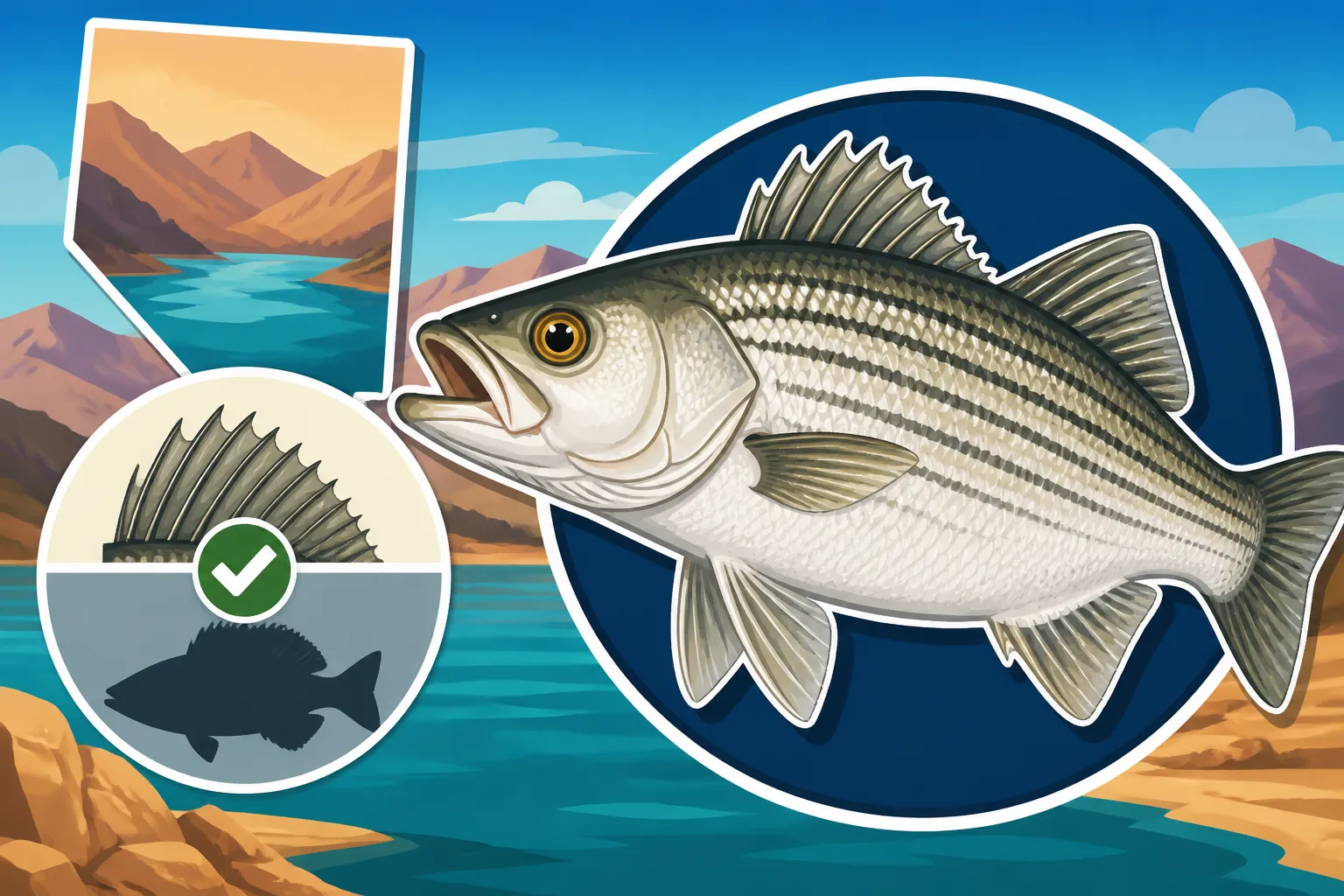
- Wiper Hybrid Bass: This is where it gets interesting! Wipers almost always have broken or interrupted stripes, especially on their lower sides. These stripes might be completely broken in places, or they might be noticeably disjointed, appearing as a series of dashes and dots rather than solid lines. Crucially, multiple stripes (usually more than one or two) will extend all the way to the tail, even if they are broken. This distinct "zig-zag" or segmented appearance of the stripes is your number one indicator. Take your time to examine these lines carefully – it’s the most reliable visual difference you'll find. This characteristic is so consistent that it’s often taught as the primary identification method in Nevada Fishing License Guide courses.
Mouth and Tongue Patches
Beyond the stripes, a closer inspection of the mouth and tongue can provide definitive proof of a wiper. This is a detail often overlooked by new anglers but is incredibly helpful for accurate identification.
- Tongue Patches: Gently open the fish's mouth and look at its tongue.
- Striped Bass: Will have two distinct patches of teeth on the back of their tongue. These patches feel rough to the touch.
- White Bass: Will have one single patch of teeth on the back of their tongue, or sometimes no noticeable patch at all.
- Wiper Hybrid Bass: Will usually have two irregular or broken patches of teeth on the back of their tongue. They won't be as clean and distinct as a pure striper's patches, often appearing more scattered or less defined. Sometimes they might even appear as one larger, uneven patch. This is a subtle but extremely reliable trait. If you're unsure about the stripes, a quick look at the tongue can often confirm your suspicions.
Comparing Wipers to Their Closest Relatives
When you're out on the water, you're most likely to confuse a wiper with either a striped bass or a white bass, given their shared family traits. Knowing the precise differences between these three will prevent you from misidentifying your catch, which is important for adhering to specific regulations like those covered in Nevada Statewide Bag Limits Explained. Let's break down the key differentiators that anglers should be aware of.
Wiper vs. Striped Bass (Striper)
This is perhaps the most common confusion, especially for anglers fishing in large reservoirs like Lake Mead or Lake Mohave, where both species coexist. While both are powerful fighters, there are distinct differences beyond just the stripe pattern.
- Body Shape: Striped bass tend to be more streamlined and elongated, almost like a torpedo. Wipers, while still powerful, have a noticeably deeper body for their length, giving them a more "chunky" or "football" appearance. This is particularly evident when you compare a striper and a wiper of similar length side-by-side; the wiper will look more robust.
- Stripes: As discussed, striped bass usually have uninterrupted, solid black lines running the length of their body. Wipers, on the other hand, will almost always display broken or discontinuous stripes, especially on their lower half. These broken stripes are the single most important visual cue to differentiate them from a pure striper.
- Size Potential: Pure striped bass can grow much larger than wipers, with trophy stripers often exceeding 40 or even 50 pounds in some fisheries. While wipers can reach impressive sizes, often exceeding 10 pounds and occasionally hitting the 20-pound mark, they generally don't achieve the same maximum size as their full-blooded striped bass parents. If you catch an absolute giant, it's more likely a striper, though a big wiper is certainly a bragging-rights catch!
- Aggression and Fight: Both are incredibly aggressive fighters. Wipers are known for their explosive initial runs and sustained battles, often described as having even more initial punch pound-for-pound than a pure striper. Stripers, especially larger ones, will offer a longer, more drawn-out fight due to their sheer power and stamina.
Wiper vs. White Bass
Distinguishing a wiper from a white bass is generally easier, mainly due to the significant size difference between the two species when mature. However, smaller wipers can sometimes be mistaken for larger white bass.
- Size: White bass are significantly smaller than wipers. A large white bass might reach 2-3 pounds, with exceptional ones pushing 4-5 pounds. Wipers, even at a young age, quickly outgrow white bass and commonly reach 5-10 pounds, with many going much larger. If you catch a fish over, say, 3 pounds with bass-like stripes, it's very likely a wiper.
- Body Shape: White bass have a more compressed, taller body for their length, making them appear somewhat "flatter" than a wiper. Wipers are much rounder and more robust.
- Stripes: White bass usually have fainter, less defined stripes, and often only one or two stripes extend to the tail. The stripes on a white bass are generally straighter and less prone to the severe breaking or zig-zag pattern seen on wipers. Wipers, again, have those distinctly broken and multiple stripes reaching the tail.
- Dorsal Fin: This is a subtle but reliable distinction. White bass typically have one connecting membrane between their spiny dorsal fin and their soft-rayed dorsal fin, meaning the two fins are slightly connected. Wipers, like striped bass, will have two distinctly separate dorsal fins, with no connecting membrane. This is a quick and easy check if you're holding the fish.
Common Misidentifications and How to Avoid Them
It’s completely normal to feel a bit confused, especially when you’re new to fishing in Nevada's diverse waters. Many anglers, even experienced ones, have made mistakes. Here’s how you can minimize the chances of misidentifying a wiper:
- Don't Rush: Take a moment to examine your catch carefully before you release it or put it in your cooler. The initial excitement can make you overlook details.
- Focus on the Stripes: This is truly your best visual indicator. Are the stripes solid or broken? How many broken stripes reach the tail? If you see multiple broken stripes extending back, you've likely got a wiper.
- Check the Tongue: If the stripes leave any doubt, don't hesitate to gently open the fish's mouth and check for those tongue patches. Two irregular patches are a strong sign of a wiper.
- Count Dorsal Fins: Remember the dorsal fin distinction for white bass versus wipers/stripers. This simple count can often clear up confusion between a small wiper and a large white bass.
- Use a Quick Reference: Consider carrying a waterproof fish identification card or a printed guide with you on your fishing trips. You can find excellent resources, including laminated charts that are perfect for boat use, on Amazon. This can be a lifesaver when you need a quick visual confirmation.
- Learn Local Regulations: Be familiar with the Nevada Fishing Regulations Explained for the specific body of water you're fishing. Often, different species have different bag limits, size restrictions, or even seasonal closures. Knowing these regulations will underscore the importance of correct identification.
Habitat, Behavior, and Fishing for Wipers in Nevada
Wipers are not just a fascinating biological creation; they're also a blast to catch! Understanding where they live, what they eat, and how they behave can significantly improve your chances of hooking into one of these hard-fighting hybrids. Nevada offers some fantastic opportunities for wiper fishing, primarily in its larger reservoir systems.
Where to Find Wipers in Nevada
In Nevada, wipers thrive in large, open-water reservoirs where they have ample space to roam and a plentiful food source, typically shad. You won't find them in small mountain streams or urban ponds, as these environments don't suit their needs.
- Key Locations: Some of the prime spots for wiper fishing include Lake Mohave and sections of the Colorado River below Hoover Dam. These waters offer the deep, clear conditions and robust forage fish populations that wipers prefer. They have also been stocked in other large impoundments over the years. Always check the latest stocking reports from local fisheries departments to know exactly which waters hold wipers, as stocking can change over time.
- Preferred Structure: While they are often pelagic (meaning they roam open water), wipers will frequently orient themselves around submerged structure, humps, points, and sudden depth changes. They use these features to ambush schooling baitfish. Look for them in areas where baitfish are abundant, often near the main lake channels or the mouths of coves. If you're fishing a new spot, a good fish finder is an invaluable tool for locating these features and the schools of bait that attract wipers. Many reputable brands offer excellent portable and mounted fish finders that are available on Amazon.
Seasonal Movements and Feeding Habits
Wipers, like most fish, are creatures of habit dictated by water temperature, forage availability, and spawning instincts (though they are sterile, their instincts are still tied to seasonal cycles).
- Spring: As water temperatures begin to rise in the spring, wipers become more active. They'll often move into shallower areas, especially around points and flats, looking for schools of shad or other baitfish that are also moving up from deeper water. This is a great time to target them with faster retrieves and reaction baits.
- Summer: During the scorching Nevada summer, wipers will typically move to deeper, cooler water during the heat of the day. They might suspend over deep channels or congregate around cooler thermal layers. Early mornings and late evenings, or even night fishing, can be highly productive as they push baitfish closer to the surface or along cooler banks. Summer Fishing Techniques for Hot Desert Lakes covers many of these methods.
- Fall: Fall is often considered one of the best times to fish for wipers. As water temperatures cool, they become incredibly active, aggressively feeding in preparation for winter. They will often chase large schools of shad in open water, creating surface boils that can be incredibly exciting to witness and target. Look for diving birds, which often indicate baitfish being pushed to the surface by feeding wipers.
- Winter: In winter, wipers slow down but don't stop feeding entirely. They will typically move to deeper water, often holding tight to structure or deep humps. Vertical jigging or slow-trolling deep-diving baits can be effective during this colder period. Understanding Nevada Fishing Seasons by Month will give you a broader overview of seasonal changes for all species.
Recommended Gear for Wiper Fishing
Given their size and fighting prowess, you'll want to come prepared with the right tackle to tackle a wiper. They hit hard and fight dirty, so light gear simply won't cut it if you're serious about landing them.
- Rod and Reel: A medium-heavy spinning or baitcasting rod, typically 6'6" to 7'6" in length, with a fast action tip and strong backbone, is ideal. Pair this with a reliable spinning reel (size 3000-4000) or a baitcasting reel capable of handling heavy lines and big fish. You need something robust enough to withstand powerful runs. For options, check out the range of Best Fishing Rods for Nevada Lakes and accompanying reels.
- Line: Spool up with 15-20 pound monofilament or fluorocarbon, or consider 30-50 pound braided line with a fluorocarbon leader for maximum sensitivity and strength. Wipers often inhabit clear water, so a less visible leader can be advantageous.
- Lures and Bait: Wipers are aggressive predators, so anything that imitates a shad or other baitfish is usually effective.
- Reaction Baits: Chrome or shad-patterned casting spoons, lipless crankbaits, swimbaits, and topwater lures (especially during surface boils) are excellent choices.
- Jigs: Heavy bucktail jigs or soft plastic swimbaits rigged on jig heads can be deadly when wipers are holding deeper.
- Live Bait: If legal in your chosen waters, live shad or anchovies (chummed to attract schools) can be irresistible to wipers. You can find a vast selection of these lures and other tackle essentials at online retailers like Amazon.
- Other Essentials: Don't forget a sturdy landing net, as wipers can be quite acrobatic at the boat. Pliers for hook removal are a must, and if you plan on keeping fish, a good cooler to keep your catch fresh in the Nevada heat. You can find more about essential items in our Nevada Fishing Gear Essentials guide.
Why Accurate Identification Matters
Beyond the simple satisfaction of knowing what you've caught, accurately identifying a wiper hybrid bass is incredibly important for several practical and ethical reasons. It's not just about bragging rights; it's about responsible angling and contributing to the health of Nevada's fisheries.
Regulatory Compliance and Bag Limits
This is perhaps the most immediate and critical reason for correct identification. Nevada, like every other state, has specific regulations designed to manage its fish populations sustainably. These regulations often include:
- Daily Bag Limits: The number of fish of a particular species you can keep in a single day.
- Possession Limits: The total number of fish you can have on your person or in your cooler at any given time.
- Size Limits: Minimum or maximum lengths a fish must be to be legally kept.
Wipers, striped bass, and white bass often have different rules because they are managed differently by the Nevada Department of Wildlife (NDOW). For example, there might be a more generous bag limit for wipers to encourage harvest and maintain ecological balance, while pure striped bass might have different limits to protect larger breeders. Misidentifying a fish could lead to inadvertently violating these regulations. This isn't just a minor oversight; fishing violations can result in significant fines, confiscation of gear, or even suspension of your fishing privileges. Ignorance of the law is rarely an excuse, so taking the time to confirm your catch before deciding its fate is crucial. Always consult the current Nevada Fishing Regulations Explained before heading out.
Contribution to Conservation
While wipers are stocked and sterile, meaning they don't reproduce, accurate identification still plays a role in the broader conservation efforts of Nevada's fisheries. When anglers correctly report their catches, whether through creel surveys, online forms, or simply by communicating with local wildlife officials, they provide valuable data. This data helps fisheries managers:
- Assess Population Health: By knowing how many wipers are being caught, their average size, and where they are being caught, biologists can determine if stocking programs are successful and if the fish are thriving.
- Manage Forage Fish: If wiper populations are too high, they might over-consume baitfish, impacting other species. If they're too low, other species might become overpopulated. Correct identification helps maintain this delicate balance.
- Monitor Invasive Species: While wipers are introduced, their presence and success are part of a managed ecosystem. Understanding the exact species caught helps distinguish them from truly invasive or unwanted species that might show up in the waters. Every piece of accurate information helps paint a clearer picture of the aquatic environment.
Ultimately, being a responsible angler means more than just having a valid Nevada Fishing License Guide; it means understanding the environment you're fishing in and the species you're pursuing. Learning to identify a wiper hybrid bass is a rewarding skill that enhances your fishing experience and helps ensure healthy fisheries for years to come.
Here's a quick reference table to help solidify the differences:
| Characteristic | Wiper Hybrid Bass | Striped Bass (Striper) | White Bass |
|---|---|---|---|
| Parentage | Female Striper x Male White Bass | Purebred | Purebred |
| Body Shape | Deeper, more "chunky" for length | Elongated, torpedo-like | More compressed, taller for length |
| Stripe Pattern | Multiple broken/interrupted stripes, several reach tail | Solid, unbroken stripes, often 7-8 total | Fainter, often broken (especially rear), 1-2 reach tail |
| Tongue Patches | 2 irregular or broken patches | 2 distinct patches | 1 single patch (or none) |
| Dorsal Fins | 2 distinctly separate fins | 2 distinctly separate fins | 2 fins, slightly connected by membrane |
| Max Size (Typical) | 10-20+ lbs | 30-50+ lbs (can be much larger) | 2-5 lbs |
| Fight | Explosive, strong initial runs | Powerful, sustained runs | Feisty, but less powerful than others |
Disclaimer
This article is for general informational purposes only and does not constitute professional advice. Laws, prices and regulations vary by location and change over time. Consult a qualified professional for guidance on your specific situation.