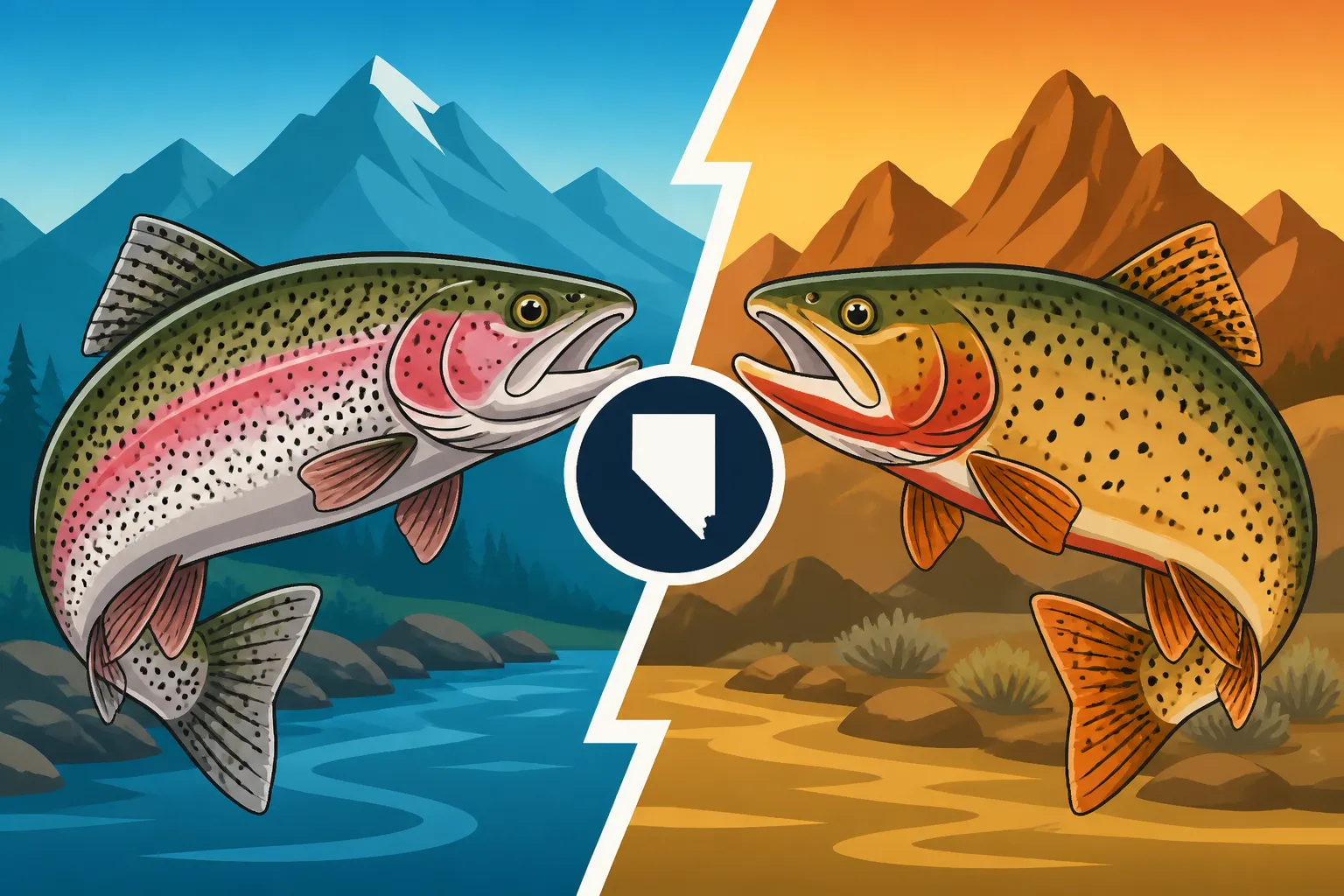
How to tell a rainbow trout from a cutthroat trout
It's incredibly common for anglers in Nevada, especially those new to our diverse waterways, to stare at a beautiful trout in their hands and wonder, "Is this a rainbow or a cutthroat?" These two species, while distinctly different to the trained eye, share enough similarities to cause confusion. This comprehensive guide is here to clear up that mystery, providing you with all the visual cues and habitat knowledge you need to confidently identify whether you've landed a vibrant rainbow or a historically significant cutthroat trout in the Silver State.
The Core Differences at a Glance
When you're out on the water, the last thing you want to do is spend precious fishing time puzzling over a fish ID chart. Luckily, there are a few tell-tale signs that can help you distinguish between a rainbow trout and a cutthroat trout quickly. Think of these as your go-to visual checkpoints. The more you know, the easier it becomes, and soon you'll be able to tell the difference at a glance, almost instinctively.
The Iconic Red Slash
Perhaps the most famous and definitive characteristic of a cutthroat trout is right there in its name: the "cutthroat" mark. This isn't a scar, but rather a distinct, vibrant red or orange streak (sometimes a yellowish-red) found on the underside of their lower jaw, in the folds of the gill plate. It genuinely looks like a slash or a cut, hence the name. While the intensity of this mark can vary—it might be faint in some individuals, particularly smaller or younger fish, or incredibly vivid in others—it is almost always present to some degree. When you catch a fish and gently lift its gill plate, if you see that splash of color, you're almost certainly holding a cutthroat. Rainbow trout, on the other hand, simply do not possess this mark. Their lower jaw area will be plain, typically white or a light grey, without any red or orange coloration. This is your number one differentiator.
Beyond its presence, consider the shade and size. In a healthy, mature Lahontan cutthroat trout from places like Pyramid Lake, this slash can be a deep, fiery orange-red and quite prominent. In high-mountain stream cutthroats, it might be a lighter, more subtle orange. Always check carefully; sometimes, mud or slime can obscure a faint mark, so a quick, gentle rinse in the water might be necessary for confirmation. This singular feature is so reliable that if you only remember one thing from this guide, make it the red slash.
Spotting Patterns and Coloration
While the red slash is the ultimate giveaway, the overall spotting and body coloration offer additional clues that, when combined, paint a clearer picture. Both species are beautiful, but they express their patterns differently. This is where a keen eye for detail really pays off.
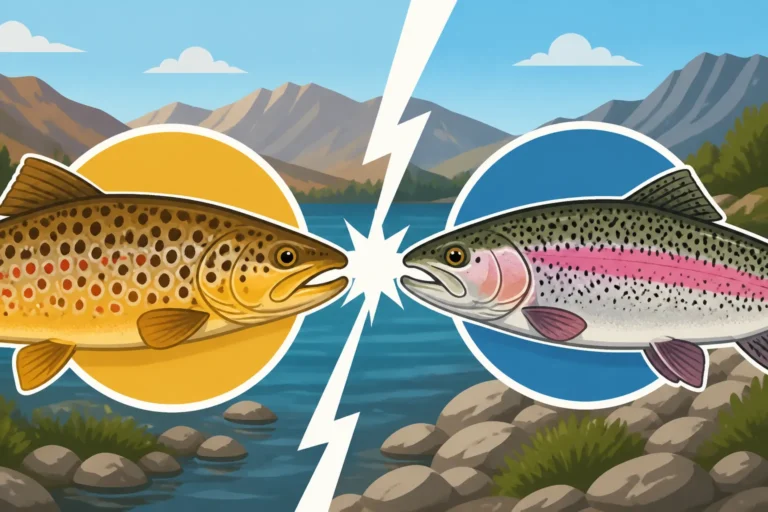
Rainbow trout, as their name implies, often have a distinctive iridescent pink or red stripe running horizontally along their lateral line, especially noticeable on larger, healthy specimens. This stripe can be very prominent, almost glowing, particularly when the fish is fresh out of the water. Their bodies are typically covered in numerous small, dark spots that are relatively uniform in size and distributed evenly across their back, sides, and caudal (tail) fin. These spots rarely extend much below the lateral line, staying mostly above. The base body color of a rainbow trout can vary from olive green to silvery-blue on the back, fading to white or silver on the belly. The spots are usually quite distinct against this background. You'll often see them stocked in urban ponds and many state waters, displaying these classic markings. Rainbow Trout Fishing in Nevada can be a fantastic experience, and knowing their look helps a lot.
Cutthroat trout, in contrast, generally have more irregular and somewhat coarser spots. These spots are often concentrated more heavily towards the tail and on the caudal fin, and they frequently extend further down onto the sides, often below the lateral line, sometimes even onto the belly in the form of smaller speckles. The spots might not be as uniformly distributed as on a rainbow; you might find clusters of spots or more widely spaced ones. Their overall body coloration tends to be more subdued than a rainbow, often ranging from olive-green to yellowish-brown or silvery-bronze, with a lighter belly. They might also exhibit a yellowish or golden hue on their flanks. While they don't have the distinct pink lateral stripe of a rainbow, some cutthroats, especially during spawning season, can develop a blush of red or orange on their sides, which can add to the confusion. This is why looking for that red slash is so critical.
Here's a quick comparison table:
| Feature | Rainbow Trout | Cutthroat Trout |
|---|---|---|
| Red Slash | Absent; lower jaw area is plain white or light | Present; distinct red/orange/yellow slash under lower jaw |
| Lateral Stripe | Often a prominent, iridescent pink/red stripe | Generally absent, or a faint pink/orange blush during spawning |
| Body Spots | Numerous, small, evenly distributed, mostly above lateral line | Irregular, coarser, often concentrated towards tail, extend below lateral line |
| Tail Spots | Spots usually present, but not always dominant | Often heavily spotted on caudal (tail) fin |
| Overall Color | Silvery-blue to olive-green, fading to white belly | Olive-green, yellowish-brown, or silvery-bronze, with lighter belly |
Beyond the Basics: Fins, Mouths, and Habitat Cues
While the red slash and spotting patterns are your primary indicators, looking at the fins and mouth structure, along with considering the specific waters you're fishing, can provide even more conclusive evidence. These subtle details can really cement your identification, especially when a fish's coloring is atypical due to its environment or age. Sometimes, even purchasing a good field guide or a waterproof species identification card from a retailer like Amazon can be a smart move to have with you on the water for quick reference.
Fin Features and Markings
Both rainbow and cutthroat trout have similar fin structures: dorsal (top), pectoral (side), pelvic (bottom-front), anal (bottom-back), and caudal (tail). However, subtle differences in their appearance can offer clues. For example, the fins of a rainbow trout often have dark edges or tips, especially the dorsal and caudal fins, making them stand out. The spots on a rainbow's fins, particularly the caudal fin, tend to be small and uniform, mirroring their body spots.
Cutthroat trout, particularly the Lahontan subspecies found in Nevada, can sometimes have fins that appear a bit more rounded or softer in outline compared to the generally sharper-edged fins of some rainbow strains. While this isn't a hard and fast rule, it's something to observe. More importantly, the spotting on the caudal fin of a cutthroat is often much more pronounced and extensive, sometimes almost covering the entire tail fin with dense, irregular spots. The other fins might also show spotting, which is less common on rainbow trout, where spots are usually confined to the body and tail. Paying attention to how the spots extend onto the fins can be a useful secondary indicator.
Mouth and Jawline Differences
Another subtle yet helpful characteristic to examine is the mouth and jawline. This can be a bit trickier, as both fish have fairly similar profiles, but there's a key distinction if you know what to look for. Generally, the upper jaw (maxillary) of a cutthroat trout extends noticeably beyond the rear edge of the eye, especially in larger, mature individuals. It gives their mouth a slightly larger, more elongated appearance. This extended jaw is particularly pronounced in larger cutthroat specimens, making it a very reliable identifier.
Rainbow trout, conversely, tend to have an upper jaw that reaches, but usually does not significantly extend past, the rear margin of the eye. Their mouth often appears a bit more compact in comparison. This difference might be subtle in smaller fish, but it becomes much more apparent as they grow. When you're comparing fish, try to gently open the mouth slightly and observe how far back the jawbone extends relative to the eye. This, combined with the other features, helps build a comprehensive picture for confident identification.
Habitat and Geographic Clues in Nevada
Knowing where you're fishing in Nevada is an incredibly powerful tool for identification. The state's diverse aquatic environments mean certain trout species thrive in specific areas, making their presence a strong clue as to what you've caught. This is especially true for our native cutthroat trout.
Lahontan cutthroat trout (LCT) are the only trout species native to Nevada, and they primarily inhabit the Lahontan basin, which includes iconic waters like Pyramid Lake and the Truckee River. If you're fishing these specific waters, especially Pyramid Lake, there's a very high probability that any trout you catch will be an LCT, provided it meets the legal size limits. Pyramid Lake is renowned for its trophy-sized LCT, and anglers specifically target this species here. Pyramid Lake Fishing Permit Guide covers the unique regulations for this special fishery. Other areas where LCT can be found include specific high-mountain lakes and streams in northern Nevada, often in more isolated or protected habitats.
Rainbow trout, on the other hand, are widely stocked by the Nevada Department of Wildlife (NDOW) into countless lakes, reservoirs, and urban ponds across the entire state. They are incredibly adaptable and are the most commonly encountered trout species in many popular fishing spots. If you're fishing a typical community pond in Las Vegas or Reno, or a large reservoir like Lake Mead or Wildhorse Reservoir, chances are good that any trout you catch will be a rainbow. Trout species stocked in Nevada lakes are predominantly rainbows, making them prevalent. Therefore, if you're pulling a trout out of an urban pond or a heavily stocked reservoir, the default assumption should lean towards it being a rainbow, unless it clearly exhibits the cutthroat slash. Always consult local regulations, as some waters might have both species present, sometimes even hybrids.
Why Accurate Identification Matters for Nevada Anglers
It might seem like a small detail, but correctly identifying the species of trout you've caught in Nevada isn't just about showing off your fish knowledge. It has real-world implications for legal compliance, conservation efforts, and even your personal fishing success. Understanding these distinctions is a fundamental part of responsible angling in the Silver State.
Understanding Regulations and Bag Limits
This is perhaps the most critical reason for accurate identification. Nevada has specific regulations, including bag limits and size restrictions, that can vary significantly between rainbow and cutthroat trout, especially for the protected native Lahontan cutthroat. For example, in many general regulation waters, the daily limit for rainbow trout might be more liberal, while for LCT in certain areas, there might be a slot limit (where only fish within a specific size range can be kept) or even a requirement for immediate release. Failing to correctly identify your catch could lead to unintentional violations, which can result in fines and other penalties.
For instance, at Pyramid Lake, strict rules apply to the Lahontan cutthroat trout regarding size and catch limits to protect the population. Elsewhere, a typical stream might have a general trout limit, but if it's known to also contain native cutthroat, specific rules for those fish might be in place. Always, always consult the current Nevada Fishing Regulations Explained before heading out. Having a digital copy or a printout of the regulations from NDOW, perhaps stored in a waterproof bag that you purchased from Amazon, can be a lifesaver. This simple act ensures you're a responsible angler and avoid any legal trouble.
Conservation and Native Species
The Lahontan cutthroat trout holds a special place in Nevada's natural heritage. It's an iconic native species, and its populations faced severe declines in the past. Extensive conservation efforts have been ongoing for decades to restore and protect these unique fish. When you can identify an LCT, you become a partner in these conservation efforts. Understanding that these fish are precious often means practicing careful catch and release, especially for larger breeding-size fish.
For example, at Pyramid Lake, the focus is heavily on the sustainable management of the Lahontan cutthroat. Anglers who release fish responsibly contribute directly to the health of the fishery. Knowing the difference empowers you to make informed decisions that support the long-term viability of Nevada's native fish populations. Every angler has a role to play in preserving these natural resources for future generations. Handling and Releasing Lahontan Cutthroat Trout provides excellent guidance on best practices.
Enhancing Your Fishing Strategy
Believe it or not, knowing the difference between a rainbow and a cutthroat can also subtly influence your fishing strategy. While both are trout, their preferences for bait, lures, and habitat can sometimes differ. Rainbows are often less selective, readily taking a variety of baits, powerbaits, and artificial lures, especially if they are recently stocked. They are often found in areas with good current or deeper pockets in lakes. You might use different techniques when Best Tackle for Nevada Trout Fishing is involved for these two types.
Cutthroat trout, particularly wild strains, can sometimes be a bit more cautious or prefer different presentations. In their native habitats like Pyramid Lake, specific flies or lures are known to be highly effective for LCT, which might not be the go-to choices for stocked rainbows elsewhere. Observing the subtle differences in their behavior and habitat selection can help you fine-tune your approach, selecting the right gear, bait, or fly pattern to increase your chances of success for the specific species you're targeting. It’s all about becoming a more effective and knowledgeable angler.
Practical Tips for Field Identification
Being able to identify fish quickly and accurately in the field, without causing undue stress to the fish, is a skill every responsible angler should cultivate. It's a combination of knowing what to look for and practicing good fish handling. With a little preparation and careful observation, you'll become an expert in no time.
Catch and Release Considerations
When you're trying to identify a fish, especially if you plan to release it, minimizing stress is paramount. This means handling the fish as little as possible and keeping it in the water or over a wet surface. If you need to examine it closely, use wet hands to hold it gently. Avoid squeezing the fish or touching its gills. The red slash on a cutthroat is usually visible by gently lifting the gill plate while the fish is still partially submerged. For spotting patterns, a quick glance is usually enough.
If you’re having trouble seeing the details, a quick, gentle dip back into the water can rinse off any slime or debris that might be obscuring the markings. Have your camera ready (more on that below) for a quick photo, then release the fish promptly. Remember, the goal is to get the fish back into its environment quickly and unharmed. Practicing careful handling ensures that the fish you release has the best chance of survival. This is especially vital for native species like Lahontan cutthroat trout.
Photography for Post-Catch Review
In this day and age, your smartphone camera is an incredibly useful tool for fish identification. If you're unsure about a species, take a few clear photos of the fish while it's still fresh and before release. Make sure to get shots from different angles, paying particular attention to the head, the underside of the jaw, the sides to capture spotting patterns, and the tail fin. A photo of the entire fish, held horizontally, can also be very helpful.
You can review these photos later, comparing them to field guides, online resources, or even asking experienced anglers for their opinion. Many fishing apps or online forums allow you to upload pictures for identification assistance. Just be mindful of local regulations regarding photography (some areas might have rules about fish out of water for extended periods). Consider a waterproof phone case or a dedicated waterproof camera, easily found on Amazon, to protect your gear while on the water. This allows you to capture those identification shots without worrying about water damage.
Disclaimer
This article is for general informational purposes only and does not constitute professional advice. Laws, prices and regulations vary by location and change over time. Consult a qualified professional for guidance on your specific situation.