Hybrid striped bass versus true striped bass in Nevada lakes
There's a common moment of excitement, and sometimes a little confusion, that hits many anglers reeling in a feisty striper from Nevada's big waters. You pull in a hard-fighting fish with those distinctive dark lines, and the question often pops into your head: Is this a true striped bass, or one of those potent hybrid wipers? Understanding the differences between these two fantastic sport fish isn't just a matter of curiosity; it can influence your fishing strategy and help you better appreciate the unique fisheries we have here in the Silver State. This guide will help you confidently tell them apart and deepen your appreciation for both species.
Understanding True Striped Bass in Nevada
True striped bass, or Morone saxatilis, are iconic game fish, and their presence in Nevada's landlocked reservoirs is a testament to successful fisheries management. These aren't naturally occurring freshwater fish in our state; their lineage stretches back to coastal ocean environments, making their thriving populations in places like Lake Mead quite remarkable.
Native Origins and Physical Traits
Originally, striped bass are anadromous, meaning they spend most of their lives in saltwater and migrate to freshwater rivers to spawn. When they were introduced to landlocked reservoirs like Lake Mead in the mid-20th century, fisheries managers found they could adapt and even reproduce in these vast freshwater systems, particularly in areas with riverine inflow. A true striped bass often has a sleek, elongated body shape, built for powerful runs in open water. The most telling physical trait is their lateral lines: they typically possess seven or eight prominent horizontal stripes running along their sides. These stripes are generally unbroken and well-defined, extending from behind the gills all the way to the tail. Their head often appears slightly longer and more pointed than that of a hybrid, and their overall coloration can range from silvery-white on the belly to a darker greenish-gray on the back, depending on water clarity and diet. For a deeper dive into their characteristics, you might want to check out our Nevada Fish Species Guide.
Behavior and Habitat
True striped bass are highly social fish, often found in large schools, particularly when they're actively feeding. They are apex predators, constantly on the hunt for baitfish like shad, which abound in our larger reservoirs. You'll frequently find them suspending in open water, chasing down schools of bait. Their preferred habitat includes large, open expanses of water, often near submerged structures, ledges, or where current congregates bait. They are sensitive to water temperature, typically preferring cooler, oxygenated water, which means they might move deeper in the heat of summer or closer to the surface during cooler seasons. This schooling behavior makes them a blast to catch when you find them, as you can often hook into multiple fish in one spot. Learning about their seasonal movements is key to consistent success, and you can find more insights in Nevada Striped Bass Seasonal Patterns.
Introducing Hybrid Striped Bass (Wipers) in Nevada
While true striped bass are incredible, some fisheries seek a fish that grows faster, is hardier in certain environments, and offers a slightly different angling experience. Enter the hybrid striped bass, often affectionately called a "wiper" or "striper hybrid." These fish are a deliberate creation, combining the best traits of two distinct species.
The Crossbreed Advantage
A hybrid striped bass is the offspring of a female striped bass (Morone saxatilis) and a male white bass (Morone chrysops). This crossbreeding results in a fish that often grows faster than either parent in many landlocked environments, exhibiting what's known as "hybrid vigor." Wipers are celebrated for their incredible fighting strength, often described as a short, powerful, head-shaking battle that is sure to get your heart pumping. They tend to be more tolerant of varying water conditions than purebred stripers, making them suitable for stocking in a wider range of reservoirs and even some urban ponds where true stripers might struggle to thrive. This adaptability makes them a fantastic option for creating robust recreational fisheries.
Distinctive Physical Markings
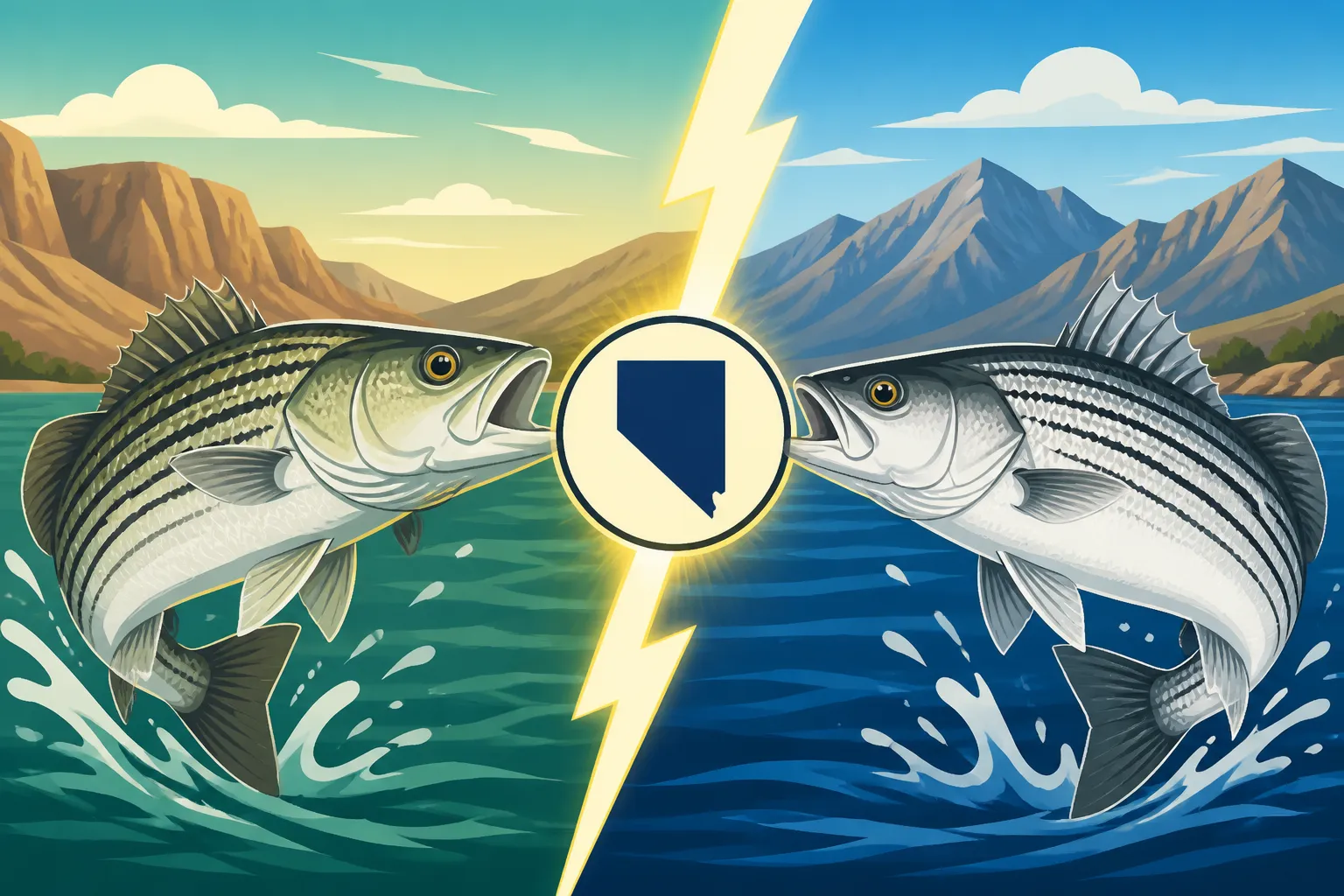
This is where the rubber meets the road for identification! While they share a strong resemblance to their striped bass parent, wipers have distinct features. The most reliable indicator is their lateral stripes: unlike the typically solid lines of a true striper, the stripes on a hybrid striped bass are almost always broken, irregular, or disjointed, particularly those below the lateral line. They might zig and zag, fade out, or stop and restart. Their body shape also tends to be deeper and more compressed or "football-shaped" compared to the torpedo-like form of a true striper. Their head can appear a bit shorter and blunter.
To make it even easier, here's a quick comparison:
| Feature | True Striped Bass (Morone saxatilis) | Hybrid Striped Bass (Wiper) |
|---|---|---|
| Body Shape | Elongated, torpedo-like, sleek | Deeper body, more compressed, "football" |
| Lateral Lines | Typically 7-8 solid, unbroken stripes | Stripes often broken, irregular, or wavy |
| Head Shape | Longer, more pointed, slightly larger mouth | Shorter, blunter snout, often smaller mouth |
| Pectoral Fins | Often reach past the operculum (gill cover) | Rarely reach past the operculum |
| Dorsal Fins | Two distinctly separated dorsal fins | First and second dorsal fins closer, sometimes connected at base |
Stocking and Popularity in Nevada
In Nevada, fisheries management may stock hybrid striped bass in specific waters to enhance angling opportunities. While the primary striped bass fisheries like Lake Mead and Lake Mohave are dominated by true stripers, wipers can provide excellent sport in other locations. They are highly valued by anglers for their aggressive strikes and powerful fights. Their robustness means they can provide exciting action in waters where other species might be harder to maintain, contributing significantly to local fishing experiences. You'll often find anglers targeting them with similar methods to true stripers, but their slightly different behavior can sometimes call for subtle adjustments.
Key Differences and Why They Matter to Anglers
Distinguishing between a true striped bass and a hybrid striped bass is more than just an academic exercise. It can help you refine your fishing techniques and deepens your understanding of the incredible fish populations we have here in Nevada.
Identifying Your Catch
The ability to correctly identify your catch is a cornerstone of responsible and successful angling. As we discussed, those lateral lines are your best friend. Take a moment to examine them closely. Are they clean and continuous, or do they look like they were drawn by a child with a shaky hand? This visual check will typically give you your answer. For example, if you're fishing a popular spot like Hemenway Bay on Lake Mead, and you pull in a fish with perfectly straight, uninterrupted stripes, you've almost certainly got a true striped bass. If those stripes are broken up, particularly on the lower half of the fish, you've likely landed a hybrid.
This skill is particularly useful if you are trying to understand where different fish species are thriving, or if you're comparing notes with other anglers. While Nevada's general fishing regulations usually lump "striped bass" and "hybrid striped bass" together for daily limits and size restrictions, knowing which one you've caught still adds to your overall angling expertise and enjoyment. Many experienced anglers keep a small, waterproof fish identification guide, perhaps one picked up from Amazon, handy on their boat or in their tackle box, just for quick reference when a unique catch comes along.
Fishing Strategies and Fight
Both species are renowned for their fighting ability, but many anglers describe subtle differences in their battle. True striped bass, with their more elongated bodies, are often said to deliver longer, powerful runs, especially when hooked in open water. They might pull line off your reel with sustained strength, testing your drag and stamina. On the other hand, hybrid striped bass, with their more compact, muscular bodies, are often described as putting up a more explosive, head-shaking fight. They might deliver incredibly strong, short bursts, trying to get away with sheer power rather than long-distance runs.
Because of these nuances, some anglers might adjust their gear. For purebred stripers, a rod with good backbone and a smooth drag is crucial to handle those long runs. For wipers, a slightly stiffer rod might help you turn their powerful, close-quarters thrashing. Understanding these subtle differences can help you select the best tackle and refine your technique, whether you're jigging or trolling. For more on how to target these powerful fish, be sure to read our guide on How to Fish for Striped Bass in Nevada.
Size and Growth Potential
Both species can grow to impressive sizes, offering the chance at a trophy catch. However, there are some general patterns. Hybrid striped bass tend to grow very quickly in their early years, often reaching respectable sizes in a shorter amount of time than purebred stripers. They are often stocked for this very reason, to provide fast-growing, hard-fighting fish for anglers. They can reach double-digit weights and provide incredible sport.
True striped bass, while perhaps having a slightly slower initial growth rate, generally have the potential to grow much larger and live longer. In truly exceptional conditions, they can become absolute giants. The biggest striped bass caught in Nevada's waters have been true stripers, reaching truly monumental sizes that would make any angler's jaw drop. So, while a hybrid offers immediate, explosive action, the true striper might be your target if you're dreaming of that once-in-a-lifetime monster catch. You can often find details on the largest catches in official state record lists, which celebrate these magnificent fish.
Where to Find Each Species in Nevada Waters
Knowing the differences is one thing, but knowing where to put your line in the water to find them is another entirely! Nevada offers fantastic opportunities for both types of striped bass, though their distributions may vary.
Prime Locations for True Stripers
When we talk about true striped bass in Nevada, our minds immediately go to the colossal reservoirs of the Colorado River system. Lake Mead stands out as the undisputed champion for these magnificent fish. It's a vast body of water, providing ample habitat and an abundant food source for stripers, allowing them to grow large and thrive. Anglers on Lake Mead commonly target them by trolling, casting large lures, or drifting bait in open water, often near submerged islands or canyon walls. Areas like Hemenway Bay, Government Wash, or even fishing the deeper channels can be extremely productive. Lake Mead Nevada Fishing Guide offers a wealth of information on specific spots.
Just downstream, Lake Mohave also holds an excellent population of true striped bass, often presenting a slightly different fishing experience due to its narrower, riverine sections. The water can be clearer here, sometimes requiring more finesse. The Colorado River below Hoover Dam, with its cooler, consistent flows, can also be a hotspot for true stripers, particularly those that have ventured out of Lake Mohave. These environments mimic some of their native river habitats, allowing them to feed and move freely. Targeting them often involves understanding their schooling patterns and tracking baitfish movements.
Nevada Waters for Hybrid Stripers
While Lake Mead and Lake Mohave are generally dominated by true stripers, hybrid striped bass are sometimes stocked in other Nevada waters where they can flourish. They are a popular choice for enhancing recreational fishing due to their hardiness and fast growth. For instance, some of Nevada's urban ponds, which are regularly stocked to provide accessible fishing opportunities, might occasionally receive wipers. These ponds offer a fantastic chance for families and beginners to experience the thrill of catching a powerful fish. However, the most consistent populations of hybrid striped bass are often found in specific reservoirs managed to maximize their potential. Always check the latest Nevada Department of Wildlife (NDOW) stocking reports and fishing regulations for specific lakes and ponds if you are targeting wipers, as stocking programs can vary. Their presence might be more localized, but where they are, they provide incredible angling fun. For general urban fishing information, you might find our Las Vegas Nevada Urban Pond Fishing Guide helpful, as these ponds are sometimes candidates for hybrid stocking.
Disclaimer
This article is for general informational purposes only and does not constitute professional advice. Laws, prices and regulations vary by location and change over time. Consult a qualified professional for guidance on your specific situation.