Crappie Fishing in Nevada
For anglers in Nevada, sometimes it feels like all the talk is about striped bass at Lake Mead, trophy Lahontan cutthroat trout at Pyramid Lake, or the feisty smallmouth in Lake Mohave. But what about crappie? It's easy to overlook these delicious panfish in the vastness of the Silver State's fishing scene, leading many to believe they aren't even here or are too hard to find. If you're longing for the thrill of a crappie bite and a tasty fish fry, this guide is here to help you pinpoint where to find them and how to hook into a good mess in Nevada's waters.
Understanding Crappie in Nevada's Waters
Crappie might not be the poster fish for Nevada, but they absolutely thrive in certain environments here. Unlike some of our more famous game fish, crappie often prefer calmer, clearer waters with plenty of structure, which means you won't find them just anywhere. Knowing what makes them tick in our unique desert and mountain environments is the first step to a successful crappie outing.
Crappie Species Found in Nevada
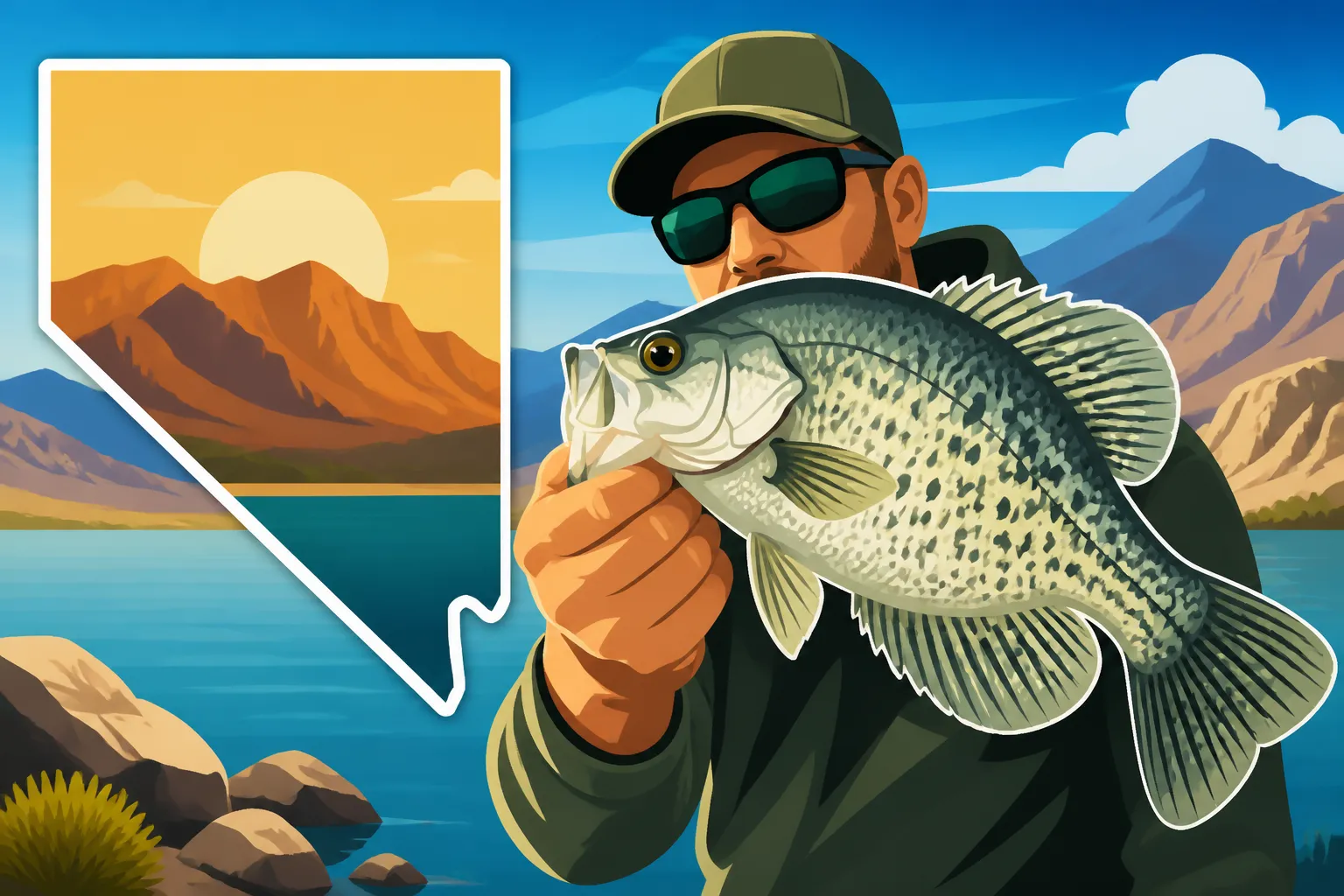
When we talk about crappie in Nevada, we're primarily referring to two species: the black crappie and the white crappie. While they share many similarities, there are subtle differences that can influence where you find them and how they behave. Black crappie tend to be more prevalent in clear, vegetated waters, often preferring cooler temperatures. They're usually identified by irregular, scattered black spots over a silvery body.
White crappie, on the other hand, are a bit more tolerant of turbid water and can be found in a wider range of habitats, including those with less vegetation. You can often distinguish them by their vertical bar patterns on their sides, which are more distinct than the black crappie's spotting. Both species offer excellent table fare and provide a fantastic fight on light tackle, making them a worthy target for any Nevada angler looking for something a little different.
Why Crappie Fishing Can Be Challenging Here
Let's be honest, crappie fishing in Nevada isn't always as straightforward as it might be in some other states known for their abundant panfish. Our reservoirs often have dramatic water level fluctuations, leading to constantly changing cover and depth, which can make it tough to pattern fish. The intense summer heat in many parts of the state also pushes crappie into deeper, cooler waters, making them harder to access for shore anglers.
Furthermore, crappie populations here can sometimes be more localized or less dense than in places where they are a primary game fish. This means you can't just drop a line anywhere and expect to hit a school. It requires a bit more research, patience, and often, mobility to find those honey holes. Don't let these challenges deter you, though; the reward of finding a school of active crappie in Nevada is incredibly satisfying.
Habitat and Preferred Environments
Crappie are masters of relating to structure, and this holds true in Nevada. They absolutely love areas with submerged timber, brush piles, rock formations, bridge pilings, and even man-made structures like docks and sunken boats. These features provide them with cover from predators, ambush points for forage, and shade from the intense Nevada sun.
Beyond structure, crappie also have a preference for certain water conditions. They generally like clear to moderately stained water, especially black crappie. Look for areas where there's a good transition in depth, such as points, humps, or creek channels, particularly where these features intersect with cover. In deeper reservoirs, they often suspend over these structures, making a fish finder an invaluable tool for locating them. For more general guidance on where to find fish, check out our Nevada Fish Species Guide.
Top Nevada Lakes and Reservoirs for Crappie
While crappie aren't found in every body of water across Nevada, there are definitely some standout locations where you can consistently find them. Knowing these hotspots is crucial, as is understanding the best times to visit them to maximize your chances.
Key Crappie Hotspots
One of the most well-known crappie destinations in Nevada is Rye Patch Reservoir. Located in the western part of the state, this reservoir is famous for its crappie fishery, especially in the spring and fall. Anglers often find success around the submerged trees and brush along the old river channel. The fluctuating water levels here can dictate where the crappie are holding, so paying attention to recent reports is key. You can learn more about fishing this fantastic spot in our Rye Patch Reservoir Fishing guide.
Another significant area is the vast Lake Mead system. While often overshadowed by its striped bass population, Lake Mead holds a healthy population of crappie, particularly in certain coves and bays with ample structure. Areas like Callville Bay, Government Wash, and the upper reaches of the Overton Arm can be productive, especially during the spring spawn when crappie move into shallower water. For a broader overview of this lake, see our Lake Mead Nevada Fishing Guide.
Further south, Lake Mohave also offers crappie opportunities. Similar to Lake Mead, focus on coves with submerged brush and rocks, especially near inflows or deeper channels. The cooler, clearer waters of Lake Mohave can often mean crappie might be found a bit deeper than in other locations. Get more details on fishing here with our Lake Mohave Nevada Fishing Guide. Some of the urban ponds, particularly around Las Vegas, are also occasionally stocked or hold resident crappie populations, providing accessible fishing for families. Check out our Las Vegas Nevada Urban Pond Fishing Guide for those closer-to-home options.
Seasonal Patterns and Best Times to Fish These Locations
Crappie fishing in Nevada is highly seasonal, much like for most other species. The absolute best time to target them is typically during the spring spawn, generally from March through May, depending on water temperatures. During this period, crappie move into shallower coves and protected areas, making them more accessible to both boat and shore anglers. They'll be actively feeding and more aggressive, often concentrating in large schools.
As summer heats up, crappie will retreat to deeper, cooler water, often suspending over structure or congregating around thermal breaks. This can make them harder to locate, requiring more advanced techniques like trolling or using a fish finder to pinpoint their exact depth. Fall can also be excellent, as water temperatures cool and crappie once again become more active, feeding heavily to prepare for winter. Winter fishing is possible, particularly in milder regions, but often involves targeting deep, vertical structure. Understanding these seasonal shifts is vital for success. You can also consult our Best Time of Year to Fish in Nevada for broader seasonal insights.
Access and Boat Launch Information
Access to crappie hotspots varies significantly across Nevada. For larger reservoirs like Lake Mead, Lake Mohave, and Rye Patch, you'll find numerous developed boat ramps and marinas. These facilities typically offer easy launch and retrieval, though some might have fees. It's always a good idea to check the specific reservoir's website or call a local marina for current conditions and any launch restrictions, especially concerning quagga mussel prevention.
For those without a boat, shore access is available at many locations, but it might require some hiking to reach prime crappie spots that are rich in submerged structure. Smaller urban ponds generally have excellent shore access with amenities, making them great for families. If you plan to use a boat, understanding Nevada Boat Registration and Titling Guide can be useful. For smaller, more maneuverable options like kayaks, look into Best Portable Fish Finder for a Kayak to help locate those crappie schools.
Crappie Fishing Techniques for Nevada Conditions
Crappie are often called "slab" for a reason – they're flat and wide, offering a fantastic fight. But catching them consistently, especially in Nevada's diverse waters, requires a bit of finesse and understanding of their feeding habits.
Preferred Baits and Lures
When it comes to crappie, small and subtle are often the keys to success. Live bait, especially small minnows, is almost always a surefire bet. Rigging a live minnow under a bobber or on a small jig head is incredibly effective, especially when crappie are a bit finicky. They just can't resist a struggling minnow.
For artificial lures, small jigs are king. Think 1/32 to 1/8 ounce jigs, often tipped with tiny soft plastics like grub tails, tubes, or small minnow imitators. Color can make a big difference, with chartreuse, white, black, and natural shad patterns being popular choices. Amazon has a fantastic selection of these tiny crappie jigs and soft plastics, making it easy to stock up before your trip. Small spinners, like Beetle Spins, can also be very effective, especially when crappie are more aggressive or when you need to cover water.
Rigging Strategies: Jigging, Trolling, Bobber Fishing
Each fishing situation in Nevada calls for a slightly different approach, and crappie fishing is no exception.
Jigging: This is perhaps the most popular and versatile method. Whether you're vertical jigging directly over a submerged brush pile from a boat, or casting a jig and slowly retrieving it from shore, the key is to impart subtle action. Let the jig sink to the desired depth, then use small twitches of your rod tip to make it dance. Pay close attention to your line for the faintest tap, as crappie bites can be incredibly light.
Trolling: When crappie are scattered or suspended in open water, slow trolling can be deadly. Using multiple rods with different colored jigs or small crankbaits at varying depths allows you to cover a lot of water and quickly determine the crappie's preferred depth and lure. This method is particularly effective in larger reservoirs like Lake Mead or Rye Patch. Adjust your speed to keep your lures just above where you're marking fish on your sonar.
Bobber Fishing: This classic method is perfect for targeting crappie around visible structure or for shore anglers. Rig a small jig or a live minnow under a slip bobber, allowing you to easily adjust your depth. Cast it near a brush pile, a dock piling, or submerged trees and let it sit. The bobber will dip dramatically when a crappie takes the bait. This technique is especially good for beginners and kids, making it a great option for Best fishing spot for a first-timer in Nevada.
Adapting to Water Depth and Clarity
Nevada's waters can range from crystal clear alpine lakes to murky desert reservoirs. Your crappie tactics need to adapt. In clear water, fish often rely more on sight, so natural colors and lighter lines (2-4 lb test monofilament or fluorocarbon) are usually best. You might also need to keep a bit more distance from the crappie to avoid spooking them. Light fluorocarbon leaders are great here.
In murkier or stained water, crappie often rely more on scent and vibration. Brighter colors like chartreuse, orange, or pink, sometimes with added scent, can be more effective. You can also use slightly heavier jigs to create more vibration. Pay attention to changes in depth; crappie often move up or down in the water column based on light penetration, temperature, and the presence of their baitfish. A good fish finder is truly invaluable for identifying these depth preferences and finding those suspended schools.
Essential Gear for Nevada Crappie Anglers
Having the right tools for the job can make all the difference, especially when you're specifically targeting crappie. While much of the gear is similar to other light tackle fishing, there are a few key considerations for Nevada.
Rods, Reels, and Line Selection
For crappie, light tackle is the way to go. You're looking for ultra-light to light action spinning rods, typically 5 to 7 feet long. These rods offer the sensitivity needed to detect those subtle crappie bites and provide a good fight on smaller fish. A fast or moderate-fast action tip will give you the responsiveness you need for jigging.
Match your rod with a small spinning reel, something in the 500 to 1000 series size. These reels are lightweight, balance well with lighter rods, and provide smooth drag for handling crappie. For line, 4 to 6-pound test monofilament or fluorocarbon is ideal. Monofilament offers good knot strength and stretch, while fluorocarbon is nearly invisible underwater and has excellent sensitivity. Braid can be used, but many crappie anglers prefer the forgiveness of mono or fluoro. For more general spinning reel advice, see our guide on Best Spinning Reels for Trout Fishing, which also applies to crappie.
Crappie-Specific Tackle Box Essentials
Your crappie tackle box should be a treasure trove of small, enticing offerings. Here's a breakdown:
- Jig Heads: Assorted sizes from 1/32 to 1/8 ounce, both ball head and mushroom head styles. Have some with glow-in-the-dark paint for low-light conditions.
- Soft Plastics: A variety of grub tails (single and double tail), tube jigs, and small minnow profiles in various colors (chartreuse, white, black, motor oil, shad). Brands like Bobby Garland's Crappie Jigs or Strike King Mr. Crappie series are always popular.
- Bobbers: Both fixed and slip bobbers. Slip bobbers are fantastic for deep water presentations, allowing you to cast farther and reel in easily.
- Hooks: Small Aberdeen or "crappie" hooks (size 2 to 8) for live bait presentations.
- Weights: Split shots or small bullet weights for adjusting the sink rate of your bait.
- Swivels: Tiny swivels to prevent line twist, especially when using spinners.
- Small Crankbaits: For trolling, have a few small crankbaits that dive to different depths.
- Pliers/Forceps: Essential for safely removing hooks from crappie mouths, which can be delicate. Many useful tools can be found on Amazon to fill out your tackle box.
Electronics and Accessories for Success
In Nevada's larger, deeper crappie waters, electronics can give you a significant advantage. A good fish finder is invaluable for locating submerged structure, spotting schools of crappie, and determining their exact depth. Many modern units offer side imaging or down imaging, which can paint a clear picture of the underwater landscape. For kayak anglers, a portable fish finder is a game-changer. Consider what might work for you by looking at Best Portable Fish Finder for a Kayak.
Beyond electronics, a landing net with a fine mesh is highly recommended to protect the crappie's delicate fins and scales, especially if you plan on practicing catch and release. A cooler with ice is absolutely essential, particularly during warmer months, to keep your catch fresh for that delicious crappie fry. Sun protection, including a wide-brimmed hat, sunglasses, and sunscreen, is also a must for long days under the intense Nevada sun.
Nevada Crappie Regulations and Conservation
As with any fishing in Nevada, knowing and adhering to the regulations isn't just about avoiding a ticket – it's about ensuring the health and sustainability of our precious fisheries for generations to come. Crappie, while not as heavily regulated as some other species, still have rules you need to follow.
Statewide and Local Limits
The Nevada Department of Wildlife (NDOW) sets the statewide fishing regulations, which include specific bag and possession limits for crappie. These limits can vary by body of water, so it's absolutely critical to consult the most current Nevada Fishing Regulations Explained booklet or the NDOW website before you head out. Generally, you'll find a daily bag limit (how many you can keep in one day) and a possession limit (how many you can have in your cooler or at home).
There may or may not be size restrictions on crappie, but again, always verify. For instance, some waters might have a minimum size limit to protect juvenile fish and allow them to grow. Don't rely on outdated information; regulations can change annually. It's your responsibility as an angler to be informed.
Best Practices for Catch and Release
While crappie are often targeted for their delicious meat, practicing catch and release, especially for larger breeding-size fish, helps maintain healthy populations. If you plan to release crappie, here are some best practices:
- Handle with Care: Crappie have delicate scales and fins. Support their body horizontally and minimize handling time.
- Wet Hands: Always wet your hands before touching a fish to avoid removing its protective slime coat.
- Use Barbless Hooks: Barbless hooks make hook removal much easier and cause less damage to the fish. You can also crimp down the barbs on regular hooks with pliers.
- Quick Release: Remove the hook quickly and gently. If the hook is deeply ingested, cut the line as close to the hook as possible rather than tearing at the fish's internals.
- Revive if Necessary: If a crappie seems lethargic after the fight, hold it gently upright in the water and move it back and forth to force water over its gills until it swims away under its own power.
Protecting Crappie Populations and Their Habitats
Conservation isn't just for trout or bass; it's vital for all fish species, including crappie. Responsible angling contributes directly to healthy fisheries. This means not only adhering to limits but also being mindful of the crappie's habitat. Avoid leaving trash, fishing line, or discarded baits in or near the water. These pollutants can harm fish and their environment.
Also, be aware of invasive species. Crappie are often found in waters that also host non-native species. Taking precautions like cleaning, draining, and drying your boat and gear between fishing trips is crucial to prevent the spread of aquatic invasive species, which can severely impact crappie habitat and forage. By being a thoughtful and responsible angler, you help ensure that crappie fishing remains a viable and enjoyable pursuit in Nevada for years to come.
Here's a quick comparison of the two main crappie species you might encounter:
| Feature | Black Crappie | White Crappie |
|---|---|---|
| Spotting Pattern | Irregular, scattered black spots | 5-7 distinct vertical bar patterns |
| Dorsal Spines | 7-8 dorsal fin spines | 6 dorsal fin spines |
| Preferred Water | Clearer water, more vegetation | More tolerant of turbid water, less vegetation |
| Body Shape | Generally deeper, more compressed body | More elongated body |
| Temperature Pref | Often prefer slightly cooler temps | Can tolerate warmer conditions |
Disclaimer
This article is for general informational purposes only and does not constitute professional advice. Laws, prices and regulations vary by location and change over time. Consult a qualified professional for guidance on your specific situation.