Difference between a striper and a wiper
It can be surprisingly tricky out on the water, can't it? You hook into a powerful, hard-fighting fish, and your mind immediately races: "Is this a purebred striper or a hard-hitting wiper?" For many anglers in Nevada, especially those new to our diverse fisheries, distinguishing between a striped bass (often called a "striper") and a hybrid striped bass (known as a "wiper") can be a real head-scratcher. Both are phenomenal sportfish, offering incredible fights and often schooling action, but they are indeed different, and understanding those distinctions can make all the difference in your fishing experience, from identifying your catch to ensuring you're compliant with local regulations. This comprehensive guide will walk you through the key characteristics, habitats, and nuances that separate these two magnificent fish in Nevada's waters.
Understanding the True Striped Bass (Striper)
When we talk about "stripers" in Nevada, we're almost always referring to the majestic purebred striped bass, a fish that boasts a remarkable history and an undeniable fighting spirit. They've found a new home in our desert reservoirs, far from their ancestral coastal waters, and have adapted wonderfully to provide fantastic angling opportunities.
The Purebred Powerhouse of Nevada's Waters
The striped bass, Morone saxatilis, is truly a wonder. Naturally, they're an anadromous species, meaning they're born in freshwater rivers, migrate to saltwater oceans to mature, and then return to freshwater to spawn. Think of the East Coast or the Gulf of Mexico, where they're a quintessential coastal sportfish. However, through careful management and stocking programs, landlocked populations have been established in various reservoirs across the country, including right here in Nevada.
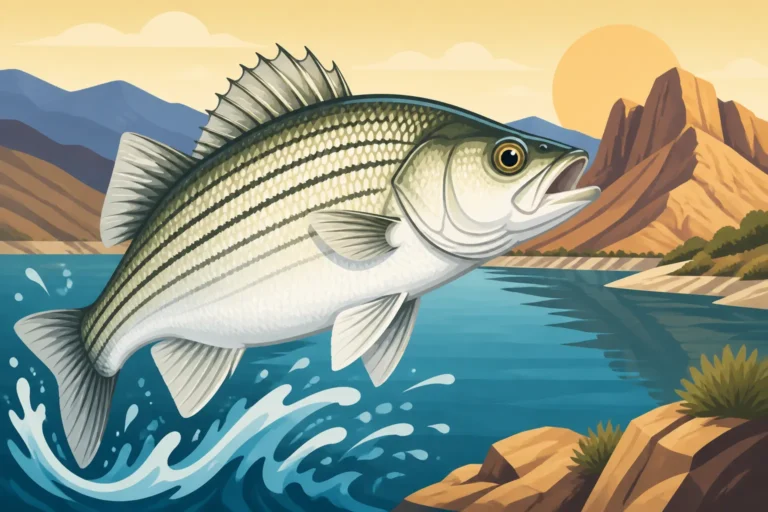
In our state, Lake Mead and Lake Mohave are the primary bastions for striped bass. These massive impoundments offer the vast open water and abundant forage base that stripers need to thrive. Anglers often describe them as elongated, powerful torpedoes. Their bodies are typically silver with a slightly darker back, but the most distinctive feature is their pattern of 7 to 9 prominent, unbroken horizontal stripes that run cleanly from their gill plates all the way to their tail. If you run your finger along one of those lines, you'll feel that it's continuous, without interruption. These fish can grow to impressive sizes in Nevada, providing long, sustained runs that test your tackle and your stamina. Learning about their habits can significantly improve your chances; check out our guide on Striped Bass Fishing in Nevada for more in-depth tips.
Where Stripers Thrive and What They Eat
Lake Mead, in particular, has a legendary reputation for its striped bass fishery. These fish are true predators, often schooling in vast numbers to herd and ambush their primary prey: threadfin shad. You'll often find them chasing baitfish near points, humps, and submerged structure, or busting the surface in what we call "boils" or "schools" when they're actively feeding. It's a spectacular sight to witness a hundred or more stripers thrashing the surface as they decimate a school of shad.
Fishing for stripers typically involves targeting these feeding frenzies with topwater lures, spoons, or swimbaits. When they're not actively boiling, jigging with heavy spoons or fishing with live or cut bait (like anchovies or shad) can be incredibly effective, especially in deeper water. They are constantly on the move, searching for food, which is why a good fish finder can be an invaluable tool. For deeper dives into specific locations, our Lake Mead Nevada Fishing Guide offers a wealth of information, including hotspots and techniques. You can find a vast selection of appropriate lures and bait, from shiny spoons to realistic shad imitations, easily accessible on Amazon.
Delving into the Wiper (Hybrid Striped Bass)
While purebred stripers have their own wild charm, the wiper brings a different kind of excitement to Nevada's fishing scene. This isn't a naturally occurring species; it's a carefully engineered fish designed to combine the best traits of two distinct species.
A Man-Made Marvel: The Hybrid Story
The wiper, or hybrid striped bass (Morone saxatilis x Morone chrysops), is exactly what its name implies: a hybrid. It's the offspring of a cross between a female striped bass and a male white bass. This hybridization began in the 1960s, driven by a desire to create a sportfish that could thrive in a wider range of freshwater environments, grow quickly, fight hard, and offer a robust fishery. The result is a fish that often grows faster than a white bass and is hardier than a purebred striped bass, making them an excellent candidate for stocking in various reservoirs that might not be ideal for stripers.
In Nevada, wipers are primarily found in waters like Rye Patch Reservoir, where they are regularly stocked to create a vibrant fishery. These fish are known for their aggressive nature and ferocious fighting style, often surprising anglers with their sheer power. They are a testament to modern fisheries management, providing a unique angling experience that blends the characteristics of their parent species. To truly appreciate their unique traits, a closer look at Wiper Hybrid Bass Identification is certainly in order.
Identifying a Wiper in the Wild
Now, this is where the rubber meets the road for distinguishing between the two. While they share a strong resemblance to their striped bass parent, wipers have several key identifiers that, once you know what to look for, make them relatively easy to spot.
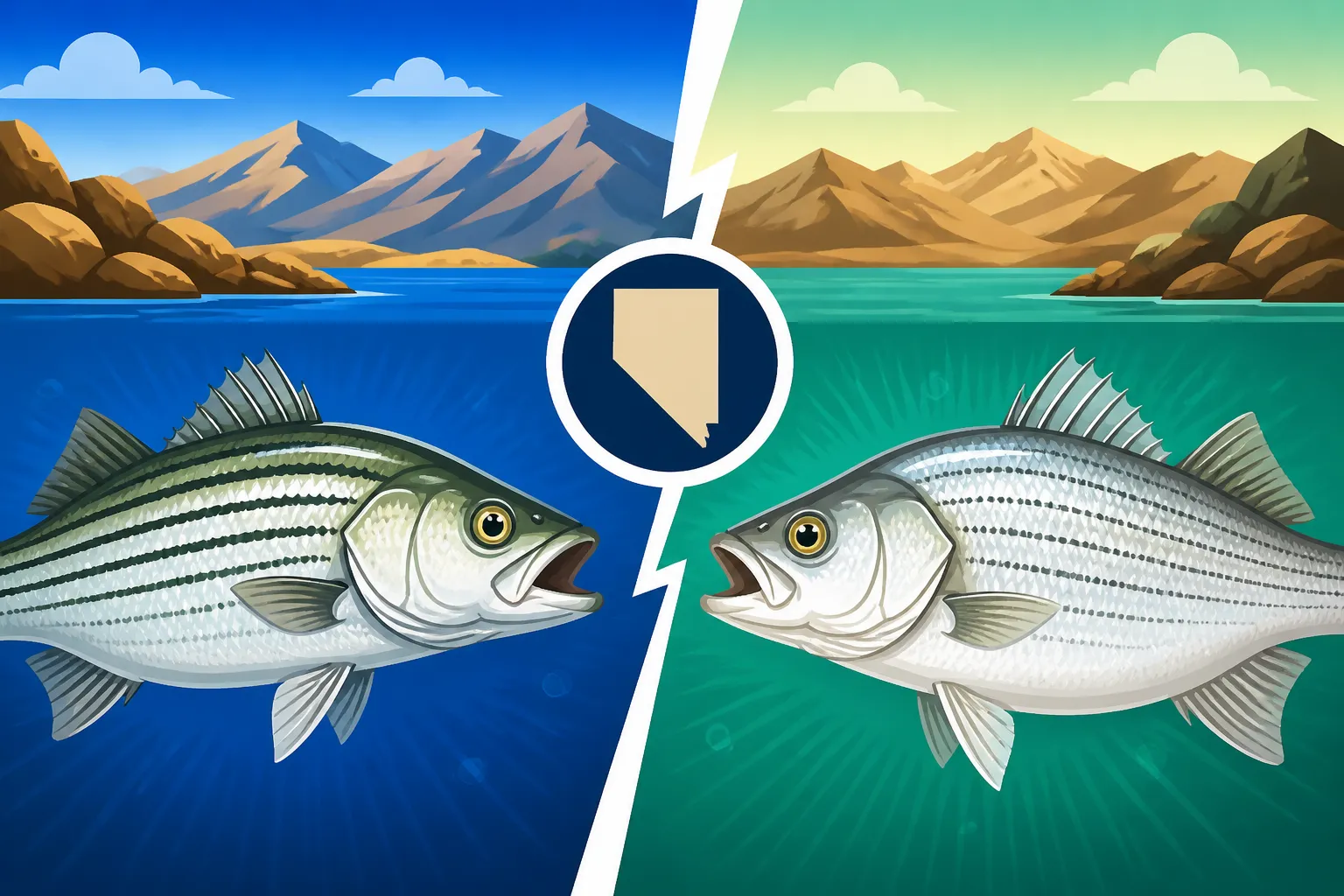
The most crucial visual cue lies in their stripes. Unlike the perfectly straight, unbroken lines of a purebred striper, a wiper's stripes are typically broken, irregular, or disjointed, especially on the lower half of its body. You might see stripes that zig-zag, fade out, or stop and start again. Sometimes, they even appear as a series of dashes rather than continuous lines.
Beyond the stripes, wipers also tend to have a deeper, more "stocky" or "bass-like" body shape compared to the more elongated, slender profile of a striper. They often look more compact and stout. Another subtle difference can be found in their dorsal fins. While both have two dorsal fins, a wiper's are often connected at the base or are very close together, showing less of a distinct gap than those on a pure striped bass. Anglers consistently praise wipers for their incredible fighting spirit – they're known for powerful, short bursts and an unwavering determination. If you want to dive into techniques for catching these feisty hybrids, our guide on How to catch a wiper hybrid bass can set you on the right path.
The Definitive Showdown: Striper vs. Wiper
So, you're standing on the shore of Lake Mead or Rye Patch, you've just landed a silver bullet, and you're still wondering: "Is it a striper or a wiper?" Let's break down the definitive differences so you can be confident in your identification.
Visual Cues and Genetic Lineage
The most reliable way to tell these two apart is by carefully examining their stripe pattern and overall body shape. It really boils down to purity versus hybridization. One is a product of millennia of natural evolution in coastal environments, while the other is a testament to human intervention in fisheries science.
Here's a quick comparison table to keep handy:
| Feature | Striped Bass (Striper) | Hybrid Striped Bass (Wiper) |
|---|---|---|
| Origin | Purebred species, native to coastal regions | Hybrid (female Striper x male White Bass) |
| Stripe Pattern | Unbroken, distinct, uniform horizontal lines | Stripes are often broken, irregular, or wavy, especially below the lateral line |
| Body Shape | More elongated, slender, torpedo-like | Deeper bodied, stockier, more compact |
| Dorsal Fins | Two distinctly separated dorsal fins | Two dorsal fins, often connected at the base or very close together |
| Mouth | Large, lower jaw protrudes beyond the upper | Large, similar to striper, but can sometimes appear slightly less pronounced |
| Nevada Habitat | Primarily Lake Mead, Lake Mohave | Primarily Rye Patch Reservoir and other stocked impoundments |
| Fighting Style | Strong, powerful, sustained runs | Often described as more aggressive, explosive, and hard-hitting |
Remember, the stripes are your number one indicator. Take a moment to look closely at the lines below the lateral line. Are they clean and continuous, or do they look like someone drew them with a shaky hand? That's your biggest clue! For anyone serious about fish identification, a good waterproof field guide is something you can find on Amazon and carry with you.
Implications for the Angler in Nevada
Knowing the difference between a striper and a wiper isn't just about showing off your fish identification skills; it has practical implications for your fishing trip in Nevada.
First and foremost, regulations can differ. While both are highly prized game fish, the Nevada Department of Wildlife (NDOW) sometimes has specific regulations for different species, or even different waters. Bag limits, size restrictions, and even seasonal closures could potentially vary between purebred stripers and hybrid wipers. It is absolutely crucial to consult the latest Nevada Fishing Regulations Explained booklet or online resources before you head out. Ignorance of the law is no excuse, and a simple misidentification could lead to an unintentional violation. You'll want to review Nevada Statewide Bag Limits Explained to avoid any issues.
Secondly, understanding their differences can subtly inform your fishing techniques and gear choices. While many lures and baits will work for both, knowing which species you're primarily targeting can help you fine-tune your approach. For example, if you're specifically after a trophy striper in Lake Mead, you might focus more on deeper trolling or jigging patterns with larger baits, whereas wipers in a smaller reservoir might respond well to different casting techniques near structure. Having versatile gear, like a medium-heavy spinning rod with a good reel, can be great for both, and you can always browse Amazon for high-quality rods and reels suitable for aggressive fish.
Finally, there's the sheer satisfaction of knowing your catch. Whether you're a seasoned pro or a casual angler, being able to accurately identify the fish you've landed adds another layer of appreciation to the sport. It connects you more deeply with the ecosystem you're enjoying and makes you a more knowledgeable, responsible angler. The Nevada Fish Species Guide is an excellent resource for broadening your knowledge of all the incredible fish that call our state home.
Catching Both: Tactics and Considerations
While distinct, both stripers and wipers offer fantastic sportfishing opportunities across Nevada. The good news is that many of the tactics you'd employ for one will often entice the other, given their shared predatory nature. However, subtle adjustments can increase your success.
Tailoring Your Approach
When you're out on the water, whether it's the vast expanse of Lake Mead or the more intimate waters of Rye Patch, you'll find that both stripers and wipers are aggressive feeders. General techniques include casting various artificial lures like swimbaits, jerkbaits, spoons, or even large spinnerbaits. Live bait, particularly threadfin shad where legal and available, is also incredibly effective for both species. Many anglers find Best Lures for Striped Bass also work wonders for wipers.
However, consider their preferred habitats. Stripers in Lake Mead or Mohave are often found in large, open-water schools, especially when they're chasing baitfish. This makes trolling or long-distance casting into boiling schools highly effective. Wipers, while also schooling, might be found more often relating to structure, humps, or channel edges in smaller reservoirs. They're often ambush predators, similar to black bass, and might hold closer to cover. Observing their behavior and adjusting your presentation based on the water body and known habits of each species can lead to more consistent hookups. For those looking to target the bigger stripers, mastering Jigging Techniques for Lake Mead Stripers is a game-changer.
Why Identification Matters Beyond the Catch
The importance of distinguishing between a striper and a wiper extends beyond personal satisfaction or even just optimizing your fishing technique. It's a critical aspect of being a responsible and law-abiding angler in Nevada.
As mentioned, regulatory compliance is paramount. Fisheries biologists and wildlife agencies like NDOW implement specific rules based on species to manage populations sustainably. Misidentifying your catch could inadvertently lead to keeping fish outside of legal size limits or exceeding bag limits, resulting in fines or other penalties. Always carry a copy of the current regulations or have them accessible on your phone, paying close attention to any species-specific or water-specific rules.
Furthermore, accurate identification contributes to conservation efforts. By understanding which species are present and in what numbers, biologists can better manage stocking programs, habitat restoration, and overall fishery health. Your accurate reporting of catches, even if just to yourself or your fishing buddies, helps build a collective knowledge base that benefits everyone who loves to fish.
Ultimately, knowing the difference between a striper and a wiper enriches your entire fishing experience. It allows you to appreciate the unique biology of each fish, to target them with more informed strategies, and to participate responsibly in the preservation of Nevada's fantastic fisheries. The next time you feel that powerful tug, you'll not only enjoy the fight but also know exactly which magnificent fish you've brought to hand.
Disclaimer
This article is for general informational purposes only and does not constitute professional advice. Laws, prices and regulations vary by location and change over time. Consult a qualified professional for guidance on your specific situation.