Best rod length for shore fishing at a reservoir
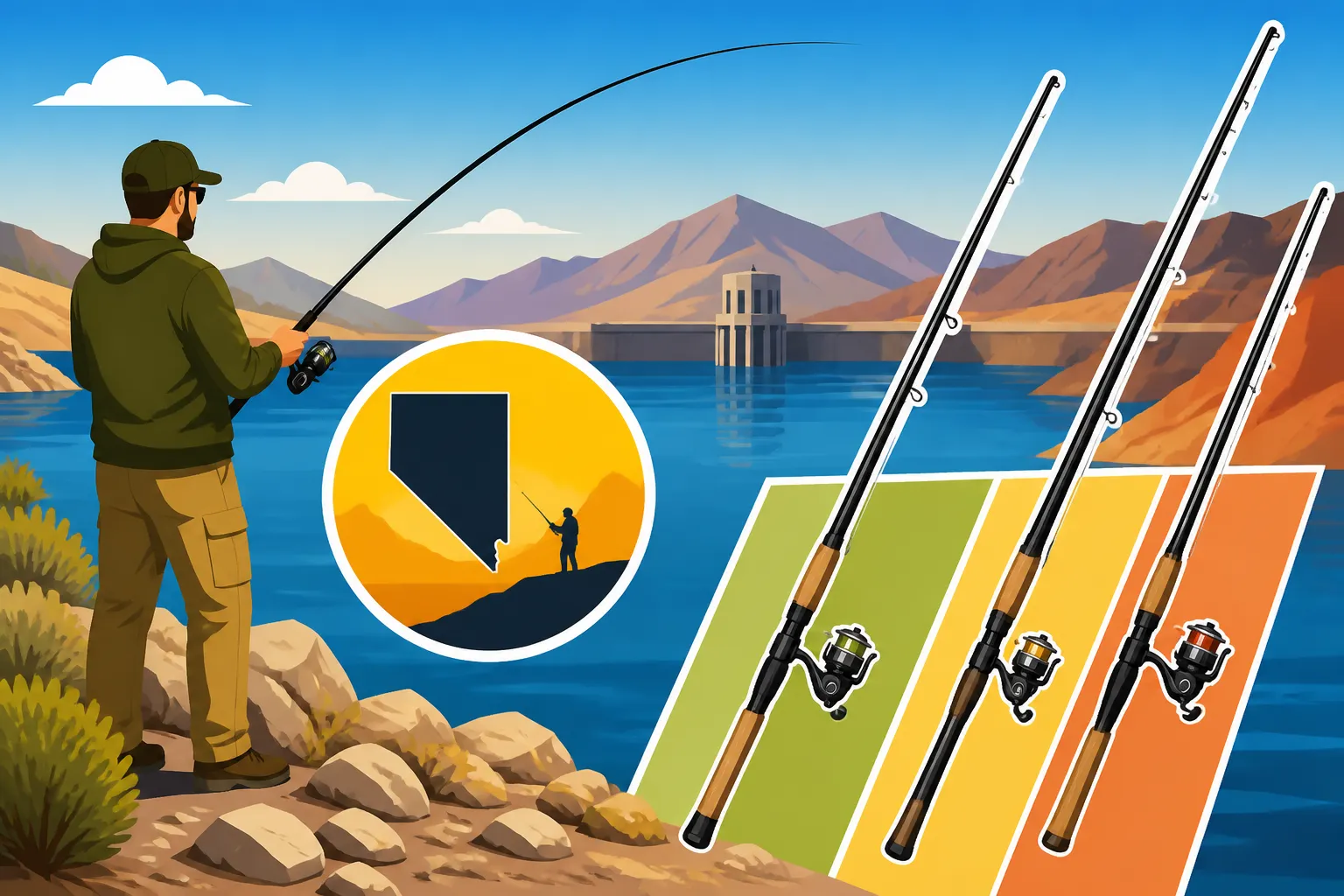
There’s nothing quite like the feeling of standing on the shore of a vast Nevada reservoir, the sun warming your face, and the anticipation of a tug on your line. But let's be honest, it can be incredibly frustrating trying to figure out if your fishing rod is actually helping you or holding you back, especially when you’re confined to the bank. This guide is all about helping you nail down the perfect rod length for your next shore fishing adventure in Nevada, ensuring you can cast farther, fight fish better, and truly enjoy your time on the water.
Understanding the Dynamics of Reservoir Shore Fishing in Nevada
Fishing from the shore of Nevada’s reservoirs presents a unique set of challenges and opportunities that are often overlooked by anglers who might be more accustomed to boat fishing or smaller, more accessible waters. The vastness of places like Lake Mead or Lake Mohave, coupled with their often-dramatic shorelines, means that your rod choice isn't just a preference – it's a strategic decision.
The Unique Challenges of Nevada's Reservoirs
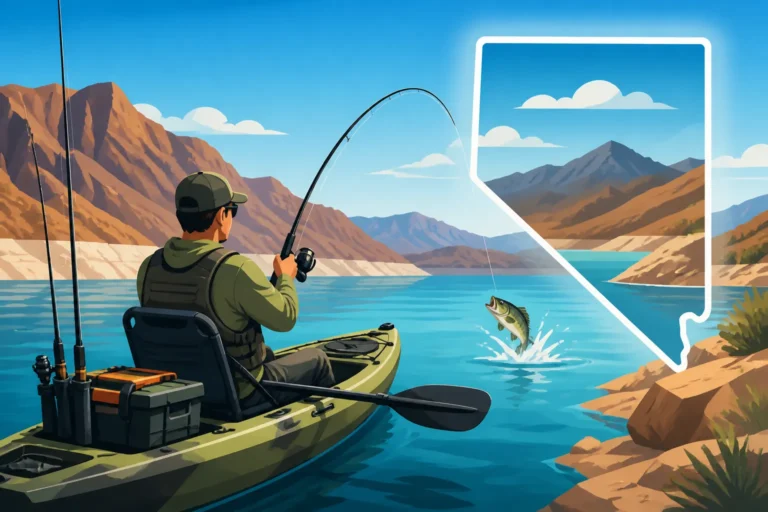
Nevada's reservoirs aren't your average placid ponds. They are often massive bodies of water, carved out of arid landscapes, with fluctuating water levels that can dramatically change the shoreline from one season to the next, or even week to week. You might find yourself casting from a rocky bluff one day and a gently sloping gravel beach the next. These varied terrains mean you’re not always able to get right up to the best fishing spots, forcing you to cast farther. Think about fishing for those elusive striped bass at Lake Mead; they might be schooling just beyond your comfortable casting range. Or perhaps you're targeting trout in a smaller, but still expansive, reservoir where the deeper channels are far from the bank. Lake Mead Nevada Fishing Guide offers a great overview of these large waters.
Another factor is the potential for obstacles. You might have dense brush behind you, making long backcasts nearly impossible, or submerged rocks and trees that can quickly snag your line once you hook into a fish. The sheer size of these reservoirs also means that weather, especially wind, can play a huge role. A strong headwind can cut your casting distance dramatically, regardless of your technique, making a longer rod with more leverage a real advantage. Without the mobility of a boat, shore anglers have to rely on their gear to bridge the distance and adapt to the environment.
Why Rod Length Matters for Shore Anglers
When you're planted firmly on the bank, your rod is your primary tool for reaching fish. The length of that rod directly impacts several crucial aspects of your fishing experience, from how far you can send your bait to how effectively you can control a hooked fish. It's a trade-off, and understanding these dynamics is key to making an informed choice.
First and foremost, casting distance. A longer rod generally allows for greater casting distance. This is due to the increased leverage and arc created during the cast, which propels your lure or bait further out into the water. This extra distance can be absolutely vital when the fish are holding in deeper water away from the immediate shoreline, or when you need to reach a specific submerged structure that's just out of reach with a shorter rod. For instance, when chasing trophy Lahontan cutthroat trout at Pyramid Lake, covering significant water from the tufa rock formations often necessitates a longer rod to get your fly or lure where the big fish are. Pyramid Lake Nevada Fishing Guide delves into the specifics of this unique fishery.
Secondly, control and sensitivity. While longer rods offer distance, they can sometimes sacrifice a bit of pinpoint accuracy in tight casting situations and can feel less sensitive in your hands, especially with lighter bites. Conversely, a shorter rod gives you more precise control over your lure and can be incredibly sensitive, allowing you to feel even the most subtle nibbles. However, fighting a powerful fish on a shorter rod from the shore can be more challenging, as you have less leverage to steer the fish away from snags or turn its head when it makes a run. The battle becomes more about brute force and reel drag management rather than the rod's ability to absorb shock and guide the fish.
Ideal Rod Lengths for Different Shore Fishing Scenarios
Choosing a rod isn't a one-size-fits-all situation, especially when you factor in the diverse conditions found around Nevada's reservoirs. What works perfectly for casting across a wide-open stretch of Lake Mohave might be a nightmare when you're tucked into a brushy cove on Lake Mead. Let's break down the optimal rod lengths for various shore fishing situations.
Reaching Distant Waters: The Case for Longer Rods
If your goal is to launch your lure or bait as far as humanly possible, perhaps to reach a distant drop-off, a submerged island, or a school of actively feeding fish beyond the immediate bank, then a longer rod, generally in the 9 to 12-foot range, is going to be your best friend. These rods are often referred to as surf rods, despite being excellent for large freshwater reservoirs, or sometimes simply "long casting" rods.
Imagine you're targeting striped bass on the main body of Lake Mead. These fish often cruise in open water, or might be feeding on shad that are pushed out past the first few yards of shoreline. A 10-foot rod allows you to put a 2-ounce Kastmaster or a heavy bait rig well past the breaking waves, giving you access to fish that shorter rods simply can’t reach. The increased lever arm of a longer rod builds more momentum during the cast, transferring that energy into distance. They also excel at keeping your line above obstructions closer to the shore, which is a huge advantage when fishing over rocky banks or submerged weed beds. How to Fish for Striped Bass in Nevada offers more insights into these powerful fish.
Beyond casting, these longer rods offer superior line control. When you hook into a powerful fish like a striper or a large trout, a longer rod helps you absorb hard runs, keep the fish’s head up, and steer it away from snags or fellow anglers' lines. It’s like having an extended arm that gives you more authority over the fish. The downside, of course, is that they can be cumbersome to transport, especially if you have to hike to your spot, and can be challenging to wield in areas with overhead obstructions or dense shoreline vegetation.
Maneuvering Tight Spots: When Shorter Rods Shine
On the other end of the spectrum, sometimes you’re not looking for maximum distance, but rather precision and maneuverability. This is where shorter rods, typically ranging from 6 to 8 feet, truly come into their own. They are ideal for situations where space is limited, or when you’re targeting fish that are holding closer to the bank.
Consider fishing a smaller coves or an urban pond in Las Vegas, perhaps at Floyd Lamb Park, where you might have trees, bushes, or other structures close behind you. A 6.5-foot rod makes it much easier to make accurate roll casts, pitch jigs under overhanging branches, or flip baits into small pockets of water without getting tangled. You have a lot more control over your casting motion, which translates directly to better accuracy. These rods are also fantastic for lighter lures and baits, making them perfect for targeting panfish like bluegill and crappie, or even smaller bass that might be hugging the shoreline cover. Las Vegas Nevada Urban Pond Fishing Guide can provide more detail on these accessible fishing spots.
Another benefit of shorter rods is their enhanced sensitivity. The shorter blank transfers vibrations from your line directly to your hand with less dampening, allowing you to feel subtle bites, the texture of the bottom, or even your lure bumping against a submerged log. This can be a game-changer when fishing for finicky bass that might just "mouth" a bait. While they don't offer the casting distance of their longer counterparts, their ability to deliver precise presentations and detect light strikes makes them invaluable in specific situations.
The Versatile All-Rounder: Mid-Length Rods
For many shore anglers in Nevada, a rod in the 7 to 9-foot range strikes a fantastic balance, offering a good compromise between casting distance and maneuverability. If you're only going to own one rod for reservoir shore fishing, this is often the sweet spot.
A 7.5-foot or 8-foot rod, for example, gives you significantly more casting distance than a shorter 6-foot rod, allowing you to reach many productive areas that are just beyond the comfortable range of a typical bass or trout rod. Yet, it's usually still manageable enough to handle in slightly brushier conditions or to transport without too much hassle. You can still make accurate casts, but you gain that crucial extra leverage for fighting fish and for pushing your lure a bit farther out.
This mid-range length is incredibly versatile. It’s effective whether you're tossing spoons for rainbow trout, working spinnerbaits for largemouth bass, or even casting lighter plugs for smaller striped bass in areas where they're closer to shore. For anglers who fish a variety of reservoirs and target different species throughout the year, this rod length allows for adaptability without having to switch out your entire setup every time. It’s often the go-to for general-purpose reservoir fishing, allowing you to tackle a wide array of conditions and target species effectively. Best Fishing Rods for Nevada Lakes discusses options for this type of versatility.
Factors Beyond Length: Matching Rod Action, Power, and Material
While rod length is a critical starting point for shore fishing, it's just one piece of the puzzle. To truly optimize your setup for Nevada's varied waters, you need to consider how other rod characteristics, such as action, power, and material, work in conjunction with length to create a harmonious and effective fishing tool. Ignoring these elements means you're missing out on serious performance benefits.
Rod Action and Power for Shore Success
"Rod action" refers to where along the blank a rod bends when pressure is applied. "Rod power" (or "weight") describes how much force it takes to bend the rod. These two characteristics are crucial for matching your rod to your target species and the types of lures or baits you'll be using from the shore.
-
Fast Action: A fast-action rod bends mostly at the tip. This is fantastic for shore anglers because it provides excellent sensitivity, allowing you to feel those subtle bites even at a distance. It also offers quick hook-sets, which is vital when fishing with jigs, worms, or other presentations that require instant response. For casting, a fast-action rod loads quickly, giving you good control and accuracy. If you're slinging artificial lures for bass or trout, a fast-action rod will typically be your preference. How to Fish for Trout in Nevada and How to Fish for Bass in Nevada often recommend faster action rods for lure presentation.
-
Moderate Action: A moderate-action rod bends more in the middle of the blank. This action provides a more parabolic bend, which is excellent for casting lighter baits or lures a good distance with less effort. It also offers a softer, more forgiving bend, which is great for protecting lighter lines and preventing hooks from tearing out of a fish's mouth, especially when using treble hooks. For live bait fishing or when using crankbaits and topwaters where a more cushioned feel is beneficial, a moderate action rod is often ideal.
-
Rod Power (Light, Medium, Heavy): This dictates how much pressure the rod can withstand without breaking and how well it handles different lure weights.
- Light Power: Perfect for panfish, smaller trout, or ultra-light presentations where subtle bites are the norm and you're using very small lures.
- Medium Power: The workhorse for most reservoir shore fishing in Nevada. A medium-power rod, often paired with a fast or moderate-fast action, can handle a wide range of lures and baits, and is suitable for common species like trout, bass, and even smaller striped bass. It offers enough backbone to fight respectable fish without being overkill.
- Heavy Power: Best for targeting larger, harder-fighting species like trophy striped bass, large channel catfish, or casting heavy baits. This rod provides the muscle needed to turn a big fish and handle heavier lines.
Material Matters: Graphite, Fiberglass, and Composites
The material your rod is made from significantly impacts its performance, weight, and durability, all of which are important when you're lugging your gear to a prime shore spot and spending hours casting.
-
Graphite Rods: These are generally lighter, stiffer, and more sensitive. The high sensitivity of graphite allows you to feel even the lightest taps and subtle changes in bottom structure, which is a huge advantage when fishing artificial lures. Their lighter weight also reduces fatigue, a major plus for a long day of casting from the shore. The downside is that graphite can be more brittle and prone to breakage if mishandled or if subjected to extreme stress (like slamming it in a car door – we've all been there!). Many modern, high-performance rods from brands like Bass Pro Shops are primarily graphite.
-
Fiberglass Rods: Historically, fiberglass rods were the standard. They are more flexible, durable, and generally less expensive than graphite. While not as sensitive, their slower action is excellent for casting live baits or for certain crankbait presentations. They absorb shock incredibly well, making them very forgiving when fighting a strong fish, but they tend to be heavier and less sensitive to subtle bites. For beginner anglers or those prioritizing durability and a softer feel, fiberglass still has its place.
-
Composite Rods: These rods blend graphite and fiberglass, aiming to combine the best attributes of both. You get a good balance of sensitivity and durability, often at a more accessible price point. Many mid-range rods use composite materials to offer a versatile option for anglers who want a bit of everything without the premium cost of high-end graphite. For general reservoir shore fishing, a quality composite rod can be an excellent choice.
Reel and Line Pairing Considerations
Your rod doesn't work in isolation; it's part of a system. The reel and line you choose must complement your rod's length, action, and power to achieve optimal performance. An imbalance can negate the advantages of even the best rod.
For shore fishing in Nevada's reservoirs, where casting distance and fighting power are often key, you'll typically be looking at spinning reels. A larger spinning reel (e.g., a 3000 to 5000 series) will balance well with longer rods (9-12 ft) and provide ample line capacity for long casts and powerful runs from fish like stripers. For shorter to mid-length rods (6-9 ft), a 2000 to 3000 series spinning reel is usually a good match, offering a balance of capacity and casting efficiency. Nevada Fishing Gear Essentials outlines other critical components.
As for line, consider braided line for its incredible strength-to-diameter ratio and lack of stretch, which enhances sensitivity and casting distance. Pair it with a fluorocarbon leader for abrasion resistance and invisibility. If you prefer monofilament, choose a high-quality, low-memory line that resists coiling and allows for smooth, long casts. The key is to match the line weight to your rod's recommended ratings to prevent breakage or under-performance. Using line that's too heavy for a light rod will stifle its action, while line that's too light for a heavy rod might snap prematurely under pressure.
Practical Tips for Choosing Your Nevada Shore Fishing Rod
So, you've got a better understanding of rod length, action, power, and materials. Now, how do you put all this information into practice to pick the best rod for your personal shore fishing adventures in the Silver State? It comes down to a few practical considerations that will help narrow down the myriad of options out there.
Assessing Your Go-To Fishing Spots
Think about where you spend most of your time fishing from shore. Are you frequently hitting the vast, open stretches of Lake Mohave, where you need to bomb casts out into the main channel to reach schooling fish? If so, a longer rod, perhaps 9 to 11 feet, with a medium-heavy power and fast action, would likely be your top choice. This setup would allow you to heave heavy lures or bait rigs a great distance and handle the larger fish you might encounter in those expansive waters. Lake Mohave Nevada Fishing Guide details this fantastic fishery.
Or perhaps you prefer the more intimate, albeit still wild, environments of smaller reservoirs or the brushy coves of larger lakes, like some of the quieter spots at Wildhorse Reservoir. Here, you might be casting into tight pockets, around submerged timber, or under overhanging brush. In these scenarios, a shorter, more agile rod, say 6.5 to 7.5 feet, with a medium power and a fast action, would provide the accuracy and control needed to place your lure exactly where you want it. It’s about tailoring your tool to the environment you frequent most.
Considering Your Target Species
The type of fish you're primarily pursuing also heavily influences your rod choice. A rod designed for delicate trout fishing is going to be very different from one built to wrestle a brute of a striped bass.
-
Trout and Panfish: If you're mainly after stocked rainbow trout in urban ponds or smaller reservoirs, or chasing panfish like bluegill, a lighter, more sensitive rod is ideal. A 6.5 to 8-foot rod with a light to medium-light power and a fast or moderate-fast action would be perfect. This allows you to feel those subtle nibbles and enjoy the fight of even smaller fish. Nevada Trout Daily Limit Rules can help you plan your catch.
-
Largemouth and Smallmouth Bass: For bass, versatility is key. They can be found in a variety of cover from shore. A 7 to 8.5-foot rod with a medium to medium-heavy power and a fast action is a popular choice. This length provides good casting distance for covering water, while the power and action offer the backbone for powerful hook-sets and steering bass out of heavy cover. Nevada Bass Daily Limit and Size Rules provides important regulations.
-
Striped Bass and Catfish: When targeting the heavy hitters like striped bass or channel catfish from shore, you'll need a rod with serious backbone and casting power. An 8.5 to 12-foot rod, typically in a medium-heavy to heavy power with a moderate-fast to fast action, will give you the leverage and strength required to cast heavy baits and battle these powerful fish.
Budgeting and Where to Buy
Let's talk about the practical side of things: your wallet. Fishing rods come in a huge range of prices, from very affordable entry-level options to high-end, specialized models. The good news is that you don't need to break the bank to get a perfectly capable shore fishing rod for Nevada.
For beginners, or those on a tighter budget, you can find excellent rod and reel combos for a very reasonable cost that will get you out on the water effectively. As you gain experience, you might want to invest in a higher-quality rod that offers better sensitivity, lighter weight, or more specialized action. Many anglers find a sweet spot in the mid-range, where you get a significant jump in performance without the top-tier price tag.
You can find a vast selection of rods at major retailers, both online and in brick-and-mortar stores. Large sporting goods stores like Bass Pro Shops often have extensive selections, allowing you to physically hold and feel different rods, which is invaluable. They also typically have knowledgeable staff who can help guide your decision. Online retailers such as Amazon also offer a massive inventory, often with competitive pricing and the convenience of home delivery, though you miss out on the tactile experience of handling the rod before purchase. Don't forget to check out local tackle shops too; they often have great regional advice and unique gear.
No matter your chosen rod, remember that practice makes perfect. The best rod in the world won't catch fish if you don't learn how to use it effectively. Spend time casting, feeling your lure, and learning to read your rod's signals. Happy fishing!
Here's a quick comparison of rod lengths for shore fishing in Nevada's reservoirs:
| Rod Length Range | Primary Use Cases | Advantages | Disadvantages | Target Species Examples |
|---|---|---|---|---|
| 6-8 feet | Tight spots, close-range accuracy, light tackle | High accuracy, sensitive, easy to maneuver, portable | Limited casting distance, less leverage for big fish | Panfish, small trout, bass in tight cover |
| 7-9 feet | General purpose, balanced distance and control | Versatile, decent casting distance, good fish fighting | Not specialized for extreme conditions | Trout, bass, smaller striped bass, catfish |
| 9-12 feet | Maximum casting distance, open water, heavy baits | Long casts, excellent leverage for large fish | Cumbersome, less accurate in close quarters | Large striped bass, trophy trout, large catfish, carp |
Disclaimer
This article is for general informational purposes only and does not constitute professional advice. Laws, prices and regulations vary by location and change over time. Consult a qualified professional for guidance on your specific situation.