Best anchor rope length for Lake Mead depths
Oh, the sheer frustration of trying to anchor on a vast, beautiful lake like Lake Mead, only to have your boat drag or discover your anchor rope just isn't long enough to hold! It’s happened to the best of us—you think you’ve got enough, you drop anchor, and then a gust of wind or a bit of swell sends you drifting right into someone else's fishing spot, or worse, toward a rocky shore. This guide is here to untangle the mystery of anchor rope length, helping you understand exactly what you need to keep your boat secure in Lake Mead's unique and often surprisingly deep waters.
Understanding Lake Mead's Unique Depths and Bottom
Lake Mead isn't your average puddle. It’s a massive, man-made reservoir with incredible variations in depth, from shallow coves to vast, deep channels that plunge hundreds of feet. Knowing this terrain is the first step in mastering your anchoring strategy. You can't just guess; you need to prepare for the unexpected.
The Geography of Lake Mead's Waters
Imagine launching your boat into Lake Mead. One moment you're in a calm, relatively shallow bay like Hemenway, perfect for an afternoon swim or a bit of shore fishing. The next, you might be cruising over an old river channel that drops precipitously. The lake was formed by damming the Colorado River, and those original riverbeds, canyons, and vast expanses now lie beneath the surface. This means that while some areas are ideal for casual anchoring with shorter ropes, others demand a much more substantial setup. Ignoring this variation is a recipe for a dragging anchor and a very stressful day on the water.
When you're out there, whether you're chasing Lake Mead Striped Bass Hotspots or just enjoying the scenery, you'll encounter everything from gradual slopes to sudden drop-offs. The depths can be deceiving, and relying on visual cues alone won't cut it. Your chart plotter or depth finder becomes your best friend, not just for navigation but for understanding the bottom contours where you plan to stop.
Bottom Composition Matters for Holding Power
Beyond depth, the type of bottom material on Lake Mead plays a huge role in how well your anchor will hold. It’s not just about how much rope you have out, but what that anchor is digging into. A good anchor can grab hold of soft mud or sand, but it might struggle with a hard, rocky bottom, or slide right over slick clay.
Lake Mead's bottom varies widely. You'll find areas of silt and mud, especially in the quieter coves where sediment has settled over decades. These are generally good for anchors designed to dig in. Then there are vast areas of rock, gravel, and even old submerged structures from when the lake was first filled. A "rocky" bottom can either mean excellent holding power if your anchor finds a crevice, or terrible holding power if it just skims across the surface. Understanding what your anchor is trying to grip helps you choose the right anchor type and, critically, ensure you have enough scope to maximize its effectiveness.
The Golden Rule of Anchoring: Scope and Its Importance
When it comes to anchoring, there’s a term every boater needs to know: "scope." It's not just a fancy word; it's the fundamental principle that determines whether your anchor holds or drags. Scope refers to the ratio of the length of your anchor rode (the anchor chain and rope combined) that is deployed, to the vertical distance from your boat's bow to the seabed. Think of it as how much "slack" or horizontal pull your anchor has to dig in and hold.
What is Scope and Why Does it Matter?
Imagine pulling a rope straight up. It's easy to pull. Now imagine pulling that same rope almost horizontally across the ground. It's much harder to move. That's essentially what scope does for your anchor. By deploying enough rode, you create a low angle of pull on the anchor. This low angle allows your anchor to dig horizontally into the bottom, maximizing its holding power. If you have too little scope, the pull angle on your anchor is steep, and it wants to lift out of the bottom rather than dig in. This is the most common reason anchors drag, leading to stress and potential danger on the water.
On a large, open body like Lake Mead, with its potential for wind and boat wakes, having proper scope is absolutely non-negotiable. You might be anchored calmly one moment, and then a sudden gust or a passing boat sends a wave your way, putting immense strain on your anchor. With insufficient scope, your anchor won't stand a chance. It’ll just skip along the bottom, leaving you in a pickle.
The Recommended Scope Ratio
Most anchoring experts recommend a minimum scope ratio of 5:1 for calm conditions, meaning five parts rode for every one part depth (water depth plus the distance from the water's surface to your anchor attachment point on the boat). For Lake Mead, with its unpredictable winds and potential for deep water, many experienced boaters lean towards a 7:1 or even 10:1 ratio, especially if they plan to stay put for a while or if conditions are a bit breezy. This extra scope provides a much more secure hold and peace of mind.
Let's break that down: if the water is 30 feet deep and your bow is 5 feet above the water, your total vertical distance is 35 feet.
- At a 5:1 ratio, you'd need 35 feet x 5 = 175 feet of anchor rode.
- At a 7:1 ratio, you'd need 35 feet x 7 = 245 feet of anchor rode.
That's a significant difference, and it illustrates why a longer rope is often essential. Skimping on rope length to save a few dollars is a false economy when considering the safety of your boat and crew.
Calculating Your Ideal Anchor Rode Length for Lake Mead
Now that we understand scope, let’s get down to the brass tacks of calculating how much anchor rode you actually need. This isn't just guesswork; it's a critical calculation for safe and effective anchoring, especially on a lake as dynamic as Lake Mead.
Step-by-Step Rode Length Calculation
To figure out your ideal anchor rode length, you need three key pieces of information:
- Water Depth: This is the depth of the water where you intend to anchor. Always check your depth sounder as you approach your desired spot and once you've stopped. Remember, Lake Mead can have sudden drops.
- Distance from Bow to Waterline: Measure the distance from the point where your anchor attaches on your boat (usually at the bow roller or cleat) down to the waterline. This accounts for the part of your boat that's above the water and needs to be factored into the "vertical distance."
- Desired Scope Ratio: As discussed, aim for at least 5:1, but strongly consider 7:1 or even 10:1 for Lake Mead.
Once you have these, the calculation is straightforward:
(Water Depth + Distance from Bow to Waterline) x Desired Scope Ratio = Minimum Anchor Rode Length.
Let's use an example: You're in a favorite cove on Lake Mead, and your depth sounder reads 40 feet. Your bow cleat is 6 feet above the waterline. You want to be extra secure, so you opt for a 7:1 scope.
(40 feet + 6 feet) x 7 = 46 feet x 7 = 322 feet.
This means you would need at least 322 feet of anchor rode. If your anchor rope is only 200 feet long, you’ll be struggling to hold that spot safely, particularly if the wind picks up. Many boaters find it helpful to mark their anchor rope with colored bands or zip ties at regular intervals (e.g., every 25 or 50 feet) so they can easily tell how much rode they've deployed.
Considering Varied Depths and Contingencies
While a specific spot might be 40 feet deep, what if you drift a little, or decide to move to a slightly deeper or shallower area? It's always a good idea to have enough rope for the deepest water you reasonably expect to anchor in on Lake Mead. If you frequently fish or relax in areas known for 60-foot depths, then calculate for 60 feet, not just your usual 30-foot spot.
It's better to have too much anchor rode than not enough. A common setup for a mid-sized powerboat on Lake Mead might include 20-30 feet of anchor chain followed by 200-300 feet of nylon rope. This gives you plenty of flexibility for a wide range of depths and conditions. You can always deploy less if you're in shallow water, but you can't conjure up extra rope out of thin air when you're in deeper conditions and starting to drag. Thinking about this beforehand is part of being a responsible boater, especially when dealing with the vastness of Lake Mead. Having enough rode also allows you to deal with unforeseen situations, like needing to anchor quickly in an emergency. Essential Safety Gear for Boating on Lake Mead includes being properly equipped for anchoring.
Factors Beyond Depth: Wind, Current, and Boat Type
Calculating the basic scope is a great start, but Lake Mead isn't a bathtub. You have to account for dynamic forces like wind and current, as well as the specific characteristics of your boat. These elements directly impact the strain on your anchor and, consequently, how much rode you need to deploy.
The Impact of Wind and Current
Lake Mead can be notorious for its afternoon winds, especially as the day heats up or a storm rolls in. A gentle breeze at sunrise can quickly turn into a substantial chop and whitecaps by midday, putting considerable stress on your anchor. Wind pushes on your boat’s hull, cabin, and even your bimini top, acting like a giant sail. This creates a pulling force on your anchor that can easily exceed what a minimal scope can handle.
Similarly, while Lake Mead doesn’t have significant river currents throughout most of its main body, certain areas, especially near the dam or where water flows into other sections, can have subtle currents. Even a slight current combined with wind can multiply the forces acting on your boat. When either wind or current increases, you need more scope to maintain that critical low angle of pull on your anchor. This means deploying more rope, even if the depth hasn't changed. Many experienced anglers will increase their scope to 10:1 or even higher if they anticipate strong winds or plan to leave their boat unattended for any length of time. This extra rode acts as a shock absorber, helping to prevent the anchor from breaking free under sudden loads.
How Boat Size and Type Affect Anchoring Needs
Not all boats are created equal when it comes to anchoring. A small jon boat will experience far less windage and pull than a large pontoon boat or a cruiser with a tall cabin. The larger your boat and the more surface area it presents to the wind, the greater the force it will exert on your anchor. This is why a Best boat size for Lake Mead fishing guide will often consider not just capacity, but also how well the boat handles varying conditions, including anchoring.
- Large, high-profile boats: Cruisers, houseboats, and even some large fishing boats with tall cabins will catch more wind. They will require a heavier anchor and a higher scope ratio to ensure they hold securely. You might be looking at 300-400 feet of anchor rode, or more, for these vessels.
- Smaller, low-profile boats: Bass boats, smaller runabouts, and kayaks will generally have an easier time holding position. However, don't get complacent! Even small boats can drag in strong winds, especially if they are light or have minimal anchor gear. For Kayak Fishing Gear for Nevada, a robust anchoring system, even if lighter, is still key.
- Pontoon boats: These are notorious for catching a lot of wind due to their large deck area. If you're using a pontoon boat on Lake Mead, plan for a substantial amount of anchor rode and possibly two anchors, one off the bow and one off the stern, to prevent swinging.
Considering your specific boat’s characteristics is vital. The generic "rules of thumb" for anchoring might get you by on a small pond, but for Lake Mead, you need to tailor your setup to your vessel and the conditions. This often means investing in a longer, higher-quality anchor rode than you might initially think you need. Places like Bass Pro Shops or even online retailers like Amazon offer a wide array of anchor ropes in various lengths and materials.
Choosing Your Anchor Line Material and Type
It’s not just about the length of your anchor rode; the materials it’s made from also play a huge role in its effectiveness and durability. A good anchor system involves both a sturdy rope and a sufficient length of chain to ensure maximum holding power and longevity.
Anchor Rope: Nylon vs. Other Materials
When it comes to the rope portion of your anchor rode, nylon is overwhelmingly the material of choice for most recreational boaters, and for good reason.
- Nylon: This is the gold standard for anchor rope. Why? Because nylon has excellent stretch or "elasticity." This stretch acts as a shock absorber, cushioning the tugs and strains placed on your anchor by waves, wind, and boat movement. Instead of a sudden jerk that could pull your anchor free, the nylon stretches, absorbing the energy and providing a more consistent pull. This elasticity is especially valuable on a lake like Mead, where unexpected boat wakes or wind gusts can quickly arise. Nylon is also strong, durable, and resistant to UV degradation, though prolonged exposure to sunlight will eventually break it down. Its supple nature also makes it easy to handle, coil, and store.
- Polyester/Dacron: While strong and UV resistant, polyester has very little stretch. This means it transmits shock loads directly to the anchor, making it more likely to pull free in surge conditions. It's generally not recommended for the main anchor rode.
- Polypropylene: This rope floats, which can be seen as an advantage by some, as it keeps the line away from your propeller. However, it's not as strong as nylon, degrades quickly in UV light, and lacks the crucial elasticity needed for effective anchoring. It's generally better suited for dinghy painter lines or short-term buoy lines, not your primary anchor.
For Lake Mead, definitely lean towards a high-quality, three-strand or braided nylon anchor rope. Ensure the diameter is appropriate for your boat size to provide adequate strength and handling comfort.
The Crucial Role of Anchor Chain
Never underestimate the power of the anchor chain! Many novice boaters try to get by with just a short section, or worse, no chain at all, and it’s a mistake that will almost certainly lead to a dragging anchor. The chain serves several vital purposes:
- Weight: The primary role of the chain is to add weight to the anchor rode. This weight helps to keep the pull angle on your anchor low and horizontal, even as your boat moves or bobs on the waves. It essentially creates a "catenary" (a curve) in the rode, allowing the anchor to dig in more effectively. Without sufficient chain, the pull on the anchor will be much steeper, causing it to lift and drag.
- Abrasion Resistance: The seabed is often rough and abrasive, especially on Lake Mead with its rocky and gravelly areas. Chain is much more resistant to abrasion than rope, protecting the vulnerable rope from being chafed or cut on sharp rocks. Even 10-20 feet of chain makes a significant difference in protecting your rode.
- Anchor Setting: The weight of the chain helps the anchor to "set" or dig into the bottom more quickly and securely.
For Lake Mead, a minimum of 15-20 feet of galvanized chain is recommended for smaller boats, with 20-30 feet being standard for most mid-sized recreational vessels. Larger boats or those anchoring in particularly challenging conditions might opt for even more. The combination of strong nylon rope and a substantial length of chain creates an effective and secure anchor rode that can stand up to the conditions you'll encounter on Nevada's largest reservoir. This setup is a key component of Best Anchor for Windy Desert Lakes.
| Rode Component | Primary Purpose | Material (Recommended) | Considerations for Lake Mead |
|---|---|---|---|
| Anchor Rope | Shock absorption, length | Nylon (3-strand or braided) | Essential for elasticity against wind/waves. High UV resistance preferred. |
| Anchor Chain | Weight, abrasion resistance | Galvanized steel | Keeps pull angle low, protects rope from rocks. Crucial for holding power. |
| Shackle | Connects anchor to chain | Stainless steel or galvanized | Ensure proper size and secure pin. |
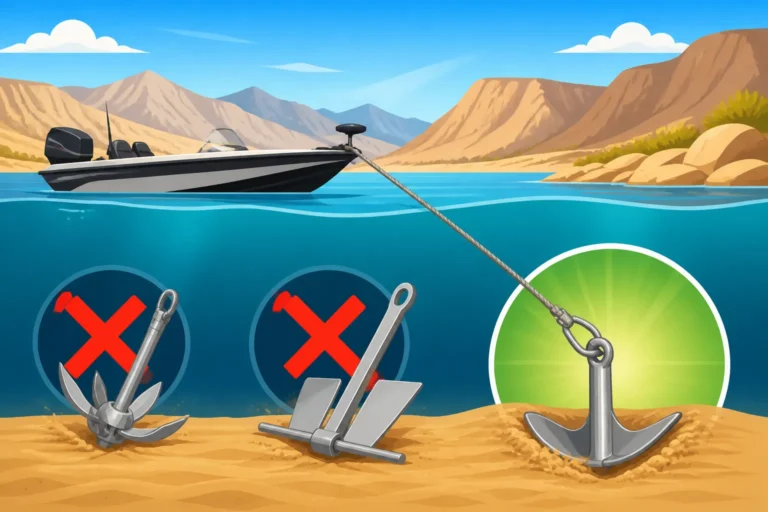
| Anchor | Digs into seabed | Danforth, Plow, Claw | Choose type appropriate for Lake Mead's varied bottom. |
Practical Tips for Lake Mead Anchoring
Even with the right length of anchor rope and the perfect gear, proper technique is essential for successful anchoring on Lake Mead. A little know-how can save you a lot of hassle, and perhaps even prevent damage to your boat or another angler's vessel.
Deploying and Retrieving Your Anchor Effectively
Getting your anchor to set properly isn't just about dropping it; it's a process. First, approach your desired anchoring spot slowly, noting the wind and current direction. You want to anchor "into" the wind or current, so your boat will drift back over the spot where you want the anchor to dig in.
As you begin to drift, gently lower your anchor (don't just throw it!) until it touches the bottom. Then, as your boat continues to drift backward, pay out your anchor rode slowly and steadily, counting your markers, until you've deployed the desired scope (remember those 5:1 or 7:1 ratios!). Once you've paid out enough rode, slowly reverse your boat against the anchor, putting a firm but gentle tension on the line. This helps the anchor dig in and "set." Watch your bow for any sideways movement or unusual vibrations; if it's dragging, you'll feel it or see it on your depth finder. Once set, visually pick out two fixed points on shore that align or move relative to each other to confirm you aren't dragging. This simple trick can save you a lot of grief. For more details, you might check Nevada Fishing Gear Essentials.
When it’s time to retrieve, motor slowly forward, picking up the slack in your anchor rode. Drive directly over your anchor, and as your boat pulls taut above it, the anchor should lift free from the bottom. Avoid dragging the anchor for long distances as this can snag it, or worse, damage the seabed. Make sure your anchor is clean and securely stowed before moving to your next fishing spot or heading back to the ramp.
Safety Considerations and Best Practices
Anchoring on a large, busy lake like Mead comes with inherent safety considerations. Always prioritize safety for yourself, your passengers, and other boaters.
- Clear the Area: Before deploying your anchor, scan the area for swimmers, other boats, and potential hazards like submerged rocks or debris. Give yourself plenty of swing room, remembering that your boat will swing in an arc around the anchor point.
- Anchor Light at Night: If you're anchoring overnight or fishing Is fishing allowed at night at Lake Mead?, ensure your anchor light is on and visible from all directions. This is a crucial safety measure to prevent collisions.
- Backup Anchor: Consider carrying a second, lighter anchor with its own rode, especially if you plan extended stays or encounter particularly windy conditions. This "lunch hook" can be invaluable for temporarily holding position or as a primary anchor in shallow, calm conditions. For true security, a second anchor can be deployed off the stern to limit swing.
- Protect Your Line: Always protect your anchor line from chafing on sharp edges of your boat or through the anchor roller. A good chafe guard or a sturdy bow roller can extend the life of your rode significantly.
- Know Your Limits: If the wind and waves are simply too strong, or the bottom conditions are unsuitable for safe anchoring, don't force it. Sometimes the safest option is to seek a more sheltered cove, head back to a marina, or find a secure dock. Your boat, and more importantly, your life, aren't worth the risk.
By understanding Lake Mead's depths, calculating your scope correctly, choosing the right gear from retailers like Bass Pro Shops or Amazon, and practicing sound anchoring techniques, you'll be well on your way to enjoying countless worry-free days out on the water.
Disclaimer
This article is for general informational purposes only and does not constitute professional advice. Laws, prices and regulations vary by location and change over time. Consult a qualified professional for guidance on your specific situation.