Best pliers for removing hooks from bass
There’s nothing quite as deflating as landing a beautiful Nevada bass, only to find the hook deeply set, making removal a stressful struggle for both you and the fish. The right pair of pliers isn't just a convenience; it's a crucial piece of gear that ensures a quick, safe release for your catch and protects your hands from those sharp trebles. This guide is all about helping you navigate the world of fishing pliers to find the perfect pair for your bass fishing adventures, ensuring a smooth process every time.
Why Good Pliers Are Non-Negotiable for Bass Anglers
When you're out chasing largemouth or smallmouth bass across Nevada's diverse waters, from the coves of Lake Mead to the rocky shorelines of Lake Mohave, having the right tools on hand isn't just a good idea – it's essential. Think about it: you've spent time and effort finding the fish, making the perfect cast, and battling it to the boat or shore. The last thing you want is for the moment of triumph to turn into a frantic struggle because you can't get the hook out cleanly.
Protecting Your Hands (and the Bass!)
One of the most immediate benefits of quality fishing pliers is hand safety. Bass, especially larger ones, have strong jaws and often make last-minute thrashing moves. Trying to finagle a hook out with just your fingers, or worse, an inadequate tool, is a recipe for a painful puncture wound. Those hooks are incredibly sharp, and a slip can ruin your whole day. Beyond your own safety, good pliers are paramount for the health of the fish. A prolonged fight with a deeply embedded hook, or clumsy handling during removal, can cause serious damage to a bass's gills or internal organs, drastically reducing its chances of survival after release. A quick, clean extraction is the goal, and proper pliers make that possible. You want to practice Catch and Release Techniques for Trout as well, applying the same gentle principles to bass.
The Frustration of Deep-Set Hooks
We've all been there: a bass inhaled your crankbait, or a soft plastic worm got swallowed deep. When that hook is buried past the barb, especially in the gullet, it's a tricky situation. Standard needle-nose pliers from the garage often lack the reach, the precise grip, or the right angle to get at those challenging hooks. This is where specialized fishing pliers shine. Their long, often tapered jaws are designed to reach into tight spaces, giving you the leverage and control needed to back out even the most stubborn hooks without tearing up the fish's delicate tissues. The frustration of fumbling around, watching the fish struggle, is completely alleviated when you have the right tool for the job.
Beyond Just Removing Hooks: Versatility
While hook removal is their primary function, a good pair of fishing pliers is often a multi-tool marvel that can handle a variety of tasks on the water. Many pliers come equipped with built-in line cutters, which are invaluable for snipping braid, fluorocarbon, or monofilament quickly and cleanly. This is far better than fumbling for a separate pair of scissors or trying to bite through tough line. Some even feature split ring openers, making it a breeze to change out treble hooks on lures or add a new split ring to a jig without damaging your fingernails. Having one tool that can do several jobs means less clutter in your Best Tackle Box Setup for a Day on the Water and more efficiency when every second counts, whether you're re-tying a knot or switching out a lure like those mentioned in Best Lures for Striped Bass.
Key Features to Look for in Bass Hook Removal Pliers
Choosing the right pair of pliers isn't just about grabbing the first thing you see. There are several critical features that differentiate a mediocre tool from an absolute game-changer. Thinking through these aspects will help you pick a pair that will serve you well for many bass fishing seasons to come.
Material Matters: Durability and Corrosion Resistance
Nevada's desert environment might seem dry, but you're constantly dealing with water, from the vast expanses of Lake Mead to the urban ponds. Exposure to water, especially if you're fishing a lot and don't meticulously dry your gear, can lead to rust and corrosion. This is why the material of your pliers is so important.
- Stainless Steel: This is a common and often excellent choice. Look for "marine-grade" or "high-carbon" stainless steel for better resistance. While not entirely rust-proof, good quality stainless steel holds up well with minimal care. It’s usually more affordable than titanium or aluminum and offers good strength.
- Aluminum: Many high-end pliers are made from aircraft-grade aluminum. These are typically much lighter than their stainless steel counterparts, which is a huge bonus if you're carrying them all day on a lanyard or in a pocket. Aluminum is also highly corrosion-resistant, though it can be softer than steel and might show dings and scratches more easily.
- Titanium: The ultimate in strength and corrosion resistance, titanium pliers are top-tier. They are incredibly light and virtually impervious to rust, even in saltwater environments (though we're talking Nevada bass here!). However, this premium performance comes with a significantly higher price tag.
No matter the material, a protective coating can add another layer of defense against the elements. Look for anodized finishes on aluminum or various anti-corrosion treatments on steel. Remember, even the best materials need a little love – a quick rinse with fresh water and a wipe-down after each trip will dramatically extend the life of any pliers.
Jaw Design: Grip, Reach, and Hook Access
The business end of your pliers is arguably the most important. The shape and design of the jaws dictate how effectively you can grab, hold, and remove hooks.
- Length and Taper: For bass fishing, you generally want pliers with a good length to their jaws – often 5 to 7 inches – to provide sufficient reach, especially for those deeply ingested lures. A tapered design that gets narrower towards the tip is crucial for accessing small spaces in the fish's mouth.
- Tip Type: Fine-tipped jaws offer precision for smaller hooks or delicate work, while slightly thicker, more robust tips might be better for larger, heavier gauge hooks found on bigger bass lures. Some pliers have bent tips, which can be incredibly useful for getting around corners and reaching hooks that are angled awkwardly.
- Serrated vs. Smooth Jaws: Most fishing pliers feature serrated jaws. These tiny teeth provide a much better grip on slippery hook shanks, reducing the chance of the hook slipping out during removal. While smooth jaws might be preferred for very delicate fly fishing, for bass, serrated jaws are generally the way to go for secure handling.
Consider the typical size of hooks you use for Largemouth Bass Fishing in Nevada and Smallmouth Bass Fishing in Nevada. If you often throw large crankbaits with beefy trebles, you’ll need pliers with strong, sturdy jaws that won't flex under pressure. If you primarily use finesse tactics with smaller, lighter wire hooks, then fine-tipped, precise jaws will be more beneficial.
Handle Comfort and Ergonomics
You'll be holding these pliers, often with wet hands or when trying to manage a feisty bass. Comfortable, ergonomic handles are essential for reducing hand fatigue and providing a secure grip.
- Handle Shape: Look for handles that fit naturally in your hand, allowing for a firm, controlled squeeze without undue strain. Finger grooves or textured surfaces can greatly enhance grip.
- Grip Material: Many pliers feature rubber, EVA foam, or textured plastic grips. These materials offer better traction when wet than bare metal and provide a bit of cushioning. Some grips are designed to be non-slip even when covered in fish slime.
- Spring-Loaded Action: Pliers with a spring-loaded mechanism that keeps the jaws open are a fantastic feature. This allows for easy one-handed operation, which is incredibly helpful when you're trying to hold a fish steady with your other hand. It also speeds up the hook removal process.
- Lanyard Loop: A small but important detail, a lanyard loop or attachment point means you can secure your pliers to your belt, vest, or boat. This prevents accidental drops overboard – a scenario we've all feared! Many anglers appreciate being able to clip their pliers within easy reach, so they're always ready when a fish hits.
When shopping, if possible, physically hold the pliers to see how they feel in your hand. Imagine using them when wet or cold. What feels good in the store will translate to better performance on the water.
Additional Features: Cutters, Split Ring Tools, and Sheaths
While hook removal is key, the best fishing pliers often offer more bang for your buck by incorporating other useful tools.
- Built-in Line Cutters: As mentioned, high-quality cutters are a huge advantage. Ensure they are sharp and capable of cleanly cutting different line types – especially braided line, which can fray with dull cutters. Some pliers have replaceable carbide cutters, meaning you can swap them out if they get dull without buying a whole new tool. Brands like Bass Pro Shops often carry models with these features.
- Split Ring Openers: For those who frequently swap out hooks or add hardware to lures, a small protrusion on the jaw designed to open split rings is a blessing. It saves your fingernails and prevents you from having to carry a separate, tiny tool.
- Crimpers: Less common for bass-specific pliers but found on some multi-purpose tools, crimpers can be useful if you use leader material with crimp sleeves for certain presentations.
- Sheaths and Lanyards: A good sheath protects your pliers from the elements and keeps them from snagging on other gear. Look for durable, quick-drying materials like nylon or molded plastic. A coiled lanyard can prevent accidental drops while keeping your pliers accessible. If you buy your pliers online, say from Amazon, make sure to check if a sheath and lanyard are included, or if you'll need to purchase them separately.
Different Types of Pliers for Different Bass Fishing Scenarios
Just like there isn't one perfect lure for every bass fishing situation, there isn't a single "best" plier for every scenario. Understanding the nuances of different plier types will help you assemble a kit that's truly versatile.
Long-Nose Pliers for General Purpose
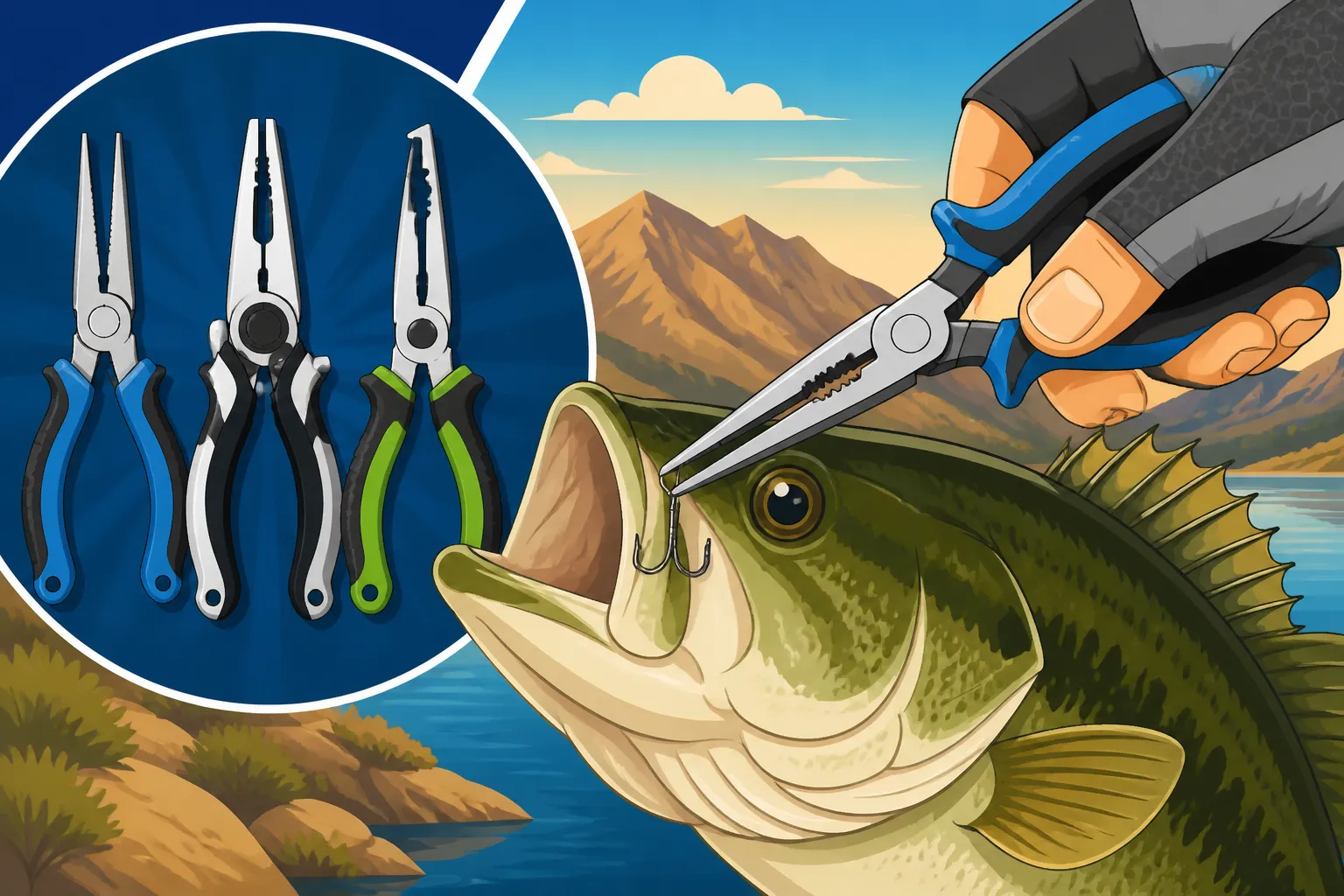
These are your workhorses, the bread and butter of most bass anglers' tool kits. Long-nose pliers are characterized by their extended, narrow jaws, which offer excellent reach into a fish's mouth.
- Versatility: They excel at handling a wide range of hook sizes, from medium crankbait trebles to single hooks on jigs and Texas rigs. Their length is ideal for reaching those hooks that are swallowed just a bit too deep, but not excessively so.
- Common Use Cases: You'll find yourself reaching for long-nose pliers most often when you're using various baits and need a reliable, all-around tool. They're great for bending a hook point slightly if needed, pinching a split shot, or adjusting a lure component.
- Variations: You can find long-nose pliers with straight jaws or slightly bent tips. Many anglers prefer the bent-tip version for bass, as it can offer a better angle for pulling hooks out, especially when the fish is still moving a bit. For general Best Tackle for Nevada Bass Fishing, a good quality pair of 6- to 7-inch long-nose pliers is indispensable.
Hemostats for Finesse and Smaller Hooks
Don't let their surgical appearance fool you; hemostats (also known as forceps) are incredibly valuable tools for specific bass fishing situations, particularly when dealing with smaller fish or finesse presentations.
- Precision and Delicate Work: Hemostats feature very fine, often serrated jaws that lock shut, providing an incredibly secure grip. This precision makes them perfect for smaller, lighter wire hooks, especially those used for drop-shotting, Ned rigs, or small finesse jigs where the hook might be tiny and delicate.
- Deep-Set, Delicate Hooks: If a small hook is swallowed extremely deep and you need to be very careful to avoid damaging the fish, hemostats offer unparalleled control. Their slim profile allows them to get into tight spots without causing unnecessary trauma.
- Limitations: While fantastic for precision, hemostats lack the raw strength and leverage of larger pliers. They are not ideal for heavy-gauge hooks, large trebles, or for cutting thick line. They also don't typically include line cutters or split ring openers. Think of them as a specialized tool for finesse anglers or when you're specifically targeting smaller bass with lighter gear.
Specialty Pliers for Heavy-Duty Applications
For anglers who target monster bass, or those who find themselves frequently in situations with deeply swallowed, heavy-duty hooks, specialty pliers step up to the plate.
- Heavy-Duty Construction: These pliers are often larger, built with robust materials like titanium or heavy-duty stainless steel, and feature thicker, stronger jaws that won't flex or bend under extreme pressure. They are designed to stand up to the rigors of big fish and tough hooks.
- Extra Long Reach: Some specialty pliers feature significantly longer jaws, sometimes extending 8 to 11 inches. This extended reach is crucial when a large bass absolutely inhales a big swimbait or a deep-diving crankbait, and the hook is way down.
- Power and Leverage: Their larger size and construction provide superior leverage, making it easier to extract stubborn hooks from tough cartilage or bone. While long-nose pliers are great for general use, these heavy-duty options are built for those extreme cases where smaller pliers just won't cut it. They might also feature more powerful line cutters capable of slicing through heavy braided line or wire leaders without a hitch. If you're planning a trip to go after big fish, perhaps where Nevada Largemouth Bass Minimum Size Limit is generous, these could be worth the investment.
| Feature | Long-Nose Pliers | Hemostats (Forceps) | Heavy-Duty Pliers |
|---|---|---|---|
| Primary Use | General hook removal, versatile | Precision for small/delicate hooks, finesse fishing | Deep-set, large, heavy-gauge hooks, big fish |
| Jaw Length/Reach | Good, all-around (5-7 inches) | Short to medium, very fine tips | Excellent, often extra-long (7-11+ inches) |
| Jaw Strength | Moderate to strong | Delicate, precise grip | Very strong, robust |
| Precision | Good | Excellent, locks onto hook | Good, but less fine than hemostats |
| Durability | Good (stainless steel/aluminum) | Moderate (can bend if forced) | Excellent (titanium/heavy steel) |
| Added Features | Often includes cutters, sometimes split ring | Rarely includes cutters or split ring | Often includes heavy-duty cutters, sometimes crimpers |
| Ergonomics | Generally comfortable, some spring-loaded | Fine, often ring-handle for secure grip | Robust handles, powerful grip |
| Cost Shape | Mid-range | Lower to mid-range | Higher-end |
Tips for Efficient and Safe Hook Removal
Having the best pliers is only half the battle; knowing how to use them effectively and safely is equally important. These tips will help you become more proficient at hook removal, benefiting both you and the fish.
Practice Makes Perfect: Techniques
No one is born an expert at hook removal. It takes practice and a gentle approach to master the technique.
- Preparation is Key: Before you even cast, have your pliers easily accessible. Many anglers keep them on a coiled lanyard clipped to their belt or fishing vest. This prevents fumbling when a fish is on the line.
- Control the Fish: Once landed, try to cradle the fish gently but firmly. For bass, a lip grip (if you have one) or a secure hold on its lower jaw can immobilize it enough for safe hook removal. Keep its body in the water if possible, especially on hot days, to reduce stress.
- Assess the Hook Set: Take a moment to see where the hook is embedded. Is it shallow in the lip? Or deep in the throat? This will dictate your approach.
- The Extraction Method:
- Shallow Hooks: For hooks in the lip or corner of the mouth, simply grip the shank of the hook with your pliers, apply steady, firm pressure, and back the hook out the way it went in. Avoid yanking or twisting excessively.
- Deep-Set Hooks: This is where good pliers truly shine. Reach in with the pliers, grip the hook shank as close to the bend as possible, and once again, apply firm, steady pressure to back it out. Sometimes a slight rotation of the hook (away from vital organs) can help dislodge it. Take your time, be patient, and avoid tearing. If you’re ever unsure about Handling and Releasing Lahontan Cutthroat Trout, the same principles of gentleness apply to bass.
- Release Gently: Once the hook is out, ease the fish back into the water. If it seems stunned, hold it upright by the tail and gently move it back and forth to force water over its gills until it swims away under its own power.
Keeping Your Pliers Maintained
Even the best pliers won't last if they're neglected. A little post-trip maintenance goes a long way.
- Rinse After Every Trip: This is crucial, especially if you've been in murky water or if your pliers have gotten slimy. A quick rinse with fresh tap water removes dirt, slime, and any corrosive elements.
- Dry Thoroughly: After rinsing, wipe your pliers completely dry with a towel. Pay extra attention to hinges and joints where water can sit and lead to rust. Air drying is fine, but a towel dry is better for prevention.
- Lubricate: Periodically, apply a drop or two of light oil (like reel oil or a multi-purpose lubricant) to the pivot points and moving parts of your pliers. This keeps them operating smoothly and adds another layer of corrosion protection.
- Check Cutters: If your pliers have line cutters, inspect them regularly. If they start to fray line instead of cutting cleanly, they might be dull. Some pliers have replaceable cutters, which is a fantastic feature.
- Store Properly: Keep your pliers in their sheath, or in a designated spot in your tackle box, away from other tools that might scratch or ding them.
Following these simple steps will ensure your pliers are always ready for action, just like ensuring your Essential Safety Gear for Boating on Lake Mead is always in top condition.
When to Cut Your Line (and When Not To)
Sometimes, no matter how good your pliers or how skilled you are, a hook is just too deep, too stubborn, or too dangerously placed to remove without causing severe harm to the fish. This is where you might have to make a tough call.
- When to Cut: If a hook is swallowed so deeply that you can barely see it, or if it appears to be embedded in a vital organ (like the gills or eye), the most humane thing to do is often to cut your line as close to the hook as possible. Leaving the hook in actually gives the fish a better chance of survival than a prolonged, damaging extraction attempt. Hooks made of lighter gauge wire will often rust out and fall away naturally over time, and a fish's stomach acids can sometimes dissolve them.
- How to Cut: Use your line cutters to snip the line right at the fish's mouth. Don't pull on the line once cut, as this can embed the hook even further.
- When Not to Cut (and try to remove): If the hook is visible and accessible, even if deep, you should always attempt to remove it with your pliers. A clean extraction is always preferable when possible. Only resort to cutting the line as a last resort when you genuinely believe removal will do more harm than good. This decision shows respect for the fish and contributes to healthy fisheries.
Remember, the goal of Nevada Fishing Regulations Explained and good angling practices is to protect our natural resources. Making smart, humane decisions on the water, supported by the right gear like quality pliers, ensures we can all enjoy Nevada's incredible fishing for years to come.
Disclaimer
This article is for general informational purposes only and does not constitute professional advice. Laws, prices and regulations vary by location and change over time. Consult a qualified professional for guidance on your specific situation.