Best gloves for handling fish in cold weather
There's nothing quite like the crisp air of a Nevada morning, the sun just peeking over the eastern mountains, as you cast your line into a glassy lake or a flowing river. It's serene, it's beautiful, and it's often absolutely freezing! The joy of an early morning bite can quickly be overshadowed by numb, aching fingers, making everything from tying knots to handling your catch an agonizing chore. This guide is here to help you navigate the often-overlooked challenge of keeping your hands warm while fishing in Nevada's chilly conditions, ensuring your focus stays on the fish, not on your frostbitten digits.
The Challenge of Cold Weather Fishing in Nevada
Fishing in Nevada isn't always about scorching desert sun. Our state boasts incredible high-elevation lakes, winding rivers, and even urban ponds that get surprisingly cold during the fall, winter, and early spring. When the temperatures drop, keeping your hands functional and comfortable becomes paramount for an enjoyable and successful outing.
Why Cold Hands are More Than Just Uncomfortable
It might sound dramatic, but cold hands can genuinely ruin a fishing trip and even pose health risks. Beyond the sheer discomfort, think about what you actually do with your hands while fishing. You're tying intricate knots, delicately feeling for bites, adjusting your reel, baiting hooks, and, most importantly, handling fish. When your fingers are stiff and unresponsive, these tasks become incredibly frustrating, if not impossible.
Imagine hooking into a beautiful Lahontan cutthroat trout at Pyramid Lake on a blustery November day. You're ecstatic! But then you realize your fingers are so cold they feel like wooden pegs. Unhooking that fish quickly and safely for release, or even just getting a good grip for a photo, becomes a clumsy struggle. The risk of dropping your prize, or worse, harming the fish by fumbling with it in icy air, increases dramatically. Furthermore, prolonged exposure to cold can lead to issues like chilblains or even frostbite, particularly if your hands get wet and stay wet. It's not just about a little chill; it's about preserving your dexterity, your health, and your fishing experience. The right gear can make all the difference, especially when you're out during what can be some of the best fishing times in Nevada.
Unique Cold Weather Considerations for Nevada Waters
Nevada's diverse geography means "cold weather" can manifest in several ways. It’s not a one-size-fits-all situation. For instance, fishing the high Sierra lakes like Lake Tahoe in late fall or early spring can involve biting winds and snow. You'll be dealing with very cold, potentially wet conditions that demand serious insulation and waterproofing. Contrast that with a brisk December morning along the Colorado River below Hoover Dam, where the air might be cold, but the sun can quickly warm things up, and your hands might not get as soaked unless you're actively wading.
Then there are the urban ponds in places like Las Vegas or Reno. While they don't experience the extreme conditions of a mountain lake, an early morning trip can still involve frosty air and cold water, especially when the Nevada Department of Wildlife (NDOW) has recently stocked trout. Your hands might be dry most of the time, but the brief moments of handling a wet, cold fish can quickly numb them. Understanding these subtle differences in our state's varied fishing environments, which are highlighted in guides like Nevada Fishing Seasons by Month, is key to selecting the right hand protection. A glove that works perfectly for ice fishing a frozen reservoir might be overkill and too bulky for a milder, finesse fishing scenario.
Types of Fishing Gloves for Cold Weather
When you're trying to keep your hands warm while fishing in Nevada, you'll quickly realize that not all gloves are created equal. Different materials and designs excel in different conditions, offering unique trade-offs between warmth, dexterity, and water resistance.
Waterproof Insulated Gloves
These are your heavy-duty heroes for truly bitter conditions. Think about those days when a cold front has really settled in, or you're venturing out for some Ice Fishing in Nevada. Waterproof insulated gloves are typically constructed with an outer shell that repels water (often made from materials like Gore-Tex or similar breathable waterproof membranes) and an inner layer of synthetic insulation, such as Thinsulate or Primaloft.
Pros: Their primary advantage is superior warmth and complete protection from water. If you're frequently dunking your hands, dealing with slush, or fishing in snowy or rainy conditions, these gloves will keep your hands dry and toasty. Many anglers find a good pair at places like Bass Pro Shops, which often carry a wide range of insulated fishing apparel.
Cons: The biggest drawback is often a significant reduction in dexterity. The thick insulation can make it difficult to perform intricate tasks like tying small knots, baiting tiny hooks, or even feeling the subtle tug of a light bite. You might find yourself constantly taking them off for a moment to tie a knot, only to have your bare hands freeze instantly. This can be a real pain if you're doing a lot of retying or lure changes. They can also be quite bulky, making it harder to grip smaller items or maintain a sensitive feel on your rod.
Best Use Cases: Absolutely essential for extreme cold, ice fishing, boat fishing in freezing spray, or prolonged exposure to wet, cold conditions. If you prioritize warmth and dryness above all else, these are the gloves for you.
Convertible Mittens/Fingerless Gloves
This category offers a fantastic compromise for many anglers, especially when the temperature isn't brutally cold but still warrants protection. Convertible mittens feature a flap that covers your fingers, essentially turning them into mittens for maximum warmth. When you need to tie a knot or handle something with precision, you can simply flip the flap back, exposing your bare fingertips. Fingerless gloves, on the other hand, permanently expose your fingertips while covering the rest of your hand.
Pros: The main benefit here is versatility. You get decent warmth when the flap is down (in the mitten configuration) and excellent dexterity when your fingertips are exposed. This means you don't have to fully remove your gloves just to perform a quick task. Many models also have a magnet or Velcro patch to hold the flap open, which is a thoughtful touch. For tasks requiring a delicate touch, like fly fishing, these can be a game-changer.
Cons: The biggest con is that your fingertips are still exposed to the cold, which can become uncomfortable over time or in truly frigid conditions. While the mitten flap helps, it's not as warm as a fully insulated, sealed glove. Also, if your hands get wet, the exposed fingertips will get wet, and the cold air will hit them directly.
Best Use Cases: Ideal for situations where you need warmth but also frequent access to your bare fingers for precision tasks. Think finesse fishing, fly fishing in cooler weather, or any scenario where you're constantly adjusting tackle. They work well for cold mornings that warm up later in the day, or for conditions where the cold isn't extreme enough to warrant full insulation. You can find a wide variety of these styles on Amazon or at local sporting goods stores.
Neoprene Gloves
Neoprene gloves are a different breed altogether. Unlike traditional insulated gloves that keep you warm by trapping dry air, neoprene works by trapping a thin layer of water against your skin, which your body then warms up. This warm water layer acts as insulation, even when the glove itself is wet. Think of a wetsuit for your hands!
Pros: Their greatest strength is their ability to provide warmth even when wet. This makes them invaluable for activities where your hands are constantly getting submerged or splashed, such as wading rivers, handling wet fish, or kayaking in cold conditions. Many neoprene gloves offer excellent grip, especially when wet, due to their textured palms. They tend to be relatively thin, allowing for a good degree of dexterity compared to bulky insulated gloves. For river anglers checking out spots like those discussed in Best Waders for River Fishing in Nevada, these can be a top choice.
Cons: While they keep you warm when wet, they don't offer the same level of warmth as heavily insulated, dry gloves in extremely cold, dry air. If your hands stay dry in a neoprene glove, you might actually feel colder than in other types of gloves because they're designed to work with that thin layer of water. They also can sometimes make your hands feel clammy over long periods due to less breathability.
Best Use Cases: Perfect for cold-weather wading, handling fish, or any activity where your hands are frequently getting wet. If you're spending a lot of time with your hands in the water or repeatedly touching icy fish, neoprene gloves are a fantastic choice for maintaining warmth and grip.
Thermal Liners and Layering
Sometimes, the best solution isn't one glove, but two! Thermal liners are thin, lightweight gloves, often made of merino wool, fleece, or synthetic materials, designed to be worn under another pair of gloves or mittens.
Pros: Liners add a significant boost of warmth without much bulk. They can wick away moisture from your skin, helping to keep your hands drier and thus warmer. When you need to perform a precise task, you can slip off your outer, bulkier glove and still have some protection from the elements with just the liner on. This two-layer approach provides incredible flexibility.
Cons: Liners alone don't offer much protection from wind or water. They are purely for insulation. If your outer gloves aren't waterproof, your liners will get wet and lose much of their insulating properties.
Best Use Cases: Layering is ideal for highly variable conditions or for extending the comfort range of your existing gloves. For example, wearing thin merino liners under a pair of waterproof shell gloves can keep your hands much warmer and drier than the shell gloves alone. It’s a smart strategy for any Nevada Fishing Gear Essentials list, especially for colder outings.
Key Features to Look For in Cold Weather Fishing Gloves
Beyond the basic types, there are several specific features that can make a huge difference in the effectiveness and comfort of your cold weather fishing gloves. Paying attention to these details will ensure you're well-equipped for any chilly Nevada fishing adventure.
Material Matters: Insulation and Waterproofing
The materials used in fishing gloves are the backbone of their performance. For cold weather, you're primarily looking for two things: excellent insulation and reliable waterproofing.
Insulation: Common insulating materials include synthetic options like Thinsulate, Primaloft, or fleece. Thinsulate, for example, uses microfibers to trap air, providing warmth without excessive bulk. Primaloft is known for its warmth-to-weight ratio and ability to retain insulation even when damp. Natural fibers like merino wool are also fantastic for liners because they offer warmth even when wet and are naturally breathable and odor-resistant. The amount of insulation is often measured in grams (e.g., 40g, 100g, 200g), with higher numbers indicating more warmth. For truly frigid Nevada mornings, especially if you're planning on Ice Fishing in Nevada, you'll want gloves with at least 100-200 grams of insulation.
Waterproofing: A glove can be incredibly warm, but if it gets soaked, it quickly loses its insulating power. This is where waterproof membranes come in. Materials like Gore-Tex, or proprietary waterproof/breathable membranes from brands like Simms or Glacier Glove, create a barrier that prevents external water from entering while still allowing moisture vapor (sweat) from your hands to escape. This helps prevent that clammy, cold feeling. Look for gloves that specify a waterproof and breathable membrane, especially if you anticipate getting your hands wet from rain, snow, or handling fish. A DWR (Durable Water Repellent) coating on the outer fabric is also a plus, as it causes water to bead up and roll off rather than saturating the fabric.
Grip and Dexterity
What good are warm hands if you can't actually do anything with them? The balance between warmth and dexterity is often the trickiest part of choosing cold weather fishing gloves.
Grip: Look for gloves with textured palms and fingers. Materials like silicone, rubberized patches, or a rougher synthetic fabric can significantly improve your ability to hold onto a wet rod, slippery fish, or even small tackle items. A glove with poor grip will lead to fumbles, frustration, and potentially lost fish or gear. Consider how crucial a firm grip is when you're wading a cold river or trying to land a feisty bass on a boat that's rocking slightly.
Dexterity: This refers to the ability to move your fingers freely and precisely. Factors affecting dexterity include the thickness of the insulation, the flexibility of the outer materials, and the fit of the glove. Pre-curved fingers can help reduce hand fatigue and make it easier to grip your rod naturally. While a bulkier glove will always reduce dexterity, some designs minimize this by using thinner, more flexible materials in key areas or by incorporating features like articulated fingers. For tasks like tying an Albright knot or swapping out a small jig head, you'll need as much dexterity as possible. This is where convertible or fingerless options shine, or when using a liner system that allows you to shed the outer layer for quick, precise work.
Cuff Design and Closure
The cuff of your glove might seem like a minor detail, but it plays a crucial role in keeping cold air and water out, and warmth in.
Cuff Length: Longer cuffs that extend past your wrist are generally better for cold weather. They provide extra insulation for your wrists, which have major blood vessels close to the surface, and they help create a seal with your jacket or wader sleeves. A short cuff can leave an exposed gap where cold air or water can easily sneak in, quickly chilling your entire hand.
Closure System: An effective closure system at the cuff is vital. Velcro straps are very common and allow for a snug, adjustable fit, which is great for sealing out drafts and preventing water from splashing up your sleeve. Some gloves might have drawstrings or elasticated cuffs. The goal is to create a tight seal that prevents cold air, snow, or rain from entering the glove, while also preventing body heat from escaping. A poorly sealed cuff can undermine all the insulation in the rest of the glove, leaving your hands cold and miserable.
Choosing the Right Gloves for Different Nevada Scenarios
Nevada fishing offers a spectrum of conditions, and having the right glove for the right situation can elevate your experience from miserable to memorable. Let's look at a few common cold-weather scenarios you might encounter.
Ice Fishing on High Mountain Lakes
When you're out on a frozen high mountain lake, perhaps chasing perch or trout through the ice, the conditions can be truly extreme. We're talking about air temperatures well below freezing, wind chill, and constant contact with ice and slush. Dexterity is often sacrificed for absolute warmth and dryness here.
For these conditions, you absolutely need waterproof insulated gloves or even heavy-duty insulated mittens with a waterproof outer shell. Look for gloves with high-gram insulation (150g or more) and a reliable waterproof membrane like Gore-Tex. The cuff should be long enough to go over or under your jacket sleeve and have a secure closure to prevent snow and ice from getting in. You might even consider having a pair of thin merino wool liners underneath for an extra layer of warmth, especially if you need to briefly expose your hands to bait a hook or check your line. Many dedicated ice fishing gloves available at Bass Pro Shops are designed specifically for these brutal conditions, often featuring reinforced palms for handling augers and ice shovels. These will protect you when you're pulling a big Mackinaw trout out of an ice hole. For more specific gear needs, check out Nevada Ice Fishing Gear Checklist.
Winter River and Stream Fishing
If you're fly fishing the Truckee River in late fall or early spring, or exploring some of Nevada's smaller, colder trout streams, you're dealing with a different set of challenges. Your hands will likely get wet, whether from casting, handling fish, or wading. However, you also need a high degree of dexterity for casting, stripping line, and tying delicate knots.
Here, neoprene gloves or convertible mittens/fingerless gloves with a robust thermal liner are often the best choices. Neoprene allows you to submerge your hands without instantly freezing, and it still offers a decent feel for your line. If you opt for convertible mittens, choose a pair with good insulation in the main body, and consider wearing a thin, quick-drying thermal liner underneath. When you need to tie a fly or release a trout, you can flip back the mitten flap, perform your task with relative ease, and then quickly cover your fingers again. For anglers who spend a lot of time in moving water, neoprene gloves are a fantastic investment. They keep you warm even if they are soaked from the water you're fishing in, which is often the case when trying to entice a trout in colder conditions, as detailed in How to Fish for Trout in Nevada.
Cold Morning/Evening Reservoir Fishing
Many of Nevada's larger reservoirs, like Lake Mead or Wildhorse Reservoir, can be surprisingly cold during early morning or late evening trips, even if the daytime temperatures are mild. You might be launching a boat before sunrise or fishing well after sunset, and the air can be crisp and chilly. Your hands might not get constantly submerged, but they will be exposed to cold air and potentially cold spray from the boat.
For these conditions, a good pair of moderately insulated, waterproof gloves or convertible mittens would serve you well. You want enough warmth to be comfortable for prolonged exposure to cold air, but also enough dexterity to manage your rod and reel, operate boat controls, or adjust your tackle. Look for gloves with a balance of insulation and flexibility. Gloves with good palm grip are also crucial for handling a wet fish, especially if it's a feisty striped bass or a large walleye. The ability to quickly expose your fingers for tasks like tying on a new lure after a bite, without completely freezing your hands, is a major plus. For those who prefer to fish from shore, understanding Bank Fishing Techniques for Desert Lakes will go hand-in-hand with having the right gloves to manage your gear in the cold.
Handling Fish Safely in Cold Conditions
This is often an overlooked aspect, but it's incredibly important for both you and the fish. When you catch a fish in cold weather, its body temperature is naturally low. Handling it with warm, dry hands can actually harm the fish by removing its protective slime layer or causing thermal shock. Conversely, handling a cold, wet fish with bare, freezing hands is incredibly uncomfortable and can make you clumsy, leading to accidental drops or prolonged handling.
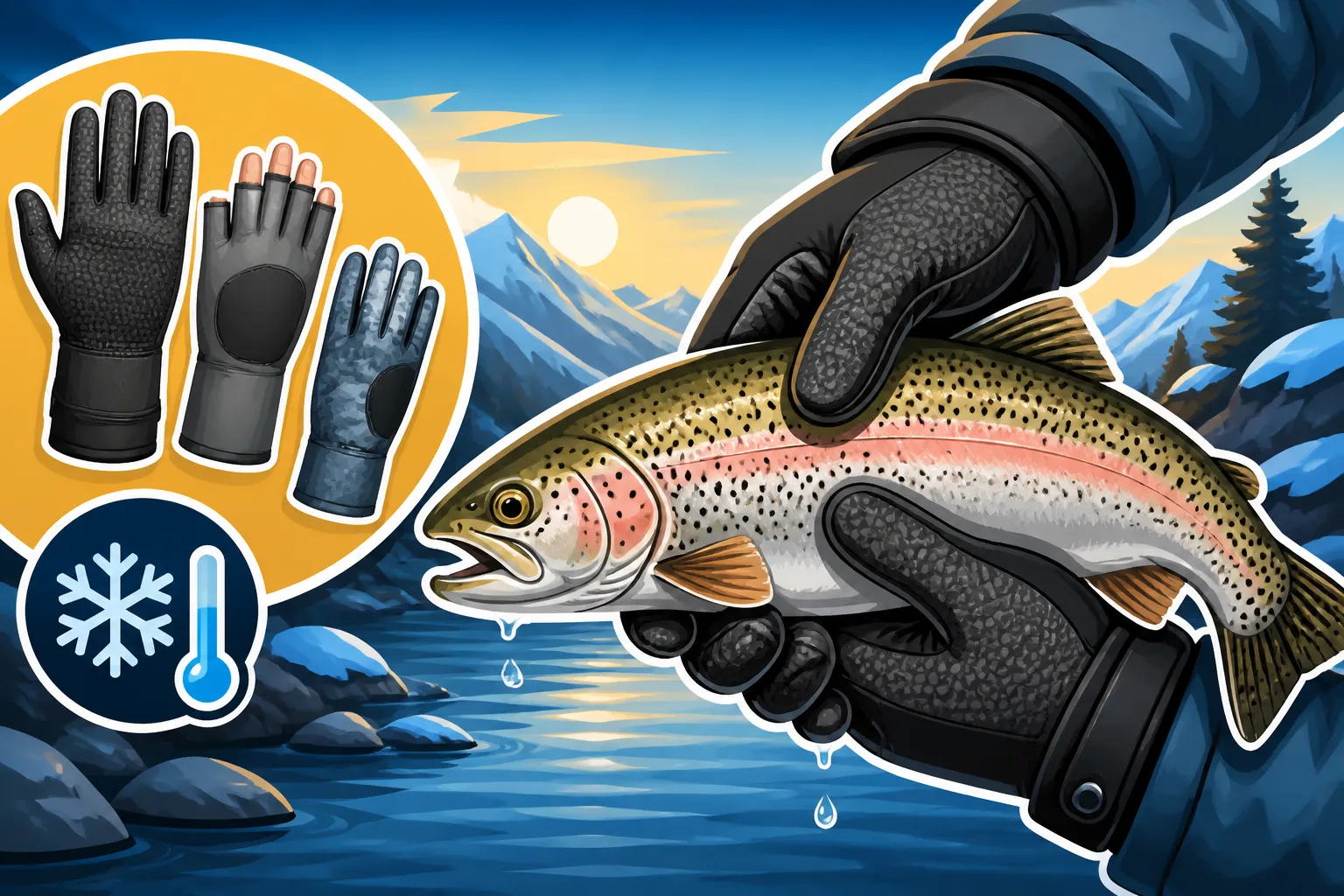
The right gloves can protect both parties. Neoprene gloves or other thin, textured gloves are excellent for handling fish because they allow for a firm, gentle grip without damaging the fish's delicate skin. They also provide a barrier for your hands, preventing them from becoming instantly numb from the cold, wet scales. Quick, efficient handling is always best for catch-and-release, and a good pair of fish-handling gloves will enable you to do this effectively. Even if you're keeping your catch, having a firm, comfortable grip on a cold, slippery fish makes the process much safer and more pleasant.
Here's a quick comparison of glove types:
| Glove Type | Primary Benefit | Warmth (1-5) | Dexterity (1-5) | Waterproofing (1-5) | Ideal Use Case |
|---|---|---|---|---|---|
| Waterproof Insulated | Maximum Warmth & Dry | 5 | 2 | 5 | Ice fishing, extreme cold, heavy snow/rain |
| Convertible Mitten/Fingerless | Versatility & Access | 3-4 | 4 | 2-3 | Finesse fishing, fluctuating temps, frequent retying |
| Neoprene | Warmth When Wet | 3 | 4 | 4 | Wading, boat fishing, constant fish handling |
| Thermal Liner (alone) | Lightweight Insulation | 2 | 5 | 1 | Underlayer, mild dry conditions |
Ultimately, selecting the best gloves for handling fish in cold weather in Nevada is about anticipating the conditions and understanding your personal needs for warmth, grip, and dexterity. Don't let cold hands cut your fishing trip short or detract from the incredible experience of angling in the Silver State. Invest in the right gear, and you'll be able to focus on what truly matters: the thrill of the catch.
Disclaimer
This article is for general informational purposes only and does not constitute professional advice. Laws, prices and regulations vary by location and change over time. Consult a qualified professional for guidance on your specific situation.