Do you need a special license plate for a boat trailer in Nevada?
One of the trickiest parts of owning a boat in Nevada isn't always finding the best fishing hole or even landing that trophy striper; sometimes, it's just figuring out the bureaucratic maze of registration and licensing. A common question that pops up, and one that can cause a fair bit of head-scratching, is whether your boat trailer needs some kind of special, unique license plate in the Silver State. Many folks assume that because a boat is a specialized recreational item, its trailer must follow equally specialized rules. The good news is, for the vast majority of anglers, the answer is simpler than you might think, and this guide will walk you through exactly what you need to know to keep your trailer legal on Nevada's roads.
Navigating Nevada Boat Trailer Registration
When you're eager to hit the water, the last thing you want is a roadblock from the Department of Motor Vehicles. Understanding how Nevada classifies and licenses boat trailers is the first step to a smooth journey from your driveway to the launch ramp. It's not uncommon to feel a little lost in the details, but let's clear up the confusion surrounding "special" license plates.
The Basics: Is Your Trailer Considered a Vehicle?
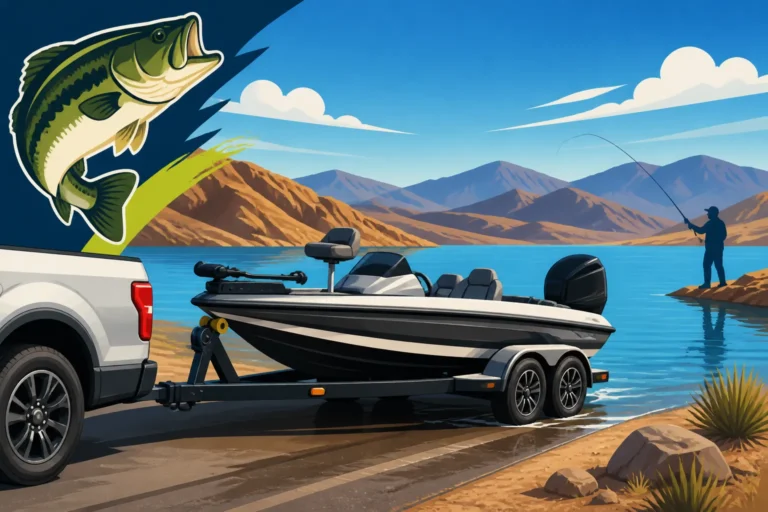
In Nevada, a boat trailer, regardless of whether it's hauling a small Jon boat or a large fishing vessel, is generally considered a vehicle in its own right when it comes to registration and licensing. This is often where the initial confusion sets in. You might think of it simply as an accessory to your boat, but the state sees it as a separate unit that travels on public roads. This classification means it needs to adhere to the same basic rules as other trailers, like utility trailers or even travel trailers.
This legal definition is crucial because it dictates the type of license plate required. It’s not about the cargo (your boat), but about the equipment itself and its interaction with the roadway. The frustration many people feel often stems from expecting different rules for different types of trailers, but Nevada typically streamlines this. The underlying principle is pretty straightforward: if it has wheels and travels on the highway, it needs to be identifiable and registered for public safety and revenue purposes. Don't let the "boat" part overcomplicate the "trailer" part of the equation – it's mostly about the trailer.
Standard Vehicle License Plates for Boat Trailers
So, to cut to the chase: your boat trailer in Nevada will typically receive a standard vehicle license plate, much like what you'd see on a utility trailer or even a car, though the plate category will specify "trailer." There isn't a unique design or "special" class of plate explicitly for boat trailers that looks different from other general-use trailer plates. You won't find a plate with a little boat graphic or the word "BOAT" stamped on it in a special font, unless it's a personalized plate you've requested.
What does this mean for you? It means you'll go through the Nevada Department of Motor Vehicles (DMV) or one of its authorized agents, provide the necessary documentation, and your trailer will be issued a license plate from their standard inventory for trailers. This plate will have a combination of letters and numbers, just like any other standard vehicle plate. The process involves submitting paperwork such as proof of ownership (like a title or bill of sale), identification, and possibly an inspection, especially if the trailer is new to you or coming from out of state. The goal is to ensure that every trailer on the road can be identified, and that it meets basic safety and legal criteria. You can often find many of the required forms and detailed instructions on the Nevada DMV website.
When a "Special" Plate Might Seem Necessary (But Isn't)
Sometimes, the idea of a "special" license plate comes from misunderstanding other related regulations or from confusing personalized plates with an entirely different category. Let's break down a few scenarios where this might happen:
First, some heavier boat trailers might require additional endorsements on your driver's license, or have specific brake requirements. For example, if your trailer and its load exceed a certain Gross Vehicle Weight Rating (GVWR), it might need its own braking system, or you might need a non-commercial Class A or B driver's license depending on the combined weight of your tow vehicle and trailer. These are important safety and licensing considerations, but they don't change the type of license plate your trailer gets. It's still a standard trailer plate, but you, as the operator, have additional responsibilities.
Second, if you're thinking about a personalized plate that says something like "BOAT GUY" or "FISH ON," that's an option available for any vehicle, including trailers, but it's a personalized version of a standard plate, not a separate class of "special boat trailer plate." You apply for these customized plates through the DMV, pay an extra fee, and they are produced with your chosen alphanumeric combination, provided it's available and meets state guidelines. These are great for adding a personal touch, and you can explore options like these through the DMV or even look at custom plate accessories online on sites like Amazon or at your local Bass Pro Shops.
In essence, Nevada's system aims for uniformity for all trailers. While your specific boat might require unique permits for certain lakes (like Pyramid Lake's tribal fishing permit), or your towing setup might have specific safety requirements, the trailer itself falls under the general trailer registration umbrella, using a standard plate.
Understanding Nevada Trailer Licensing Requirements
Getting your boat trailer licensed in Nevada is a critical step before you can legally hit the road with your prized fishing vessel. It's not just about getting a piece of metal with numbers; it's about ensuring your equipment is properly documented and compliant. Ignoring these steps can lead to fines, citations, and a lot of unnecessary headaches, especially when you're pulled over by a game warden or highway patrol.
Essential Documents for Trailer Registration
To get your boat trailer registered and obtain that standard license plate, you'll need to gather a few key documents. Being prepared makes the process much smoother and prevents frustrating multiple trips to the DMV.
- Proof of Ownership: This is paramount. For a new trailer, you'll need the Manufacturer's Certificate of Origin (MCO) or Manufacturer's Statement of Origin (MSO). For a used trailer, you'll need the properly assigned title from the previous owner. If the title is lost, you'll have to go through a process to obtain a duplicate title, which can add time to your registration. If you purchased it from an individual, a bill of sale can also be an important supporting document.
- Identification: You'll need a valid form of personal identification, such as your Nevada driver's license or state ID card. This verifies who you are and that you're a resident, if applying for resident rates. For more details on residency and licensing, you might want to check out Nevada Resident Fishing License Types.
- Vehicle Identification Number (VIN) Inspection: Many trailers, especially if they are new to Nevada or were previously registered out of state, will require a VIN inspection. This is a quick check by a DMV employee or an authorized inspector to verify that the VIN on your trailer matches your documentation and that the trailer hasn't been stolen or illegally modified. Don't skip this step, as it's a common reason for registration delays.
- Proof of Insurance (if applicable): While trailers themselves often don't require separate liability insurance policies (they are often covered by the towing vehicle's liability policy), some specific types of trailers or those exceeding certain weight classes might have different requirements. It’s always best to check current regulations. However, your tow vehicle must have current insurance.
- Payment for Fees: Be ready to pay the applicable registration fees, which are calculated based on factors like the trailer's declared value, weight, or age, and can vary. It's wise to check the DMV's fee schedule beforehand, or even consider reading up on things like Nevada Boat Registration Fees by Length to get a sense of how costs are structured for different vessels and their associated equipment.
Having these documents neatly organized will make your visit to the DMV much more efficient.
The Registration Process Step-by-Step
Once you have all your documents in order, the registration process itself is fairly straightforward.
- Visit the DMV (or online/mail): For initial registration, especially if a VIN inspection is required, a trip to a Nevada DMV office is usually necessary. You can often start by making an appointment online to save time. In some cases, renewals can be handled online or by mail, which is a huge convenience once you're established. When you're dealing with the initial setup, you'll physically present your documents. They'll verify everything, perform any necessary inspections, and then process your application.
- Submit Paperwork and Pay Fees: Hand over your title, ID, and any other required forms. The DMV representative will calculate your fees. These fees typically include a registration fee, a governmental services tax (based on the trailer's value), and a license plate fee.
- Receive Your Plate and Decals: Once processed, you'll be issued your new standard Nevada trailer license plate, along with registration decals that you'll apply to the plate. You'll also receive a registration certificate that you should keep with your vehicle at all times when towing the trailer. For a comprehensive overview of what paperwork is generally involved, refer to Nevada Boat Registration Paperwork Checklist.
- Renewal: Nevada trailer registrations are typically valid for one year. You'll receive a renewal notice in the mail before your registration expires. Renewals are often much simpler, and as mentioned, can usually be done online, by mail, or at a DMV kiosk. Remember that consistent, timely renewal is key to avoiding penalties.
Importance of Displaying Your License Plate Correctly
Having a license plate is one thing; displaying it correctly is another. Nevada law is very clear about how your boat trailer's license plate must be mounted and maintained.
The plate must be:
- Securely fastened: It shouldn't swing loosely or be easily detachable.
- Clearly visible: This means no dirt, mud, or boat overhang obstructing the view. It should be mounted horizontally, right side up, in the designated area.
- Legible: Keep your plate clean so all numbers and letters are easily readable, day or night.
- Lighted at night: Your trailer's wiring system must ensure that a white light illuminates the license plate at night, making it visible from at least 50 feet away. This is crucial for safety and legal compliance. Many trailer light kits available at places like Bass Pro Shops or even general auto parts stores will include this functionality.
Failing to properly display your license plate can result in a traffic citation, which is an unnecessary expense and hassle. Law enforcement, including game wardens who are often patrolling boat launch areas, can and will check for proper registration and display. Ensuring your plate is always clean, visible, and well-lit is a simple step to avoid these issues. Just like your fishing license, it’s a non-negotiable part of responsible outdoor recreation in Nevada.
Common Pitfalls and Troubleshooting Trailer Registration
Even with the clearest instructions, sometimes real-life throws a curveball. From moving states to losing a plate, there are common scenarios that can complicate your boat trailer registration. Knowing how to troubleshoot these situations can save you time and stress, ensuring your fishing plans aren't derailed by paperwork.
Out-of-State Trailers and Moving to Nevada
One of the most frequent sources of confusion for new Nevada residents or those bringing in a trailer from another state is the transfer process. You might assume your out-of-state registration is good to go for a while, but Nevada has specific requirements for new residents.
Generally, if you're establishing residency in Nevada, you'll need to register your vehicle (and this includes your boat trailer) within a certain timeframe after moving. This isn't just a suggestion; it's a legal requirement. You'll need to bring your out-of-state title, your current registration, and proof of Nevada residency to the DMV. The process will usually involve a VIN inspection, as mentioned earlier, to verify the trailer's identity. They will then issue you a new Nevada title and a standard Nevada trailer license plate.
It's tempting to put this off, especially when you're busy unpacking and exploring new fishing spots. However, delaying registration can lead to penalties. Make it a priority to visit the DMV shortly after settling in. This proactive approach will prevent any issues when you're heading out to Lake Mead Nevada Fishing Guide or Pyramid Lake Nevada Fishing Guide for the first time.
Lost, Stolen, or Damaged License Plates
Life happens, and sometimes license plates get lost, stolen, or damaged. Whether it vibrated off on a rough dirt road, was accidentally bent at a busy boat launch, or was unfortunately taken, you need to address it promptly.
- Report a Stolen Plate: If your license plate is stolen, the first thing you should do is report it to local law enforcement. This creates an official record and protects you if the plate is used for illicit activities.
- Obtain a Replacement: Regardless of whether it was lost, stolen, or damaged, you'll need to apply for a replacement plate at the DMV. You'll typically need your identification, your vehicle's registration certificate, and a small fee for the replacement plate. If you reported it stolen, bring a copy of the police report.
- Temporary Permits: While waiting for your new plate, the DMV can usually issue you a temporary moving permit or temporary tag, allowing you to legally operate your trailer for a short period. This is crucial so you don't have to put your boat in storage while you wait. Never operate your trailer without a visible, valid license plate or temporary permit.
It’s always a good idea to keep a copy of your registration certificate and title information in a safe, accessible place, not necessarily in the trailer itself where it could be lost or damaged, but perhaps in your tow vehicle or a digital copy on your phone. This information will be invaluable if you ever need to replace your plate.
Trailer Weight, Brakes, and Inspections
Beyond the license plate itself, the physical characteristics of your boat trailer can trigger additional requirements that anglers sometimes overlook. This is particularly true for larger boats and their heavier trailers.
Nevada, like most states, has regulations concerning Gross Vehicle Weight Rating (GVWR) and Gross Combination Weight Rating (GCWR). These are important because they dictate whether your trailer needs its own braking system and what class of driver's license is required to tow it.
- Brake Requirements: Trailers with a gross weight exceeding a certain threshold (check the latest DMV or DOT regulations for the exact figure, as it can change) are typically required to have independent braking systems. This is a critical safety feature, especially when hauling a heavy boat through Nevada's mountainous terrain or in emergency braking situations. Ensure your trailer's brakes are always in good working order.
- Safety Inspections: While a general annual safety inspection isn't typically required for all trailers in Nevada, certain situations (like initial registration of an out-of-state trailer) might trigger a VIN inspection or a basic safety check to ensure lights, tires, and basic components are functional. It’s your responsibility to maintain your trailer in a safe operating condition at all times, including functional lights, good tires, and secure hitch connections. Items like the condition of your trailer lights are part of the Nevada required safety equipment checklist for boats.
Always consult the Nevada DMV and Department of Transportation (NDOT) for the most current regulations regarding trailer weight, braking systems, and any specific inspection requirements for your trailer's GVWR. This ensures not only legal compliance but also the safety of yourself and others on the road.
Beyond the Plate: Additional Considerations for Boat Trailer Owners
Getting that license plate on your boat trailer is a big step, but it's just one piece of the puzzle for responsible boat ownership in Nevada. There are several other considerations that will ensure your trailer, and your boat, have a long and safe life on and off the road in the Silver State. These often get overlooked in the excitement of planning a fishing trip, but they are crucial for safety, longevity, and peace of mind.
Maintaining Your Trailer for Nevada Roads
Nevada's climate and diverse terrain—from scorching desert highways to snowy mountain passes—can be tough on boat trailers. Proper maintenance isn't just about avoiding breakdowns; it's about protecting your investment and ensuring safe travel.
- Tires: Always check your trailer tires before each trip. Desert heat can increase tire pressure significantly, and prolonged exposure to sun can cause dry rot. Ensure they are properly inflated to the manufacturer's recommended PSI (which is often higher than your tow vehicle's tires), and inspect for cracks, bulges, or excessive wear. Don't forget the spare! A flat tire on the side of a remote Nevada highway with a boat attached is a miserable experience.
- Wheel Bearings: These are notorious for failure if not properly maintained, especially on boat trailers that are frequently submerged in water. Water ingress can rust the bearings, leading to catastrophic wheel failure. Regularly check and grease your wheel bearings, and consider investing in bearing protectors for added peace of mind.
- Lights and Wiring: Constant exposure to water and road grime can corrode electrical connections. Before every trip, test your trailer's brake lights, turn signals, and running lights. Replace any blown bulbs or damaged wiring immediately. Remember, the license plate light is also part of this system and must be functional at night. Quality trailer wiring kits and replacement lights are readily available at stores like Bass Pro Shops or online at Amazon.
- Brakes (if equipped): If your trailer has its own braking system, ensure it's regularly inspected and serviced. This includes hydraulic lines, calipers, pads, or electrical connections for surge brakes. Malfunctioning trailer brakes are a serious safety hazard.
- Frame and Hitch: Inspect the trailer frame for any signs of rust, cracks, or structural fatigue. Check the hitch coupler for wear and ensure it securely latches onto your tow ball. Safety chains should always be crossed and securely attached to the tow vehicle.
A well-maintained trailer is a safe trailer, and it means fewer unexpected stops on your way to a fantastic fishing day at Wildhorse Reservoir Nevada Fishing Guide.
Towing Safely in Nevada
Towing a boat requires a different approach to driving than just cruising around in your car. Nevada's open roads and occasional strong winds demand extra vigilance.
- Pre-Trip Inspection: Beyond the trailer itself, inspect your hitch connection, safety chains, and the wiring harness that connects your trailer lights to your tow vehicle. Ensure your boat is properly secured to the trailer with tie-downs front and rear. Nothing ruins a trip faster than finding your boat shifted on the trailer or a strap loose.
- Weight Distribution: Proper weight distribution is key. Too much weight on the tongue can overload your tow vehicle's rear suspension, while too little can cause dangerous trailer sway. Aim for 10-15% of the total trailer weight (boat + trailer) on the tongue. Adjust your boat's position on the trailer if necessary.
- Speed Limits: Remember that speed limits for vehicles towing trailers are often lower than for passenger vehicles alone. Pay attention to posted signs and adjust your speed accordingly, especially on highways and in windy conditions. You're also generally required to stay in the right-hand lanes on multi-lane highways.
- Braking Distance: Your stopping distance will increase significantly when towing a boat. Maintain a much greater following distance than you normally would, and anticipate stops and turns well in advance.
- Wide Turns: When turning, your trailer will cut a sharper corner than your tow vehicle. Always make wider turns to avoid hitting curbs, signs, or other vehicles. This is particularly important at boat launches and in parking lots.
- Wind and Weather: Nevada is known for its sudden gusty winds, especially in open desert areas. High winds can cause severe trailer sway. Slow down immediately if you experience sway and avoid sudden steering corrections. Pull over if conditions become too dangerous. For more tips on preparing your tow vehicle, you might find Best truck for towing a boat in Nevada helpful.
Insurance for Your Boat and Trailer
While your tow vehicle's liability insurance often extends to your trailer in terms of damage you might cause to others, it typically won't cover damage to your own boat or trailer. This is where dedicated boat and trailer insurance comes into play.
- Comprehensive Coverage: Consider comprehensive boat insurance that covers your vessel (and often the trailer as an attachment) against theft, vandalism, fire, and natural disasters, even when it's not on the water. Given the value of most boats and trailers, this protection can be invaluable.
- Collision Coverage: This would cover damage to your boat and trailer if you're involved in an accident, regardless of fault.
- Towing and Roadside Assistance: Some policies offer towing and roadside assistance specifically for your boat and trailer, which can be a lifesaver if you have a breakdown far from civilization.
- Agreed Value vs. Actual Cash Value: Understand the difference between these types of policies. Agreed value pays out a predetermined amount if your boat is a total loss, while actual cash value pays out the depreciated value.
Before you launch your boat for that unforgettable day, take the time to review your insurance policies or speak with an agent. Make sure both your boat and its trailer are adequately covered for the unexpected. While a Nevada boat registration requires proof of insurance for the tow vehicle, the boat and trailer themselves don't always mandate specific insurance, but it's a wise investment in protecting your assets.
Summary of Nevada Trailer Licensing & Care
| Aspect | Nevada Requirement | Key Takeaway |
|---|---|---|
| License Plate Type | Standard "trailer" license plate | No unique "special" boat trailer plate; standard alphanumeric. |
| Required Documents | Title/MCO, ID, VIN inspection, Fees | Gather documents beforehand; VIN inspection often needed. |
| Insurance | Tow vehicle requires liability; boat/trailer insurance highly recommended. | Your car's insurance covers their damage, not yours. |
| Plate Display | Securely fastened, clearly visible, legible, lighted at night | Crucial for avoiding citations; check before every trip. |
| Out-of-State Trailers | Register promptly upon establishing Nevada residency | Don't delay; penalties apply for late registration. |
| Maintenance | Regular checks for tires, bearings, lights, brakes, frame | Nevada climate is harsh; proactive maintenance prevents issues. |
| Towing Safety | Proper hitching, weight distribution, wider turns, increased braking distance | Drive defensively; strong winds can be a major factor. |
Taking care of these details means less worry and more time doing what you love: fishing Nevada's incredible waters. It's all part of being a responsible angler and boater in the Silver State.
Disclaimer
This article is for general informational purposes only and does not constitute professional advice. Laws, prices and regulations vary by location and change over time. Consult a qualified professional for guidance on your specific situation.