Best Truck for Towing a Boat in Nevada
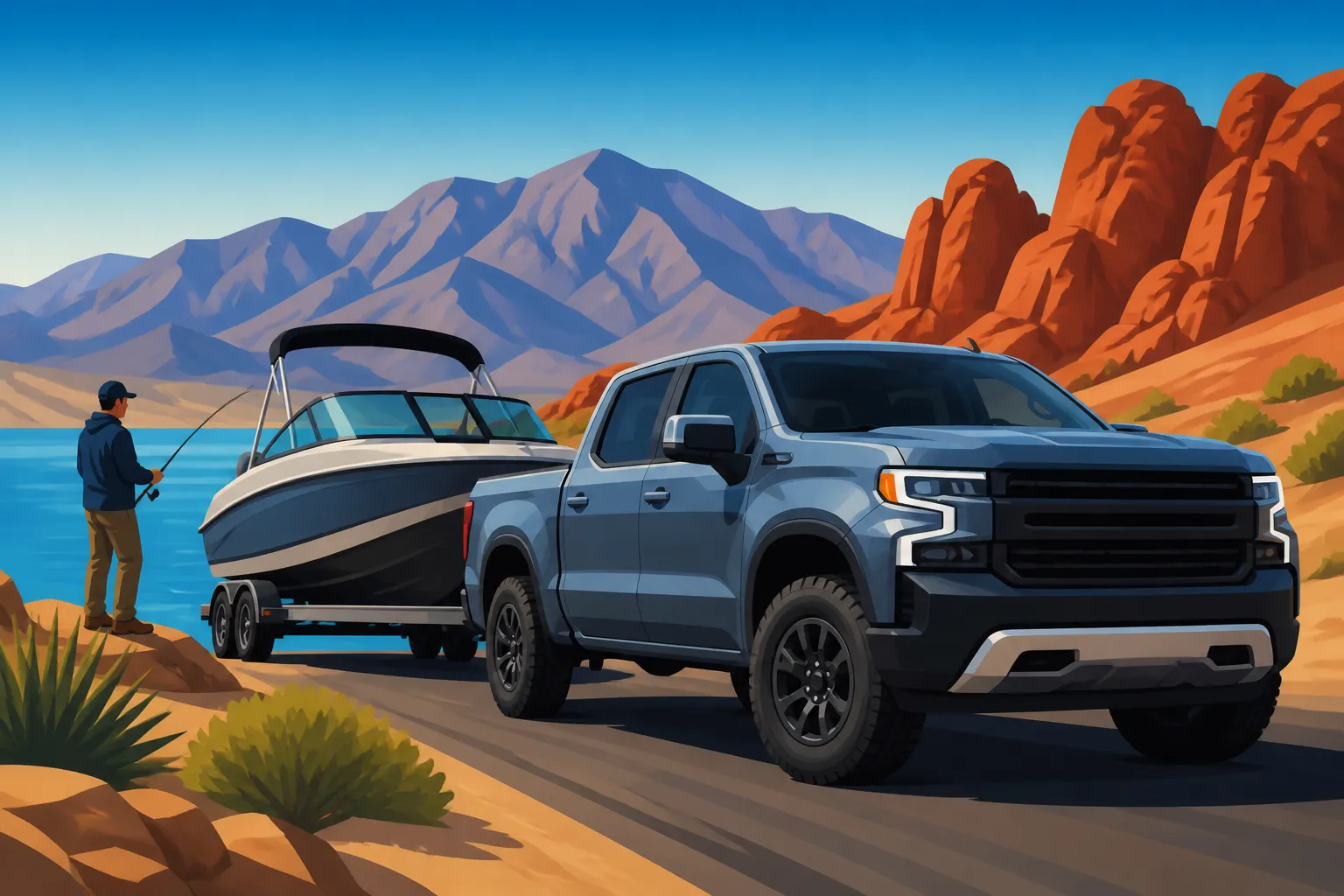
Choosing the right truck to tow your boat across Nevada's vast and varied landscapes can feel like a daunting task. You've got to contend with searing desert heat, formidable mountain passes, and long stretches of open road, all while ensuring your precious boat arrives safely. This guide is going to walk you through everything you need to consider, from engine power to safety features, so you can confidently pick the perfect towing vehicle for your next Nevadan fishing adventure.
Understanding Nevada's Unique Towing Challenges
Towing a boat isn't just about hitching it up and going. In Nevada, our environment presents some specific hurdles that demand a capable truck. Ignoring these can lead to overheating, poor performance, or even dangerous situations on the road.
High Temperatures and Desert Driving
Picture this: you're heading down to Lake Mead on a scorching summer day, the mercury pushing past 100 degrees, and your engine is working overtime to pull your boat. That kind of heat puts immense strain on a truck's cooling system, transmission, and engine. A truck that might perform adequately in cooler climates could struggle or even overheat in the Nevada desert. You need a vehicle designed with robust cooling capabilities, often including auxiliary transmission coolers and heavy-duty radiators, to prevent breakdowns and ensure longevity. This isn't just about comfort; it's about mechanical integrity and avoiding costly repairs on the side of a lonely desert highway.
The consistent high temperatures also impact tire pressure and overall engine efficiency. You'll want to ensure your truck is running optimally before any long desert hauls, and that means paying attention to routine maintenance like oil changes and coolant flushes.
Mountain Passes and Steep Grades
Nevada isn't all flat desert. Head up towards Lake Tahoe, Wildhorse Reservoir, or even some of the higher elevation access points around the state, and you'll encounter significant mountain passes. Pulling a boat up a 6% or 7% grade requires serious horsepower and torque. But it's not just about getting up the mountain; it's equally, if not more, about getting down safely. Descending steep grades with a heavy load can quickly overheat brakes and lead to a loss of control if your truck isn't equipped with features like exhaust brakes or effective tow/haul modes that engage engine braking.
Having sufficient power allows your truck to maintain speed on inclines without straining, which improves both safety and fuel efficiency. And on the descent, controlled braking is paramount. A truck that can manage its speed without constantly riding the service brakes is crucial for preventing brake fade and ensuring you have stopping power when you truly need it.
Long Hauls and Remote Access
Nevada is a big state, and many of its best fishing spots, from Pyramid Lake north of Reno to Lake Mohave in the south, involve considerable driving distances. This means you'll be spending hours behind the wheel, often far from major towns or service stations. A truck that's comfortable for long hauls, offers a smooth ride, and is reliable enough to tackle remote access roads is invaluable. You don't want to be stranded in the middle of nowhere with a broken-down vehicle and a boat in tow.
Furthermore, some prime fishing locations might require navigating unpaved or less-maintained roads. Your truck's suspension, ground clearance, and tire choice will come into play here. While you might not need an extreme off-road rig, a truck with a capable suspension system and decent tires will make those last few miles to the water much less stressful. It also means you should always carry essential emergency gear, a full tank of fuel, and know where your Nevada Boat Registration and Titling Guide and other critical documents are.
Key Truck Specifications for Boat Towing
When you're looking at trucks, it's easy to get lost in the jargon. But a few key specifications are absolutely critical for safe and effective boat towing. These numbers tell you what a truck is truly capable of handling.
Towing Capacity and Payload Rating
This is where the rubber meets the road, quite literally. Every truck has a maximum towing capacity, which is the heaviest trailer it can safely pull, and a payload rating, which is the total weight your truck can carry in its cab and bed, including passengers, cargo, and the tongue weight of your trailer. It's vital to understand both, as exceeding either can be dangerous and illegal. Don't just look at the boat's "dry" weight; remember to factor in the weight of your trailer, all your fishing gear, fuel in the boat's tank, ice in the cooler, and any other supplies you're hauling.
For example, a typical bass boat might weigh 2,500 pounds, but with a trailer, fuel, and tackle, that could easily jump to 4,000-5,000 pounds. A larger runabout or small cruiser could push 8,000-10,000 pounds, requiring a much more robust truck. Always check your boat and trailer's Gross Vehicle Weight Rating (GVWR) and tongue weight. A good rule of thumb is to choose a truck with a towing capacity that's at least 15-20% more than your fully loaded boat and trailer to give yourself a safety margin and reduce strain on the vehicle. You can often find a lot of great boating accessories and measurement tools to help you accurately calculate these weights on sites like Amazon.
Engine Types and Their Towing Performance
The heart of any towing vehicle is its engine. You'll primarily find three types when truck shopping: gasoline V6, gasoline V8, and diesel. Each has its strengths and weaknesses, especially when it comes to towing in Nevada.
- Gasoline V6 Engines: These have come a long way, especially turbocharged versions, offering surprising horsepower and torque for their size. They are often more fuel-efficient when not towing heavily and are typically found in half-ton trucks. For smaller boats (under 5,000-6,000 pounds), a modern V6 can be perfectly adequate, especially if you're not constantly tackling steep grades. However, they'll work harder under heavy loads and during long hauls, which can impact fuel economy and long-term durability if pushed to their limits frequently.
- Gasoline V8 Engines: The traditional workhorse for towing, V8s offer robust power and torque, making them ideal for a wide range of boats, from medium-sized bass boats to larger recreational vessels. They generally handle heat and sustained loads better than V6s, providing a more relaxed towing experience. While fuel economy will drop significantly when towing, these engines are usually less expensive to maintain than diesels and have a lower initial purchase price. Most half-ton and some three-quarter ton trucks offer excellent V8 options.
- Diesel Engines: If you're towing a very large boat (over 8,000-10,000 pounds), consistently traversing mountains, or simply want the ultimate towing machine, a diesel engine in a heavy-duty truck is hard to beat. Diesels offer incredible low-end torque, which is fantastic for getting heavy loads moving and maintaining speed on inclines. They also typically provide better fuel economy when towing heavy loads compared to gasoline engines and boast impressive longevity. Features like exhaust brakes, common on diesels, are a game-changer for controlling descents. The trade-off is a higher purchase price, more expensive maintenance, and the need for Diesel Exhaust Fluid (DEF).
Transmission and Drivetrain Considerations
The engine might provide the power, but the transmission delivers it smoothly to the wheels. Modern trucks feature highly capable automatic transmissions, often with 8, 10, or even more gears. More gears allow the engine to stay in its optimal power band, improving both towing performance and efficiency. Look for transmissions with a dedicated "tow/haul" mode, which adjusts shift points to prevent excessive shifting and uses engine braking more effectively on descents.
When it comes to the drivetrain, most trucks offer both 2WD (two-wheel drive) and 4WD (four-wheel drive) options. For Nevada, 4WD can be a significant advantage, especially if you plan to launch your boat from unimproved ramps, navigate muddy or sandy shoreline access points, or encounter snowy conditions in the higher elevations during shoulder seasons. Trying to pull a heavy boat and trailer out of a slippery launch ramp with only 2WD can be a frustrating, if not impossible, experience. While 4WD adds to the purchase price and slightly decreases fuel economy, the added traction and peace of mind it provides for a Nevada boater are often well worth the investment. Think about those chilly mornings at Wildhorse Reservoir or the potentially soft ground at some of the Pyramid Lake Shoreline Access Points; 4WD can be your best friend.
Essential Towing Features and Technologies
Beyond raw power and capacity, modern trucks come equipped with a suite of features designed to make towing safer, easier, and less stressful. These aren't just luxuries; they're vital tools for any serious boater in Nevada.
Integrated Trailer Brake Controllers
This feature is non-negotiable for towing anything but the lightest of boats. An integrated trailer brake controller (ITBC) allows your truck to communicate seamlessly with your trailer's electric brakes, providing proportional braking force. This means when you press the brake pedal in your truck, your trailer's brakes engage simultaneously and with the appropriate power, preventing dangerous swaying, improving stopping distances, and reducing wear on your truck's brakes.
Aftermarket brake controllers exist, but an integrated system from the factory is almost always superior in terms of smooth operation, reliability, and safety. You'll appreciate the seamless feel and control, especially when navigating heavy traffic or making sudden stops. It's a critical component for safe towing, helping you maintain control over your entire rig, which is especially important on busy highways like I-15 or when descending grades.
Tow/Haul Mode and Grade Braking
We touched on this earlier, but it deserves its own spotlight. When you activate "tow/haul" mode, your truck's transmission, engine, and braking systems are optimized for carrying or pulling a heavy load. The transmission holds gears longer to prevent "hunting" for the right gear, provides more aggressive acceleration, and most importantly, enhances engine braking on descents. This "grade braking" uses the engine's compression to slow your truck and trailer, saving your service brakes from overheating and premature wear.
Imagine coming down a steep grade towards Lake Tahoe: with tow/haul mode engaged, your truck downshifts automatically, keeping your speed in check without you having to constantly press the brake pedal. This significantly reduces the risk of brake fade, a terrifying experience where your brakes lose effectiveness due to excessive heat. This feature becomes even more pronounced and effective on diesel trucks, where the exhaust brake can provide tremendous stopping power. It’s an absolute lifesaver on Nevada’s mountainous roads.
Advanced Safety and Driver-Assist Systems
Modern trucks are packed with technology, and many of these features are incredibly beneficial for towing. While they don't replace good driving skills, they certainly enhance safety and reduce driver fatigue, especially on those long Nevada hauls.
- Trailer Sway Control: This system works with the truck's stability control to detect trailer sway and apply individual truck brakes or reduce engine power to bring the trailer back in line. It's an invisible guardian that can prevent a dangerous situation from escalating.
- Blind-Spot Monitoring with Trailer Coverage: Standard blind-spot monitors often don't extend past the truck. Systems with trailer coverage account for the length of your boat trailer, providing alerts if a vehicle is in your blind spot alongside the trailer, a huge advantage when changing lanes with a long rig.
- Rearview Cameras with Trailer View: Many trucks now offer multiple camera views, including one specifically for hitching up your trailer and others that provide a wider view down the sides of the trailer. Some even allow you to connect an external camera to the rear of the trailer. This makes solo hitching a breeze and provides invaluable visibility when maneuvering in tight spots or backing up.
- Pro Trailer Backup Assist/Guidance: Certain brands offer systems that make backing up a trailer incredibly intuitive, allowing you to steer the trailer with a knob while the truck handles the steering wheel. This can drastically reduce the stress of backing a boat into a tricky launch ramp, whether at Lake Mead or a busy marina.
- Adaptive Cruise Control with Trailer Integration: On long, open stretches of highway, adaptive cruise control can reduce fatigue, and when integrated with towing, it can account for the added weight and length of your trailer, adjusting speed more smoothly.
These technologies, available on many new trucks, provide an extra layer of confidence and safety, transforming a potentially stressful towing experience into a much more relaxed one. When you're spending your hard-earned money at a place like Bass Pro Shops for new fishing gear, you want to make sure you have the right vehicle to get you and your boat there safely.
Truck Classes and Their Suitability for Boats
Trucks generally fall into a few distinct classes, each designed for different levels of work. Understanding these classifications is key to matching the right truck to your boat.
Half-Ton Trucks (1500 Series)
These are the most popular trucks on the road today, encompassing models like the Ford F-150, Ram 1500, Chevrolet Silverado 1500, and Toyota Tundra. Half-ton trucks offer a great balance of daily drivability, comfort, and significant towing capability.
- Pros: Generally more comfortable ride when unloaded, better fuel economy when not towing, often equipped with more creature comforts and technology, easier to maneuver in urban settings, and typically more affordable than heavy-duty options. Many half-tons, especially those with powerful V8s or turbocharged V6s, can tow upwards of 8,000 to 12,000 pounds, making them suitable for most bass boats, wake boats, and many small to medium-sized cruisers.
- Cons: While capable, they can feel less stable with very heavy or long trailers, and their payload capacity might be limiting if you carry a lot of gear in the bed in addition to a heavy tongue weight. Pushing a half-ton to its upper towing limits consistently in Nevada's harsh conditions can lead to increased wear and tear.
For most recreational boaters with single or tandem axle trailers, a well-equipped half-ton truck is often an excellent choice. They're perfect for those weekend trips to Lake Mead or shorter hauls to the Best Nevada Trout Lakes.
Three-Quarter Ton Trucks (2500 Series)
Stepping up from the half-ton, the three-quarter ton trucks (Ford F-250, Ram 2500, Chevrolet Silverado 2500HD) are true heavy-duty workhorses. These are built from the ground up for towing and hauling.
- Pros: Significantly higher towing capacities, often ranging from 15,000 to 20,000+ pounds, making them ideal for larger, heavier boats and longer trailers. They offer superior stability and control when towing, thanks to heavier frames, more robust suspension, and larger brakes. Diesel engine options are common and provide exceptional torque and engine braking. Payload capacity is also much higher, allowing you to carry more gear.
- Cons: Less comfortable ride when unloaded (stiffer suspension), worse fuel economy overall, more challenging to maneuver in tight spaces, higher purchase price, and often more expensive maintenance, especially for diesel models.
If your boat is on the larger side, perhaps a substantial offshore fishing boat or a larger cabin cruiser, or if you regularly tow long distances over Nevada's mountain passes and in extreme heat, a three-quarter ton truck offers an undeniable advantage in confidence and safety. They excel at tackling the kinds of conditions you'd find on a long drive to Wildhorse Reservoir Nevada Fishing Guide.
One-Ton Trucks (3500 Series)
The pinnacle of consumer towing, one-ton trucks (Ford F-350, Ram 3500, Chevrolet Silverado 3500HD) are designed for the absolute heaviest loads. These often come with dual rear wheels (duallies) for maximum stability.
- Pros: Enormous towing and payload capacities, often exceeding 30,000 pounds, making them capable of pulling virtually any recreational boat, even large fifth-wheel toy haulers with boats on the back. Unmatched stability, durability, and control for the heaviest of loads.
- Cons: Very rough ride when unloaded, significantly worse fuel economy, incredibly difficult to park and maneuver in city environments, highest purchase price, and highest operating costs. They are overkill for most boaters.
A one-ton truck is generally not necessary unless you're towing a truly enormous boat or combining it with other heavy loads like a large RV. For the average Nevada angler, this class of truck is usually more than you'll ever need.
Here's a quick comparison of truck classes for Nevada boaters:
| Truck Class | Typical Towing Capacity (lbs) | Best For Nevada Boaters | Key Considerations |
|---|---|---|---|
| Half-Ton | 8,000 – 12,000 | Most bass boats, wake boats, smaller cruisers, frequent daily driving | Good balance of comfort & capability. Check payload carefully for heavy gear. |
| Three-Quarter Ton | 15,000 – 20,000+ | Larger offshore boats, substantial cruisers, frequent mountain passes, long hauls | Superior stability and control for heavier loads. Stiffer ride. Diesel options shine. |
| One-Ton | 20,000 – 35,000+ | Very large boats, combined RV/boat setups, commercial applications | Maximum capacity and stability. Overkill for most. Poor daily driver comfort. |
Factors Beyond Raw Power: Comfort, Fuel, and Maintenance
While towing capacity and engine power are paramount, a good towing truck for Nevada involves more than just brute strength. You're going to spend a lot of time in this vehicle, and ignoring practical aspects like comfort and running costs can lead to buyer's remorse.
Fuel Economy for Long Nevada Trips
Let's be real: towing a boat is never going to be fuel-efficient. The added weight and aerodynamic drag will always significantly reduce your miles per gallon. However, there can still be noticeable differences between trucks, and over hundreds or thousands of miles across Nevada, those differences add up.
Diesel trucks often offer better fuel economy than gasoline trucks when towing heavy loads, though they may be less efficient when unloaded. Gasoline V6 engines, especially turbocharged ones, can be quite efficient when empty but suffer a steeper drop when towing. V8 gasoline engines typically offer a more consistent, albeit lower, fuel economy whether loaded or unloaded. Consider the balance of your daily driving needs versus your towing frequency. If you tow only a few times a year, prioritizing unloaded fuel economy in a half-ton might make sense. If you're a weekend warrior constantly hauling a substantial boat, the towing efficiency of a diesel might be more appealing, even with the higher diesel fuel costs. Remember, those trips to Lake Mohave Nevada Fishing Guide or Pyramid Lake Nevada Fishing Guide can chew through a lot of fuel.
Ride Quality and Interior Comfort
Nevada's highways can be long and sometimes bumpy, and comfort becomes a real factor on extended trips. A stiff, jarring ride from a heavy-duty truck designed for maximum payload might be fine for a short work commute, but it can be exhausting after several hours heading to a remote lake. Half-ton trucks generally offer a more car-like ride, with independent front suspensions and coil-sprung rear ends becoming more common, greatly improving unloaded comfort.
Inside, consider the quality of the seats, the ergonomics of the controls, and the available technology. Features like heated and ventilated seats, a good infotainment system, and sufficient storage can make a huge difference to your enjoyment and reduce fatigue on those long drives. If you're bringing the family along, ensure there's enough space and comfort for everyone. A miserable drive can dampen the excitement of even the best fishing trip.
Maintenance and Reliability in Harsh Conditions
Nevada's extreme temperatures, dust, and long distances put extra stress on any vehicle. Choosing a truck with a reputation for reliability is crucial. Regular maintenance is non-negotiable for a towing vehicle, so consider the cost and availability of parts and service for the brands you're looking at.
Diesel engines, while durable, often have more complex emissions systems that can be costly to maintain or repair. Gasoline engines generally have lower maintenance costs. Regardless of engine type, frequent oil changes, transmission fluid flushes, and regular brake inspections are vital when towing, especially in heat. Don't skimp on these. Investing in a good quality truck from a reputable manufacturer, and then sticking to its maintenance schedule, will save you headaches and money in the long run. Keeping your truck in top shape will also help ensure it meets the requirements for Nevada required safety equipment checklist for boats for smooth sailing (or driving) with your boat.
Making Your Final Decision: Matching Truck to Boat
So, how do you pull all this information together to pick your best truck? It comes down to a clear understanding of your specific needs, your budget, and what you prioritize in a vehicle.
Calculating Your Boat's True Tow Weight
This is the absolute first step. You cannot guess. Find your boat's dry weight from the manufacturer's specifications. Then, add the weight of your trailer. Don't forget:
- Fuel: Gasoline weighs about 6 pounds per gallon. A 50-gallon tank adds 300 pounds!
- Water: If you have a fresh water tank, water weighs 8.3 pounds per gallon.
- Gear: Fishing rods, tackle boxes, coolers full of ice and drinks, safety equipment, anchors, life jackets, spare props, batteries, etc. This can easily add several hundred pounds.
- Engine Fluids: Oil, coolant, etc.
- Waste: If you have a holding tank, factor that in too.
The best way to get an accurate total weight is to take your fully loaded boat and trailer to a public scale (often found at truck stops, recycling centers, or even some agricultural facilities). Compare this total weight to the potential truck's maximum towing capacity. Then, calculate your tongue weight (typically 10-15% of the total trailer weight) and add that to your truck's curb weight plus passengers and cargo. This total cannot exceed the truck's Gross Vehicle Weight Rating (GVWR) or Gross Combined Vehicle Weight Rating (GCVWR). Err on the side of caution; a little extra capacity is always better than pushing the limits. For details specific to your boat, check out resources like Nevada boat registration cost for a 16 foot boat to understand associated weights and regulatory needs.
Assessing Your Usage and Budget
Be honest with yourself about how often you'll be towing and how far.
- Occasional trips to a nearby lake? A well-equipped half-ton might be perfect. You'll appreciate its comfort and better daily driving fuel economy when you're not towing.
- Frequent long hauls, often over mountains or in extreme heat? A three-quarter ton, especially with a diesel engine, will provide a much more relaxed and safer towing experience, even if it's less comfortable and thirstier when empty.
- Do you live in a big city or a rural area? Maneuvering a large heavy-duty truck can be a hassle in crowded urban environments.
Your budget plays a huge role, of course. Heavy-duty trucks and diesel engines carry a higher sticker price, higher registration fees, and often higher insurance and maintenance costs. Factor in not just the purchase price, but the total cost of ownership over several years. You'll also want to consider the Nevada boat sales tax on a used boat purchase if you're looking at pre-owned boats.
Considering Used vs. New Trucks
Both new and used trucks offer compelling advantages.
- New Trucks: You get the latest technology, warranty coverage, and the peace of mind that comes with a brand-new vehicle. Financing might be easier, and you'll benefit from the most advanced safety and towing features. However, they come with a higher price tag and rapid depreciation in the first few years.
- Used Trucks: Can offer significant savings, allowing you to get a more capable truck (e.g., a three-quarter ton) for the price of a new half-ton. Depreciation has already occurred, and you might find a vehicle that fits your Best truck towing capacity for a bass boat needs within your budget. The downsides include potential unknown maintenance history, expired warranties, and possibly older technology. If considering a used truck, always get a pre-purchase inspection from a trusted mechanic, especially one familiar with heavy-duty vehicles and diesel engines, if applicable. Carefully check the service records for signs of regular maintenance, particularly if it's been used for towing.
Ultimately, the "best" truck for towing a boat in Nevada is the one that safely handles your boat's weight, meets your towing frequency and route demands, fits your budget, and provides a comfortable experience for your specific needs. Do your homework, calculate your weights, and drive confidently into your next Nevada fishing adventure!
Disclaimer
This article is for general informational purposes only and does not constitute professional advice. Laws, prices and regulations vary by location and change over time. Consult a qualified professional for guidance on your specific situation.