Best throwable flotation device for a boat
There’s nothing quite like a day out on Nevada’s stunning waters – whether you’re casting for Lahontan cutthroat trout at Pyramid Lake or chasing striped bass on Lake Mead. But even on the calmest days, the unexpected can happen. Someone can slip, a boat can capsize, or an accidental fall overboard can turn a perfect outing into a terrifying emergency in a flash. This comprehensive guide is here to walk you through everything you need to know about throwable flotation devices, ensuring you’re well-equipped and confident to handle those critical moments on the water.
Why a Throwable Flotation Device is Absolutely Essential for Nevada Boaters
When you’re out on the vast, open waters of a Nevada lake or reservoir, safety isn't just a suggestion; it’s a non-negotiable part of responsible boating. A throwable flotation device (TFD) isn't merely another piece of gear; it's a lifeline. It’s designed to provide immediate buoyancy to someone who has gone overboard, giving them something to hold onto and significantly increasing their chances of survival while you maneuver your boat for recovery.
The Law and Your Safety: Beyond Just a Requirement
First and foremost, it’s important to understand that having a throwable flotation device on board isn't just a good idea – it's often a legal requirement in Nevada, enforced by the Nevada Department of Wildlife (NDOW) and the U.S. Coast Guard. Most vessels 16 feet or longer (excluding canoes and kayaks) must carry at least one Type IV throwable device. Ignoring this can lead to fines and a ruined day on the water, but that's really the least of your worries.
Think about it: the law is there for your safety and the safety of your passengers. When someone falls into the water, especially if they’re unconscious, injured, or simply exhausted, a TFD is the quickest way to provide immediate support without putting yourself at risk by jumping in after them. It buys you precious time. It’s a tool that bridges the gap between someone being in distress in the water and getting them back to the safety of your boat. This is a critical component of your Essential Safety Gear for Boating on Lake Mead or any other body of water you might explore.
Unexpected Incidents on Nevada's Vast Waters
Nevada’s lakes and reservoirs are breathtaking, but they can also be unforgiving. Lake Mead, for instance, is enormous, and sudden wind gusts can whip up choppy conditions in a hurry. Pyramid Lake, while often tranquil, can also experience swift changes in weather. Even the relatively colder waters of Lake Tahoe pose their own unique risks with potential for cold water shock. In any of these scenarios, a person accidentally falling overboard might quickly become disoriented, exhausted, or succumb to the cold.
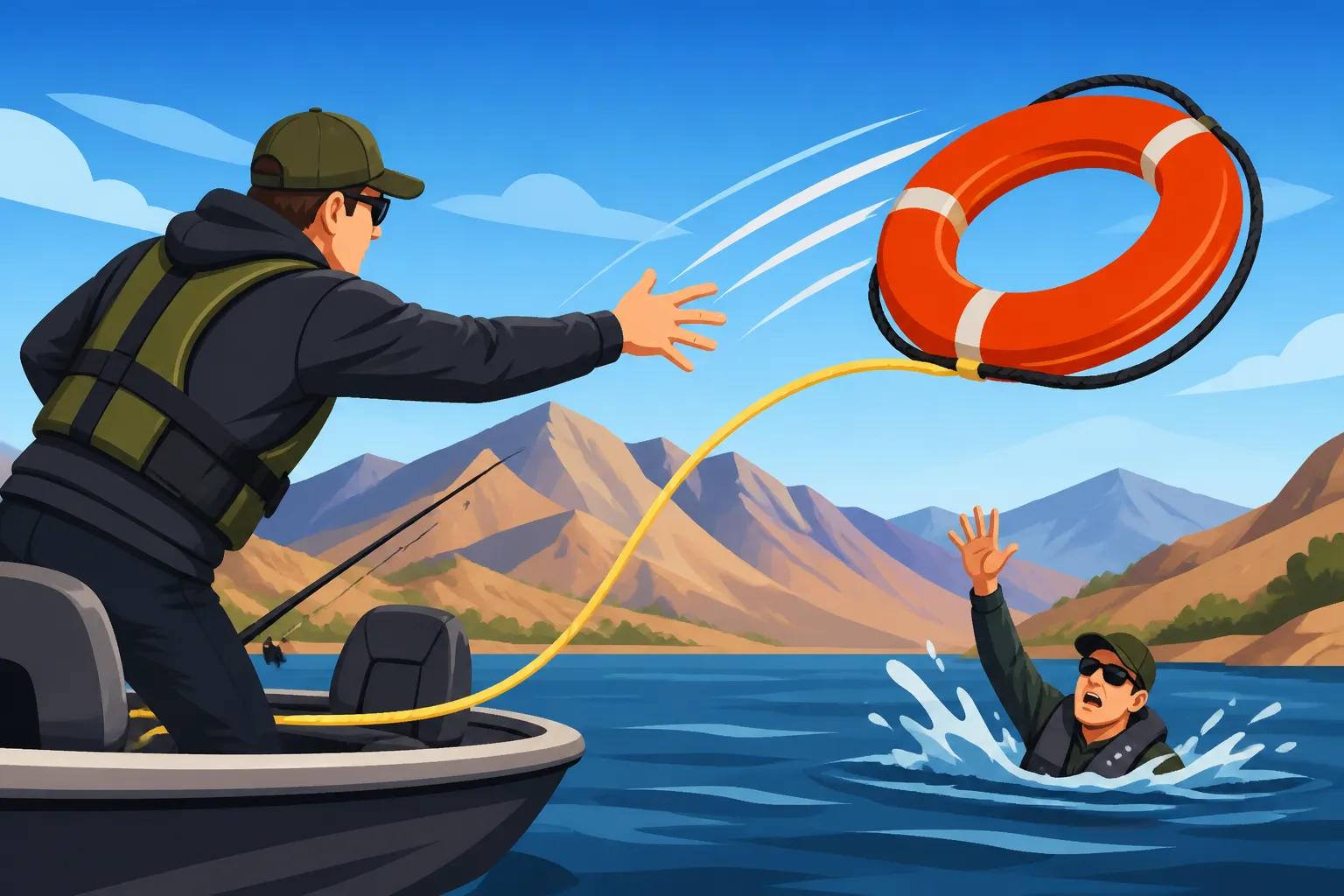
Imagine you're fishing on Lake Mohave, and a friend, perhaps reaching for a dropped rod, loses their balance and tumbles in. They might be a strong swimmer, but the shock of the cold water or the suddenness of the event could leave them struggling. If your boat is drifting, or if there’s a current, they can quickly get away from the vessel. A throwable device gives them something buoyant to grab onto immediately, keeping them afloat and visible while you circle back, rather than having them expend precious energy trying to swim back to the boat. This instantaneous aid can make all the difference, providing a much-needed boost of confidence and physical support in a stressful situation.
Navigating the Options: Types of Throwable Flotation Devices
When you start looking for a throwable flotation device, you’ll quickly notice there are a few distinct types, each with its own advantages and disadvantages. Understanding these differences will help you select the best fit for your specific boating and fishing needs in Nevada. All US Coast Guard-approved throwable devices fall under "Type IV PFDs" (Personal Flotation Devices), meaning they are intended to be thrown to a person in the water, not worn.
The Classic Ring Buoy (Type IV PFD)
The ring buoy is probably what most people picture when they think of a throwable device. It’s that iconic, circular lifebuoy, often white or orange, sometimes with a line attached for retrieval.
Pros:
- Highly Visible: Their bright colors and substantial size make them easy to spot in the water, even from a distance or in choppy conditions.
- Excellent Buoyancy: Ring buoys provide significant flotation, capable of supporting an adult's head and shoulders out of the water, making them ideal for someone who might be injured or less able to assist themselves.
- Easy to Grab: Their large, continuous shape offers a substantial surface for a person in the water to hold onto, especially if they are disoriented.
- Retrieval Line: Many ring buoys come with a tether line, allowing you to pull the person (and the buoy) back to the boat once they’ve secured it.
Cons:
- Bulky: Ring buoys are often quite large and can take up significant space on smaller boats. They might not be the most practical choice for a compact bass boat or a kayak.
- Accuracy: Throwing a ring buoy accurately, especially in windy conditions or to a distant person, can take practice. Its aerodynamic shape isn't always conducive to pinpoint accuracy.
- Not a Wearable Device: Remember, it's for throwing, not for wearing, so it won't help if the person is unconscious and unable to grab it.
Scenario: You're on a larger pontoon boat with family, perhaps enjoying a day out on Lake Mead. A child (who has a proper life jacket on, of course!) slips off the swimming platform. They're conscious but a little panicked. A ring buoy with its attached line is perfect here; you can quickly toss it to them and then reel them gently back to the boat.
The Versatile Throwable Cushion (Type IV PFD)
Throwable cushions are another very common and popular choice, especially among recreational anglers. These are essentially buoyant seat cushions.
Pros:
- Dual Purpose: This is perhaps their biggest advantage. They double as a comfortable seat cushion, which means they're always readily accessible and not just stored away until an emergency. Many anglers love the practicality of this.
- Compact: Compared to a ring buoy, cushions are less bulky and easier to stow or simply leave on a seat.
- Easy to Stow: They fit neatly into boat storage compartments or can be strapped to a seat.
- Affordable: Often, throwable cushions are a very budget-friendly option. You can find a good selection at stores like Bass Pro Shops or even online at Amazon.
Cons:
- Lower Buoyancy: While they provide adequate flotation, they typically offer less buoyancy than a ring buoy, making them less ideal for someone who is completely incapacitated.
- Harder to Hold On To: Their flat, rectangular shape can be more challenging for a person to hold onto, especially in rough water or if they are weakened.
- Less Visible: Though usually brightly colored, they are smaller and can be harder to spot in choppy water or from a distance.
Scenario: You’re out solo on your bass boat on Lake Havasu, focused on finding that perfect Largemouth Bass Habitat at Lake Mead (even if it's technically Mohave). You hit an unexpected wake, and your buddy loses their footing and goes over. A throwable cushion is right there on the seat next to you, easy to grab and toss quickly. For smaller vessels like kayaks or canoes covered under Nevada Nonmotorized Boat Rules, a compact cushion can be an excellent choice if it meets the overall length requirements.
Horseshoe Buoys and Specialized Throw Bags
Beyond the most common types, there are specialized throwable devices that cater to different boating styles and conditions.
Horseshoe Buoys:
These devices are shaped like a horseshoe, designed to fit around a person's torso.
- Pros: They offer better stability and a more secure fit for a conscious person than a flat cushion, almost like a hybrid between a ring buoy and a wearable vest, without being a "worn" PFD. They are easier for a person in the water to don.
- Cons: They can be bulkier than cushions and might not be considered a Type IV PFD by some interpretations unless specifically approved. Always check the USCG approval.
- Scenario: Ideal for sailboats or larger cruisers where a more secure, easy-to-grab flotation is desired, and there's ample storage space.
Throw Bags (Rescue Bags):
A throw bag is a bag containing a coil of rope, often brightly colored, designed for precise throwing and retrieval.
- Pros:
- Accuracy: The bag’s weight allows for very accurate throws, even over longer distances.
- Retrieval: The rope makes it incredibly easy to retrieve the person once they've grabbed the line.
- Versatile: Excellent for swift-water environments like rivers (think Truckee River Fishing Near the Nevada Line), where currents can quickly sweep someone away.
- Cons:
- Requires Skill: Throwing a throw bag effectively requires practice to avoid tangles and ensure accuracy.
- Not Buoyant on its Own: The bag itself doesn't offer much flotation; the person grabs the rope and is then pulled to safety.
- Scenario: You’re fly fishing on a river, and a wader loses their footing in the current. A well-aimed throw bag can quickly get a line to them, allowing you to pull them to shore.
| Feature | Ring Buoy (Type IV) | Throwable Cushion (Type IV) | Throw Bag (Specialized) |
|---|---|---|---|
| Primary Use | Emergency flotation for person overboard | Emergency flotation, doubles as seat cushion | Swift water rescue, precise throwing/retrieval |
| Buoyancy | High, keeps head and shoulders out of water | Moderate, good for temporary support | Rope only, person holds line; bag provides minimal flotation |
| Ease of Holding | Very easy to grab and hold | Can be challenging to hold in rough water | Person grasps the rope, not the bag itself |
| Visibility | High, large and brightly colored | Moderate, smaller, can be harder to spot in chop | High, bright rope and bag |
| Storage/Bulk | Bulky, requires dedicated space | Compact, fits easily, dual-purpose | Compact bag, easy to stow |
| Retrieval Line | Often included or easily attached | Can be attached, but less common | Integral to design |
| Best Use Case | Larger boats, open water, less mobile victims | Smaller boats, limited space, conscious individuals | Rivers, rapids, situations needing precise line delivery |
Choosing the Right TFD for Your Nevada Fishing Adventures
Selecting the perfect throwable flotation device isn't a one-size-fits-all decision. It truly depends on a few key factors related to your specific boating habits and the types of waters you frequent in the Silver State.
Considering Your Boat Type and Size
The kind of vessel you use for your Nevada fishing trips plays a huge role in your TFD choice.
- Smaller Boats (Kayaks, Canoes, Jon Boats): If you're out in a compact craft, like one of the Best Kayak for Fishing Nevada Reservoirs, space is at a premium. A throwable cushion often makes the most sense here. It's less bulky, can double as a comfortable seat, and meets the legal requirement (if your boat length requires one). You might also consider a compact throw bag if you're frequently in rivers or areas with currents, provided you’ve practiced using it.
- Medium-Sized Boats (Bass Boats, Small Deck Boats): For a typical bass boat or smaller runabout, you usually have a bit more room. A throwable cushion is still a popular choice due to its dual functionality and ease of access. However, if you prioritize maximum buoyancy and visibility, a ring buoy could be stowed at the stern or near the helm, especially if you have an open deck plan.
- Larger Boats (Pontoon Boats, Cruisers): If you're piloting a larger vessel, like those covered in Best Pontoon Boat for Family Fishing Trips, you likely have ample storage and deck space. This is where a classic ring buoy really shines. Its superior buoyancy and visibility are assets, particularly with multiple passengers or in rougher conditions on expansive waters like Lake Mead. Many larger boats will have both a ring buoy and several throwable cushions spread around for easy access.
Remember, the goal is not just to have one, but to have one that is accessible and effective for your vessel. Don’t just check off a box; think about how it will actually be used in an emergency.
Water Conditions and Target Species
Nevada’s fishing environments are incredibly diverse, from the high desert reservoirs to mountain streams and vast lakes. The conditions of these waters can influence your TFD choice.
- Large, Open Lakes (Lake Mead, Lake Mohave): These vast bodies of water can develop significant chop and waves quickly, especially with sudden winds. Visibility becomes paramount here. A highly visible ring buoy, possibly with a strobe light attached for night use, would be an excellent choice. The strong winds can also make accurate throwing challenging, so a heavier, more stable device might be beneficial.
- Cold Waters (Lake Tahoe): In colder lakes, swift recovery is absolutely critical due to the risk of hypothermia. While a TFD won't prevent hypothermia, getting the person back to the boat as quickly as possible is vital. A device that is easy to grab, provides good flotation, and can be retrieved efficiently (like a ring buoy with a strong line) is preferable.
- Rivers and Streams (Truckee River): For flowing water, especially rivers with a strong current, a throw bag is often the most effective tool. Its design allows for precise throws to a person being swept downstream and enables you to quickly reel them in to safety or to the bank. A ring buoy or cushion might be difficult to aim and less effective in a strong current.
Considering your target species often means considering where you'll be fishing. Are you deep-dropping for Mackinaw trout in Lake Tahoe or chasing smallmouth bass near rocky points? Different environments suggest different safety considerations, all part of understanding the broader Nevada Fishing Regulations Explained and best practices.
Budget and Availability
Fortunately, throwable flotation devices are generally quite affordable. You're not looking at a huge investment, but it's important to invest in a quality, USCG-approved product.
- Cost-Effectiveness: Throwable cushions are often the most budget-friendly option, making them a great choice for new boaters or those looking for an extra TFD. Ring buoys are usually a bit more, and specialized throw bags can vary in price depending on the length and quality of the rope.
- Where to Buy: You'll find a wide array of options at most sporting goods stores, like Bass Pro Shops, which typically stock various types of USCG-approved safety gear. Online retailers like Amazon also offer a massive selection, often with customer reviews that can help you gauge quality and user experience. Always look for the official USCG approval stamp to ensure it meets safety standards. While prices vary, remember that this is a critical safety item – don't cut corners on quality for a few dollars.
Ultimately, the best TFD is the one you have readily available, that is appropriate for your vessel and environment, and that you and your passengers know how to use. This piece of Nevada Fishing Gear Essentials is small in comparison to your rods and reels, but infinitely more important in a crisis.
Beyond the Purchase: Placement, Maintenance, and Practice
Buying a throwable flotation device is just the first step in ensuring safety on the water. To truly be prepared, you need to think about where it lives on your boat, how you keep it in good condition, and crucially, how you and your crew would actually use it in an emergency.
Strategic Placement for Rapid Deployment
In a real-life emergency, seconds count. A TFD that’s buried under a pile of fishing tackle, stowed deep in a locker, or tangled in ropes is about as useful as no TFD at all.
- Accessibility is Key: Your throwable device needs to be immediately accessible from the helm and from anywhere on the main deck. This means it should be in an open area, not behind a closed hatch or under a seat cushion that’s hard to lift. Imagine someone falls off the bow; can you grab and throw the device within a few seconds from your position at the stern?
- Secured but Easily Released: It's important that your TFD is secured to prevent it from blowing away in transit or bouncing off the boat in rough water. However, it should not be tied down with complex knots or straps that require fumbling to release. A simple clip, bungee cord, or a designated cradle that allows for a swift grab and toss is ideal. Some larger vessels might even have them mounted in a quick-release bracket.
- Scenario: You’re alone on the boat, and your child, who was playing near the transom, suddenly splashes into the water. Your TFD is hanging on a hook right next to the helm, easy to grab with one hand while you maintain control of the boat and shout instructions. That immediate access allows you to get flotation to them before they drift further away or panic.
Essential Maintenance for Longevity and Reliability
Just like your fishing reels or boat engine, your throwable flotation device needs a little love and attention to ensure it performs when you need it most. These aren't set-it-and-forget-it items.
- Regular Inspection: Make it a habit to visually inspect your TFD before each outing. Look for any signs of wear and tear:
- Fading or Cracking: UV rays from the Nevada sun can degrade the material over time, making it brittle or less buoyant.
- Stitching: Check for loose or frayed stitching, especially around straps or handles.
- Tears or Punctures: Even small holes can compromise buoyancy.
- Rope Condition: If your TFD has a retrieval line, check for fraying, knots, or weak spots.
- Keep it Clean and Dry: Store your TFD in a clean, dry place when not in use. Moisture can lead to mildew, which can degrade the fabric and stitching. If it gets wet during an outing, let it air dry completely before stowing it away.
- Replacement: If you notice significant damage or degradation, it’s time to replace it. A compromised TFD is a hazard, not a safety device. The cost of a new cushion or buoy is minimal compared to the potential consequences of a failed one.
Practice Makes Perfect: Drills for Emergency Situations
Having the right gear is only half the battle; knowing how to use it effectively is the other. Many boaters buy a TFD, stash it, and never think about it again until an emergency. That’s a mistake.
- Familiarize Everyone: Everyone who regularly boats with you should know where the TFD is located and how to deploy it. This includes family members, friends, or even regular fishing buddies. You might be the one in the water!
- Practice Throws: Take a few minutes during a calm day on the water to actually practice throwing your TFD. Pick a floating object (like a spare fender) and practice hitting it from various distances and angles. Pay attention to how the wind affects your throw. This will build muscle memory and confidence. If your TFD has a retrieval line, practice throwing it, allowing it to extend, and then reeling it back in without tangling.
- Develop a Recovery Plan: Beyond just throwing the device, discuss with your crew the full recovery plan. How will you maneuver the boat back to the person? How will you get them back on board? This might involve using a ladder, a retrieval sling, or specific boat maneuvers. This preparation is part of a broader commitment to safety, which also includes understanding things like Nevada Boater Education Card Requirement and other vital boating knowledge.
By strategically placing your TFD, maintaining it diligently, and regularly practicing its use, you’re not just meeting a regulation; you’re genuinely preparing yourself and your passengers for a safer, more enjoyable time on Nevada’s beautiful, sometimes challenging, waters.
Disclaimer
This article is for general informational purposes only and does not constitute professional advice. Laws, prices and regulations vary by location and change over time. Consult a qualified professional for guidance on your specific situation.