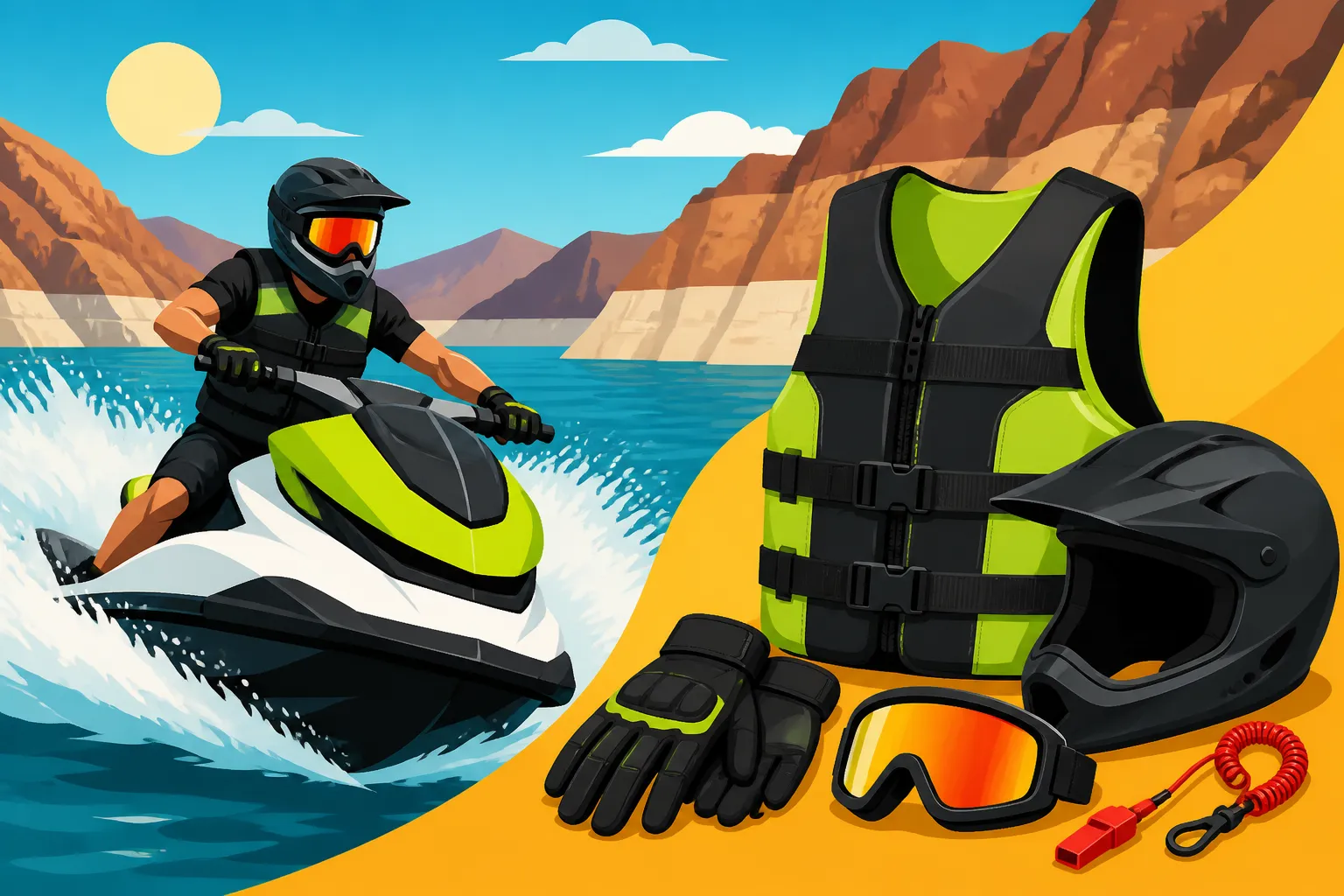
Best jet ski safety gear for Lake Mead
Heading out on Lake Mead for a fun day on your jet ski can feel like pure freedom, but it’s a big, powerful body of water with its own set of challenges. People often underestimate how quickly conditions can change or how vast the lake truly is, leaving them unprepared for unexpected situations. This guide is all about equipping you with the best safety gear for your jet ski adventures on Lake Mead, ensuring you have a blast while staying safe and sound.
Why Safety Gear is Non-Negotiable on Lake Mead
Let's be real, when you're thinking about a day of zipping across the water, safety gear might not be the first thing that comes to mind. You're probably picturing the sun, the spray, and the sheer thrill of it all. But on a lake as immense and dynamic as Lake Mead, overlooking safety can turn a dream day into a nightmare. It’s not just about avoiding trouble; it’s about being ready if trouble finds you.
Understanding Lake Mead's Unique Challenges
Lake Mead isn't your average pond or small reservoir. It's one of the largest man-made lakes in the world, stretching for miles with deep canyons, wide-open expanses, and countless coves. This vastness means a few things for jet ski enthusiasts. First, distances can be deceiving. A shoreline that looks close might be miles away, and if your jet ski breaks down, that's a long paddle or swim. Second, the weather can shift dramatically and rapidly. Clear skies can give way to strong winds and white caps in a matter of minutes, turning calm water into a choppy, challenging ride. Add to that the sheer volume of boat traffic—everything from kayaks to massive houseboats—and you have a complex environment where situational awareness and proper gear are absolutely critical. Lake Mead Nevada Fishing Guide can give you an idea of just how expansive this body of water truly is.
Then there's the remoteness. While there are popular launch points and marinas, large sections of Lake Mead feel isolated. If you have an emergency in a remote cove, getting help might not be as simple as flagging down a passing boat or making a quick phone call. Cell service can be spotty in many areas, and if you're out of sight, you're out of mind for passing vessels. Preparing for these unique conditions isn't about being paranoid; it's about being responsible and ensuring you can handle whatever the lake throws your way.
The Legal Requirements versus Smart Preparedness
Nevada has specific laws about what safety equipment you must have on board your personal watercraft (PWC), which includes jet skis. These regulations are designed to ensure a basic level of safety for everyone on the water. For instance, a US Coast Guard-approved life jacket for every person on board is a universal requirement, along with a fire extinguisher if your PWC has an enclosed fuel compartment, and a sound-producing device like a whistle. You'll also need a valid Nevada Boater Education Card Requirement if you meet certain age criteria.
However, just meeting the legal minimums isn't always enough, especially on a lake like Mead. Think of it like a car's safety features: you must have seatbelts, but having airbags, anti-lock brakes, and roadside assistance is just plain smart for truly comprehensive protection. Going beyond the bare minimum means carrying extra water, a comprehensive first-aid kit, and reliable communication devices. It means having gear that not only keeps you legal but genuinely prepares you for common problems like dehydration, minor injuries, or mechanical issues far from shore. Don't just tick the boxes; think about what could actually save your day, or even your life. Reviewing the Nevada required safety equipment checklist for boats can give you an even broader perspective.
Essential Personal Flotation Devices (PFDs)
If there's one piece of safety gear that should always be at the top of your list for any water activity, it's a personal flotation device, or PFD. For jet skiing, it's not just a suggestion; it's a lifeline. Even the strongest swimmers can be incapacitated in an instant by a fall, a collision, or unexpected rough water.
The Importance of a Properly Fitted Life Jacket
A life jacket's primary purpose is to keep you afloat and, ideally, to turn you face-up in the water if you're unconscious. But for it to do its job, it absolutely must fit correctly. A PFD that's too loose can ride up around your ears, hindering your ability to breathe or swim, and potentially slipping off entirely. One that's too tight will be uncomfortable and restrict your movement, which is the last thing you want when trying to maneuver a jet ski or swim. When you try on a PFD, make sure it's snug but still allows you to move your arms freely. Lift your arms above your head; if the PFD rides up significantly, it's too big.
It’s crucial to select a PFD that is U.S. Coast Guard-approved. This approval ensures that the device meets rigorous safety standards. Beyond adults, consider PFDs for all passengers, especially children. Kids' life jackets are specifically designed with features like crotch straps and neck floats to keep them secure and their heads above water. And hey, don't forget your furry co-pilots! Many pet-specific PFDs are available from retailers like Bass Pro Shops, ensuring your four-legged friend stays safe too.
Choosing the Right PFD for Jet Skiing
While all USCG-approved PFDs offer flotation, some are better suited for jet skiing than others. For personal watercraft, a Type III PFD (also known as a "flotation aid") is generally the best choice. These PFDs are designed for active use and provide excellent comfort and mobility, allowing you to operate your jet ski without feeling restricted. They typically come in vest or jacket styles, often with multiple straps and zippers for a customizable, secure fit. This snug fit is essential because when you fall off a jet ski, you hit the water at speed, and a loose PFD could be ripped off.
Look for PFDs made from durable, quick-drying materials with features like large armholes for full range of motion, and maybe even a small pocket for a whistle or emergency snack. Bright colors are also a huge plus, as they significantly increase your visibility to other boaters if you end up in the water. You can find a wide variety of excellent Type III PFDs online from Amazon or at local sporting goods stores. Some even come with built-in whistles, fulfilling another legal requirement in one go. Remember, an uncomfortable PFD is one you might be tempted not to wear, and on a jet ski, wearing it is non-negotiable.
Navigation and Communication Essentials
Being out on the vastness of Lake Mead is incredible, but it also means you need reliable ways to find your way around and, more importantly, to call for help if things go sideways. Getting lost or stranded without communication can quickly turn a fun outing into a serious situation.
Staying Found and Calling for Help
Your most immediate communication tool is likely your cell phone. However, Lake Mead is notorious for having spotty service in many areas, particularly in canyons or far from the main recreation areas. So, while it's essential to have it, don't rely on it as your sole means of communication. Always keep your phone in a truly waterproof case, preferably one that floats, and ensure it's fully charged before you head out. A portable power bank is also a wise addition, just in case.
For more reliable communication, especially in open water or when cell service is nonexistent, a VHF marine radio is a game-changer. These radios operate on dedicated marine frequencies, allowing you to communicate directly with other boats, the Coast Guard, or park rangers. A handheld, waterproof VHF radio is perfect for a jet ski and can be a lifesaesaver if you have a mechanical breakdown or medical emergency. Pair this with a good old-fashioned marine whistle, which is a legal requirement in Nevada anyway, and you have a solid communication plan. A compact signal mirror can also be incredibly effective for attracting attention from distant vessels or aircraft on a sunny day.
Visual Signals for Distress
Sometimes, shouting or even a radio call isn't enough, especially if you're out of sight or in an urgent situation where you need immediate visual attention. This is where visual distress signals come into play. A set of marine-approved flares, whether aerial or handheld, can be crucial for alerting rescuers to your location, particularly at night or in low visibility. Just make sure you understand how to deploy them safely and that they haven't expired.
Beyond flares, an air horn or even a bright, highly visible flag can serve as excellent visual and audible signals. If you're drifting or stalled, flying a bright orange distress flag can catch the eye of another boater much faster than you might think. Remember that the more ways you have to signal for help, the better your chances of a quick rescue. It’s all about redundancy and ensuring you're prepared for various scenarios on the water.
Emergency and Repair Kits
Even the most well-maintained jet ski can have an unexpected issue, and out on Lake Mead, a small problem can quickly escalate if you're not prepared. Having a basic repair kit and a comprehensive first-aid kit can make all the difference in dealing with minor glitches or injuries.
Basic Tool and Repair Kit for On-Water Fixes
Imagine your jet ski sputtering to a halt miles from the nearest launch ramp. It happens. A small, waterproof bag containing some essential tools can get you back up and running for simple issues. Think about what typically goes wrong: a loose battery connection, a fouled spark plug, or a clogged intake grate. Your kit should ideally include:
- A multi-tool or a basic set of wrenches and screwdrivers.
- Spare spark plugs and a spark plug wrench (know where your spark plugs are!).
- Zip ties and electrical tape for temporary fixes.
- A small length of duct tape (the universal repair solution!).
- A small flashlight or headlamp (even during the day, you might need to look into a dark engine compartment).
- A small piece of wire or stiff coat hanger to clear intake grates of weeds or debris.
Keep this kit in a dry bag, securely fastened to your jet ski. It won't fix everything, but it can prevent a lengthy tow or rescue for common, easily remedied problems.
First-Aid and Hydration for Unexpected Situations
The sun, the heat, the constant motion, and the sheer fun can all contribute to potential issues. Dehydration is a very real and dangerous threat on Lake Mead, especially during the warmer months. Always carry more water than you think you’ll need. Hydration packs are excellent for jet skiing, allowing you to drink hands-free while riding. Beyond water, some electrolyte tablets or sports drinks can be invaluable.
A well-stocked first-aid kit is another non-negotiable item. It should be in a waterproof container and include items for common injuries you might encounter on the water:
- Bandages, gauze, and antiseptic wipes for cuts and scrapes.
- Pain relievers (ibuprofen, acetaminophen).
- Allergy medication (antihistamines).
- Sunburn relief gel or spray.
- Tweezers for splinters.
- Motion sickness medication, if anyone is prone to it.
- Any personal prescription medications.
Remember, a little preparation goes a long way in ensuring minor issues don't become major emergencies. You can find comprehensive first-aid kits and individual components for a custom kit at any general store or online from retailers like Amazon.
Smart Accessories for Enhanced Safety and Comfort
While core safety gear covers the essentials, a few smart accessories can significantly enhance both your safety and overall enjoyment on Lake Mead. These are the items that make your day smoother and more comfortable, allowing you to focus on the fun rather than the unforeseen.
Sun Protection and Hydration Strategies
Nevada sunshine is intense, and the reflection off Lake Mead's surface amplifies it. Sun protection isn't just about comfort; it's about preventing severe sunburn, heat exhaustion, and long-term skin damage. Always apply a high-SPF, waterproof sunscreen generously and reapply frequently, especially after being in the water. Look for sunscreens that are reef-safe if you’re concerned about aquatic ecosystems, though Lake Mead is a freshwater environment.
Beyond sunscreen, consider wearing quick-drying, long-sleeved shirts with UPF (Ultraviolet Protection Factor) ratings. A wide-brimmed hat that can be secured tightly to prevent it from blowing off, and polarized sunglasses are also critical. Sunglasses protect your eyes from harmful UV rays and reduce glare, helping you see obstacles and other boats on the water. And again, always, always carry plenty of water. A cooler dedicated solely to drinks, even a small one, is a wise investment. Best sun protection gear for desert fishing offers some great crossover advice here.
Anchoring and Docking Tools
Many jet skiers assume they won't need an anchor, but trust me, it’s a vital piece of gear. Whether you want to take a break in a secluded cove, stop for a swim, or need to wait for a friend, an anchor keeps you from drifting into danger or away from your spot. A small, collapsible grappling anchor with a sufficient length of rope (Lake Mead can be deep!) is ideal for a jet ski. Make sure the rope has a buoy or float attached so you don't lose your anchor if you need to drop it quickly.
Dock lines are equally important. You’ll need them to temporarily tie up at a marina, a buoy, or even another boat. Carrying two relatively short lines (around 10-15 feet each) with a loop on one end will cover most docking situations. Fender lines or small, inflatable fenders can also protect your jet ski's hull from bumps and scrapes if you're tying up alongside another vessel or a dock. These small additions provide a lot of peace of mind and prevent those awkward, uncontrolled drifts when you just want to take a moment to enjoy the incredible scenery.
Here's a quick reference table for your essential jet ski safety gear on Lake Mead:
| Category | Essential Item | Why You Need It | Legal Requirement in Nevada? |
|---|---|---|---|
| Personal Safety | USCG-Approved PFD | Keeps you afloat, increases visibility. | Yes |
| Whistle/Sound Device | Audible distress signal. | Yes | |
| Navigation & Communication | Waterproof Cell Phone | Emergency calls, navigation apps (when service allows). | No |
| Handheld VHF Marine Radio | Reliable communication with authorities/other boats. | No | |
| Visual Distress Signals | Flares, signal mirror for attracting attention. | No | |
| Emergency Preparedness | Basic First-Aid Kit | Addresses minor injuries, scrapes, sunburn. | No |
| Water & Electrolytes | Crucial for preventing dehydration in desert heat. | No | |
| Basic Repair Kit | Spark plugs, tools, tape for minor mechanical issues. | No | |
| Comfort & Convenience | Sunscreen (High SPF) | Prevents sunburn and UV damage. | No |
| UPF Clothing/Hat/Sunglasses | Additional sun protection, glare reduction. | No | |
| Small Anchor & Rope | Prevents drifting, allows for breaks. | No | |
| Dock Lines | Secures PWC at docks or alongside other vessels. | No |
Remember, while the initial Nevada fishing license cost breakdown focuses on fishing, boat safety applies universally. Staying safe on Lake Mead means respecting its power, understanding its unique environment, and equipping yourself with the right gear. Happy riding!
Disclaimer
This article is for general informational purposes only and does not constitute professional advice. Laws, prices and regulations vary by location and change over time. Consult a qualified professional for guidance on your specific situation.