Ice Fishing Gear for Nevada Lakes
When the winter chill truly sets in across Nevada, many anglers pack away their warm-weather gear and dream of spring. But for a growing number of us, the freezing temperatures signal the start of a unique and incredibly rewarding adventure: ice fishing. If you've ever thought about venturing onto the frozen surface of a Nevada lake, you know the apprehension – the cold, the unknown, and the critical question of what gear you actually need to stay safe, warm, and successful. This comprehensive guide will equip you with everything necessary to make your Nevada ice fishing trips memorable for all the right reasons.
Prioritizing Safety: Your First Line of Defense on the Ice
Let's be real, ice fishing in Nevada might sound a little wild, but it's an exhilarating experience that calls for extreme caution. The biggest challenge, and certainly the one that causes the most anxiety, is the ice itself. Unlike some northern states with consistently thick ice, conditions in Nevada can vary dramatically from year to year, and even day to day. That's why safety isn't just a suggestion; it's the absolute foundation of a successful and enjoyable trip. You're out there, often in remote spots, and being prepared is non-negotiable.
Essential Safety Equipment for Hard Water
Before you even think about dropping a line, you need to have a rigorous safety checklist. First and foremost, a pair of ice picks is paramount. These aren't for breaking ice, but for self-rescue. If you happen to break through, you can use them to gain purchase on the slippery ice and pull yourself out. They should be worn around your neck or easily accessible on your jacket. Trust me, fumbling for them in a panic is not an option.
Next, a spud bar or a sharp ice auger is critical for checking ice thickness as you venture out. Don't just walk out blindly. Tap ahead of you, ensuring the ice can support your weight. This is especially vital when exploring new areas or early in the season. You'll also want to carry a sturdy rope – at least 50 feet – in case you need to help someone else (or be helped) from a distance. Finally, consider wearing a flotation suit or a personal flotation device (PFD) underneath your winter gear. These are designed to keep you buoyant and insulated if you do go through, significantly increasing your survival time in frigid water.
Beyond these absolute essentials, a whistle is a simple but effective communication tool if you get separated from your group or need to signal for help. A well-stocked first-aid kit is also a must, capable of handling minor cuts, scrapes, and especially cold-related injuries like frostbite. Remember, many of Nevada's prime ice fishing spots, like Wildhorse Reservoir or Cave Lake State Park, can be a fair drive from immediate medical attention, making self-sufficiency incredibly important. For more on navigating these conditions, check out our guide on Ice Fishing Safety on Nevada Reservoirs.
Understanding Ice Conditions and Preparation
Knowing the difference between safe and unsafe ice is an art, not a science, and it takes experience. However, there are general guidelines to follow. The Nevada Department of Wildlife (NDOW) recommends a minimum of four inches of clear, solid ice for safe foot travel. Anything less, or ice that looks slushy, discolored, or has open water nearby, should be avoided. Always use your spud bar to check the ice every few steps, especially near inlets, outlets, pressure ridges, or structures like docks and rocks, where ice can be thinner.
Never go ice fishing alone. Always bring a buddy, and make sure someone knows where you're going and when you expect to return. This is not the time for solo exploration, no matter how appealing the solitude might seem. Proper communication, whether through cell phones (fully charged!) or satellite communicators in remote areas, is vital. Dressing in layers, which we'll delve into more later, is also a crucial part of preparation, allowing you to adapt to changing temperatures throughout the day. A sudden drop in air temperature or an unexpected wind can turn a comfortable outing into a dangerously cold one very quickly. Always be aware of the weather forecast, not just for the temperature, but for wind chill and potential snow. For a broader overview of the sport, our article on Ice Fishing in Nevada provides more context.
Core Fishing Tackle for Nevada Ice
Once you've got your safety plan dialed in, it's time to talk about the fun stuff: the actual gear you'll use to catch fish. Ice fishing tackle is distinctly different from open-water gear. It's often shorter, more sensitive, and designed for precise presentations in a confined space directly over a hole. The key is subtlety and feeling those sometimes-light bites through a thick layer of ice.
Ice Rods, Reels, and Line Choices
Ice fishing rods are typically much shorter than conventional rods, ranging from 18 inches to about 36 inches. This short length is perfect for working in a small space, whether you're sitting on a bucket or inside a compact ice shelter. They come in various actions, just like open-water rods. A light action rod with a sensitive tip is ideal for detecting the delicate bites of panfish like perch or small trout, which are common catches in many Nevada lakes that freeze over, such as Wildhorse Reservoir. For larger fish like bigger trout or even the occasional walleye (if you're lucky enough to find them in Nevada), a medium or medium-heavy action rod offers more backbone to fight stronger fish. You can find a wide range of specialized ice fishing rods on Amazon, often in affordable combos.
For reels, you generally have two main choices: spinning reels or inline reels. Spinning reels are familiar to most anglers and work well, especially smaller ultralight models. Inline reels, on the other hand, prevent line twist because the line comes straight off the spool without being wrapped around a bail. This is a huge advantage when using tiny, lightweight jigs, allowing them to fall naturally. Whichever reel you choose, pair it with a good quality fishing line. Monofilament is popular for its stretch, which can act as a shock absorber for light bites, and its lower visibility. Fluorocarbon is even less visible and has less stretch, offering more sensitivity. Many experienced ice anglers prefer braided line for its extreme sensitivity and no-stretch properties, often pairing it with a fluorocarbon leader for stealth. For different setups, check out our guide on Best Ice Fishing Rod and Tip-Up Setup.
Baits and Lures for Nevada Ice Fish
The world of ice fishing lures is fascinating, packed with tiny, specialized offerings designed to entice fish in cold, clear water. Jigs are king here. Small tungsten or lead jigs, often tipped with a live bait or a soft plastic, are incredibly effective. Tungsten jigs are denser, allowing them to fall faster and get back into the strike zone quickly, which is a huge advantage when fishing deep or in windy conditions. Common colors include glow-in-the-dark, chartreuse, orange, and silver, mimicking small invertebrates or baitfish.
Spoons are another excellent choice, especially for larger trout or active panfish. They flutter on the fall, mimicking a wounded baitfish, and can be jigged aggressively to draw attention. Examples include Swedish Pimples or Kastmasters. Ice flies are delicate and mimic insects, often suspended under a small bobber, perfect for extremely finicky trout. When it comes to live bait, don't underestimate the power of mealworms, wax worms, or even small minnows (where legal). A small piece of PowerBait or Gulp! on a jig can also be incredibly effective for stocked trout. Remember that local regulations may have specific rules about bait, especially at places like Pyramid Lake, so always check the Nevada Fishing Regulations Explained before you go. The right presentation is key; sometimes a subtle quiver is all it takes, other times a more aggressive jigging motion is needed to trigger a strike.
Breaking Through: Augers and Shelters
You can't go ice fishing without a hole in the ice, and you certainly won't stay out long without some protection from the elements. These two categories of gear are fundamental to the actual act of fishing and your comfort on the frozen expanse. Imagine trying to fish in a Nevada winter without either – it would be a short, miserable trip!
Choosing the Right Ice Auger
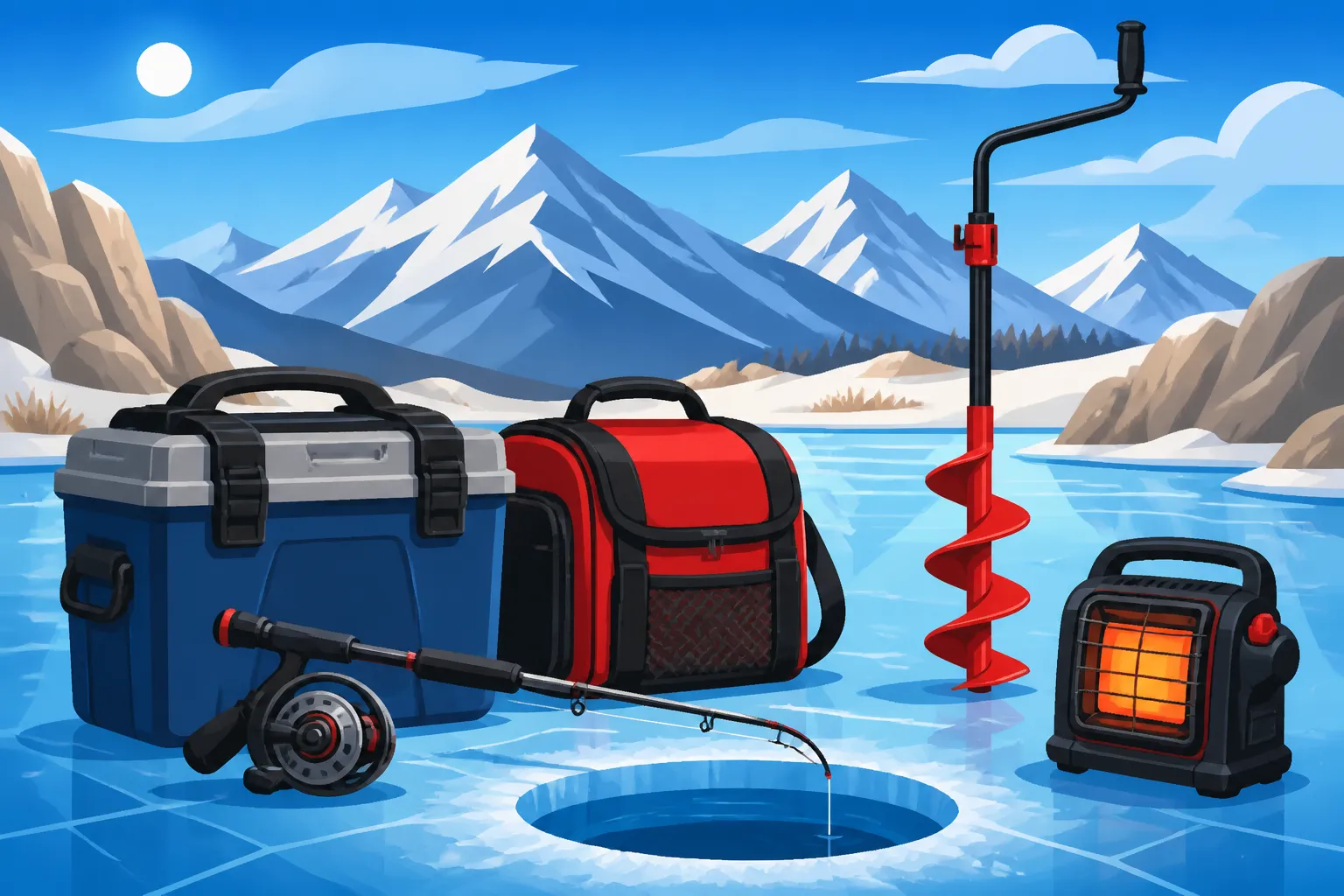
The ice auger is your gateway to the fish. It's the tool that drills through potentially feet of solid ice, creating your fishing hole. There are several types, each with its own pros and cons. Manual augers are the most basic and affordable. They work purely off elbow grease and are fantastic for early-season ice (4-10 inches) or for anglers who don't mind a workout. They're lightweight and reliable, perfect for small, walk-in lakes or if you're on a budget.
For thicker ice or if you plan on drilling many holes, a power auger is a game-changer. These come in gas, propane, and electric varieties. Gas augers are powerful and can drill through very thick ice quickly, but they're noisy, produce fumes, and require fuel. Propane augers are a cleaner, quieter alternative to gas, still offering plenty of power without the fumes. Electric augers, powered by rechargeable lithium-ion batteries, are the quietest and cleanest, and their popularity has soared. Brands like Ion and StrikeMaster make excellent electric models. They are perfect for those who want quick, easy holes without the hassle of gas, though battery life can be a consideration on extended trips or in extreme cold. Consider the typical ice thickness you'll encounter in Nevada, which might not be as extreme as in Minnesota, but can still be significant on lakes like Wildhorse or South Fork State Recreation Area.
When choosing, also consider the auger blade size. A 6-inch auger is perfect for panfish and smaller trout. An 8-inch auger offers more versatility for larger species. Going any larger, like 10 inches, typically means a heavier auger and a lot more work to drill a hole, which usually isn't necessary for the species commonly targeted in Nevada.
Selecting an Ice Fishing Shelter
An ice fishing shelter, often called a shanty or shack, transforms a freezing outdoor activity into a relatively comfortable experience. It shields you from biting winds, snow, and keeps your body heat in, allowing you to focus on fishing rather than shivering. They typically fall into two main categories: flip-over shelters and pop-up shelters.
Flip-over shelters are often integrated with a sled base, making them easy to pull across the ice. When you get to your spot, you simply "flip" the tent portion over, and you're ready to fish. They are very quick to set up and take down, and often come with built-in seating and storage. Brands like Eskimo and Clam are well-known for their durable flip-overs. These are fantastic for mobile anglers who like to move around until they find the fish.
Pop-up shelters are more like conventional tents. They "pop up" into shape from a compact bag, offering more interior space for their footprint compared to flip-overs. They are excellent for groups or for anglers who plan to stay in one spot for an extended period. Many pop-ups are fully insulated, making them incredibly warm when combined with a portable heater. The trade-off is they can take a little longer to set up, especially in strong winds. No matter which style you choose, ensure it's made from durable, insulated material and has sturdy hubs and poles. Consider bringing a portable propane heater, like those from Mr. Heater, to keep things toasty inside. For a more detailed look at these structures, check out Best Ice Fishing Auger and Shelter.
| Feature | Manual Auger | Electric Auger | Propane Auger | Flip-Over Shelter | Pop-Up Shelter |
|---|---|---|---|---|---|
| Power Source | Angler | Battery (Li-ion) | Propane Tank | Manual (integrated sled) | Manual (collapsible poles) |
| Noise Level | Silent | Quiet | Low to Moderate | Minimal | Minimal |
| Fumes | None | None | Minimal | None (unless using internal heater) | None (unless using internal heater) |
| Portability | Very High (Lightweight) | High (Battery weight) | Moderate (Propane tank adds weight) | High (sled design) | Moderate (packs flat, can be bulky) |
| Speed | Slow (depends on ice/strength) | Fast | Fast | Very Fast Setup/Teardown | Moderate Setup/Teardown (can be tricky in wind) |
| Best For | Early season, few holes, budget | Frequent drilling, clean operation | Extended trips, thick ice, less hassle than gas | Mobile anglers, solo/duo, quick moves | Groups, stationary fishing, maximum space |
| Common Blade Size | 6-8 inches | 6-8 inches | 8-10 inches | Single or dual angler capacity | Multiple anglers, more gear |
| Typical Cost | Low ($50-$150) | Medium to High ($400-$800) | Medium to High ($300-$600) | Medium to High ($300-$1000+) | Low to Medium ($150-$600) |
Staying Warm and Comfortable on the Ice
This is where many newcomers to ice fishing in Nevada struggle. It's not just about surviving the cold; it's about being comfortable enough to truly enjoy the experience. There's nothing worse than having to pack up early because your fingers or toes are numb. Proper clothing isn't just a nicety; it's a safety measure, preventing hypothermia and frostbite.
Layering for Nevada's Winter Elements
The secret to staying warm in extreme cold is layering. Forget that bulky single parka you wear for shoveling snow; that won't cut it on a windy, frozen lake. Start with a good base layer. This is worn directly against your skin and should be made of moisture-wicking material like merino wool or synthetic fabrics (polyester, polypropylene). Cotton is a definite no-go as it absorbs sweat and loses all its insulating properties when wet, making you colder. Base layers like those offered on Amazon can make a huge difference in your comfort.
Your mid-layers provide the bulk of your insulation. Fleece jackets, down vests, or synthetic insulated jackets work well here. The idea is to trap warm air close to your body. You might wear one or two mid-layers depending on how cold it is. Finally, your outer shell needs to be waterproof and windproof. This layer protects you from the elements – snow, sleet, and especially the relentless Nevada wind that can cut right through you. Many dedicated ice fishing suits are designed with flotation capabilities and multiple layers of insulation built-in, offering excellent protection. Brands like StrikerICE or Clam make excellent suits tailored for the ice, ensuring maximum warmth and mobility.
Essential Cold-Weather Accessories
Beyond your layered clothing, several accessories are absolutely vital for comfort. Your feet are particularly vulnerable to cold, so investing in high-quality, insulated boots is a must. Look for boots rated for extremely cold temperatures (e.g., -40°F or colder) and make sure they are waterproof. Pair them with thick, moisture-wicking wool or synthetic socks. Again, avoid cotton socks at all costs.
A warm hat that covers your ears is critical, as a significant amount of body heat is lost through your head. A balaclava can offer even more protection for your face and neck on brutally cold or windy days. Gloves or mittens are also essential. Many anglers prefer mittens for maximum warmth, often taking them off momentarily to tie knots or handle fish, then quickly putting them back on. Some specialized fishing gloves have convertible finger flaps, allowing for dexterity when needed. Hand warmers and foot warmers, easily purchased from Amazon, are inexpensive little packets that can provide hours of warmth and make a world of difference. Lastly, consider a portable, insulated seat or a comfortable padded bucket. Sitting directly on the cold ice will quickly sap your body heat, so a barrier is key. And don't forget a thermos full of hot coffee, tea, or cocoa – it's a game-changer!
Enhancing Your Ice Fishing Experience with Electronics and Extras
While you can certainly catch fish with basic gear, modern electronics and thoughtful accessories can significantly improve your success rate and overall enjoyment on the ice. These tools help you understand what's happening beneath the surface, saving you time and effort when searching for fish in Nevada's deeper, colder lakes.
Fish Finders and Flashers for Ice
A fish finder or flasher is an invaluable tool for ice fishing. Unlike open-water fish finders that scan a wide area, ice fishing versions are designed to look straight down through your hole. They provide real-time information about what's directly beneath you: the depth, the bottom composition, and most importantly, the presence of fish and your lure. This eliminates the guesswork of whether fish are even in the area, allowing you to move to more productive spots.
Traditional flashers, like those made by Vexilar or Marcum, display a live, circular graph of what's happening below. You can see your jig, watch fish approach it, and even see their reaction to your presentation. This dynamic feedback loop helps you refine your technique and entice more bites. More advanced sonar units, from brands like Humminbird (with their Ice Helix series) and Garmin, offer detailed LCD screens with traditional 2D sonar, often with GPS mapping capabilities. This allows you to mark productive spots, track your movements, and even download lake maps, which is incredibly useful on large bodies of water like Lake Tahoe, which experiences ice fishing on its shallower bays in some winters, or Wildhorse. Battery life is a critical consideration for these units, especially in cold weather, so investing in a good quality, long-lasting battery is wise. For more details on using these tools, our guide on Do you need a fish finder to catch stripers at Lake Mead? offers insights into sonar application, even though the specific target species differs.
Other Useful Gadgets and Tools
Beyond the core tackle and electronics, a few other items can make your ice fishing trip much smoother and more enjoyable. An ice skimmer (also called a slush scoop) is essential for keeping your hole free of ice chips and slush, which can freeze over quickly in cold temperatures. A good pair of fishing pliers or forceps is crucial for removing hooks, especially from smaller fish. If you anticipate catching larger species, a gaff hook might be useful for safely landing them.
A powerful headlamp is a must-have, especially if you're fishing at dawn, dusk, or planning a night fishing trip. Many anglers arrive before sunrise or stay after sunset. A GPS device or a reliable GPS app on your phone (with downloaded maps for no-service areas) can help you navigate safely on the ice, especially in whiteout conditions or on vast, featureless landscapes. Always carry a portable charger for your phone and any other electronic devices. Finally, a fishing sled is incredibly useful for transporting all your gear across the ice. It saves your back and ensures you can bring everything you need for a comfortable and productive day. Many anglers even build custom "smitty sleds" to make hauling even easier.
Here's a quick checklist of everything we've covered to help you pack for your next Nevada ice fishing adventure!
| Category | Essential Items | Description |
|---|---|---|
| Safety | Ice Picks | Worn around neck; self-rescue tool for pulling yourself out of the water if you break through. |
| Spud Bar / Auger | Used to test ice thickness ahead of you as you walk; ensures safe passage. | |
| Flotation Suit / PFD | Provides buoyancy and insulation if you fall through the ice. | |
| Rope (50 ft+) | For assisting others or being assisted from a distance. | |
| Whistle | Simple signaling device for emergencies or communication. | |
| First-Aid Kit | For minor injuries, cuts, and cold-related issues like frostbite. | |
| Communication Device (Phone/Satellite Messenger) | Crucial for staying in touch and calling for help; ensure batteries are charged. | |
| Fishing Gear | Ice Rods (18-36 inches) | Short, sensitive rods designed for ice fishing; varying actions for different species. |
| Ice Reels (Spinning/Inline) | Small reels appropriate for ice rods; inline reels reduce line twist. | |
| Fishing Line (Mono/Fluoro/Braid) | Specific lines for cold water conditions, considering stretch, sensitivity, and visibility. | |
| Jigs (Tungsten/Lead) | Small lures, often tipped with bait, effective for enticing bites in cold water; various colors and sizes. | |
| Spoons & Ice Flies | Alternative lure options, mimicking baitfish or insects, used for various species and presentations. | |
| Live Bait / Scented Baits | Mealworms, wax worms, minnows (check regulations), PowerBait, Gulp! for added attraction. | |
| Breaking Ice | Ice Auger (Manual/Power) | Tool for drilling holes in the ice; choice depends on ice thickness, frequency of use, and budget. |
| Ice Skimmer / Slush Scoop | For clearing ice chips and slush from your fishing hole. | |
| Shelter & Heat | Ice Fishing Shelter (Flip-Over/Pop-Up) | Provides protection from wind, snow, and cold; choose based on mobility needs and group size. |
| Portable Heater | Essential for staying warm inside your shelter; always use proper ventilation. | |
| Propane / Fuel (for heater/auger) | Sufficient supply for your power auger and heater. | |
| Comfort | Layered Clothing (Base, Mid, Outer) | Moisture-wicking base, insulating mid-layers, waterproof/windproof outer shell. No cotton! |
| Insulated, Waterproof Boots | Rated for extreme cold; essential for protecting your feet. | |
| Wool/Synthetic Socks | Keep feet dry and warm; multiple pairs recommended. | |
| Warm Hat / Balaclava | Covers head and ears to prevent heat loss. | |
| Insulated Gloves / Mittens | Protect hands from extreme cold; consider convertible styles for dexterity. | |
| Hand & Foot Warmers | Disposable packets for extra warmth in boots and gloves, widely available on Amazon. | |
| Portable Seat / Padded Bucket | Essential for comfort and preventing heat loss from sitting directly on cold ice. | |
| Thermos with Hot Beverages | Coffee, tea, or hot cocoa to warm you from the inside out. | |
| Electronics & Extras | Fish Finder / Flasher | Provides real-time information on depth, structure, and fish presence under the ice. |
| GPS Device / App | For navigation and marking productive fishing spots, especially in whiteout conditions. | |
| Portable Power Bank | For recharging phones, fish finders, or other electronic devices. | |
| Sled | For easily transporting all your gear across the ice. | |
| Pliers / Forceps | For hook removal and other small tasks. | |
| Headlamp | For visibility during pre-dawn setup, dusk fishing, or night fishing. |
By carefully selecting and preparing your ice fishing gear, you're not just buying equipment; you're investing in unforgettable experiences on Nevada's unique frozen waters. From the adrenaline of drilling your first hole to the peaceful solitude of watching your line dance on the flasher, ice fishing is a winter tradition worth exploring safely and comfortably. For specifics on where the ice gets thick enough, check out Which Nevada lakes freeze thick enough for ice fishing.
Disclaimer
The information provided in this guide is for general informational purposes only and does not constitute professional advice. Ice fishing carries inherent risks, and conditions on frozen bodies of water can change rapidly. Always exercise extreme caution, prioritize safety, and adhere to all local and state regulations. Consult official sources like the Nevada Department of Wildlife (NDOW) for current ice conditions, fishing regulations, and safety guidelines before venturing onto the ice.