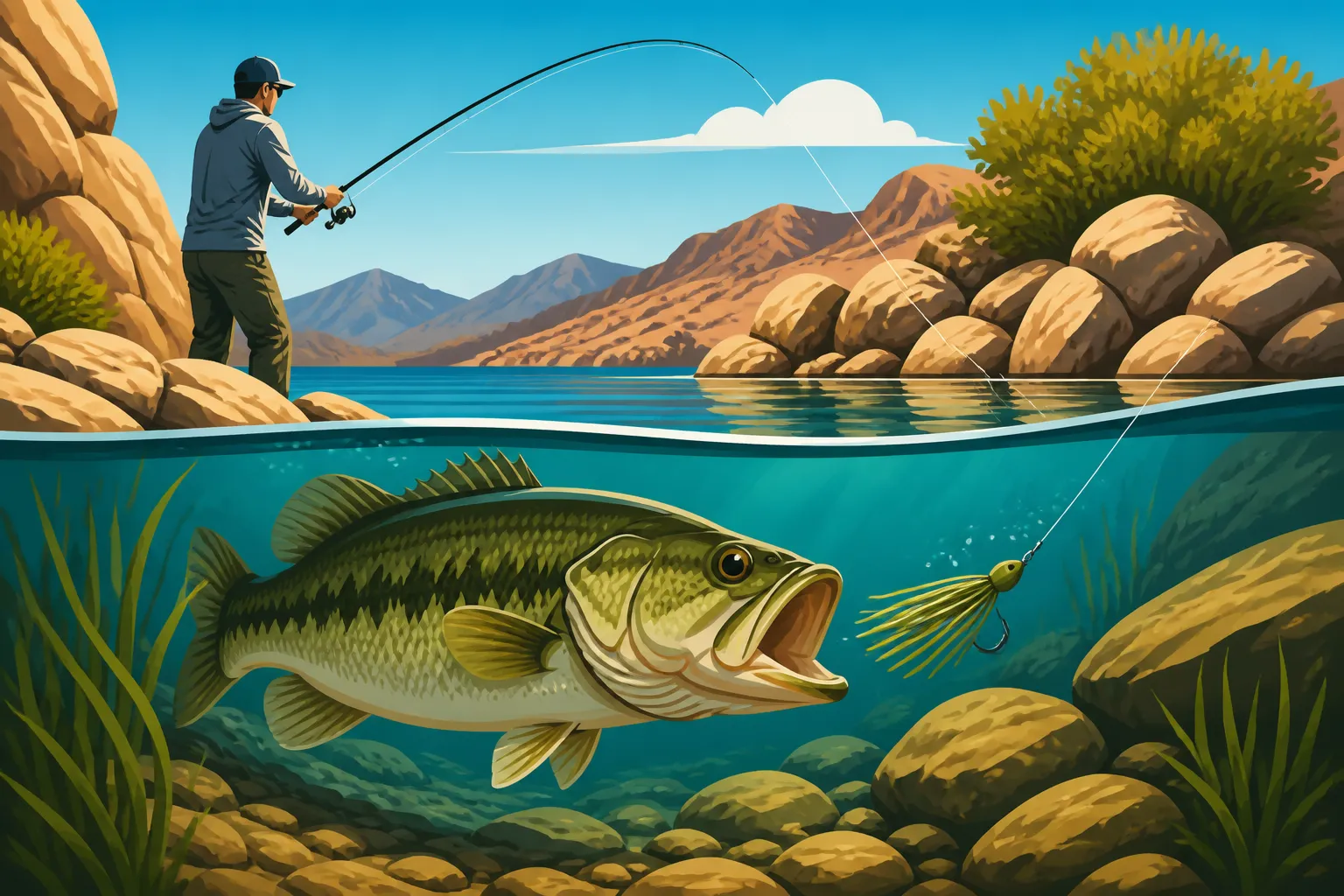
Shallow Water Techniques for Cove Bass Fishing
There’s nothing quite as frustrating as heading out to your favorite Nevada fishing spot, ready for a productive day, only to find the bass have seemingly vanished from the main lake. You cast and cast, but nothing. It’s a common scenario that leaves many anglers scratching their heads and feeling defeated. What many don’t realize is that these elusive fish often aren't gone; they've simply moved into the calmer, shallower waters of the coves. This guide is your ultimate resource for cracking the code on shallow water techniques for cove bass fishing, turning those frustrating days into successful, action-packed adventures.
Understanding Shallow Water Bass Behavior in Coves
When you're chasing bass in Nevada, especially in vast, clear reservoirs like Lake Mead or Lake Mohave, it's easy to get fixated on deeper structures. But the truth is, a significant portion of a bass's life is spent in shallower coves. These areas aren't just pretty backdrops; they're vital habitats providing everything a bass needs to survive and thrive. Understanding why they move into these spaces is the first step to consistently finding and catching them.
Why Bass Move to Shallow Coves
Bass are opportunistic predators driven by a few core needs: food, shelter, and reproduction. Shallow coves offer a perfect blend of all three. They act as natural nurseries for baitfish, creating a ready-made buffet for hungry bass. In spring, these protected areas warm up faster than the main lake, signaling the start of the spawn, which is why you'll often find bass clustered here. In summer, while deep water offers refuge from the midday sun, bass will frequently push into shallow coves during low-light periods to ambush unsuspecting prey. During the fall, as temperatures begin to drop, bass will move into coves to feast on baitfish schooling up before winter, packing on weight. It’s a cycle driven by instinct and survival, and once you recognize it, you can predict their movements.
The appeal of coves isn't just about food and warmth. The intricate structure found in these shallower zones – submerged brush, rock piles, fallen trees, and even man-made docks – provides crucial ambush points and protection from larger predators and the scorching Nevada sun. Imagine being a bass, vulnerable in open water; a shallow cove with plenty of cover is a sanctuary. Recognizing this gives you a huge advantage. Instead of blindly casting, you can target specific pieces of cover where a bass is likely to be lurking, waiting for an easy meal to swim by. This understanding helps validate the frustration of not finding fish in open water – they're just not there!
Impact of Water Temperature and Clarity
Nevada's desert lakes are known for their extreme temperatures and often crystal-clear water. These factors play a huge role in how bass utilize shallow coves. In spring, warming water pushes bass into the coves to stage for the spawn. Once the water hits the sweet spot, roughly 58-68 degrees Fahrenheit for largemouth bass, they'll move onto beds. Conversely, during the intense summer heat, bass might seek deeper, cooler water during the day, but they will venture into the shallows of coves during cooler mornings and evenings, especially if there's shade or active bait.
Water clarity is another critical factor. Many of Nevada's reservoirs, like Lake Tahoe, are incredibly clear, meaning bass in shallow water can be highly skittish and easily spooked. This demands a stealthier approach from anglers. You'll need to make longer casts, use lighter line, and employ more subtle presentations to avoid alarming your target. In contrast, coves with slightly stained or murky water might allow for more aggressive tactics, as the bass rely less on sight and more on lateral line vibrations to detect prey. Knowing your specific lake's characteristics, including its water temperature for bass fishing and typical clarity, will drastically improve your success rates.
Bass Foraging Habits in Shallows
When bass are in shallow coves, their feeding behavior shifts to match the environment. They're typically in ambush mode, hiding behind or within cover, waiting for an unsuspecting baitfish, crawfish, or even a frog to swim by. This means they often won't chase a lure far; your presentation needs to be right in their strike zone. They exploit the reduced visibility offered by structure or slight water discoloration to surprise their prey.
Understanding these foraging habits helps you select the right lures and present them effectively. For example, if bass are hiding under docks, a lure that can be skipped under the structure and allowed to fall slowly often triggers a reaction strike. If they’re relating to submerged brush, a weedless soft plastic or jig can be worked through the snags without getting hung up. Observing the presence of baitfish, like shad or sunfish, in a cove is a strong indicator that bass are actively feeding or will be soon. Pay attention to any surface commotion – swirls, splashes, or baitfish jumping – as these are clear signs of bass actively hunting in the shallows.
Essential Gear for Shallow Cove Bass Fishing
Having the right tools for the job is paramount when tackling shallow coves. You wouldn't use a sledgehammer to drive a nail, and similarly, using ill-suited gear for tight, cover-laden areas will only lead to frustration and lost fish. The key here is balancing power with finesse, and accuracy with sensitivity. The gear you choose should enable precise presentations and give you the strength to extract a hawg from heavy cover.
Rod and Reel Selection for Accuracy
For shallow cove bass fishing, accuracy is king. You're often trying to pitch or flip a lure into small pockets, under docks, or tight against brush piles. This calls for a different rod setup than open-water power fishing. Generally, a 6'6" to 7'2" medium-heavy to heavy power casting rod with a fast action tip is ideal. The shorter length allows for more control in tight quarters and easier skipping, while the fast action gives you the sensitivity to feel subtle bites and the backbone to set the hook hard.
Pair this rod with a high-speed baitcasting reel (a gear ratio of 7.1:1 or higher). This allows you to quickly pick up slack line after a cast and get fish out of cover fast, which is critical when a bass immediately tries to bury itself in the submerged brush or a thick patch of weeds. For those who prefer spinning gear or for lighter presentations, a 6'6" to 7' medium power fast action spinning rod with a 2500-3000 series reel can also be incredibly effective, especially for finesse techniques. You can find excellent options from reputable brands on platforms like Amazon, offering a wide range of Best Fishing Rods for Nevada Lakes suitable for this type of precision fishing.
Line Choices for Stealth and Strength
Your choice of fishing line can make or break your day in shallow coves. Given the often clear waters of Nevada, stealth is crucial, but you also need the strength to pull a bass out of heavy cover. This means fluorocarbon is often a top choice for its near-invisibility underwater and excellent sensitivity. A 10-17lb fluorocarbon line is usually sufficient for most shallow cove applications, balancing invisibility with abrasion resistance.
However, when you're fishing in really heavy cover, like dense brush or thick mats of vegetation, braided line becomes invaluable. Its incredible strength and zero stretch allow you to literally rip bass out of cover and cut through weeds. For these scenarios, a 30-50lb braided line is appropriate. Keep in mind that braid is highly visible, so many anglers will tie a fluorocarbon leader (12-20lb test) to their braided mainline to retain some stealth while still benefiting from the braid's strength. Learning about Best Line for Desert Reservoir Fishing can further refine your choices for specific conditions.
Tackle Box Essentials for Coves
Your tackle box for shallow cove fishing should be streamlined and purposeful. You don't need to carry every lure you own; focus on baits that excel in shallow, cover-laden environments. Beyond the lures, a few essential tools will make your life much easier. A good pair of needle-nose pliers or a hook remover is crucial for safely extracting hooks from deeply hooked fish. Line clippers, a measuring tape, and a small first-aid kit are also non-negotiable.
Don't forget a sturdy pair of polarized sunglasses to help you spot submerged structure and even cruising bass in clear water. A wide-brimmed hat and sunscreen are also vital for protection against Nevada's intense sun. Packing a small bag with water and snacks will keep you comfortable and focused, especially during those long, successful days. You can easily stock up on these and other Best Tackle for Nevada Bass Fishing items on Amazon, ensuring you're fully prepared for whatever the coves throw at you.
Top Lure and Bait Choices for Nevada's Shallow Coves
The shallow coves of Nevada's lakes are rich in cover and provide ideal ambush points for bass. To truly excel here, you need a diverse arsenal of lures that can effectively navigate these challenging environments and entice strikes from wary fish. From subtle presentations to aggressive power baits, selecting the right lure for the conditions is a critical skill.
Soft Plastics: Versatility in the Shallows
Soft plastics are undoubtedly one of the most versatile and effective lure categories for shallow cove bass fishing. Their ability to mimic a wide range of forage, combined with their weedless rigging options, makes them indispensable. Texas-rigged or Carolina-rigged worms, creature baits, and senkos can be pitched into the densest cover with minimal snags. The slow, tantalizing fall of a weightless senko or a wacky-rigged worm is often irresistible to bass lurking in shallow pockets.
Consider the clarity of the water and the available forage when choosing colors. In clear water, natural greens, browns, and watermelon hues are often best, matching crawfish or small baitfish. For slightly stained water or aggressive presentations, brighter colors like junebug or blue fleck can be very effective. Try experimenting with different sizes and shapes too; sometimes a subtle change can make all the difference. For example, a larger creature bait might mimic a crawfish perfectly, while a smaller finesse worm can tempt a finicky bass. Explore different brands and styles on Amazon to find what works best for your local waters. Many anglers find success with specific Best plastic worm color for clear desert lakes tailored to Nevada's conditions.
Topwater Baits: Excitement on the Surface
There's nothing quite like the explosive strike of a bass on a topwater lure, and shallow coves, especially during low light or around heavy cover, are prime territory for this exhilarating technique. Frogs, poppers, and walking baits (like a Zara Spook) are excellent choices. Frogs are particularly effective when fishing over dense mats of submerged vegetation or lily pads, as they can be worked directly across the cover without getting snagged. The commotion they create often draws bass out from under the greenery.
Poppers create splashy, gurgling sounds that mimic struggling baitfish, while walking baits "walk the dog" with an enticing side-to-side sashay. The key to topwater success is often patience – let the lure sit for a moment after casting, then retrieve with varying pauses and twitches. The best times for topwater action are typically early mornings, late evenings, or overcast days when bass are more willing to rise to the surface. It's truly one of the most exciting ways to experience How to fish for bass in Nevada.
Spinnerbaits and Bladed Jigs: Covering Water
When you need to cover water efficiently in shallow coves, especially when trying to locate active fish or dealing with sparse cover, spinnerbaits and bladed jigs (like the ChatterBait) are excellent choices. Their flash and vibration are highly effective at attracting bass from a distance. Spinnerbaits, with their distinct thumping blades, are great for probing around submerged wood, rock piles, or sparse weeds. The vibration and flash can trigger aggressive reaction strikes.
Bladed jigs offer a unique erratic swimming action and a strong vibration that can mimic a fleeing baitfish or crawfish. They are incredibly effective when fished around grass lines, docks, or other vertical cover. Both lures come in various sizes and colors, allowing you to match the forage and water conditions. Use larger, brighter blades in stained water, and smaller, more subtle blades in clear water. Vary your retrieve speed – sometimes a fast burn is best, other times a slow roll with occasional pauses can be deadly. These baits are fantastic search lures and can help you quickly identify productive areas within a cove.
Crankbaits and Jerkbaits: Mimicking Forage
Shallow-diving crankbaits and jerkbaits have a strong place in a cove angler's tackle box. Crankbaits are designed to dive to a specific depth and are excellent for deflecting off submerged cover like rocks or wood, often triggering a reactionary strike from a lurking bass. For shallow coves, focus on crankbaits that dive 2-5 feet. The erratic action they exhibit when they "crash" into an obstacle is often what seals the deal.
Jerkbaits, on the other hand, mimic dying or wounded baitfish with their stop-and-go, darting action. These are particularly effective in clearer water or when bass are finicky. Cast a jerkbait out, reel it down to its running depth, and then retrieve it with a series of sharp jerks followed by pauses. Many strikes occur during the pause, as the lure suspends tantalizingly in the water. Color selection for both crankbaits and jerkbaits should largely depend on the local baitfish, so shad, perch, or bluegill patterns are always good starting points.
| Lure Type | Best Conditions | Retrieve Style | Pros | Cons |
|---|---|---|---|---|
| Soft Plastics | Heavy cover, clear water, finicky fish | Slow fall, Texas/Wacky rig, subtle twitches | Highly versatile, weedless, natural look, subtle presentation | Can be slow to cover water, easily torn by fish or snags |
| Topwater Baits | Low light, overcast, dense surface cover | Stop-and-go, popping, walking the dog | Exciting strikes, great over thick cover, visual appeal | Less effective in bright sun/deep water, weather dependent |
| Spinnerbaits | Stained water, windy, searching | Steady retrieve, slow roll, bumping cover | Strong vibration/flash, covers water quickly, good in sparse cover | Can be snaggy in heavy cover, less subtle for wary fish |
| Bladed Jigs | Grass lines, docks, moderate cover | Steady retrieve, occasional pauses | Strong vibration, unique erratic action, good for active fish | Can be snaggy, best in moderate to slightly stained water |
| Crankbaits | Rocky banks, wood, covering water | Steady retrieve, deflecting off cover | Mimics baitfish, good search bait, triggers reaction strikes | Prone to snagging in heavy cover, depth specific |
| Jerkbaits | Clear water, suspended fish, cooler temps | Jerk-jerk-pause, erratic retrieve | Great for finicky fish, mimics wounded bait, suspends effectively | Can be slow, requires specific retrieve, less effective in dirty water |
Effective Casting and Retrieval Techniques
Fishing shallow coves isn't just about having the right lure; it's about how you deliver and work that lure. The tight spaces, abundant cover, and often wary nature of shallow bass demand precision and finesse in your casting and retrieval. Mastering these techniques will allow you to present your bait exactly where it needs to be, increasing your chances of triggering a strike.
Precision Casting and Skipping Techniques
One of the biggest frustrations in shallow cove fishing is constantly getting hung up or failing to reach those prime, bass-holding spots. Precision casting is the answer. Instead of long, sweeping overhead casts, focus on shorter, more controlled pitches and flips. These techniques allow you to drop your lure quietly and accurately into small openings in the cover, under overhanging branches, or against dock pilings without spooking nearby fish.
Skipping a lure, particularly a soft plastic or a jig, is an advanced but incredibly effective technique for getting baits deep under docks, pontoon boats, or low-hanging cover. It involves a low, side-arm cast that makes the lure "skip" across the water's surface, much like skipping a stone. This not only gets your bait into otherwise unreachable areas but also does so with a soft entry that won't alert a wary bass. It takes practice, but the payoff in terms of reaching untouched fish is immense. Remember, the goal is often to make it seem like the bait effortlessly drifted into the bass's living room.
Varying Your Retrieve to Trigger Bites
Bass in shallow coves can be incredibly finicky, and a consistent retrieve might not always be the ticket. Experimentation is key. Sometimes, a slow, methodical retrieve is what they want, allowing the bait to linger in their strike zone. Other times, an erratic, aggressive retrieve, with sudden twitches and pauses, can mimic a fleeing or wounded baitfish, triggering a reaction strike from a bass that might not otherwise commit.
Think about the conditions: if the water is cold, a slower retrieve is often more effective, as bass are more lethargic. In warmer water, bass are more active, and a faster, more aggressive retrieve might be necessary to elicit a chase. Even slight changes, like a longer pause or an extra twitch, can be the difference between a follow and a strike. Don't be afraid to mix it up until you find what the fish are responding to on any given day. If you're struggling to get bites, try different retrieve patterns before switching lures entirely.
Handling Strikes and Fighting Bass in Cover
When a bass strikes in shallow cover, things can go from zero to sixty in a blink. You've often got mere seconds to react before the fish dives into a brush pile, wraps around a dock post, or buries itself in thick weeds, resulting in a lost fish or a snagged lure. This is why a strong, decisive hookset is absolutely critical. Use the backbone of your medium-heavy rod and reel in any slack before swinging hard.
Once hooked, immediately apply pressure and try to steer the fish away from any heavy cover. Don't give it an inch! High-speed reels and stout line (especially braid) are your best friends here, allowing you to quickly gain line and overpower the fish. If a bass does manage to get into cover, don't just pull harder. Sometimes, easing tension for a few seconds can convince the fish to swim out on its own. If not, try to gently work your boat or kayak closer to free the line. Losing a big one in the tangles is heartbreaking, but with practice, you'll learn to anticipate their moves and keep them out of trouble.
Reading the Water and Locating Prime Bass Habitat
Finding bass in shallow coves isn't about blind luck; it's about observation and understanding. Bass are creatures of habit and structure, and once you learn to "read the water," you'll start to notice patterns and identify high-percentage areas. This skill takes time to develop, but it's one of the most rewarding aspects of becoming a truly successful angler.
Identifying Key Structures and Cover
Shallow coves are often mosaics of different types of cover and structure, and bass will relate to specific features within them. Docks, fallen trees (laydowns), rock piles, submerged brush, and even small changes in bottom contour can all hold fish. Docks, for example, provide shade and overhead cover, making them ideal ambush points, especially during sunny days. The pilings themselves can hold algae and baitfish, further attracting bass.
Fallen timber and brush piles create complex networks of cover that bass love to hide in. Work your weedless baits slowly through these areas, paying close attention to any subtle taps or changes in line movement. Rock piles offer crevices and cooler water, attracting crawfish and baitfish. Look for "transition zones" where one type of cover meets another, like a rocky bank meeting a patch of weeds, as these often create prime ambush points for bass. Taking the time to observe and dissect a cove, rather than just casting randomly, will dramatically increase your hook-up ratio. It might feel overwhelming at first, but with practice, you'll quickly identify the most promising spots, perhaps even finding some untouched Lake Mead Largemouth Bass Coves that are off the beaten path.
Understanding Wind and Current Influence
Many anglers overlook the impact of wind and subtle currents in shallow coves, but these factors can heavily influence where bass position themselves. Wind can push baitfish into certain areas of a cove, creating a natural feeding frenzy for bass. A slight breeze creating a ripple on the surface also breaks up the light, offering bass a bit more cover from overhead predators and making them less wary. This is often why the "wind-blown bank" is a classic bass fishing adage.
Conversely, strong, sustained winds can make a cove too choppy and uncomfortable for bass, pushing them deeper or into more protected pockets within the cove. Any subtle current, even from a main lake point extending into a cove, can position bass to ambush food that's swept past them. Pay attention to how the wind is hitting the shoreline; often, the side of the cove that's getting the most consistent wave action will be the most productive. This also applies when considering Seasonal Movement of Fish in Reservoirs, as wind patterns shift throughout the year.
The Role of Submerged Vegetation
Not all vegetation is visible from the surface, and ignoring submerged grass beds can be a huge mistake. Hydrilla, coontail, and even sparse stands of cattails can provide crucial cover, oxygen, and food sources for bass and their prey. These underwater "grass flats" are often magnets for baitfish and crawfish, which in turn attract hungry bass. Locating these hidden vegetation beds is a game-changer.
You can find submerged vegetation by slowly dragging a Texas-rigged worm or a bladed jig along the bottom, feeling for the subtle resistance of the grass. Once you pinpoint a patch, fish it thoroughly. Bass will often position themselves on the edges of these beds, in pockets within the grass, or right over the top of sparse sections. Don't be afraid to experiment with different presentations to penetrate the canopy and reach the fish hiding within. Understanding the nuances of Reading Water Temperature for Trout Fishing (and applying similar logic to bass) can also help indicate where vegetation might be thriving and attracting fish.
Seasonal Considerations for Shallow Water Bass
Bass behavior in shallow coves isn't static; it changes dramatically with the seasons. What works in spring will likely fall flat in summer, and vice-versa. Understanding these seasonal shifts is fundamental to consistently catching bass throughout the year in Nevada's diverse fishing environments.
Spring: The Spawning Frenzy
Spring is arguably the most anticipated season for shallow water bass anglers. As water temperatures rise, bass migrate from their deeper wintering grounds into the coves to spawn. This period, typically from March through May in many Nevada lakes, sees bass actively staging in shallow water, building nests (beds), and guarding their eggs and fry. During the spawn, bass become extremely territorial and aggressive, making them highly susceptible to a variety of lures.
Look for bass on visible beds in clear, shallow areas, often around hard bottom like gravel or sand. Soft plastics, like senkos, lizard baits, or creature baits, pitched onto or near the bed can trigger aggressive strikes from protective bass. Jerkbaits and shallow crankbaits are also effective for "staging" bass that are preparing to move onto beds. Be mindful of fishing ethics during this vulnerable time; practice catch and release for spawning fish to help sustain populations. For more detailed information on this crucial period, check out our guide on Nevada Bass Season and Spawn Timing.
Summer: Early Morning and Evening Bites
As Nevada's summer temperatures soar, bass behavior in shallow coves shifts. The intense midday sun drives many bass into deeper, cooler water or into the densest, shadiest cover they can find. However, this doesn't mean shallow coves are a bust. On the contrary, summer mornings and evenings can provide some of the most exciting shallow water action.
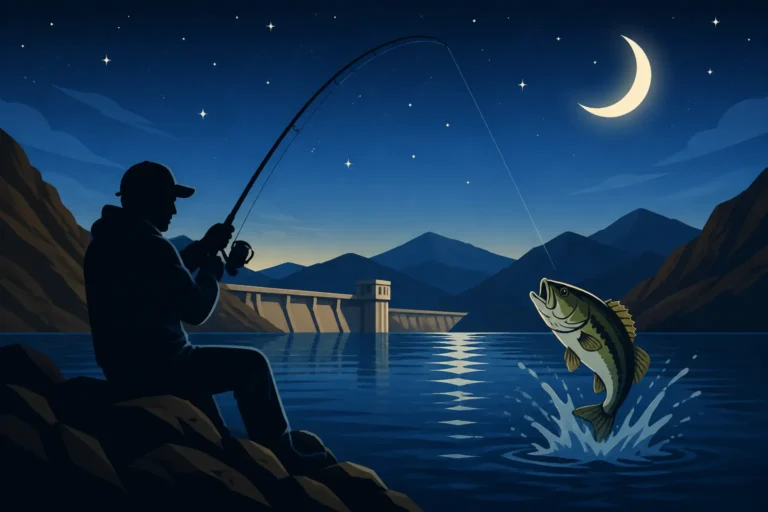
During these low-light periods, and especially after sunset, bass will push into the shallows to feed aggressively. Topwater lures, like frogs and poppers, become incredibly effective as bass key in on surface activity. Spinnerbaits and bladed jigs can also be deadly when retrieved quickly through shallow water, mimicking fleeing baitfish. Focus your efforts around dense shade, overhanging trees, docks, and areas with submerged vegetation, which can provide cooler water and ambush points. Fishing these times can be a blast, especially when targeting those elusive fish that hide out in the heat of the day.
Fall: Feeding Frenzy Before Winter
Fall is another fantastic time for shallow cove bass fishing in Nevada. As water temperatures begin to cool and days shorten, bass enter a pre-winter feeding frenzy, trying to pack on calories before the lean months ahead. Baitfish, often shad or minnows, will school up in the coves, making them easy targets for hungry bass.
This is a time for aggressive presentations. Spinnerbaits, bladed jigs, shallow crankbaits, and even large topwater walking baits can be incredibly effective as bass actively chase down schools of bait. Look for visible baitfish activity on the surface, often indicated by diving birds or splashes. Bass will often chase these schools, so moving baits that cover water quickly are excellent choices. Concentrate your efforts on the points and mouths of coves, as well as any areas where baitfish are congregating. This fall bite is often one of the most action-packed periods, offering anglers a chance to catch numerous, aggressively feeding bass before they retreat to deeper water for winter. You might even want to consult our Best time of year to fish in Nevada guide for more general tips.
Disclaimer
Fishing conditions and regulations in Nevada can change. Always consult the latest Nevada Department of Wildlife (NDOW) regulations before heading out. This guide is for informational purposes only and does not supersede official regulations. Stay safe and fish responsibly.