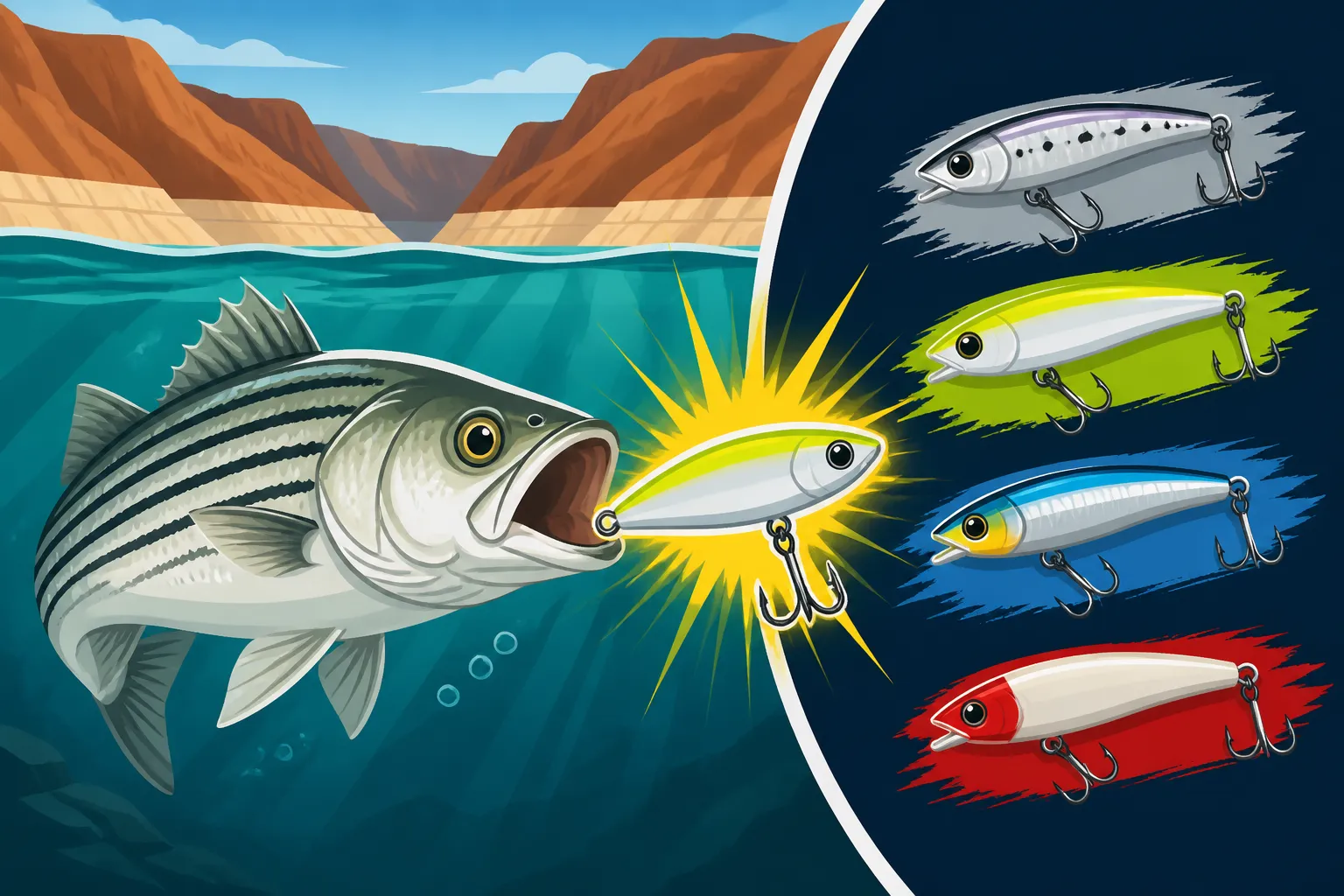
Best lure color for Lake Mead striped bass
It’s a common frustration, isn't it? You’re out on Lake Mead, staring at your tackle box, wondering if that shiny chrome lure or the subtle chartreuse will be the magic ticket for striped bass today. Deciphering the best lure color for Lake Mead striped bass can feel like cracking a secret code, especially with the lake’s ever-changing conditions. This comprehensive guide is here to break down the science, the seasonal shifts, and the critical factors that will help you choose the perfect hue to tempt those powerful stripers.
Understanding Striped Bass Vision in Lake Mead's Waters
Before we dive into specific colors, it’s crucial to understand how striped bass perceive their world beneath the surface of Lake Mead. Their vision, much like ours, is heavily influenced by light and water clarity. Lake Mead is a vast, dynamic reservoir, and its water conditions can vary wildly from one cove to another, or from season to season. What works in the crystal-clear waters of the main basin might be invisible in a murkier arm after a significant rain event.
Imagine trying to see in a dimly lit, foggy room – that's often what a striper experiences. The color of your lure, therefore, isn't just about aesthetics; it's about making your offering visible and enticing under specific environmental conditions. Sunlight penetration plays a huge role; as light travels through water, certain colors of the spectrum are absorbed more quickly than others. Red, for instance, virtually disappears at shallow depths, becoming a dull grey or black. Blues and greens, conversely, penetrate much deeper. This means a vibrant red lure might look fantastic to you on the boat deck, but to a striper lurking 30 feet down, it could be utterly bland. The ability to adapt your lure color to these shifting underwater light conditions is what separates a good striper angler from a truly great one. If you’re looking to truly master your approach, understanding the nuances of how stripers react can be a game-changer for your success on the water.
The Science Behind Lure Color Choices for Stripers
Selecting the right lure color for striped bass isn't just a shot in the dark; there's a good deal of science and observation behind it. It boils down to making your lure as visible and attractive as possible, whether you’re trying to mimic their natural forage or trigger an aggressive reaction strike. We’ve learned through countless hours on the water that certain colors consistently outperform others in specific scenarios.
Bright Colors for Low Light and Stained Water
When the light is low, or the water is stained – conditions you’ll frequently encounter on Lake Mead, especially in the mornings, evenings, or after heavy winds – bright, fluorescent, or highly contrasting colors become your best friends. Think chartreuse, bright orange, hot pink, or patterns like firetiger (a mix of bright green, yellow, and orange with black stripes). Why do these stand out? Because they absorb and reflect light in a way that makes them more visible in conditions where natural light is limited or scattered. They create a strong silhouette and presence, helping the striper detect your lure even when visibility is poor.
These colors aren't necessarily trying to imitate a specific baitfish. Instead, they act as a "trigger." They scream "here I am!" to a predator that might otherwise overlook a more subtle offering. Striped bass are opportunistic feeders, and a brightly colored, erratic lure can often provoke an aggressive, territorial strike, even if the fish isn't actively feeding on specific bait. Many anglers keep a variety of these eye-catching patterns in their tackle box, often finding excellent options for sale on Amazon, ready for those challenging low-visibility days. When you’re trying to locate schools of fish in variable conditions, these vibrant hues are often the first choice to get some attention. For more insights on general gear, check out our guide on Nevada Fishing Gear Essentials.
Natural Colors for Clear Water and Bright Conditions
Conversely, when Lake Mead’s water is clear and the sun is high, stripers have excellent visibility. In these conditions, they tend to be much more discerning, scrutinizing their potential prey. This is when natural colors that closely mimic the local forage become paramount. The primary baitfish in Lake Mead are threadfin shad, which are generally silver, white, or light grey with subtle hints of green or blue. Therefore, lures in colors like white, silver, chrome, light grey, or natural shad patterns are incredibly effective.
These colors blend in beautifully with the environment while still offering a subtle flash or shimmer that imitates the scales of a swimming baitfish. The goal here is realism. You want the striper to think your lure is just another unsuspecting shad or small fish. Transparent or semi-transparent lures with a hint of glitter can also work wonders, catching and reflecting ambient light in a very natural way. When the sun is beating down and the water is like glass, try reaching for a lure that looks like a fish a striper would naturally encounter, and you'll often find yourself with a successful day. It's all about tricking their keen eyesight with an accurate presentation.
The Importance of Flash and Contrast
Beyond solid colors, the interplay of flash and contrast in your lure selection is a game-changer, especially for predatory fish like striped bass. Flash, often achieved with chrome, holographic finishes, or reflective foils, mimics the glint of scales on a frantic baitfish. This can be incredibly effective in both clear and slightly stained water, as the flash disperses light, creating an irresistible visual signal that can be seen from a distance. Think of it as a distress signal to a hungry striper.
Contrast, on the other hand, refers to the difference between light and dark areas on a lure. Many effective lures feature a dark back (like blue, black, or green) and a light belly (white or silver). This classic pattern is highly effective because it naturally imitates how many baitfish appear from below when silhouetted against the lighter surface, or from above when viewed against a darker bottom. The stark contrast can make the lure appear more lifelike and define its profile, even in less-than-ideal visibility. A lure with good contrast can make a significant difference in how stripers perceive its shape and movement, helping it stand out without being overtly "unnatural." Learning about different Best Lures for Striped Bass will certainly cover many options with excellent flash and contrast.
Top Lure Colors for Lake Mead Striped Bass, Season by Season
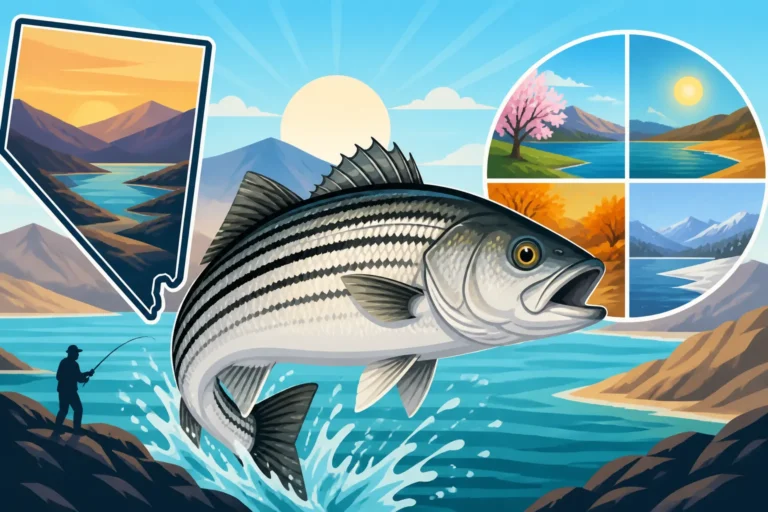
Lake Mead's environment changes with the seasons, and so do the habits and preferred depths of striped bass. Understanding these seasonal shifts is key to choosing the most effective lure colors. What works in the chilly depths of winter won't necessarily be your best bet during the scorching summer months.
Springtime Strategies: Aggressive & Natural Tones
As the water temperatures in Lake Mead begin to rise in spring, striped bass become more active and start to move into shallower coves and points, preparing for their spawn. This is a fantastic time for aggressive strikes. In early spring, when the water is still cool and possibly a bit murky from winter runoff, bright colors like chartreuse, white, and chrome can be very effective, especially on lipless crankbaits or swimbaits that you can retrieve quickly to cover water. These colors offer high visibility and provoke reaction strikes from awakening fish.
As spring progresses and the water warms further, and clarity often improves, stripers will key in on threadfin shad. Natural shad patterns (silver, white, light blue/grey) become incredibly potent, particularly when fishing near schooling baitfish or around structure where stripers might ambush prey. Topwater lures in white or chrome can be explosive during low-light hours. This is also a great time to experiment with jigging spoons in chrome or white, mimicking a dying shad. For more on seasonal movements, consider reading our guide on Best Time of Year to Fish in Nevada.
Summer Tactics: Deep Water & High Contrast
Summer on Lake Mead means high temperatures, and usually, very clear water. Striped bass often retreat to deeper, cooler waters during the day, where light penetration is significantly reduced. This shift in depth profoundly influences your color choice. While natural colors like white and silver are still important, especially for lures retrieved through the middle columns or near the surface in early mornings or late evenings, the contrast and reflectivity of your lures become even more critical for deep water.
For jigging spoons, umbrella rigs, or deep-diving crankbaits, chrome and white remain strong choices, often with a blue or green back for added contrast. In the deep, a lure’s flash needs to work harder to attract attention. Glow-in-the-dark or UV-enhanced lures can also have an edge in the extreme depths or during night fishing. When the sun dips and stripers become more active in shallower water at night, white, chartreuse, or even a subtle glow can be excellent choices. Remember, Night Fishing Techniques for Striped Bass often rely on strong visual cues.
Fall Frenzy: Mimicking Baitfish Schools
Fall is arguably one of the most exciting times to fish for striped bass on Lake Mead. As water temperatures cool, stripers become incredibly active, often forming massive schools and driving baitfish to the surface in spectacular feeding frenzies known as "boils." This is a prime time for realistic baitfish imitations.
Lure colors that perfectly mimic threadfin shad – primarily white, silver, and light blue/grey – are consistently the most effective. Chrome and holographic finishes on topwater plugs, jerkbaits, and swimbaits will shine, literally. The goal is to match the hatch as closely as possible, both in color and size. When stripers are actively chasing schools of shad, they are less concerned with bright, aggressive colors and more focused on picking off individual baitfish that look and act like their natural prey. Having a wide array of shad-imitating lures, easily found on Amazon, will give you an advantage during these exhilarating moments. For exciting fishing opportunities, checking out Lake Mead Striped Bass Hotspots can guide you to where the action is.
Winter Wonders: Slow & Subtle Presentations
Winter fishing on Lake Mead can be challenging, but also incredibly rewarding for those who brave the cold. Striped bass are generally more lethargic in colder water and often hold tight to deep structure or channel bends. Your presentation will be slower, and your color choices should reflect this more subdued approach.
Natural colors like white, silver, and subtle shad patterns still perform well, but sometimes a dark, contrasting color can provide the necessary silhouette against the dimmer light of deeper water. Black or dark blue jigs, sometimes tipped with a white or chartreuse tail for a hint of contrast, can be surprisingly effective. The key is often less about a flashy, attention-grabbing color and more about a slow, methodical retrieve that keeps the lure in the strike zone longer. Light grey or transparent lures with minimal flash can also tempt a wary, cold-water striper. In winter, every detail matters, including your Best line test for striped bass fishing to detect those subtle bites.
Beyond Color: Other Factors Influencing Striper Lure Choice
While lure color is undoubtedly important, it's just one piece of the puzzle. An effective striper angler understands that color works in conjunction with several other critical factors. Neglecting these can make even the "perfect" color choice ineffective.
Lure Type and Action
The type of lure you choose – be it a topwater, crankbait, swimbait, or jig – dictates its action in the water, and this action can significantly influence how a striper perceives its color. A fast-moving, erratic crankbait in a bright color might trigger a reaction strike, while a slowly retrieved swimbait in a natural shad pattern might entice a cautious fish. The action creates movement, and movement makes color dynamic. A lure that wobbles, flashes, or darts will present its colors differently than one that simply sinks straight down.
For example, a topwater popper in white or chrome creates splash and disturbance, drawing attention from below. Even if the fish only sees a silhouette, the action signals "food." A deep-diving crankbait in a firetiger pattern, on the other hand, is designed to elicit a reaction strike in deeper, darker water where its aggressive colors can still be seen. Knowing Jigging Techniques for Lake Mead Stripers also demonstrates how presentation and action are inseparable from color.
Size and Profile
Matching the hatch is a common mantra in fishing, and for good reason. Striped bass are often focused on the size and shape of their primary forage, the threadfin shad. If the shad are small, a large lure, no matter how perfectly colored, might be ignored. Conversely, if stripers are feeding on larger baitfish, a tiny lure might not register as a worthwhile meal.
Always pay attention to the size of the baitfish you see in the water or that the stripers are spitting up. Most shad in Lake Mead range from 2 to 4 inches, but there can be variations. Your lure's profile (its overall shape) should also mimic that of a baitfish, with a tapering body and a defined tail, rather than something entirely alien to their diet. Consider keeping a range of sizes in your tackle box. This becomes even more critical when looking at the Striped Bass Size and Growth at Lake Mead, as bigger fish might prefer bigger meals.
Retrieval Speed and Depth
Finally, how you present your lure – your retrieval speed and the depth at which you're fishing – significantly impacts its effectiveness, regardless of color. A perfectly colored lure fished too fast or too slow, or at the wrong depth, will likely go unnoticed. Stripers are often found at specific depths depending on water temperature, light conditions, and baitfish location.
If stripers are holding deep, you need a lure that can reach them. A brightly colored lure won't do much good if it's consistently running 10 feet above the fish. Similarly, if they're actively chasing shad near the surface, a deep-diving lure will miss the action. Your retrieval speed also dictates how "natural" or "urgent" your lure appears. A slow, methodical retrieve might be best in cold water, making a subtle white or silver lure seem like an easy meal. A fast, erratic retrieve with a chrome or chartreuse lure might simulate a panicked baitfish in warmer, more active conditions. Always observe the stripers' behavior and adjust your presentation accordingly. The How water level affects fishing at Lake Mead article highlights how changing water levels also influence where fish hold, thus impacting the effective depth.
Here’s a quick reference table to help guide your lure color decisions on Lake Mead:
| Condition Category | Specific Condition | Recommended Lure Colors | Rationale | Best Lure Types |
|---|---|---|---|---|
| Water Clarity | Clear Water | White, Silver, Shad, Light Blue/Green | Mimics natural forage; less need for aggressive visibility. | Jerkbaits, Swimbaits, Spoons, Topwaters |
| Stained/Murky Water | Chartreuse, Firetiger, Bright Orange, Hot Pink | High visibility in low-light penetration. | Crankbaits, Lipless Crankbaits, Jigs, Swimbaits | |
| Light Conditions | Sunny/Bright | Chrome, Silver, White, Natural Shad | Reflects sunlight like scales; subtle realism. | Spoons, Jerkbaits, Topwaters, Swimbaits |
| Cloudy/Overcast | White, Chartreuse, Orange, Dark Back/Light Belly | Stands out without being overpowering; good contrast. | Crankbaits, Jigs, Swimbaits | |
| Low Light (Dawn/Dusk) | White, Glow-in-the-Dark, Black (silhouette) | Creates strong silhouette; highly visible during transition times. | Topwaters, Swimbaits, Jigs, Crankbaits | |
| Depth | Shallow Water | White, Silver, Shad, Bone | Natural presentation for wary fish near surface; subtle flash. | Topwaters, Jerkbaits, Shallow Crankbaits |
| Deep Water | Chrome, White, Blue/Silver, Glow, UV-Enhanced | Maximum reflectivity and visibility where light is scarce. | Jigging Spoons, Umbrella Rigs, Deep Crankbaits | |
| Season | Spring | White, Silver, Chartreuse, Firetiger | Mix of natural for forage, bright for reaction strikes. | Crankbaits, Swimbaits, Spoons, Topwaters |
| Summer | White, Chrome, Silver, Blue/White | Natural deep-water choices; strong flash for low light deep down. | Jigging Spoons, Umbrella Rigs, Deep Crankbaits | |
| Fall | Silver, White, Shad, Chrome | Mimics schooling baitfish; focus on realism. | Topwaters, Jerkbaits, Swimbaits, Spoons | |
| Winter | White, Silver, Dark Blue/Black, Light Grey | Subtle natural options; contrasting darks for visibility in deep. | Jigs, Spoons, Blade Baits |
Remember that Lake Mead is one of the Best Places to Fish in Nevada for stripers, and with practice, you'll develop an intuition for what works best. Don't be afraid to experiment, and always keep an eye on the water conditions to make the most informed decision possible. You can always check out a detailed Lake Mead Nevada Fishing Guide for more specific information. For those interested in How to chum for striped bass at Lake Mead, color choice also plays a role in what you use to draw them in!
Disclaimer
Fishing conditions and regulations in Nevada can change. Always consult the latest Nevada Department of Wildlife (NDOW) regulations before heading out. This guide is for informational purposes only and should not replace official sources.