Smallmouth Bass Habitat at Lake Mead
Many anglers, especially those new to the vast expanse of Lake Mead, often struggle to pinpoint exactly where the feisty smallmouth bass make their homes. It's easy to feel overwhelmed by the sheer size and the unique desert landscape of this reservoir, making it a challenge to consistently find these hard-fighting fish. This comprehensive guide will peel back the layers of Lake Mead's environment, focusing on the specific habitats smallmouth bass prefer throughout the seasons, and help you understand their behaviors so you can land more of them.
Understanding Lake Mead's Unique Environment for Smallmouth
Lake Mead isn't your average fishing hole; it's a massive, man-made desert reservoir with an incredibly dynamic ecosystem. What works in a northern natural lake often won't cut it here. To really get a handle on finding smallmouth, you need to appreciate the specific conditions that define their world in this unique landscape.
The Desert Reservoir Challenge
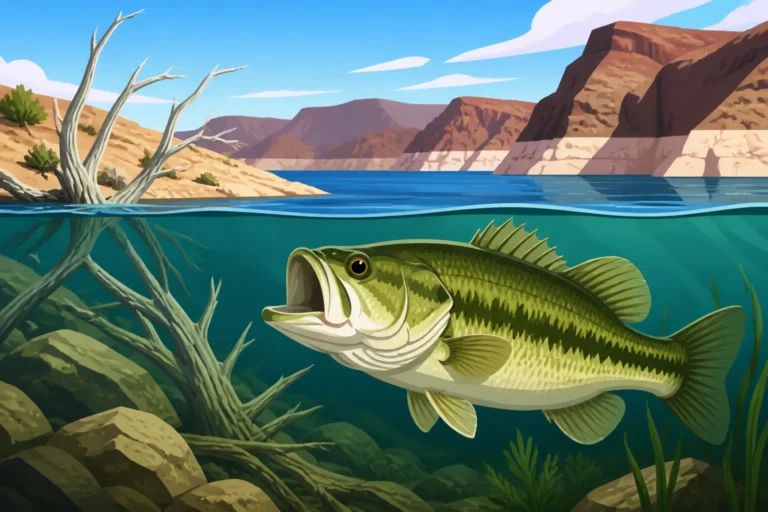
Picture this: you're standing on the shore, looking out at miles of blue-green water, surrounded by arid mountains. It's breathtaking, but also a bit daunting for an angler. Unlike natural lakes with consistent shorelines and submerged vegetation, Lake Mead is characterized by dramatic fluctuations in water levels, vast areas of exposed rock, and a distinct lack of dense aquatic plant life in many sections. These factors mean smallmouth bass here have adapted to a very different kind of hide-and-seek. They thrive on structure – natural or man-made – that provides cover, ambush points, and proximity to forage in an otherwise open environment. Anglers accustomed to fishing lily pads or cattail edges will need to shift their focus to rocks, ledges, and debris.
Water Clarity and Forage Base
One of the defining features of Lake Mead is its often exceptional water clarity. This crystal-clear water, while beautiful, presents its own set of challenges and opportunities for smallmouth. In clear water, smallmouth can spot prey from a distance, but they are also more wary of predators, including you! This often means they'll hug cover tighter or hold in deeper water during bright conditions. The primary forage for smallmouth in Lake Mead includes threadfin shad, small bluegill, and various invertebrates. Understanding where these baitfish congregate – often near points, humps, or sheltered coves – is key to locating the bass. The clear water also makes finesse techniques more effective, as bass can easily inspect lures. Knowing that visibility is high, you can choose more natural-looking baits and presentations.
Impact of Fluctuating Water Levels
The ebb and flow of Lake Mead's water levels, sometimes dramatic over seasons or even years, profoundly impacts smallmouth habitat. A dropping lake might expose entire coves, leaving behind barren mudflats, while rising water can flood new brush and shoreline features, creating temporary but highly productive new cover. Smallmouth are incredibly adaptable, and they'll follow the water, always seeking out that ideal combination of cover, depth, and forage. Anglers who stay informed about current lake levels and understand how these changes create or eliminate habitat will have a significant advantage. For instance, if the lake has been stable for a while, fish patterns tend to be more predictable. But if the water is rapidly rising or falling, you'll need to adapt quickly, perhaps targeting newly flooded terrestrial vegetation or concentrating on deeper, more stable structure.
Key Habitat Elements for Smallmouth Bass in Lake Mead
Smallmouth bass are structure-oriented fish, and Lake Mead offers a wealth of diverse structures they call home. Knowing what to look for and how to interpret these features is crucial for successful fishing. If you're looking for prime fishing spots, understanding these elements is your first step. Check out our guide on Best Places to Fish in Nevada for broader insights.
Rocky Banks and Points
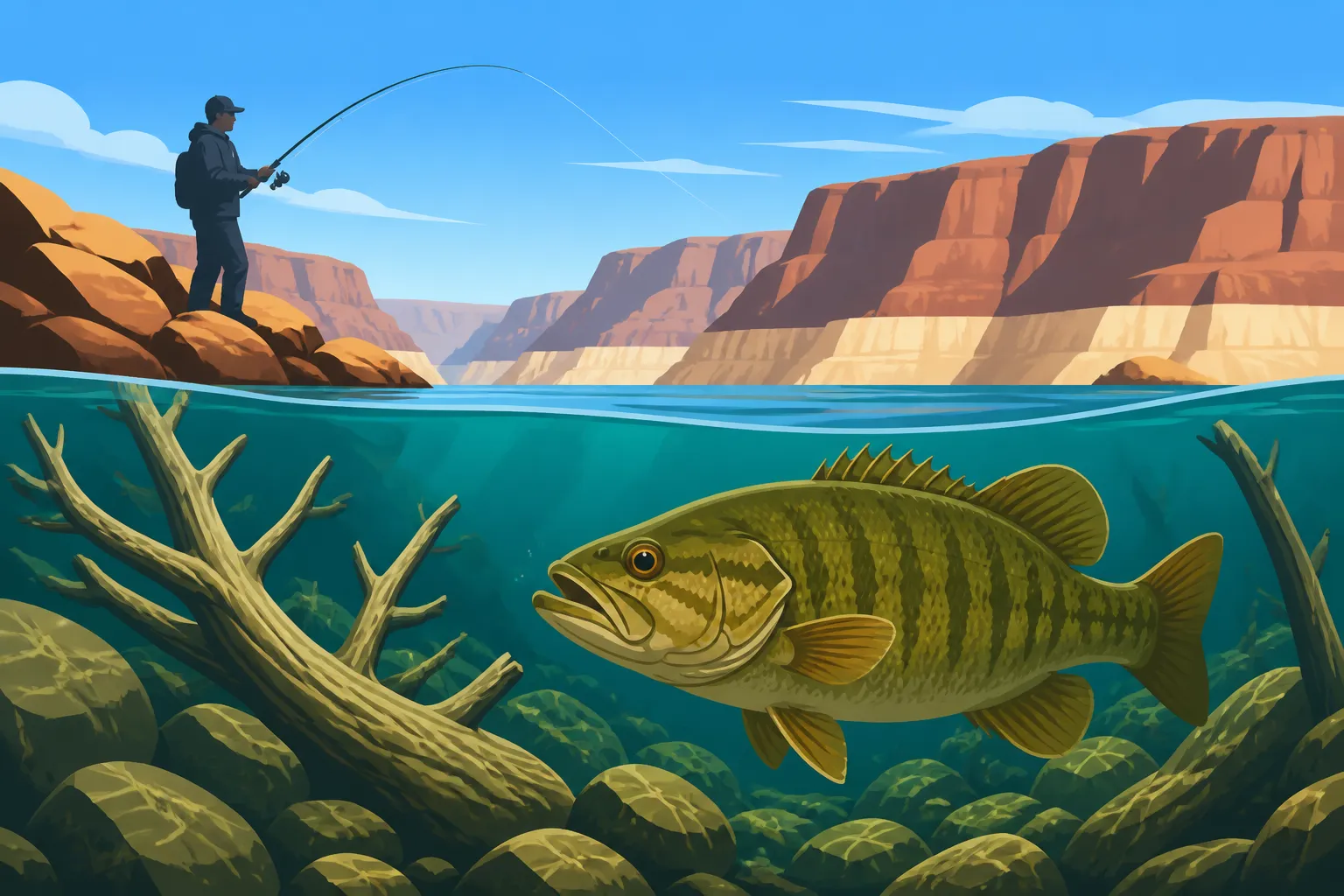
If there's one thing smallmouth bass love, it's rocks. Lake Mead, with its mountainous and canyon-like terrain, is absolutely full of them. From towering canyon walls to scattered boulders and rip-rap along man-made structures, these rocky areas provide everything a smallmouth needs. They offer shade from the intense Nevada sun, ambush points for unsuspecting baitfish, and crevices for protection. Points that jut out into deeper water are particularly productive, as they act as highways for baitfish and funnel currents, making them prime feeding grounds. Imagine a long, tapering rocky point extending from the shore – smallmouth will often patrol the sides and top of that point, especially where it meets deeper water. On a windy day, baitfish might be pushed against these rocky faces, making them hotspots. Anglers should focus on casting parallel to these points or working jigs and crankbaits directly over the rocky bottom.
Submerged Structure and Debris
While Lake Mead might lack widespread aquatic vegetation, it certainly doesn't lack other forms of submerged structure. Old channels, drowned trees (though less common in heavily fluctuating areas), artificial fish habitats, and even historical remnants from before the lake was filled can all hold smallmouth. These submerged features offer complex cover that smallmouth adore, providing a sense of security and prime ambush opportunities. Think about a sudden depth change where an old creek bed drops off, or a scattered field of rubble from an old mining operation. These subtle features can be overlooked by many, but they concentrate bait and, by extension, the bass. Using your electronics to identify these hidden gems is key. If you're targeting areas around Boulder City, for example, there are some unique structures that have been submerged for decades. A good fish finder, often found with great reviews on Amazon, can be an invaluable tool for pinpointing these spots.
Deep Water Ledges and Drop-offs
As the seasons change and the desert sun beats down, smallmouth bass often retreat to deeper, cooler waters. This is where ledges, shelves, and sharp drop-offs become absolutely vital habitat. Lake Mead has an abundance of these features, particularly along its ancient river channels and canyon walls. These underwater cliffs and terraces provide perfect staging areas for smallmouth, allowing them to suspend and ambush prey moving up or down the water column, or to hold tight to vertical structure. The edge where a flat expanse abruptly plunges into 50, 80, or even 100 feet of water is a classic smallmouth haunt. During the hotter months, these deep water haunts are essential. How deep bass go in winter and summer is a key factor in understanding their behavior. They might cruise along a ledge at 30 feet, darting out to grab a passing shad before retreating to the security of the deeper water. Vertical jigging or drop-shotting along these contours can be incredibly effective.
Seasonal Patterns and Smallmouth Bass Movement
Smallmouth bass are keenly aware of temperature and light, and their habitat preferences shift dramatically throughout the year in Lake Mead. Understanding these seasonal movements is crucial for consistently finding them.
Spring Spawning and Shallow Water Action
As the water temperatures begin to climb in early spring, usually when they hit the high 50s to low 60s Fahrenheit, smallmouth bass start thinking about one thing: spawning. This brings them out of their deeper winter haunts and into the shallower, protected coves and pockets of Lake Mead. They'll seek out hard, rocky bottoms where they can fan out nests, often in water just a few feet deep. During this pre-spawn and spawn period, you'll find them cruising rocky banks, points, and even submerged gravel beds. This is often the most accessible time to catch them from shore in many areas. They can be incredibly aggressive, defending their nests from intruders. Look for clearer, warmer water within protected coves. Understanding Nevada Bass Season and Spawn Timing is critical for successful spring fishing and ethical angling practices.
Summer Deep Water Retreat
Once the intense Nevada summer sun takes hold and water temperatures soar into the 80s, smallmouth bass will largely abandon the shallow banks. They become primarily deep-water residents, seeking the cooler, more stable temperatures found in the main lake body. You'll find them congregating around those deep ledges, humps, and submerged structure we talked about earlier. They'll often suspend over deep water, especially if there's a thermocline (a layer where the water temperature changes rapidly with depth), or relate closely to vertical rock walls in the canyons. Early mornings and late evenings might see them push shallower for quick feeding forays, but during the bright midday, expect them to be down deep. Fishing for them during this time often requires heavier tackle and specific techniques. Our guide on Summer Fishing Techniques for Hot Desert Lakes has some excellent tips for this challenging period.
Fall Feeding Frenzy and Transitional Zones
Ah, autumn on Lake Mead! As air temperatures cool and water temperatures slowly begin to drop into the 70s and 60s, smallmouth bass undergo a transformation. This is often described as a "feeding frenzy" as they gorge themselves in preparation for the upcoming winter. They become highly active, often moving between deeper main lake structure and shallower feeding flats. You'll find them targeting baitfish that are also moving, often schooling up in open water or along prominent points and humps. This transitional period means fish can be found at a variety of depths, making it exciting but sometimes challenging to pinpoint them. They might be found shallower in the morning and evening, then retreat to medium depths during the brighter parts of the day. They're trying to pack on calories, so anything that mimics a shad or other forage will get their attention. This is a fantastic time for both power fishing and finesse techniques.
Winter Habits and Slow Presentation
When the chill of winter truly sets in and water temperatures dip below 50 degrees Fahrenheit, smallmouth bass activity slows considerably. They become lethargic, conserving energy, and typically hold in deeper water, often suspending over structure or hunkering down on deep ledges. Their metabolism is slow, so they aren't actively chasing prey. You'll need to present baits slowly and directly to them. Vertical presentations, like jigging spoons or drop-shot rigs, are often the most effective. Look for concentrations of fish on your electronics over deep humps, along the main river channel, or near sharp drop-offs. While the bites can be subtle, catching a chunky winter smallmouth is incredibly rewarding. They might not bite as often, but when they do, they're usually quality fish. Don't be afraid to leave your bait in the strike zone for longer periods, as they'll need more time to decide to commit.
Finding Smallmouth Bass in Different Water Level Scenarios
Lake Mead's water levels are a constant topic of conversation among anglers, and for good reason. They dictate what habitat is available, and knowing how to adjust your strategy for different water scenarios is key to success.
High Water: New Cover and Flooded Terrain
When Lake Mead's water levels are on the rise, it can be a double-edged sword for smallmouth fishing. On one hand, newly flooded terrestrial vegetation, brush, and rocks create an abundance of new cover and forage opportunities. Smallmouth will often move into these newly submerged areas, exploring the fresh habitat. This can scatter the fish across a larger area, making them harder to find initially, but also providing exciting opportunities for shallow-water exploration. The newly flooded areas often bring with them terrestrial insects and invertebrates, drawing in baitfish and then the bass. Look for areas where the desert scrub or even old fence lines have recently been covered by water. These spots can hold surprisingly large smallmouth feeding aggressively. Fishing lighter baits or even topwater presentations in these newly accessible zones can be very effective, especially if you're exploring by kayak or smaller boat. You might even find yourself fishing over old roads or foundations that were high and dry just weeks before.
Low Water: Exposed Structure and Concentrated Fish
Conversely, when Lake Mead's water levels are low or receding, the smallmouth habitat changes dramatically. Many shallow coves and traditional spawning grounds may become exposed, forcing fish to retreat to deeper, more permanent structure. While this might seem like a negative, it can actually concentrate smallmouth bass into more predictable areas. Rocky points become more pronounced, submerged humps rise closer to the surface, and deep ledges become prime real estate. The challenge here is navigating shallower launch ramps and identifying newly exposed hazards. However, the fish that remain are often grouped up, making them easier to locate with good electronics. Focus on the distinct edges of the main lake body, any remaining deep water access points within coves, and areas where prominent structure meets deeper water. In these conditions, understanding the lake map and previous water levels becomes even more critical. Our guide on Best Kayak for Fishing Nevada Reservoirs discusses how a shallower draft boat can be advantageous in these conditions.
Stable Water: Predictable Patterns
The dream scenario for many Lake Mead anglers is a period of stable water levels. When the lake isn't rapidly rising or falling, smallmouth bass establish more consistent and predictable patterns. They'll settle into their preferred seasonal habitats with less movement, making them easier to find once you've cracked the code for that particular time of year. During stable conditions, you can often revisit productive spots day after day and find fish in similar areas. This is when you can really dial in specific patterns, like "smallmouth are on the main lake points in 20-30 feet of water, hitting drop-shots with natural-colored plastics." Without the constant shift, forage also becomes more predictable, leading to more reliable feeding windows. This is the time to really refine your techniques and learn the nuances of specific coves and points.
Gear and Tactics for Targeting Lake Mead Smallmouth Habitat
Having the right gear and employing the correct tactics can make all the difference when fishing for smallmouth bass in the diverse habitats of Lake Mead.
Essential Lures and Baits
Given Lake Mead's clear water and rocky environment, smallmouth have developed a keen eye and a preference for certain presentations. You'll want a tackle box stocked with a variety of options.
- Jigs: Finesse jigs (like Ned rigs or small football head jigs) in natural colors (green pumpkin, brown, watermelon seed) are absolute staples. They mimic crawfish or bottom-dwelling baitfish and are incredibly effective when dragged or hopped along rocky bottoms and ledges. You can find a huge selection of these plastics on Amazon, making it easy to experiment with different brands and styles.
- Drop-Shot Rigs: This technique excels in clear, deep water and for suspended fish. A small soft plastic minnow, worm, or creature bait rigged on a drop-shot allows you to present the bait right in the fish's face, twitching it without moving the weight from the bottom. This is deadly for smallmouth holding on deep structure.
- Crankbaits and Jerkbaits: For covering water and evoking reaction strikes, lipped crankbaits that dive to various depths (especially those that can deflect off rocks) and suspending jerkbaits are excellent choices. Look for patterns that imitate shad or crawfish. These are especially good during the pre-spawn and fall periods when fish are more aggressive.
- Swimbaits and A-Rigs: When smallmouth are chasing schools of shad, soft plastic swimbaits, either Texas-rigged or on a jig head, can be irresistible. In certain situations, an umbrella rig (A-rig) with multiple swimbaits can be incredibly effective at mimicking a bait ball, though local regulations on the number of hooks per lure should always be checked.
- Topwater: Don't underestimate topwater lures in low-light conditions, especially during the spring and fall. Poppers, walking baits, and even buzzbaits can trigger explosive strikes from aggressive smallmouth patrolling shallow, rocky areas.
Rod, Reel, and Line Selection
Matching your tackle to the technique and the fish you're targeting is paramount. For Lake Mead smallmouth, versatility is key.
- Rods: A good medium-light to medium power spinning rod (6'6" to 7'2") is excellent for finesse techniques like drop-shotting, Ned rigs, and smaller jigs. For crankbaits, jerkbaits, and heavier jigs, a medium to medium-heavy casting rod (6'8" to 7'6") will give you the backbone and accuracy you need. Graphite rods tend to be preferred for their sensitivity, allowing you to feel subtle bites even in deep water.
- Reels: Pair your spinning rods with 2000 or 2500 series spinning reels for smooth retrieves and good line capacity. For casting rods, a low-profile baitcasting reel with a gear ratio around 6.3:1 to 7.1:1 offers a good balance for various presentations.
- Line: In Lake Mead's clear water, fluorocarbon line is often favored for its low visibility and sensitivity, especially for finesse presentations. A 6-10 lb test fluorocarbon mainline on spinning gear or a leader paired with braid is common. For casting setups, 10-15 lb fluorocarbon is a good starting point. Braided line as a mainline (15-20 lb) with a fluorocarbon leader is also a popular choice, offering excellent sensitivity and casting distance, especially when using lighter baits. Our Best Line for Desert Reservoir Fishing guide dives deeper into options.
Advanced Electronics and Mapping
In a reservoir as vast and dynamic as Lake Mead, good electronics aren't just a luxury; they're almost a necessity.
- Fish Finders/Sonar: A quality fish finder with Down Imaging and Side Imaging capabilities can literally show you the smallmouth habitat below and around your boat. You can spot those deep ledges, submerged rock piles, and even individual fish holding on structure. Learning to interpret these readings will dramatically improve your success. Look for models with high-resolution screens and clear transducer signals. Many top brands offer excellent options, and you can often compare features and read reviews on Amazon before making a purchase.
- GPS and Mapping: Integrated GPS with detailed lake maps (often pre-loaded or downloadable) allows you to mark waypoints of productive spots, navigate safely, and understand the underwater contours. Knowing exactly where that submerged point or creek channel runs, even if the water level has changed, gives you a huge advantage. These maps will show you depth contours, helping you identify those key drop-offs and humps that hold smallmouth. Being able to return to a specific rock pile or a productive section of a ledge is invaluable.
Conservation and Responsible Angling
Enjoying the incredible smallmouth bass fishing Lake Mead offers also comes with the responsibility of protecting this resource for future generations. Ethical angling practices are paramount.
Catch and Release Practices
While it's perfectly fine to keep a few smallmouth for a meal (always check current Nevada regulations for limits and size restrictions), many anglers practice catch and release, especially for larger, older fish. These bigger fish are crucial for the health and genetics of the population. When practicing catch and release, handle fish with care:
- Minimize Air Exposure: Keep the fish in the water as much as possible. If you need to remove it for a photo, do so quickly and gently.
- Wet Hands: Always wet your hands before touching the fish to protect its protective slime coat, which guards against disease.
- Use Barbless Hooks: Consider crimping down the barbs on your hooks or using barbless hooks, which make hook removal much easier and less damaging to the fish.
- Proper Hook Removal: Use pliers or a de-hooking tool to carefully remove hooks. If a fish is deeply hooked, it's often best to cut the line as close to the hook as possible rather than tearing tissue trying to extract it.
- Revive Gently: If a fish is lethargic after the fight, hold it gently in the water, supporting its belly, and allow water to flow over its gills until it swims away under its own power. Never throw a fish back.
These practices, similar to those described in Catch and Release Techniques for Trout, are vital for ensuring the continued health of Lake Mead's smallmouth population.
Protecting Lake Mead's Ecosystem
Beyond handling the fish themselves, responsible angling extends to protecting the broader Lake Mead ecosystem. This means being mindful of your impact on the environment.
- Pack It In, Pack It Out: Leave no trace. Take all your trash, including discarded fishing line and broken lures, with you. Fishing line is particularly harmful to wildlife.
- Prevent Invasive Species: Always clean, drain, and dry your boat and gear after each outing. Lake Mead has dealt with invasive species like quagga mussels, which can severely impact the ecosystem. Taking preventative measures helps stop their spread to other water bodies. Nevada Boat Registration for Anglers covers some of the requirements related to invasive species.
- Respect Wildlife and Other Anglers: Be courteous to other boaters and shore anglers. Give wildlife, especially nesting birds or bighorn sheep, their space.
- Stay Informed: Always stay up-to-date on the latest Nevada fishing regulations and any specific advisories for Lake Mead, including those related to water quality or species limits. These regulations are in place to protect the fishery and ensure everyone can enjoy it.
By adopting these responsible practices, you contribute to the long-term health and enjoyment of Lake Mead for all who visit.
Comparing Smallmouth Bass Seasonal Habitat Preferences
To make it a bit easier to visualize, here's a quick comparison of where you can expect to find smallmouth bass on Lake Mead throughout the year, along with common depths and activity levels.
| Season | Primary Habitat Type | Typical Depth Range (feet) | Activity Level | Preferred Lure Types | Key Considerations |
|---|---|---|---|---|---|
| Spring | Shallow rocky coves, spawning flats, points | 5-20 | High | Jigs, crankbaits, jerkbaits, topwater, soft plastics | Spawning focus, watch water temps, fish shallow rock |
| Summer | Deep ledges, humps, main lake points, canyons | 20-60+ | Medium-Low | Drop-shots, deep jigs, spoons, deep crankbaits | Early/late day shallow, midday deep; clear water, wary fish |
| Fall | Transitional zones, main lake points, humps | 10-40 | High | Crankbaits, jerkbaits, swimbaits, jigs, topwater | Feeding aggressively, chasing baitfish, can be anywhere |
| Winter | Deep structure, main river channel, ledges | 30-70+ | Low | Drop-shots, blade baits, spoons, Ned rigs | Slow presentations, fish concentrated but lethargic |
Disclaimer
This article is for general informational purposes only and does not constitute professional advice. Laws, prices and regulations vary by location and change over time. Consult a qualified professional for guidance on your specific situation.