Does quagga mussel affect fishing at Lake Mead?
You've been hearing about them, maybe even seen them attached to a rock or a dock line – those pesky quagga mussels in Lake Mead. It's natural to wonder, "How exactly do these little invaders affect my fishing trip and the overall health of my favorite fishing hole?" This guide will break down the real, on-the-water impacts of quagga mussels on Lake Mead fishing, explaining not just that they're a problem, but how they change everything from water clarity to fish behavior and what you, as an angler, need to know.
Understanding the Quagga Mussel Threat in Lake Mead
When you think about fishing in Nevada, especially in a vast reservoir like Lake Mead, you often envision clear, open waters and abundant fish. But a silent invader, the quagga mussel, has been steadily changing that landscape for years. These tiny mollusks might seem harmless, but their presence creates a cascade of effects that reshape the entire aquatic ecosystem, directly impacting the angling experience.
What are Quagga Mussels and Why are They a Problem?
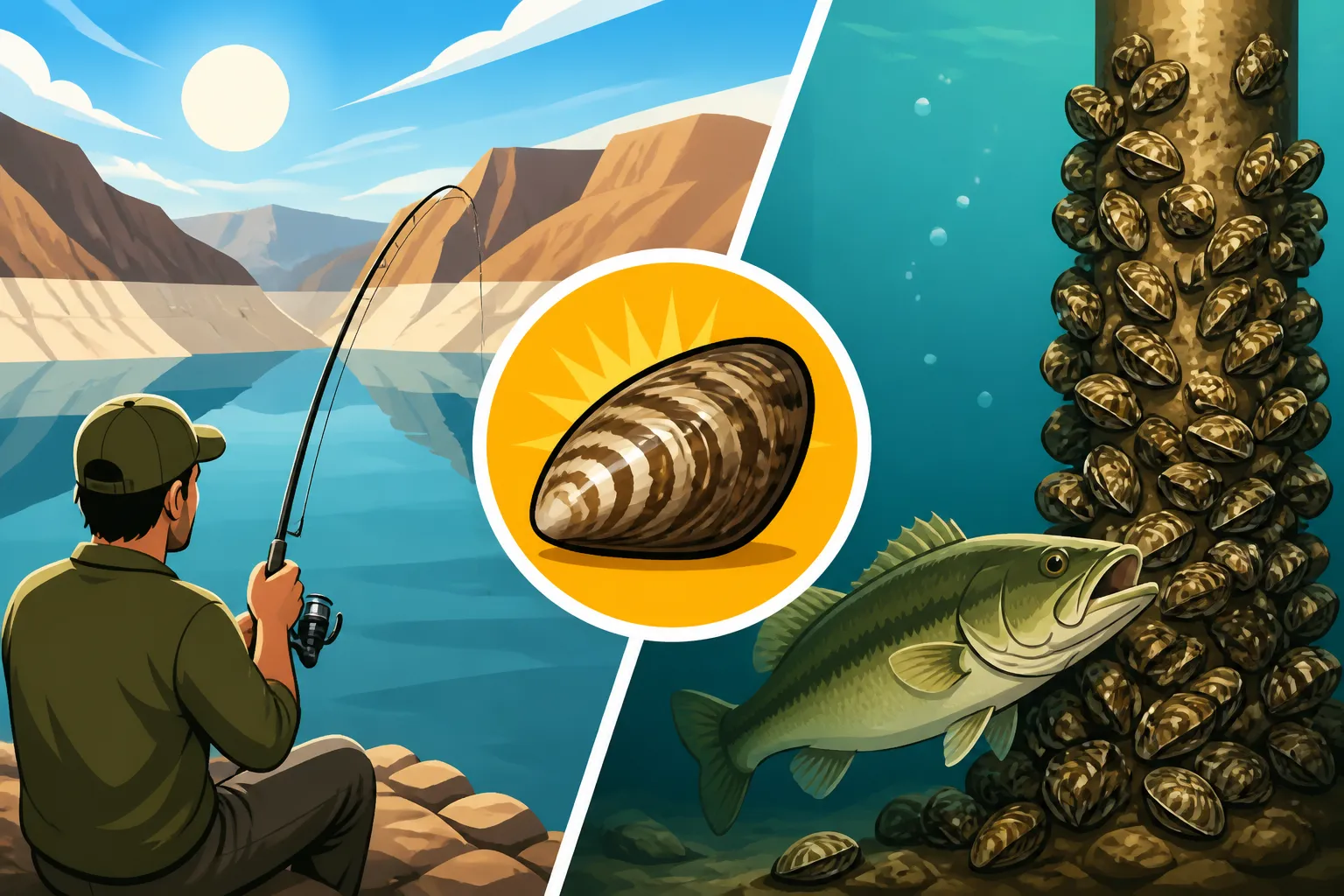
Quagga mussels (Dreissena rostriformis bugensis) are small, freshwater bivalves, typically less than an inch long, with a distinct D-shaped shell and often alternating light and dark bands. They originate from the Dnieper River basin of Ukraine and were first discovered in the Great Lakes region of North America in the late 1980s. They are incredibly prolific, reproducing rapidly and attaching themselves to virtually any hard surface, including rocks, docks, other mussels, and even living organisms like native clams and crayfish.
The core of their problematic nature lies in their efficiency as filter feeders. Each mussel can filter up to a liter of water per day, consuming microscopic organisms like phytoplankton and zooplankton. While this sounds like it might clean the water, the reality is far more complex and detrimental. They outcompete native species for food, drastically alter the nutrient cycle, and can suffocate or starve other bottom-dwelling organisms. This makes them an ecological engineer, fundamentally changing the very foundation of the food web in the waters they inhabit. Their aggressive colonization means they don't just exist in the lake; they dominate it.
How Quagga Mussels Invaded Lake Mead
The arrival of quagga mussels in Lake Mead was a wake-up call for western states. They were first confirmed in the lake in 2007, believed to have been transported there via contaminated recreational boats from infested waters further east. It's a classic example of how easily invasive species can hitchhike across vast distances when proper "Clean, Drain, Dry" protocols aren't strictly followed by boaters moving between different bodies of water.
Once in Lake Mead, the conditions were unfortunately ideal for their proliferation. The lake's vast size, warm temperatures, and abundant hard surfaces (like rocks, submerged trees, and man-made structures) provided an open invitation for these mussels to establish massive colonies. Within a few years, their populations exploded, covering vast expanses of the lakebed and any structure within the water. This rapid colonization quickly made Lake Mead one of the most heavily infested bodies of water in the western United States, setting the stage for the profound ecological and fishing impacts we see today.
Direct Impacts on Lake Mead Fishing
The presence of quagga mussels in Lake Mead isn't just an abstract ecological concern; it has very real, tangible effects that anglers notice on every trip. From the way the water looks to how your gear performs, these tiny invaders have changed the game for fishing in this iconic Nevada reservoir.
Changes in Water Clarity and Visibility
One of the most immediate and noticeable effects of quagga mussels is the dramatic increase in water clarity. Because these mussels are such efficient filter feeders, they remove massive amounts of phytoplankton from the water column. Phytoplankton forms the base of the aquatic food web and, in large quantities, gives water a greenish or brownish tint. With the mussels filtering so much of it out, the water in Lake Mead has become remarkably clear in many areas.
While clear water might sound appealing for swimming, it's a double-edged sword for fishing. Fish, especially predatory species like bass and striped bass, rely on subtle changes in light and water conditions for hunting. In extremely clear water, fish can become more wary, making them harder to approach without being seen. Lure choices might need to shift to more natural colors or stealthier presentations, as bright, unnatural baits can be easily detected. Furthermore, the absence of the natural murkiness means fish have fewer places to hide from predators, potentially altering their comfort zones and where they choose to congregate. Anglers who once relied on certain visibility levels to predict fish behavior often find themselves having to completely re-think their approach to account for this new, crystal-clear environment.
Impact on Fish Food Sources
The filtering prowess of quagga mussels doesn't just clear the water; it fundamentally reshapes the entire food web. By consuming vast quantities of phytoplankton, they deplete the primary food source for zooplankton, which are tiny aquatic animals. Zooplankton, in turn, are a crucial food source for many baitfish species, such as threadfin shad, which are a cornerstone of the diet for larger game fish like striped bass and largemouth bass in Lake Mead.
When the base of this food web is severely diminished, the entire pyramid suffers. Fewer phytoplankton mean fewer zooplankton, which leads to fewer shad. A reduction in shad populations directly impacts the health, size, and abundance of the predatory fish that feed on them. Anglers might notice that fish are leaner, or that trophy-sized catches become less frequent. The fish may also need to expend more energy to find food, changing their feeding patterns and making them harder to locate. It’s a classic case of bottom-up disruption, where changes at the very lowest trophic levels ripple all the way up to the species anglers care about most. This means that Lake Mead Striped Bass Hotspots might not be as active as they once were, or that the bass in Lake Mead Largemouth Bass Coves behave differently without their traditional forage.
Effects on Fishing Gear and Infrastructure
Beyond the ecological changes, quagga mussels pose a very direct and frustrating threat to fishing gear and boating infrastructure. Their ability to attach to any hard surface means they will colonize boat hulls, propellers, transducers, and cooling water intake systems.
For boaters, this means increased maintenance. Mussels can grow on propellers, reducing efficiency and potentially causing vibration. They can clog engine cooling systems, leading to overheating and costly repairs. Hull growth increases drag, reducing fuel efficiency and requiring frequent scraping and cleaning. Moored boats are particularly susceptible, as mussels will quickly cover underwater surfaces. Anglers using electronics might find their sonar transducers encrusted, diminishing their effectiveness. Fishing lines, especially those left in the water for extended periods, can become fouled with mussels, weakening the line and making it prone to breaking. Even something as simple as retrieving an anchor can become a challenge when it's covered in mussels, making it heavier and slimier. This emphasizes the need for regular boat checks and adherence to "Clean, Drain, Dry" protocols every single time you move your boat, even if you’re just pulling it out for a quick wash. You can find essential supplies like boat hull cleaners and pressure washers on platforms like Amazon to help with this ongoing battle.
Indirect Effects on Fish Behavior and Populations
The direct impacts of quagga mussels—clearer water and a disrupted food web—don't just exist in a vacuum. They create a ripple effect throughout the entire Lake Mead ecosystem, subtly but profoundly altering how fish live, hunt, and reproduce. Understanding these indirect effects is key to becoming a more adaptable and successful angler in a changed environment.
Shifts in Fish Habitat and Movement Patterns
With significantly clearer water, fish that once felt secure in shallower areas might now retreat to deeper, darker zones where they feel less exposed to predators, including human anglers. Imagine being a bass in water so clear you can see every ripple on the surface from a hundred feet down – you'd probably be a bit more cautious! This can lead to game fish like bass and stripers congregating in areas with more structure or depth, offering greater concealment.
Furthermore, the disruption of traditional food sources means fish might alter their migratory and feeding patterns. If their primary forage, like shad, becomes scarcer or shifts its own habitat in response to mussel filtration, then the larger predatory fish will naturally follow suit. This could mean that what were once prime Lake Mead Largemouth Bass Coves might see less activity at certain times, or that stripers move to entirely new depths or sections of the lake in search of food. Anglers need to be more vigilant in observing fish behavior and willing to explore new areas and depths, rather than relying solely on past knowledge of hotspots. Fish often become more nocturnal in clearer waters, meaning night fishing might become a more productive strategy for some species.
Potential Changes in Fish Species Composition
The long-term presence of quagga mussels can lead to significant shifts in which fish species thrive and which decline. Species that rely heavily on plankton for food, either directly or through baitfish that consume plankton, are often negatively impacted. This can put pressure on Lake Mead's beloved striped bass, which are highly dependent on shad populations.
Conversely, some species might find advantages in the new environment. Certain bottom-dwelling species that feed directly on the mussels (though not many native species do effectively) or those whose diets are less impacted by plankton depletion might fare better. The clearer water could also favor sight-feeding predators under certain conditions, or provide a competitive edge to species that are naturally more wary or adapt quickly to new habitats. Over time, this could lead to a different mix of species dominating the lake, changing the overall fishing dynamic. It's an ongoing ecological experiment, and anglers are on the front lines, witnessing these subtle but important shifts firsthand. For a comprehensive overview, understanding the Nevada Fish Species Guide is more important than ever to grasp these ecological changes.
Health Concerns for Fish and Anglers
While not as immediately obvious as gear damage or water clarity, quagga mussels can also introduce potential health concerns. By filtering vast amounts of water, these mussels can accumulate pollutants and toxins within their tissues. This process, known as bioaccumulation, can then lead to biomagnification as those mussels are consumed by other organisms in the food chain.
For fish, this means they could be ingesting higher concentrations of contaminants, potentially impacting their health, reproduction, and overall vitality. For anglers who consume their catch, there’s a concern that these accumulated toxins could be passed on. While specific advisories and studies would be needed for definitive statements on consumption safety at Lake Mead, it's a factor worth considering when dealing with heavily filtered and potentially contaminated ecosystems. Always check local health advisories regarding fish consumption. Additionally, mussels can create sharp shell debris on shorelines and submerged structures, posing a physical hazard to both fish and unsuspecting anglers wading or handling gear.
What Anglers Can Do: Prevention and Adaptation
Facing the challenges posed by quagga mussels in Lake Mead can feel overwhelming, but as anglers, we have a crucial role to play in preventing their further spread and adapting our techniques to continue enjoying the sport. It's about being responsible and smart.
Stop the Spread: Clean, Drain, Dry
This isn't just a suggestion; it's a critical directive for every boater and angler. Quagga mussels spread primarily by hitchhiking on boats, trailers, and fishing gear that move from one body of water to another. Adhering to the "Clean, Drain, Dry" protocol is the single most effective way to prevent their transfer.
- Clean: Inspect your boat, trailer, and all fishing gear (lines, nets, waders, buckets) thoroughly for any attached mussels, aquatic plants, or mud. Remove and dispose of them in the trash, far from the water's edge. Power washing your boat with hot water (140°F or hotter) is highly effective at killing mussels. You can find pressure washers and suitable cleaning agents on Amazon.
- Drain: Pull all plugs and drain all water from your boat, including the bilge, livewells, ballast tanks, and engine cooling system. This water can contain microscopic mussel larvae (veligers) that are invisible to the naked eye. Do this away from the launch ramp, ideally on dry land.
- Dry: Allow your boat and all gear to completely dry for at least five days, or longer if conditions are humid, before launching into another body of water. The longer the drying time, the better the chance of killing any remaining mussels or larvae.
Ignoring these steps risks contaminating other pristine Nevada waters. Your compliance protects the future of fishing across the state and prevents the need for even stricter regulations. Remember, Nevada Boat Registration for Anglers comes with the responsibility of protecting our waters.
Adapting Your Fishing Techniques
The altered conditions in Lake Mead due to quagga mussels mean that old habits might not yield the same results. Successful anglers are adaptable anglers.
Firstly, embrace deeper water and structural fishing. With increased water clarity, fish often retreat to deeper zones, using submerged structures, ledges, and drop-offs for cover and ambush points. Pay close attention to your fish finder to locate these subtle changes in depth and bottom contour. Secondly, consider stealthier presentations. Lighter lines, fluorocarbon leaders, and more natural bait colors can be more effective in clear water where fish have a better view of your offerings. For species like bass, a drop-shot rig or a Ned rig can be incredibly effective when fish are pressured and wary. For striped bass, Best Lures for Striped Bass might include those with more subtle actions or colors that imitate local forage, rather than overly flashy options.
Consider fishing during low-light conditions, such as dawn, dusk, or even at night. Fish often feel more comfortable and are more active feeders when the sun isn't directly overhead, especially in clear water. Understanding the Best Tackle for Nevada Bass Fishing for these conditions will give you an edge. It's about observing, experimenting, and being willing to step outside your comfort zone to find what works in this new environment.
Checking for Current Regulations and Advisories
The situation with invasive species is dynamic, and regulations can change to protect aquatic resources. It is absolutely vital that before every fishing trip, you consult the latest guidelines from the Nevada Department of Wildlife (NDOW) and the National Park Service (NPS) if you are fishing in areas like Lake Mead, which falls under NPS jurisdiction.
These agencies provide updated information on mussel decontamination requirements, specific closures, or any fishing advisories related to fish health or changing populations. For example, specific decontamination stations might be mandatory before launching, or there might be new rules regarding live bait. The Nevada Fishing Regulations Explained booklet is your best friend here, always make sure you have the most current version. Stay informed through official websites, local tackle shops, and public notices. Being aware of the rules not only keeps you compliant but also ensures you're doing your part to manage the ecological challenges that quagga mussels present.
| Impact Category | Pre-Quagga Mussel Conditions (General) | Post-Quagga Mussel Conditions (Lake Mead) | Angler Adaptation Recommended |
|---|---|---|---|
| Water Clarity | Typically moderate visibility, some turbidity from plankton. | Significantly clearer, often crystal-clear visibility. | Use lighter lines, fluorocarbon leaders, natural lure colors. Fish deeper or during low light. |
| Fish Food Sources | Abundant plankton supporting healthy baitfish (e.g., shad) populations. | Reduced plankton, potentially leading to fewer baitfish. | Focus on alternative forage or switch to artificial lures that imitate different prey. |
| Fish Habitat | Fish comfortable in varied depths, including shallower areas. | Fish may retreat to deeper water or dense cover due to increased visibility. | Target deep structures, drop-offs, and shaded areas. |
| Gear Fouling | Minimal, general algae or silt accumulation. | Rapid attachment of mussels to hulls, props, lines, and cooling systems. | Strict "Clean, Drain, Dry" protocol after every use. Regular hull cleaning. |
| Boating Safety | Standard boating safety concerns. | Added risk of engine overheating from clogged intakes, propeller damage. | Frequent inspection of intakes, prop, and hull. Ensure Essential Safety Gear for Boating on Lake Mead includes maintenance tools. |
| Regulations | Standard fishing and boating regulations. | Enhanced regulations for invasive species prevention (e.g., mandatory inspections, decontamination). | Always check current NDOW and NPS advisories before launching. |
Disclaimer
This article is for general informational purposes only and does not constitute professional advice. Laws, prices and regulations vary by location and change over time. Consult a qualified professional for guidance on your specific situation.