Is Wildhorse Reservoir good for ice fishing?
For many anglers, the idea of ice fishing in Nevada might seem like something out of a tall tale. After all, the Silver State is famous for its scorching deserts and sunny skies, not necessarily for frozen lakes thick enough to walk on. When you hear about places like Wildhorse Reservoir, you probably picture reeling in bass or trout during a pleasant spring or fall day, not bundled up against the biting cold, staring down a hole in the ice. But this perception can leave many wondering: is ice fishing at Wildhorse Reservoir a legitimate and worthwhile endeavor, or just a risky fantasy? This guide aims to clear up that confusion, offering a realistic, in-depth look at what you can expect when considering an ice fishing adventure on Wildhorse Reservoir.
Understanding Ice Conditions at Wildhorse Reservoir
Let's be real, the thought of stepping onto a frozen lake in Nevada can be a bit daunting. We're not talking about the consistent, deep freezes you'd find in Minnesota or Michigan. Nevada's high desert winters have a unique personality, and understanding that is crucial before you even think about drilling a hole.
The Unpredictable Nature of Nevada Winters
Wildhorse Reservoir sits in the northeastern part of Nevada, a region that definitely sees more severe winter weather than, say, Las Vegas. But even here, conditions can be incredibly volatile. One week, you might have daytime temperatures struggling to get above freezing, and the next, a warm front can push things into the 40s or even 50s. This isn't just an inconvenience; it's a critical factor for ice safety. A few cold nights might put a skin of ice on the water, but it's often not uniform or reliably thick across the entire reservoir. We've all heard the stories of anglers venturing out too early or too late in the season, only to have a terrifying experience. The frustration comes from not knowing if it's safe until you're literally standing there, often after a long drive.
Historically, Wildhorse Reservoir can offer decent ice fishing conditions, but it's rarely a guarantee for the entire winter. The best windows usually occur between late December and late February. However, persistent cold is key. A few days of sunshine or strong winds can quickly degrade ice, especially near shorelines, inlets, or areas with current. This means keeping a close eye on weather forecasts and, more importantly, recent ice reports from local sources like the Nevada Department of Wildlife (NDOW) or tackle shops in Elko or Spring Creek is absolutely non-negotiable. Trying to guess the ice thickness based on weather from a week ago is a recipe for trouble.
Typical Ice Formation and Safe Thickness
When conditions are right, Wildhorse Reservoir can develop safe ice, but it’s rarely a uniform sheet. Shallow coves and sheltered bays, particularly on the northern and western sides of the reservoir, tend to freeze first and often hold safer ice for longer. Areas near the dam or where the main river channel enters the reservoir can have stronger currents or deeper water, making ice formation less reliable and often thinner.
So, what's considered "safe ice"? The general rule of thumb for walking on clear, solid ice is a minimum of 4 inches. If you're planning on using an ATV or snowmobile, that number jumps to 5-7 inches, and a vehicle needs at least 8-12 inches. It's vital to remember that these are bare minimums, and "black ice" (newly formed, clear ice) is significantly stronger than opaque, slushy, or snow-covered ice. Slush is particularly deceptive – it might look solid, but it’s usually just a layer of wet snow on top of thin ice, or worse, open water. Pressure ridges, where ice sheets push against each other, can be extremely dangerous as they create unstable cracks and open water. Additionally, Wildhorse does have springs and varying depths which can create thin spots even in seemingly safe areas. Always carry an ice spud or chisel to test the ice in front of you as you walk, and never, ever assume the ice is safe just because someone else is out there.
Target Species and Techniques for Ice Fishing
Alright, so if the ice holds, what's waiting for you under that frozen surface? Wildhorse Reservoir is a renowned fishery, but the dynamics change significantly when you're looking to pull fish through a hole in the ice. It’s not just about luck; it’s about understanding what fish are active and how to tempt them in their sluggish winter state.
What You Can Expect to Catch Through the Ice
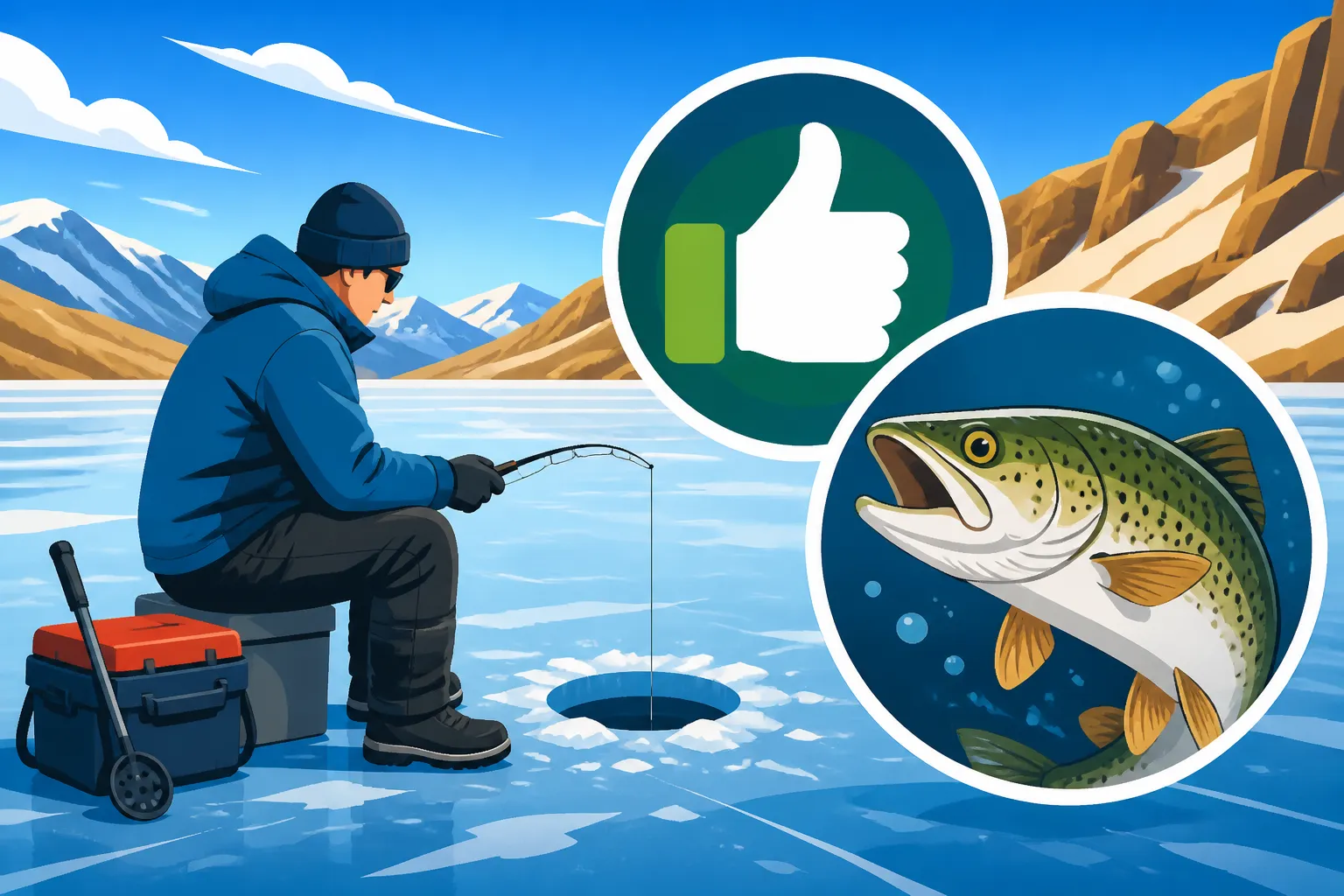
The primary stars of a Wildhorse ice fishing trip are typically yellow perch, rainbow trout, and brown trout. These species remain relatively active in colder water and are often the most reliable catches through the ice.
- Yellow Perch: If you're looking for consistent action and delicious table fare, the yellow perch at Wildhorse are usually your best bet. They tend to school up in large numbers, often around submerged vegetation, old creek channels, or gradual drop-offs in 10-25 feet of water. Once you find a school, the action can be non-stop. They're often on the smaller side, but a good meal of Wildhorse perch is a winter treat. You can find more specific information about the population in our guide on Yellow Perch at Wildhorse Reservoir
- Rainbow Trout: Wildhorse is regularly stocked with rainbow trout by NDOW, and these feisty fish are a popular target. They tend to roam more than perch, often cruising the edges of drop-offs or slightly deeper flats. While they might not be as plentiful as perch through the ice, catching a beautiful rainbow on a cold day is incredibly rewarding. They might be found anywhere from 5 to 30 feet deep. To understand their movements better, check out the Nevada Trout Stocking Schedule
- Brown Trout: The brown trout at Wildhorse are often larger, more elusive, and considered a trophy species for many anglers. They're usually found in similar areas to rainbows but can be more structure-oriented, hugging submerged rocks, timber, or sudden depth changes. Catching a significant brown through the ice is a real accomplishment and often requires a bit more patience and specialized tactics.
While Wildhorse also hosts smallmouth bass and other species, they tend to become very sluggish in extreme cold and are less commonly targeted or caught through the ice. You might accidentally hook one, but they aren't the primary quarry for most ice anglers here.
Essential Ice Fishing Techniques for Wildhorse
When you’re drilling through ice, your fishing techniques need to adapt dramatically from open water methods. Fish are slower, less aggressive, and often holding tight to structure or the bottom.
- Jigging for Perch: For yellow perch, small jigs and spoons are incredibly effective. Think tiny tungsten jigs tipped with a mealworm, maggot, or a piece of Berkley PowerBait. Popular colors include chartreuse, glow-in-the-dark, and silver. A slow, subtle jigging motion is usually best – just enough to make the bait dance. Experiment with depths. If you find one fish, you've likely found a school, so keep working that area.
- Tip-Ups for Trout: When targeting trout, especially the larger browns or rainbows, tip-ups can be a game-changer. These passive devices allow you to cover more ground. Set them up with a lively minnow or a generous gob of PowerBait on a small hook, suspended anywhere from 5 to 20 feet below the ice. When a fish bites, the flag "tips up," signaling a strike. This allows you to set up multiple lines (within legal limits, of course – always check Nevada Fishing Regulations Explained for current rules) and wait for a cruiser.
- Location, Location, Location: Just like open water fishing, finding the fish is half the battle. Use a good fish finder (flasher or portable sonar) to locate schools of perch or individual trout. Look for underwater structure like humps, drop-offs, and points. The old creek channels that run through Wildhorse are always good places to start, as are areas where you'd find good cover during the open water season, which you can learn more about in our Wildhorse Reservoir Warm Water Fishing Areas guide. Remember, fish metabolism slows down in cold water, so they often hold in areas with stable temperatures and easy access to food, expending minimal energy.
Gear, Safety, and Regulations for a Successful Trip
Venturing out onto the ice, even on a popular spot like Wildhorse, requires more than just a rod and reel. Safety should always be your top priority, followed closely by having the right gear to stay warm and comfortable. After all, nobody wants to cut a fishing trip short because they're freezing or unprepared.
Must-Have Gear for Wildhorse Ice Fishing
Think of your ice fishing gear as your winter survival kit with a fishing bonus. You'll need more than just your usual fishing tackle.
- Ice Auger: A critical piece of equipment. For Wildhorse, a 6-inch hand auger might suffice for perch, but an 8-inch auger (manual or powered) is better if you're targeting larger trout or just want to make quick work of thicker ice. The powered augers from brands like Eskimo or ION can be a lifesaver on really thick ice.
- Ice Shelter: An ice shanty or a portable hub-style shelter like those from Clam or Frabill will make a massive difference in your comfort, especially on windy days. Being out of the wind and potentially having a heater running can extend your time on the ice significantly.
- Warm Clothing: This is non-negotiable. Layers are key: thermal base layers, fleece mid-layers, and waterproof, insulated outer layers. A good quality ice fishing suit (bibs and jacket) offers excellent warmth and flotation in case of an emergency. Don't forget insulated, waterproof boots, warm gloves or mittens, and a hat that covers your ears.
- Safety Gear: Never, ever go on the ice without essential safety items. These include ice picks (worn around your neck for quick access), a rope, a throwable flotation device, and a fully charged cell phone. It's also highly recommended to go with a buddy. You can find a more comprehensive list in our guide to Ice Fishing Gear for Nevada Lakes.
- Fishing Tackle: Shorter ice fishing rods (24-36 inches) paired with small spinning reels spooled with cold-weather specific monofilament or fluorocarbon line are ideal. Bring a variety of small jigs, spoons, and tip-ups with minnows or PowerBait. A portable fish finder (flasher or sonar) will drastically improve your success rate.
- Comfort Items: A portable heater (propane-powered), a lantern for early mornings or late evenings, a comfortable chair, and plenty of hot beverages and snacks will make your experience much more enjoyable.
Remember, the high desert sun, even in winter, can be intense. Don't forget sunscreen and polarized sunglasses to protect against glare.
Navigating Regulations and Access
Before you even pack your gear, make sure you're squared away with the rules. The last thing you want is a fine to spoil your hard-earned catch.
- Nevada Fishing License: A valid Nevada fishing license is required for anyone 12 years and older. You might also need a Nevada Trout Stamp Requirements if you're specifically targeting trout, depending on the type of license you hold. Make sure to purchase your license well in advance, and always carry it with you. You can learn more in our comprehensive Nevada Fishing License Guide.
- Regulations: Always consult the current NDOW Fishing Regulations booklet for the Western Region. This is where you'll find specific rules regarding daily limits, possession limits, tackle restrictions, and legal fishing hours for Wildhorse Reservoir. Pay close attention to the Nevada Fishing Season Dates and Limits for trout and other species.
- Access: The main boat ramps at Wildhorse, like those at Wildhorse State Recreation Area, become primary access points during ice fishing season. While they won't be used for launching boats, they provide parking and relatively easy access to the reservoir. Depending on snow levels, you might need a 4×4 vehicle to reach certain areas, and snowmobiles or ATVs can be invaluable for covering larger distances on the ice, assuming the ice thickness allows. Be aware that services like restrooms might be limited or closed during the depths of winter, so plan accordingly.
Planning Your Ice Fishing Adventure
Ice fishing at Wildhorse, when conditions align, can be an incredibly rewarding experience. But it's not something you just wake up and do. Thoughtful planning, checking conditions, and being prepared for the realities of winter in the high desert will make all the difference.
Best Times and Conditions
The "best" time to ice fish Wildhorse Reservoir is a moving target, entirely dependent on Mother Nature. Generally, your window will be from mid-January through February. What you're really looking for is a prolonged period of stable, below-freezing temperatures, ideally without heavy snowfall or strong winds.
- Stable Cold Snaps: These are crucial. A week or two of consistent lows in the teens or single digits and highs only creeping into the 20s will build the safest ice. Avoid venturing out after a significant warming trend, even if it was cold previously.
- Minimal Wind: Wind is the enemy of ice fishing comfort. Even with a shelter, strong winds can make the experience miserable and can also accelerate ice degradation.
- Local Reports Are Gold: This cannot be stressed enough. Check with local tackle shops in Elko, the staff at Wildhorse State Recreation Area, or online fishing forums specific to Nevada. These local insights are far more valuable than general weather forecasts. They can tell you where the ice is holding, what's biting, and what areas to avoid. This is also where services like FishingBooker can be invaluable, allowing you to connect with local guides who are intimately familiar with Wildhorse's winter conditions.
- Weather Patterns: A high-pressure system often brings clear skies and stable cold, which is ideal for ice formation and safety. Watch out for approaching storms or rapid temperature fluctuations.
Remember, the journey itself is part of the adventure. Wildhorse is a bit remote, so planning your travel and ensuring your vehicle is ready for winter conditions is essential.
Beyond the Fishing – Amenities and Lodging
While the focus is on fishing, it’s worth considering the practicalities of a multi-day trip. Wildhorse Reservoir is beautiful, but it's not a bustling metropolis.
- Camping and Facilities: Wildhorse State Recreation Area offers Wildhorse Reservoir Boat Ramp and Camping options, but during the ice fishing season, many services will be limited or entirely closed. Primitive camping might be available, but expect minimal amenities. Plan on being self-sufficient for food, water, and waste.
- Nearby Towns for Supplies: The closest towns for significant supplies are Mountain City (very small, limited services) or, more reliably, Elko, which is about an hour and a half drive away. Elko offers grocery stores, hardware shops, tackle stores, and various lodging options. Stock up on everything you need before you head to the reservoir.
- Guided Trips and Local Expertise: If you're new to ice fishing, or new to Wildhorse, consider booking a guided trip. Local guides not only know where the fish are but also the safest spots on the ice and the best techniques for current conditions. Websites like FishingBooker can help you find experienced local guides for Nevada, who can make your trip much safer and more successful, transforming a daunting adventure into a genuinely enjoyable experience. They'll often provide much of the specialized gear too, saving you from a significant upfront investment if you're just trying it out.
Ice fishing at Wildhorse Reservoir is definitely a possibility, and for those who brave the cold, it can offer some fantastic winter angling. But it's an activity that demands respect for the elements and thorough preparation. Staying informed about ice conditions, understanding the regulations, and equipping yourself properly are the keys to a safe and memorable trip on Nevada's frozen waters. It's a testament to the diverse fishing opportunities that Nevada truly offers, proving it's not just a warm-weather fishing destination.
Disclaimer
Fishing conditions and regulations in Nevada can change frequently. Always consult the latest official Nevada Department of Wildlife (NDOW) regulations and local advisories before planning any fishing trip. Safety on the ice is paramount; never assume ice is safe without verifying its thickness and stability. This guide is for informational purposes only and does not replace official guidelines or professional advice.