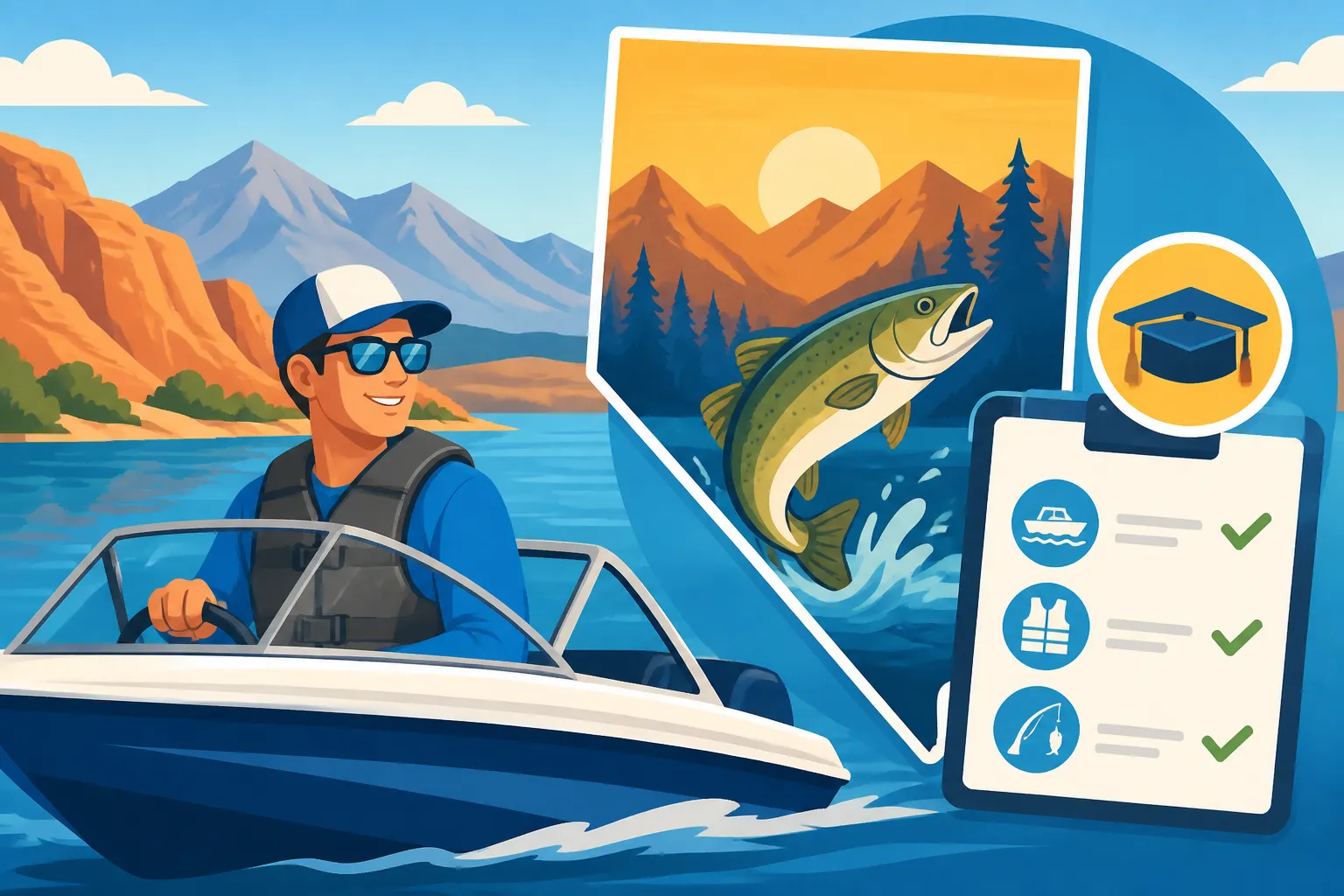
Where to take the Nevada boater education course
Trying to figure out exactly where and how to get your boater education card in Nevada can feel a bit like navigating a winding river without a map. There’s a lot of information out there, and it's easy to get confused about what's required and which courses are legitimate. This guide is designed to cut through the noise, making the path to getting your Nevada boater education card clear, simple, and stress-free.
Understanding Nevada's Boater Education Requirement
It’s completely understandable if you’re a bit hazy on the specifics of Nevada's boater education requirements. Many folks assume that if they’ve been boating for years, or if they only use a small craft, these rules might not apply to them. But the truth is, boating safety is a serious matter in the Silver State, and there are specific regulations in place to ensure everyone on the water has a basic understanding of safe operation and etiquette. The Nevada Department of Wildlife (NDOW) takes water safety seriously, and for good reason. Our lakes and reservoirs, from the vast expanses of Lake Mead to the serene beauty of Lake Tahoe, see a lot of traffic, and a little education goes a long way in preventing accidents.
Who Needs a Boater Education Card in Nevada?
This is often the first big question people have, and it’s a critical one. Generally speaking, if you operate a motor-powered vessel on Nevada waters and you were born on or after January 1, 1983, you are required to possess a valid boater education card. This isn't just for big powerboats; it includes personal watercraft like jet skis, and even a small fishing boat with an outboard motor. The law is really focused on anyone who has control of a motorized vessel, regardless of its size or propulsion type, if you fall within that birthdate range. It's a common misconception that if your boat is under a certain horsepower, you're exempt, but that's typically not the case. It’s always best to check the latest regulations to be sure, but that 1983 cutoff is a key detail. For a deeper dive into specific age cutoffs and exemptions, you can always check out Nevada Boater Education Card age cutoff.
Now, what about those who don't fit that birthdate criterion? If you were born before January 1, 1983, you are currently exempt from the mandatory boater education card requirement. However, even if you’re exempt, taking a course is still a fantastic idea. Boating laws and best practices evolve, and a refresher can always teach you something new, helping you stay safer on the water and more prepared for any situation. Plus, many insurance companies offer discounts if you voluntarily complete a boater safety course, regardless of your age. Don't forget that if you operate certain non-motorized vessels, such as kayaks or canoes, while you don't need a boater education card, you still have to follow certain safety guidelines, especially regarding life jackets. You can learn more about this in Nevada Nonmotorized Boat Rules.
Out-of-state visitors also often wonder how these rules apply to them. If you’re visiting Nevada and operating a motor-powered vessel, you are typically required to meet Nevada's boater education requirements, or hold an equivalent and valid boater education card issued by your home state, provided that state’s course is approved by the National Association of State Boating Law Administrators (NASBLA). So, if you already have a card from California, Arizona, or another state, it's likely reciprocal. But it's always smart to carry proof of that certification with you, just in case you're stopped by a game warden or marine patrol officer. The goal here is safety, not to make things difficult for visitors, but rather to ensure everyone sharing our beautiful waters is operating responsibly.
Why Boater Education is So Important for Nevada Waters
It’s easy to look at another regulation and feel a bit of a groan. "Another hoop to jump through," you might think. But honestly, boater education isn't just about ticking a box; it's about making our precious Nevada waterways safer and more enjoyable for everyone. Our desert lakes and reservoirs, like Lake Mead and Lake Mohave, can get incredibly busy, especially on a sunny weekend. When you have a mix of experienced boaters, new enthusiasts, anglers, and families just out for a swim, a shared understanding of safety protocols becomes paramount. Without it, you quickly run into preventable accidents, misunderstandings, and general chaos.
Think about it from a practical standpoint. Do you know the "rules of the road" for boats? Do you understand navigation markers, right-of-way rules, or how to properly use flares and other distress signals? What about the local specific regulations for our unique fisheries? A good boater education course covers all of this and more. It teaches you how to handle unexpected situations, like sudden weather changes which are common in Nevada, or what to do if someone falls overboard. It's not just about avoiding collisions; it's about being a responsible steward of our aquatic environments and ensuring everyone gets home safely at the end of the day.
Beyond the immediate safety concerns, boater education also plays a vital role in protecting our natural resources. Courses often cover topics like preventing the spread of aquatic invasive species, proper waste disposal, and minimizing your impact on fragile shorelines and wildlife habitats. We all love fishing for those big Lahontan Cutthroat Trout at Pyramid Lake or chasing Striped Bass at Lake Mead, and part of being an ethical angler and boater is understanding how to preserve these ecosystems for future generations. Getting properly educated helps you contribute to the overall health and sustainability of Nevada's incredible fishing and boating opportunities. It's a small investment with a huge payoff for safety and conservation.
Approved Options for Taking Your Nevada Boater Education Course
When it comes to actually taking the course, you've got a couple of main avenues, and thankfully, both are designed to make it as accessible as possible. The key is to ensure that whatever course you choose, it's approved by the Nevada Department of Wildlife (NDOW) and meets the standards set by the National Association of State Boating Law Administrators (NASBLA). This ensures that the curriculum is comprehensive and your certification will be recognized. Don't just pick the first one you see online; a little research here saves you time and ensures your efforts count! You can often find a list of approved providers directly on the NDOW website.
Online Boater Safety Courses
For many busy folks, online courses are an absolute lifesaver. They offer incredible flexibility, allowing you to work through the material at your own pace, whenever and wherever it's convenient for you. Got an hour free after dinner? Log in. A quiet Saturday morning? Dive deeper into the modules. This self-paced approach is perfect for those juggling work, family, or other commitments. You typically register, pay a course fee, and then access the curriculum through a web portal. The material is usually broken down into chapters with quizzes to test your understanding along the way, culminating in a final exam. Companies like BoatUS Foundation and Boat-Ed are prominent providers of NASBLA-approved online courses that are recognized in Nevada.
The beauty of online courses is that they remove geographical barriers. You don't have to worry about finding a class near you or adjusting your schedule to fit a specific time slot. Many of these platforms are also designed with engaging multimedia content, including videos, interactive graphics, and quizzes, which can make learning about boating regulations much more interesting than simply reading a textbook. While the exact cost can vary between providers, they generally offer a very reasonable and efficient way to get certified. After passing the final exam, you’ll usually receive a temporary certificate immediately, with your permanent boater education card mailed to you shortly after. This flexibility and convenience is a huge plus, similar to how straightforward it is to manage other official tasks online, like How to buy a Nevada fishing license online. Sometimes, you might even find study guides or supplementary materials available through major retailers like Amazon or Bass Pro Shops to help you prepare even further, though the official course itself will be through an approved provider.
Classroom and In-Person Courses
While online options are popular, there’s still a lot to be said for a good old-fashioned classroom setting. If you’re someone who thrives on direct interaction, likes to ask questions in real-time, or simply prefers a structured learning environment away from the distractions of home, an in-person course might be the perfect fit. These courses are typically taught by certified instructors who are often experienced boaters themselves, offering valuable real-world insights and anecdotes that can't always be replicated in an online format. They provide a fantastic opportunity to network with other local boaters and hear different perspectives.
Finding these in-person courses might take a little more legwork than just a quick online search, but they are available. Look for them offered by local community centers, marinas, boating clubs, or even through the NDOW itself at various times throughout the year. Sometimes, large outdoor recreation retailers like Bass Pro Shops might host or promote these types of events as well. These classes often run over a weekend or a series of evenings, providing a dedicated block of time for learning. The direct interaction with an instructor means you can get immediate clarification on complex topics, whether it's understanding tricky navigation rules or getting advice on specific safety challenges you might face on Nevada's unique waterways. You can often find information on scheduled courses by contacting your local NDOW office or checking their website for a list of Nevada Boater Education Course Options.
Other Educational Resources and Materials
Beyond the formal courses, there's a wealth of supplementary educational resources available to help you become a more knowledgeable and safer boater. These materials aren't a substitute for an approved course if you're required to get your card, but they can be incredibly helpful for studying, refreshing your memory, or simply expanding your general boating knowledge. Many of the official course providers also offer free practice tests online, which are invaluable for getting a feel for the exam format and identifying areas where you might need to brush up.
The Nevada Department of Wildlife also publishes official boating handbooks and regulation guides, often available for free download from their website or sometimes in print at their offices or at various license vendor locations. These guides are packed with Nevada-specific rules, safety tips, and often include diagrams of navigation aids or boat signaling rules. Checking these out can give you a head start before you even begin your formal course. Furthermore, sites like Amazon or specialty boating supply stores (like Bass Pro Shops) often carry a variety of boating safety books, DVDs, and reference cards that can serve as excellent study aids. Using these resources wisely can not only help you pass your exam but also truly integrate the principles of safe boating into your everyday practice on the water.
What to Expect During and After Your Course
Embarking on a boater education course, whether online or in person, isn't just about passing a test. It's about gaining practical knowledge that will serve you well every time you hit the water. Understanding the structure of the course and what happens once you complete it can help alleviate any anxiety and set clear expectations. It's a journey designed to equip you with the skills and confidence to navigate Nevada's beautiful lakes and rivers safely.
Course Content Overview
Regardless of whether you choose an online or in-person format, the core content of a NASBLA-approved Nevada boater education course will cover a comprehensive range of topics essential for safe and responsible boating. You'll delve into the foundational "rules of the road" for boats, which are surprisingly similar to driving laws but with their own unique marine twists. This includes understanding navigation lights, sound signals, right-of-way rules when encountering other vessels, and how to operate safely in various conditions. It's not just about avoiding collisions; it's about predictable behavior on the water.
A significant portion of the course focuses on vessel operation and maintenance. You’ll learn about different types of boats, how to properly fuel your vessel, launching and retrieving techniques, and basic engine care. Critical safety equipment is another major segment. This covers everything from the mandatory life jacket requirements for different age groups (and how to properly fit them!) to the importance of fire extinguishers, signal devices, and first aid kits. Understanding the proper use and stowage of these items can literally be a lifesaver. You can get a head start on some of these requirements by checking out Nevada required safety equipment checklist for boats or Essential Safety Gear for Boating on Lake Mead.
Finally, the courses always touch upon Nevada-specific regulations and environmental responsibilities. This includes understanding things like speed limits in certain areas, laws regarding alcohol use on the water, and preventing the spread of aquatic invasive species, which is a big deal in Nevada. You'll also get information on how different fish species are regulated in our state, which can be useful for anglers, though the primary focus will be on boating safety rather than specific fishing techniques or Nevada Fishing Regulations Explained. This holistic approach ensures that you not only know how to operate a boat but also how to do so legally, safely, and with respect for the environment.
The Certification Process
Once you’ve diligently worked through all the course material, whether online or in a classroom, the final step is usually an exam. This test is designed to confirm your understanding of the essential boating safety principles. Don't stress too much; if you've paid attention and reviewed the material, you should be well-prepared. Most online courses allow you to retake the exam if you don't pass on your first try, though there might be a waiting period or a small fee for subsequent attempts. In-person courses will typically have the instructor proctor the exam.
After successfully passing the exam, you'll receive proof of completion. For online courses, this often comes in the form of a printable temporary certificate that you can use immediately while you await your official, permanent boater education card. This physical card, often a sturdy plastic similar to a driver's license, is then mailed to you by the issuing authority or the course provider. It's vital to carry this card, or a valid temporary certificate, with you whenever you're operating a motor-powered vessel that requires it in Nevada. Think of it like your driver’s license; it proves you've met the educational requirements. Should you ever lose your card, most providers and the NDOW offer a process for requesting a replacement, though a small fee may apply.
Maintaining Your Boater Education Card
Here’s a piece of good news: your Nevada boater education card doesn’t expire! Once you’ve earned it, it's generally valid for life. This is a big relief compared to other licenses or certifications that require regular renewal. However, "valid for life" doesn't mean "learn once and forget about it." Boating laws, regulations, and best practices can and do change over time. What was standard procedure ten years ago might have evolved, especially with advancements in technology and new environmental concerns.
It's a smart habit to periodically review the current Nevada Boating Regulations Handbook, which is updated regularly by the NDOW. This will keep you informed of any new rules, changes to equipment requirements, or shifts in environmental guidelines. Think of it as staying current with your knowledge, even if your physical card never needs renewing. This commitment to ongoing learning ensures you remain a safe, responsible, and informed boater, ready to tackle any adventure on Nevada’s beautiful waters. Staying informed is just as important as the initial certification.
Tips for a Smooth Boater Education Journey
Embarking on the path to becoming a certified boater in Nevada doesn't have to be a daunting task. With a little planning and the right approach, you can make the entire process smooth, effective, and even enjoyable. After all, this is about enhancing your boating experience, not creating another chore.
Choosing the Right Course for You
The first step to a smooth journey is selecting the boater education course that best suits your individual needs and learning style. Are you someone who thrives in a traditional classroom setting, where you can ask questions directly and engage with an instructor and fellow students? If so, an in-person course through a local agency or organization, as discussed in Nevada Boater Education Course Options, might be your ideal choice. These can be great for hands-on learners or those who benefit from structured, dedicated time away from distractions.
On the other hand, if your schedule is packed, or you prefer to learn at your own speed from the comfort of your home, an online course is probably going to be a better fit. The flexibility of online learning means you can break up the modules into smaller, manageable chunks that fit into your day. Consider your learning preferences: do you prefer reading, watching videos, or interactive quizzes? Many online platforms integrate a variety of media to cater to different styles. Also, think about your budget; while costs are generally reasonable, they do vary between providers. Read reviews, check the course structure, and make an informed decision that aligns with how you learn best.
Preparing for the Exam
Passing the boater education exam isn't about memorizing obscure facts; it's about demonstrating a solid understanding of boating safety principles. The best way to prepare is to actively engage with the course material as you go. Don't just skim through it. Take notes, pay attention to the key concepts, and make sure you understand why certain rules and safety measures are in place, not just what they are. Many online courses include quizzes after each module, which are excellent for self-assessment.
Before sitting for the final exam, take advantage of any practice tests offered by your course provider or available through the NDOW website. These practice tests are often very similar in format and content to the actual exam, giving you a valuable opportunity to identify any weak spots in your knowledge. Review those areas thoroughly. Don't try to cram everything at the last minute; instead, space out your study sessions. A calm, well-prepared mind is your best asset when taking any exam, and it will ensure you truly absorb the vital safety information.
Real-World Application and Beyond
Getting your boater education card is a significant achievement, but it's just the beginning. The true value of this education comes from applying what you've learned every single time you’re on the water. Don't just pass the test and forget the lessons. Make a conscious effort to integrate safe boating practices into your routine. This includes everything from always having the required Nevada required safety equipment checklist for boats on board to practicing safe navigation and being aware of others around you.
Remember, the goal isn't just to avoid a ticket, but to ensure your safety, the safety of your passengers, and the safety of everyone else enjoying Nevada's beautiful lakes and rivers. Continue to be a lifelong learner when it comes to boating. Talk to experienced boaters, pay attention to new regulations, and practice good judgment. Whether you're leisurely cruising, fishing for trophy bass in Lake Mead, or simply enjoying a sunset on Lake Tahoe, your boater education will serve as a foundation for countless safe and memorable adventures on the water.
| Feature | Online Boater Safety Course | Classroom/In-Person Course |
|---|---|---|
| Flexibility | High (self-paced, access anytime, anywhere) | Low (fixed schedule, specific location) |
| Interaction | Limited (typically via forums or email support) | High (direct instructor Q&A, peer interaction) |
| Cost | Generally a set fee, often comparable to in-person | Variable, sometimes free through volunteer organizations |
| Pacing | Self-directed, can rush or take your time | Instructor-led, fixed pace for the group |
| Materials | Digital modules, videos, interactive quizzes | Textbooks, handouts, instructor presentations |
| Certification | Immediate temporary certificate upon passing, card mailed | Often receive certificate directly from instructor, card mailed |
| Suitability | Busy individuals, self-starters, remote learners | Visual learners, those who prefer direct guidance |
Disclaimer
This article is for general informational purposes only and does not constitute professional advice. Laws, prices and regulations vary by location and change over time. Consult a qualified professional for guidance on your specific situation.