Best hat and sunglasses for sight fishing in bright water
Standing by the shimmering, often glass-like waters of a Nevada lake or reservoir, the blinding glare off the surface can turn an exciting day of sight fishing into a frustrating squinting contest. It's truly disheartening when you know the fish are there, but the sun's relentless assault on your eyes makes spotting them an impossible task. This guide will walk you through the essential headwear and eyewear choices that will not only protect you from the intense desert sun but also dramatically improve your ability to see beneath the surface, transforming your fishing experience.
Why Headwear and Eyewear are Crucial for Sight Fishing in Nevada
Anyone who’s spent more than a few minutes on a Nevada lake knows that the sun isn't just bright; it's an absolute force of nature. It’s not just about comfort; it's about protecting your vision long-term and, crucially for sight fishing, giving you the edge to actually see the fish you're targeting. Without the right gear, you're essentially fishing blindfolded in some of the clearest, yet harshest, conditions out there.
The Relentless Nevada Sun
Nevada's desert environment, with its high elevation and typically cloudless skies, means you're exposed to an incredible amount of ultraviolet (UV) radiation. This isn't just about getting a sunburn; prolonged exposure can lead to serious eye damage like cataracts and macular degeneration over time. Think about those long days casting for bass at Lake Mead or hunting for cruising cutthroat at Pyramid Lake – that's hours of direct, unfiltered sun beating down on you.
Beyond the UV, there's the sheer intensity of the light itself. It causes eye strain, fatigue, and headaches, even on cooler days. When your eyes are constantly fighting to adjust to the overwhelming brightness, your focus on subtle changes in the water or the slightest flicker of a fish is severely compromised. It makes an already challenging pursuit like sight fishing exponentially harder, leading to missed opportunities and a less enjoyable day on the water.
This is why proper protection isn't just a suggestion; it's a non-negotiable part of your Nevada Fishing Gear Essentials. You need gear that acts as a barrier, shielding your eyes and face from the sun's relentless assault, allowing you to stay out longer, more comfortably, and with a much clearer view of the underwater world. It’s about being proactive against the elements, rather than reactive to discomfort.
Beating the Glare for Better Vision
The biggest nemesis for any sight angler on Nevada's bright waters is glare. This isn't just reflected sunlight making things bright; it's scattered light that creates a blinding veil over the water's surface, effectively turning the top few feet of the water into an impenetrable mirror. You know the feeling – you peer into that promising shallow flat, convinced there's a fish there, but all you see is a shimmering white-hot reflection of the sky.
This glare completely obscures underwater structure, weed lines, and, most importantly, the fish themselves. Without the ability to penetrate that surface glare, you're guessing where to cast, missing those subtle movements that indicate a feeding fish, or failing to identify the prime ambush points where a trophy bass might be hiding. It turns precision casting into random luck, taking much of the "sight" out of sight fishing.
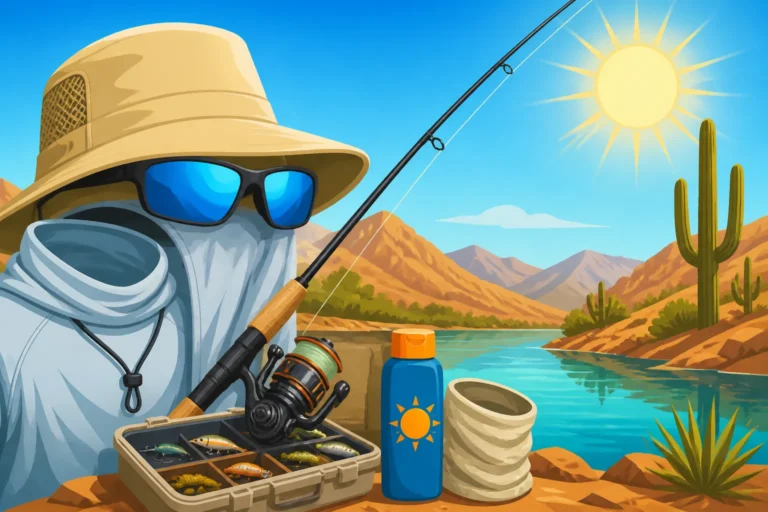
The right combination of headwear and eyewear works synergistically to drastically reduce this glare. The hat provides an immediate shade canopy, blocking overhead light, while specialized sunglasses cut through the remaining surface reflections. This combination allows your eyes to relax and see into the water column, revealing the hidden world beneath and putting you directly onto the fish. It’s the difference between seeing a vague shape and clearly identifying a smallmouth bass subtly fanning a bed or a Lahontan cutthroat trout cruising a drop-off.
Choosing the Right Hat for Nevada's Bright Waters
A good fishing hat does more than just make you look the part; it's your first line of defense against the fierce Nevada sun. The right hat will protect your face, ears, and neck, reducing the overall amount of light hitting your eyes and enhancing the performance of your sunglasses. For Desert Fishing Gear and Sun Protection, a hat is paramount.
Wide-Brimmed Hats and Boonie Hats
When it comes to maximum sun protection, wide-brimmed hats and boonie hats are the undisputed champions. Imagine a summer day at Lake Mohave, with the sun relentlessly beating down. A hat with a brim that extends at least 3 to 4 inches all the way around offers comprehensive shade for your entire face, ears, and often a good portion of your neck. This significantly reduces the amount of direct and ambient light that can creep in around your sunglasses, minimizing glare and eye strain.
Look for materials that are lightweight, breathable, and quick-drying, especially important when you might be sweating or splashing water. Many modern fishing hats are made from synthetic fabrics with UPF (Ultraviolet Protection Factor) ratings, similar to sunscreen, indicating how much UV radiation they block. A UPF 50+ rating is ideal for the intense Nevada sun. Ventilation features, like mesh panels or laser-cut holes, are also crucial to prevent heat buildup and keep you comfortable during long hours on the water. Brands like Columbia and Simms offer excellent options you can find at places like Bass Pro Shops or online retailers like Amazon.
These hats are particularly beneficial when you're spending hours out in the open, whether you're bank fishing on a wide-open reservoir or navigating a kayak across a glassy surface. They offer a consistent, moving shade canopy, ensuring that as the sun changes position throughout the day, your face remains protected, allowing your eyes to stay focused on the water without the distraction of harsh light.
Caps and Visors for Versatility
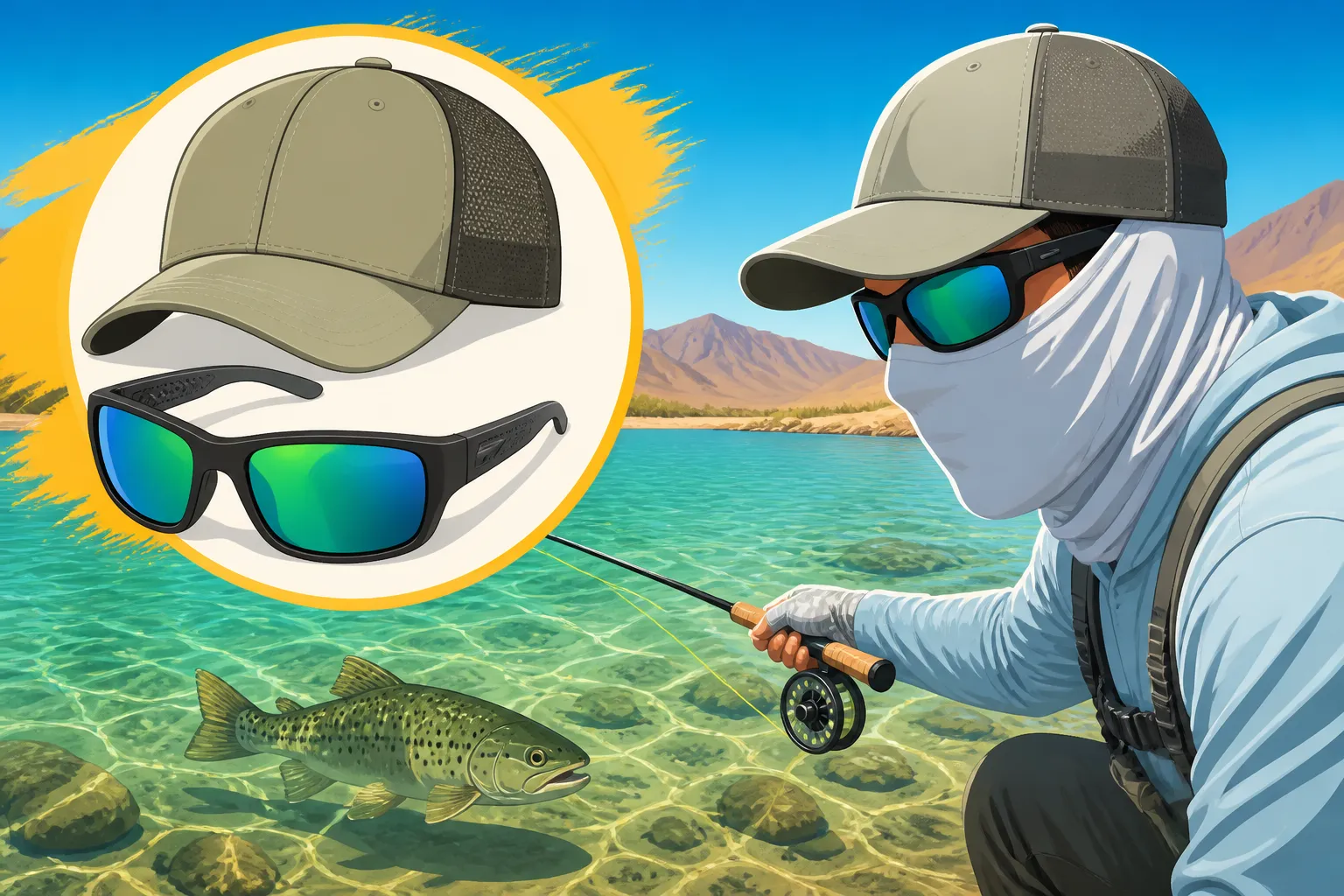
While wide-brimmed hats offer superior overall protection, traditional baseball caps and visors still have their place, especially for anglers who prefer a more streamlined feel or who combine them with other protective gear. A standard baseball cap, with its stiff front brim, provides excellent shade for your eyes and forehead, crucial for blocking direct overhead sun. Many anglers find them more comfortable and less cumbersome than a wide-brimmed hat, especially when dealing with wind.
The key with caps, particularly for sight fishing, is how well they pair with your sunglasses. The brim of the cap should extend far enough forward to create a deep shadow over your eyes, allowing your polarized lenses to do their job more effectively. Some caps even feature a darker underside to the brim to further reduce reflected glare from the cap itself. Visors offer similar eye-level shade but leave the top of your head exposed, which can be a double-edged sword: great for ventilation, but less protection against direct sun on your scalp.
When choosing a cap, prioritize those made from moisture-wicking, breathable fabrics to manage sweat. Many fishing-specific caps also include darker under-brims and even integrated neck flaps for added protection. While they don't offer the all-around coverage of a boonie hat, they are a popular choice for quick trips or when combined with a neck gaiter for comprehensive Best Sun Protection Gear for Desert Fishing.
Material and Color Considerations
The material and color of your fishing hat play a significant role in both sun protection and comfort. For sight fishing in Nevada's bright conditions, you want materials that actively work to keep you cool and protected, rather than trapping heat or offering minimal defense.
UPF Rating: Always look for a UPF (Ultraviolet Protection Factor) rating on your hat. This rating indicates how much UV radiation a fabric blocks. For example, a UPF 50+ fabric allows less than 1/50th of the sun's UV radiation to pass through, offering excellent protection. Many high-quality fishing hats, available at retailers like Bass Pro Shops, are specifically designed with these features. This is far more effective than a standard cotton hat, which might only offer a UPF of 5-7 when dry.
Breathability and Moisture-Wicking: In the Nevada heat, your head will sweat. Opt for lightweight, breathable synthetic fabrics like nylon or polyester, often with mesh ventilation panels. These materials excel at wicking moisture away from your skin and promoting airflow, which helps with evaporative cooling. Quick-drying properties are also a huge plus, as a wet, heavy hat is uncomfortable and can stay damp for hours.
Color: When it comes to color, lighter shades are generally better for reflecting sunlight and heat, keeping your head cooler. Think light grey, khaki, white, or light blue. Darker colors absorb more heat, which can lead to discomfort on scorching days. While a dark under-brim on a cap can help reduce glare for your eyes, the overall hat color should lean towards the lighter spectrum for heat management.
Selecting the Best Sunglasses for Sight Fishing
If a hat is your first line of defense, then high-quality polarized sunglasses are your ultimate secret weapon for sight fishing. They don't just reduce brightness; they literally strip away the glare, allowing you to peer into the underwater world with astonishing clarity. Investing in good fishing sunglasses is arguably the single most impactful gear choice you can make for improving your sight fishing success. You need to look for Best polarized sunglasses for spotting fish in clear water.
The Non-Negotiable: Polarization
Let's get this out of the way: if your sunglasses aren't polarized, they're simply not suitable for sight fishing in bright conditions. Polarization is the magic ingredient that filters out horizontal light waves, which are the primary cause of glare reflecting off water, roads, and other flat surfaces. Without it, you're essentially just wearing tinted lenses that make everything darker but don't eliminate the blinding surface shimmer.
How does it work? Imagine light waves traveling in all directions. When they hit a flat, reflective surface like water, a large portion of these waves become horizontally oriented, creating that annoying glare. Polarized lenses have a special filter that blocks these horizontal waves while allowing vertical waves to pass through. The result? The glare disappears, and you can see through the water's surface, revealing fish, rocks, submerged vegetation, and changes in bottom contour that were previously invisible.
This ability to cut through glare is absolutely critical for sight fishing. Whether you're trying to spot a cruising trout in the Truckee River or looking for bedding bass in a clear cove at Lake Mead, polarization provides that crystal-clear window into their world. It’s what allows you to make precise casts to individual fish, understand their behavior, and drastically increase your hook-up ratio. Cheap sunglasses might offer UV protection, but they won't have this glare-eliminating power, making them a poor choice for serious anglers.
Lens Colors and Their Applications
Beyond polarization, the tint or color of your sunglass lenses plays a vital role in optimizing your vision for specific light conditions and environments. There isn't a single "best" lens color; rather, different tints excel in different situations common to Nevada fishing.
| Lens Color | Primary Application | Best for Nevada Conditions | Pros | Cons |
|---|---|---|---|---|
| Amber/Copper | Low light, overcast, shallow water, woody cover | Cloudy days, dawn/dusk, identifying subtle structure | Enhances contrast, good depth perception | Less effective in extremely bright, open water |
| Gray/Smoke | Bright sun, open water, deep water | Midday sun, large lakes (Lake Mead, Tahoe) | Reduces overall brightness, natural color | Can reduce contrast in low light |
| Green Mirror | Medium to bright light, varying conditions | Versatile, great for general freshwater fishing | Enhances contrast, good for varied light | Can be a bit dark in very low light conditions |
| Blue Mirror | Extremely bright sun, open ocean, large lakes | Very bright, deep clear lakes (Lake Tahoe) | Excellent glare reduction, good for blue water | Can be too dark for shallow, subtle fishing |
For most Nevada freshwater applications, especially those involving a mix of clear water and bright sun, amber or copper lenses are often a favorite because they significantly enhance contrast, making it easier to spot fish against rocky bottoms or submerged vegetation. They also tend to perform well in variable light, like early mornings or late afternoons. Green mirror lenses offer a good all-around solution for many freshwater scenarios, balancing brightness reduction with contrast enhancement. For the most intense midday sun on vast, open bodies of water like Lake Mead or Lake Tahoe, grey or blue mirror lenses might be preferred for their maximum light reduction.
Consider the typical conditions you fish. If you're often out during the middle of the day in bright, clear conditions, a gray or green lens would serve you well. If you frequently fish at dawn or dusk, or on overcast days, an amber or copper lens will provide better contrast. Many anglers carry multiple pairs or opt for interchangeable lens systems to adapt to changing light.
Frame Styles and Fit
The frames of your sunglasses are just as important as the lenses for comfort, durability, and effectiveness, especially for sight fishing. A proper fit ensures maximum coverage and prevents light leakage.
Coverage and Side Shields: For optimal sight fishing, you want frames that offer generous coverage around your eyes. Wrap-around styles are excellent as they block peripheral light, reducing glare that can sneak in from the sides. Some frames even feature integrated side shields or thick temples specifically designed to block this "light leak" – a critical feature that cheap frames often lack. This prevents light from bouncing off your cheekbones or temples and reflecting onto the back of your lenses, which can cause internal glare and reduce clarity.
Comfort and Durability: You'll be wearing these glasses for hours, so comfort is paramount. Look for lightweight materials, adjustable nose pads, and secure temple arms that don't pinch or slip down your nose, especially when you're sweating. Many fishing-specific frames incorporate rubberized contact points to ensure they stay put, even when casting vigorously or moving quickly in a boat. Durability is also key in the rugged Nevada outdoors. Frames made from Grilamid nylon or similar impact-resistant materials can withstand accidental drops or bumps. Brands like Costa Del Mar, Oakley, and Maui Jim are popular among anglers for their robust designs and superior optics, and you can often find them through online retailers like Amazon or in person at Bass Pro Shops.
Venting: In the extreme heat and humidity that can occur even in Nevada, lenses can fog up. Some high-end fishing frames incorporate venting systems or coatings to minimize fogging, which can be a huge frustration when you're trying to maintain a clear view of the water. This combination of fit, coverage, and durable design ensures your sunglasses remain effective and comfortable throughout your Best Time of Day to Fish in Summer Heat excursions.
Combining Hat and Sunglasses for Optimal Performance
Think of your hat and sunglasses as a team, working together to give you the clearest possible vision on the water. They are not independent pieces of gear, but rather complementary tools that, when chosen and worn correctly, create an almost impenetrable barrier against glare and harsh sunlight.
Maximizing Coverage and Reducing Light Leak
The key to getting the most out of your hat and sunglasses combo for sight fishing is to create a seamless shield against light. Your hat's brim should extend far enough forward and around to shade your entire face, effectively creating a "cave" for your eyes. This dramatically reduces the amount of ambient light reaching your sunglasses.
Then, your sunglasses should fit snugly and closely to your face, especially at the temples and around the eyebrows. Wrap-around styles are particularly effective here, as they minimize gaps where light can penetrate. The goal is to prevent any light from entering from above, below, or the sides of your lenses. When light sneaks in from these angles, it can reflect off the back of the lenses and create internal glare, counteracting the polarization. This is why a wide-brimmed hat, pulled down low, coupled with well-fitting, wrap-around polarized sunglasses, is the ultimate setup. It creates a complete blackout zone around your eyes, allowing the lenses to perform at their peak and giving you an unobstructed view into the water. This synergy is especially important for delicate tasks like spotting a trout rise or seeing the subtle twitch of a bass's tail.
Practical Tips for Hot Days
Nevada summers can be brutal, and staying comfortable is vital for maintaining focus while sight fishing. Beyond just vision, your gear needs to help you manage the heat.
First, consider how your hat affects airflow around your head. While a wide brim is great for shade, ensure it has good ventilation, like mesh panels, to prevent your head from overheating. If you're wearing a cap, pairing it with a neck gaiter made from cooling fabric can provide extra sun protection for your neck and ears without adding too much heat. Brands like Buff make excellent cooling gaiters that you can pull up over your nose and ears.
For your sunglasses, ensure the frames aren't too tight, which can trap heat against your skin and cause discomfort. Some frames are designed with small vents or air channels to help with airflow and prevent fogging, which is a common issue when moving between air-conditioned spaces and the humid outdoors, or simply from sweat. Keeping a lens cloth handy is also essential to wipe away sweat and smudges, ensuring your vision remains crystal clear. Remember, you might be out there for hours, so comfort is not a luxury; it's a necessity for an enjoyable and effective fishing trip. These little details contribute significantly to your overall How to fish from a kayak on a windy reservoir or Best Fishing Rods for Nevada Lakes experience.
Equipping yourself with the right hat and sunglasses for sight fishing in Nevada's bright conditions is a game-changer. It’s about protecting your eyes, enhancing your ability to spot fish, and ultimately making your time on the water more productive and enjoyable. Don't underestimate the power of this dynamic duo in your fishing arsenal. For more general gear advice, check out Nevada Fishing Gear Essentials.
Disclaimer
This article is for general informational purposes only and does not constitute professional advice. Laws, prices and regulations vary by location and change over time. Consult a qualified professional for guidance on your specific situation.