Why the striped bass population declined at Lake Mead
For any angler who has spent time on the majestic waters of Lake Mead, the shift in its striped bass population hasn't just been a topic of conversation – it's been a visible, often heartbreaking reality. We've all noticed the difference: fewer fish, smaller catches, and sometimes, long stretches of nothing. This guide will dive deep into the complex, interconnected reasons behind the decline of the striped bass population at Lake Mead, helping us understand what's truly going on beneath the surface.
The Heyday of Lake Mead Stripers: A Look Back
It's hard to talk about the current situation without first remembering what Lake Mead once was for striped bass. For decades, it was a legendary fishery, a place where anglers from all over the country would come to experience incredible fishing. The stories aren't exaggerated; the lake truly teemed with these powerful, schooling fish.
A Legacy of Abundance and Excitement
Picture this: the late 1980s, the 1990s, and even into the early 2000s, Lake Mead was synonymous with big stripers and even bigger numbers. Anglers would head out, often early in the morning, and find boils of schooling stripers aggressively chasing shad on the surface. It was adrenaline-pumping action, and it wasn't uncommon to catch dozens of fish in a single outing, many of them respectable keepers. People would target them from shore, from boats, and even on kayaks. The sheer abundance of fish meant that even novice anglers could experience success, creating a vibrant fishing culture around the lake. Families made traditions of it, and local tackle shops thrived on selling the right gear for the next big striper trip. It was a golden era that many of us remember fondly, almost with a sense of disbelief at how much things have changed.
The Ecosystem's Original Balance for Stripers
This incredible abundance wasn't just luck; it was a testament to a unique set of ecological conditions. Lake Mead, a massive reservoir created by the Hoover Dam on the Colorado River, initially provided an ideal environment for striped bass. The lake offered vast expanses of deep, cool water, which stripers prefer. Crucially, it had an incredibly robust population of gizzard shad, a small, oily baitfish that formed the primary food source for the growing striper population. These shad reproduced rapidly, providing a continuous buffet for the hungry bass. The fluctuating water levels, while sometimes a challenge for anglers, often created new structure and refreshed the nutrient cycles, further bolstering the food web. There was a delicate, yet highly productive, balance where water, forage, and predator populations thrived together, setting the stage for one of the most productive fisheries in the American West.
Primary Factors Contributing to the Decline
The current situation isn't due to a single problem but a complex interplay of environmental changes, some natural and some introduced. Understanding these primary factors is key to grasping the magnitude of the challenge facing Lake Mead's striped bass.
Persistent Drought and Water Levels
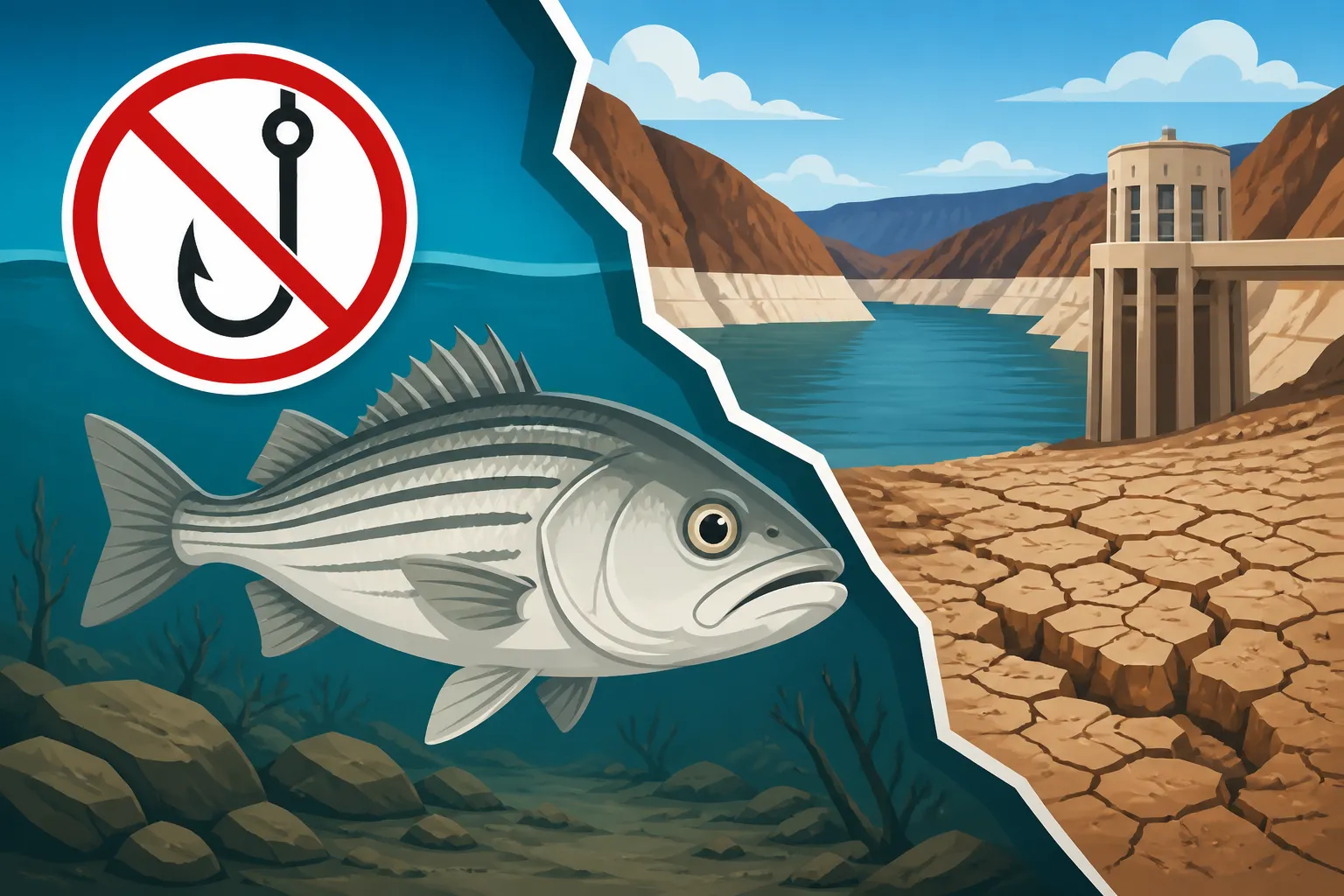
Perhaps the most visually striking and widely recognized factor is the prolonged and severe drought that has gripped the American Southwest for over two decades. Lake Mead, as a reservoir for the Colorado River, relies heavily on snowmelt and rainfall from a vast upstream basin. When these sources diminish, the lake's water levels drop dramatically. We've all seen the images of receding shorelines, exposed bathtub rings, and forgotten canyons emerging from the depths. This isn't just about aesthetics; it profoundly impacts the entire ecosystem.
Lower water levels mean a reduction in total fish habitat. What was once a sprawling underwater world with varied structure—points, coves, submerged brush—becomes compressed. Fish are forced into smaller areas, increasing competition for food and making them more vulnerable to predation. Furthermore, shallower waters warm faster, which can stress fish, particularly a species like striped bass that prefers cooler, deeper environments. The loss of extensive, complex shallow-water zones also impacts the spawning success of important forage fish, further disrupting the food chain. When you lose millions of acre-feet of water, you're not just losing volume; you're losing the very foundation that sustained such a massive fish population. This issue is a constant reminder of the fragility of even vast man-made impoundments in the face of long-term climatic shifts. Learning How water level affects fishing at Lake Mead can really help you understand the dynamics at play.
Influx of Invasive Species: The Quagga Mussel Effect
While you might not see them directly, the introduction of quagga mussels to Lake Mead has arguably had the most devastating and insidious impact on the striped bass population. These tiny, non-native mollusks, first detected in the lake in the mid-2000s, are filter feeders. They can filter enormous quantities of water, removing phytoplankton and zooplankton – the microscopic organisms that form the base of the entire aquatic food web.
Imagine millions, even billions, of these mussels constantly cleaning the water. What happens? The water becomes incredibly clear. While clear water might seem appealing, it's actually detrimental to the ecosystem's productivity. With less plankton, the gizzard shad, which feed on plankton, lose their primary food source. This domino effect then starves the striped bass, which rely heavily on the shad. The quagga mussels essentially divert the lake's energy and nutrients into their own biomass, making them unavailable to the native food chain that once supported the abundant stripers. The impact is so significant that it's nearly impossible to overstate. It fundamentally altered the energy flow of the entire lake, creating a new, less productive reality for many species, including our beloved striped bass. It’s a classic example of Invasive Fish Species in Nevada Lakes having far-reaching consequences.
Changes in Forage Fish Populations
The availability of forage fish, particularly gizzard shad, is the backbone of a healthy striped bass fishery. As mentioned, the decline in plankton due to quagga mussels directly impacts shad populations. Without ample food, shad numbers plummet, and the individual shad that do survive are often smaller and less numerous.
This creates a critical shortage of high-quality food for striped bass. Stripers are voracious predators; they need a lot of calories to grow big and reproduce successfully. When their primary food source dwindles, several things happen. First, the overall population shrinks because fewer fish can be supported. Second, the surviving fish grow slower and are often smaller in average size. Third, their health and reproductive capacity can be compromised, leading to fewer successful spawns. Anglers have witnessed this firsthand: fewer, smaller boils, and stripers that are leaner than they once were. The lack of a robust and easily accessible food supply is a direct and undeniable driver of the striped bass decline. Knowing Striped Bass Feeding Patterns and what they prey on makes this connection clear.
Secondary and Contributing Challenges
Beyond the major ecological shifts, several other factors, while perhaps less dramatic individually, compound the difficulties for Lake Mead's striped bass, creating a cumulative effect that further pressures the population.
Habitat Degradation and Loss
The severe drop in water levels, driven by the persistent drought, doesn't just reduce the volume of water; it fundamentally degrades and eliminates critical habitat. As the water recedes, vast areas that were once submerged structure – rocky points, deep channels, brushy coves – become exposed land. This means less protective cover for juvenile fish, fewer ambush points for adult predators, and a general simplification of the underwater landscape.
The remaining habitat often becomes more uniform and less diverse, which can be particularly detrimental to a species like the striped bass that relies on varied structure for different life stages. Spawning grounds can be left high and dry, and nursery areas for young-of-the-year fish are reduced. Furthermore, the concentration of fish in smaller areas can increase stress, make them more susceptible to disease, and intensify competition for the already scarce food resources. It's like shrinking a bustling city into a small village without reducing its population – everyone struggles to find resources. This continuous erosion of suitable habitat directly impacts the long-term viability of the population.
Fishing Pressure and Management
While fishing pressure is rarely the sole cause of a widespread decline, especially in a lake as massive as Lake Mead, it can certainly exacerbate issues when a population is already under stress from environmental factors. During the glory days, the lake could absorb significant fishing pressure because the striped bass population was so robust. Daily limits and regulations were in place, but the sheer numbers of fish made it feel almost endless.
However, as forage diminished and habitat shrank, the resilience of the striped bass population weakened. In this altered state, even moderate fishing pressure can have a more pronounced impact. Management agencies, like the Nevada Department of Wildlife (NDOW), continuously monitor fish populations and adjust regulations to try and strike a balance, but they are often reacting to large-scale ecological changes that are beyond their immediate control. Anglers themselves also play a role; responsible catch-and-release practices, especially for larger breeding fish, become even more important when a population is struggling. The rules are designed to protect, so understanding Nevada Fishing Regulations Explained is always crucial, particularly for species under pressure.
Climate Change Impacts on Desert Lakes
The broader umbrella of climate change encompasses many of the issues seen at Lake Mead. Increased average air temperatures lead to warmer water temperatures, especially in shallower areas. Warmer water holds less oxygen and can stress fish, making them more lethargic and less able to withstand other environmental pressures. It can also accelerate metabolic rates, meaning fish need more food at a time when food is scarce.
Furthermore, changes in precipitation patterns – reduced snowfall in the mountains that feed the Colorado River and altered timing of runoff – directly contribute to the persistent drought conditions and lower water inflows into Lake Mead. More extreme weather events, while less direct, can also disrupt delicate aquatic ecosystems. The desert environment of Nevada already presents unique challenges for aquatic life, and climate change is intensifying these challenges, pushing an already fragile balance further out of whack. This overarching environmental shift affects everything from Best Time of Year to Fish in Nevada to the overall health of the ecosystem.
What This Means for Anglers and the Future
So, what does all this mean for us, the anglers who love fishing Lake Mead? It means acknowledging a new reality and adapting our approaches. The days of guaranteed boils and massive stringers may be behind us for a while, but that doesn't mean the lake is dead, or that there aren't still opportunities to enjoy its waters.
Adapting Your Fishing Strategy
The biggest takeaway for anglers is that fishing Lake Mead for striped bass now requires different strategies. You can't just expect to stumble upon massive schools in the same way. Anglers are now focusing more on deeper techniques, often using sonar to locate fish holding near structure in the remaining deep water. Trolling with downriggers, vertical jigging, and using artificial baits that mimic the scarce shad are becoming more prevalent. Many anglers are exploring a wider range of lures and baits, and consulting resources like Best Lures for Striped Bass becomes more critical than ever.
It also means being patient and persistent. The bite might not be as hot or as frequent, but diligent anglers who adapt to the new conditions can still find success. It might involve exploring different parts of the lake than you used to, or fishing at different times of day – perhaps targeting Best time of day to catch striped bass at Hemenway Bay during low light conditions or focusing on areas where cooler water might persist. Even a good pair of polarized sunglasses, available on Amazon, can help you spot subtle changes in water or structure that might indicate fish activity.
| Factor Contributing to Decline | Direct Impact on Striped Bass | Angler Adaptation |
|---|---|---|
| Persistent Drought | Reduced habitat, warmer water, concentrated fish | Focus on deeper water, use sonar, explore new areas |
| Quagga Mussels | Collapse of plankton, reduced forage base (shad) | Downsize baits, use scent, target structure-oriented fish |
| Forage Fish Decline | Starvation, slower growth, reduced reproduction | Match bait to current smaller forage, use finesse techniques |
| Habitat Degradation | Loss of cover, reduced spawning areas | Target remaining deep structure, focus on transition zones |
| Fishing Pressure | Exacerbates decline, especially on vulnerable populations | Practice catch-and-release, respect limits |
| Climate Change | Warmer water, stress, ecosystem instability | Fish low-light hours, seek thermal breaks, use Summer Fishing Techniques for Hot Desert Lakes |
Conservation Efforts and Outlook
Despite the challenges, there are ongoing efforts to monitor and manage Lake Mead's fishery. Wildlife agencies like NDOW regularly conduct surveys to assess fish populations and adjust regulations accordingly. There's also continued research into the impacts of invasive species and climate change, seeking potential long-term solutions or mitigation strategies.
For us, the angling community, participating in these efforts is crucial. This can mean volunteering for clean-up days, reporting invasive species, or simply following regulations diligently. It also means educating fellow anglers about the challenges and the importance of conservation. While the future of Lake Mead's striped bass population faces significant hurdles, the lake itself remains a vital ecosystem with other species to target. Who knows what new balance will emerge in time, but our appreciation and responsible engagement will always be important. Finding books on aquatic conservation or even advanced fishing techniques for challenging conditions on Amazon can also be a way to deepen your understanding and contribute to more informed angling practices.
Disclaimer
This article is for general informational purposes only and does not constitute professional advice. Laws, prices and regulations vary by location and change over time. Consult a qualified professional for guidance on your specific situation.