What striped bass eat at Lake Mead
One of the most common questions I get from anglers, especially those new to the incredible waters of Lake Mead, is "What in the world are these striped bass eating?" It's a fantastic question, because understanding a fish's diet is like getting a secret decoder ring for fishing success. Trying to catch stripers without knowing what they're munching on can feel like throwing darts in the dark, leading to a lot of frustration and empty stringers. This guide will peel back the layers on the Lake Mead striper's menu, helping you understand their preferences and, more importantly, how you can use that knowledge to put more fish in your boat or on the bank.
The Foundation of the Striper Diet: Threadfin Shad
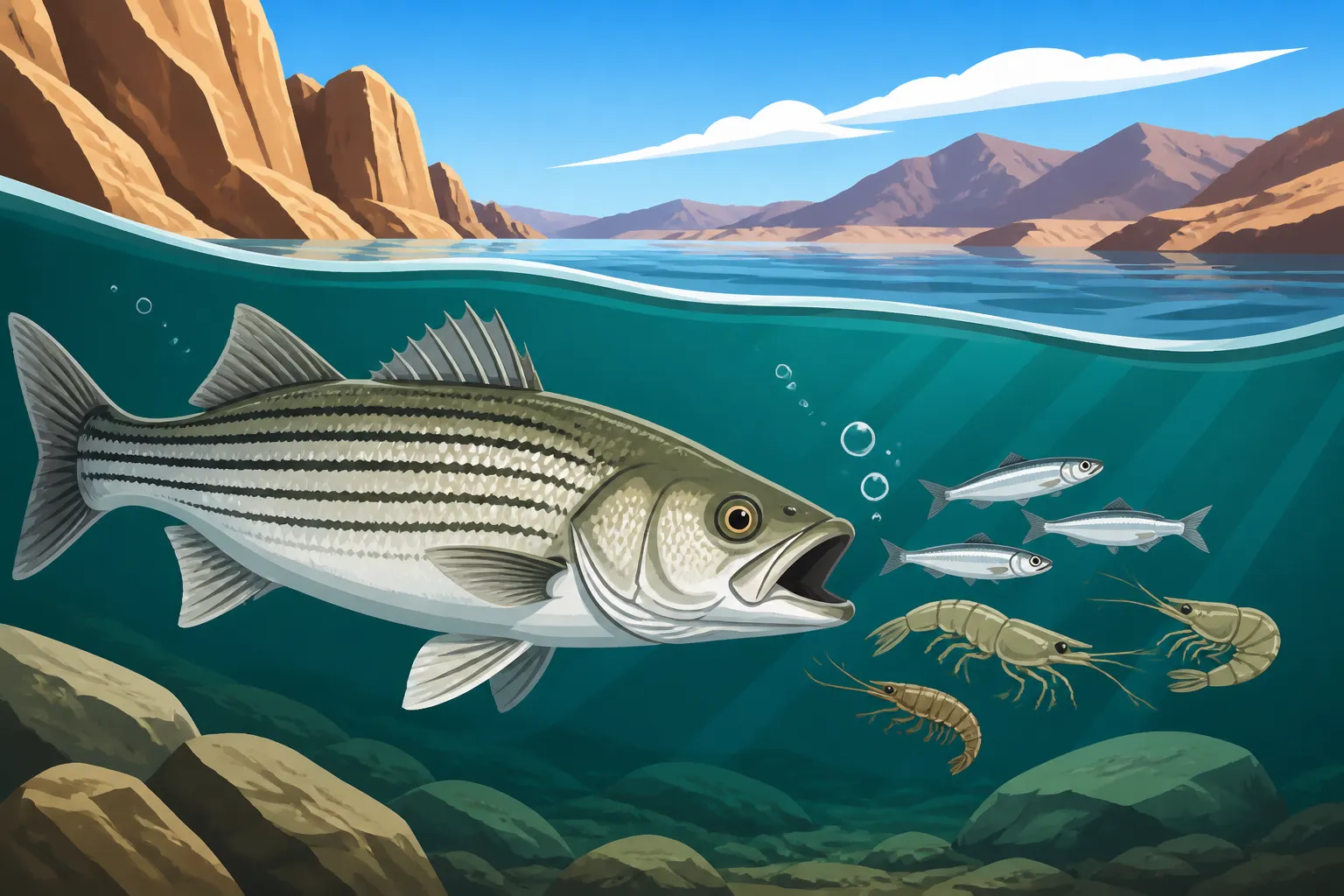
When you talk about what striped bass eat in Lake Mead, there's one answer that stands head and shoulders above the rest: threadfin shad. These silvery, schooling baitfish are the absolute cornerstone of the striper diet in this vast desert reservoir, forming the base of a food chain that supports not just the stripers, but many other predatory species as well. Without a robust population of threadfin shad, the entire ecosystem would look dramatically different, and our chances of landing those powerful, hard-fighting stripers would diminish significantly.
Why Shad Are So Crucial
Threadfin shad are incredibly prolific, reproducing quickly and in large numbers, which is essential for sustaining a healthy population of predators like striped bass. They thrive in the warmer waters of Lake Mead, moving in massive schools throughout the open water and often congregating around points, coves, and submerged structures where they can find plankton to feed on. This schooling behavior is exactly what makes them such a perfect target for striped bass. Stripers are apex predators that excel at ambushing and herding baitfish. They’ll often push huge schools of shad to the surface, creating what we call "boils" or "blow-ups" – an exhilarating sight for any angler, as the water literally erupts with feeding fish. This intense feeding frenzy is a clear indicator that the shad are present and the stripers are on the hunt. When you see these events, it's a direct peek into their dining habits; they're not just eating, they're feasting. Understanding this dynamic is key to figuring out Striped Bass Feeding Patterns.
The sheer abundance of shad means that stripers don't have to work too hard to find a meal, allowing them to grow quickly and maintain their fighting vigor. They are literally swimming protein for these powerful fish. The life cycle of the threadfin shad dictates much of the striper's seasonal movements and deepest feeding habits. As water temperatures change, so do the depths and locations where shad prefer to hang out, and the stripers are never far behind. This close relationship means that if you can locate the shad, you're almost guaranteed to find the striped bass. It’s a constant dance between predator and prey, and the shad are always leading the waltz.
Mimicking Shad for Angler Success
Given their primary diet, it's no surprise that the most effective lures and baits for Lake Mead stripers are those that perfectly imitate threadfin shad. Anglers spend countless hours trying to crack the code, but often, the simplest answer is the best: make your offering look, act, and feel like a wounded or confused shad. This is where your tackle box becomes a canvas for artistry and deception. Soft plastic swimbaits, often with a paddle tail, are phenomenal because they replicate the subtle body roll and tail kick of a real shad. Colors like silver, white, blueback, and pearl are staples for a reason – they mirror the natural hues of shad in the clear desert waters of Lake Mead. You can find an incredible variety of these at your local tackle shop or even on Amazon, ready to trick those hungry stripers.
Jerkbaits, especially those designed with a slender profile and a realistic baitfish finish, are another excellent choice. When twitched and paused, they mimic a struggling shad, triggering an aggressive strike from nearby stripers. Remember, stripers are incredibly visual predators, especially in clearer water, so a realistic presentation can make all the difference. Spoons, particularly vertically jigged spoons, are deadly when stripers are holding deep and feeding on schools of shad. The flash and flutter of a spoon often perfectly imitate a dying shad falling through the water column, an irresistible target for a hungry striper. Whether you're working the shoreline or deeper structures, your goal is always to present something that screams "easy meal" to a striper that's accustomed to chasing down threadfin. Knowing what they eat empowers you to choose the right tools for the job, transforming your approach from hopeful casting to strategic targeting. This is especially true when exploring Lake Mead Striped Bass Hotspots.
Beyond Shad: A Diverse Menu for Lake Mead Stripers
While threadfin shad are undeniably the main course for striped bass in Lake Mead, these fish are opportunistic predators. They're not picky eaters if a more convenient meal presents itself, or if shad populations fluctuate due to environmental factors. Think of it like us having a favorite meal, but if that's not available, we'll gladly dig into something else tasty. Understanding this broader diet can open up new strategies, especially when the shad bite is slow or during different times of the year when other forage might be more prevalent.
Other Forage Fish and Opportunistic Meals
Lake Mead is home to a variety of other smaller fish species that can end up on a striper's plate. Tilapia, which are quite common in the shallower, warmer coves, can be a significant food source, especially for larger stripers. Their broad, flatter profile makes them a different kind of target, but a big striper won't hesitate to ambush one if the opportunity arises. Bluegill and other panfish, while not as prevalent in the main lake as shad, are still found in certain areas and can become a snack. Even smaller carp or the juvenile versions of their own species – tiny stripers – can fall victim to larger, more aggressive striped bass. Cannibalism, while not common, isn't unheard of in the fish world, especially among highly predatory species when food is scarce or competition is high.
These opportunistic meals highlight the striper's incredible adaptability. They're not single-minded foragers; rather, they're always scanning for an easy meal. This means that if you're fishing an area known for tilapia or bluegill, perhaps near some submerged brush or rocky structure, using lures that imitate these different profiles might just trigger a strike. It's about thinking like the fish: what other easy protein sources are swimming around in this particular part of the lake? Sometimes, a slower retrieve or a jigging motion that imitates a bottom-dwelling fish might be more effective than a fast-moving shad imitation, depending on what the stripers are keying in on at that moment. This kind of flexibility in your approach is what separates consistently successful anglers from those who just get lucky.
Invertebrates and Unexpected Snacks
While bigger stripers are mostly focused on fish, especially large schools of shad, their diet can include other aquatic life forms, particularly when they are younger or when larger prey is scarce. Crawfish, for example, are a common resident of many rocky bottom areas in Lake Mead. Though stripers aren't primarily crawfish eaters like some bass species, a curious or hungry striper might take a swipe at one if it's scuttling by. Imitations of crawfish, often in darker brown or green hues, could theoretically draw a strike, particularly in shallower, rockier coves.
Insects and their larvae also play a minor role, especially for smaller, juvenile stripers. Terrestrial insects that fall into the water, or aquatic insect hatches, can provide a momentary buffet. While you're unlikely to target stripers specifically with insect imitations, it's a testament to their varied diet and adaptability. Understanding this broader scope means you might occasionally pick up a striper on a lure or bait that you wouldn't typically associate with them, simply because they were in an opportunistic mood. It’s a good reminder that fishing is rarely black and white, and thinking outside the box can sometimes yield surprising results.
The Impact of Habitat and Season on Striper Diet
Just like our own appetites can change with the seasons or depending on where we are, a striped bass's diet and feeding habits are heavily influenced by the time of year and the specific habitat they find themselves in within Lake Mead. It's not just what they eat, but when and where they eat it that can make all the difference in your fishing success.
Seasonal Shifts in Feeding Habits
Nevada's desert climate means Lake Mead experiences distinct seasons, and these temperature fluctuations drive significant changes in fish behavior. In the warmer months, especially during summer, shad populations are booming, and stripers are often found actively chasing these baitfish in open water, creating those spectacular boils. This is when fast-moving lures that mimic frantic shad are prime. The high metabolism of warm water fish means they need to eat frequently and aggressively. Knowing this helps you understand the Best month to catch striped bass at Lake Mead.
As the water cools in the fall, shad may move into deeper water or become more dispersed. Stripers then adapt, often focusing on slower, deeper presentations. They might still be targeting shad, but their hunting strategy shifts from open-water sprints to more methodical patrolling along ledges and submerged structures. Winter can be a slower period, with stripers conserving energy and often suspending in deep water, where they might opportunistically feed on individual baitfish or larger, slower-moving prey. This is when vertical jigging techniques, like those detailed in Jigging Techniques for Lake Mead Stripers, become particularly effective. Spring brings renewed activity, with stripers moving shallower as water temperatures rise, preparing for their spawn and again actively chasing schools of newly hatched shad or other available forage. Each season presents a different puzzle, and knowing how their diet changes with these environmental cues is crucial.
Structure and Cover: Where the Food Hides
The physical layout of Lake Mead also plays a massive role in where stripers find their food. Baitfish, especially threadfin shad, often congregate around specific types of structure and cover. This could be underwater points, humps, ledges, submerged brush, or even artificial habitat like old foundations or wreckages. These areas provide protection for the baitfish from predators and offer convenient ambush points for the stripers. If you're fishing open water, you're relying on finding those massive, free-roaming schools of shad. However, if you're fishing near structure, you're targeting areas where baitfish are naturally concentrated, making it easier for stripers to hunt.
Understanding the relationship between baitfish, structure, and stripers is foundational. For example, a striper might push a school of shad against a sheer rock wall, trapping them for an easier meal. Or, they might patrol along a deep submerged ridge, waiting for baitfish to swim over it. Anglers who effectively use their electronics to identify these underwater features and locate baitfish concentrations often have the most consistent success. It's about putting yourself in the striper's shoes: where would you wait for dinner if you were a powerful predator in this vast lake? This knowledge is essential whether you're fishing from a boat or trying How to fish for striped bass from shore.
Angler's Strategy: Matching the Hatch and Adapting
Now that we understand what Lake Mead striped bass eat and how their diet is influenced by the environment, it's time to translate that knowledge into actionable fishing strategies. It's not enough to just know; you have to apply it effectively on the water.
Observing the Water and Using Your Senses
The best anglers are also the best observers. Before you even make your first cast, take the time to really look and listen to the water. Are there birds diving? That's a huge clue! Diving birds, especially gulls, often indicate that baitfish (and therefore stripers) are pushed to the surface. Are there surface boils or splashes? Those are unmistakable signs of actively feeding stripers. These "boils" are precisely what they sound like – the water boiling with fish, a direct result of stripers herding and devouring shad. If you see this, cast a shad imitation directly into the frenzy.
If you have a boat with electronics, use them! Your fish finder isn't just for locating big fish; it's also for finding baitfish schools. Look for large clouds of bait suspended in the water column or hugging structure. If you see bait, the stripers are likely nearby, either below them, above them, or off to the side, waiting for an opportune moment to strike. Don't be afraid to experiment with different depths until you find where the fish are holding relative to the bait. The wind, too, can be your friend. Often, baitfish get pushed by the wind, and the stripers will follow. Casting into a choppy, wind-blown point can sometimes be incredibly productive. Remember, Lake Mead is a dynamic environment, and conditions can change quickly, so constant observation is key.
Live Bait vs. Artificial Lures
When it comes to actually putting something in the water, you've got two main choices: live bait or artificial lures. Both can be incredibly effective, and the choice often comes down to personal preference, prevailing conditions, and legal regulations (always check current rules!).
Live Bait: The most effective live bait for Lake Mead stripers is, unsurprisingly, live threadfin shad. If you can catch your own with a cast net (again, check regulations for baitfish collection), you'll have the freshest, most natural presentation possible. Slow trolling live shad, or suspending them under a bobber in an active area, can be deadly. The natural movement and scent of a live shad are often irresistible to stripers, especially when they are being finicky. However, catching live bait can be time-consuming, and keeping it alive requires a good livewell. Another popular live bait option, particularly for shore anglers or when chumming, is anchovies. While not native, stripers readily devour them, especially if you're using techniques like those described in Chumming and Anchovy Techniques for Stripers.
Artificial Lures: For artificial lures, the goal is always to "match the hatch" – meaning, use a lure that closely resembles the size, shape, and color of the dominant forage, which is almost always threadfin shad.
Here's a quick guide:
| Forage Mimicked | Lure Type | Best Conditions | Example Colors |
|---|---|---|---|
| Threadfin Shad | Swimbaits | Open water, active boils, suspended fish | Silver, White, Blueback |
| Threadfin Shad | Spoons | Deep water, vertical jigging, fish on bottom | Chrome, White, Chartreuse |
| Threadfin Shad | Jerkbaits | Near structure, ambushing fish, imitating wounded bait | Silver, Pearl, Shad |
| Small Fish | Crankbaits | Covering water, targeting specific depths | Shad, Bluegill, Chrome |
| Other Forage | Soft Plastics | Slow presentations, varying depths, subtle action | White, Green Pumpkin |
You can find a vast array of these lures at sporting goods stores or easily browse through options on platforms like Amazon. Having a diverse tackle box that includes a range of shad-imitating lures in different sizes and weights will allow you to adapt to whatever the stripers are doing. Whether they're chasing bait on the surface, suspended deep in the water column, or hiding near submerged cover, matching your lure to their current feeding behavior is your best bet for a successful day on Lake Mead. And remember, understanding the overall health and population of these fish is also important, so it's good to keep up with information like Why the striped bass population declined at Lake Mead and Striped Bass Size and Growth at Lake Mead.
Disclaimer
This article is for general informational purposes only and does not constitute professional advice. Laws, prices and regulations vary by location and change over time. Consult a qualified professional for guidance on your specific situation.