Age of a 30 pound striped bass
There’s a special kind of thrill that courses through a Nevada angler when they hook into something truly substantial. And when it comes to Lake Mead or Lake Mohave, that often means a striped bass—a fish known for its powerful runs and impressive size. You’ve probably seen the photos, heard the stories, or maybe even landed a big one yourself. But when you hear about someone pulling in a 30-pound striped bass, it begs the question: how old is that fish? It’s not just about the weight; it’s about the journey that fish has taken, and understanding that journey can make you an even better angler. This guide dives deep into what it takes for a striper to reach such an epic size in our desert waters, and what that truly means in terms of its lifespan.
Unraveling the Age of a 30-Pound Striped Bass in Nevada Waters
Catching a 30-pound striped bass in Nevada isn't an everyday occurrence. It's the kind of catch that makes local news and creates lifelong memories. These aren't juvenile fish; they are true veterans of the deep, having navigated years of challenges and avoided countless lures. Understanding their age helps us appreciate the resilience of these magnificent fish and gives us insight into the unique conditions required for them to thrive in our desert environment.
The Elusive Number: A General Range
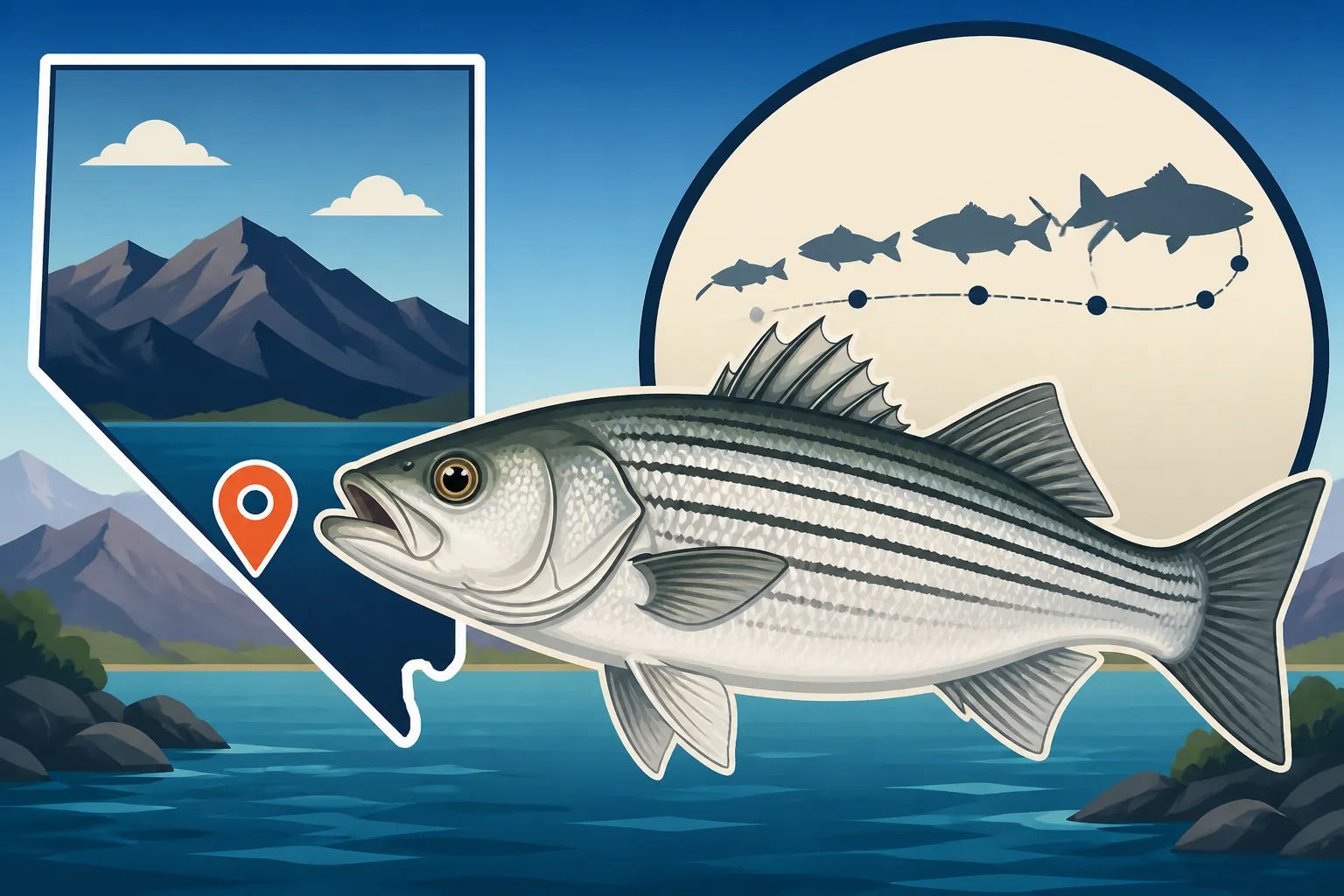
When we talk about a striped bass reaching 30 pounds in a landlocked system like Lake Mead or Lake Mohave, we're definitely talking about a fish that has been around for a while. There's no single, universally fixed age for a 30-pound striper, as growth rates can vary dramatically based on a multitude of factors. However, generally speaking, a striped bass in Nevada waters reaching the impressive 30-pound mark is typically somewhere in the range of 10 to 15 years old, sometimes even older.
Imagine a fish that has spent over a decade swimming the depths of Lake Mead, growing steadily, dodging predators, and surviving environmental shifts. That's a significant portion of a fish's potential lifespan, which can stretch up to 20 years or more in ideal conditions. The upper end of that age range, closer to 15 years or beyond, often applies to fish that might have experienced slower growth periods or simply continued to put on weight steadily over a very long time. It speaks to their incredible tenacity and adaptability in an often-challenging habitat.
Key Factors Influencing Striper Growth Rates
Several critical elements play into how quickly—or slowly—a striped bass grows to a monumental size like 30 pounds. It's a complex interplay of biology and environment that shapes every fish's journey.
Food Availability and Diet
This is, without a doubt, the most significant factor. For a striped bass to pack on 30 pounds of muscle and fat, it needs an abundance of high-quality forage. In Lake Mead and Lake Mohave, the primary diet for stripers traditionally revolved around threadfin shad and, to a lesser extent, young gizzard shad. When these baitfish populations are booming, stripers can grow at an accelerated rate. They have an almost insatiable appetite, and consistent feeding translates directly into rapid weight gain.
However, if baitfish populations decline due to factors like water level changes, invasive species impacts (like quagga mussels affecting the base of the food chain), or environmental stressors, striper growth can slow dramatically. A fish that consistently has to work harder or travel farther to find food simply won't gain weight as quickly as one living in a buffet. This is why you'll often hear veteran anglers discussing the state of the shad population as much as they discuss their fishing techniques.
Water Temperature and Metabolism
Nevada's desert lakes are known for their warm summers. While warmer water can initially increase a fish's metabolism and feeding activity, leading to faster growth, there's a limit. Extremely hot water can stress fish, reduce oxygen levels, and actually slow growth. Striped bass are eurythermal, meaning they tolerate a wide range of temperatures, but they thrive within certain optimal zones.
During the cooler winter months, a striper's metabolism slows down considerably. They become less active and feed less frequently, conserving energy. This means that a significant portion of their annual growth occurs during the milder spring and fall periods when water temperatures are comfortable, and baitfish are active. A fish that experiences more extended optimal conditions throughout its life will likely grow faster and potentially reach that 30-pound mark sooner than one in a less stable thermal environment.
Genetics and Individual Variation
Just like people, fish have genetic variations that influence their growth potential. Some individual striped bass are simply genetically predisposed to grow larger and faster than others. They might be more efficient at converting food into biomass, or they might have a natural inclination towards a more aggressive feeding strategy. These genetic "super-fish" are often the ones that stand out and become the giants of the lake.
Beyond genetics, individual fish will also exhibit varying behaviors. Some stripers are simply better at finding and ambushing prey, while others might be more dominant within their school, gaining better access to food. These subtle individual differences, compounded over a decade or more, contribute to the wide range in age for a 30-pound fish.
Fishing Pressure and Survival
Finally, the sheer fact that a fish has reached 30 pounds means it has survived against the odds for many years. It has outsmarted countless anglers, evaded nets, and avoided natural predators. Waters with high fishing pressure might see fewer older, larger fish simply because they are caught more frequently. A fish that reaches 30 pounds has often become incredibly wary and cunning, learning to avoid popular lures and busy areas. This experience contributes to its longevity, allowing it to continue growing.
The Nevada Striped Bass Ecosystem: Lake Mead and Lake Mohave
When we talk about trophy striped bass in Nevada, our minds almost immediately turn to Lake Mead and Lake Mohave. These two massive reservoirs on the Colorado River are the titans of Nevada striper fishing, each with its own characteristics that influence how stripers grow and where anglers can find them.
Lake Mead's Role in Trophy Striper Production
Lake Mead has historically been the destination for monster striped bass. For decades, it was revered as one of the top trophy striper fisheries in the entire country. The vast, open waters and once-abundant threadfin shad population provided an ideal environment for stripers to grow incredibly large. Anglers regularly pulled out fish well over 20 pounds, and 30-pounders, while still a prize, were more common than they are today. If you wanted to land a really big one, Lake Mead was the place to be, and many anglers would spend weeks out there specifically targeting these leviathans. You can learn more about finding them in Lake Mead Striped Bass Hotspots.
However, the ecosystem of Lake Mead has undergone significant changes in recent years. Fluctuating water levels, driven by long-term drought conditions, have certainly impacted fish habitats and the overall food web. The introduction of invasive quagga mussels has also fundamentally altered the lake's ecology. These mussels filter the water, leading to clearer conditions but also removing plankton that forms the base of the food chain, which can indirectly affect shad populations. While Lake Mead still produces truly impressive striped bass, the average size might have shifted, and reaching that 30-pound mark often signifies an even greater feat for the fish itself, navigating a more complex and potentially leaner environment. Anglers targeting these fish often need to adapt their strategies, sometimes moving to deeper water or focusing on specific structures where baitfish might congregate.
Lake Mohave's Sustained Trophy Potential
Often overshadowed by its larger neighbor, Lake Mohave actually offers excellent and often more consistent trophy striped bass fishing, especially for the truly massive ones. The key difference lies in its unique hydrology. Lake Mohave is directly downstream from Hoover Dam, meaning it receives a constant flow of cold, oxygenated water from the bottom of Lake Mead. This colder water creates a more stable thermal environment, particularly in the northern reaches near Willow Beach. This sustained cool water is a significant advantage for striped bass.
Fish in Lake Mohave often maintain a more consistent metabolism throughout the year compared to those in the warmer, more variable temperatures of Lake Mead. This can lead to steadier growth and potentially longer lifespans for stripers that are able to find sufficient food. Many anglers consider the stretch near Willow Beach to be prime territory for truly large stripers, where they might be found holding in deep channels, ambushing trout that are stocked by the Nevada Department of Wildlife. While less sprawling than Lake Mead, Lake Mohave provides pockets of incredibly rich habitat that allow stripers to reach impressive sizes. Those who understand Lake Mohave Rainbow Trout Water often find that stripers are not far behind.
The Journey to 30 Pounds: What it Takes to Get There
A 30-pound striped bass isn't just a fish; it's a testament to endurance, a survivor of years in a challenging environment. Its age, often a decade or more, highlights the remarkable journey it has taken.
Lifespan and Survival Challenges for Striped Bass
To reach such a venerable age and size, a striped bass must successfully navigate a gauntlet of survival challenges year after year. From the moment they hatch, they are prey for a host of other species, including larger fish, birds, and even their own kind. As they grow, the threats change, but they never entirely disappear. Environmental stressors are constant in desert reservoirs. Fluctuations in water quality, dissolved oxygen levels, and dramatic shifts in water levels can all take a toll. A severe winter or an exceptionally hot summer can stress a fish, making it more susceptible to disease or predation.
But perhaps the most constant threat for a large, old striper, besides natural causes, is the angler. These fish have spent years avoiding hooks, learning patterns, and understanding what bait to trust and what to ignore. Their very existence at such a size is a testament to their wariness and intelligence. Every year an individual fish survives, it gains more experience and becomes harder to catch, allowing it to continue growing. This longevity is what allows them to put on those extra pounds that push them into the trophy category.
Angler's Perspective: Targeting These Giants
For anglers, targeting a 30-pound striped bass is not for the faint of heart. It requires immense patience, specialized gear, and a deep understanding of striper behavior. You're not just casting a line; you're entering a chess match with a seasoned veteran of the lake. These fish are often found in deeper waters, especially during the hotter months, or patrolling specific structures where they can ambush prey.
Anglers often employ heavy-duty trolling gear, using large plugs or even live bait such as hefty trout or shad, to entice these leviathans. The sheer power of a 30-pound striper means that your rod, reel, and line all need to be up to the task. Many serious striper anglers will invest in high-quality conventional reels and stout rods, often available through retailers like Amazon, specifically designed for handling powerful freshwater species. They might also utilize specialized electronics, like advanced fish finders, to locate deep schools of bait and the large stripers lurking nearby. Understanding Striped Bass Feeding Patterns is absolutely critical, as these older, larger fish often have specific times and locations where they prefer to feed.
It's a game of dedication and strategy. You're trying to outthink a fish that has already outsmarted almost everything else in the lake for over a decade. This often means waking up before dawn to be on the water at first light or staying out late into the evening, adapting to conditions, and constantly refining your approach. Some anglers spend entire seasons dedicated to just a few bites from these trophy fish, which is why the successful landing of a 30-pounder is so celebrated.
Understanding Growth: A Comparative Look
How does a striped bass go from a tiny fry to a massive 30-pound fish? It's a fascinating process, and knowing a little about fish biology can help paint a clearer picture of their impressive growth.
How a Striped Bass Gains Weight Over Time
A striped bass's growth isn't a simple linear progression. Like many fish species, they experience periods of rapid growth when young, typically during their first few years, especially if food is abundant. During this time, they are focused on establishing themselves and growing quickly to avoid predation. Once they reach sexual maturity, a portion of their energy is diverted towards reproduction, which can sometimes slow down somatic growth (growth of their body mass).
However, unlike many species, striped bass are indeterminate growers, meaning they continue to grow throughout their entire lives, albeit at a slower rate as they age. A fish that reaches 10-15 pounds might have done so fairly quickly, perhaps in 5-8 years. But to add those extra 15-20 pounds to get to 30, it requires many more years of consistent feeding and survival. The growth from 25 to 30 pounds is often slower and harder-won than the growth from 5 to 10 pounds. This is why a 30-pound striper is such a revered catch—it represents a fish that has reached its full, mature potential over a long period. Understanding this slower growth phase for older fish can also influence lure choice; sometimes, a larger, slower presentation is more appealing to a less active, but still hungry, giant. Tackle shops and online retailers, including Amazon, offer a wide variety of these larger baits.
Methods of Age Determination for Fish
So, how do biologists figure out how old a fish is? It's not like counting tree rings, but it's similar in principle. The most common and accurate method involves analyzing otoliths, which are small, calcium carbonate ear bones found in the heads of bony fish. These otoliths grow in layers throughout the fish's life, forming concentric rings much like tree rings. By carefully sectioning and examining these otoliths under a microscope, biologists can count the rings (called annuli) and determine the fish's age.
Another less accurate but sometimes used method involves examining scales. Fish scales also grow by adding layers, and these layers can sometimes show annual growth rings. However, scales can be lost and regenerated, and the rings can be less distinct than those on otoliths, making age determination less reliable. For trophy fish, which are often studied more intensely, otolith analysis is preferred for its precision. This scientific understanding of fish age is vital for wildlife management agencies like the Nevada Department of Wildlife (NDOW) to set appropriate regulations and ensure sustainable fisheries. Knowing the Nevada Striped Bass Seasonal Patterns can help with this management.
Here's a simplified look at the potential age vs. weight for a striped bass in a favorable Nevada reservoir environment, remembering that these are averages and individual fish will vary:
| Age (Years) | Average Weight (Pounds) | Notes |
|---|---|---|
| 1-2 | 1-3 | Rapid early growth, focused on survival. |
| 3-4 | 4-8 | Entering maturity, growing quickly with good food supply. |
| 5-6 | 9-15 | Strong growth, becoming a solid keeper. |
| 7-9 | 16-24 | Reaching significant size, becoming wary, harder to catch. |
| 10-12 | 25-30+ | Trophy class, very experienced, growth slows but continues. Likely a decade or more old. |
| 13-15+ | 30-40+ | True giants, rare, exceptional survivors. Can exceed 30 pounds significantly. |
As you can see, a 30-pound striped bass is firmly in that 10-15+ year range, a testament to its incredible journey through the waters of Nevada. Catching one is not just a triumph of angling skill; it’s an encounter with a living legend of the lake.
Disclaimer
This article is for general informational purposes only and does not constitute professional advice. Laws, prices and regulations vary by location and change over time. Consult a qualified professional for guidance on your specific situation.