Best wetsuit for cold spring fishing on Lake Tahoe
The stunning beauty of Lake Tahoe in spring is undeniably inviting, but don't let those sunny skies fool you – the water is still incredibly, dangerously cold. Many anglers, excited to hit the prime fishing season, underestimate just how quickly the frigid temperatures can turn a great day into a serious safety concern if they end up in the water. This guide is all about helping you understand why a wetsuit is a smart choice for cold spring fishing on Lake Tahoe and how to pick the perfect one to keep you safe and comfortable.
Why Cold Spring Fishing on Lake Tahoe Demands the Right Wetsuit
Spring on Lake Tahoe offers some of the most spectacular fishing opportunities, especially for species like the elusive Mackinaw trout. The weather might be getting warmer, but the massive volume of Lake Tahoe's deep, clear water means it retains its winter chill for a long time. Surface temperatures can hover in the low 40s or even upper 30s well into late spring. This isn't just uncomfortable; it's a genuine hazard.
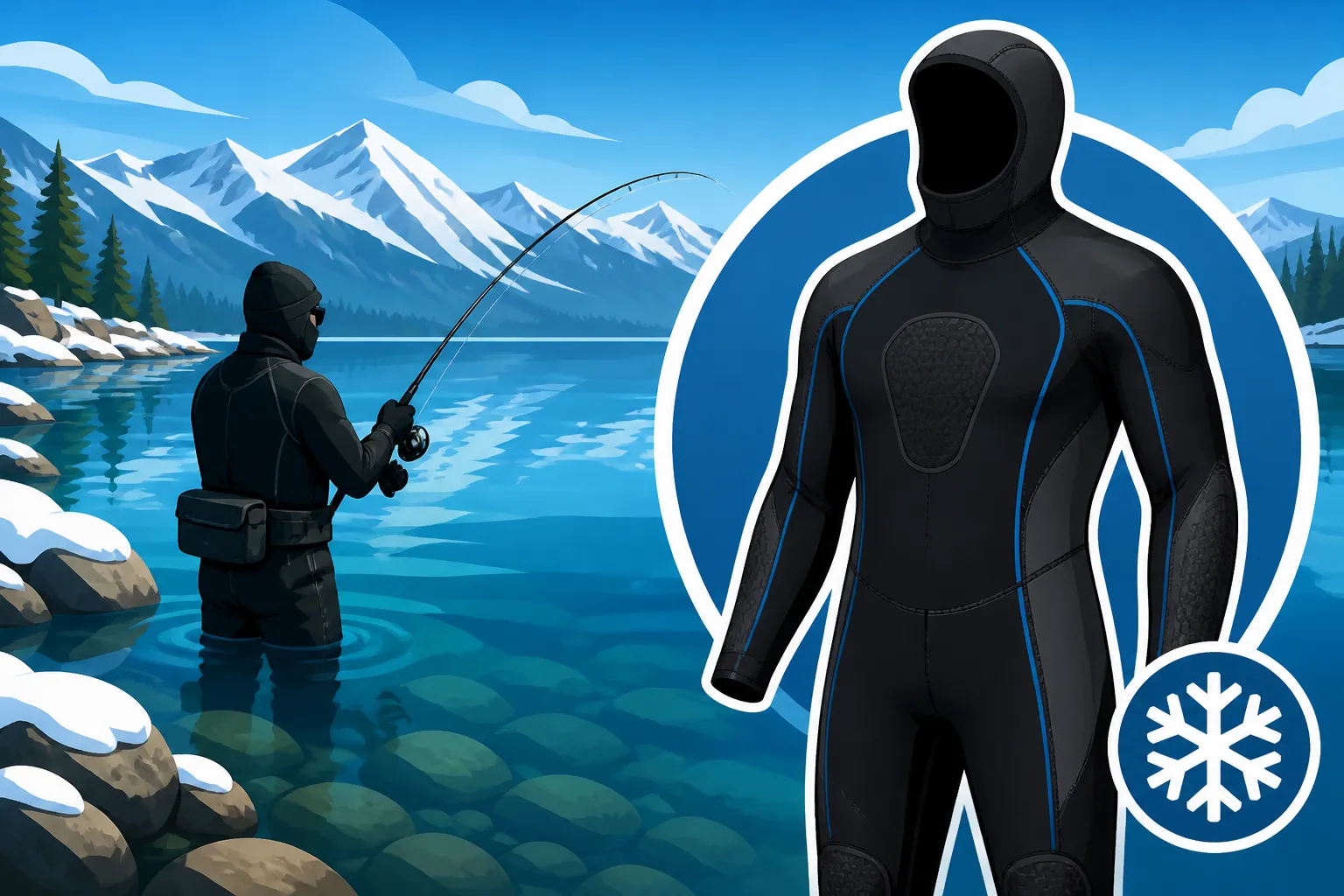
Think about it: whether you're out in a kayak, a small boat, or even just wading near the shore, an unexpected splash, a rogue wave, or – heaven forbid – capsizing can put you directly into that hypothermia-inducing water. Normal rain gear or layered clothing will protect you from splashes and wind, but they offer very little thermal protection once soaked through. That's where a wetsuit becomes an indispensable piece of safety and comfort gear. It's designed to trap a thin layer of water against your skin, which your body then warms, providing insulation even when fully submerged. It's not about staying dry, it's about staying warm wet.
Many folks are so focused on getting their lines in the water that they overlook personal safety equipment. But when you're targeting big fish on Lake Tahoe Nevada Fishing Guide, being prepared for the worst-case scenario means you can truly enjoy the best-case fishing. The last thing you want is to be shivering uncontrollably, unable to focus, or worse, in a life-threatening situation because you didn't respect the lake's power.
Choosing the Right Wetsuit Thickness and Style for Lake Tahoe's Chill
Selecting a wetsuit isn't a one-size-fits-all deal, especially when you're dealing with the persistently cold waters of Lake Tahoe in spring. Wetsuits are measured in millimeters, often with two or three numbers (e.g., 3/2mm, 4/3mm, 5/4mm). These numbers refer to the thickness of the neoprene in different parts of the suit – the thicker numbers usually for the torso and the thinner for the limbs to allow for more flexibility. For spring fishing on Lake Tahoe, you're absolutely going to want something robust.
A 3/2mm wetsuit, while common for warmer waters or active sports in mild conditions, just isn't going to cut it here unless it's a particularly warm late spring day and you're highly active. You'll likely be too cold, too quickly. Moving up to a 4/3mm wetsuit offers a much better balance of warmth and flexibility for spring. This thickness provides substantial insulation, making it suitable for water temperatures in the mid-40s to low 50s Fahrenheit, which perfectly aligns with early to mid-spring on Lake Tahoe. For those truly adventurous souls who hit the water at the absolute beginning of spring or on exceptionally chilly days, a 5/4mm or even a 5/4/3mm wetsuit provides maximum thermal protection. While it might feel a bit more restrictive, the added warmth is a non-negotiable for safety when water temperatures are in the 30s or low 40s.
Let's look at the common wetsuit types you might encounter and their suitability:
- Full Suit: This is a no-brainer for cold water. A full suit covers your entire body, from ankles to wrists and neck, maximizing heat retention. It's what you need for Lake Tahoe spring fishing.
- Shorty/Spring Suit: These have short arms and/or legs. Absolutely not recommended for cold spring fishing on Lake Tahoe. Save these for summer days on warmer, shallower lakes.
- Two-Piece Wetsuit: Sometimes wetsuits come as separate pants and jackets. While they can offer flexibility, ensure there's sufficient overlap to prevent cold water flushing through gaps, especially if you're active or could be submerged. A one-piece full suit is generally more reliable for consistent warmth.
Consider the material composition as well. Neoprene is the standard, but look for suits with internal thermal linings or those marketed for cold water activities. These often have fleece-like inner layers that further enhance warmth and comfort against your skin. Remember, if you're getting your gear from a place like Bass Pro Shops or searching for options on Amazon, read product descriptions carefully for temperature ratings and material specifics.
Here’s a quick comparison to help visualize the choice:
| Wetsuit Thickness | Water Temperature Range (Fahrenheit) | Suitability for Lake Tahoe Spring Fishing | Key Consideration |
|---|---|---|---|
| 3/2mm | 55°F – 65°F | Generally too thin for early/mid-spring | Only for very late spring/early summer, highly active |
| 4/3mm | 45°F – 55°F | Good choice for most spring conditions | Balanced warmth & flexibility |
| 5/4mm or 5/4/3mm | 35°F – 48°F | Best choice for early spring or very cold days | Maximum thermal protection, potentially less flexible |
When you're out there trolling for Mackinaw Lake Trout at Lake Tahoe, you want to be comfortable enough to focus on your fishing, not on shivering.
Essential Features for a Durable and Comfortable Fishing Wetsuit
Once you've narrowed down the thickness, it's time to dive into the details that make a wetsuit truly effective for fishing. These aren't just about warmth; they're about durability, ease of use, and overall comfort during what can be long hours on the water.
Seam Construction
The seams are crucial for keeping you warm. Poorly constructed seams allow cold water to seep in constantly, defeating the purpose of the wetsuit. Look for these types of seams:
- Glued and Blind Stitched (GBS): This is the gold standard for cold water wetsuits. The panels are first glued together, and then stitched on the inside in a way that the needle doesn't fully penetrate the neoprene. This creates a waterproof seal that significantly reduces water entry.
- Fluid Seam Weld (or Liquid Tape): Often found on high-end wetsuits, this involves an external liquid rubber bead applied over the GBS seams, creating an even more watertight and durable seal. This is excellent for Lake Tahoe's cold.
- Flatlock Stitching: While comfortable and durable, flatlock stitching penetrates both sides of the neoprene, creating tiny holes. This means it's not truly watertight and is better suited for warmer waters. Avoid this for spring fishing in Lake Tahoe.
Entry System and Flexibility
Getting into and out of a wetsuit can be a workout, especially thicker ones. The entry system impacts both convenience and how much water flushes into the suit.
- Back Zip: The most common and often easiest to get into, with a zipper running down the spine. Look for a large internal flap (called a "batwing" or "drainage barrier") behind the zipper to minimize water flushing.
- Chest Zip: These suits have a shorter zipper across the chest, which you pull over your head. They are generally considered warmer because there's less seam length and a smaller opening for water entry. However, they can be a bit trickier to get into and out of, requiring more flexibility.
- Zipperless: Some high-performance wetsuits omit zippers entirely for maximum flexibility and warmth, but these are typically for surfing and very difficult to put on, making them less practical for fishing.
Beyond the entry, overall flexibility is key. Fishing involves casting, reeling, netting, and often moving around your boat or kayak. A wetsuit that’s too stiff will quickly become uncomfortable and fatiguing. Modern neoprene blends offer incredible stretch without sacrificing warmth. Look for terms like "superstretch" or "ultrastretch" neoprene.
Durability and Reinforcements
Fishing gear takes a beating, and wetsuits are no exception. You'll be leaning against boat gunwales, kneeling in a kayak, or scrambling on Lake Tahoe Nevada Shoreline Fishing spots.
- Knee Pads: Reinforced knee panels are a must-have. They protect the neoprene from abrasions and add a layer of cushioning.
- Seat Reinforcement: Similar to knees, reinforced seat areas extend the life of the suit, especially for those spending time sitting.
- Abrasion-Resistant Panels: Some suits feature tougher materials in high-wear areas, which is a bonus for anglers.
Thinking about where you might snag or rub your wetsuit while setting up your gear or landing a fish will help you identify what reinforcements are most important for your style of fishing.
Complementary Gear for Ultimate Cold Water Protection on Lake Tahoe
A wetsuit is a fantastic foundation for cold water safety, but it's just one part of the equation. To truly stay warm and safe while fishing Best Time of Year to Fish in Nevada on Lake Tahoe, you need a full system of protective gear.
Head, Hands, and Feet: Critical Heat Loss Zones
Your extremities are where you lose the most heat, and leaving them exposed can quickly negate the warmth of your wetsuit.
- Wetsuit Boots or Booties: These are absolutely essential. Cold feet are miserable and can quickly lead to overall body chill. Look for 5-7mm thick neoprene boots with good grip. Some have hard soles for walking on slippery rocks, which is great if you're doing any Kayak Fishing Gear for Nevada with a launch from shore.
- Wetsuit Gloves: Cold hands make everything difficult, from tying knots to handling fish. Choose 3-5mm gloves. Some feature pre-curved fingers for better dexterity, or even open-finger designs if you absolutely need fingertip feel, though these sacrifice a lot of warmth. For general warmth, full-finger is best.
- Neoprene Hood: If your wetsuit doesn't have an integrated hood (and many don't), a separate neoprene hood or cap is a game-changer. It makes an incredible difference in retaining core body heat. You'll thank yourself when the wind picks up.
Layering and Outerwear
While the wetsuit is your primary thermal layer against water, what you wear over it (or under it, in some cases) matters, too.
- Base Layers (Under the Wetsuit): On truly frigid days, some anglers wear thin thermal base layers under their wetsuits. Just make sure they are synthetic or wool, not cotton, as cotton loses all insulating properties when wet.
- Windproof/Waterproof Outer Shell (Over the Wetsuit): If you're primarily in a boat or kayak and not expecting full immersion but want protection from spray and wind, a good quality waterproof and windproof jacket and pants worn over your wetsuit can add significant comfort. The wetsuit acts as a backup in case you go in, while the outer shell protects from the elements. This combination is especially effective for preventing wind chill on a cold boat ride.
- Life Vest/PFD: This isn't optional; it's a legal and safety requirement. A good quality fishing-specific PFD can also add an extra layer of insulation to your core. Always wear it, especially on cold water. Even strong swimmers can be quickly incapacitated by cold shock if they fall into Lake Tahoe's frigid waters.
Other Safety Considerations
Never underestimate Lake Tahoe. It's a vast body of water, and conditions can change rapidly.
- Communication Device: A fully charged cell phone in a waterproof case, or a marine radio if you're in a boat.
- Emergency Whistle/Signal: To attract attention if needed.
- Dry Bag: To keep essential items like extra layers, snacks, and first aid supplies dry.
- Warm Drinks and Snacks: Thermos of hot coffee, tea, or soup can do wonders for maintaining core temperature and morale.
- Know Your Limits: If the weather or water conditions feel too extreme, it's always better to err on the side of caution and postpone your trip. No fish is worth risking your life.
Equipping yourself properly, combining a well-chosen wetsuit with the right accessories and safety practices, means you can confidently enjoy the incredible Nevada Fishing Gear Essentials opportunities that cold spring fishing on Lake Tahoe has to offer. Whether you're targeting big mackinaw or just enjoying the tranquility, staying warm and safe should always be your top priority. Remember to check regulations as well, you can find a lot of information in guides like Nevada Fishing License Guide and Nevada Fishing Season Dates and Limits.
Disclaimer
This article is for general informational purposes only and does not constitute professional advice. Laws, prices and regulations vary by location and change over time. Consult a qualified professional for guidance on your specific situation.