Best rod case for traveling with fishing gear
There's nothing quite like the excitement of packing up your fishing gear for an adventure across the Silver State, but the sheer anxiety of rods getting snapped, bent, or scratched during transit is a real buzzkill. Whether you're navigating dusty backroads to a remote high-desert lake or flying into Reno for a week on the Truckee, keeping your prized fishing rods safe is absolutely paramount. This guide will walk you through everything you need to know to choose the best rod case for traveling with your fishing gear, ensuring your rods arrive in perfect condition, ready for action.
Why a Quality Rod Case is Non-Negotiable for Nevada Anglers on the Move
Let's be honest, fishing rods aren't cheap, and the emotional attachment we form to our favorite setup is priceless. A damaged rod isn't just a financial hit; it can ruin a planned trip and put a serious damper on your angling spirit. Investing in a robust rod case is less about luxury and more about smart protection for your valuable equipment and peace of mind.
Protecting Your Investment from the Nevada Elements and Rough Roads
Nevada's landscape is as beautiful as it is demanding. From the scorching summer heat that can warp delicate graphite to the bone-jarring washboard roads leading to hidden gems like Wildhorse Reservoir, your gear faces a gauntlet of potential hazards. Imagine driving miles down a dirt road, only to pull out your rod and find a guide bent or a tip snapped because it was rattling around in the truck bed. A quality rod case provides a shock-absorbing buffer, safeguarding against impacts, vibrations, and even curious hands if you're making a quick stop.
Furthermore, the Nevada sun can be relentless, and prolonged exposure can degrade rod blanks, line, and even reel components. Many good cases offer UV protection, and some even provide a degree of insulation. This isn't just about preventing catastrophic breaks; it's about maintaining the longevity and performance of your gear, trip after trip. You want your rods to perform as intended when you finally get to the water, not to feel flimsy from being baked or banged around.
Avoiding Travel Headaches with Airlines and Overpacked Vehicles
Anyone who's ever flown with fishing gear knows the potential for stress. Airlines have strict rules, and a flimsy bag often won't cut it. Hard cases are almost a prerequisite for air travel, protecting against the rigors of baggage handling. Even for car travel, an overstuffed trunk or a truck bed shared with coolers, camping gear, and tackle boxes is an accident waiting to happen. A dedicated rod case keeps your rods organized, secure, and separate from other items that could cause damage.
Think about loading up for a family camping trip to Lake Mead. Between the tents, sleeping bags, and food, space is at a premium. Trying to wedge exposed rods into tight spots is a recipe for disaster. A proper case, especially one that can hold multiple rods, makes packing more efficient and prevents those "oops" moments when someone leans against a carefully placed rod. It also helps you comply with regulations; while Nevada Fishing Regulations Explained will cover specifics, general transport safety is always key.
Navigating the Options: Types of Fishing Rod Cases
The world of fishing rod cases is quite diverse, offering a range of protection levels and features. Your choice will largely depend on how you travel, how much gear you're bringing, and how much you're willing to invest in protecting it.
Soft-Sided Cases: Lightweight and Flexible Protection
Soft-sided rod cases are often made from durable canvas, nylon, or Cordura, sometimes with light padding. They're typically lighter and more flexible than hard cases, making them easy to carry and store when not in use. Many feature external pockets for tackle, reels, or accessories, which can be super convenient for keeping everything in one place.
These cases are excellent for local trips in your own vehicle where you can control how your gear is stored. If you're heading out to a local spot like the Floyd Lamb Park Fishing Ponds for a quick afternoon session, a soft case might be all you need. They protect against minor bumps, scratches, and dust. However, they offer minimal crush protection. If you're concerned about heavy luggage being piled on top of your rods, or if you're sending them through airline baggage, a soft case probably won't cut it. For car travel where rods are secured and unlikely to be crushed, they provide a good balance of protection and portability.
Hard-Sided Cases: The Ultimate Defense for Your Prized Rods
When maximum protection is your priority, a hard-sided rod case is the way to go. These are typically constructed from tough plastics like ABS or polypropylene, designed to withstand significant impact and pressure. Many are also waterproof or highly water-resistant, a huge plus if you're driving through a sudden desert downpour or storing your gear in a damp environment. They often feature foam inserts that can be customized to cradle individual rods securely, preventing them from shifting and colliding during transit.
Hard cases are the gold standard for air travel, ensuring your rods survive the journey through baggage handling unscathed. They're also ideal for long road trips where your gear might be exposed to more extreme conditions or stored in situations where it could be crushed. Brands like Plano and Cabela's offer a wide range of robust hard cases. While they are heavier and bulkier than soft cases, the peace of mind they provide for valuable or delicate rods is often worth the trade-off. For anglers tackling remote spots in Nevada where the drive itself is an adventure, a hard case protects against the unexpected.
Hybrid and Specialized Cases for Unique Travel Needs
Beyond the basic soft and hard categories, you'll find hybrid cases that offer a middle ground, combining the rigidity of a hard shell with some of the lighter weight and external storage options of a soft case. These might feature a semi-rigid exterior or reinforced panels in critical areas. They're a great option if you need more protection than a soft case offers but don't want the full bulk of a heavy-duty hard case.
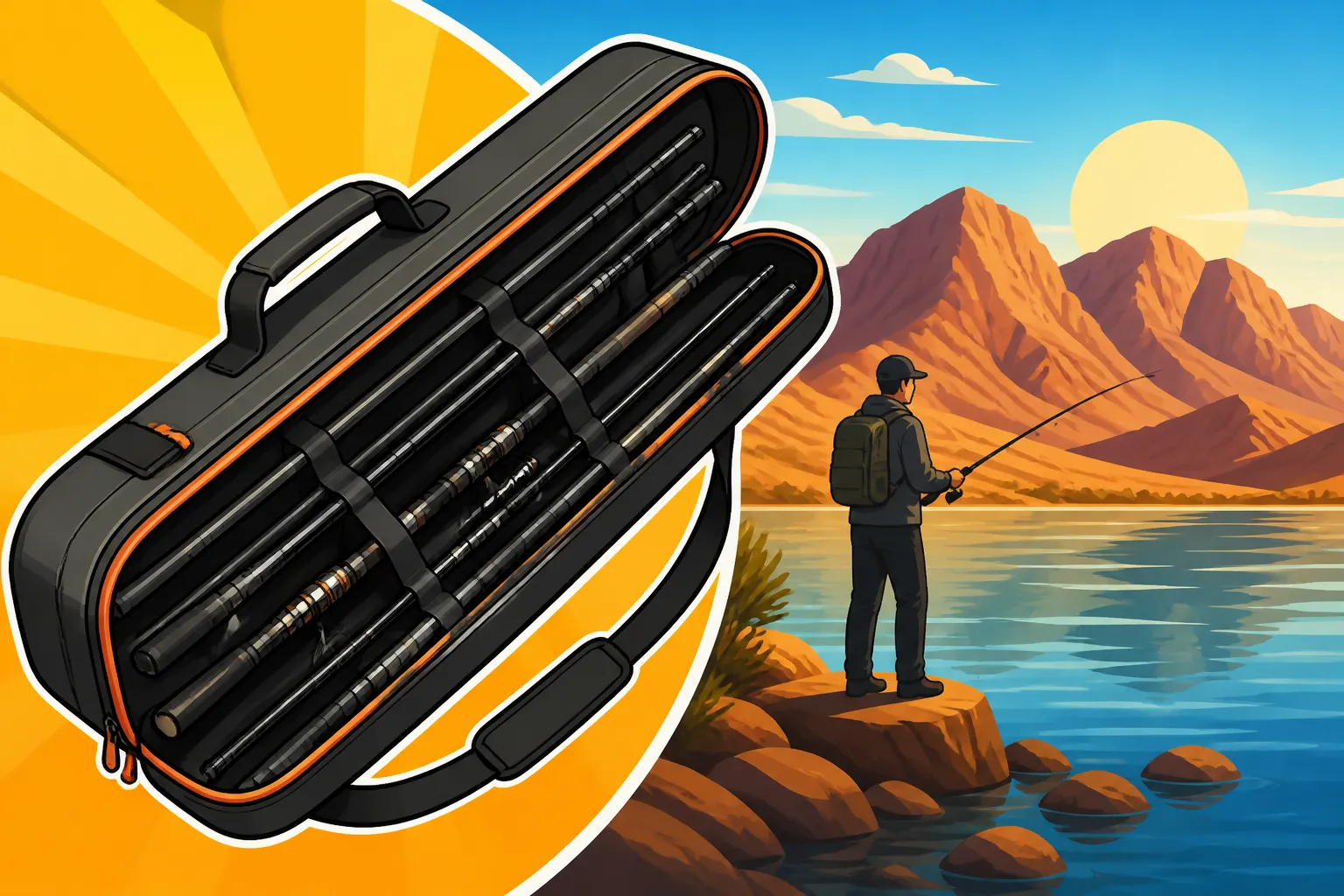
Then there are specialized cases, like those designed for fly rods, which often come in a rigid tube format, or cases for specific types of Best Fishing Rods for Nevada Lakes. Some cases are designed to be telescopic, adjusting in length to accommodate different rod sizes, which is incredibly handy if you use a variety of rods. For those venturing into the backcountry for high mountain lake fishing, collapsible or lightweight tube cases can be a game-changer, strapping easily to a backpack without adding excessive weight. Consider your most frequent travel scenarios and the specific gear you want to protect when looking at these specialized options.
Key Considerations When Choosing Your Travel Rod Case
Selecting the right rod case isn't a one-size-fits-all decision. A few critical factors should guide your choice, ensuring the case meets your specific needs for protection, convenience, and travel style.
Length, Capacity, and Rod Compatibility
First and foremost, the case must accommodate the length of your longest rod section. If you primarily use one-piece rods, you'll need a long case. For two-piece or multi-piece travel rods, the case can be much shorter, which is often more convenient for storage and transport. Measure your rods accurately, especially the longest section when broken down.
Capacity is another big one. Are you traveling with a single favorite spinning rod, or do you need to protect a quiver of fly rods, baitcasters, and even a heavy-duty setup for Lake Mead Striped Bass Hotspots? Cases come in various capacities, from single-rod tubes to large boxes that can hold six or more rods. Think about how many rods you typically bring on your trips. Many cases also specify whether they are designed for spinning rods (which have larger guides) or baitcasting rods. Some even have dedicated slots for reels, ensuring they don't bash into the rod blanks. Make sure the case can comfortably fit your rods, ideally with enough padding or securing straps to prevent movement.
Material, Durability, and Weather Resistance
The material of your rod case dictates its durability and protection level. As discussed, hard plastics offer the best impact and crush resistance. Look for cases made from high-density polyethylene (HDPE) or ABS plastic for maximum toughness. If you opt for a soft case, seek out heavy-duty denier nylon or canvas with reinforced stitching and robust zippers.
Weather resistance is crucial, especially in Nevada where dust, sudden rain, and extreme temperatures are common. Many hard cases are designed to be waterproof or highly water-resistant, featuring O-ring seals and strong latches. This is a game-changer if your case ends up on a wet boat deck or exposed to the elements during transport. Even soft cases can offer some water repellency, which is better than nothing. Consider if your trips often involve exposure to water, sand, or heavy dust, and choose a material that can stand up to those conditions. A good case should be built to last, enduring years of abuse from travel and the elements.
Security Features and Ease of Transport
When you're traveling, especially with valuable gear, security is a legitimate concern. Many hard cases feature padlock-ready clasps, allowing you to secure your rods against theft or unauthorized access. This is particularly important for airline travel or when your gear might be left unattended in a vehicle or campsite. Some soft cases also have lockable zippers, though they offer less robust security than a hard case.
Ease of transport refers to how easy it is to carry, load, and move the case. Heavy hard cases often come with wheels, making them much easier to maneuver through airports or across parking lots. Good handles are essential, preferably ergonomic and reinforced. For soft cases, comfortable shoulder straps are a big plus, especially if you're hiking a short distance to the water. Think about how you'll typically move your case. Will it be lifted in and out of a truck? Carried long distances? Rolled through a terminal? These considerations will help you pick a case that's not only protective but also practical for your adventures. Nevada Fishing Gear Essentials covers other critical items you'll need to haul, so an efficient rod case will make your overall load easier.
| Case Type | Protection Level | Weight/Portability | Ideal Use Case | Pros | Cons |
|---|---|---|---|---|---|
| Soft-Sided | Low to Medium | Very Light/High | Local car trips, short walks, organized vehicle storage | Lightweight, flexible, often has external pockets, affordable | Minimal crush protection, limited weather resistance |
| Hard-Sided | High to Very High | Heavy/Low | Air travel, long road trips, protecting expensive rods | Maximum crush and impact protection, often waterproof, lockable | Bulky, heavy, can be expensive |
| Hybrid/Semi-Rigid | Medium to High | Medium/Medium | Car travel with more protection, shorter flights, specific rod types | Better protection than soft, lighter than full hard cases, specialized features | Can still be bulky, price can vary widely |
Matching Your Case to Your Nevada Fishing Adventure
Nevada offers so many different fishing experiences, from urban ponds to high mountain lakes. Your choice of rod case should align perfectly with the type of trip you're planning.
Car Travel and Road Trips: Convenience and Capacity
If most of your fishing excursions involve piling into the truck and hitting the highway, your primary concerns will likely be convenience, capacity, and preventing damage from other gear in the vehicle. A multi-rod soft case or a mid-range hard case that can be securely strapped down is usually perfect here. You'll appreciate features like external pockets for reels, spare spools, and small tackle boxes, keeping everything you need for the day organized and accessible.
When you're taking a long road trip to explore new waters, perhaps from Las Vegas up to the Wildhorse Reservoir Nevada Fishing Guide, you'll be throwing a lot of gear in the car. A hard case provides peace of mind that your rods won't get crunched by a shifting cooler or a poorly packed tent. However, if space is at a premium, a compact multi-piece travel rod in a sturdy soft or hybrid tube might be a better fit, allowing you to maximize room for other essentials. Many anglers find products from Bass Pro Shops or even general outdoor retailers on Amazon offer excellent options for road-tripping anglers, balancing price and protection.
Air Travel and Long-Distance Expeditions: Maximum Protection
Flying with fishing rods is where hard cases truly shine as the undisputed champions. Airline baggage handlers are not known for their gentle touch, and soft cases are simply not robust enough to guarantee the safety of your rods against crushing or bending forces. Look for a hard case that is specifically designed for air travel, often denoted by terms like "airline approved" or "TSA friendly" (meaning it has padlock points).
These cases typically feature heavy-duty latches, reinforced corners, and dense foam inserts that you can custom-cut to perfectly cradle your rods. Some even have pressure relief valves to handle changes in cabin pressure. While you'll pay a bit more and deal with the extra weight and bulk, it's a small price to pay to ensure your precious Lahontan Cutthroat Trout in Nevada setup arrives intact for that bucket-list trip to Pyramid Lake. Always check your airline's specific baggage policies and dimensions for sporting equipment before you fly.
Backcountry Hikes and Remote Water Access: Portability is Key
For the adventurous angler who loves to hike into remote high-mountain lakes or trek along sections of the Truckee River, portability becomes paramount. Lugging a heavy, bulky hard case for miles through rugged terrain is simply not practical. Here, lightweight, compact options are king. Single-rod tubes, especially those made from rigid PVC or lightweight composites, are excellent. Even better are cases designed for multi-piece travel rods. A four-piece fly rod, for instance, can break down into very short sections that fit into a tube just a couple of feet long, easily attaching to or slipping inside a backpack.
Some anglers even use specialized "rod socks" combined with sturdy backpack frames for minimal impact on their hike. While offering less impact protection, they keep rods from snagging on brush and provide basic scratch resistance. The trade-off for light weight and ease of carry is often reduced protection, so careful packing and situational awareness are key. Always prioritize a case that lets you comfortably access those hidden fishing spots without overburdening yourself. For these kinds of specialized needs, browsing a wide selection on Amazon might reveal some unique, compact solutions.
Where to Find Your Perfect Travel Rod Case
Now that you have a better idea of what you're looking for, let's talk about where you can actually get your hands on a great rod case.
Online Retailers and Their Vast Selections
The internet is a treasure trove for fishing gear, and rod cases are no exception. Large online retailers like Amazon offer an incredible selection from numerous brands, often at competitive prices. You can easily compare features, read customer reviews, and have the case delivered right to your door. This is particularly useful if you're looking for very specific dimensions or a niche product that might not be carried in every local shop. You can find everything from budget-friendly soft cases to high-end, airline-approved hard cases.
Just remember to pay close attention to the product descriptions, especially the interior dimensions, to ensure your rods will fit. User photos and reviews can also be incredibly helpful in gauging the real-world size and quality of a case. Don't forget to check return policies, just in case the case isn't quite what you expected when it arrives.
Specialty Fishing Stores and Expert Advice
For a more hands-on approach, nothing beats visiting a specialty fishing store. Shops like Bass Pro Shops are fantastic because you can physically see and feel the cases, test the latches, check the padding, and even try fitting your actual rods inside. This is especially valuable for larger, more complex hard cases. The staff at these stores are often experienced anglers themselves and can offer invaluable advice based on their own travel experiences and knowledge of different products.
They might even have insider tips specific to traveling around Nevada, whether it's navigating particular roads or understanding airline requirements for fishing gear. While you might not always find the absolute lowest prices compared to online, the ability to inspect the product in person and get expert guidance can be well worth the visit. Plus, it's always great to support your local fishing community! Don't be afraid to ask about popular options for Nevada nonresident fishing license types if you're an out-of-state visitor, as you're already there.
Disclaimer
This article is for general informational purposes only and does not constitute professional advice. Laws, prices and regulations vary by location and change over time. Consult a qualified professional for guidance on your specific situation.