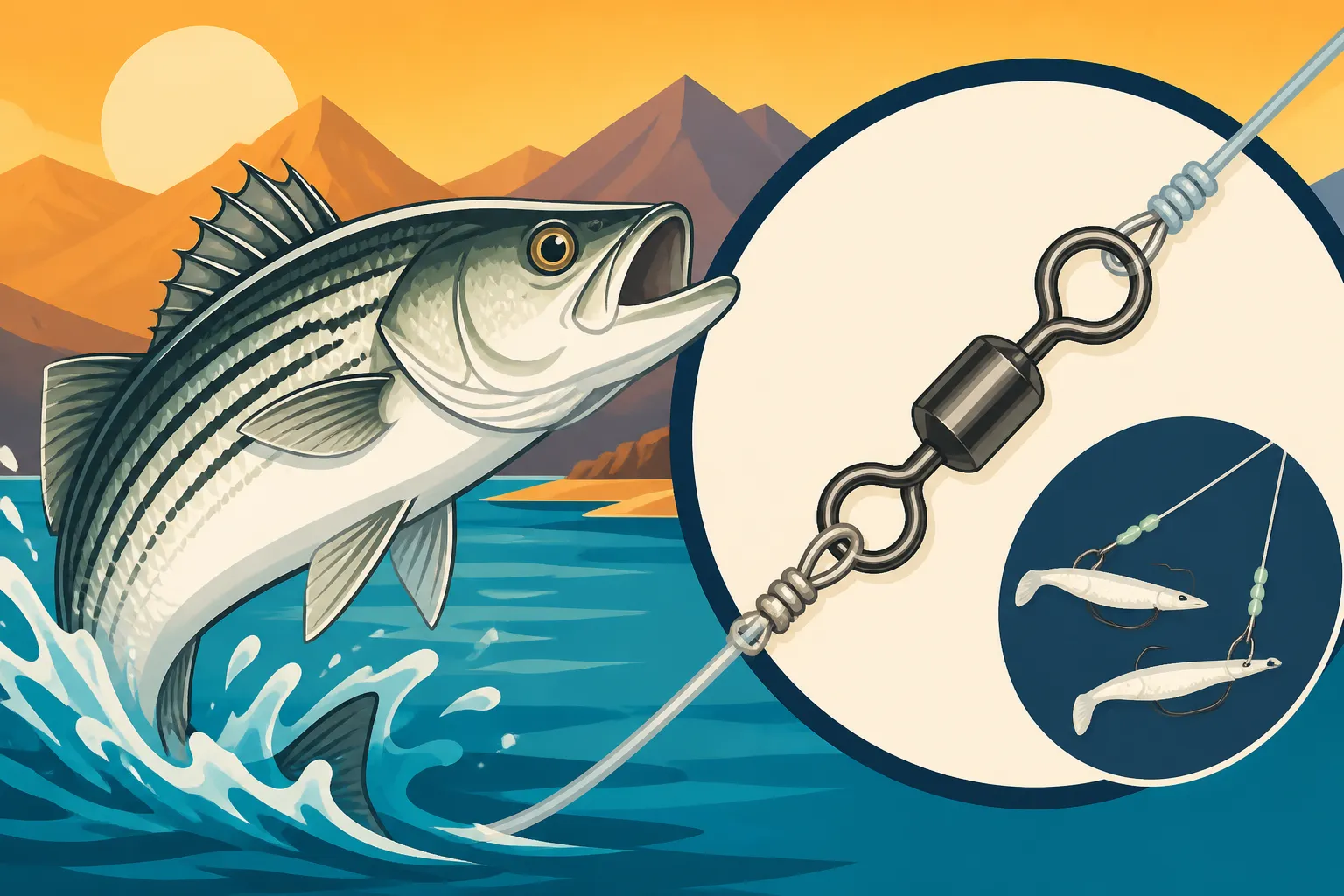
Best swivel setup for striped bass rigs
If you've ever spent a frustrating day on Lake Mead or Lake Mohave battling a feisty striped bass, only to reel in a line twisted beyond recognition, or worse, lose a fish because your knots failed under pressure, then you know the struggle is real. The powerful runs and head shakes of stripers can put immense stress on your fishing line and connections, leading to infuriating tangles and weakened rigs. This guide is dedicated to helping you understand the unsung hero of many successful striped bass rigs: the humble swivel, and how to choose and set up the best ones for your Nevada fishing adventures.
The Underrated Role of Swivels in Striped Bass Rigs
It might seem like a small, insignificant piece of tackle, but a well-chosen swivel can make all the difference between a productive day on the water and one filled with frustrating tangles and lost fish. When you're targeting hard-fighting species like striped bass in Nevada's vast reservoirs, every component of your rig needs to be up to the task.
Preventing Line Twist and Tangles
Line twist is the bane of many anglers, especially when using spinning gear or casting baits that helicopter through the air. Striped bass are notorious for their violent head shakes and strong, twisting runs once hooked. This action, combined with certain lures or natural baits that spin in the water, can quickly introduce a severe twist into your main line.
Imagine casting a Kastmaster or a bucktail jig for stripers at Lake Mead. If that lure doesn't have a built-in swivel or isn't connected to one, every retrieve can add a subtle twist to your line. Over time, this cumulative twist can cause your line to coil, knot up, and even weaken, making casting difficult and detection of light bites nearly impossible. A good swivel acts as a rotation point, absorbing that twist before it travels up to your reel, keeping your main line straight and strong. This simple addition can save you a ton of headaches and re-rigging time.
Maintaining Rig Integrity and Strength
Beyond just preventing twist, swivels play a crucial role in maintaining the overall integrity and strength of your fishing setup. They provide a reliable connection point between different sections of your rig, often between your main line and a leader, or between a leader and a lure/bait. This separation can be particularly important when fishing with a heavy main line and a lighter, more subtle leader, as it protects the leader knot from direct stress.
Furthermore, swivels act as a buffer against the sudden, violent shocks that a powerful striper can inflict. When a big striped bass hits your bait like a freight train or makes an unexpected surge, the swivel, if appropriately sized and tied, can distribute that force, preventing a weak point in your line from snapping. It's a small piece that adds a significant layer of confidence to your setup, allowing you to focus on the fight rather than worrying about your gear. This is particularly true when you’re wrestling larger fish out of cover or strong currents, something you might encounter while fishing the Colorado River Fishing Below Hoover Dam.
Enhancing Lure Presentation
While their primary functions are strength and anti-twist, swivels can also subtly enhance the presentation of your lures and baits. By allowing natural baits to drift or spin more freely, they can appear more lifelike to a wary striper. For certain artificial lures, especially those designed to wobble or dart, a swivel can ensure they move unimpeded, maximizing their action.
For example, when drift fishing cut bait for stripers, a swivel connecting your main line to a fluorocarbon leader can allow the bait to tumble and roll naturally with the current, mimicking an injured baitfish. Similarly, if you're using a large spoon or a heavy jig, a swivel ensures the lure can perform its intended action without being hampered by a stiff, twisted line, making it much more appealing to hungry bass. This level of finesse in presentation, even for aggressive fish like stripers, can sometimes be the difference between a bite and a blank.
Types of Swivels Best Suited for Striped Bass
When you walk into a tackle shop, the sheer variety of swivels can be overwhelming. For striped bass, however, we can narrow it down to a few key types, each with its own advantages depending on your specific rig and fishing style. Understanding these differences will help you choose wisely. You can often find a great selection of all these types at your local Bass Pro Shops or even when browsing for specific brands on Amazon.
Barrel Swivels
The barrel swivel is the most basic and common type of swivel you'll encounter. It consists of two rings connected by a cylindrical barrel that rotates. They are straightforward, inexpensive, and widely available, making them a staple in many anglers' tackle boxes.
For striped bass, barrel swivels are a good general-purpose choice, particularly for simple setups where extreme rotation isn't the primary concern. They are effective at preventing moderate line twist and providing a strong connection. However, their rotation isn't as smooth or frictionless as other types, which means if you're using highly spinning lures or experiencing severe line twist from a fighting fish, they might not fully mitigate the issue. They are excellent for connecting a main line to a leader when using cut bait or live bait that doesn't inherently spin much. For example, if you're fishing a simple Carolina rig for stripers with a chunk of anchovy, a barrel swivel will generally suffice.
Crane Swivels
Crane swivels are an upgrade from barrel swivels, offering a more robust construction and smoother rotation. Instead of a simple barrel, they typically feature a more streamlined, almost teardrop-shaped body, with the two rings rotating on a central pin. This design allows for less friction and more efficient rotation, making them better at combating line twist.
For the powerful and acrobatic striped bass, crane swivels are often a superior choice. They handle the stress of hard-fighting fish much better and provide more reliable twist prevention, especially when you're casting and retrieving lures that tend to spin, like spoons or certain plugs. Many anglers opt for crane swivels when constructing their Best Tackle for Nevada Bass Fishing rigs where durability and smooth function are paramount. They come in a wide range of sizes and strengths, so you can easily match them to your line test and the size of stripers you're pursuing. Their improved performance often justifies the slight increase in cost over standard barrel swivels.
Ball Bearing Swivels
When it comes to the ultimate in smooth rotation and line twist prevention, ball bearing swivels are in a league of their own. As their name suggests, these swivels incorporate tiny ball bearings within their mechanism, allowing for incredibly fluid and frictionless rotation, even under heavy load.
For serious striped bass anglers, especially those targeting trophy fish or using methods that induce a lot of line twist (like trolling spoons or specific types of live bait presentations), ball bearing swivels are the gold standard. They are virtually immune to line twist, ensuring your line remains untangled and strong, regardless of how much your lure spins or how hard a striper thrashes. While they are typically more expensive and slightly bulkier than barrel or crane swivels, their performance is unmatched. If you're investing in quality line and lures for your Lake Mead Nevada Fishing Guide adventure, don't skimp on your swivels. Ball bearing swivels offer peace of mind, knowing that line twist won't be the reason you lose that fish of a lifetime.
Snap Swivels and Three-Way Swivels
While barrel, crane, and ball bearing swivels address line twist and connection strength, other specialized swivels serve different purposes in a striped bass rig.
- Snap Swivels: These combine a swivel (usually a barrel or crane) with a snap clip on one end. They are incredibly convenient for quickly changing lures or leaders without having to re-tie knots every time. This can be a real time-saver when you're experimenting with different baits or lures to find what stripers are hitting. However, the snap mechanism introduces another potential point of failure. Always choose heavy-duty, high-quality snaps for striped bass, as cheaper ones can bend open under the strain of a strong fish. Many anglers prefer to tie directly to a lure or use a split ring for maximum strength, reserving snap swivels for situations where rapid lure changes are critical.
- Three-Way Swivels: As the name implies, these swivels have three rings, allowing you to attach three separate lines. They are primarily used to create specialized rigs, such as a dropper rig where one line goes to a weight, another to a bait or lure, and the third to your main line. They are excellent for suspending baits at a specific depth or for covering multiple depths simultaneously. For striped bass, a three-way swivel can be used to present a bait near the bottom while keeping your main line clear of snags. They don't offer much in terms of line twist prevention for the main line, but they are invaluable for specific rig constructions.
Matching Swivel Strength and Size for Nevada Stripers
Choosing the right swivel isn't just about the type; it's equally critical to match its strength and size to your fishing line, target species, and the conditions you'll be fishing in. Overlooking this step can lead to break-offs and disappointment, even with the best quality swivel.
Understanding Breaking Strength and Line Test
The most important factor is the swivel's breaking strength, which should always match or ideally exceed the breaking strength of your fishing line. If you're using 20-pound test monofilament or braid for striped bass, you wouldn't want to use a swivel rated for only 10 pounds. The swivel would become the weakest link in your entire setup, destined to fail under pressure.
Always check the manufacturer's rating on the swivel packaging. When in doubt, err on the side of going slightly stronger. Many anglers targeting larger stripers on Lake Mead Striped Bass Hotspots will use lines in the 20 to 40-pound test range. Therefore, their swivels should be rated for at least that much, if not more, to handle the powerful runs and sudden surges of these formidable fish. This creates a balanced system where your line, knots, and hardware are all working in harmony, minimizing the chances of a catastrophic failure.
Selecting the Appropriate Size
While strength is paramount, size also matters. A swivel that's too large can be overly visible to fish, detract from your lure's action, and create unnecessary drag in the water. Conversely, a swivel that's too small might not be strong enough or could be difficult to tie efficiently, especially with heavier lines.
For most striped bass applications in Nevada, you'll want swivels that are small enough to be unobtrusive but large enough to handle the line you're using and the stresses of the fight. This often means choosing swivels in the #2 to 2/0 range for barrel or crane types, or comparable strength ratings for ball bearings. Think about your presentation: if you're trying to present a small bait subtly, you'll lean towards the smaller end of the spectrum, while heavy trolling rigs for deep-water Mackinaw or stripers might accommodate larger, more robust swivels. Remember, a smaller size often means less visibility and potentially more bites, but never at the expense of breaking strength. It's a delicate balance that often comes with experience.
Considering Water Conditions and Target Fish Size
The environment you're fishing in and the size of the fish you expect to encounter should also influence your swivel choice. If you're fishing in clear water, you might prioritize smaller, less visible swivels to avoid spooking the fish. If the water is murky, visibility might be less of a concern, allowing you to use slightly larger, more robust hardware.
Moreover, if you're specifically targeting trophy-sized striped bass, which can easily exceed 20 pounds in places like Lake Mead, you'll want to invest in the strongest, most reliable swivels available, such as high-quality ball bearing swivels. These larger, more powerful fish put immense strain on every component of your tackle, and a cheap or undersized swivel is a common point of failure. Conversely, for smaller stripers or when fishing for them in shallower, less demanding conditions, you might get away with slightly less heavy-duty options, but never compromise on the breaking strength matching your line. Always consult local regulations, such as those found in Nevada Fishing Regulations Explained, to ensure your gear complies with any specific rules for certain species or waters.
Here's a quick comparison of common swivel types for striped bass:
| Swivel Type | Pros | Cons | Best Use for Stripers |
|---|---|---|---|
| Barrel Swivel | Affordable, readily available, adequate for moderate twist prevention. | Not as smooth as crane or ball bearing, can twist under heavy load. | General purpose, live/cut bait fishing, Carolina rigs where twist is minimal. |
| Crane Swivel | Smoother rotation than barrel, good strength, more durable. | Still not as frictionless as ball bearing, slightly more visible. | Versatile, good for most lure types, jigging, and heavier live bait rigs. |
| Ball Bearing Swivel | Superior anti-twist, extremely smooth rotation, high strength. | More expensive, potentially larger/bulkier. | Trolling, highly spinning lures, braided line, targeting trophy stripers, critical situations. |
| Snap Swivel | Quick lure changes, convenient. | Snap can be a weak point if not high quality, extra hardware. | Rapid lure experimentation, when convenience outweighs minimal risk. |
| Three-Way Swivel | Creates multi-point rigs, suspends baits. | Doesn't prevent line twist on main line, specialized use. | Dropper rigs, bottom fishing with multiple baits or weight. |
Popular Striped Bass Rigs and Their Ideal Swivel Setups
Now that we've covered the different types and considerations, let's talk about how swivels fit into some of the most effective striped bass fishing rigs you'll use in Nevada. Each rig has a specific purpose, and the swivel plays a key role in its functionality.
Carolina Rig for Bottom-Dwelling Stripers
The Carolina Rig is a classic bottom-fishing setup, incredibly effective for presenting live or cut bait to striped bass holding near the bottom. It allows your bait to move naturally while keeping your weight on the bottom.
To tie a Carolina rig, you'll typically slide an egg sinker or similar sliding weight onto your main line first, followed by a bead (to protect your knot). This is where your swivel comes in. You'll tie your main line to one eye of a barrel or crane swivel. From the other eye of the swivel, you'll attach a fluorocarbon or monofilament leader, usually 1 to 3 feet long, ending with your hook and bait. The swivel serves two critical functions here: it stops the sliding weight and bead from reaching your hook, and more importantly, it prevents line twist in your leader, allowing your bait to flutter and drift enticingly. For this rig, a robust crane swivel in a size appropriate for your line test (e.g., #2 to 1/0 for 20-30lb line) is an excellent choice, providing durability and sufficient twist prevention for the leader. It’s a fantastic setup for presenting chunks of shad or anchovies at spots like Hemenway Bay.
Three-Way Swivel Rig for Suspended Baits
When stripers are suspended in the water column or you want to cover different depths simultaneously, the three-way swivel rig becomes invaluable. This rig is particularly useful for fishing from a boat, allowing you to present a bait at a precise depth above the bottom or in open water.
As discussed, a three-way swivel is the centerpiece of this rig. Your main line will tie to one eye. To the second eye, you'll tie a shorter leader (often 6 inches to 2 feet) that goes to a weight, typically a bell sinker or pyramid sinker. To the third eye, you'll tie a longer leader (2 to 5 feet) that goes to your hook and bait. This setup allows your bait to swim freely above the weight. The key benefit here is depth control and reducing tangles between your main line, weight, and bait. For the three-way swivel itself, choose a size that matches your main line strength, as it will bear the brunt of the weight and the fighting fish. This rig is fantastic for suspending live threadfin shad or stripers at Lake Mohave, and often proves its worth when trying to get down to deeper fish during the warmer months, especially when exploring Lake Mohave Rainbow Trout Water which might also hold hungry stripers.
Simple Bait Rig for Shore Anglers
For those fishing from shore or a dock, a simpler bait rig is often preferred, emphasizing ease of casting and a straightforward presentation. Even in these less complex setups, a swivel still plays an important role.
A common shore rig involves tying a barrel or crane swivel to your main line. To the other side of the swivel, you'll attach a leader (perhaps 1 to 2 feet) and then your hook with bait. Above the swivel, you might have a sliding sinker, similar to a Carolina rig, or a fixed sinker if you're casting shorter distances. The swivel here again prevents twist and provides a reliable connection for your leader. If you're casting heavier sinkers, or using baits that might spin on retrieve, a crane swivel will offer better performance. For urban pond fishing or smaller lakes where stripers might be present and you're casting smaller baits, a simple barrel swivel might suffice. However, for the powerful runs of a striper, upgrading to a crane or even a ball-bearing ensures you're ready for anything. Remember to also check Is a fishing license required for shore fishing in Nevada? before heading out!
Lure Fishing with Jigs and Spoons
When you're actively casting and retrieving artificial lures like jigs, spoons, or crankbaits for striped bass, line twist can become a major issue very quickly due to the action of the lures themselves.
For spoons, like those shiny Kastmasters or Hopkins Shorty lures frequently used for Jigging Techniques for Lake Mead Stripers, a ball bearing swivel is your best friend. These lures can spin and wobble intensely, and a standard barrel swivel simply won't keep up, leading to severe line twist over time. Attaching the ball bearing swivel directly to your main line (or to a short, heavy leader tied to your main line) and then tying your lure directly to the swivel's snap or ring will give you the best anti-twist protection. For bucktail jigs or soft plastics on jig heads, line twist is less common unless the retrieve is very fast or the lure is rigged imperfectly. Here, a high-quality crane swivel (or a snap swivel if you're changing jigs often) is usually sufficient, again tied directly to your main line or a short leader. The goal is to let the lure perform its action uninhibited while keeping your line clean. When stocking up on these essentials, don't forget to check out what's available through retailers like Amazon for convenience.
Essential Tips for Swivel Usage and Maintenance
Having the right swivel is only half the battle; knowing how to use it properly and care for it will ensure its longevity and effectiveness, maximizing your chances of success on your Nevada fishing trips.
Proper Knot Tying and Inspection
A swivel is only as strong as the knot connecting it to your line. A poorly tied knot can reduce your line's breaking strength by 50% or more, negating the benefit of using a strong swivel. For tying to a swivel eye, reliable knots like the Improved Clinch Knot, Palomar Knot, or Uni Knot are excellent choices for both monofilament and fluorocarbon lines. When using braided line, knots like the Palomar or a properly tied Uni are often preferred, as braid can slip on certain knots.
Always moisten your line before tightening any knot. This lubricates the line, allowing the knot to cinch down properly and preventing friction heat that can weaken the line. After tying, always inspect your knot closely. Look for any overlapping lines, nicks, or improper wraps. If it doesn't look perfect, cut it off and re-tie it. A few extra seconds spent on a proper knot can save you a heartbreaking lost fish later. Don't let a sloppy knot be the reason you're looking up Nevada Fishing Violation Penalties because you had to leave line in the water!
Matching Swivel to Line Type
Different fishing lines interact differently with swivels. Monofilament, being more stretchy, is generally forgiving. Fluorocarbon is less stretchy and more abrasion-resistant but can be stiffer, sometimes making knot tying slightly trickier. Braided line, with its lack of stretch and thin diameter for its strength, can sometimes "cut" into cheaper plastic or softer metal components if not tied carefully.
For braided line, especially when targeting powerful fish like stripers, investing in ball bearing swivels or high-quality crane swivels is highly recommended. The smooth rotation of these swivels helps prevent the braid from twisting and coiling. Also, ensure the swivel's eyes are smooth and free of burrs that could fray your braided line. Some anglers even prefer a short fluorocarbon leader between the braid and the swivel to add invisibility and abrasion resistance, especially in clear waters. This is an important consideration for your Nevada Fishing Gear Essentials list.
Regular Inspection and Replacement
Swivels are subjected to immense stress from casting, retrieving, and fighting fish. Over time, they can wear down, corrode, or become damaged. It's a good practice to regularly inspect all your swivels. Look for signs of rust, especially if you fish in brackish water or frequently leave your tackle exposed to moisture. Check for bent or distorted eyes, which can indicate that the swivel has been stressed past its limit. Even a slightly bent eye can create a weak point or cause your knot to fail.
If you notice any signs of wear, or if a swivel feels gritty or rough when you try to rotate it, replace it immediately. Swivels are relatively inexpensive components, and replacing them proactively is a small price to pay to avoid losing a trophy fish due to equipment failure. Many experienced anglers replace swivels on their most-used rigs after every few outings or certainly at the start of a new fishing season. This simple habit will save you a lot of frustration in the long run.
Disclaimer
This article is for general informational purposes only and does not constitute professional advice. Laws, prices and regulations vary by location and change over time. Consult a qualified professional for guidance on your specific situation.