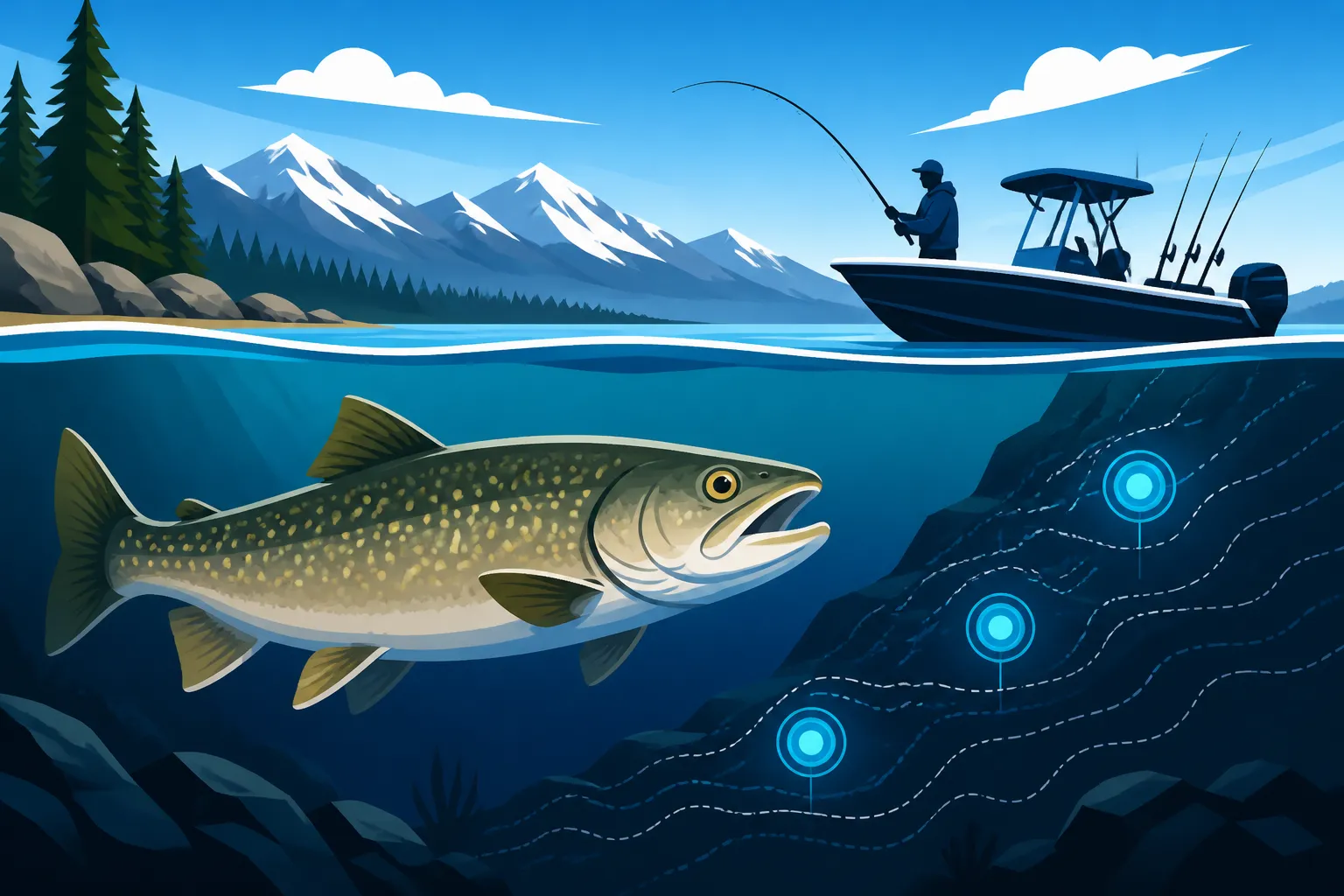
Lake Tahoe Deep Water Mackinaw Spots
For anglers venturing onto Lake Tahoe, the sheer size and profound depths can be intimidating, especially when you're targeting elusive deep-dwelling species like the Mackinaw (lake trout). It’s easy to feel lost on such a vast body of water, wondering where to even begin your search for these impressive fish. This comprehensive guide will equip you with the knowledge, strategies, and specific locations on the Nevada side of Lake Tahoe to help you successfully target and land Mackinaw in their deepwater domain.
Understanding Lake Tahoe's Mackinaw Fishery
Lake Tahoe is an ecological marvel, famous for its crystal-clear, deep, and cold waters. This unique environment makes it a perfect habitat for Mackinaw, also known as lake trout. These apex predators are a prized catch, offering a thrilling challenge to any angler.
The Mackinaw's Deepwater Domain
Mackinaw trout ( Salvelinus namaycush ) are perfectly adapted to the cold, oxygen-rich depths of Lake Tahoe. Unlike their rainbow or brown trout cousins, Mackinaw prefer water temperatures in the low 50s Fahrenheit, often retreating to the thermocline or even deeper as surface waters warm. They are primarily piscivorous, meaning their diet consists mostly of other fish. In Lake Tahoe, juvenile kokanee salmon and various baitfish are their main food sources. This preference for deep, cold water and a diet of smaller fish dictates where and how anglers should target them. You won't find them lurking in shallow weed beds; instead, you'll be looking for them suspended over vast depths or hugging subtle underwater structures.
Seasonal Movements and Depths
The movements and preferred depths of Mackinaw in Lake Tahoe can vary significantly throughout the year, primarily influenced by water temperature and the availability of their prey. In the spring, after the ice-out in higher elevations and as the lake begins to warm slightly, Mackinaw might be found a bit shallower, sometimes in the 80-150 foot range, especially near areas where kokanee are starting to become active. As summer progresses and the surface water temperatures climb, these fish will retreat to much deeper water, often holding at depths of 150 to 300 feet, or even deeper, in areas with abundant oxygen. During the fall, as the lake's surface cools and "turns over," there can be a period where Mackinaw become more active and might be found in a wider range of depths, sometimes even making for excellent opportunities for anglers trying to find them a bit higher in the water column before they settle into their winter patterns.
Lake Tahoe's Unique Characteristics
Lake Tahoe is unlike many other major fishing destinations. Its unparalleled clarity, immense depth (reaching over 1,600 feet in places), and often featureless bottom (in terms of traditional "structure" like reefs or submerged timber) present both challenges and opportunities. The clear water means that fish can be very line-shy, requiring careful presentation and lighter leaders than you might use in murkier lakes. The sheer depth necessitates specialized gear and techniques, primarily deep trolling with downriggers or lead core line, to accurately present lures at the precise depths where Mackinaw are holding. Furthermore, the lack of widespread complex structure means that finding subtle underwater contours, points, and ledges becomes paramount. These smaller, often overlooked features are where Mackinaw frequently congregate, ambushing baitfish. Understanding these characteristics is crucial for developing an effective Mackinaw fishing strategy.
Essential Gear and Techniques for Deepwater Mackinaw
Successfully targeting Mackinaw in Lake Tahoe's deep waters demands a specific arsenal of gear and a refined set of techniques. This isn't your average pond fishing; it requires robust equipment and a keen understanding of deepwater presentations.
Specialized Rods, Reels, and Line
When it comes to deepwater Mackinaw, you're going to need heavy-duty gear that can handle significant drag, long fights, and the constant strain of deep trolling. Look for stout trolling rods, typically 7 to 9 feet in length, with a medium-heavy to heavy action that can absorb the shock of a strike and provide the leverage needed to fight large fish from extreme depths. Paired with these rods should be high-capacity conventional reels, capable of holding hundreds of yards of line. Brands like Penn, Daiwa, or Shimano offer excellent options built for this kind of work.
Your line choice is equally critical. Many anglers opt for braided line as their main line due to its strength, thin diameter, and lack of stretch, which provides excellent sensitivity. However, a long fluorocarbon leader (20-40 lb test) is often tied to the braid to provide stealth in the clear Tahoe waters. For anglers using lead core line, a different setup is required, where the lead core itself provides the weight to get lures down, typically spooled onto a large capacity conventional reel. When you're considering your setup, remember that Best Trolling Rods for Lake Trout are designed to withstand the unique pressures of deep-water battles.
Trolling Lures and Baits
Mackinaw are aggressive predators, and the right presentation can trigger powerful strikes. Dodgers and flashers are often used in conjunction with various lures or baits. These large, reflective attractors create vibration and flash that mimic schooling baitfish, drawing Mackinaw in. Behind the attractor, popular choices include minnow-imitating plugs like Rapala J-Plugs, Apex Lures, or Flatfish in various sizes and colors (silver, blue, chartreuse, and white are often reliable). Spoons, particularly larger flutter spoons, also work well when trolled at the right speed.
Live bait, especially large sucker minnows, is incredibly effective for Mackinaw. These are often rigged on a multiple-hook harness to ensure a solid hookup. Some anglers swear by using a dead bait rig, where a cut plug or whole baitfish is trolled to mimic a wounded prey item. Experimentation with color and size based on the day's conditions and what the fish are keying in on is always a good idea. Knowing How to Catch Mackinaw Trout at Lake Tahoe often comes down to selecting the right lure for the conditions.
Electronics and Navigation
In a lake as vast and deep as Tahoe, electronics aren't just a luxury; they're an absolute necessity. A high-quality fish finder/sonar unit is your most important tool for locating Mackinaw, identifying bait balls, and mapping the subtle underwater structure they relate to. Look for units with powerful transducers and high-resolution screens that can clearly differentiate fish arches from bottom contours, even at extreme depths. Garmin, Humminbird, and Lowrance offer excellent models with features like CHIRP sonar, side imaging, and down imaging, which provide unparalleled underwater visibility.
Integrated GPS and chartplotter capabilities are equally vital. Lake Tahoe has many deepwater areas that look similar on the surface. A GPS allows you to mark productive spots, track trolling paths, and return to specific contours or submerged features with precision. You can mark waypoints for baitfish schools, Mackinaw sightings, or even successful strike zones. Having a detailed map of Lake Tahoe's contours loaded onto your unit will give you a significant advantage in finding those elusive deepwater structures. For more on this, checking out a guide like Best Fish Finder for Reservoir Fishing can be incredibly helpful.
Top Deep Water Mackinaw Hotspots on the Nevada Side
The Nevada side of Lake Tahoe offers some truly spectacular deep-water fishing for Mackinaw. While the fish can be found throughout the lake, certain areas consistently produce due to their unique underwater topography, baitfish concentrations, or historical productivity. Remember that you'll need to have your Lake Tahoe Nevada Fishing License Rules in order before hitting these spots!
Crystal Bay and the North Shore Depths
Crystal Bay, located on the northeast side of Lake Tahoe, transitioning into the main lake, is a renowned area for Mackinaw. The topography here features steep drop-offs and shelves that plunge quickly into profound depths. Anglers often focus on the edges of these shelves, looking for transitions where baitfish might congregate or Mackinaw might patrol. The deeper sections just outside of the actual bay, where the bottom drops from 100 feet down to several hundred feet, are particularly productive.
Look for underwater points and humps that extend out into the abyss; these often act as magnets for both bait and predators. The key is to troll parallel to these depth contours, meticulously covering different depths until you locate active fish. Local knowledge often points to the deep water surrounding the small islands and submerged rock formations in this area, which provide crucial ambush points for Mackinaw. This region, extending westward toward Stateline Point, consistently holds good numbers of quality Mackinaw throughout the seasons.
Zephyr Cove and East Shore Structure
Moving south along the east shore, Zephyr Cove and the surrounding areas down towards Glenbrook offer another prime deepwater Mackinaw territory. This section is characterized by a mix of long, tapering points and intricate underwater canyons and ledges. The deeper waters off Zephyr Cove, especially where the bottom contours become more complex, are often excellent holding grounds. Anglers commonly target depths ranging from 150 to 300 feet here, particularly where the lake bottom shows subtle changes in elevation or structure on their fish finders.
The steep underwater faces and rocky outcrops provide shelter and ambush points for Mackinaw. Trolling patterns often involve navigating these underwater structures, sometimes making broad S-turns to cover varying depths and present lures to fish holding at different levels. This section of the lake can be very productive during the summer months when Mackinaw retreat to their deepest haunts. It's also a popular area for those launching from the east shore, offering quick access to prime deep-water fishing.
The South Shore's Deep Channels
While the south shore of Lake Tahoe is known for its shallower recreational areas, the waters just offshore, particularly east of the Nevada-California state line and extending towards Skunk Harbor, hide significant deepwater channels and extensive shelves that are magnets for Mackinaw. These areas can be incredibly productive, especially during the colder months or when fish are holding particularly deep. The bottom here drops off dramatically, creating broad, deep flats interspersed with sudden changes in contour.
Anglers targeting this region often focus on the outer edges of the shelf that extends from the shore, where it plunges into the deepest parts of the lake. These deep channels serve as highways for Mackinaw moving between feeding grounds. Trolling patterns should involve covering these deeper troughs and the adjacent slopes, paying close attention to any marks on the sonar that indicate baitfish schools or large fish arches. The vastness of this area means covering water efficiently is key, often requiring longer trolling runs before turning to hit the same productive depth contours again. This area offers excellent opportunities for trophy-sized Mackinaw if you can pinpoint their specific holding areas.
Mastering Trolling Strategies for Mackinaw
Trolling is undeniably the most effective method for consistently catching Mackinaw in Lake Tahoe's deep, expansive waters. It allows you to cover vast areas and present your lures at precise depths for extended periods. However, it’s not just about dragging a lure behind the boat; it requires precision, patience, and a bit of art.
Downrigger and Lead Core Tactics
To consistently reach the depths where Mackinaw reside, downriggers are indispensable. A downrigger uses a heavy ball (cannonball) attached to a cable, which is lowered to a desired depth. Your fishing line, with its lure or bait, is then attached to the downrigger cable via a release clip. When a fish strikes, the line pops free from the clip, allowing you to fight the fish directly without the weight of the cannonball. This setup provides unparalleled depth control, ensuring your lure is swimming right where the fish are. Modern downriggers often have digital counters and can even be programmed for specific depths or depths that follow the bottom contours.
Lead core line offers an alternative method for deep trolling, especially useful for covering a range of depths in the water column or for anglers without downriggers. Lead core line is braided line with a lead filament woven into its core, causing it to sink. The line is typically color-coded (e.g., every 10 yards changes color) allowing anglers to estimate depth based on how many "colors" of line are let out. While less precise than a downrigger for hitting an exact depth, lead core is excellent for targeting fish that might be scattered across a depth range, or for a simpler setup. Understanding the nuances of Trolling Techniques for Lake Tahoe Mackinaw is crucial for success.
Speed, Pattern, and Depth Control
Optimizing your trolling speed is paramount. For Mackinaw, speeds typically range from 1.8 to 2.5 miles per hour, but this can vary depending on the specific lure being used and the activity level of the fish. Experimentation is key; sometimes a slight increase or decrease in speed can trigger bites. Observe your rod tips to ensure your lures are swimming correctly.
Trolling patterns are more than just straight lines. Making subtle S-turns can cause your lures on the inside of the turn to slow down and sink slightly, while those on the outside speed up and rise. This change in action can often elicit a strike from following fish. Always troll along known depth contours or structure, rather than just randomly across open water. Use your GPS to track your path and repeat successful runs. And remember, Mackinaw are often found at specific thermal layers or depths; precise depth control is vital to keep your offering in the strike zone. You might be targeting depths mentioned in resources covering Daily limit for Mackinaw trout at Lake Tahoe or even deeper depending on the season and conditions.
Reading Your Electronics for Success
Your fish finder is your eyes beneath the surface. Learning to effectively read your sonar screen is a game-changer for Mackinaw fishing. Look for sharp, distinct arches, which typically indicate fish. Larger arches often mean larger fish. Pay close attention to bait balls – dense clouds on your screen, often appearing as irregular shapes. Where there's bait, there are usually predators. Mark these bait balls as waypoints on your GPS.
Beyond fish and bait, study the bottom contours. Mackinaw often relate to subtle structure like ledges, humps, and points, even if they're holding suspended just above them. Understanding these underwater features will help you predict where fish might be holding. If your unit has side imaging, use it to scan wide swaths of the bottom for structure and fish off to the sides of your boat, allowing you to adjust your trolling path accordingly. The ability to interpret these readings will significantly increase your chances of success, ensuring you're not just guessing where the fish are.
Best Times and Conditions for Mackinaw Fishing
Like any species, Mackinaw have their preferences when it comes to time of year, day, and weather conditions. Understanding these factors can dramatically improve your success rate. For a broader overview of fishing across the state, you might want to look at the Best Time of Year to Fish in Nevada, but for Mackinaw, it's a specific game.
Prime Seasons and Water Temperatures
While Mackinaw can be caught year-round in Lake Tahoe, certain seasons offer more consistent action. Late spring, especially May and June, can be excellent as the fish move a bit shallower after winter. Summer brings deeper fishing, often requiring substantial downrigger depths, but offers the chance for larger, trophy fish as they feed heavily. Fall, particularly September and October, is another prime season as water temperatures begin to cool, and fish can become more aggressive, sometimes moving into slightly shallower water to feed before winter.
Winter fishing, often involving ice fishing on other Nevada lakes, is less common for Mackinaw on Tahoe due to its immense depth and rare complete freeze. However, boat fishing during winter can still be productive for those willing to brave the cold, as Mackinaw remain active and concentrated in their deepwater haunts. The key throughout all seasons is water temperature. Mackinaw thrive in cold water, ideally between 45-55°F. Your fish finder's temperature gauge can help you locate the thermocline and target depths within this range.
Weather and Lake Conditions
Lake Tahoe's weather can change quickly, and these changes can influence Mackinaw behavior. Generally, calm days with stable barometric pressure are often productive, as fish are less affected by environmental shifts. Overcast days can also be beneficial, as the reduced light penetration might encourage fish to rise slightly in the water column or become more active. Strong winds, however, can make deep trolling challenging, making it difficult to maintain speed and direction, and can also make for an uncomfortable day on the water.
Fishing immediately after a major storm front passes can sometimes be slow as fish adjust, but a few days later, they may resume their normal feeding patterns. Pay attention to sudden drops or rises in barometric pressure; significant changes can sometimes put the fish off the bite for a short period. Ultimately, consistent conditions, whatever they may be, often lead to more consistent fishing. Before heading out, always check the marine forecast for Lake Tahoe.
Early Morning and Late Afternoon Bites
For many predatory fish, including Mackinaw, low-light conditions often stimulate feeding activity. The period around dawn and dusk is frequently the most productive time to be on the water. As the sun rises or sets, the reduced light penetration makes Mackinaw feel more secure in pursuing prey, and baitfish may also be more active. This doesn't mean you can't catch them during midday, especially when trolling deep, but the "golden hours" often offer a heightened chance of a strike.
Planning your trip to coincide with these times, particularly in the summer when daytime sun can be intense, can yield better results. Many serious Mackinaw anglers are out on the water well before sunrise, making their first passes as the light begins to break. Similarly, fishing right up until sunset can capitalize on the late afternoon bite. Being prepared for these low-light conditions, perhaps with proper navigation lighting and safety gear, is also essential. For any fishing excursion, consider leveraging platforms like FishingBooker to find experienced local guides who can put you on fish during these prime windows.
Conservation and Responsible Angling
Lake Tahoe is a precious natural resource, and it's our responsibility as anglers to ensure its health and the sustainability of its fish populations. Practicing responsible angling techniques is crucial, especially when targeting deepwater species like Mackinaw. For comprehensive rules, always refer to Nevada Fishing Regulations Explained.
Handling Deepwater Catches
Catching fish from significant depths, particularly 100 feet or more, presents unique challenges when it comes to catch and release. Fish brought up quickly from deep water can suffer from barotrauma, a condition caused by the rapid expansion of gases in their swim bladder due to pressure changes. Signs of barotrauma include bulging eyes, a distended belly, or the stomach protruding from the mouth.
To minimize harm, use descending devices or "fizzing" tools (a hollow needle used to release gas from the swim bladder, though fizzing should only be done by experienced anglers) to help fish return to their preferred depth. Ideally, avoid bringing up fish you intend to release too quickly. If a fish shows signs of severe barotrauma and cannot descend on its own, it is often more humane to keep it within your legal limit rather than releasing it to certain death. Always wet your hands before handling fish, minimize their time out of water, and handle them gently to protect their slime coat.
Regulations and Limits
Adhering to current Nevada fishing regulations is not just a legal requirement but a fundamental aspect of responsible angling. The Nevada Department of Wildlife (NDOW) sets specific rules for Lake Tahoe, including size limits, bag limits, and gear restrictions for Mackinaw and other species. These regulations are designed to protect the fishery and ensure healthy populations for future generations.
Before every fishing trip, it is vital to consult the latest NDOW fishing guide or visit their website for the most up-to-date information on Daily limit for Mackinaw trout at Lake Tahoe, as rules can change annually. Understand the difference between daily limits and possession limits. Some areas may also have specific closures or restrictions, so always be informed about the specific section of Lake Tahoe you plan to fish. For a comprehensive overview of the region's angling opportunities and rules, consult a resource like Lake Tahoe Nevada Fishing Guide. Additionally, if you’re unsure about the regulations or need local advice, booking a trip through services like FishingBooker can connect you with knowledgeable local guides who are always up-to-date on the latest rules and best practices.
Navigating Lake Tahoe with Confidence
Lake Tahoe is an incredible fishery, and with the right approach, targeting deepwater Mackinaw can be an incredibly rewarding experience. Whether you're a seasoned angler or looking to try something new, these tips and techniques will give you a solid foundation for success. Remember, preparation is key: ensure your gear is in top condition, understand the nuances of deepwater trolling, and always prioritize safety on the water.
There's nothing quite like the thrill of feeling a heavy Mackinaw strike your lure from hundreds of feet down, followed by the powerful pull of these magnificent fish. With the knowledge of the specific hotspots on the Nevada side, the right gear, and an understanding of their behavior, you're well on your way to creating unforgettable fishing memories on the stunning waters of Lake Tahoe. If you're planning a trip and want to ensure you maximize your chances, consider consulting with local guides, many of whom can be found on platforms like FishingBooker, offering invaluable insights and assistance for tackling the deep waters of Tahoe.
Disclaimer
The information provided in this guide is for general informational purposes only and should not be considered legal advice. Fishing regulations, conditions, and fish behavior are subject to change without notice. Always consult the most current regulations from the Nevada Department of Wildlife (NDOW) before engaging in any fishing activities. Safety on the water is paramount; always wear appropriate personal flotation devices and be aware of weather conditions. The author and publisher are not responsible for any accidents, injuries, or legal infractions incurred as a result of using this information.