Best technique for catching perch through the ice
Ice fishing for perch in Nevada might sound like a niche pursuit, but when those colder temperatures truly settle in, some of our high-elevation lakes transform into winter wonderlands, offering a unique angling experience. However, chasing those elusive perch through a small hole in the ice can be frustrating if you don't have the right approach and a keen understanding of their winter habits. This guide is here to help you unlock the secrets to successful ice perch fishing, making your winter angling adventures more rewarding and bringing home a tasty meal.
Understanding Perch Behavior Under Nevada Ice
Before you even think about drilling a hole, it's crucial to understand how yellow perch behave once the water turns to ice. They're not like summer bass, scattered and chasing everything that moves. Winter perch activity is often dictated by water temperature, available food, and oxygen levels, which leads to predictable patterns if you know what to look for.
The Winter Perch Mindset: Slow and Schooling
When the water temperatures plunge into the low 40s and 30s, perch metabolism slows down considerably. They don't need to eat as often or expend as much energy. This means they're less likely to chase a fast-moving lure across a wide area. Instead, they conserve energy, often hunkering down in specific areas where food is concentrated or they feel safe. The good news is, perch are highly social fish, and they tend to school up in winter. Find one, and you've likely found a whole group!
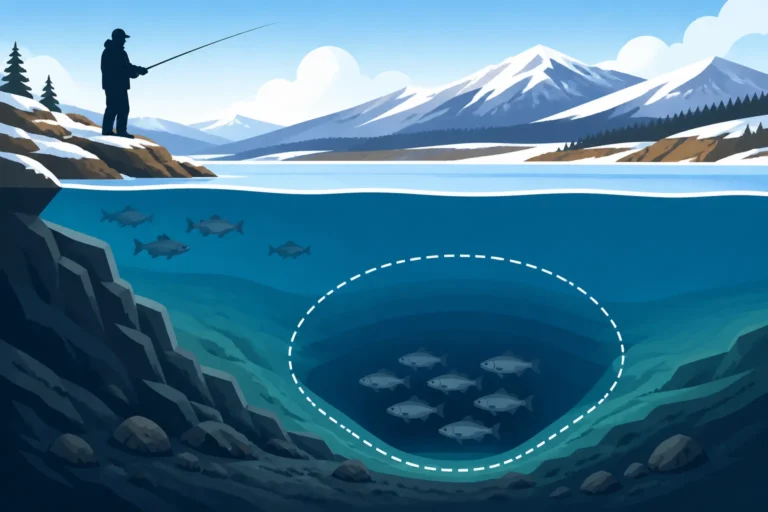
This schooling behavior is your biggest asset as an ice angler. Instead of trying to pick off individual fish, your goal becomes locating these aggregations. They'll often hold tight to structure, whether that's submerged weed beds, rocky points, sharp drop-offs, or even humps on the lake bottom. These areas provide cover from predators and can funnel small prey like insect larvae, minnows, or even other small perch. It's not about casting and retrieving; it's about precise placement and subtle presentations right in their living room.
Key Winter Habitats for Perch in Nevada
Nevada's ice fishing opportunities are primarily found in high-elevation reservoirs like Wildhorse Reservoir, Marlette Lake (special regulations apply), and some smaller mountain lakes. These waters offer specific types of habitat that perch gravitate towards in winter. For more general guidance, check out our article on Which Nevada lakes freeze thick enough for ice fishing.
- Weed Beds: Even under ice, dying weed beds can hold an incredible amount of life. Small invertebrates, minnows, and insect larvae find refuge in the remaining vegetation. Perch will patrol the edges of these beds, or even suspend slightly above them, picking off easy meals. Look for areas where weeds transition to open water or a channel runs through them.
- Drop-Offs and Contours: Perch love changes in depth. A sharp drop-off from a shallow flat into deeper water provides them with quick access to different depths, allowing them to adjust to changing light or pressure conditions without expending much energy. They can move up to feed and quickly retreat to deeper, more stable water. Focus on the "lip" of these drop-offs.
- Submerged Structure: Rock piles, submerged timber (though less common in many Nevada reservoirs), or even old foundations can be magnets for perch. These provide cover and act as ambush points. If you have a good contour map or a fish finder, actively seek out these hidden gems. Understanding the Seasonal Movement of Fish in Reservoirs can also help you predict where perch might be holding.
Essential Gear for Ice Perch in Nevada
Successful ice fishing for perch hinges on having the right tools for the job. You're not using heavy bass rods here; it's a game of finesse and sensitivity. Think light, think small, and think precise.
Rods, Reels, and Line: The Finesse Factor
Ice fishing gear is specialized for a reason. You need ultra-sensitive setups to detect the incredibly light bites that winter perch often deliver. For a comprehensive overview, read our guide on Nevada Ice Fishing Gear Checklist.
- Ice Rods: Forget your usual spinning rod. Ice rods are typically short, ranging from 24 to 36 inches, with extremely sensitive tips. This short length allows you to fish comfortably in a small shelter or out in the open, close to your hole, and the sensitive tip acts like a natural strike indicator. Look for rods specifically labeled for "panfish" or "perch." The backbone is usually moderate, giving you enough power to set the hook, but the tip is everything for bite detection.
- Reels: A small, lightweight spinning reel (size 500 or 1000) is ideal. It should have a smooth drag system, as even small perch can make quick runs on light line. Some anglers prefer inline reels, which prevent line twist, but a good quality spinning reel works perfectly for most perch applications. You can often find excellent budget-friendly options for these types of reels on platforms like Amazon.
- Line: This is where many anglers make a mistake. Heavy line will hinder your presentation and make bites almost impossible to feel. Opt for monofilament or fluorocarbon line in the 2- to 4-pound test range. Fluorocarbon is often preferred due to its low visibility and minimal stretch, which translates to better feel for subtle bites. If you're using a micro-jig, this low-stretch quality is absolutely critical. Some anglers will even use a small section of fluorocarbon leader (2-3 feet) tied to a slightly heavier braided main line for enhanced sensitivity and knot strength.
Lures and Baits: Tiny Offerings for Hungry Perch
Winter perch are rarely interested in large, flashy presentations. Their meals are smaller, and their movements are less energetic. Your lures and baits should reflect this.
- Small Jigging Spoons: These are classic ice fishing lures. They're typically metal, ranging from 1/32 to 1/8 ounce, and designed to flutter or dart when jigged. Colors like silver, gold, chartreuse, and perch patterns are excellent starting points. Many spoons come with a small treble hook, but some anglers prefer to swap it out for a single, sharp hook, especially if they are tipping it with live bait. Examples include the Lindy Rattl'n Flyer Spoon or the Northland Forage Minnow Spoon.
- Tungsten Jigs: These tiny, heavy jigs are a revelation for perch fishing. Because tungsten is denser than lead, a tungsten jig can be much smaller than a lead jig of the same weight. This allows you to present a very small profile while still getting your bait down to depth quickly and maintaining excellent feel. They come in various shapes like tear drops, horizontal jigs, and vertical jigs. Tipping these with live bait is almost always the key.
- Live Baits: This is often the ultimate secret weapon for finicky perch. Maggots (also called eurolarvae or spikes), wax worms, and small mealworms are incredibly effective. Their natural scent and subtle wiggling action are irresistible to perch. You thread one or two onto your jig hook, making sure the hook point is exposed. For an in-depth look at optimal bait, our article on Best Bait for Pyramid Lake Cutthroat shares insights on live bait preferences that can sometimes apply to other species like perch, though they are quite different fish.
- Soft Plastics (Micro): Tiny soft plastic baits, often mimicking larvae, grubs, or minnows, can also be highly effective. Brands like Berkley PowerBait or Mister Twister offer micro-sized plastics that can be fished alone or tipped onto a tungsten jig. Scented versions are particularly good for enticing hesitant perch. Experiment with different colors, but natural tones like brown, black, and white, as well as bright colors like chartreuse or orange, often produce well.
Essential Ice Fishing Tools for Perch Anglers
Beyond your rod and reel, a few other items are critical for a successful and comfortable day on the ice. If you're still building your kit, platforms like Amazon are great for finding specialized tools and comparing options.
- Ice Auger: You need to make holes! A hand auger is perfectly fine for perch fishing, especially if you're only drilling a few holes or fishing thinner ice. For thicker ice or if you plan on drilling many holes quickly, a gas-powered or electric auger is a game-changer. An 8-inch auger is usually sufficient for perch.
- Skimmer/Scoop: Ice chunks and slush will quickly freeze over your hole. A long-handled skimmer is essential for keeping your hole clear so you can fish effectively and land fish without obstruction.
- Five-Gallon Bucket: This multi-purpose tool serves as a seat, a carrier for your gear, and a receptacle for your catch.
- Shelter (Optional but Recommended): While not strictly essential, an ice fishing shelter, whether a portable flip-over or a hub-style tent, makes a huge difference in comfort, especially on windy or very cold Nevada days. Staying warm and out of the elements allows you to focus better and fish longer. For more specific recommendations, our guide on Best Ice Fishing Auger and Shelter has detailed information.
- Fish Finder/Flasher (Optional but Highly Recommended): Modern electronics can drastically improve your success. A flasher like a Vexilar or Marcum shows you exactly what's under your hole in real-time – your lure, fish, and even their reaction to your presentation. This eliminates guesswork and helps you stay on active fish.
Mastering the Art of Ice Jigging for Perch
With your gear in hand and an understanding of perch behavior, it's time to talk techniques. Ice fishing for perch is about subtle movements, patience, and knowing when to switch things up.
The Basic Jigging Motion: Attracting Attention
The fundamental approach to ice perch is jigging. It's not a violent, aggressive motion; rather, it's about enticing these often-lethargic fish.
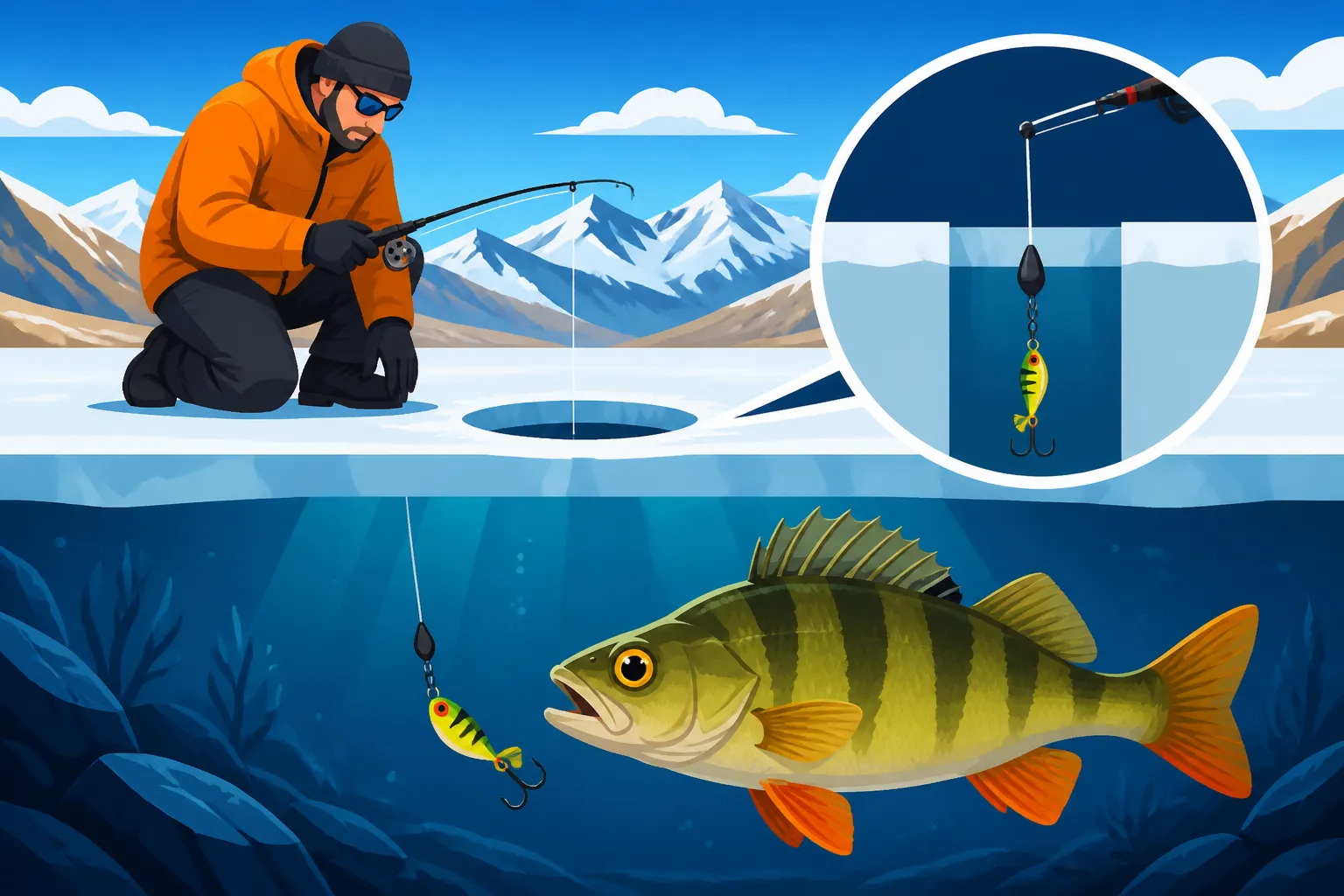
- Drop and Locate: Lower your lure to the bottom. If you're using a fish finder, you'll see it as a distinct mark. Once it hits bottom, reel up a foot or so. Perch often feed just off the bottom, so this keeps your lure in their strike zone.
- The "Lift-Drop": Start with a short, sharp lift of your rod tip (just a few inches), followed by a controlled drop back to the starting position. This makes your lure dart and then settle. The bite often happens on the drop or as the lure is suspended motionless.
- Pause and Repeat: After each lift-drop, pause for 3-10 seconds. This "hang time" is crucial for perch, giving them time to inspect the lure and commit to a bite. Vary your pauses.
- Experiment with Aggression: Some days, perch respond to a more aggressive jig. Try higher, faster lifts. Other days, they want almost no movement at all. The key is to start moderate and then adjust based on how the fish react, if you can see them on your flasher. If you notice fish coming in but not biting, try shortening your lifts and extending your pauses.
Finesse Jigging: When Perch Get Picky
There will be days when the perch are just plain finicky. This is when finesse jigging truly shines.
- Micro-Movements: Instead of lifts and drops, think shivers and twitches. Hold your rod absolutely still, then just ever so slightly twitch your wrist to make your lure tremble. A small tungsten jig tipped with a single maggot is perfect for this. Imagine trying to make the bait look like a struggling insect larva rather than a darting minnow.
- Deadsticking: This technique involves using a second rod (if legal where you're fishing – always check Nevada Fishing Regulations Explained) or simply holding one rod perfectly still in a rod holder. Hang a live bait (like a minnow if allowed, or multiple maggots) on a plain hook or a very small jig, suspended at a depth where you've seen perch. The natural movement of the bait can be enough to trigger a bite from truly passive fish. Many anglers will actively jig one rod while "deadsticking" another nearby.
- Bottom Pounding: Sometimes, generating a little commotion on the bottom can attract distant perch. Drop your jig or spoon to the bottom and lightly tap it a few times, creating puffs of sediment. Then, lift it a foot or so off the bottom and resume your finesse jigging. This mimics a bottom-dwelling critter stirring up food.
"Deadsticking" and Combination Rigs
As mentioned, deadsticking is a fantastic way to capitalize on those truly inactive fish. But you can also combine techniques to increase your odds.
- Tandem Rigs: Consider using a small dropper rig. Tie a heavier jig or spoon to the end of your line, then tie a short (4-6 inch) leader about a foot above it with a tiny fly or a plain hook tipped with live bait. The heavier lure acts as an attractor, creating flash and vibration, while the smaller, more natural bait on the dropper is often what the perch actually commit to. This allows you to present two different offerings simultaneously.
- The Power of Contrast: Sometimes perch are drawn to a brighter, more active lure, but they'll only eat the subtle, natural offering. Use a brightly colored jigging spoon to call them in, and a natural-colored tungsten jig with a maggot on a separate hole or dropper rig nearby for the actual bite. Observing how fish react on your flasher to different presentations is key here. Do they zoom in on the spoon but refuse it? Then move a more natural bait into their view.
Tips for Maximizing Your Ice Perch Catch
Beyond the basic techniques, a few strategic considerations can significantly boost your perch numbers, especially when conditions are tough.
Hole Hopping and Locating Schools
Remember, perch school up. Finding the school is 90% of the battle. Don't be afraid to be mobile!
- Drill, Fish, Move: Resist the urge to sit over a barren hole for too long. If you've fished a spot for 10-15 minutes with no bites and no marks on your fish finder, it's time to move. Drill a new hole 20-50 feet away, or even further if necessary, and repeat. This is where an efficient auger, whether manual or powered, truly pays off.
- Grid Search vs. Structure Focus: You can conduct a systematic "grid search" over a likely area (e.g., a large flat adjacent to a drop-off), drilling holes in a pattern until you find fish. Alternatively, focus your hole-hopping around known structure or transition zones. If you catch a few fish from one hole, stay put until the action dies down, then move to an adjacent spot. Small changes in depth or structure can hold an entirely new school. Consider how this mobility plays into How to find fish in a new lake.
Using Electronics: Fish Finders and Flashers
A good quality ice fishing flasher or fish finder is an invaluable tool for perch fishing. It takes much of the guesswork out of the equation.
- Real-Time Feedback: A flasher shows you your lure, the fish, and the bottom in real-time. You can see fish approaching your lure, see if they're interested, and adjust your jigging presentation accordingly. If they rise to the lure, speed it up. If they back off, slow it down or drop it slightly.
- Depth and Structure: Electronics help you identify the exact depth at which fish are holding. If perch are consistently suspended 2 feet off the bottom, you know to keep your lure in that zone. They also confirm bottom composition and structure, helping you target those key areas more accurately.
- Determining Fish Activity: You can often gauge how active fish are by how they react on your flasher. Aggressive fish will shoot up to your lure; finicky fish might just slowly approach or sit below it. This helps you choose between an aggressive jigging approach or a more subtle, finesse presentation.
Presentation and Hook Set
Even with the best gear and location, proper presentation and a timely hook set are critical for converting bites into landed fish.
- Subtle Bites: Winter perch bites are often incredibly subtle. It might feel like a slight "tick," a momentary increase in line weight, or just your line going slack (which means a fish swam up and took the bait). The sensitive tip of your ice rod is your first line of defense here.
- Watch Your Rod Tip: Keep your eye glued to the tip of your rod. Any unusual twitch, bend, or straightening often indicates a bite. Some anglers use bobbers or spring bobbers (a small, sensitive spring attachment on the rod tip) to further enhance bite detection.
- The Sweep Set: When you detect a bite, don't rear back like you're trying to set the hook on a saltwater tuna. With light line and small hooks, a firm, smooth "sweep set" is usually all it takes. Just lift your rod tip upward and sweep it to the side to pull the line tight and embed the hook. Overly aggressive hook sets can snap your line or rip the hook from a perch's soft mouth.
| Lure/Bait Type | Description | Best Use Case | Pros | Cons |
|---|---|---|---|---|
| Small Jigging Spoon | Metal, flashy spoon, often with a treble hook. | Aggressive perch, searching for schools. | Reflective flash, covers water quickly, attracts from a distance. | Can spook timid fish, less natural presentation. |
| Tungsten Jig | Small, heavy jig with a single hook, often tipped with bait. | Finesse fishing, light bite, deep water. | Sinks fast, excellent feel for subtle bites, small profile. | Small profile might not attract larger fish, easily missed if not watched closely. |
| Live Maggots/Wax Worms | Natural insect larvae, fished on a small hook or jig. | Any conditions, especially slow bites and finicky fish. | Natural scent and movement, highly effective, irresistible to perch. | Can be messy, need to be kept cool, might require frequent re-baiting. |
| Soft Plastics (Micro) | Tiny plastic worms, grubs, or larvae imitations. | Finesse, mimicking small prey, versatile. | Durable, can be scented, various colors and shapes. | Less natural movement than live bait, can be ignored if not presented perfectly. |
| Small Minnows (if legal) | Live minnow, often hooked through the back. | Attracting larger perch, set it and wait. | Highly natural, can draw in bigger fish, good on a deadstick. | Not legal everywhere, requires aerated bucket, can be expensive. |
Nevada's ice fishing scene for perch might not be as widespread as other states, but for those willing to brave the chill and learn the nuances, it offers a truly rewarding experience. With the right gear, patience, and a keen eye for subtle bites, you can enjoy some fantastic winter angling and bring home a delicious meal from the frozen waters of the Silver State. Just remember to always prioritize safety when venturing onto the ice; refer to resources like Nevada Ice Fishing Safety on Nevada Reservoirs before heading out.
Disclaimer
This article is for general informational purposes only and does not constitute professional advice. Laws, prices and regulations vary by location and change over time. Consult a qualified professional for guidance on your specific situation.