How to fish a swimbait for striped bass
If you've ever spent hours chasing those elusive, hard-fighting striped bass in Nevada's vast reservoirs, only to come up empty-handed or with smaller fish than you hoped for, you know the frustration. Stripers can be incredibly aggressive, but they can also be maddeningly finicky. This guide is all about mastering one of the most effective tools in a striper angler's arsenal: the swimbait. We’ll dive deep into how to choose, rig, and retrieve swimbaits to trick even the wariest of Lake Mead or Lake Mohave stripers into striking.
Why Swimbaits Are a Game Changer for Nevada Stripers
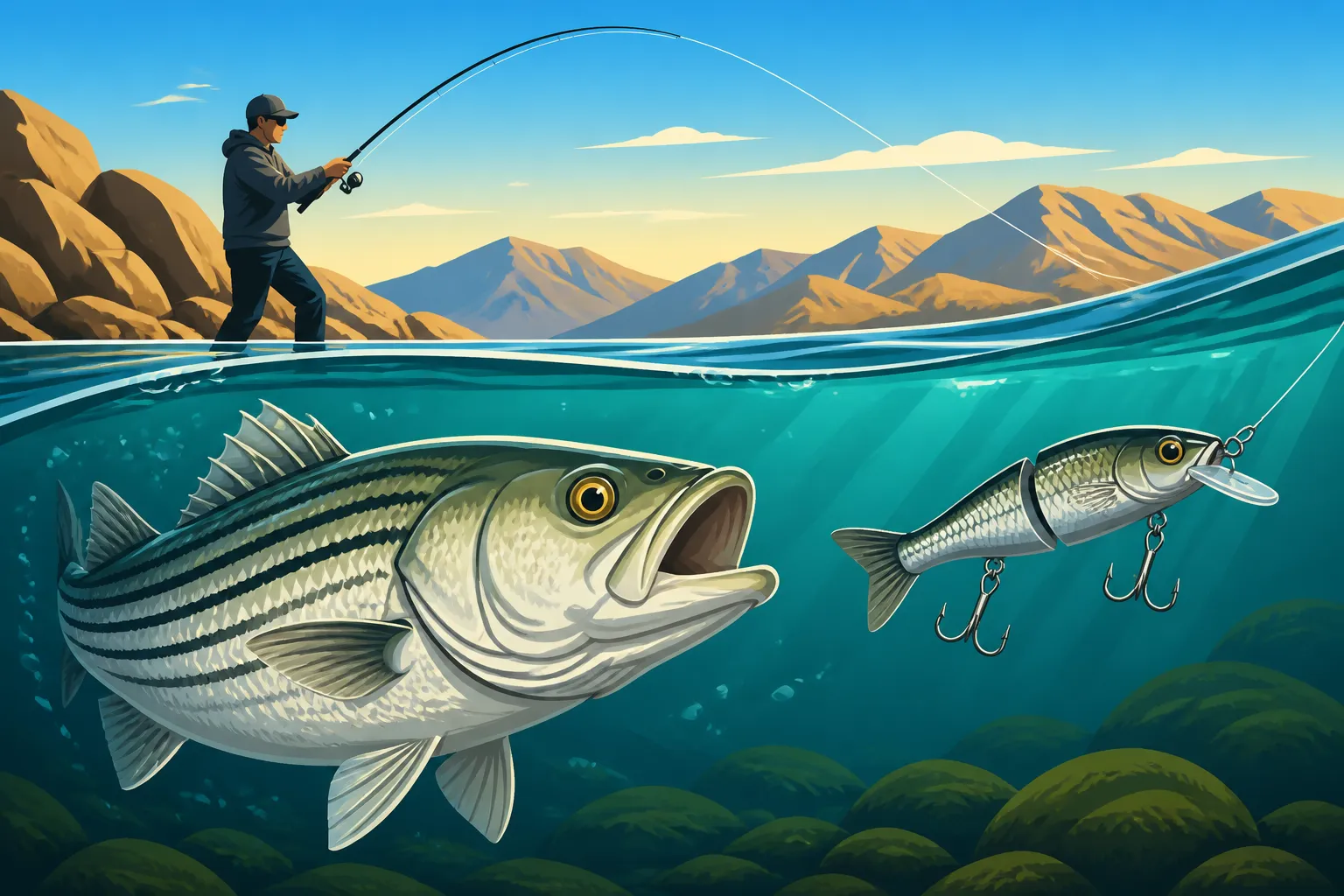
Striped bass, particularly the bigger ones, are ambush predators that love to chase down a substantial meal. They're often keyed in on larger baitfish, and that's exactly where swimbaits shine. Unlike smaller lures, a well-presented swimbait mimics the size, profile, and swimming action of the forage fish these powerful predators are constantly hunting. When those stripers are feeding aggressively, a swimbait can be absolutely irresistible.
Mimicking Natural Prey in Nevada Waters
Think about what striped bass eat in our big Nevada lakes like Lake Mead and Lake Mohave. Their diet is largely comprised of threadfin and gizzard shad, and in some areas, even stocked trout. These baitfish are generally silvery, sometimes with darker backs, and they move with a very distinct swimming motion. A good swimbait, especially one with a realistic profile and a paddle tail, perfectly imitates this natural movement. It’s not just about the color or size; it’s about the subtle wiggle and flash that screams "easy meal" to a hungry striper.
We're not just throwing something shiny out there; we're trying to fool a smart predator into thinking it's about to devour a real fish. That realism is key, especially in clear Nevada waters where fish can be more discerning. The consistent thumping action of a paddle tail swimbait sends vibrations through the water, alerting stripers to its presence long before they can see it, much like a school of shad moving through a cove.
Targeting Larger, Trophy Stripers
While you can certainly catch smaller stripers on various lures, swimbaits truly excel when you're aiming for those bigger, heavier fish. A larger lure naturally deters smaller, more timid fish and signals to the dominant predators that a substantial meal is available. If you've ever dreamt of landing a truly impressive striper, perhaps one that really tests your drag and your biceps, upsizing your presentation with a swimbait is a fantastic strategy.
Big stripers are often solitary or hang out in smaller, less active schools than their smaller counterparts. They're not as quick to chase down every little minnow; they're looking for an efficient caloric payoff. A 5 to 8-inch swimbait often fits this bill perfectly, presenting a hearty target that's worth the chase. If you’re serious about those trophy catches, exploring the world of swimbaits is a crucial step. You can often find a wide array of options, from budget-friendly choices to more premium, highly detailed swimbaits, on platforms like Amazon.
Types of Swimbaits and How to Rig Them Effectively
The world of swimbaits is incredibly diverse, with options ranging from soft plastics that feel like real fish to hard-bodied lures with intricate jointed sections. Choosing the right type and rigging it correctly is paramount to getting that irresistible action and, more importantly, landing the fish once it strikes.
Soft Plastic Paddle Tail Swimbaits
These are arguably the most popular and versatile swimbaits for striped bass, and for good reason. They're typically made of soft plastic, with a paddle-shaped tail that kicks and vibrates intensely as it moves through the water. This tail action is what gives them their lifelike swimming motion.
When rigging soft plastic paddle tails, you have a couple of primary options:
- Jig Heads: This is a very common and effective method. You simply thread the swimbait onto a leadhead jig, ensuring the hook comes out cleanly on top of the bait, leaving the paddle tail free to move. The weight of the jig head will dictate your retrieve depth and rate of fall. For shallow water or when stripers are busting on the surface, a lighter jig head (1/4 to 1/2 ounce) works well. For deeper water or when you need to cast further, heavier heads (3/4 to 2 ounces or more) are essential. Brands like Berkley and Keitech make excellent paddle tail swimbaits that pair perfectly with a stout jig head. For understanding the general behavior of these fish, you might find our guide on Nevada Striped Bass Seasonal Patterns quite helpful.
- Keel-Weighted Hooks: If you're fishing around submerged brush, rocks, or other cover where a traditional jig head might snag, a weedless presentation with a keel-weighted swimbait hook is invaluable. These hooks have a small weight built into the shank, often on the bottom, which helps the swimbait swim true and prevents it from rolling. The hook point is typically Texas-rigged into the body of the swimbait, making it virtually snag-proof. This rigging style is fantastic when targeting stripers that might be holding tight to structure in places like Lake Mohave's coves.
Hard Body Swimbaits
Hard body swimbaits offer a different action and profile compared to their soft plastic counterparts. They're usually made of hard plastic or resin and can be solid, jointed, or even incorporate internal weights that allow for varied sink rates.
- Jointed Swimbaits: These lures feature multiple sections connected by hinges, giving them an incredibly realistic, snaking swimming motion. They are particularly effective when stripers are a bit more lethargic or when you need a very slow, seductive retrieve. They can be lipped or lipless, with lipped versions diving to specific depths and lipless ones sinking more horizontally. The larger profile often appeals to bigger fish.
- Lipless Hard Swimbaits: These are often denser and sink faster, making them great for covering deeper water quickly. They typically have a tight wobbling action and often feature internal rattles that create noise and vibration, drawing stripers in from a distance. While they don't have the same "paddle tail" action, their erratic darting and vibrating can be extremely effective, especially when fishing for schools of actively feeding stripers. When looking for the ideal selection, don't forget to browse Amazon for a wide range of hard body swimbait styles.
Blade-Style Swimbaits
While not traditional swimbaits in the sense of mimicking a full baitfish profile, blade-style swimbaits (sometimes called bladed jigs or chatterbaits) have earned their place in the striper angler's box due to their incredible vibration and flash. They combine a jig head with a soft plastic trailer (often a paddle tail swimbait) and a metal blade that vibrates vigorously on the retrieve.
The rapid, erratic vibration of the blade, combined with the swimming action of the trailer, creates a commotion that stripers find hard to ignore. They're fantastic for fishing stained water or when the fish are scattered and need to be called in. You can cast them out and retrieve them steadily, or you can impart a stop-and-go action, letting them fall and then reeling them back up, mimicking a struggling baitfish. These are particularly useful when exploring new areas, as their strong presence helps locate active fish. If you're wondering how these compare to other lures, our article on Best Lures for Striped Bass goes into more detail.
The Art of the Retrieve: Making Swimbaits Come Alive
Getting the right swimbait is only half the battle. The magic truly happens in how you retrieve it, bringing that hunk of plastic or resin to life in a way that perfectly imitates an injured or fleeing baitfish. Your retrieve needs to be adaptable, changing based on water conditions, fish activity, and the specific type of swimbait you're using.
Steady Retrieve for Hungry Stripers
When the stripers are actively feeding, especially during a hot bite or when you see schools busting on the surface, a steady retrieve is often all you need. The goal here is to keep the swimbait swimming naturally, showing off its inherent action.
- Consistent Speed: Maintain a consistent reeling speed that allows the swimbait's tail to kick or body to wobble effectively. It shouldn't be so fast that it blows out (loses its action and starts spinning) nor so slow that it simply sinks lifelessly.
- Target Depth: Pay attention to where the fish are holding or where the bait is. If fish are suspended, try to count your swimbait down to that depth and then start your steady retrieve. If they're on the surface, reel quickly enough to keep the lure in the upper water column.
- Line of Sight: In clearer waters like Lake Tahoe (though stripers aren't as prevalent there), or the clearer sections of Lake Mead, stripers will often track a swimbait for a short distance before committing. A steady retrieve gives them time to inspect the lure and make their decision. This technique works wonders during the peak seasons. For more on general fishing patterns, check out Best Time of Year to Fish in Nevada.
Jerk and Pause for Finicky Stripers
Sometimes, a steady retrieve just isn't cutting it. When stripers are less aggressive, maybe due to a recent cold front or heavy fishing pressure, a more erratic, "jerk and pause" retrieve can often trigger a reaction strike. This mimics a wounded or disoriented baitfish, an easy target that even a hesitant predator can't resist.
- Varying Motion: Cast your swimbait out and let it sink to your desired depth. Then, with your rod tip, give it a sharp twitch or two, moving the lure forward a few feet. Immediately stop reeling and let the lure pause or flutter for a few seconds. The pause is often when the strike occurs, as the swimbait looks like it's dying or falling.
- Mimicking Injury: This stop-and-go action is incredibly effective at imitating a struggling baitfish, which is often an irresistible trigger for a predator. The sudden change in direction and speed can surprise a striper into striking out of instinct.
- Experimentation: Don't be afraid to experiment with the length of your jerks and pauses. Sometimes short, subtle twitches are best, while other times a longer, more aggressive jerk followed by an extended pause will draw a strike. This tactic can also be very effective for targeting suspended fish. Our detailed guide on Jigging Techniques for Lake Mead Stripers provides excellent insights that can be adapted to swimbait jigging.
Varying Depths and Speeds
One of the biggest mistakes anglers make is fishing the same way, at the same depth, all day long. Striped bass are constantly on the move, and their preferred depth and feeding activity can change by the hour, especially in large, dynamic environments like Lake Mead.
- Fan Casting: Start by fan-casting around your boat or shoreline position. Cast to different angles and distances, allowing the swimbait to sink to varying depths on each cast. This helps you cover the water column and locate where the fish are holding.
- Counting Down: Learn to "count down" your swimbait. After casting, let the lure sink for a specific number of seconds before starting your retrieve. Repeat this on subsequent casts, increasing or decreasing the count until you find the strike zone. This is a crucial skill for targeting different depths.
- Speed Adjustments: Pay close attention to how the fish react to different retrieve speeds. On some days, a blazing fast retrieve might be what they want; on others, a painfully slow, deliberate presentation will get the most bites. Factors like water temperature and light conditions can greatly influence a striper's willingness to chase, so adapt your speed accordingly. Remember, having a selection of swimbaits with different sink rates is helpful, and you can stock up on a variety of weights and styles on Amazon.
Where and When to Throw Swimbaits for Stripers in Nevada
Knowing the right swimbait and how to fish it is crucial, but it's equally important to know where and when to present your offerings in Nevada's vast waters. Striped bass have predictable patterns based on season, time of day, and location, and understanding these can dramatically increase your success rate.
Lake Mead and Lake Mohave Hotspots
These two colossal reservoirs are the undisputed champions for striped bass fishing in Nevada, and they offer prime territory for swimbait anglers.
- Lake Mead: The sheer size of Lake Mead can be intimidating, but stripers often congregate in specific areas. Look for them around points, submerged islands, drop-offs, and canyon walls. Places like Hemenway Harbor, Government Wash, and the mouths of deeper coves are perennial hotspots. Stripers here often follow schools of shad. Casting swimbaits along these structures, especially where there's a quick depth change, can be incredibly productive. Focus on areas where you see activity, like birds diving or baitfish scattering on the surface. For a full breakdown, explore our Lake Mead Nevada Fishing Guide.
- Lake Mohave: Downstream from Lake Mead, Lake Mohave also holds a fantastic population of stripers, often with a good chance at bigger fish. The riverine sections and deep coves of Lake Mohave, particularly around Willow Beach and Cottonwood Cove, are excellent for swimbaits. Here, stripers might be less scattered than in Mead, often relating closely to canyon walls, submerged ledges, and current breaks. The water clarity can be exceptional, so presentation and realistic swimbait choices become even more critical. Our Lake Mohave Nevada Fishing Guide offers more specific location insights.
Seasonal Considerations for Striped Bass
Striped bass behavior changes with the seasons, impacting where they'll be and how they'll react to your swimbait.
- Spring: As water temperatures rise, stripers become more active and move into shallower coves and points to feed on spawning shad. This is a fantastic time for swimbaits, as stripers are aggressively chasing bait. Target shallower areas with lighter jig heads or weedless swimbaits.
- Summer: The intense Nevada summer heat drives stripers deeper during the day, where they seek cooler water and oxygen. Early mornings, late evenings, and even night fishing become prime times. Focus your swimbait presentations on deep-water points, submerged humps, and the thermocline. You'll need heavier jig heads to reach them. Night fishing with glow-in-the-dark swimbaits or those with reflective properties can also be surprisingly effective.
- Fall: This is arguably the best time for swimbait fishing for stripers. As temperatures cool, stripers become incredibly active, pushing huge schools of shad to the surface in what are known as "boils." When you encounter a boil, casting a swimbait into the frenzy is almost guaranteed to get a strike. Look for bird activity – gulls diving means stripers are pushing bait up. Fish a swimbait that matches the size of the baitfish being busted.
- Winter: During the colder months, stripers slow down and often congregate in deep channels, coves, and near thermal outflows. They're still catchable, but your retrieve needs to be much slower and more deliberate. Heavy swimbaits fished slowly along the bottom or jigged vertically can entice a strike. Don't be afraid to let your swimbait sit motionless for longer pauses.
Best Times of Day to Present Swimbaits
While stripers can be caught throughout the day, certain times offer a significantly higher chance of success, especially with swimbaits.
- Sunrise and Sunset: These "low light" periods are often when stripers are most active and willing to chase. The reduced light gives them an advantage over their prey, and they'll often move into shallower water to feed. A swimbait presented during these times, mimicking a lone baitfish, can be deadly.
- Overcast Days: Overcast or cloudy days can extend the productive fishing window, as the diffused light keeps stripers more comfortable in shallower water for longer.
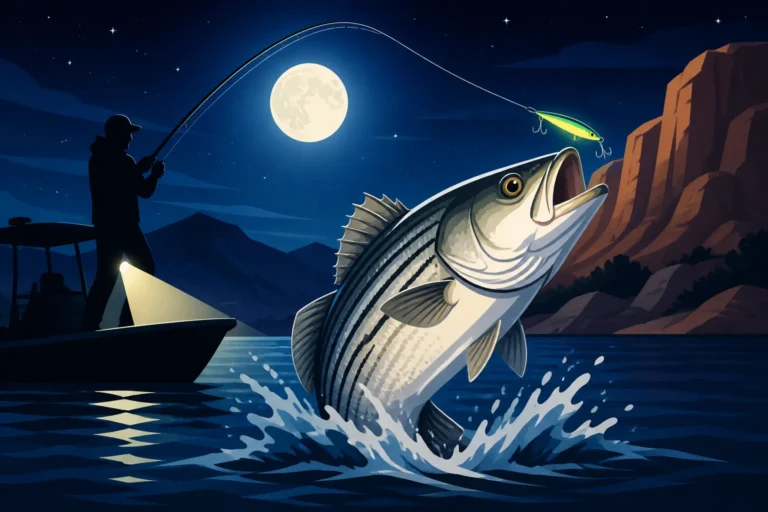
- Night Fishing: Don't overlook night fishing for stripers, especially in the heat of summer. Stripers have excellent low-light vision and will actively feed under the cover of darkness. This can be a fantastic time to use larger, slower-moving swimbaits, as they represent a substantial meal without the need for high-speed pursuit. Many anglers find success by casting towards shorelines or underwater structures illuminated by boat lights or moonlight. For a broader overview of how all these factors play into a successful outing, our guide to How to Fish for Striped Bass in Nevada is a valuable resource.
Essential Gear for Swimbait Fishing
To effectively fish swimbaits for striped bass, you need gear that can handle the often aggressive strikes and powerful fights these fish deliver. A good setup will not only make it easier to cast and work your lure but will also ensure you can land that trophy striper when it bites.
Rod and Reel Selection
Choosing the right rod and reel is paramount. You need a setup with enough backbone to handle larger swimbaits and enough power to control a fighting striper.
- Rods: Look for a medium-heavy to heavy power casting rod, typically between 7 and 8 feet in length. The longer rod provides better casting distance, which is often crucial for reaching breaking stripers or covering more water from shore or boat. A fast action tip is ideal for detecting subtle bites and setting the hook, while the powerful blank helps you put the brakes on a hard-running fish. For more detailed advice, our article on Best Fishing Rods for Nevada Lakes could be a great read.
- Reels: A baitcasting reel is generally preferred for swimbait fishing due to its power, line capacity, and ability to handle heavier lures. Choose a reel with a robust drag system and a gear ratio in the 6.0:1 to 7.5:1 range. A higher gear ratio allows for faster retrieves, which can be useful when stripers are chasing fast-moving bait or when you need to quickly pick up slack. Ensure the reel has a smooth retrieve and can hold at least 150-200 yards of strong line. A good quality baitcasting reel is an investment, but it will pay dividends in performance and durability. You can often find a great selection of reliable brands on Amazon.
Line and Terminal Tackle
Your line and terminal tackle are the direct connection to the fish, so don't skimp here. Weak links in this chain will lead to heartbreak.
- Fishing Line: Braided line is highly recommended for swimbait fishing for stripers. It offers superior casting distance, incredible sensitivity (you'll feel every bump and subtle bite), and zero stretch, which translates to powerful hooksets. A braided line in the 30-65 lb test range is a good starting point, depending on the size of fish you're targeting and the cover you're fishing around. For a leader, many anglers use a 15-30 lb fluorocarbon leader. Fluorocarbon is nearly invisible underwater and is more abrasion-resistant than mono, which is helpful around rocky structures. The length of your leader can vary, but 2-4 feet is a common choice.
- Hooks: If you're using soft plastic paddle tail swimbaits, ensure your jig heads or weighted swimbait hooks are strong and sharp. Look for hooks made from heavy-gauge wire that won't straighten under the pressure of a big striper. The hook size should match the size of your swimbait, allowing for good exposure without hindering the lure's action. A quality hook is non-negotiable for landing aggressive fish.
- Swivels and Snaps: While not always necessary, a heavy-duty snap swivel can be useful when fishing hard body swimbaits that might twist your line or when you want to quickly change lures. Always use a snap swivel rated for the breaking strength of your main line or leader to avoid any weak points. For further details on choosing the right line, you could refer to our comprehensive article on Best Line for Desert Reservoir Fishing.
| Swimbait Type | Best Use Case | Rigging Options | Pros | Cons |
|---|---|---|---|---|
| Soft Plastic Paddle Tail | All-around, versatile, mimics shad | Jig head, weighted hook | Realistic action, versatile, affordable | Can tear easily, may need frequent re-rigging |
| Jointed Hard Body | Slow retrieve, finicky fish, trophy hunting | Direct tie, snap swivel | Highly realistic swim, durable | More expensive, can be cumbersome to cast |
| Lipless Hard Body | Deep water, fast retrieve, covering water | Direct tie, snap swivel | Great vibration, durable, casts far | Less "fish-like" action than jointed types |
| Blade-Style (Chatterbait) | Stained water, calling fish in, reaction strikes | Jig head with trailer, direct tie | Intense vibration, flash, high appeal | Less subtle, can be too aggressive sometimes |
Best Practices for Swimbait Success
Beyond the gear and basic techniques, a few best practices can make a significant difference in your swimbait fishing success, especially when targeting smart and powerful striped bass in Nevada.
Pay Attention to Your Electronics
Modern fish finders are invaluable tools for swimbait fishing. They can help you locate schools of baitfish, identify submerged structures where stripers might be holding, and even spot individual suspended fish.
- Locating Bait: Look for large clouds of baitfish on your sonar. Where there's bait, there are usually predators. Cast your swimbait into or around these bait balls.
- Identifying Structure: Stripers often relate to underwater features like humps, points, and drop-offs. Use your electronics to find these features and then position your boat or casts to target them effectively.
- Targeting Suspended Fish: If you see large arcs on your sonar suspended in the water column, these are often stripers. Note their depth and try to present your swimbait at that exact level using the "counting down" technique. This precision can be the difference between a slow day and a banner day. For more insights on how to leverage technology, check out our guide on Best Fish Finder for Reservoir Fishing.
Match the Hatch (Size and Color)
One of the oldest fishing adages still holds true: "match the hatch." While swimbaits are inherently good at mimicking baitfish, paying attention to the specific size and color of the local forage can drastically improve your results.
- Size: If the stripers are feeding on small shad, a huge swimbait might be ignored. Conversely, if they're busting on larger trout, a tiny swimbait might not get their attention. Observe any jumping baitfish or listen to local reports to get an idea of the predominant baitfish size.
- Color: Natural colors like silver, white, pearl, and shad patterns are almost always a good starting point in Nevada's generally clear waters. However, don't be afraid to experiment with brighter colors like chartreuse or bright orange, especially in stained water or on overcast days when stripers might need something more visually appealing to grab their attention. Carrying a variety of colors in your tackle box is always a good idea. Sometimes, a subtle change in hue can make all the difference.
Proper Fish Handling and Release
Striped bass are incredible fighters, and landing a big one is a thrill. However, it's our responsibility as anglers to ensure these fish are handled with care, especially if you plan to release them.
- Minimize Fight Time: Use appropriate tackle to bring the fish in relatively quickly. Prolonged fights can exhaust a striper, making its chances of survival after release much lower.
- Wet Hands: Always wet your hands before handling a fish. Dry hands can remove the protective slime coat, leaving the fish susceptible to disease.
- Support the Fish: If you're taking a photo, support the fish horizontally with one hand under its belly and the other gripping the lower jaw. Never hold a large striper vertically by the jaw alone, as this can damage its internal organs.
- Quick Release: Remove the hook gently and quickly, using pliers or a de-hooking tool. If the fish is deeply hooked, consider cutting the line as close to the hook as possible rather than tearing internal organs. Get the fish back in the water as soon as possible. If it's sluggish, gently hold it in the water, facing into the current, until it swims away under its own power. This commitment to conservation helps ensure healthy populations for future generations of anglers.
Swimbait fishing for striped bass in Nevada can be incredibly rewarding, offering the chance to hook into some truly powerful and memorable fish. With the right gear, a thoughtful approach to rigging and retrieving, and a keen eye for where the fish are holding, you’ll be well on your way to swimbait success on our incredible desert lakes.
Disclaimer
This article is for general informational purposes only and does not constitute professional advice. Laws, prices and regulations vary by location and change over time. Consult a qualified professional for guidance on your specific situation.