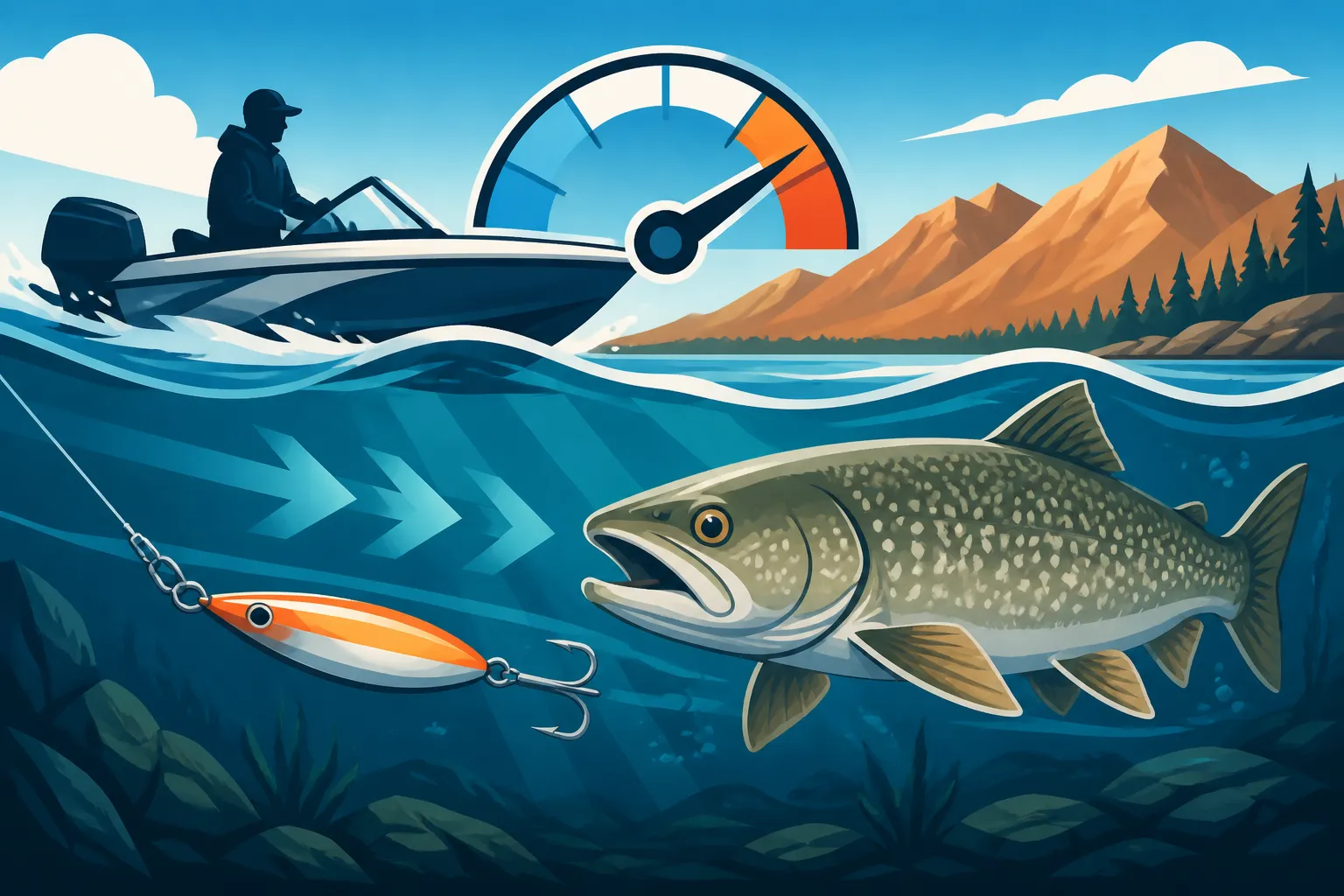
Best trolling speed for lake trout
Oh, the age-old question that keeps many of us Nevada anglers up at night: "What's the best trolling speed for lake trout?" You're out there on those vast, glittering waters of Lake Tahoe or one of our other stunning reservoirs, maybe a bit frustrated, watching your line, wondering if you're too fast, too slow, or just plain wrong. It’s a common struggle, trust me. Lake trout, or Mackinaw as we often call them, are magnificent, elusive creatures, and nailing that perfect speed can feel like cracking a secret code. This guide is here to decode it for you, helping you understand the nuances of trolling speed to increase your chances of landing that trophy Mackinaw.
Understanding Lake Trout Behavior and Trolling Fundamentals
Before we even talk numbers, let's get into the head of a Mackinaw. These aren't your average, eager-to-bite panfish. These are apex predators, often residing in the deep, cold, dark waters of our Nevada lakes. They're built for ambush, and their behavior heavily dictates how they react to your presentation.
Why Speed is the Secret Sauce for Mackinaw
Think about it from a lake trout's perspective. In their deep, often dimly lit world, they rely on sight and lateral line vibrations to detect prey. Your trolling speed directly affects how your lure moves and vibrates, mimicking different types of forage.
- Mimicking Prey: A slower speed might imitate a lethargic, injured baitfish, an easy meal that doesn't require much energy to chase. A faster speed, conversely, can simulate a fleeing, panicked fish, triggering an aggressive reaction strike. Mackinaw are opportunistic, but they're also efficient. They won't expend excessive energy unless the reward justifies it. The exact speed often dictates whether your lure looks like a "too good to pass up" snack or an impossible-to-catch blur.
- Energy Conservation and Strike Windows: Especially in colder waters, a lake trout's metabolism is slower. They might not be willing to chase a lure that's zipping by at warp speed. However, during certain feeding windows, or when they're particularly active, they'll smash a faster-moving offering. Finding that balance – that "strike window" created by your lure's action at a specific speed – is absolutely critical.
The Basics of Trolling for Deep-Dwellers
Trolling itself is the act of dragging a baited line or lure behind a moving boat. For deep-dwelling fish like Mackinaw, this involves specialized gear to get your lure down to their preferred depths.
- Depth Control and Speed Interplay: It’s impossible to talk about trolling speed without discussing depth. Your speed, combined with your line type, leader length, and the weight of your downrigger ball or planer board, all work together to determine how deep your lure runs. For instance, increasing your speed with the same setup will often cause your lure to run shallower, due to water resistance. Conversely, slowing down can let your lure sink deeper. Understanding this interplay is key, because Mackinaw often hold to very specific thermal layers or relate directly to structure at certain depths. Many anglers swear by the effectiveness of Trolling Techniques for Lake Tahoe Mackinaw when targeting these fish.
- Presenting Lures Naturally: The goal is always to make your lure look as natural as possible. A spoon that's wobbling too frantically or a plug that's darting unnaturally fast might spook a wary Mackinaw. The right speed allows your lure to perform its designed action flawlessly, mimicking the movements of real baitfish. It’s a dance, and your boat is leading the rhythm.
Key Factors Influencing Your Trolling Speed
There's no single "magic" number for trolling speed. Every day on the water brings a new set of variables that demand adjustments. Ignoring these factors is like trying to drive a car with your eyes closed – you might get somewhere, but it won't be efficient or safe!
Water Temperature and Lake Trout Activity
This is arguably the most significant factor. Lake trout thrive in cold water, typically preferring temperatures between 45 and 55 degrees Fahrenheit.
- Metabolism and Chase Response: In colder water, their metabolism slows down, making them less inclined to chase a fast-moving bait. Here, a slower, more deliberate presentation often works best. As the water warms up (even slightly in their preferred depth zone), their activity levels can increase, allowing for faster trolling speeds. You might find them in different parts of Lake Tahoe Nevada Fishing Guide depending on the season and temperature.
- Targeting Thermal Layers: Mackinaw will seek out specific thermal layers. Your fish finder will be your best friend here, helping you identify these temperature breaks and the depths where fish are holding. If you're marking fish at 80 feet in 50-degree water, your speed needs to be appropriate for that temperature, not the warmer surface water.
Lure Type and Action
Different lures are designed to perform at different speeds. What makes a spoon wiggle might make a plug spin wildly or do nothing at all.
- Spoons: Lures like large spoons (e.g., Dodger, Sockeye Slammer, or a classic Daredevil) often have a broad wobble or flutter. They tend to perform best at slower to moderate speeds (think 1.5 to 2.5 mph). Too fast, and they might blow out or simply spin. Too slow, and they might just drag.
- Plugs and Stickbaits: These include popular choices like Rapalas, J-Plugs, or FlatFish. Many plugs have a specific lip design that gives them a distinct swimming or diving action. They often require a slightly faster speed (2.0 to 3.5 mph) to get that enticing darting or wiggling motion. Some plugs are designed for even higher speeds.
- Dodgers and Flashers with Bait: Dodgers and flashers are attractors designed to draw fish in with their flash and vibration. They require a specific speed range to create their erratic, fish-attracting action. When paired with a bait (like a minnow or piece of cut bait), the speed must allow the bait to trail naturally, not spin unnaturally. Usually, these setups excel at slower speeds, often 1.0 to 2.0 mph, depending on the specific dodger's design. It's a fine line to walk, as the dodger needs to work, but the trailing bait needs to look irresistible.
Table: Common Lake Trout Lures and Suggested Trolling Speeds
| Lure Type (Examples) | Typical Speed Range (MPH) | Why This Speed? | Notes |
|---|---|---|---|
| Large Spoons (e.g., Dodger) | 1.5 – 2.5 | To achieve a wide, enticing wobble and flash without spinning out. | Can be effective for less active fish. Adjust for varying spoon designs. |
| Plugs/Stickbaits (e.g., Rapala) | 2.0 – 3.5 | To activate the plug's inherent swimming or darting action. | Faster speeds mimic fleeing baitfish. Some plugs are designed for higher speeds. |
| Dodgers/Flashers with Bait | 1.0 – 2.0 | To create a fish-attracting wobble/flash while allowing trailing bait to swim naturally. | Too fast will cause the bait to spin unnaturally or the dodger to "blow out." Focus on consistent action. |
| Live Bait (minnow) | 0.5 – 1.5 (drift or very slow troll) | To present a natural, vulnerable meal to cautious fish. | Often used with minimal weight or a very slow, controlled drift. Requires patience and sensitivity. |
Forage Base and Imitation
What are the Mackinaw eating? Knowing their primary food source in a particular lake can help you determine the best speed.
- Matching the Hatch: If they're feeding on kokanee salmon, which are agile and quick, a faster trolling speed might be more effective in mimicking a struggling kokanee. If they're targeting slower-moving bottom fish or insects, a reduced speed makes more sense. Understanding the prey species in a lake like Lake Tahoe, for instance, is crucial for How to Catch Mackinaw Trout at Lake Tahoe.
- Speed of Prey: Observe the natural movement of the prey. Small minnows often dart quickly, while larger bottom dwellers might be slower. Your lure's action and speed should align with these natural movements to trick the Mackinaw.
Weather Conditions and Water Clarity
The elements play a huge role in both fish behavior and your ability to maintain a consistent speed.
- Wind and Current: Wind can make maintaining a steady boat speed a real challenge. You might think you're going 2.0 mph, but a strong headwind could be pushing your boat slower, or a tailwind pushing it faster than your GPS indicates. Pay close attention to your actual speed over ground. Current, while less common on large lakes, can also affect your lure's action and depth. This is where a good Best Fish Finder for Reservoir Fishing can help you track your lure and boat's true movement.
- Bright Sun vs. Cloudy Days: On bright, sunny days with clear water, Mackinaw often retreat to deeper, darker water and can be more wary. Slower, more subtle presentations might be needed. On cloudy days or during low light conditions (dawn/dusk), they might move shallower and be more aggressive, potentially responding to faster speeds.
- Water Clarity: In gin-clear waters like Lake Tahoe, fish have excellent visibility. This means your presentation needs to be impeccable. Slower speeds often allow for closer inspection and a more natural appearance. In slightly stained water, faster speeds might create more vibration and flash, helping fish locate your lure.
The Sweet Spot: Optimal Trolling Speeds for Nevada Lake Trout
Alright, let's get down to some actionable numbers. While there's no magic bullet, there are proven ranges that generally yield the best results for Mackinaw in Nevada's deep, clear waters.
General Speed Recommendations
For Lake Trout, especially in Nevada's larger reservoirs, a good starting point for trolling speed is typically between 1.5 and 3.5 miles per hour (MPH).
- 1.5 – 2.5 MPH: This range is often your bread and butter, especially for dodger/flasher-and-bait combos, or larger spoons. It allows the lure to achieve a tantalizing wobble and flash without overwhelming the fish. This is particularly effective when the fish are less active, perhaps during colder parts of the year or in deep, low-light conditions. Many anglers targeting Mackinaw Trout Size and Age at Lake Tahoe will start in this slower range.
- 2.5 – 3.5 MPH: When fish are more aggressive, or if you're using plugs designed for a faster retrieve, this range can trigger powerful reaction strikes. It mimics a fleeing baitfish, and the increased speed often covers more water, helping you locate active fish. If you're using a lure that has a tight, quick action, this speed will really make it dance.
Remember, these are starting points. The key is to experiment within and around these ranges.
Adjusting for Active vs. Finicky Fish
How the fish are behaving on any given day should inform your speed.
- Speeding Up for Aggressive Fish: If you're consistently getting strikes or seeing active fish on your sonar, don't be afraid to bump up your speed slightly. Sometimes, that extra half-mile per hour is all it takes to push a neutral fish into striking. You'll often find more aggressive fish during prime feeding times or when schools of baitfish are actively moving.
- Slowing Down for Lethargic or Finicky Fish: If you're marking fish but not getting bites, or if the fishing is generally slow, try reducing your speed incrementally. A slight decrease can often coax a lethargic fish into biting. This is especially true for large, old Mackinaw that have seen countless lures in their lives and require a perfect, unthreatening presentation. Sometimes, the difference between a bite and no bite is just 0.2 MPH.
Experimentation is Your Best Friend
Never be afraid to break the "rules" and try something completely different.
- Small Increments Make a Big Difference: Adjust your speed by small increments, like 0.1 or 0.2 MPH. These subtle changes can dramatically alter your lure's action and appeal to the fish. Make a change, troll for 15-20 minutes, and observe the results.
- Log Your Successes: Keep a fishing log! Note the date, time, weather, water temperature at depth, lure type, and most importantly, your successful trolling speed. Over time, you'll start to see patterns that will make you a much more effective Mackinaw angler. This data will be invaluable for future trips. Don't be shy about trying to How to find fish in a new lake with this methodical approach.
Practical Tips for Maintaining and Adjusting Trolling Speed
Having the right speed in mind is one thing; consistently achieving it on the water, especially in windy or choppy conditions, is another. Here’s how you can take control.
Using Your Electronics Effectively
Modern electronics are an angler's best friend, especially when it comes to precision trolling.
- GPS for Precise Speed Readings: Your boat's speedometer often measures speed through the water, which can be inaccurate due to current. A GPS unit, however, measures your "speed over ground" (SOG), which is what truly matters for your lure's action. Always rely on your GPS for accurate trolling speed. Brands like Garmin, Humminbird, and Lowrance offer excellent units that provide precise speed readings.
- Fish Finders and Sonar: Use your fish finder not just to locate fish, but also to monitor your downrigger balls and lure presentations. Some advanced units can even show you your lure's depth and how it's behaving at different speeds. If you see fish at a certain depth, you can adjust your speed to ensure your lure stays in that strike zone. A good Best Fish Finder for Reservoir Fishing is an investment that pays dividends.
Propeller Pitch and Kicker Motors
Your boat's propulsion system plays a critical role in speed control.
- Propeller Pitch: The pitch of your main engine's propeller determines how much water it "bites" with each rotation. A lower pitch propeller can allow for slower trolling speeds without needing to drop your engine's RPMs too low, where it might lug or run inefficiently. Conversely, a higher pitch prop might make it harder to achieve very slow speeds.
- The Benefit of a Kicker Motor: For serious trollers, a dedicated kicker motor (a smaller, auxiliary outboard engine) is a game-changer. These motors are designed for slow-speed operation, providing incredibly precise and consistent trolling speeds, even in wind or chop. They're also much more fuel-efficient for trolling than your main engine. This becomes particularly useful when you're trying to master Deep Water Techniques for Lake Mead Bass, which shares some commonalities with Mackinaw fishing.
Drifting and Back-Trolling Considerations
Sometimes, traditional forward trolling isn't the only answer, or even the best one.
- Controlled Drifting: If there's a gentle breeze or current, you can use it to your advantage for controlled drifting. This offers a very natural, almost motionless presentation that can be deadly for wary Mackinaw. You can still influence your "speed" by using a drift sock or by intermittently engaging your main engine or kicker to slow or redirect your drift.
- Back-Trolling: Back-trolling (using your main engine in reverse) allows for incredibly slow and precise boat control, especially in windy conditions. It helps you keep your bow pointed into the waves, providing a smoother ride and better lure presentation. It’s a technique often employed when the fish are extremely finicky.
Gear Setup for Speed Control
Your rods, reels, and terminal tackle all contribute to effective speed management.
- Line Type: Using a thinner diameter line, like braided line with a fluorocarbon leader, can reduce drag in the water, allowing your lure to run deeper and maintaining its action more effectively at a given speed. This is a common setup for those pursuing Best Fishing Rods for Nevada Lakes to handle these powerful fish.
- Downriggers: These are essential for deep-water trolling. They allow you to get your lure down to precise depths, and you can run multiple lines at different depths. Your trolling speed directly affects how far back your lines blow out from the downrigger ball. Learning to read your downrigger's depth counter in conjunction with your GPS speed is crucial.
- Planer Boards: While less common for deep-dwelling Mackinaw, planer boards are excellent for spreading lines out to the side of the boat, covering a wider swath of water. Your speed impacts how effectively the boards run and how much your lure deviates from a straight path.
Mastering the art of trolling for lake trout in Nevada is a journey, not a destination. It requires patience, observation, and a willingness to experiment. By understanding the intricate relationship between lake trout behavior, lure action, environmental factors, and precise boat control, you'll be well on your way to consistently finding that "sweet spot" speed and reeling in those magnificent Mackinaw. Now get out there, pay attention to the details, and make that tackle dance!
Disclaimer
This article is for general informational purposes only and does not constitute professional advice. Laws, prices and regulations vary by location and change over time. Consult a qualified professional for guidance on your specific situation.