Bowcutt Trout Hybrid Identification
Have you ever reeled in a trout in Nevada, admired its beauty, and then found yourself scratching your head, wondering exactly what kind of fish you were holding? It's a common dilemma, especially when you're looking at a fish that seems to have a mix of characteristics from different species. Those mixed-up features often point to a hybrid, and one of the most intriguing in our state's waters is the Bowcutt trout. This guide is here to unravel the mystery, helping you confidently identify this unique rainbow-cutthroat cross.
Understanding Trout Hybrids in Nevada
The world of trout can be wonderfully complex, and nowhere is that more apparent than when you start talking about hybrids. These fish, a blend of two different species, offer a fascinating look into genetics and the dynamic nature of our waterways. For anglers, knowing your hybrids isn't just a fun fact; it's often crucial for following regulations and appreciating the unique biology swimming beneath the surface.
The Basics of Trout Genetics and Crossbreeding
At its core, a trout hybrid occurs when two different species of trout interbreed. This can happen naturally where their ranges overlap, or it can be a result of human intervention through stocking programs. In Nevada, where we have a mix of native and introduced trout species, the conditions are ripe for these genetic mash-ups. The Bowcutt trout is a prime example, being a cross between a rainbow trout (Oncorhynchus mykiss) and a cutthroat trout (Oncorhynchus clarkii).
Think of it like this: different dog breeds can often produce offspring with a mix of traits from both parents. Trout are similar. When a rainbow and a cutthroat spawn together, their offspring inherit a genetic blueprint from each, leading to a unique combination of physical characteristics. This can make identification tricky, as the hybrid might display some features strongly associated with one parent, and other features from the other. Sometimes, the hybridization is intentional, to create a fish with desirable traits like faster growth or increased hardiness. Other times, it's simply a natural occurrence when two species find themselves in the same spawning grounds.
Why Hybrid Identification Matters to Anglers
You might wonder, "Why go through all the trouble of identifying a hybrid?" Well, for starters, it's about being a responsible angler. Nevada has specific regulations for different trout species, including bag limits, size restrictions, and even specific methods for certain fish. Misidentifying a fish could inadvertently lead to a violation, which nobody wants. Imagine accidentally keeping a cutthroat when you thought it was a rainbow, only to find out you've exceeded the limit for that particular species.
Beyond regulations, proper identification is important for conservation. Native trout species, like our precious Lahontan cutthroat, are often protected and subject to stricter rules to ensure their survival. Knowing a hybrid from a pure native fish helps support these conservation efforts. Plus, let's be honest, there's a certain satisfaction in knowing exactly what you've caught. It enhances your understanding of the local ecosystem and deepens your appreciation for the diversity of fish in our beautiful state. It's like being a detective on the water, piecing together clues to solve a fishy mystery.
The Pedigree of the Bowcutt: Rainbow and Cutthroat
To truly understand the Bowcutt, we first need to get a clear picture of its parents: the rainbow trout and the cutthroat trout. Each of these species has distinct features that, when blended, create the unique appearance of their hybrid offspring. Knowing the individual characteristics is the first step in recognizing the fascinating blend that is a Bowcutt.
Key Features of a Pure Rainbow Trout
Rainbow trout are probably the most recognized trout in Nevada, thanks to extensive stocking programs that bring them to many lakes and rivers across the state. They're often celebrated for their vibrant colors and feisty fight.
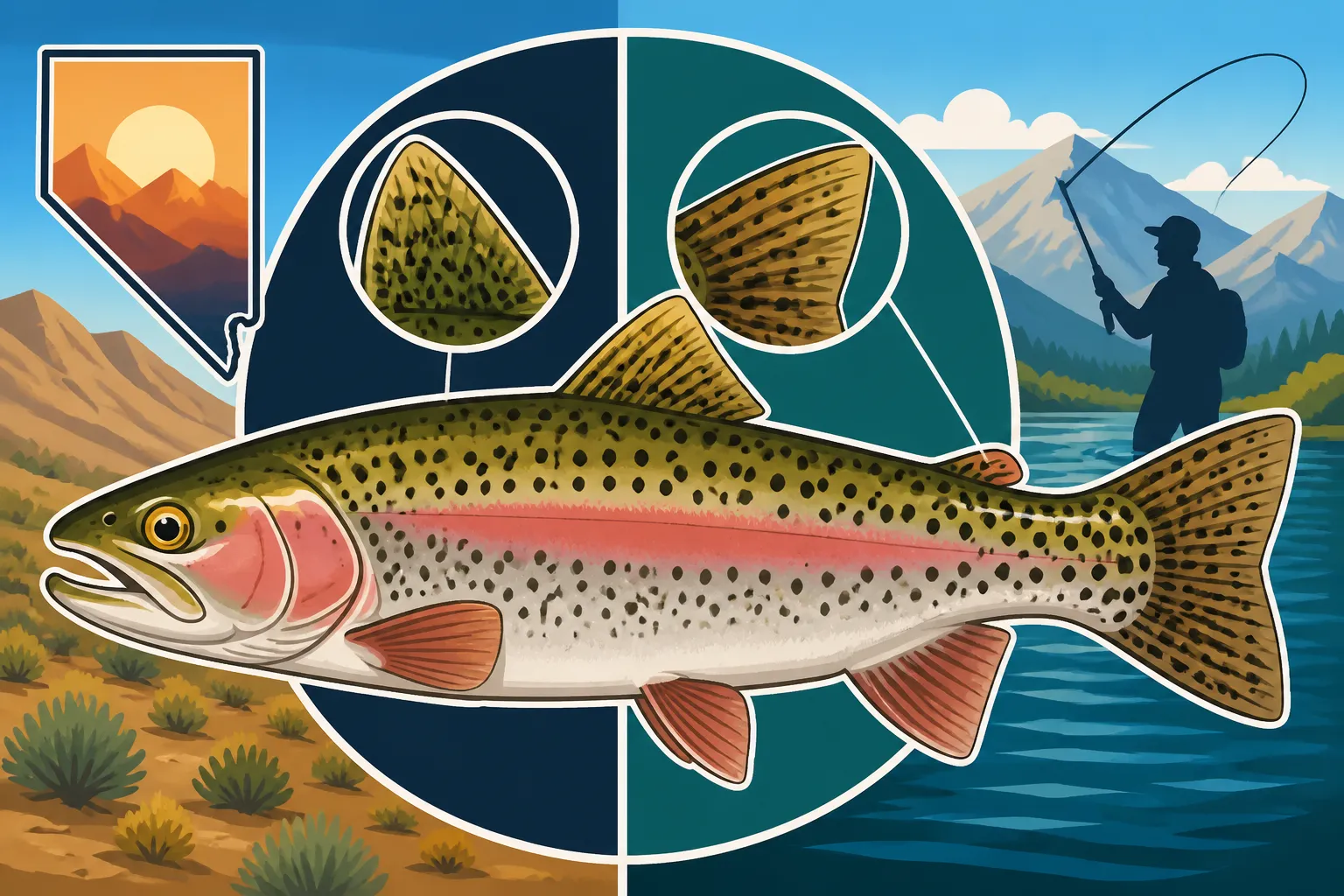
A classic rainbow trout usually has a distinctive, broad, pinkish or reddish stripe running horizontally along its flanks, from its gills to its tail. This stripe can be quite vivid, especially during spawning season. Their body is typically covered in numerous small, dark spots, which are usually evenly distributed over their back, sides, and fins. When you look inside their mouth, you'll generally find it's a clean white or light gray. Unlike some other trout, they lack any reddish-orange markings under their lower jaw. Their overall body shape tends to be more streamlined and slender compared to some cutthroat varieties, and their caudal fin (tail) is typically square or slightly forked. You can often find information about Rainbow Trout Stocking Size in Nevada if you're curious about what to expect from the stocked fish. These fish are hardy and adapt well to various environments, which is why they're so prevalent in our local fisheries.
Distinctive Marks of a Pure Cutthroat Trout
Cutthroat trout, on the other hand, carry a specific hallmark that gives them their name: the iconic red or orange "slash" mark under their jaw. This slash can range from a vibrant crimson to a faint orange, but it's almost always present in a pure cutthroat. In Nevada, our most famous native cutthroat is the Lahontan Cutthroat Trout, a truly magnificent fish with a rich history, particularly in waters like Pyramid Lake.
Pure cutthroat trout tend to have larger, more irregularly shaped spots compared to rainbows. These spots are often concentrated more heavily towards the tail and may be less uniform across the entire body. Their base coloration can vary widely, from silvery-bronze to olive-green or even golden hues, depending on their habitat. While they may have a reddish lateral band, it's usually not as distinct or vibrant as a rainbow's. The mouth is typically not as stark white as a rainbow's, sometimes appearing darker or with a slight yellowish tint. The best way to deepen your understanding is by learning about Lahontan Cutthroat Trout Identification, as this species is particularly special to Nevada anglers. These native fish often have a deeper body profile and a somewhat larger head in proportion to their body than a typical rainbow.
Pinpointing the Bowcutt Trout Hybrid
Now that we've established the distinct traits of rainbow and cutthroat trout, it's time to delve into how these features merge to create the Bowcutt hybrid. Identifying a Bowcutt is often about looking for a blend, a compromise, or sometimes even a confused mix of what its parents exhibit. It's not always straightforward, but with practice, you can spot the tell-tale signs.
The Tell-Tale Signs: A Blending of Features
The most defining characteristic of a Bowcutt trout is that it will display a combination of traits from both its rainbow and cutthroat parents. This means you won't see a perfectly clear "slash" or a perfectly vibrant "stripe," but rather something in between.
Look for a faint or incomplete red/orange slash mark under the lower jaw. It might be present on only one side, or broken up, or simply a paler shade than you'd expect on a pure cutthroat. Simultaneously, you might notice a lateral stripe, but it could be less pronounced, shorter, or more muted in color than on a classic rainbow. The spotting pattern is another key indicator. Bowcutts often have a mix of spot sizes and distributions – some small, rainbow-like spots might be present alongside larger, more irregular cutthroat-style spots, particularly towards the tail. The mouth coloration might not be purely white like a rainbow's, nor distinctly dark like some cutthroats, but somewhere in the middle. Their overall body coloration can also be a mixed bag, sometimes showing hints of green, gold, and silver all at once. It's like the fish couldn't quite decide which parent it wanted to look like most! Anglers often debate the exact classification, and that's precisely why understanding the blended features is so important.
Common Variations and How to Distinguish Them
It's crucial to understand that not all Bowcutts look identical. Just like human siblings can look quite different, so can hybrid trout. Some Bowcutts might lean more heavily towards their rainbow parent in appearance, showing a stronger lateral stripe and smaller spots, but still possessing that faint hint of a jaw slash. Others might favor the cutthroat side, with larger spots and a more distinct slash, but with a body shape or fin structure that whispers "rainbow."
One common challenge is the "ghost" slash. Sometimes, the cutthroat slash is so faint, especially in certain lighting or water conditions, that it's barely visible. You might need to gently lift the gill plate or carefully examine the underside of the jaw to spot it. This variability means you can't rely on just one feature for identification. You have to consider the whole package. Compared to other hybrids like a tiger trout, which is a very distinct brook trout x brown trout cross with vermiculation patterns, the Bowcutt's appearance is often more subtle and requires a closer look at these blended characteristics. Always remember that environmental factors, diet, and age can also influence a fish's coloration and physical appearance, adding another layer of complexity to the identification process.
Where and When You Might Encounter a Bowcutt
Finding a Bowcutt trout isn't about targeting them specifically; it's about fishing in the right places where their parental species are present and have the opportunity to interbreed. These hybrids are typically found in specific environments within Nevada where the ecological conditions support both rainbow and cutthroat populations.
Typical Habitats and Nevada Waters
Bowcutt trout hybrids are most likely to be found in waters that contain both rainbow trout and cutthroat trout. This often includes reservoirs and certain rivers in Nevada where both species have been stocked or have naturally occurring populations that overlap. For instance, in some parts of the Truckee River system or certain reservoirs that receive regular rainbow trout stockings and also have historical or managed cutthroat populations, you might encounter these unique hybrids. They are not considered a native Nevada fish species but rather a product of the interaction between introduced rainbows and native or stocked cutthroats.
Areas where both species are actively reproducing in proximity create the ideal scenario for hybridization. This isn't necessarily every lake or river, but typically larger bodies of water or river systems where diverse trout populations coexist. They thrive in similar conditions to their parent species, preferring cool, clear, well-oxygenated water. If you're fishing in a spot known for both rainbows and cutthroat, especially where a Nevada Fish Species Guide indicates a mixed population, keep an eye out for a Bowcutt – you might be surprised!
Factors Influencing Hybrid Presence and Abundance
The presence and abundance of Bowcutt trout can be influenced by several factors. Stocking programs play a significant role. If a body of water is regularly stocked with rainbow trout, and it also contains a reproducing population of cutthroat trout, the chances of hybridization increase. Conversely, if a native cutthroat population is isolated or there are no rainbow trout present, hybrids won't occur. Natural migration patterns during spawning seasons can also bring different species into contact, facilitating crossbreeding.
Environmental conditions, such as water temperature, flow rates, and habitat availability, can also affect which species thrive and where they choose to spawn, indirectly influencing hybridization rates. While Bowcutts are not specifically managed as a distinct species, their presence is an indicator of the dynamic interactions within our fisheries. As for their behavior, hybrids often display a mix of traits from their parents, sometimes exhibiting the aggressive feeding of a rainbow combined with the hardiness of a cutthroat. This can make them an exciting catch for anglers, often putting up a spirited fight.
Practical Identification Tips for Anglers
Even with all the knowledge in the world, identifying a fish on the bank, especially a hybrid, can still be a bit of a challenge in the moment. The key is to have a systematic approach and to be prepared. Don't worry, even seasoned pros sometimes have to take a closer look!
The "Junk Drawer" Approach: Looking at Multiple Cues
When trying to identify a Bowcutt, think of it like going through a junk drawer – you're looking for a collection of clues, not just one definitive item. Don't rely solely on the presence or absence of a jaw slash, or just the spotting pattern. Instead, combine all the features we've discussed:
- Check the Jaw Slash: Is it present? How prominent is it? Is it full and vibrant, or faint, broken, or only on one side? A faint or incomplete slash is a strong indicator of a hybrid.
- Examine the Lateral Stripe: Does the fish have a red stripe along its side? Is it broad and vibrant like a rainbow's, or more subdued and less distinct? A muted stripe suggests hybridity.
- Observe Spotting Patterns: Are the spots small and evenly distributed like a rainbow, or larger and more concentrated towards the tail like a cutthroat? A mix of both, or an irregular pattern, points to a Bowcutt.
- Look at Mouth Color: Is the inside of the mouth pure white (rainbow), or darker/yellowish (cutthroat)? An intermediate shade can signal a hybrid.
- Consider Body Shape and Overall Coloration: While variable, sometimes a hybrid will have a body profile that doesn't quite fit either parent perfectly.
- Fin Condition: While not a primary identifier for hybrids, fin condition can tell you if a fish is wild or hatchery-raised, which can sometimes provide context.
Having a good field guide or even a waterproof laminated chart can be incredibly helpful. You can often find excellent resources, including laminated fish identification cards, on Amazon that are designed to withstand a day on the water. Keep one handy in your tackle box! This multi-faceted approach significantly increases your chances of correctly identifying the fish in your hands.
What to Do If You're Still Unsure
Let's be honest, sometimes you're just not 100% sure, and that's okay. When in doubt, it's always best to err on the side of caution, especially when it comes to regulations. If you suspect you have a protected species or aren't sure if your fish falls within legal limits for a specific type of trout, it's generally best to release it gently. This is particularly important for species like the Lahontan cutthroat, which have strict regulations. Understanding Nevada Fishing Regulations Explained is paramount here.
If you want to learn more, take a clear photo of the fish, focusing on the key identification features like the jaw, spots, and lateral line. You can then consult a local tackle shop expert, an experienced angler, or even reach out to the Nevada Department of Wildlife (NDOW) for assistance. Many state agencies have biologists who are happy to help educate anglers. Modern smartphones take excellent pictures, and if you're concerned about dropping your phone in the water, consider investing in a waterproof camera case, also widely available on Amazon, for those critical catch photos. This way, you contribute to better understanding our fish populations and ensure you're always fishing responsibly.
Here's a quick comparison table to help you visualize the differences:
| Feature | Rainbow Trout | Cutthroat Trout | Bowcutt Trout Hybrid |
|---|---|---|---|
| Jaw Slash | Absent | Distinct red/orange mark under jaw | Faint, broken, or incomplete red/orange mark |
| Lateral Stripe | Prominent, vibrant pink/red stripe | Usually absent or very faint | Present but often muted or less distinct |
| Spots | Numerous small, evenly distributed dark spots | Larger, more irregular spots, often clustered towards tail | Mix of small and larger spots, varied distribution |
| Mouth Color | White or light gray | Often darker, sometimes yellowish tint | Intermediate shade, not distinctly white or dark |
| Body Color | Silvery-green to brassy, sometimes iridescent | Greenish-yellow, golden, or bronze; can vary | Highly variable, blend of parent colors |
| Native to NV | No (introduced, widely stocked) | Yes (Lahontan Cutthroat is native) | No (hybrid of introduced/native) |
Remember, identifying trout, especially hybrids, can be a rewarding challenge. The more you observe and compare, the better you'll become at recognizing these beautiful and diverse fish in Nevada's waters. Learning about How to Fish for Trout in Nevada will often put you in proximity to these hybrids, so knowing what you've caught adds to the experience! Enjoy your time on the water, and tight lines!
Disclaimer
This article is for general informational purposes only and does not constitute professional advice. Laws, prices and regulations vary by location and change over time. Consult a qualified professional for guidance on your specific situation.