Striped Bass Feeding Patterns
One of the most thrilling experiences for any angler in Nevada is getting tangled up with a powerful striped bass, often called a striper. These magnificent fish are true apex predators, but their feeding habits can be notoriously finicky, leaving many a hopeful fisher scratching their head on why the bite suddenly died. This guide is dedicated to demystifying the intricate world of striped bass feeding patterns, helping you understand when, where, and how these impressive fish hunt so you can increase your chances of a successful catch.
Understanding Striped Bass Biology and Behavior
Before we can truly grasp their feeding patterns, it's essential to understand the basic biology and inherent behaviors that drive striped bass in Nevada's waters. These fish aren't just swimming around looking for a meal; they're governed by instinct, environmental factors, and their physiological needs, all of which dictate their predatory behavior.
Striped Bass as Apex Predators
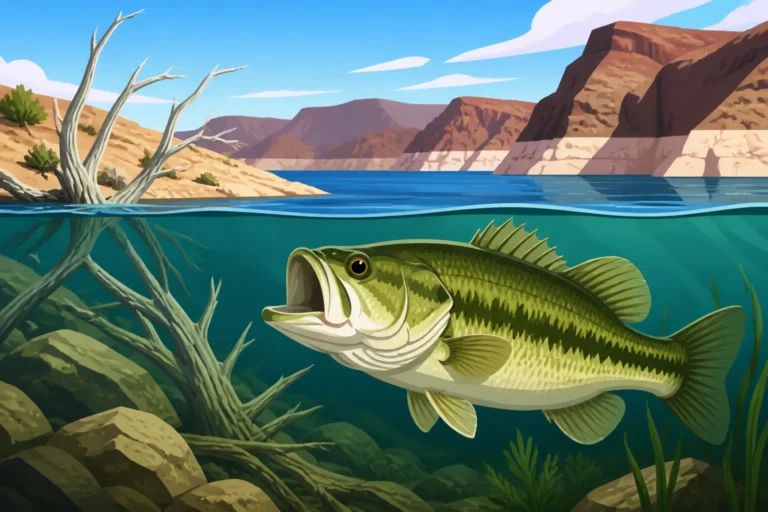
Striped bass, often simply called stripers, are undeniably at the top of the food chain in many of Nevada's larger reservoirs like Lake Mead and Lake Mohave. They are built for speed and power, with a streamlined body, strong caudal fin, and a large, bucket-like mouth designed to engulf prey. Their predatory nature means they are constantly seeking out opportunities to feed, but they do so with a calculated efficiency. They aren't random hunters; they leverage their environment and their schooling instincts to maximize their caloric intake with minimal effort. Think of them as the wolves of the underwater world – intelligent, social, and incredibly effective hunters.
When you're out on the water, remember that you're dealing with a creature perfectly adapted to its role. This understanding helps you anticipate their movements and preferred ambush points. They aren't going to be lurking in muddy backwaters unless there's a specific reason, like an abundance of baitfish or a sudden change in water conditions. Instead, they prefer areas where they can corner bait or use current and structure to their advantage, much like a hawk uses thermals to spot prey from above.
Sensory Acuity and Hunting Strategies
Stripers possess an impressive array of senses that aid them in their relentless pursuit of food. Their keen eyesight is excellent, especially in clear water and low-light conditions, allowing them to spot baitfish from a distance. However, their lateral line system is arguably their most crucial sensory tool for hunting. This specialized organ detects vibrations and pressure changes in the water, essentially giving them a "feel" for their surroundings and the movements of prey, even in murky conditions or complete darkness. This is why certain lures that emit strong vibrations can be incredibly effective.
Beyond their senses, stripers employ various hunting strategies. They can be ambush predators, waiting patiently near submerged cover or along sharp drop-offs for unsuspecting baitfish to pass by. More often, especially larger schools, they are active pursuit predators, corralling baitfish into tight balls at the surface or against a structure before launching a coordinated attack. Understanding these strategies helps you choose the right fishing technique and presentation. If they're ambushing, a slow-moving, suspended bait might work. If they're in pursuit, a fast-moving, erratic retrieve could trigger a reaction strike.
Schooling Behavior and Opportunistic Feeding
One of the most defining characteristics of striped bass is their strong schooling instinct. While smaller stripers almost always travel in large, tight schools, even bigger, more solitary fish will often join groups, especially when actively feeding. This schooling behavior offers several advantages: it provides safety in numbers, allows for more efficient hunting through coordinated efforts, and helps them locate food more effectively by covering a wider area. When a school of stripers finds a bait ball, the ensuing feeding frenzy can be explosive, with fish crashing the surface in a spectacular display known as a "boil."
This opportunistic feeding is a hallmark of their behavior. Stripers aren't picky eaters when they're in a feeding mood. They will gorge themselves on whatever forage is most abundant and easiest to catch. This means that while they have preferred prey, they will readily adapt their diet based on what's available. For an angler, this translates to paying close attention to what the stripers are eating on a given day, often called "matching the hatch." If you see small baitfish scattering, you'll want lures that mimic those small fish. If larger shad are present, you'll want a bigger profile bait.
Key Forage Species in Nevada Waters
To consistently catch striped bass, you absolutely need to understand their diet. What stripers eat directly influences where they are found, how they behave, and what lures or baits will tempt them. In Nevada's large reservoirs, a few key species make up the bulk of their diet.
Threadfin and Gizzard Shad: The Primary Diet
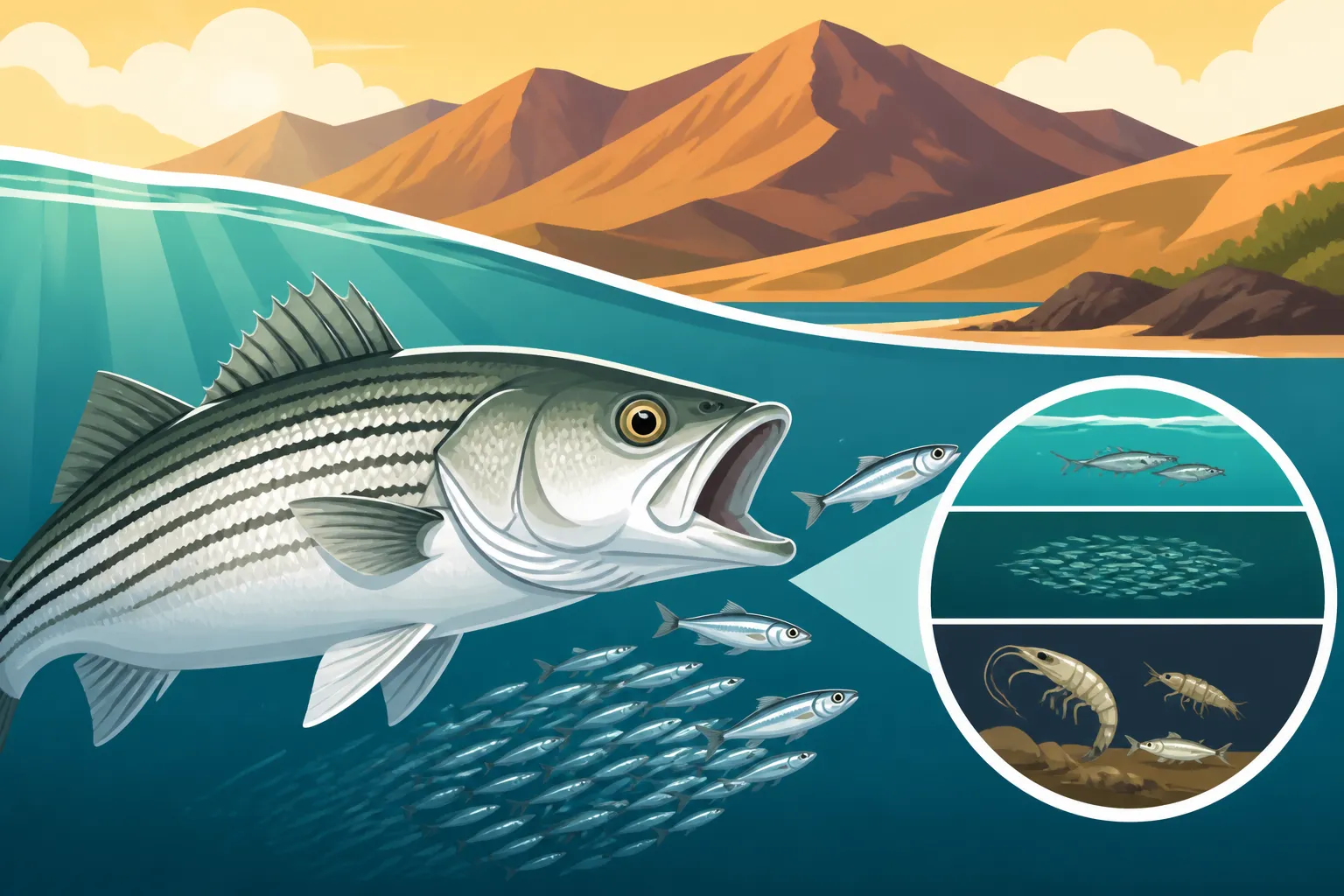
Without a doubt, threadfin shad and gizzard shad are the cornerstone of the striped bass diet in Nevada's major impoundments like Lake Mead and Lake Mohave. These schooling baitfish are incredibly abundant and provide a rich, easily accessible food source for stripers. Threadfin shad are smaller, often just a few inches long, making them a perfect snack for stripers of all sizes. Gizzard shad, on the other hand, can grow much larger, sometimes exceeding a foot in length, and become a crucial food source for trophy-sized stripers.
The life cycle and habits of these shad directly impact striper movements. Shad are plankton eaters, and they often congregate in vast schools, especially in open water. They are also sensitive to water temperature and oxygen levels, moving to find comfortable conditions. When stripers locate these large schools of shad, they will follow them relentlessly, often pushing them to the surface or against submerged structures for easier predation. Anglers who master locating shad often find themselves on top of feeding stripers. Many of the most popular striper lures on Amazon are designed to perfectly imitate the size, shape, and flash of these crucial baitfish.
Other Baitfish and Opportunistic Meals
While shad dominate the menu, stripers are not exclusively reliant on them. Other smaller fish, when available, can also become significant forage. These might include smaller sunfish, minnows, or even juvenile sportfish like small bass or trout if they venture into striper territory. This opportunistic aspect of their diet means that a striper might hit a lure that doesn't perfectly mimic a shad if it looks like an easy meal.
Beyond fish, stripers have been known to consume a variety of other items, although less frequently. Crayfish, insects, and even small amphibians or rodents that fall into the water are fair game if the opportunity arises. This broader diet reinforces the idea that stripers are aggressive, opportunistic feeders. It also explains why, occasionally, a seemingly "wrong" lure or bait might still get slammed. For instance, a small swimbait that resembles a bluegill could draw a strike if a striper is patrolling shallow cover where those fish reside.
Impact of Forage Abundance on Striper Behavior
The sheer abundance, or scarcity, of forage species profoundly impacts striped bass feeding patterns. In years or seasons of high shad populations, stripers can be incredibly active, growing rapidly, and forming massive, aggressive feeding schools. They might be less selective in their feeding, as there's simply so much food available. These are the times when "boils" at the surface are common, indicating widespread, aggressive feeding.
Conversely, when forage is scarce, stripers become more spread out, less aggressive, and often much harder to locate and tempt. They might spend more time searching for food or conserving energy, leading to fewer visible feeding frenzies. In these situations, your presentation needs to be more precise, and your choice of bait or lure more critical. They might require a slower retrieve, a more natural presentation, or live bait to entice a strike. Understanding the current status of baitfish populations in a given reservoir, often through reports from local tackle shops or fellow anglers, can provide invaluable insight. You can find excellent resources on tracking Nevada Striped Bass Seasonal Patterns.
Seasonal Feeding Patterns of Nevada Stripers
Just like us, stripers adjust their habits with the changing seasons. The brutal Nevada heat, the refreshing spring, and the crisp fall all bring different challenges and opportunities for these fish, directly influencing their feeding behavior.
Springtime Aggression and Spawning Related Feeding
Ah, spring in Nevada! As water temperatures begin to climb after the winter chill, typically reaching the mid-50s to low 60s Fahrenheit, striped bass kick into high gear. This is a period of intense activity, driven by two main factors: increasing metabolism after a slower winter, and the impending urge to spawn. Stripers will move out of their deeper winter haunts and begin to cruise shallower points, coves, and main lake areas in search of food. They're trying to build up energy reserves for the strenuous spawning process.
During this time, feeding can be incredibly aggressive. Stripers will chase down schools of shad with gusto, and anglers often report some of the most consistent action of the year. Look for them in areas where water is warming up fastest, as this is where shad will often congregate. Reaction baits like lipless crankbaits, swimbaits, and topwater lures can be incredibly effective during these pre-spawn and early spawn phases, as stripers are eager to strike at anything that resembles a fleeing baitfish. Understanding Nevada Bass Daily Limit and Size Rules for other species can also give you an idea of general fish activity during this time.
Summer Heat and Deep-Water Strategies
Once the scorching Nevada summer sun truly kicks in and water temperatures soar into the 70s and 80s, striped bass feeding patterns shift dramatically. Surface activity often decreases significantly during the bright, hot parts of the day. Stripers, like many other cool-water species, become sensitive to warm water and lower oxygen levels in the shallower zones. They will retreat to deeper, cooler, and more oxygenated waters, often suspending over deep channels, submerged structures, or near the thermocline (the layer where water temperature changes rapidly).
Their feeding during the summer often becomes concentrated in the early morning, late evening, and especially at night, when surface temperatures cool, and baitfish might move shallower. During the day, targeting suspended schools in deep water requires different tactics. Downriggers, lead core line, and heavy jigs or spoons are often necessary to get your bait down to where the fish are holding. Trolling deep-diving crankbaits or vertically jigging metal spoons can be very effective. It's crucial to use your electronics – a good fish finder is invaluable for locating these deep, suspended schools of stripers and the baitfish they are shadowing. You can find a robust selection of fish finders on Amazon that are perfect for reservoir fishing.
Fall Frenzy: Bulking Up for Winter
As autumn arrives and the oppressive summer heat begins to wane, water temperatures start to drop, ushering in another period of intense striped bass feeding: the "fall frenzy." This is arguably the most exciting time for striper fishing in Nevada. Stripers, sensing the approaching winter, enter a phase of aggressive feeding to pack on fat reserves. Their metabolism is high, and they know food will become scarcer and harder to find as the water gets colder.
During the fall, baitfish, particularly shad, will also become highly active, often schooling up in massive quantities and moving into coves and shallower flats as the overall lake temperature becomes more uniform. This convergence of active predators and abundant prey often leads to spectacular surface boils and sustained feeding action throughout the day. Topwater lures, large swimbaits, jerkbaits, and spoons cast into boiling schools are incredibly effective. This is the time when anglers have a real shot at catching multiple big stripers in a single outing. It's a truly special time on the water, and many anglers plan their trips around this fall feeding pattern.
Winter Slowdown and Metabolic Changes
When winter fully sets in, and water temperatures dip into the 40s and low 50s, striped bass metabolism slows significantly. They become less active, conserving energy, and their feeding becomes less frequent and often more subdued. They will typically move to the deepest parts of the reservoir, congregating in large, dense schools near main lake channels, deep points, or the base of submerged structures.
While the bite might not be as aggressive as in spring or fall, stripers still need to eat. The key to catching them in winter is a much slower, more subtle presentation. Vertical jigging spoons or soft plastics directly over suspended schools is often the most effective method. Live bait, such as shad or large minnows, fished slowly and deep, can also coax a strike from a lethargic winter striper. Don't expect explosive surface action; instead, anticipate soft bites and a more challenging, but still rewarding, pursuit. Remember, even in winter, understanding the Nevada Fishing Season Dates and Limits is crucial.
Daily and Environmental Influences on Striper Feeding
Beyond the broad seasonal shifts, day-to-day conditions and specific times of day play a huge role in when and how striped bass decide to feed. Overlooking these details can mean the difference between a full livewell and a frustrating skunk.
Time of Day: Dawn, Dusk, and Night Feeding
Like many predators, striped bass often exhibit peak feeding activity during periods of low light. Dawn and dusk are prime times. As the sun rises or sets, the reduced light levels give stripers an advantage over their prey, which might rely more heavily on sight. Baitfish are also often more active during these transitional periods, moving from deeper water to shallower feeding grounds or vice versa. This makes them vulnerable.
Night fishing for stripers, particularly during the hot summer months, can be incredibly productive. With the sun completely gone, surface water temperatures cool, and baitfish often move higher in the water column or closer to shore. Stripers use their superior lateral line system and keen low-light vision to ambush unsuspecting prey. Glow-in-the-dark lures, noisy topwater baits, or live bait fished under lights can be highly effective after dark. Many seasoned anglers will tell you that the biggest stripers are often caught under the cover of darkness. Make sure you have all the Essential Safety Gear for Boating on Lake Mead if you're venturing out at night.
Water Temperature and Oxygen Levels
Water temperature is perhaps the single most critical environmental factor influencing striped bass behavior. Stripers are cold-blooded, meaning their body temperature mirrors the water around them, and their metabolism is directly tied to it. They generally prefer water temperatures ranging from the mid-50s to low-70s Fahrenheit for optimal activity and feeding. When temperatures fall below this range, they become sluggish; when they rise too high, they seek cooler, deeper water to avoid thermal stress.
Oxygen levels also play a significant role. Warm water holds less dissolved oxygen than cool water. During hot summers, the combination of high temperatures and low oxygen can force stripers into specific, limited zones in the lake where conditions are more favorable. Understanding the thermocline (the layer where water temperature changes most rapidly) is vital, as this often defines the upper limit of oxygenated, cool water where stripers will comfortably suspend. Always keep an eye on water temperature if your boat has a sensor, or consult local reports.
Wind, Current, and Weather Fronts
Believe it or not, meteorological conditions like wind, current, and passing weather fronts also dictate striper feeding patterns. Wind can be a friend to the striper angler. A consistent breeze creates a "chop" on the water's surface, which breaks up light penetration, provides cover for predators, and concentrates baitfish. Wind-blown points and shorelines often have abundant baitfish, making them prime striper feeding grounds. The wind can also create currents that funnel bait, creating natural ambush points.
Current, whether from a dam release, inflowing rivers, or even strong winds, is a major attractant for stripers. They are built to thrive in current, using it to their advantage to ambush prey that is disoriented or swept along. Look for stripers where current meets structure, creating eddies or seams where baitfish might congregate.
Finally, weather fronts can either ignite or shut down a bite. Before a cold front moves in, falling barometric pressure often triggers an aggressive feeding spree as fish sense the change and try to feed before conditions worsen. After a cold front passes, rising pressure and clear skies can make fish lethargic and tight-lipped, making the bite much tougher. These "post-front" conditions often require slower presentations and more finesse.
| Season | Typical Water Temp Range | Primary Forage Activity | Striper Behavior & Location | Recommended Techniques |
|---|---|---|---|---|
| Spring | 50-65°F (10-18°C) | Shad moving shallower, spawning | Active, pre-spawn aggression; shallower points, coves | Reaction baits (crankbaits, swimbaits), topwater |
| Summer | 70-85°F (21-29°C) | Shad deeper during day, shallower at night | Retreat to deep, cool, oxygenated water; nocturnal feeding | Deep jigging, trolling, night fishing with lights, live bait |
| Fall | 60-75°F (15-24°C) | Shad schooling heavily, widespread | "Frenzy" feeding, bulking up for winter; widespread | Topwater, swimbaits, jerkbaits, spoons, live bait |
| Winter | 40-55°F (4-13°C) | Shad deep, less active | Slow metabolism, deep, dense schools; less frequent feeding | Slow vertical jigging, deep live baiting |
Recognizing Striper Feeding Signs and Locating Them
Finding actively feeding striped bass is often half the battle. They can be elusive, but they also give away clues to their presence and intentions if you know what to look for. Being observant and using your tools effectively are key.
Surface Activity: Boils and Jumps
The most exhilarating and unmistakable sign of feeding stripers is surface activity. This includes "boils," where entire schools of stripers push baitfish to the surface and violently thrash through them, creating a churning, frothing disturbance. You might also see individual stripers "jumping" clear out of the water, often a sign they're chasing baitfish right to the top. Seeing these signs is like hitting the jackpot – it tells you exactly where the action is, and it's time to cast quickly!
However, these boils can be fleeting. They might last only a few seconds or a few minutes before the stripers sound. The trick is to approach cautiously, stay downwind if possible to drift into range quietly, and make long, accurate casts with topwater lures, spoons, or swimbaits. Sometimes, a boil isn't just about fish on the surface; it indicates a massive school of stripers is below, pushing bait up. Even if the surface action stops, keep an eye on your fish finder, as the main school might still be active just below the surface. This is a common sight when fishing Lake Mead Striped Bass Hotspots.
Using Electronics to Find Bait and Predators
In the absence of visible surface activity, your boat's electronics, especially a good fish finder, become your best friend. Modern fish finders can paint a clear picture of what's happening beneath the surface, showing you not only the depth but also the presence of baitfish schools and larger predator arches. Look for dense, often blob-like formations of baitfish. Where there's bait, there are usually stripers not far behind.
Stripers often appear as distinct, strong arches or even large, dark blobs on your sonar screen, especially when they are schooled up. Pay attention to where these arches are in the water column – are they on the bottom, suspended in open water, or near a thermocline? Understanding their depth preference for the day is critical for presenting your lure at the right level. Some advanced units even allow side-imaging or 360-degree views, which can help you locate schools off to the sides of your boat, giving you an edge in finding fish that aren't directly beneath you. Consider investing in quality electronics to maximize your time on the water, easily found on Amazon.
Identifying Structure and Ambush Points
Stripers, even in open water reservoirs, are often associated with some form of structure. This could be a submerged old river channel, a prominent point that extends into the lake, a deep humps or rock piles, or even an underwater cliff face. These structures provide cover, create current breaks, and act as natural funnels or ambush points for baitfish.
Understanding how stripers relate to these structures changes with the seasons and time of day. In spring and fall, they might relate more to shallow points and coves. In summer, they'll be found along the deeper edges of channels or suspended over deep structure. Identifying these key structural elements on your lake map or with your electronics, and then observing how stripers are using them, is a crucial skill. How to Find Fish in a New Lake goes into more detail on this topic. Focusing your efforts on these high-percentage areas, even when fish aren't visibly feeding, can yield excellent results, as stripers often stage here before launching their attacks.
Gear and Techniques for Targeting Feeding Stripers
Once you've located the stripers and have a sense of their feeding patterns, it's time to choose the right tools and tactics to present your offering. The right gear and technique can turn a frustrating day into a memorable one.
Matching the Hatch: Lure Selection
The concept of "matching the hatch" is paramount when targeting feeding stripers. This means selecting lures that mimic the size, shape, color, and action of the primary forage species the stripers are currently feeding on, most often shad. If stripers are chasing small threadfin shad, a 3-inch white or silver swimbait or spoon will be more effective than a large gizzard shad imitation. Conversely, if bigger gizzard shad are present, larger swimbaits, big crankbaits, or even substantial topwater plugs might be the ticket.
Common lure types include:
- Swimbaits: Soft plastic swimbaits, often paddle-tail designs, rigged on jig heads are incredibly versatile and mimic shad perfectly.
- Spoons: Metal jigging spoons or casting spoons (like Kastmasters) are excellent for mimicking injured baitfish, especially when stripers are busting on the surface or suspended deep.
- Crankbaits: Deep-diving crankbaits are great for trolling or casting to deep, suspended fish, while lipless crankbaits excel in shallower, aggressive scenarios.
- Topwater Lures: Poppers, walk-the-dog baits, and prop baits are deadly when stripers are feeding aggressively on the surface.
- Jerkbaits: Suspended jerkbaits can be incredibly effective when stripers are holding at a specific depth and are finicky, offering a slow, tantalizing presentation.
Always have a variety of these lures in different sizes and colors in your tackle box. Best Lures for Striped Bass offers a deeper dive into popular options.
Live Baiting Strategies
While artificial lures are incredibly effective, sometimes nothing beats the real thing. Live bait is often the most productive method for catching striped bass, especially when they are less aggressive or holding deep. The primary live bait for stripers in Nevada is often threadfin or gizzard shad, which can be caught with a cast net in areas where legal, or purchased from bait shops if available. Other effective live baits include large minnows or even small trout in certain waters.
When live baiting, there are several common strategies:
- Free-lining: Simply hook a live shad through the nose or back and let it swim freely behind the boat or from shore. This is effective when stripers are actively chasing bait near the surface.
- Slip-bobber Rig: A slip-bobber allows you to present live bait at a precise depth, which is great for targeting suspended fish or when fishing over submerged structure.
- Bottom Rigging: Using a weight to get your live bait to the bottom, often on a Carolina rig or a three-way swivel setup, can be deadly for stripers that are holding tight to the lakebed, especially in deeper water.
- Downriggers: For targeting deep, suspended fish, downriggers allow you to precisely control the depth of your live bait, making it a favorite for many anglers on larger boats.
Remember to keep your live bait healthy and lively. A good bait tank with aeration is crucial, especially on hot days.
Trolling and Casting Methods
Both trolling and casting are highly effective methods for catching striped bass, and the choice often depends on the fish's behavior and the angler's preference.
Trolling is a fantastic search method, allowing you to cover vast amounts of water and present multiple baits at different depths. This is particularly effective when stripers are scattered or suspended in open water, or when you're trying to locate schools during the summer or winter slowdowns. You can troll with a variety of lures, including deep-diving crankbaits, spoons, or even live bait on downriggers or lead core line. Vary your speed, make wide turns, and pay close attention to your electronics to identify productive depths and patterns. Jigging Techniques for Lake Mead Stripers can be combined with trolling once you locate a school.
Casting is the go-to method when stripers are actively boiling on the surface, pushing bait into coves, or holding tight to specific structures. It requires accuracy and quick reactions, as boils can be here one moment and gone the next. Use topwater lures, swimbaits, or spoons, casting beyond the action and retrieving through it. From shore, casting long distances with heavy spoons or large swimbaits can reach stripers patrolling ledges and drop-offs. Always be ready to cast; you never know when a school will suddenly erupt! A versatile rod and reel combo, like many found on Amazon, can handle both casting and light trolling for stripers.
Ultimately, consistent success with striped bass in Nevada comes down to a blend of understanding their fundamental biology, adapting to seasonal and daily patterns, using your electronics wisely, and employing the right gear and techniques. It’s a dynamic fishery, and those who learn to read the water and the fish often reap the biggest rewards.
Disclaimer
This article is for general informational purposes only and does not constitute professional advice. Laws, prices and regulations vary by location and change over time. Consult a qualified professional for guidance on your specific situation.