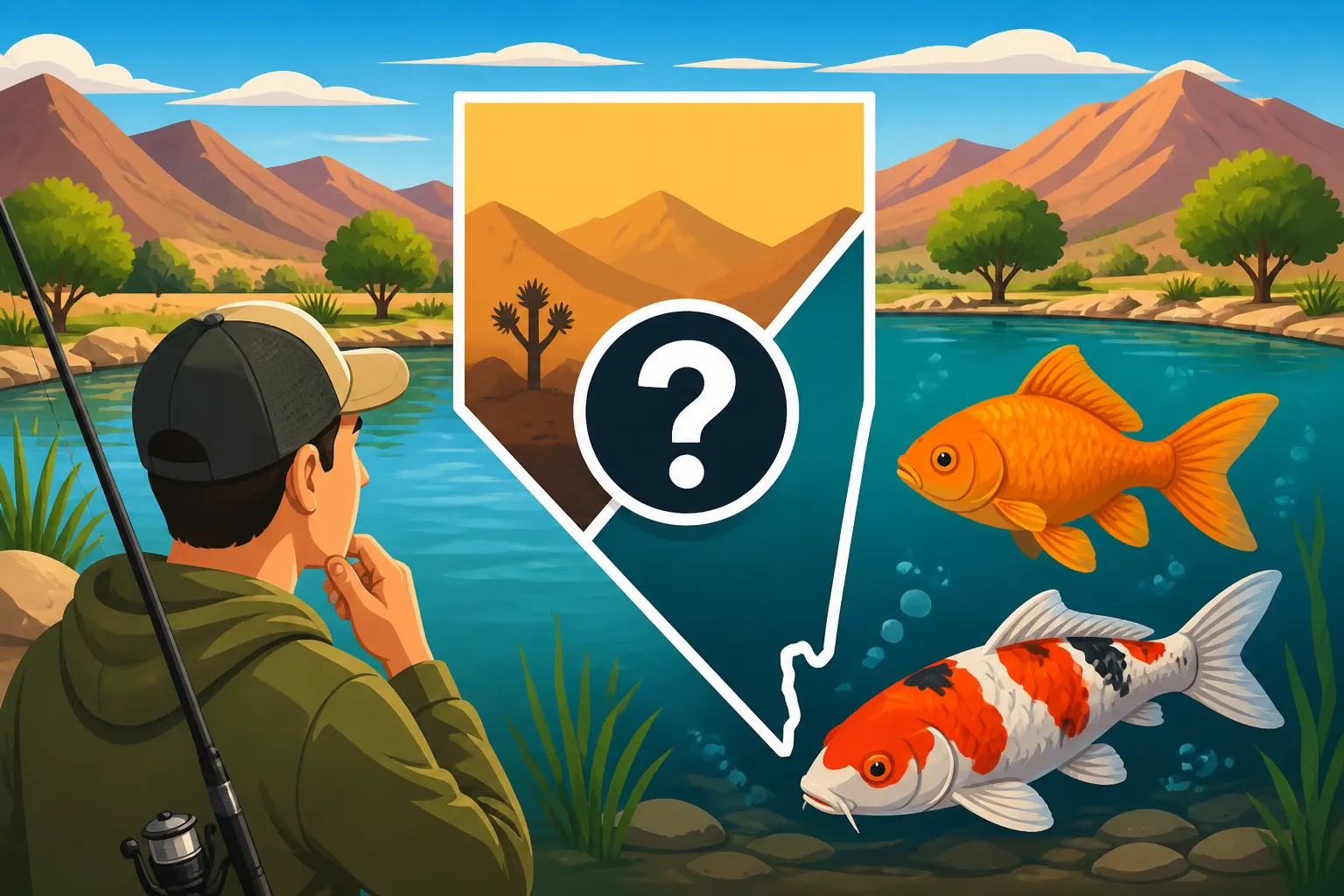
Do Nevada ponds have goldfish or koi?
It’s a curious sight, isn’t it? You’re out enjoying a peaceful morning by a local park pond in Nevada, perhaps casting a line, and suddenly you spot a flash of vibrant orange or even a mottled white and red shape beneath the surface. It’s not a rainbow trout, nor is it a native minnow. You start to wonder, "Do Nevada ponds have goldfish or koi?" It’s a common question, and one that often leads to a mix of fascination and confusion for anglers. This guide is here to clear up the mystery, explain why these ornamental fish sometimes appear in our public waters, and what it means for you as an angler in the Silver State.
The Allure of Goldfish and Koi in Nevada Ponds
There’s something undeniably captivating about goldfish and koi. Their bright colors and graceful movements make them popular residents of backyard water features and tranquil garden ponds. But when they show up in public fishing waters, it throws a bit of a curveball into the traditional angling experience. It's not every day you expect to hook something that looks like it swam straight out of a pet store tank.
Why People Ask About Them
Anglers, especially those new to a specific pond or just starting out, often have a set expectation of what they'll find. Trout, bass, catfish – those are the usual suspects. So, when a shimmering orange or calico-patterned fish appears, it naturally sparks curiosity. People want to know if these fish are supposed to be there, if they’re legal to catch, and if they impact the other species present. The sudden splash of color in otherwise natural-looking water is just a little jarring, a delightful anomaly for some, and a perplexing problem for others. It’s a sign that our urban ecosystems are often far more interconnected with our backyard habits than we realize.
The Accidental Angler's Dilemma
Imagine you’re fishing with your kids at a community pond, patiently waiting for a bite. Suddenly, the bobber dips, and a fight ensues! When you reel it in, instead of a plump rainbow trout, you find a bright orange goldfish, perhaps even a surprisingly large one. What do you do? The kids are probably thrilled, but as an adult, you might be wondering about the ethics, the legality, and the ecological implications. It’s an interesting dilemma, certainly not one most anglers anticipate when they pack their gear. This unexpected encounter is a prime example of how human actions, often well-intentioned, can lead to unforeseen changes in local aquatic environments. It’s part of the broader conversation around Nevada Urban Pond Fishing Rules and what truly constitutes a "game fish" in these managed waters.
Goldfish and Koi in the Wild: A Nevada Perspective
It might seem strange, but goldfish and koi, despite their domesticated origins, can indeed survive and even thrive in some of Nevada's public waters. They are resilient fish, capable of adapting to various conditions, which is part of what makes them so persistent once introduced.
How They End Up in Local Waters
The presence of goldfish and koi in public ponds usually boils down to one primary factor: human release. People sometimes move or decide they no longer want their ornamental fish, and rather than euthanizing them or finding them a new home, they mistakenly believe releasing them into a local pond is a humane solution. They think they're giving the fish a "better life" or "setting them free." Unfortunately, this couldn't be further from the truth. What seems like an act of kindness can have serious consequences for the delicate balance of the pond's ecosystem. Think about it: a seemingly harmless act by one individual can set off a chain reaction for an entire aquatic community. This is often the case with many Invasive Fish Species in Nevada Lakes.
Another way they end up in public waters is through accidental escapes during heavy rains or floods, especially if someone's backyard pond overflows and connects to a storm drain system that eventually leads to a public waterway. While less common than intentional release, it's still a possibility. Regardless of how they get there, once established, they can be difficult to remove.
Ecological Concerns and Impacts
While a single goldfish might seem innocuous, a thriving population can cause real problems. Goldfish and koi are essentially fancy carp (yes, they're part of the carp family!), and like their wild common carp cousins, they can be quite disruptive. They forage by rooting around in the bottom sediments, stirring up mud and making the water murky. This turbidity reduces sunlight penetration, which can harm aquatic plants that provide food and cover for native fish and invertebrates. It can also degrade water quality.
Furthermore, these released ornamentals compete with native fish species and even stocked trout for food and habitat. They can also introduce diseases or parasites that native fish populations aren't equipped to handle. In some instances, they can outcompete smaller, less aggressive species, leading to a decline in their numbers. This disruption can throw off the entire food web of a pond or small lake, impacting everything from insects to birds that rely on the aquatic environment. It's a prime example of how Nevada Fishing Regulations Explained often include rules designed to protect our natural resources from such unintended harm.
Where You Might Encounter Them
You're most likely to encounter goldfish and koi in urban and suburban ponds and smaller reservoirs that are easily accessible to the public. These include many of the urban fishing ponds managed by the Nevada Department of Wildlife (NDOW) in cities like Las Vegas, Reno, and Henderson. Places like Floyd Lamb Park, Lorenzi Park, and Sunset Park in the Las Vegas Valley are prime examples where people might release unwanted pets.
They can also be found in larger, more remote water bodies if they've been introduced there, but it's less common to see large, bright goldfish schools dominating the deeper, colder waters of, say, Lake Tahoe. They generally prefer shallower, warmer, and more stagnant waters, making community ponds their ideal, albeit unwelcome, habitat. When you're fishing in these areas, you never quite know what you're going to pull out, which adds a certain unpredictable charm, even if it's not always ecologically sound.
What to Do If You Catch a Goldfish or Koi in Nevada
So, you've cast your line, felt a tug, and reeled in a shiny, orange surprise. Now what? It’s important to know the proper and responsible way to handle these non-native fish.
Understanding NDOW's Stance
The Nevada Department of Wildlife (NDOW) generally discourages the release of any non-native species into public waters, including goldfish and koi. In fact, releasing live fish into any waters not approved by the department is typically against regulations. NDOW focuses on managing and protecting native fish populations, as well as maintaining healthy ecosystems for sport fish like trout and bass. Introduced species, especially those that can multiply quickly and disrupt the environment, are considered a threat. This policy is consistent with efforts to prevent the spread of Invasive Fish Species in Nevada Lakes and preserve the biological integrity of our waterways.
They are unlikely to be part of any stocking program, unlike the Nevada Trout Stocking Schedule which regularly replenishes fish for anglers. Therefore, when you catch one, it's generally not considered a "game fish" in the traditional sense, and specific limits or seasons usually don't apply to them.
Catch-and-Release vs. Removal
For most native and desirable sport fish in Nevada, catch-and-release is a widely practiced conservation method. However, for goldfish and koi, the recommendation is often different. If you catch one, it is generally advised not to release it back into the water where it was caught. Releasing it simply allows it to continue contributing to the ecological problems discussed earlier.
Instead, the most responsible action is to humanely dispatch the fish and remove it from the ecosystem. This might sound harsh, but it's a necessary step to help protect the environment and native species. You wouldn't release a noxious weed back into your garden, and the same principle applies here. If you're not comfortable with this, the best option is often to carefully dispose of the fish away from the water, perhaps in a trash receptacle. Always ensure that you handle any fish with respect, even if it's an invasive species.
Responsible Angling Practices
Beyond what to do when you catch one, responsible angling means preventing their spread in the first place. Never use live goldfish as bait. Not only is it illegal in many places due to the risk of introducing non-native species, but it's also incredibly irresponsible. Always be sure you're using legal and appropriate bait for the waters you're fishing.
When you're done fishing, ensure you properly dispose of any leftover bait and don't dump your bait bucket contents into the water. Clean your gear, including nets, waders, and boat hulls, before moving between different bodies of water to prevent the transfer of aquatic hitchhikers, including tiny fish eggs or larvae that could belong to invasive species. Simple actions, like wiping down your boots and boat, make a huge difference. You can find more comprehensive guidance on these practices in resources like Nevada Fishing Gear Essentials.
Distinguishing Pond Ornamentals from Native Species
It's one thing to spot a bright orange fish, but what if it's more subtly colored, or you're just not sure? Learning to identify goldfish and koi, and understanding how they differ from other fish you might encounter in Nevada, is a helpful skill for any angler.
Key Identification Features
While goldfish and koi can come in a dazzling array of colors and patterns (orange, red, white, black, calico), their body shape and fin structure are usually key identifiers, especially compared to native fish or even stocked trout.
- Goldfish: Often have a more elongated, streamlined body than many ornamental varieties found in bowls, especially when they grow larger in pond environments. Their color can vary greatly, from the common orange to dull brown or olive, especially after a few generations in the wild. They typically lack barbels (whisker-like sensory organs) around their mouth.
- Koi: Generally much larger and more robust than goldfish, often reaching impressive sizes in ponds. They frequently display distinct patterns of multiple colors. A key identifying feature for koi, distinguishing them from goldfish, is the presence of two pairs of prominent barbels at the corners of their mouth, similar to a Channel Catfish Fishing in Nevada but much smaller and often less noticeable on first glance.
- Common Carp: These are the wild ancestors of goldfish and koi, and they share many similarities. Common carp are typically bronze, olive, or yellowish-brown, lacking the vibrant colors of their ornamental relatives. They have large scales and usually possess two pairs of barbels, making them quite similar in appearance to koi in their wild form, though less colorful.
Here's a quick comparison table:
| Feature | Goldfish | Koi | Common Carp |
|---|---|---|---|
| Color | Wide variety (orange, red, white, dull brown) | Often multi-colored (red, white, black, orange) | Bronze, olive, yellowish-brown |
| Size (Adult) | Up to 12-14 inches, typically smaller | Can reach 2-3 feet or more | Up to 3-4 feet or more |
| Body Shape | More elongated in wild, can be stout | Robust, torpedo-shaped | Robust, deep-bodied, can be very large |
| Barbels | Typically absent | Two pairs of small barbels at mouth corners | Two pairs of prominent barbels at mouth corners |
| Scales | Relatively large | Large, distinct scales | Very large, distinct scales |
| Habitat | Ponds, slow-moving waters | Ponds, slow-moving waters, reservoirs | Ponds, lakes, rivers, slow-moving waters |
Other Common Non-Native Fish in Nevada Ponds
It's not just goldfish and koi that sometimes populate our urban ponds. Many of these waters are stocked with non-native species for sport fishing, but others find their way in through various means. For instance, Bluegill and Sunfish in Nevada Ponds are incredibly common and popular with kids, often stocked or naturally reproducing in many urban waters. While not native to Nevada, they've been widely introduced and are a staple of warm-water fisheries. Common Carp in Nevada Waters are also prevalent in many lakes and slow-moving rivers, and like goldfish, they can stir up sediment and impact water clarity.
You might also encounter various species of minnows or even some types of aquarium fish if they've been released. The key takeaway is that not every fish you see in a Nevada pond is necessarily native or intentionally placed there. Understanding what's common and what's an anomaly can help you make more informed decisions when you're out fishing.
Legalities and Regulations Surrounding Non-Native Species
Understanding the rules and regulations is crucial for any responsible angler in Nevada. When it comes to non-native species like goldfish and koi, there are specific guidelines you need to be aware of, primarily concerning their release. These rules are in place to protect the ecological health of Nevada's diverse waterways.
The Rule Against Releasing Live Fish
Nevada law, enforced by the Nevada Department of Wildlife (NDOW), generally prohibits the release of any live fish into public waters unless specifically authorized. This isn't just about goldfish and koi; it applies to all species. The primary reason for this stringent regulation is to prevent the introduction and spread of invasive species, diseases, and parasites that could harm existing fish populations and aquatic ecosystems. Imagine if everyone released their unwanted pets or baitfish wherever they pleased – our delicate ecosystems would quickly become overwhelmed and unhealthy. This regulation is a critical component of Nevada Fishing Regulations Explained and is designed to maintain balance.
This rule means that if you catch a goldfish or koi, you cannot legally release it back into the water, even if you brought it there yourself. The intent is to remove these potential threats from the environment. Anglers must always consult the most current NDOW regulations for specific details, as rules can vary and be updated. Ignorance of the law is generally not a defense, so staying informed is part of being a good steward of our natural resources.
Penalties and Consequences
Releasing live fish into unauthorized waters can carry serious penalties. While specific fines can vary, fishing violations in Nevada, including those related to the illegal release of fish, can result in significant monetary fines, confiscation of fishing equipment, and even suspension of fishing privileges. These are not minor infractions; they are taken seriously due to the potential long-term damage to the environment. For example, if you're found to be in violation, you could face Nevada Fishing Violation Penalties that could impact your ability to enjoy fishing in the state for a period of time.
Beyond the legal consequences, the environmental impact is perhaps the most significant. An illegal release of non-native fish can disrupt the food chain, introduce pathogens, outcompete native species for resources, and degrade water quality, all of which ultimately diminish the quality of fishing for everyone. It's a reminder that every angler has a responsibility to protect and conserve Nevada's natural heritage. What might seem like a small, harmless act of "setting a fish free" can, in reality, contribute to widespread ecological damage.
In conclusion, while spotting a goldfish or koi in a Nevada pond might be a novel experience, it's a clear indication of human impact on our natural aquatic systems. These colorful fish, though charming in a home aquarium, pose a threat to the delicate balance of our local waterways when released into the wild. As responsible anglers, it's our duty to understand the rules, identify these non-native species, and act in a way that protects Nevada's precious fish populations and aquatic environments. Next time you're debating Best Bait for Nevada Trout or planning a trip to one of the Best Places to Fish in Nevada, remember the bigger picture of conservation that keeps our waters healthy and vibrant for all.
Disclaimer
This article is for general informational purposes only and does not constitute professional advice. Laws, prices and regulations vary by location and change over time. Consult a qualified professional for guidance on your specific situation.