Best kayak length for reservoir fishing
Choosing the right kayak length for fishing Nevada’s incredibly diverse and often challenging reservoirs can feel like a real puzzle. You want something stable enough for those sudden gusts on Lake Mead, but fast enough to cover water on the vastness of Pyramid Lake, and still easy to get into and out of those trickier shore access points. It’s a common frustration, and this guide is designed to help you navigate the options and find the perfect paddle-powered vessel for your high desert angling adventures.
Understanding Nevada's Reservoir Fishing Landscape
Nevada’s reservoirs aren’t your average backyard pond. They range from massive, open-water bodies like Lake Mead and Lake Mohave, which can develop ocean-like swells in a heartbeat, to high-desert gems like Wildhorse Reservoir, which, while smaller, can still be buffeted by strong winds. Then you have unique waters like Pyramid Lake, which combines vastness with very specific shoreline access and often choppy conditions. Each of these unique environments places different demands on your kayak and, consequently, on the ideal length.
The Impact of Wind and Waves
Anyone who’s spent time fishing Nevada’s larger reservoirs knows how quickly the wind can pick up. A glassy surface can turn into a washing machine in a matter of minutes, especially in the afternoons. This is where kayak length starts to really matter.
Shorter kayaks, generally those under 10-11 feet, tend to get tossed around more easily by waves. They might feel more stable initially due to their wider beam, but once those waves hit, they can become less predictable and require constant corrective paddling to stay on course. Imagine trying to troll a small lure across a breezy section of Lake Mead in a 9-foot kayak – you’ll spend more time fighting the wind and waves than actually fishing. This constant battle is not only exhausting but can also be genuinely unnerving, particularly if you're not accustomed to rough water. The short length means less waterline contact, making them more susceptible to being pushed sideways by the wind.
Longer kayaks, typically 12 feet and above, handle waves much better. Their longer hull cuts through chop more efficiently, providing a smoother, more stable ride. They track straighter with less effort, which is a huge benefit when you’re trying to cover distance or maintain a precise trolling path. While they might feel a little less "turn on a dime" in calm conditions, that trade-off is absolutely worth it when the wind inevitably kicks up on a big Nevada reservoir. This enhanced tracking reduces fatigue, allowing you to focus on your fishing rather than constantly correcting your heading.
Covering Distances on Vast Waters
Many of Nevada’s prime fishing spots, like the vast expanses of Lake Mead, the long stretches of Lake Mohave, or the open waters of Pyramid Lake, require covering significant distances to reach productive areas or follow fish schools. This is another area where kayak length plays a critical role.
Shorter kayaks, due to their inherent design, are generally slower and require more effort to propel over long distances. While they might be fine for short hops around a small cove or an urban pond like those found in Las Vegas, trying to paddle a mile or two in a short kayak will quickly exhaust you. The wider, shorter hull creates more drag, making each stroke less efficient. You’ll find yourself expending a lot of energy just to keep moving, leaving you less fresh for the actual fishing.
Longer kayaks, on the other hand, are designed for efficiency and speed. Their sleek, narrower hulls glide through the water with less resistance, allowing you to cover more ground with less effort. This means you can reach distant fishing holes, explore more shoreline, or chase down a breaking school of striped bass without feeling completely wiped out. For serious reservoir anglers who need to cover water, a longer kayak is an absolute game-changer. Think of it like this: a longer kayak is like a touring bicycle, built for distance, while a shorter one is more like a mountain bike, great for quick maneuvers but not for covering miles of pavement. This enhanced speed and efficiency also means you can react faster to changing conditions or move to a new spot if your current one isn't producing.
Access and Launch Points
While the open water performance is crucial, the reality of getting your kayak to the water in Nevada can also influence your ideal length. Not every reservoir has a paved boat ramp that's accessible year-round, especially with fluctuating water levels. Sometimes you're dealing with sandy beaches, rocky shorelines, or even needing to portage a bit.
Shorter kayaks have a clear advantage here. They are lighter and more manageable to load, unload, and transport. If you're frequently fishing smaller, less-developed access points, or if you need to carry your kayak a short distance over uneven terrain, a 10-foot kayak is going to be much easier to handle than a 14-footer. This ease of transport can significantly reduce the effort required before and after your fishing trip, making the overall experience more enjoyable. They're also often easier to maneuver in tight spots on shore or in crowded launch areas. If you're a solo angler without a dedicated trailer or robust roof rack system, a shorter, lighter kayak might be your best friend for convenience. You can often just toss it in the back of a truck or lift it onto a simple roof rack.
Longer kayaks, while superior on the water, can be a beast to manage on land. They're heavier, more cumbersome, and often require a dedicated trailer or a robust cart to move from your vehicle to the water. Loading a 14-foot kayak onto a rooftop rack can be a two-person job, or at least a very awkward solo endeavor. This isn't necessarily a deal-breaker if you primarily use paved ramps and have the right equipment, but it’s a significant consideration for those who value quick, easy, and flexible access. For anglers who launch at developed marinas like those on Lake Mead, this might not be an issue, but for remote spots, it's definitely something to weigh.
Kayak Length and Performance: What the Numbers Actually Mean
When you look at kayak specifications, length isn't just a number; it dictates fundamental aspects of how the vessel will perform on the water. It’s a balance, and understanding these trade-offs is key to making the right choice for your Nevada fishing adventures.
Stability Versus Speed: The Inevitable Trade-Off
This is arguably the most talked-about aspect of kayak design. Anglers, especially those new to kayak fishing or those who prefer standing to cast, prioritize stability.
- Shorter Kayaks (Under 11 feet): Often designed with a wider beam (width) to compensate for their shorter length, which initially creates a very stable platform. This "primary stability" makes you feel very secure when you first sit down or move around slightly. They tend to be less prone to tipping with small movements, making them great for beginners, or for anglers who plan to do a lot of sight fishing in calm, shallow waters, where standing might be beneficial. However, as discussed, this width and shorter length also contribute to more drag and slower speeds. When larger waves hit, their short hull can be pushed around more, leading to a feeling of "secondary instability" – that wobbly feeling when leaning into a wave.
- Longer Kayaks (12 feet and above): While some longer fishing kayaks are also quite wide for enhanced stability, their length often allows for a narrower design without sacrificing too much primary stability. More importantly, they excel in "secondary stability." This means they might feel a little less initially "rock solid" when you first get in, but they'll be far more forgiving and stable in choppy water or when leaning into a large swell. Their longer waterline allows them to track straighter and cut through waves, reducing that "tippy" sensation. The trade-off for this enhanced open-water performance is usually a slight reduction in initial stability and, of course, increased length for transport and storage. However, the speed and efficiency gained are invaluable for covering large reservoirs.
Tracking and Maneuverability
These two characteristics are often inversely related, and kayak length is a major factor in how a kayak behaves on the water.
- Tracking: This refers to a kayak's ability to hold a straight line with minimal effort. Longer kayaks, with more of their hull in the water, naturally track much better. They resist turning with each paddle stroke and stay on course, which is invaluable on windy days or when you're trying to troll a precise line. This means less wasted energy on corrective strokes and more focus on what's happening below the surface. Imagine trying to troll a Rapala across the open water of Lake Mohave – a kayak that constantly wants to veer off course will make that impossible.
- Maneuverability: This is a kayak's ability to turn quickly and easily. Shorter kayaks, with their reduced waterline, are inherently more agile and easier to spin. This is a huge advantage when fishing tight spaces, navigating around submerged brush piles, or exploring small coves and inlets where quick turns are necessary. If you're targeting largemouth bass tucked into flooded timber or rocky points, being able to pivot your kayak swiftly can put you in the perfect casting position. The drawback, as mentioned, is that this enhanced maneuverability comes at the expense of tracking, meaning you'll work harder to keep it going straight.
Storage and Capacity
For kayak anglers, storage isn't just about packing a lunch; it's about carrying rods, tackle boxes, bait, fish finders, safety gear, and potentially a cooler full of ice for your catch. Length plays a role, but so does overall design.
- Shorter Kayaks: Typically offer less overall storage space. While some might have large open "tank wells" in the stern, the shorter deck means less enclosed storage and less room for multiple rod holders or large tackle crates. Their weight capacity is also generally lower, which can be a concern once you factor in your body weight, gear, and any fish you plan to keep. You’ll need to be very strategic about what you bring on board. For a simple day trip with minimal gear to a local urban pond, this might be perfectly adequate.
- Longer Kayaks: These almost always boast superior storage capacity. The extended deck allows for more ample stern and bow storage areas, often with larger hatches for dry storage. Many longer fishing kayaks are designed to accommodate multiple rod holders, large tackle management systems, and even coolers or livewells. Their higher weight capacity means you can load them up with all your essentials – and then some – without compromising performance or safety. If you're planning an all-day excursion to a large reservoir or want to carry specialized equipment like a Best Fish Finder for Reservoir Fishing, a longer kayak with ample storage will be a significant advantage. Brands like Bass Pro Shops often have models with generous storage options designed specifically for serious anglers.
Matching Kayak Length to Your Nevada Fishing Style
Now that we’ve covered the technical aspects, let’s tie kayak length directly to how you might typically fish in Nevada’s unique environments. Your personal fishing style and target species should heavily influence your choice.
Shoreline Hopping and Finesse Fishing
If your idea of a perfect fishing day involves leisurely paddling along the shore, casting to visible structure, and targeting bass or panfish in shallower coves and calmer areas, a shorter to medium-length kayak might be your sweet spot.
Imagine exploring the numerous coves and inlets of Lake Mead for largemouth bass, or picking apart rocky points on Lake Mohave for smallmouth. In these scenarios, maneuverability is key. A kayak between 10 and 12 feet will allow you to pivot quickly, get into tight spaces, and make precise casts without fighting a long, unwieldy vessel. These lengths are also typically lighter, making them easier to launch and retrieve from those less-than-perfect shoreline spots that often hold the best fish. You might not be covering huge distances, but you’ll be making accurate presentations to promising structures. This approach is fantastic for learning the ropes of kayak fishing too, as the enhanced initial stability can build confidence. For this style, you’re often carrying less gear, perhaps just a small tackle box and a couple of rods, which shorter kayaks can handle perfectly.
Trolling and Open Water Cruising
For anglers who dream of chasing down trophy striped bass on Lake Mead, trolling for Mackinaw trout at Lake Tahoe, or covering vast stretches of water on Pyramid Lake for Lahontan cutthroat, a longer kayak is practically a necessity.
In these open-water scenarios, speed, tracking, and wave-handling capabilities are paramount. Kayaks typically 13 feet and longer truly shine here. Their efficient hull designs allow you to paddle for miles with less fatigue, maintain a consistent trolling speed, and stay on course even when the wind and waves pick up. Trying to troll with multiple lines or keep pace with a breaking school of stripers in a short kayak would be an exercise in frustration. A longer kayak provides the platform needed for robust rod holders, a fish finder, and enough gear for a full day out on big water. The stability in chop means you can focus on your electronics and your rods, rather than constantly battling the elements. Many serious open-water kayak anglers will opt for models even up to 14 or 15 feet to maximize these benefits. For specific techniques like Trolling Techniques for Lake Tahoe Mackinaw, the ability of a longer kayak to hold a straight line and maintain speed is indispensable.
Family Fun and Casual Angling
Perhaps you're not always chasing trophy fish; sometimes, it's about getting out on the water with the kids, enjoying the scenery, and maybe catching a few panfish or stocked trout at a place like Floyd Lamb Park. In these situations, balancing stability, ease of use, and a bit of fishing capability is the goal.
For general recreational use with occasional fishing, a medium-length kayak, perhaps 10-12 feet, often hits the sweet spot. These kayaks offer a good compromise between stability and ease of paddling. They're typically stable enough for a novice or a child to feel comfortable, yet still capable of getting you to a decent fishing spot without too much effort. They're also often more affordable and easier to store and transport than their longer, more specialized counterparts. Look for models with comfortable seating and open deck space for a small cooler or dry bag. While you won't be setting any speed records, you'll be able to enjoy the water and introduce new anglers to the joy of fishing. Many recreational kayaks available through retailers like Amazon are in this size range, offering a good blend of features for the casual user.
Practical Considerations Beyond the Water
While on-water performance is crucial, the reality of owning a kayak involves getting it to and from the water, and storing it when you're not using it. These logistical challenges can often dictate your ideal kayak length as much as fishing performance.
Vehicle Compatibility and Rooftop Racks
Think about the vehicle you drive. Do you have a small car, an SUV, or a truck?
- Shorter Kayaks (under 12 feet): Generally easier to transport on most vehicles. They're lighter and less awkward to lift onto a roof rack, especially if you're fishing solo. Many can even fit in the bed of a pickup truck, especially if you opt for an 8 or 9-foot model (though they might hang over the tailgate a bit). This ease of transport means you're more likely to use your kayak spontaneously, rather than seeing it as a major logistical operation.
- Longer Kayaks (13 feet and above): Can present a challenge. A 14 or 15-foot kayak sticking far off the front and back of a compact car can be dangerous and potentially illegal, depending on local regulations. You'll likely need a truck, a longer SUV, or a very robust roof rack system specifically designed for long kayaks. Even then, loading a heavy, long kayak can be difficult and may require specialized assistance or a two-person effort. If you plan to go with a longer kayak, invest in a proper heavy-duty roof rack from a reputable brand or consider a dedicated kayak trailer. For folks frequently visiting Lake Mead Nevada Fishing Guide or Pyramid Lake Nevada Fishing Guide with a longer kayak, a trailer often makes the most sense.
Storage at Home
Where will your kayak live when it's not on the water? This might seem like a minor detail, but it can quickly become a headache if you don't plan ahead.
- Apartment or Small Garage/Storage Space: Shorter kayaks are much easier to store. They can often be hung vertically on a garage wall, tucked into a corner, or even stored on a balcony. Their compact size makes them less intrusive, especially if space is at a premium.
- Large Garage or Yard: If you have ample space, a longer kayak presents less of a storage challenge. You can keep it on sawhorses, a dedicated kayak stand, or even suspended from the ceiling. However, even with space, remember that longer kayaks are heavier and more cumbersome to move around, so you'll want a system that minimizes lifting.
Ultimately, the "best" kayak length for reservoir fishing in Nevada isn't a single number; it's a sweet spot that balances your personal fishing goals, the types of waters you frequent, and your practical considerations for transport and storage.
| Kayak Length Category | Typical Length Range | Best For Nevada Conditions | Key Advantages | Potential Drawbacks |
|---|---|---|---|---|
| Short | 8-10 feet | Small, calm ponds; tight coves (urban ponds) | High initial stability; Easy to transport & store; Highly maneuverable | Slow; Poor tracking in wind/waves; Limited capacity; Less stable in chop |
| Medium | 10-12 feet | General reservoir fishing; mixed conditions; learning | Good balance of stability & speed; Decent tracking; Manageable transport | Can struggle in very heavy chop; Not ideal for covering extreme distances |
| Long | 12-15+ feet | Large, open reservoirs (Lake Mead, Tahoe, Pyramid); windy conditions; trolling | Excellent speed & tracking; Handles chop well; High capacity; Great for covering distance | Heavier, harder to transport & store; Less maneuverable in tight spots; Higher cost |
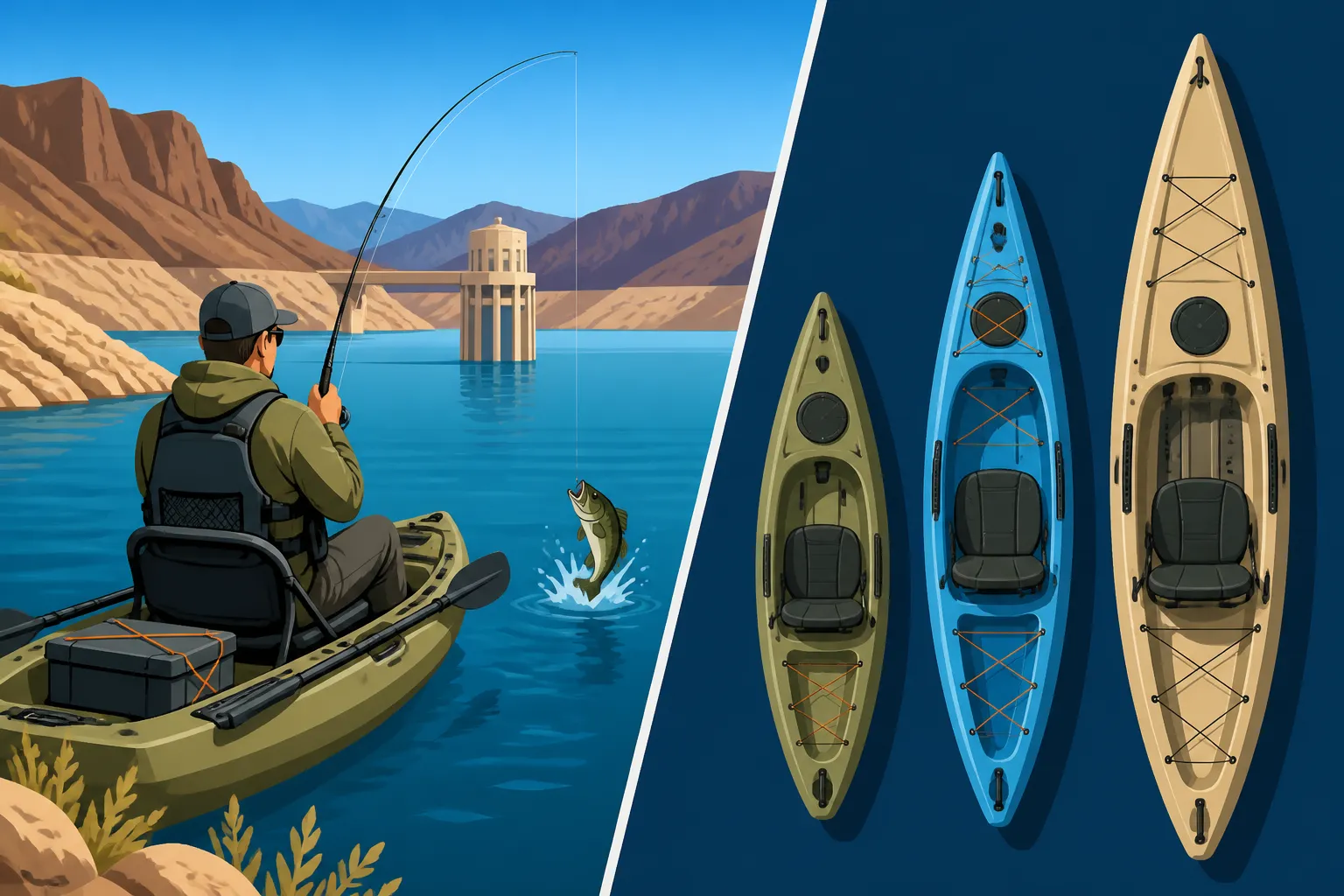
For most anglers tackling Nevada's diverse reservoirs, a kayak in the 12 to 14-foot range offers the most versatile sweet spot. This length provides enough speed and tracking to handle the open water and wind, while still being somewhat manageable for transport and providing ample space for all your gear. If you exclusively fish small, calm waters, or prioritize extreme portability, then a shorter model might be better. If you are a dedicated open-water troller or plan multi-day trips, going to the longer end of the spectrum (14+ feet) will be a significant advantage. Just remember to consider your vehicle, your storage, and the muscle you have available for loading and unloading! Happy fishing!
Disclaimer
This article is for general informational purposes only and does not constitute professional advice. Laws, prices and regulations vary by location and change over time. Consult a qualified professional for guidance on your specific situation.