Best boat trailer tires for desert driving
Towing your boat to those fantastic Nevada fishing spots means navigating some of the most challenging terrain and climate conditions in the country. From scorching summer asphalt that could cook an egg to rough, unpaved roads leading to remote lake access points, your boat trailer tires take a beating. This guide will walk you through everything you need to know about choosing, maintaining, and protecting your boat trailer tires for reliable desert driving, ensuring your fishing adventures don't get sidetracked by a roadside blowout.
The Harsh Realities of Desert Trailer Towing in Nevada
Let's face it, Nevada's environment is beautiful but unforgiving, especially on anything made of rubber. The desert presents a unique gauntlet for boat trailer tires, combining extreme temperatures with varied and often abrasive road surfaces. Understanding these challenges is the first step to mitigating them and protecting your investment.
Why Desert Heat is a Tire Killer
When you're cruising down I-15 towards Lake Mead or heading north on US-95 to Pyramid Lake, the ambient air temperature might be a scorching 100 degrees Fahrenheit, but the asphalt itself can easily hit 150 degrees or more. This incredible heat is directly transferred into your tires, causing the rubber compounds to soften and the internal air pressure to increase dramatically. Tires are designed to flex and deform as they roll, which naturally generates heat. In a desert environment, this internal heat buildup is compounded by the external road temperature, pushing the tires beyond their designed limits and accelerating wear. Over time, this constant thermal stress can break down the tire's internal structure, leading to tread separation, sidewall cracks, and eventually, a sudden and dangerous blowout.
The Impact of Rough Nevada Roads
It's not just the heat; Nevada's roads offer a diverse challenge. While the main highways can be smooth, many of the best fishing spots require navigating gravel roads, dirt tracks, or uneven, unpaved boat launches. These rough surfaces are notorious for causing punctures from sharp rocks, impacting tire sidewalls, and stressing the wheel assemblies. Even on paved roads, potholes and debris can be significant hazards. A tire that performs admirably on smooth, temperate highways might quickly succumb to the abuse of a rocky track leading to a secluded cove on Lake Mohave. The constant jarring and twisting on uneven terrain can also contribute to uneven wear patterns and structural fatigue, shortening the lifespan of your tires significantly. Remember that maintaining your trailer is just as important as the boat itself, as outlined in our Nevada Boat Registration and Titling Guide.
Common Tire Failures and Their Consequences
A tire failure on a boat trailer isn't just an inconvenience; it can quickly become a serious safety issue, potentially leading to property damage or even accidents. A blowout at highway speeds can cause your trailer to swerve uncontrollably, risking damage to your boat, truck, or other vehicles on the road. Even a slow leak discovered at a remote launch site can strand you, turning a fun fishing trip into a frustrating ordeal involving a difficult tire change in the blazing sun or a costly tow. Beyond the immediate danger, blowouts can cause extensive damage to your trailer's fenders, wiring, and even the hull of your boat from flying debris. Having a proper spare and knowing your Essential Safety Gear for Boating on Lake Mead is crucial.
Understanding Trailer Tire Types and Their Differences
When you're outfitting your boat trailer for the unique demands of Nevada, understanding the fundamental differences between tire types is paramount. Not all tires are created equal, and choosing the right construction can make a huge difference in safety and longevity.
Bias-Ply vs. Radial Tires: A Crucial Choice
The two main types of trailer tires you'll encounter are bias-ply and radial. While they might look similar from the outside, their internal construction and performance characteristics are quite distinct.
Bias-Ply Trailer Tires
Bias-ply tires, often referred to as "ply rating" tires, have their internal cords crisscrossing at angles from bead to bead, forming a multi-ply network. This construction creates a very stiff sidewall, which can be beneficial in certain situations. They tend to be more resistant to damage from side impacts and punctures on very rough, unpaved surfaces, making them a consideration if your fishing adventures take you exclusively to extremely rugged, low-speed off-road launches. They are also often less expensive initially, which can be appealing for some.
However, these benefits come with significant drawbacks, especially for extended desert driving. Bias-ply tires generate more heat than radials due to their less flexible sidewalls and tread. This increased heat buildup, combined with Nevada's already extreme temperatures, can lead to premature tire failure. They also tend to flat-spot when sitting for extended periods and can wear unevenly, leading to a bumpier ride and reduced stability at highway speeds. For a vast majority of Nevada anglers who travel significant distances on paved roads, bias-ply tires are generally not the optimal choice.
Radial Trailer Tires
Radial tires, on the other hand, feature cords that run perpendicular to the direction of travel, with a separate belt package under the tread. This design allows the sidewall and tread to operate more independently. The result is a tire that runs significantly cooler, which is a massive advantage in the Nevada desert. Cooler running temperatures translate to less heat buildup, reduced risk of blowouts, and a longer overall lifespan. Radial tires also offer a smoother ride, better highway tracking, and more even tread wear, which is crucial for those long hauls to places like Lake Tahoe or Wildhorse Reservoir.
While radial tires might have a slightly higher upfront cost, their improved performance, safety, and durability in desert conditions often make them a more cost-effective choice in the long run. Their more flexible sidewalls mean they can be slightly more susceptible to sidewall damage from sharp impacts if not driven carefully over obstacles, but the benefits for highway travel far outweigh this minor consideration for most users. When considering your Best Boats for Nevada Reservoir Fishing, don't forget the importance of the tires that get them there.
Load Range and Speed Ratings: Don't Overlook These
Beyond the construction type, two critical specifications for trailer tires are their load range and speed rating. Ignoring these can put you and your boat at serious risk.
Load Range
The load range indicates the tire's maximum weight-carrying capacity at a specified inflation pressure. It's often represented by letters like 'C', 'D', 'E', or 'F', which roughly correspond to an older "ply rating" system. It's absolutely crucial that the combined load capacity of your trailer tires meets or exceeds the Gross Vehicle Weight Rating (GVWR) of your fully loaded boat trailer. This means accounting for the weight of your boat, engine, fuel, gear, and the trailer itself. Many boaters make the mistake of using tires that are just "good enough" for the empty trailer, only to find them dangerously overloaded once the boat is on and fully provisioned for a trip. An under-spec'd tire will flex excessively, generate dangerous amounts of heat, and be highly prone to failure, especially in the desert. Always check the sticker on your trailer for its GVWR and ensure your chosen tires comfortably exceed that total weight when combined.
Speed Rating
Trailer tires also come with a speed rating, typically represented by letters like 'L' (up to 75 mph), 'M' (up to 81 mph), or 'N' (up to 87 mph). Unlike passenger car tires, most trailer tires are not designed for sustained high speeds. While Nevada highways often have speed limits of 75 mph or more, it's vital to know your tire's maximum speed rating and adhere to it. Exceeding the speed rating, particularly in hot desert conditions, drastically increases heat buildup and the likelihood of a catastrophic blowout. Imagine being halfway to your fishing destination and having a tire fail because you pushed it too hard. It's simply not worth the risk. Always check the sidewall of your trailer tires for their speed rating and plan your travel accordingly. You might be eager to get to your fishing hole, but safety always comes first, a principle also highlighted in Nevada Fishing Regulations Explained.
Key Features to Look For in Desert-Ready Trailer Tires
When you're shopping for new boat trailer tires, don't just grab the cheapest option. Investigate the features that specifically address the challenges of Nevada's environment. A little extra research and investment now can save you a lot of headache and expense down the road.
Enhanced Heat Dissipation and Construction
For desert driving, heat is the enemy, so look for tires designed to fight it. Tires with enhanced heat dissipation are constructed with rubber compounds that are formulated to resist heat buildup and maintain their integrity even at elevated temperatures. These specialized compounds are often stiffer and more robust than those used in standard trailer tires. When you're browsing tires, whether online through Amazon or at a specialized retailer like Bass Pro Shops, pay attention to descriptions that highlight "cool running," "heavy-duty construction," or "desert-proven."
Beyond the compound, the internal construction plays a huge role. Look for tires that feature stronger steel belts and thicker sidewall reinforcement. These features not only help manage heat more effectively but also provide a crucial layer of protection against the various impacts and abrasions encountered on Nevada's diverse roads. A more robust internal structure means less flexing and distortion, translating to cooler operation and greater resistance to the stresses of sustained highway speeds in high heat.
Tread Design and Durability for Varied Terrain
The tread pattern on your trailer tires might seem like a minor detail, but it's essential for both performance and longevity in the Nevada desert. For one, a good tread design helps shed heat more efficiently by allowing better airflow around the tire surface. More importantly, it plays a critical role in durability on uneven surfaces.
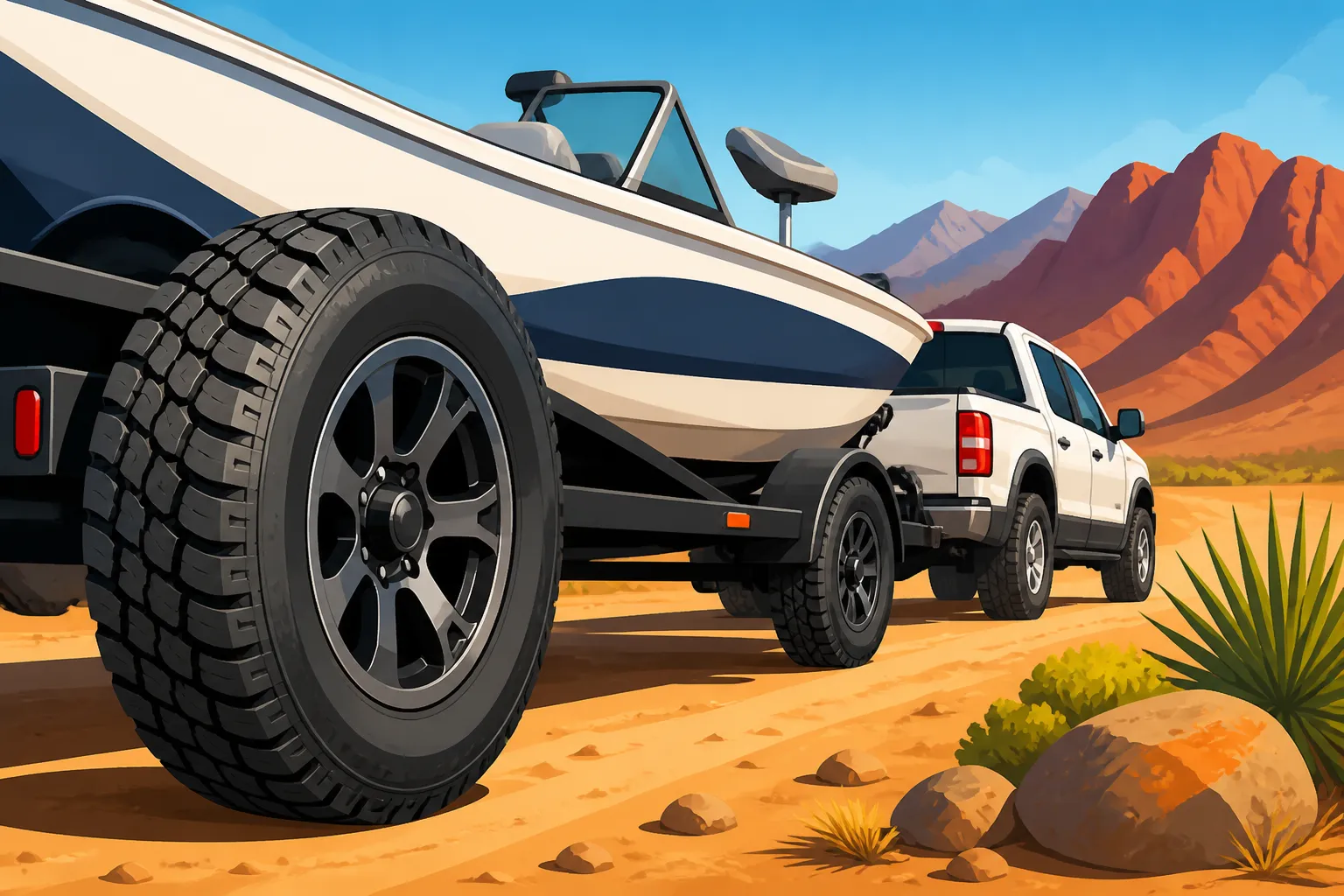
Look for tires with deeper treads and robust, interconnected blocks. This design offers better grip on loose gravel, dirt ramps, or sandy patches you might encounter at less developed launch sites. Deeper treads also provide more material to wear away, extending the tire's overall life. Another excellent feature to seek out are "stone ejectors" – small ridges or angles within the tread grooves designed to push out small rocks and debris before they can become embedded and cause punctures or damage to the casing. Tires with good chipping and tearing resistance are also highly beneficial, as they can better withstand the abrasive nature of rocky roads without chunks of rubber being torn away. This attention to detail in your gear extends to all aspects of fishing, from your license to your setup, as covered in Nevada Fishing Gear Essentials.
UV Resistance and Storage Considerations
The intense ultraviolet (UV) radiation from the Nevada sun is incredibly damaging to rubber, even when your trailer is parked. UV rays cause rubber to degrade, become brittle, and develop cracks, especially in the sidewalls. These cracks, known as "dry rot," weaken the tire structure and can lead to premature failure, regardless of how much tread is left.
When selecting tires, inquire about their UV resistance. Many quality trailer tires incorporate UV inhibitors into their rubber compounds to slow down this degradation process. However, even with UV-resistant tires, proactive storage is key. Always try to park your boat trailer in the shade, if possible, or consider investing in tire covers. These covers, often made of durable vinyl or fabric, act as a physical barrier against the sun's harmful rays, significantly extending the life of your tires. Even for short periods of non-use, covering your tires can make a big difference in maintaining their pliability and preventing the premature onset of dry rot, ensuring they're ready for your next trip to Pyramid Lake Nevada Fishing Guide.
Maintenance is King: Extending Tire Life in the Nevada Desert
Even the best boat trailer tires won't perform optimally or last long without diligent maintenance. In the harsh Nevada desert, skipping routine checks is a surefire way to invite trouble. Think of tire maintenance as an ongoing commitment, not a one-time setup.
Proper Inflation is Non-Negotiable
This cannot be stressed enough: maintaining correct tire pressure is the single most important factor in preventing trailer tire failure. Under-inflated tires flex excessively, building up tremendous amounts of heat, which, as we've discussed, is a death sentence in the desert. Over-inflation can make the tire too rigid, reducing its contact patch with the road, leading to uneven wear in the center of the tread, and making it more susceptible to impact damage.
Always check your trailer tire pressure when the tires are cold, meaning they haven't been driven for at least an hour. The recommended pressure is typically found on the tire's sidewall or on a sticker on your trailer. This pressure is often significantly higher than what you'd put in your tow vehicle's tires. Carry a reliable tire pressure gauge, which you can easily find at Bass Pro Shops or online at Amazon, and make checking pressures part of your pre-trip routine, every single time. It takes just a few minutes, but it can prevent hours of frustration and potentially dangerous situations on the road.
Regular Inspections and Rotations
Beyond inflation, a visual inspection of your tires should be a routine habit before and after every trip. Look for any signs of trouble: bulges or bubbles in the sidewall (indicating internal damage), cuts or cracks in the tread or sidewall (especially dry rot), and any foreign objects embedded in the tread. Pay close attention to uneven wear patterns; cupping, feathering, or excessive wear on one side can signal issues with your trailer's alignment, axle, or suspension, which need to be addressed promptly.
Rotating your trailer tires, especially on tandem-axle trailers or if you notice uneven wear, can help distribute the load and wear more evenly, extending their overall lifespan. This isn't always as simple as with a car, so consider having it done by a professional if you're unsure. While you're inspecting the tires, it's also a good practice to check the lug nuts on your wheels. Heat and vibration can sometimes cause them to loosen, and securing them is crucial for wheel retention. This diligence helps ensure you can enjoy all aspects of Nevada Fishing Seasons by Month without interruption.
Spare Tires, Bearings, and Hubs: Your Roadside Insurance
Even with the best tires and meticulous maintenance, things can happen. That's why a properly maintained spare tire is non-negotiable for any desert boating trip. Ensure your spare is not only present but also correctly inflated and of the same load range and speed rating as your primary tires. Don't let your spare be an afterthought; it needs the same care as the tires on the ground, especially given the prolonged storage it might experience.
Equally important are your trailer's wheel bearings and hubs. These components are under constant stress and are crucial for the wheel's rotation. Overheated or damaged bearings are a common cause of roadside breakdowns, often leading to a wheel seizing or even coming off the trailer. This can be mistaken for a tire issue, but the root cause is mechanical. Before any long trip, especially through the desert, it’s wise to inspect your hubs for any signs of grease leakage or excessive play. Periodically re-packing your wheel bearings with fresh grease is a preventive measure that can save you from a costly and frustrating roadside repair. Having a solid understanding of your vehicle and trailer maintenance is part of being a responsible boater, similar to knowing your Nevada Fishing License Guide.
Here's a quick comparison of radial vs. bias-ply tires for desert towing:
| Feature | Radial Trailer Tires | Bias-Ply Trailer Tires |
|---|---|---|
| Construction | Cords run perpendicular to travel, steel belt under tread | Cords crisscross at angles, multi-ply |
| Heat Buildup | Significantly lower (runs cooler) | Higher (runs hotter due to more flexing) |
| Highway Speed | Excellent stability, smoother ride, better tracking | Less stable, bumpier ride, more prone to sway |
| Tread Wear | More even wear, longer tread life | Less even wear, prone to flat-spotting and cupping |
| Fuel Economy | Generally better due to less rolling resistance | Generally poorer |
| Sidewall | More flexible, can be prone to sharp impact damage | Stiffer, better resistance to side impacts/punctures |
| Cost (Initial) | Generally higher | Generally lower |
| Best Use | Long-distance highway towing, general use in desert | Short-distance, rough terrain, low-speed towing |
Disclaimer
This article is for general informational purposes only and does not constitute professional advice. Laws, prices and regulations vary by location and change over time. Consult a qualified professional for guidance on your specific situation.