Best headlamp brightness for pre-dawn boat launches
There's nothing quite like the excitement of hitting the water before the sun even thinks about peeking over the horizon, especially for a prime Nevada fishing experience. But let's be real, those pre-dawn boat launches can be a real headache if you're fumbling in the dark. Trying to back a trailer down a ramp, tie off lines, or simply organize your gear when you can barely see your hand in front of your face is frustrating and frankly, dangerous. This guide is all about helping you light up those early mornings, ensuring your boat launch is smooth, safe, and sets the stage for a fantastic day of fishing.
Understanding Headlamp Brightness and Lumens for Boat Launches
When you're standing at the boat ramp in the pitch black, with only the distant glow of city lights or the vast expanse of the Nevada desert around you, a reliable headlamp isn't just a convenience – it's an absolute necessity. But what exactly makes a headlamp "reliable" for this specific task? It really comes down to understanding brightness, measured in lumens, and how that translates to practical visibility for your pre-dawn boat launches.
What Lumens Mean for Practical Use
Lumens are essentially a measure of the total amount of visible light emitted by a source. The higher the lumen count, the brighter the light can be. However, more lumens don't always mean "better" in every situation. Think about it: you wouldn't want a blinding spotlight while trying to read a map up close, just like a dim light won't help you spot hazards on a dark ramp. For boat launches, you'll encounter a range of tasks that require different levels of illumination.
Consider the dynamic environment of a boat ramp before sunrise. You might be checking the trailer hitch, inspecting tires, ensuring your boat is properly secured, or simply walking from your vehicle to the water's edge. Each of these activities demands a certain amount of light. Too little, and you're squinting and risking a trip or a misplaced piece of gear. Too much, and you're creating harsh glare, potentially blinding yourself or your fishing buddies, and even startling wildlife. It's about finding that sweet spot for each moment.
The key is versatility. A good headlamp for Nevada Fishing Gear Essentials should offer multiple brightness settings. This allows you to dial down the lumens for close-up tasks like tying knots or rummaging through your tackle box, and then crank them up when you need to scan a wider area or identify something further down the ramp. Many anglers find that a headlamp offering a range from a gentle 20-30 lumens for reading, up to a powerful 300-600 lumens for spotting distant objects, provides the flexibility needed for a successful pre-dawn start.
The Ideal Brightness Range for Launching a Boat
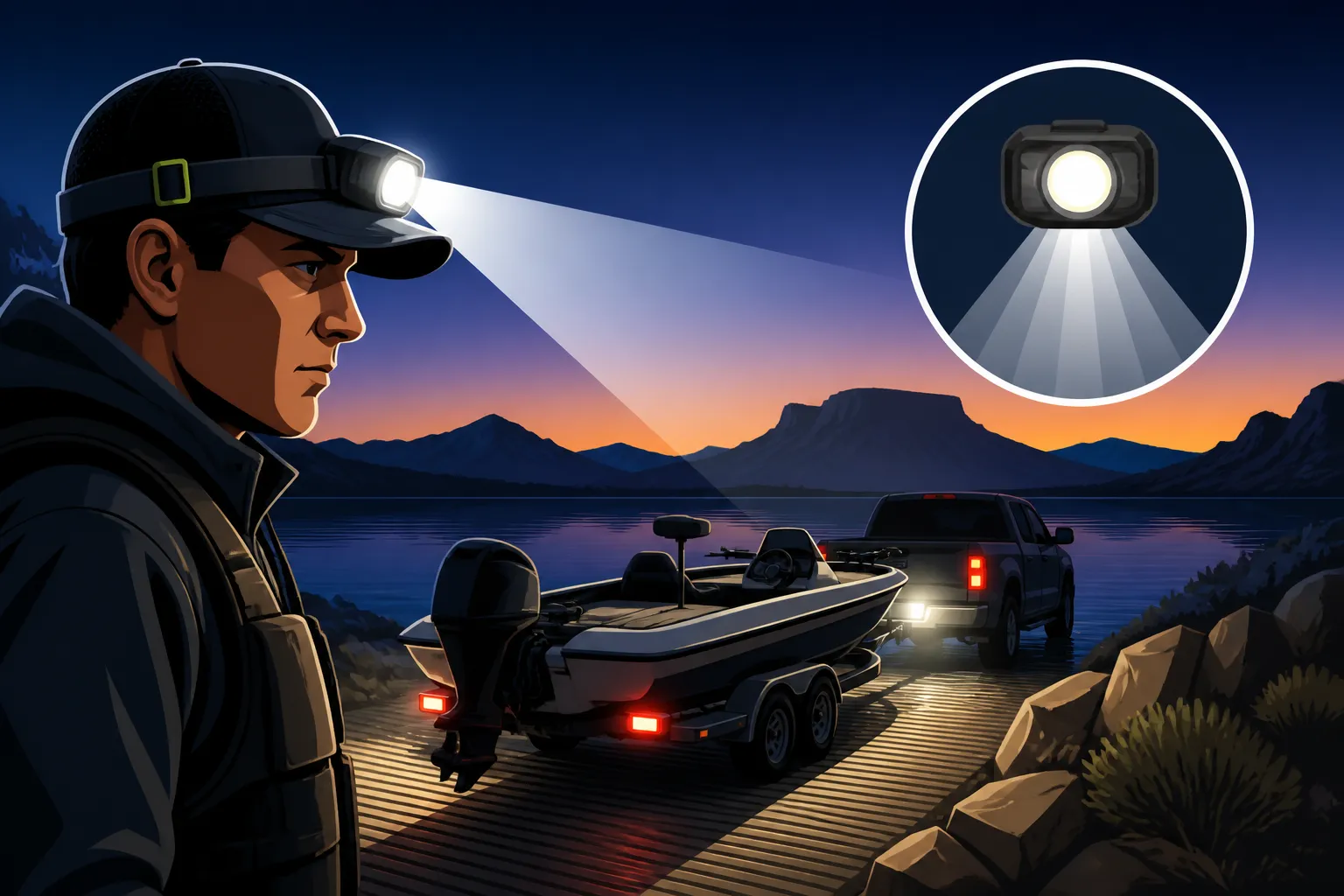
For the core task of launching a boat, you’re often dealing with a combination of close-up work and the need for broader illumination. When backing a trailer, for instance, your vehicle's reverse lights provide some visibility, but a headlamp adds crucial, directional light exactly where your eyes are looking. This is especially true if you’re trying to avoid a tricky patch of sand or a hidden rock at the edge of the ramp.
A brightness range of 200 to 400 lumens is generally excellent for navigating the boat ramp itself. This provides enough light to clearly see the concrete or gravel, any potential debris, and the water's edge, without being overly intense. For critical moments like unhooking the bow line or pushing off from the trailer, a setting around 100-200 lumens is often perfect, offering ample light for detailed work while still being comfortable for your eyes. If you need to scan the water for a distant buoy or a tricky current before you motor out, bumping up to 500-600 lumens can be incredibly helpful for a brief period.
Remember, the goal isn't just raw power, but effective illumination. A headlamp with a good quality reflector and lens will distribute that light efficiently, making those lumens go further. For instance, a quality headlamp from a brand like Fenix or Petzl, often found at Bass Pro Shops or on Amazon, will deliver more usable light at a given lumen rating than a cheaper, poorly designed alternative.
Beyond Peak Brightness: Beam Patterns and Modes
Beyond just the sheer number of lumens, how that light is delivered is incredibly important. Headlamps typically offer different beam patterns to suit various activities.
- Flood Beam: This provides a wide, diffuse light, excellent for illuminating your immediate surroundings. It’s perfect for setting up your rods, organizing your cooler, or generally seeing the area directly in front of you without creating harsh shadows. You’ll want this for most close-up tasks during a launch.
- Spot Beam: This is a more focused, narrower beam of light designed to cut through the darkness and illuminate objects at a distance. It's invaluable for scanning the far end of the boat ramp, looking for submerged obstacles, or spotting a navigation marker far out on the water. Many headlamps combine both, allowing you to switch between them or even use a hybrid mode.
Additionally, various light modes can make a huge difference:
- Red Light Mode: This is a non-negotiable feature for any serious angler launching pre-dawn. Red light preserves your natural night vision, meaning your eyes don't have to constantly re-adjust when you switch from artificial light back to the low ambient light. It's fantastic for checking your boat's gauges, tying a quick knot, or glancing at a map without ruining your ability to see stars or subtle movements on the water. If you’re fishing for species like trout or striped bass that are active in low light, maintaining your night vision is crucial for observing subtle bites or changes in the water.
- Strobe/SOS Mode: While not directly used for launching, these safety modes are excellent to have in an emergency, especially if you're launching at a remote location or facing unexpected boat trouble on the water. Having a signal light can draw attention if you run into an issue, making it a critical part of your Essential Safety Gear for Boating on Lake Mead.
Essential Headlamp Features for Pre-Dawn Nevada Fishing
Launching a boat in Nevada means dealing with a unique set of conditions. From the often-rocky or sandy boat ramps to the potential for unexpected splashes, your headlamp needs to be more than just bright; it needs to be resilient and smart. Selecting the right features will make your pre-dawn adventures significantly smoother and safer.
Red Light Mode: Preserving Night Vision
I can't stress enough how vital a red light mode is. When your eyes adjust to darkness, they become incredibly sensitive to light. A sudden burst of white light can completely reset this adaptation, leaving you temporarily disoriented and blind in the dark once you turn the white light off. This is precisely what you want to avoid when you're maneuvering a boat and trailer in low light conditions, or stepping onto an unfamiliar dock.
The red light feature provides just enough illumination for close-range tasks without impacting your night vision. Imagine you're doing a final check of your lines or adjusting your depth finder settings right before you back into the water. Using a red light allows you to see what you're doing without blinding yourself or your companions. It's also less likely to scare off nocturnal critters or alert other early-bird anglers to your exact location, which can be a plus if you're trying to sneak onto a prime fishing spot. Whether you're targeting big trout or Night Fishing Techniques for Striped Bass, preserving your night vision gives you a significant advantage. Always remember to start with the lowest red light setting and only increase brightness if absolutely necessary.
Battery Life and Power Source Considerations
Nothing ruins an early start faster than a dead headlamp. When choosing a headlamp for pre-dawn launches and subsequent fishing, battery life is paramount. You'll generally find two main power source types:
- Alkaline Batteries (AAA or AA): These are common, easily replaceable, and generally inexpensive. The downside is that their performance can drop in colder temperatures (though less of an issue in much of Nevada), and they're not rechargeable, leading to more waste and ongoing costs. However, for occasional use or as a backup, they're perfectly fine. Just make sure to carry spares, perhaps tucked into your Best dry bag for keeping gear safe on the water.
- Rechargeable Lithium-Ion Batteries: Many modern headlamps come with integrated or removable rechargeable batteries. These often offer consistent performance, are more environmentally friendly, and can be charged via USB, which is incredibly convenient if you have a power bank or a charging port in your vehicle. They tend to hold a charge better in varying temperatures and can deliver higher lumen outputs. The initial cost might be higher, but the long-term savings and convenience often make them worthwhile. Look for models that can also run on standard alkaline batteries as a backup, offering the best of both worlds.
When evaluating battery life, always check the runtimes for different lumen settings. A headlamp might advertise a 200-hour runtime, but that's usually on its lowest setting. The high-lumen settings, which you'll use for backing down the ramp or scanning, will drain the battery much faster. Aim for a headlamp that offers at least a few hours of runtime on its medium-to-high settings, ensuring it won't die on you halfway through your launch sequence or during an extended How early to start fishing in hot weather session.
Durability and Water Resistance for the Elements
Nevada's environment, while often dry, can still present challenges for electronic gear. Dust, grit, and the inevitable splashes from the water are all factors to consider. Your headlamp needs to be built tough.
- Impact Resistance: Dropping your headlamp on a concrete boat ramp is a real possibility in the dark. Look for models with a rugged housing, often made from durable plastics or aluminum, that can withstand accidental drops.
- Water Resistance (IPX Rating): This is crucial. Even if you don't plan on dunking your headlamp, splashes from waves, rain, or simply handling wet lines are common. An IPX4 rating means it can handle splashes from any direction, which is generally sufficient for most fishing activities. An IPX7 rating means it can be submerged for a short period, which offers even more peace of mind, especially if you're Kayak Fishing Gear for Nevada and have a higher chance of accidental submersion. Always check the specific IPX rating, as a higher number indicates greater water protection.
The straps and headband material also matter. Look for comfortable, adjustable, and breathable straps that won't chafe or slip when you're moving around. Some headlamps feature reflective elements on the strap, which can add an extra layer of visibility if you're walking along a road or in areas with limited light. After all, safety extends beyond just seeing what you're doing; it's also about being seen by others.
Practical Tips for a Smooth Pre-Dawn Boat Launch
Even with the best headlamp, a pre-dawn boat launch can feel like a chaotic dance if you're not prepared. But with a little planning and coordination, you can transform it into a seamless, almost peaceful start to your fishing day. It's all about anticipating what you'll need and having a system in place.
Preparing Your Gear Before You Go
The less you have to fumble with in the dark, the better. This tip is probably the single most important piece of advice for any successful early morning departure. Think of it like a military operation: every piece of gear has its place, and you know exactly where it is.
- Load and Organize: Get as much of your gear loaded into the boat and organized the night before as possible. Rods secured, tackle boxes in their compartments, cooler stocked, and life vests easily accessible. Ensure everything is strapped down properly so it doesn't shift during transit or slide around when you hit the water.
- Pre-Check Vehicle and Trailer: Before you leave home, do a quick walk-around. Check your trailer lights, tire pressure, and ensure your hitch is properly secured. Make sure your boat's drain plug is in – yes, it sounds obvious, but it's a common, embarrassing, and potentially dangerous mistake in the dark! Verify that your tie-downs are secure but easily released when you're at the ramp.
- Headlamp Ready: Always keep your headlamp charged or with fresh batteries, and know exactly where it is. Attach it to your fishing vest, keep it in a designated pocket, or clip it to the brim of your hat. Have it on and ready before you even back down the ramp. This proactive approach saves precious minutes and prevents frustration, allowing you to focus on the task at hand rather than searching for light.
By taking these steps, you minimize the amount of intensive, light-dependent work you have to do at the ramp itself. It also reduces the chances of forgetting something crucial, which is easy to do when you're operating on limited sleep and even more limited visibility.
Coordinating Lights with Your Crew
If you're lucky enough to have fishing buddies joining you, their lighting strategy is just as important as yours. Uncoordinated lights can lead to blinding flashes, confusion, and even arguments before you've even cast a line.
- Communicate Roles: Assign specific roles for the launch: who's driving the boat, who's handling lines, who's backing the trailer. This clear division of labor helps everyone know where to focus their attention and, consequently, their light.
- Strategic Lighting: Encourage everyone to use their headlamps on lower settings, especially if they have that invaluable red light mode. The goal is to illuminate the task at hand, not to create a strobe light effect across the entire ramp. If someone is directly facing the person driving the boat, they should dim their light or switch to red.
- Vehicle Lights: Use your truck's reverse lights and trailer lights to your advantage, but be mindful of others. If you're idling, consider turning off your headlights so as not to blind people waiting their turn. Remember, courtesy at the boat ramp goes a long way, especially during those busy early mornings. Having clear instructions and understanding of who is doing what, and where their light needs to be directed, makes the whole process smoother and much safer.
A well-coordinated team means less stress, fewer mistakes, and a faster, more efficient launch, allowing you to get to your fishing spot while the fish are still biting. For more details on boating regulations, check out Nevada Boat Registration for Anglers or Nevada Boat Registration and Titling Guide.
Safety First: Visibility and Situational Awareness
No amount of excitement for catching fish should ever compromise safety. Pre-dawn hours are inherently riskier due to low visibility, and a boat ramp adds another layer of potential hazards.
- Be Seen: While your headlamp helps you see, consider how visible you are to others. Wearing light-colored clothing or even a reflective vest can make a big difference if another vehicle is maneuvering in the area. At many ramps, especially those that are popular, there might be other anglers launching or retrieving, and you want to ensure everyone sees each other.
- Scan Your Surroundings: Before you make any major move, pause and take a mental scan of your environment. Are there other boats waiting? Are there pedestrians nearby? Are there any unexpected obstacles on the ramp or in the water? Your headlamp should be used to actively sweep these areas, not just to illuminate what’s directly in front of you. Pay attention to the conditions of the ramp itself – is it slick with algae, gravelly, or uneven?
- Slow and Steady: Rushing is the enemy of safety, especially in the dark. Take your time backing up, launching, and securing your boat. It’s better to take an extra minute or two and do it right than to rush and cause an accident or damage your gear. This mindful approach to your Nevada Fishing Seasons by Month can prevent unnecessary frustration and keep everyone safe.
- Watch Your Footing: Boat ramps, especially near the water's edge, can be slippery from algae, oil, or simply moisture. Your headlamp provides the light, but it’s up to you to use it to identify hazards and step carefully. This is particularly important when moving between your trailer, vehicle, and boat.
Prioritizing safety during those crucial pre-dawn moments ensures that your fishing trip starts on the right foot – and that you'll be able to enjoy many more such trips in the future.
Choosing the Right Headlamp: Brands and Recommendations
When you're ready to invest in a headlamp that truly serves your Nevada fishing adventures, you'll find a dizzying array of options. From budget-friendly choices to high-end technical marvels, picking the "best" one depends largely on your specific needs, how often you'll use it, and your budget. But remember, the investment in a quality headlamp is an investment in safety and convenience for every single Best Time of Day to Fish in Summer Heat or early morning launch.
Considerations for Different Budgets and Needs
Not every angler needs a headlamp that can signal planes, but everyone needs something reliable.
- The Casual Angler (Occasional Use): If you're only hitting the water a few times a year for a pre-dawn launch, you might not need the most advanced, expensive model. Look for headlamps in the 200-400 lumen range with multiple modes, a red light option, and an IPX4 water resistance rating. Brands like Energizer or Duracell often offer dependable, affordable options that run on alkaline batteries and can be easily found at most general stores or online retailers. They provide solid basic illumination without breaking the bank.
- The Dedicated Angler (Frequent Use): For those who spend many mornings hitting the water, a more robust and feature-rich headlamp is a smart investment. Consider models with higher lumen outputs (up to 600+), rechargeable lithium-ion batteries with good runtimes, multiple beam patterns (flood and spot), and an IPX7 water resistance rating for added peace of mind. Brands like Black Diamond, Princeton Tec, or Coast are popular choices, offering excellent durability and advanced features. These often represent a significant step up in quality and longevity.
- The Tech-Savvy Angler (Advanced Features): If you crave the latest technology, there are headlamps with reactive lighting (which automatically adjusts brightness based on ambient light), specialized battery packs, and even Bluetooth connectivity for custom settings via a smartphone app. While perhaps overkill for a simple boat launch, these features can enhance overall user experience for extended trips or specialized applications. Petzl and Fenix are known for pushing the boundaries in this category.
No matter your budget, always prioritize the red light mode, decent battery life, and enough brightness for your core tasks. Sometimes, it's worth spending a little more for a headlamp that won't fail you when you need it most.
Where to Find Reliable Headlamps for Your Adventures
The good news is that finding a quality headlamp is easier than ever, thanks to a variety of retailers both brick-and-mortar and online.
- Sporting Goods Stores: Places like Bass Pro Shops and Cabela's are excellent resources. They typically have dedicated camping and outdoor lighting sections where you can physically try on different models, test their brightness, and speak with knowledgeable staff about features and durability. This hands-on experience can be invaluable in making the right choice, especially for something you'll wear on your head for hours. They often carry a wide range of brands, from budget-friendly to premium.
- Online Retailers: Amazon is, of course, a treasure trove of headlamps. The sheer selection can be overwhelming, but it also means you can find exactly what you're looking for, often with competitive pricing. Be sure to read customer reviews carefully, paying attention to comments about battery life, actual brightness, and durability in real-world scenarios. Look for sellers with good return policies in case the headlamp doesn't meet your expectations. Websites specializing in outdoor gear, like REI or Backcountry, also offer curated selections of high-quality headlamps, often with detailed specifications and expert reviews.
- Local Tackle Shops: Don't overlook your local tackle shop! While they might not have the biggest selection, they often carry products specifically chosen for local fishing conditions and angler needs. Plus, supporting local businesses is always a good thing, and you might get some fantastic local fishing tips while you're there.
Before you make a purchase, consider the conditions you typically fish in. Do you mostly fish calm lakes or windy reservoirs? Is extreme heat or cold a factor? The more you tailor your choice to your actual fishing environment and habits, the happier you'll be with your headlamp.
| Task During Launch | Recommended Lumens | Key Features Needed | Why It Matters |
|---|---|---|---|
| Pre-inspection (trailer, boat) | 100-200 | Wide flood, neutral white LED | Detail visibility, reduced harsh glare |
| Backing down ramp | 200-400+ | Flood/spot combo, red light option | Illuminate ramp path, avoid blinding crew/others |
| Securing boat, loading gear | 50-150 | Flood, red light preferred | Hands-free, close-up work, preserves night vision |
| Navigating dock/shore | 150-300 | Flood/spot combo, reliable beam | See obstacles, depth perception, general awareness |
| Emergency signaling | 500-1000+ | Strobe/SOS mode | Attract attention in critical situations |
Disclaimer
This article is for general informational purposes only and does not constitute professional advice. Laws, prices and regulations vary by location and change over time. Consult a qualified professional for guidance on your specific situation.