How to fish muddy water after a storm
After a sudden storm rolls through Nevada, turning those usually clear, inviting waters into a coffee-with-cream swirl, it can feel like your fishing plans are completely washed out. That feeling of disappointment when you arrive at your favorite spot, only to see the turbidity, is something every angler knows. But don't despair! Fishing in muddy water after a storm isn't a lost cause; it simply requires a shift in strategy, and this guide is here to help you understand how fish react and what you can do to still reel in a successful catch.
Understanding Why Storms Muddle the Water and How Fish React
When the skies open up over Nevada, whether it's a summer monsoon downpour or a spring shower in the mountains, the landscape changes quickly. This dramatic shift doesn't just affect the scenery; it drastically impacts the underwater world where our finned friends live. Understanding these changes is your first step to adapting your approach and finding success.
The Science Behind Murky Waters: Runoff and Sediment
The primary culprit behind muddy water is runoff. When heavy rain hits the land, it doesn't just soak in. It collects, flows, and picks up everything in its path – soil, silt, organic debris, and even pollutants. This sediment-laden water then rushes into lakes, reservoirs, and rivers, drastically reducing visibility. Think about a usually clear mountain stream, like a feeder into the Truckee River after a heavy rain: it can transform from crystal clear to a brownish torrent in a matter of hours. The amount of sediment stirred up depends on the intensity of the storm, the surrounding topography, and the soil composition. Clay soils, for instance, tend to suspend in water longer than sandy soils, leading to prolonged murkiness.
This influx of sediment doesn't just make the water look unappealing; it fundamentally changes the aquatic environment. The suspended particles can irritate fish gills, reduce oxygen levels in some localized areas, and most importantly for us anglers, severely limit visibility. Fish that rely heavily on sight for hunting will struggle, while those that use other senses might actually gain an advantage. It's a whole new ballgame underwater, and your usual tactics might be completely ineffective.
How Fish Sense and Respond to Reduced Visibility
Fish are incredibly adaptable creatures, and they possess a suite of senses that help them navigate their world, even when sight is compromised. While their vision might be hindered in muddy water, their lateral line system, sense of smell, and hearing become paramount. The lateral line is a sensory organ that runs along the sides of a fish, detecting vibrations and pressure changes in the water. This allows them to "feel" prey, predators, and even obstacles in conditions where they can't see a thing.
Furthermore, fish have an excellent sense of smell. They use chemical cues in the water to find food, mates, and even navigate. In muddy water, strong scents can become irresistible, cutting through the murk in a way that visual lures simply cannot. Consider how a predator like a striped bass, often found in Lake Mead, might use its lateral line to track schools of baitfish in low light or turbid conditions, feeling the subtle movements of its prey rather than seeing them directly. This highlights why your approach needs to shift from purely visual attraction to appealing to these other heightened senses.
Identifying Fish Behavior Shifts in Cloudy Conditions
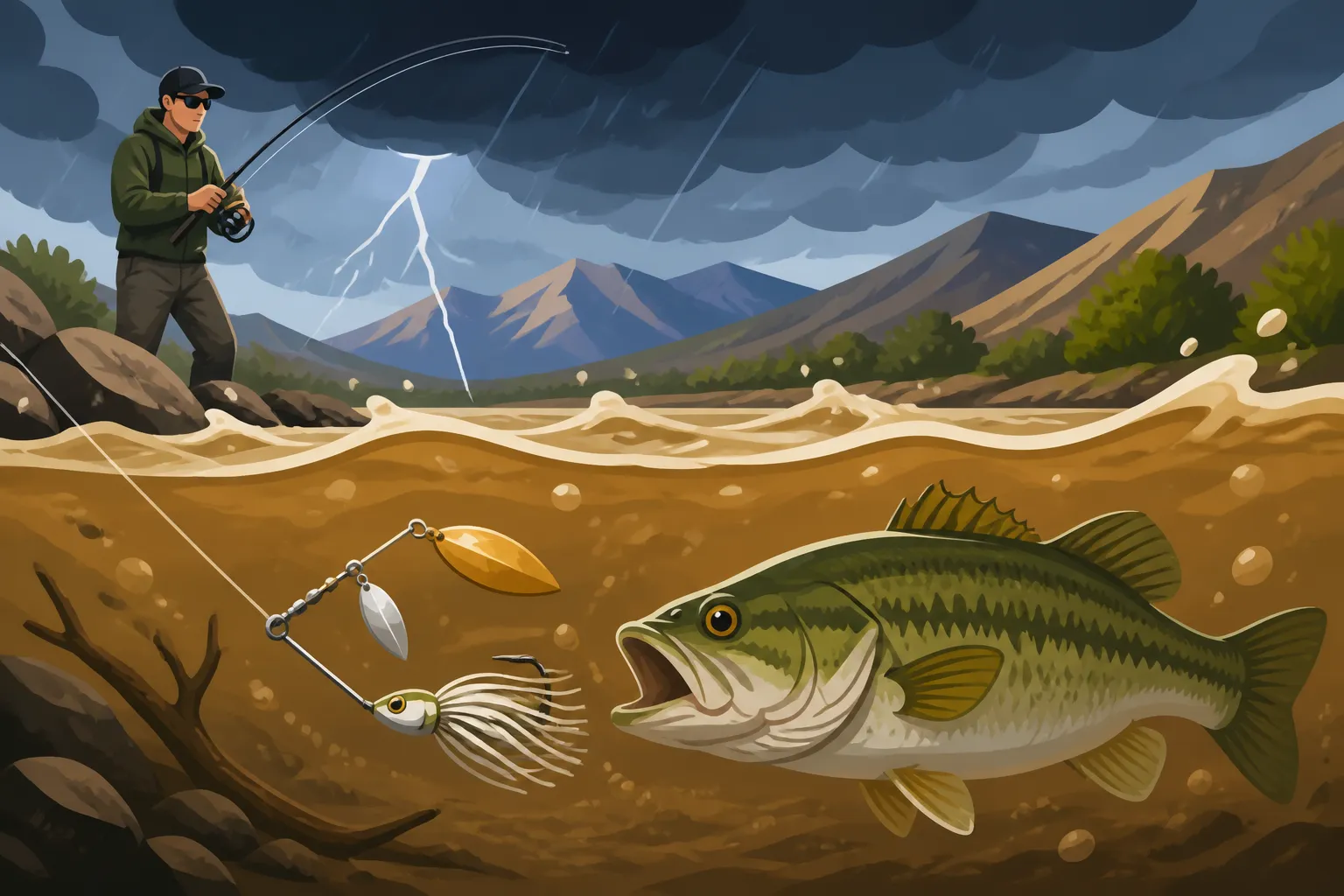
Muddy water often brings about predictable changes in fish behavior. Many species will seek out areas where the water is slightly clearer or where there's less current, often near inflows or along transition lines where clear water meets the muddy plume. They might also move shallower, using the reduced visibility as cover, or conversely, move deeper to find more stable, less disturbed water. For instance, after a big storm, bass in a reservoir might move closer to shore and hug structure, using the cloudy water as an ambush point for unsuspecting prey.
Another common behavior is a reduction in activity. Fish might become more lethargic, conserving energy due to lower oxygen levels or simply because hunting is harder. This means they're less likely to chase down a fast-moving lure. They might also congregate in specific areas where food is being washed in by the runoff, such as creek mouths or points where debris accumulates. Understanding these shifts is crucial. Don't expect fish to be in their usual clear-water haunts, and certainly don't expect them to react to your presentation in the same way. It's about thinking like a fish in a suddenly unfamiliar environment.
Adapting Your Approach: Lures, Baits, and Presentation
When the water turns murky, your tackle box isn't useless, but some items will become far more effective than others. This is where you need to be strategic, moving away from subtle presentations and embracing methods that maximize sound, vibration, and scent to cut through the cloudy conditions.
Go Bold: High-Contrast Lures and Vibrations
In muddy water, visibility is severely compromised, so a lure that blends in is simply going to get overlooked. This is the time to go bold! Think about colors that offer high contrast against the murky background. Bright, fluorescent colors like chartreuse, orange, and fire-tiger patterns are often incredibly effective. These colors stand out more in low light, making them easier for fish to detect even with limited vision. Don't be afraid to use lures that look almost neon; what seems garish to you might be just enough to grab a fish's attention in the murk.
Beyond color, vibration is your secret weapon. Lures that displace a lot of water and create strong vibrations are gold in muddy conditions. Spinnerbaits, chatterbaits, and lipped crankbaits are excellent choices because they create a significant thump and wobble that fish can feel with their lateral line from a distance. Rattle traps with their internal BBs or tungsten beads also produce irresistible noise and vibration. Consider a situation at Lake Mohave: if a muddy plume has pushed into a cove, a large, loud crankbait in a fire-tiger pattern, retrieved slowly, can be far more effective than a subtle, natural-colored jig. You're not trying to mimic a specific baitfish visually; you're trying to send out a distress signal that screams "EAT ME!" through the water. Many effective vibrating lures can be found on Amazon.
Scent and Noise: Appealing to Other Senses
As mentioned, fish rely heavily on their sense of smell in low-visibility conditions. This makes scent an invaluable tool for muddy water fishing. Adding scent to your lures, whether it's a paste, gel, or spray, can dramatically increase your chances. Products with strong fish-attracting aromas, like garlic, anise, or various "fish-attractant" formulas, can draw fish in from a greater distance and encourage them to hold onto the lure longer, giving you a better chance to set the hook. Even for lures that already produce vibration, a boost of scent can be the difference between a curious sniff and a committed strike.
Beyond scent, maximizing any noise your presentation makes can also be beneficial. Rattles within soft plastics, noisy topwater lures (though topwater fishing can be tougher in truly muddy conditions unless fish are very shallow), or even adding a small bell or weight that clinks against your mainline can help fish pinpoint your offering. For species like channel catfish, which are keen nocturnal hunters and rely heavily on smell, a stink bait or a punch bait is almost mandatory in murky conditions. The goal is to create an irresistible olfactory and auditory beacon in an otherwise confusing environment for the fish. For those looking to upgrade their tackle for all conditions, check out our guide on Best Fishing Gear Essentials.
Slow and Low: Adjusting Your Retrieve and Depth
In muddy water, fish are often less aggressive and less willing to chase. Their world has been turned upside down, and they might be feeling disoriented or sluggish. This means you need to slow down your retrieve significantly. A slow, methodical presentation allows fish more time to locate your lure using their other senses and decide whether to strike. Fast retrieves that are effective in clear water will often be ignored in the murk because fish simply can't react quickly enough or even find the lure.
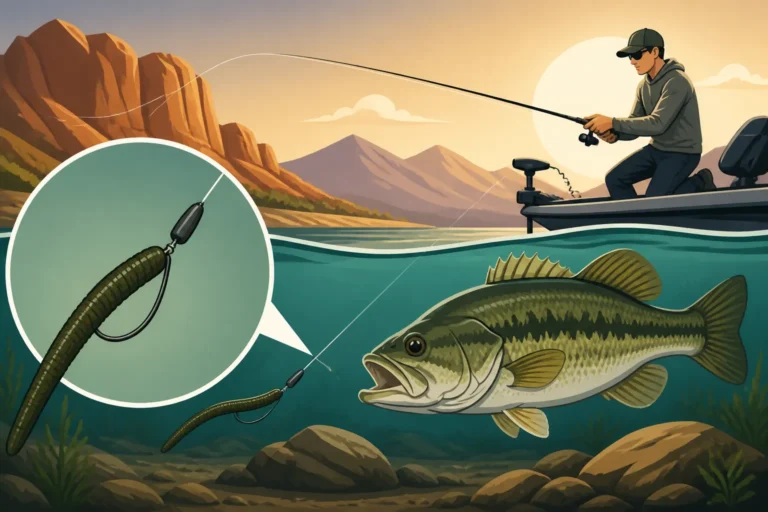
Furthermore, fish in muddy conditions tend to hug the bottom or structure, seeking shelter and stable conditions. This means you generally need to fish deeper than you might otherwise. Getting your bait right into their strike zone is critical. Use heavier weights to ensure your lure reaches the bottom quickly and stays there. When fishing for bass, for example, a jig-and-pig combo or a Texas-rigged worm fished slowly along the bottom, bumping into structure, can be incredibly effective. For trout in a desert reservoir, a similar slow, bottom-bouncing approach with a powerful scent can entice strikes. Understanding the Seasonal Movement of Fish in Reservoirs can further inform where fish might be holding. It's about bringing the meal directly to them, practically spoon-feeding it, rather than expecting them to chase it down.
Locating Fish in Post-Storm Conditions
Finding fish in a vast expanse of muddy water can feel like searching for a needle in a haystack. However, fish don't just randomly disperse. They often gravitate towards specific areas that offer relief from the turbidity, a food source, or a sense of security. Knowing where to focus your efforts is key to success.
Targeting Transition Zones and Inflow Areas
One of the most promising places to find fish after a storm is at the transition zones where muddy water meets clearer water. These "mud lines" can be incredibly productive, as fish will often stage along them, waiting for opportunities. Predator fish might lurk on the clear side, ambushing baitfish that wander into the turbid water for cover or food. Conversely, baitfish might hide in the muddy water, and predatory fish will patrol the edges. These lines often occur where a muddy creek flows into a larger, clearer lake, or along shorelines where runoff has created distinct muddy plumes.
Inflow areas, such as the mouths of creeks, rivers, or even large culverts, are also prime targets. Storms wash a significant amount of food — insects, worms, and organic debris — into the water, and fish will often congregate in these areas to feast on the sudden bounty. This can be particularly true for species like trout and bass. However, be mindful of strong currents; while fish might be attracted to the food, they'll often position themselves just out of the main flow, in eddies or behind obstacles, to conserve energy. This is where keen observation and understanding the Nevada Fishing Regulations Explained come in handy for finding those hot spots.
Finding Structure and Cover
Even in clear water, fish relate strongly to structure and cover. In muddy conditions, this relationship becomes even more pronounced. Submerged trees, rock piles, ledges, docks, and even dense weed beds provide crucial refuge from strong currents, offer ambush points for predators, and can sometimes trap clearer pockets of water. Fish will often press themselves tight against these features, using them as navigation aids and security blankets.
When fishing a muddy lake or river, systematically targeting every piece of structure you can find is a smart move. Cast your bold, noisy, or scented lures right up against submerged logs, rocky points, or the pilings of a bridge. Remember the "slow and low" approach here; let your bait sink, work it deliberately along the contours of the structure, and give fish ample opportunity to find it. Many anglers find great success exploring areas near submerged structures with a fish finder, learning How to use a fish finder to locate suspended stripers or bass that are holding tight. Don't overlook man-made structures in urban ponds as well; they offer the same benefits to fish seeking refuge.
Leveraging Water Temperature Differences
While less obvious than visible mud lines, water temperature can also play a role in where fish position themselves after a storm. Heavy rain, especially if it's colder than the ambient lake water, can create thermal stratification or pockets of cooler water. Fish, particularly cold-blooded species like trout, are highly sensitive to temperature changes and will seek out their preferred thermal zones. Conversely, if the storm brings warmer runoff into a cold lake, fish might gravitate towards those slightly warmer inflows.
In some situations, the muddier water itself can warm or cool faster than clearer water, creating subtle thermal shifts that attract or repel fish. While it's harder to detect without specialized equipment, paying attention to the overall weather pattern and the temperature of the incoming runoff can give you clues. If a cold front has just passed, for instance, fish might move to deeper, more stable water, or conversely, seek out shallower, warmer areas if the sun quickly returns. This relates to understanding patterns like Best time to fish before a cold front hits and adapting to post-front conditions.
Essential Gear and Safety Considerations for Muddy Water
Fishing in post-storm conditions isn't just about changing your lures; it's also about preparing your gear and ensuring your safety. The environment can be unpredictable, and having the right tools can make all the difference.
Gear for Enhanced Visibility and Detection
Your own visibility can also be compromised after a storm, especially if it's still overcast or drizzling. Quality polarized sunglasses are an absolute must, even in murky conditions. While they won't cut through dense mud, they can significantly reduce glare, helping you spot subtle changes in water clarity, identify mud lines, or even see a fish break the surface that you might otherwise miss. Look for amber or yellow lenses for low-light conditions. A good pair of these glasses can be easily found on Amazon.
Beyond your personal vision, electronic gear plays a vital role. A reliable fish finder with good down-imaging and side-imaging capabilities can be your best friend. In muddy water, seeing the fish directly might be impossible, but your fish finder can still detect their presence, locate structure they're holding to, and even identify bait balls. This is especially useful in larger bodies of water like Lake Mead or Lake Tahoe. Don't forget a sturdy rod and reel combo that can handle the potentially larger fish that might strike your bolder lures, as discussed in guides like Best Rods for Nevada Lakes.
Staying Safe on Storm-Affected Waters
Safety should always be your top priority, especially when dealing with the aftermath of a storm. Water levels can be higher, currents stronger, and debris can be a serious hazard. If you're boating, exercise extreme caution. Navigational markers might be obscured, and submerged logs or other debris can pose a threat to your propeller and hull. Always wear a life jacket, ensure all your Essential Safety Gear for Boating on Lake Mead is easily accessible, and let someone know your float plan.
Bank fishing also requires caution. Wet, muddy banks can be slippery, and water levels can fluctuate rapidly. Avoid fishing near unstable banks or areas with strong currents. If wading, be extremely careful about footing, as the bottom can become treacherous with shifting sediment and debris. Always fish with a buddy if possible, and be aware of changing weather conditions. A second storm front can roll in quickly, especially during certain seasons in Nevada.
Post-Storm Fishing Checklist
To help you prepare for your next muddy water adventure, here's a quick checklist of considerations and gear.
| Category | Item | Why It's Important |
|---|---|---|
| Lures & Baits | High-contrast lures (chartreuse, orange, fire-tiger) | Stand out in low visibility |
| Vibrating lures (spinnerbaits, chatterbaits, crankbaits with rattles) | Create sound and vibration to attract fish via lateral line | |
| Scented baits/attractants | Appeal to heightened sense of smell in murky water | |
| Heavy weights | Get lures to the bottom where fish are likely holding | |
| Gear & Electronics | Quality polarized sunglasses | Reduce glare, help spot subtle changes |
| Fish finder with good imaging | Locate fish and structure when visibility is zero | |
| Sturdy rod and reel | Handle potentially aggressive strikes from larger fish | |
| Extra line (braided or heavier mono) | Best Line for Desert Reservoir Fishing – withstand abrasion from debris | |
| Safety & Comfort | Life jacket (if boating/wading) | Non-negotiable safety item |
| Non-slip footwear | Prevent falls on wet, muddy banks | |
| Rain gear / waterproof clothing | Stay dry and comfortable in unpredictable weather | |
| Drinking water & snacks | Essential for any outing, especially if conditions are tougher | |
| First-aid kit | For minor cuts, scrapes, or other incidents |
Fishing in muddy water after a storm can be challenging, but with the right mindset, techniques, and gear, it can also be incredibly rewarding. It forces you to think differently, hone your senses, and truly understand how fish operate in less-than-ideal conditions. So next time a storm rolls through, don't pack away your gear. Instead, embrace the challenge, adapt your strategy, and you might just find some of the most memorable catches of your Nevada fishing journey.
Disclaimer
This article is for general informational purposes only and does not constitute professional advice. Laws, prices and regulations vary by location and change over time. Consult a qualified professional for guidance on your specific situation.