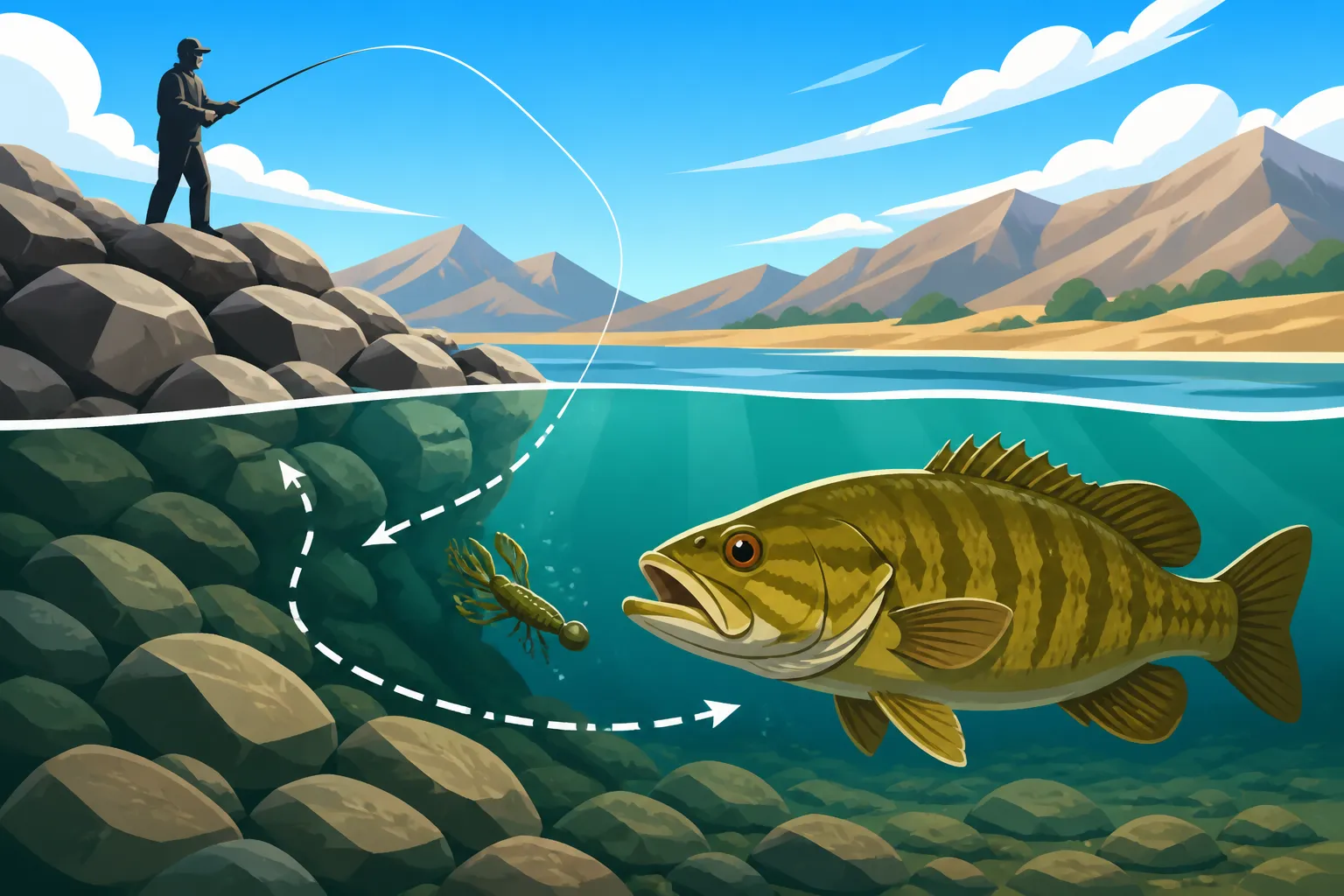
How to target smallmouth around rocky points
There's nothing quite like the thrill of feeling that distinct "thump" of a smallmouth bass attacking your lure, especially when you've painstakingly targeted them around a promising rocky point. Many anglers, myself included, have spent countless hours scratching our heads, wondering why these feisty fighters seem to vanish from seemingly perfect habitat. The truth is, smallmouth bass love rocky points, but knowing why they love them and how to fish them effectively can feel like cracking a secret code. This guide is here to demystify the art of targeting smallmouth around rocky points in Nevada, giving you the insights and techniques to turn those head-scratching moments into triumphant catches.
Understanding Smallmouth Bass Behavior Around Rocky Points
Rocky points aren't just random formations; they're prime real estate for smallmouth bass. These areas offer a buffet of benefits that attract and hold these hard-fighting fish, making them key targets for any serious angler.
Why Smallmouth Love Rocky Points
Think of a rocky point as a perfect hunting ground and sanctuary for smallmouth. First off, they're typically teeming with food sources. Crayfish, a smallmouth's absolute favorite meal, thrive in rocky crevices, and baitfish often congregate around these structures for cover and food. The rocks themselves provide excellent ambush points, allowing a smallmouth to hide from predators while patiently waiting for an unsuspecting meal to swim by. It’s like a natural blind for a hunter.
Beyond food and cover, rocky points play a crucial role in temperature regulation. As the Nevada sun beats down, a point extending into deeper water can offer cooler temperatures a few feet down, providing a comfortable thermal refuge for smallmouth. Conversely, in cooler seasons, shallower rocks can absorb sunlight and warm up faster, attracting both baitfish and the bass that prey on them. During spawning season, the clean, hard bottom of a rocky point also makes it an ideal spot for smallmouth to build their nests. Imagine a typical Nevada reservoir like Lake Mead or Lake Mohave; the sun might be intense, but a rocky point extending into deeper water offers that crucial escape from the heat, providing both shade and cooler water just a few feet down, often attracting schools of stripers and smallmouth alike.
Reading the Water: Submerged Structure and Current
One of the biggest mistakes anglers make is just casting blindly at a visible rocky point. The real magic often lies beneath the surface. You need to identify key features like ledges, isolated boulders, and transition zones where rock meets sand or mud. These subtle changes in bottom composition can be goldmines. A ledge, for example, creates a natural current break and a perfect ambush point where smallmouth can sit just out of the main flow, conserving energy while waiting for prey to drift past.
Current is another major factor. Even in seemingly still reservoirs, subtle currents can exist, especially around points where water flows around obstacles. Smallmouth will instinctively position themselves on the "down-current" side of a point or boulder to take advantage of these breaks, letting the current bring food to them. Pay close attention to any subtle ripples or changes in water movement you observe. Similarly, depth changes, whether sudden drops, gradual slopes, or hidden humps, are critical. Fish often orient to these contours. For instance, if you’re at Topaz Lake, scanning a rocky point, and you notice a slight ripple indicating a current, coupled with a subtle drop-off on one side revealed by your fish finder, you’ve just found yourself a prime smallmouth hotspot. This understanding is key to effective Smallmouth Bass Fishing in Nevada.
Essential Gear and Tackle for Rocky Point Smallmouth
Having the right tools for the job is paramount when targeting smallmouth in the rocky Nevada landscape. The unforgiving nature of these environments demands specific gear choices that can stand up to the challenge while providing the sensitivity needed for subtle bites.
Rods, Reels, and Line Choices
For most rocky point scenarios, you’ll want a versatile rod setup. Medium-light to medium power spinning rods, typically in the 6’6” to 7’6” range with a fast action, are fantastic. This setup offers the sensitivity to detect subtle bites and the backbone to handle hard-fighting smallmouth, while also being excellent for casting lighter lures like small jigs and tubes. If you're planning on throwing heavier crankbaits or football jigs in deeper water, a medium-heavy baitcasting setup might be more appropriate.
Matching your reel to your rod is crucial for balance and performance. A 2500-3000 size spinning reel pairs well with the medium-light spinning rods, offering a good balance of line capacity and drag power. For baitcasting, a low-profile reel with a fast retrieve ratio is ideal for quickly taking up slack and battling fish around structure. When it comes to line, fluorocarbon is often the preferred choice for its low visibility, excellent sensitivity, and decent abrasion resistance, typically in the 6-10 lb test range. However, for maximum strength and casting distance, many anglers opt for braided line with a fluorocarbon leader, giving them the best of both worlds, especially when casting near sharp rocks. Consider researching the Best Line for Desert Reservoir Fishing to ensure your setup is truly ready for Nevada's unique conditions.
Lure Selection: Cranks, Jigs, and Plastics
The right lure can make all the difference, and smallmouth bass around rocky points can be quite particular. For covering water and triggering reaction strikes, crankbaits are fantastic. Look for deep-diving models that can reach the depths where fish are holding, and prioritize crawfish or shad patterns, often with rattling features to attract attention in stained or deeper water. Allowing these baits to "crash" off the rocks can often trigger an aggressive strike from a lurking smallmouth.
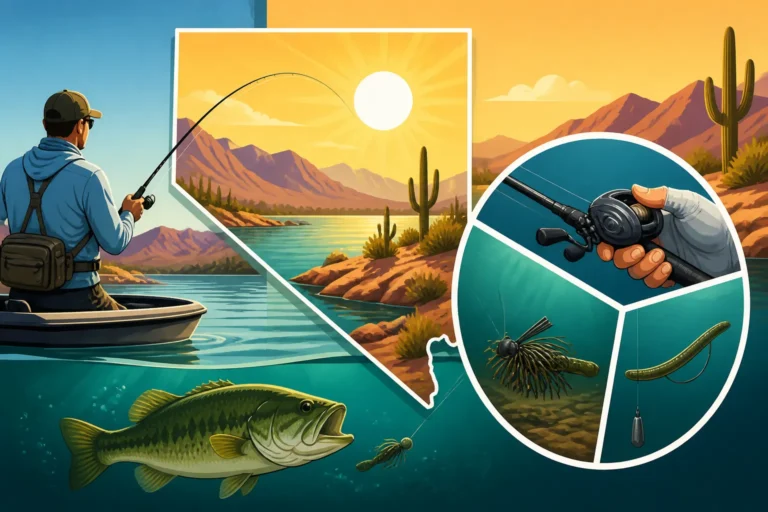
When the fish are holding tight to the bottom structure or being finicky, jigs and soft plastics truly shine. Football jigs, designed with a head shape that helps them resist snagging in rocky terrain, are excellent when tipped with crawfish or creature bait trailers. These can be dragged, hopped, and shaken along the bottom, mimicking a struggling crayfish. Soft plastics like tubes, grubs, and small swimbaits rigged on jig heads, or drop-shot worms, are incredibly effective. Natural colors like green pumpkin, watermelon, or brown are often best, blending in with the rocky environment and imitating natural forage. You can find a wide selection of these versatile lures on Amazon, making it easy to stock your tackle box. For some more specific ideas, check out our guide on the Best Lures for Nevada Bass.
Essential Accessories
Beyond your rods, reels, and lures, a few key accessories can significantly improve your fishing experience and success. A good pair of needle-nose pliers or a dedicated hook remover is indispensable for safely extracting hooks from deeply hooked fish and for quickly bending back snags. A rubberized landing net is also a smart investment; it protects the fish's slime coat, making for healthier releases, and helps secure those trophy smallmouth right at the boat or shoreline.
Given Nevada's often intense sun, comprehensive sun protection isn't just a comfort, it's a necessity. A wide-brimmed hat, polarized sunglasses (essential for seeing structure and fish under the water's surface!), and plenty of high-SPF sunscreen should always be in your bag. Finally, a well-organized tackle box or bag will ensure your lures and tools are readily accessible. There's nothing worse than fumbling for a lure when the bite is hot. Brands like Plano and Ugly Stik offer excellent storage solutions that can be found on Amazon, helping you keep everything tidy. These are all part of the Nevada Fishing Gear Essentials that every angler should consider.
Proven Techniques for Rocky Point Smallmouth
Smallmouth bass can be incredibly sensitive to pressure and conditions, so having a diverse arsenal of techniques at your disposal is crucial. What works one day might not work the next, requiring you to adapt and experiment.
Finesse Approaches: Drop-Shotting and Ned Rigs
When smallmouth are finicky, holding tight to structure, or the water is particularly clear, finesse techniques are often the key to unlocking the bite. The drop-shot rig is a prime example. This setup allows your bait to suspend above the bottom on a short leader, with a weight below it. This presentation keeps your lure right in the strike zone, subtly fluttering with minimal rod movement, making it incredibly appealing to wary bass. It's particularly effective for targeting suspended fish or those tucked away in deeper rock crevices without constantly getting snagged on the bottom. If you've never tried it, learning How to fish a drop shot rig for bass can seriously elevate your game.
Another fantastic finesse option is the Ned Rig. This technique utilizes a small, mushroom-head jig paired with a short, buoyant soft plastic worm or creature bait. The buoyancy of the plastic causes it to stand upright off the bottom, mimicking a foraging baitfish or crayfish. The Ned Rig is designed for slow, methodical retrieves, dragging it subtly along the bottom over rocky terrain. Its compact size and natural presentation often trigger strikes when larger, more aggressive baits are ignored, especially after a cold front or in high-pressure situations.
Aggressive Tactics: Cranking and Jerkbaiting
While finesse is often necessary, smallmouth can also be incredibly aggressive, especially when actively feeding. This is where crankbaits and jerkbaits shine. When using crankbaits around rocky points, the goal isn't just to retrieve it; it's to make it collide with the structure. Retrieve your crankbait at varying speeds, allowing it to "crash" into the rocks, ledges, and boulders. This deflection often mimics an escaping or injured baitfish, triggering a violent reaction strike from nearby smallmouth. Experiment with different retrieve speeds and pauses to find what the fish prefer on any given day.
Jerkbaits are another powerhouse for aggressive smallmouth. These lures are designed for an erratic retrieve – twitch, twitch, pause. The long pause can be absolutely deadly, especially in cooler water or when fish are following but not committing. The key is to impart a lifelike, wounded baitfish action. Cast your jerkbait parallel to the rocky point or over submerged structure, then work it back with sharp twitches, followed by a strategic pause. Many of the best jerkbaits are readily available on Amazon, ready to provoke those aggressive bites. This approach is often what separates a good day from a great day when fishing for Smallmouth Bass Fishing in Nevada.
Jigging and Bottom Bouncing
Sometimes, smallmouth are glued to the bottom, refusing to chase anything that isn't presented right in front of their faces. This is when jigging and bottom bouncing techniques become indispensable. Football jigs, named for their football-shaped heads, are specifically designed to navigate rocky terrain with minimal snagging. These jigs can be dragged, hopped, and shaken along the bottom, creating puffs of sediment that mimic a crawfish digging or fleeing. The key is to maintain constant contact with the bottom, feeling for every rock, pebble, and, most importantly, every subtle "thump" of a strike.
Another effective bottom technique involves using soft plastic swimbaits or grubs rigged on a traditional jig head. These can be cast out and retrieved slowly, maintaining bottom contact, allowing the tail to kick and imitate a swimming baitfish. The subtle vibrations and natural profile are often too much for a smallmouth to resist. For deeper presentations, especially around steeper rocky drops, vertical jigging a spoon or heavy jig straight down can be incredibly effective. Many experienced anglers targeting smallmouth around these structures swear by a well-presented football jig, particularly when big smallmouth are hugging the bottom in deeper water. This methodical approach often entices the biggest, most cautious bass.
Strategic Considerations and Advanced Tips
Successfully targeting smallmouth around rocky points involves more than just casting a lure. It requires a thoughtful approach, considering environmental factors, boat positioning, and effective use of modern electronics.
Time of Day and Seasonality
Smallmouth behavior around rocky points can change dramatically throughout the day and across seasons. Generally, the early morning and late evening hours are often the most productive, especially during the hotter summer months in Nevada. The lower light conditions and cooler temperatures encourage fish to move shallower and feed more actively. During mid-day, particularly under bright sun, smallmouth might retreat to deeper water or tuck tightly into shaded rock crevices, making them harder to find and entice.
Seasonal patterns are even more pronounced. In the pre-spawn period (typically late winter to early spring, depending on water temperature), smallmouth will congregate around rocky points as they stage to move into shallower spawning areas. During the actual spawn, they’ll be nesting on rocky bottoms. Post-spawn, they might be scattered and recuperating but will still use points for feeding. In winter, they'll often be deeper, but a sun-baked rocky point can still hold active fish. Paying attention to the Nevada Bass Season and Spawn Timing will significantly improve your chances of being on the water when the fish are most active. During the hotter summer months in southern Nevada, targeting smallmouth around rocky points early in the morning before the sun gets too high, or late in the evening as temperatures drop, can be incredibly productive. These are often the Best Time of Year to Fish in Nevada for these feisty bass.
Boat Positioning and Approach
Your approach and boat positioning can be just as important as your lure choice. In clear Nevada waters, stealth is paramount. Approach rocky points quietly, using your trolling motor minimally to avoid spooking fish. When you find a promising point, consider whether to cast to it from a distance or to position your boat to cast parallel to its edges. Casting parallel allows you to keep your lure in the strike zone for a longer period, covering more potential holding spots.
Wind can be both a blessing and a curse. A light breeze can help with longer casts and create a natural drift, but too much wind can make boat control a nightmare. Learn to use the wind to your advantage, positioning your boat so you can drift slowly along the contours of the point, making controlled casts. For instance, at Lake Mohave, if there's a slight breeze blowing into a rocky point, instead of fighting the wind, you might use it to drift slowly, making controlled casts with a spybait or weightless worm towards the most promising areas. Keeping your boat just off the point, rather than directly on top of it, also gives fish a sense of security and allows you to cover more water effectively.
Reading Your Electronics and Adapting
Modern fish finders and sonar units are indispensable tools for targeting smallmouth around rocky points. Use your traditional sonar to locate submerged rock piles, ledges, and sudden depth changes. Side imaging or down imaging can be even more revealing, allowing you to "see" hidden structure off to the sides of your boat that might not be visible on standard sonar, identifying isolated boulders or subtle transition zones that hold fish. The Best Fish Finder for Reservoir Fishing can give you a significant edge in these situations.
But seeing the fish and structure is only half the battle; the other half is adaptation. If a particular lure or retrieve isn't producing strikes, don't be afraid to change. Experiment with different lure types (crankbait to jig, finesse to aggressive), retrieve speeds, and even colors. Sometimes a slight change in the size of your bait or the speed of your retrieve is all it takes. If fish are showing up on your electronics but not biting, consider a finesse presentation like a drop-shot or Ned Rig. Your sonar might show a sudden depth change and some scattered boulders just off the main point. Instead of just casting shallow, you might decide to deploy a drop-shot rig to target those deeper-holding fish, adapting your approach based on what your electronics are telling you. The most successful anglers are those who are constantly observing, experimenting, and adapting their strategies to the conditions at hand.
Lure Comparison for Rocky Point Smallmouth
Choosing the right lure for rocky point smallmouth can often feel like a guessing game. Here's a quick comparison of common lure types and when to use them:
| Lure Type | Best Use Case | Retrieve Style | Pros | Cons |
|---|---|---|---|---|
| Crankbaits | Covering water, reaction strikes | Erratic, deflecting off rocks, varying speeds | Excellent for active fish, covers large areas | Prone to snagging, less effective for finicky fish |
| Football Jigs | Bottom contact, deeper water, vertical jigging | Dragging, hopping, shaking, slow presentations | Great for structure, mimics crawfish | Can be slow, requires feel for subtle bites |
| Drop-Shot Rigs | Finicky fish, suspended fish, clear water | Subtle shakes, minimal movement, holding in place | Highly effective for pressured fish, versatile | Can be time-consuming to rig, small hooks |
| Ned Rigs | Cold fronts, tough bites, small presentations | Slow dragging, stand-up presentation | Very subtle, good snag resistance | Limited casting distance, small profile |
| Jerkbaits | Reaction strikes, suspended fish, cooler water | Twitch-twitch-pause, erratic, slow to fast | Triggers aggressive strikes, good for searching | Less effective on bottom, can be expensive |
Disclaimer
This article is for general informational purposes only and does not constitute professional advice. Laws, prices and regulations vary by location and change over time. Consult a qualified professional for guidance on your specific situation.