How to cast a spinning rod for beginners
Learning to cast a fishing rod can feel like trying to juggle three balls while riding a unicycle – utterly frustrating and a quick path to tangles if you don't know the rhythm. Many new anglers in Nevada get discouraged before they even get a chance to feel that first tug, simply because casting seems so complicated. But trust me, it doesn't have to be. This guide is all about breaking down the art of casting a spinning rod into simple, manageable steps, so you can confidently send your lure sailing across the water and start enjoying the peace of mind that comes with a successful day out on the water.
Getting Your Gear Ready for the First Cast
Before you even think about flinging a lure, having the right setup and understanding its components is key. It's like building a house; you need a solid foundation. Don't worry, you don't need a high-end, expensive setup to get started – simplicity is your friend here.
Choosing the Right Beginner Setup
For folks just starting their angling journey, especially here in Nevada's diverse waters, a light to medium action spinning rod and reel combo is usually the sweet spot. These combos are incredibly forgiving, making them ideal for learning the feel of a cast without being too stiff or too flimsy. You'll find a ton of options available, often pre-spooled with line, which takes one headache out of the equation.
When you're looking for that perfect beginner rod, consider one in the 6 to 7-foot range. This length offers a good balance of casting distance and manageability. Shorter rods can limit your distance, while longer ones can be a bit unwieldy when you're still figuring things out. Look for something that feels comfortable in your hands, not too heavy, and with a grip that gives you confidence. Brands like Ugly Stik or Shakespeare often have excellent, durable, and affordable options that are perfect for beginners, and you can often find great deals on a full "ready-to-fish" kit on sites like Amazon. These entry-level kits usually come with a simple spinning reel already mounted, which is exactly what we're focusing on today. Remember, the goal isn't to break records with your first rod, but to learn the mechanics and enjoy the process. You can always upgrade later when you know what specific type of fishing truly sparks your interest.
Spooling Your Line Properly
Even if your beginner combo comes pre-spooled, understanding how to put line on your reel is a fundamental skill every angler should know. An improperly spooled reel is a recipe for frustration, leading to tangles (often called "bird's nests") and shorter casts. The key is to spool the line with just the right amount of tension, ensuring it lays evenly on the reel.
First, you'll want to find a spool of monofilament line. For most beginner setups and general Nevada fishing, a 6 to 8-pound test monofilament is perfect. It's relatively inexpensive, easy to tie knots with, and has enough stretch to be forgiving if you make a mistake. To start, take your new spool of line and find a way to hold it so that the line comes off the spool in the same direction it will be wrapping onto your spinning reel. Many people will put a pencil through the spool and have a friend hold it, or you can simply set it on the floor with the label facing up (or down, depending on how your reel spins).
Next, thread the line through the guides of your rod, starting from the closest guide to the reel and going all the way to the tip. Open the bail on your spinning reel and tie the line onto the reel's spool using an arbor knot or a simple overhand knot. Make sure it's snug! Close the bail, and with a bit of tension on the line coming off the filler spool, start slowly cranking the reel handle. Watch how the line lays on the spool. It should be even, not piling up too much on one side. Fill the spool until it's about an eighth of an inch from the lip – never overfill, as that's another common cause of those dreaded tangles. For more on setting up your rig, check out our guide on Nevada Fishing Gear Essentials.
Tying on Your First Lure or Weight
Now that your rod is ready and the line is spooled, it's time to add something to the business end. For practicing casting, you don't necessarily need a fancy lure. A simple practice weight or an inexpensive, snag-resistant lure is ideal. This saves you from losing your favorite Rapala if you get a little wild with your first few casts!
The most important thing here is tying a strong, reliable knot. For beginners, two excellent choices are the Improved Clinch Knot or the Palomar Knot. Both are relatively easy to learn and provide good strength for most fishing situations you'll encounter in Nevada. You can find tons of videos online demonstrating these knots, but here's a quick rundown of the Improved Clinch: Thread your line through the eye of your lure or weight, then wrap the tag end around the standing line about 5-7 times. Bring the tag end back through the first loop you made near the eye, then thread it through the larger loop that's now formed. Moisten the knot with a little saliva (this helps it cinch down properly without friction damage) and pull both ends slowly and firmly until it's tight. Trim any excess tag end, leaving about a quarter-inch. Attaching a simple bobber and a weight, maybe a little hook, is also a classic setup for learning, especially if you're planning on trying to catch some trout in one of the many stocked urban ponds. Learn more about simple setups in our article, Best tackle for a beginner angler.
Mastering the Basic Overhead Cast
This is it, the moment of truth! The overhead cast is the bread and butter of spinning rod fishing, offering decent distance and accuracy. It’s a smooth, fluid motion, not a jerky heave. Once you get this down, you’ll be surprised at how quickly you pick up confidence on the water.
The Stance and Grip
Before you even think about swinging that rod, your foundation is crucial. A good stance and a firm, comfortable grip on your rod will set you up for success. Stand with your feet about shoulder-width apart, perhaps with your dominant foot slightly back, creating a stable base. If you cast right-handed, your right foot might be a little back; if left-handed, your left foot. You want to be balanced, not wobbling, as you prepare to cast.
Hold the rod with your dominant hand, just above the reel seat, with your index finger extended and resting on the rod blank, just in front of the reel. This finger is incredibly important because it's what you'll use to control the line release. Make sure your grip is firm but not a death grip – you don't want to squeeze the life out of the rod, as this will lead to tension and hinder a smooth cast. Your other hand can lightly support the rod below the reel if it helps with balance, but the dominant hand is doing most of the work for a basic cast. Practicing this comfortable, balanced stance, even without casting, can help build muscle memory. Think of it like a golf swing or a baseball throw; the setup is half the battle.
The Smooth Backward Motion
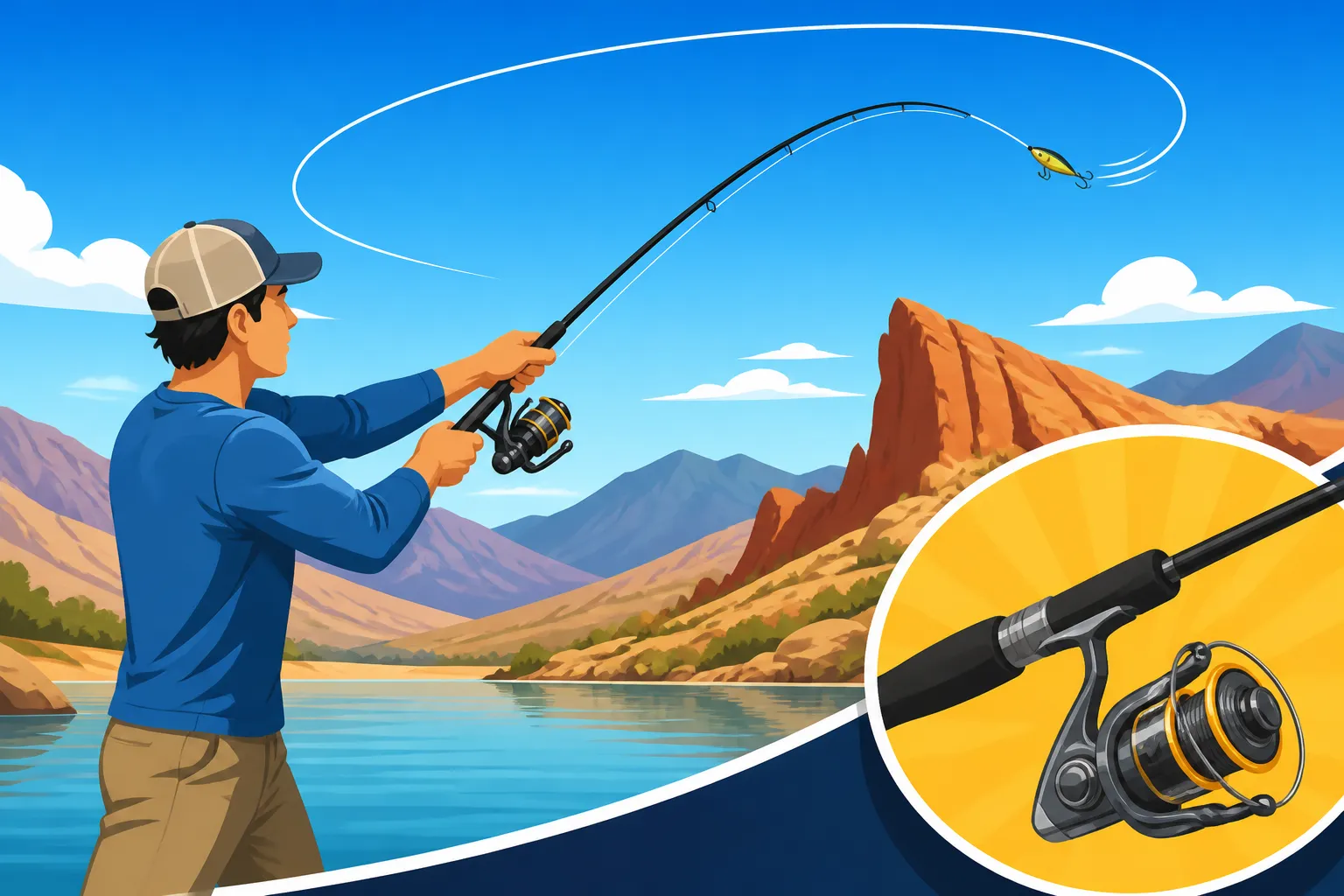
This is where the magic really begins. The backward motion of your cast isn't about power; it's about loading the rod, allowing its natural flex to do the work. Start by reeling in your lure or weight until it's hanging about 6 to 12 inches from the rod tip. This short distance provides the best control and prevents your lure from swinging wildly. Next, use your dominant hand to open the bail on your spinning reel. This is typically a small wire arm on the reel that flips open, allowing the line to come off freely. Crucially, as soon as the bail is open, use your extended index finger to secure the line against the rod handle. This is your brake; it holds the line in place until you're ready to release it.
Now, bring the rod up smoothly, in one continuous motion, over your shoulder and slightly back. Think of it as painting a graceful arc in the air. Stop the rod when it's roughly at the 10 or 11 o'clock position (if 12 o'clock is straight up). This "stop" is important because it loads the rod, bending it backward with the weight of the lure. Avoid snapping the rod back too hard; a gentle, controlled motion is much more effective. If you bring the rod back too far, you lose control and the lure might drop behind you. The key is smooth acceleration and a crisp stop to load that energy into the rod blank.
The Forward Sweep and Release
With the rod loaded and the lure hanging back, it's time for the forward sweep. This is where you transfer the energy stored in the rod into propelling your lure forward. Begin by moving the rod forward with a smooth, accelerating motion. Your arm should be leading, but think of your wrist and forearm as the primary drivers of this movement, generating a whip-like action. Aim the rod tip towards your desired target.
As the rod reaches approximately the 1 o'clock or 2 o'clock position in its forward arc (just past vertical, pointing slightly down towards your target), you need to perform the most critical step: releasing the line from your index finger. This timing is everything! If you release too early, your lure will shoot straight up into the sky or land just a few feet in front of you. If you release too late, it will likely plop down right at your feet or cast far to your side. The goal is to release the line at the peak of the forward motion, allowing the lure's momentum and the rod's stored energy to launch it. It takes practice, so don't get discouraged if your first few casts are less than perfect. With each try, you'll start to feel that sweet spot.
Following Through for Accuracy
Just like in sports, a good follow-through is essential for accuracy and distance. After releasing the line, continue your rod's forward motion, pointing the rod tip directly at where you want your lure to land. This helps guide the line and minimizes wobble. As the lure flies through the air, keep your eye on it. Once it's near your target, or just before it hits the water, gently place your index finger back on the line or close the bail manually with your other hand. This stops the line from spooling out further and prevents your lure from overshooting or creating a large amount of slack line on the water.
This controlled stop, often called "feathering the spool" with your thumb on a baitcaster but in this case, gently applying pressure to the line with your finger or closing the bail, is important for precise lure placement. Once your lure hits the water, you're ready to begin your retrieve. Many beginners tend to "chase" the lure with their rod tip, letting it fall past the target. Instead, visualize "aiming" the rod at the spot you want the lure to land, and letting it stop there. This follow-through isn't just for show; it actively contributes to a straighter, more controlled cast. When practicing, try to pick a specific spot, like a leaf in a pond or a marker in your yard, and consciously follow through to it. If you're practicing in an urban pond, for instance, knowing how to fish a specific area can lead to better results.
Common Casting Mistakes and How to Fix Them
Everyone makes mistakes when learning to cast – it's part of the process! Recognizing these common issues early on can save you a lot of frustration and help you improve faster. Don't beat yourself up; even seasoned anglers have off days.
Overpowering Your Cast
One of the most frequent mistakes beginners make is trying to muscle the cast, using too much arm strength instead of letting the rod do the work. This often results in a jerky, inefficient cast that lacks distance and accuracy. You'll notice your lure just sort of flops out there, or it might sail wildly off to the side, completely missing your intended target. This "heaving" motion prevents the rod from properly loading and unloading, which is essential for a smooth, powerful cast.
The fix for overpowering is to focus on a smoother, more fluid motion. Think of it less like throwing a baseball and more like cracking a whip, but with control. The power should come from a combination of your forearm and wrist, with a smooth acceleration. Imagine your rod as a spring; you want to compress that spring on the back cast and then allow it to snap forward naturally. If you're finding your lure doesn't go where you want it to, try consciously slowing down your backward and forward sweeps. Feel the weight of the lure at the end of the line. That weight is what loads the rod. The goal is to let the rod's flex propel the lure, not your sheer arm strength. Often, less effort equals more effective casting.
Timing Your Release
As we touched upon earlier, the timing of your line release is perhaps the single most crucial element of a good cast. Releasing the line too early will send your lure sky-high, sometimes even looping behind you, making it look like you're trying to fish for birds. This happens because the rod hasn't built up enough forward momentum to properly launch the lure horizontally. Conversely, releasing too late will cause the lure to plunge straight down in front of you, often with a disappointing splash just feet from the bank. This means the rod has already completed its forward arc, and the momentum has been lost.
The solution to timing issues is, quite simply, practice and feel. There's no magic trick, but a good mental image can help. When you bring the rod forward, imagine that sweet spot at the 1 o'clock or 2 o'clock position. Try to visualize your lure continuing in a straight line from the rod tip at that exact moment. Start by consciously trying to release a little earlier or a little later on consecutive casts until you start to see improvement. Pay attention to where the lure goes relative to your release point. Over time, your muscle memory will kick in, and you'll naturally find that perfect moment. It's a dance between your finger, the rod, and the lure, and with enough practice, you'll get into the rhythm. For choosing the right line to avoid frustrating tangles, check out Best line for desert reservoir fishing.
Dealing with Backlashes and Tangles
While spinning reels are generally more forgiving than baitcasters, "bird's nests" and tangles can still happen, especially for beginners. A backlash on a spinning reel typically occurs when too much line spools off the reel too quickly, or when the line becomes loose and coils up on itself. This can be incredibly frustrating, halting your fishing and requiring precious time to untangle.
The primary cause of tangles often ties back to improper line spooling (as discussed earlier, avoiding overfilling is key) or not managing slack line. When your lure lands, if you don't immediately close the bail or put tension on the line, the loose line on the spool can unravel and create a mess on your next cast. Another common issue is using line that's too heavy or too light for your reel, or line that has too much "memory" (it retains its coiled shape from the spool).
To prevent backlashes and tangles:
- Don't Overfill Your Spool: Leave that 1/8 inch gap from the spool's lip.
- Manage Slack: As soon as your lure hits the water, close the bail manually or use your finger to create tension as you begin your retrieve. Don't let loops form.
- Use Quality Line: A good quality monofilament or fluorocarbon line with low memory will lay better on your spool. You can find many reliable and affordable options on Amazon.
- Check for Line Twist: If you notice your line twisting, it could be from certain lures or improper reeling. Periodically, let out all your line in an open area (like a park or a calm section of water) with no lure, and let it untwist itself before reeling it back in.
Practice Makes Perfect: Where and How to Improve
Like any skill, casting takes practice. You won't become a pro overnight, but consistent, focused practice will dramatically improve your accuracy and distance. Don't wait until you're on the water at Lake Mead or Pyramid Lake for the first time to try casting – get some reps in!
Safe Practice Spots
The beauty of practicing casting is that you don't need a boat or a body of water to get started. In fact, practicing away from actual fishing spots can help you focus solely on your technique without the distraction of trying to catch a fish.
Your own backyard is an excellent starting point. Just make sure there are no windows, pets, or people in your casting path! A simple open lawn is ideal. If your backyard isn't an option, a local park or an open field can also work wonders. Just be mindful of other people, especially kids and pets, and always use a practice plug or a simple lead-free weight instead of a sharp hook or a valuable lure. This prevents accidents and saves you money if you happen to get a snag. These safe environments allow you to experiment with different release points and motions without the pressure of having to land a fish. You can even set up simple targets, like a hula hoop or a bucket, to start working on your accuracy. Remember, the key is repetition in a safe, stress-free environment.
Targeting and Accuracy Drills
Once you've got the basic overhead cast down, it's time to refine your aim. Being able to consistently hit a specific spot is what separates a decent caster from a great one. This skill is invaluable when you're trying to cast near submerged structure, lily pads, or other fish-holding cover in Nevada's lakes and rivers.
Start by setting up a target in your chosen practice spot. A small bucket, an old tire, or even a piece of colored cloth can work. Begin by casting to it from a short distance, say 15-20 feet. Focus on hitting the target, not necessarily on casting far. As you become more consistent, gradually increase your distance. Try to hit the target 5-10 times in a row before moving back. You can also try casting from different angles or positions, simulating real-world fishing scenarios where you might not always have a perfectly open casting lane. Another great drill is to visualize a narrow corridor and try to cast through it, rather than just at a target. This helps with precision and keeping your line straight. This deliberate practice will pay dividends when you're on the water and need to place your lure exactly where you want it.
Transitioning to Real Fishing Scenarios in Nevada
When you feel confident in your casting abilities, it's time to take your skills to the water. Nevada offers fantastic opportunities for beginners to apply what they've learned. The urban ponds in places like Las Vegas or Reno are fantastic stepping stones. They are typically well-stocked with trout and sometimes catfish, and often have easy access and calmer conditions, making them perfect for honing your casting without the challenges of wind or large open water. Check out our guide on Best urban pond for kids to fish in Las Vegas for some ideas.
When you first venture out, pick a day with light wind if possible. Wind can significantly affect your cast, pushing your line and lure off target, which can be frustrating. Look for calmer coves or sheltered areas on larger reservoirs like Lake Mead or Lake Mohave if you're feeling adventurous. Start with simple setups, like a small lure or bait under a bobber. This helps you see how the line behaves in the water and how different retrieves affect your presentation. Don't be afraid to experiment with your casting technique as you fish. Observe how the lure travels, where it lands, and how your changes impact the result. Every cast is a learning opportunity, and soon enough, you'll be casting like a pro, ready to tackle the amazing fishing opportunities Nevada has to offer. Understanding the ideal times to fish these stocked waters can give you an edge, so you might find our article on Best time to fish an urban pond after stocking particularly useful.
Common Casting Issues and Their Simple Fixes
| Issue Description | Common Cause | Simple Fix |
|---|---|---|
| Lure goes too high or behind you | Releasing line too early on forward cast | Delay release slightly; aim for 1-2 o'clock position in forward sweep. |
| Lure drops right at your feet or very short | Releasing line too late on forward cast | Release line earlier; initiate release at 1-2 o'clock position. |
| Lure lands off to the side, not straight | Rod tip not aimed at target during follow-through | Keep eyes on target; point rod tip directly at desired landing spot. |
| Rod feels stiff, cast lacks power/distance | Overpowering cast with arm, not loading rod | Focus on smooth, fluid motion; let rod's flex do the work; use wrist. |
| Tangles (bird's nest) on the spool | Overfilled spool, slack line, or line twist | Don't overfill; close bail immediately after splash; check for line twist. |
| Lure hits water with a loud splash | Not stopping line/closing bail before impact | Feather the line with finger or close bail just before splash for soft landing. |
| Line doesn't come off reel smoothly | Line wound too tight or too loose on spool | Ensure proper tension when spooling; don't overfill or underfill. |
Disclaimer
Fishing conditions and regulations in Nevada can change. While we strive to provide the most accurate and up-to-date information, it is always your responsibility to consult the latest regulations from the Nevada Department of Wildlife (NDOW) before heading out. Be aware of local rules, special permits, and any emergency closures. Stay safe and fish responsibly.