Best Line for Desert Reservoir Fishing
One of the trickiest parts of fishing Nevada's stunning desert reservoirs like Lake Mead, Lake Mohave, or even smaller gems like Rye Patch, is figuring out the right fishing line. You're up against crystal-clear waters, sharp rocky structures, and relentless sun, all while trying to fool fish that can be incredibly finicky. Choosing the wrong line can mean lost fish, frayed nerves, and a whole lot of re-tying. This guide is all about helping you cut through the confusion and select the absolute best fishing line for the unique challenges of desert reservoir fishing in the Silver State.
Understanding the Unique Challenges of Desert Reservoirs
Fishing in Nevada's desert reservoirs isn't like fishing in a murky river or a heavily vegetated pond. The environment here throws some specific curveballs that demand careful consideration when it comes to your fishing line. Ignore these factors, and you'll find yourself frustrated with break-offs and spooked fish.
The Crystal-Clear Water Factor
Walk up to the shore of Lake Mead or Lake Mohave on a calm day, and you'll often be amazed at how clear the water is. This stunning clarity is fantastic for spotting underwater structures, but it's a double-edged sword for anglers. Fish, especially the larger, more experienced ones, have excellent eyesight. If your line is too thick, too shiny, or the wrong color, it can stand out like a neon sign in the water, sending wary bass or trout darting away before they even get a look at your lure or bait. This means stealth is often a top priority. You're essentially trying to present your offering as naturally as possible, with the line being as inconspicuous as possible. Think of it like trying to sneak up on a deer; any unnatural movement or visual cue will blow your cover.
This heightened visibility means that the diameter of your line becomes even more critical. A line that might pass unnoticed in stained water will scream "danger!" in our clear desert reservoirs. Even the subtle sheen off a certain type of line can be enough to put fish off. We're talking about micro-decisions fish make based on minimal visual cues.
Battling Brutal Sun and Heat
Nevada's desert sun is no joke, and it's a relentless enemy of fishing line. Ultraviolet (UV) radiation is notorious for breaking down the molecular structure of fishing line over time. This isn't just about cosmetic fading; it significantly weakens the line, making it brittle and more prone to snapping, often at the most inconvenient moment – usually when you've hooked into that monster striper or trophy bass. The intense heat also plays a role, especially if your line is left exposed on a reel in direct sunlight for extended periods. It can cause line memory, where the line retains the shape of the spool, leading to coils and tangles that make casting a nightmare.
This constant exposure means that cheap, low-quality lines will degrade rapidly, leading to frequent re-spooling and potential heartbreak. You need a line that can stand up to the desert's harsh climate, maintaining its integrity and strength even after hours under the blazing sun. This extends beyond the fishing trip itself; proper storage of your rods and reels out of direct sunlight can significantly extend the life of your line.
Navigating Abrasive Structures
Our desert reservoirs are often characterized by rugged, rocky shorelines, submerged rock piles, jagged ledges, and sometimes even remnants of old trees or foundations. These aren't soft, muddy bottoms. Every cast, every retrieve, and especially every battle with a fish near structure, puts your line at risk of rubbing against something sharp or rough. A line with poor abrasion resistance will quickly fray, nick, or even snap under these conditions.
Imagine you've hooked a feisty largemouth that immediately dives into a submerged brush pile, or a hard-fighting striped bass that rubs your line against a rocky drop-off. If your line isn't tough enough, it's game over. This is where the true test of a fishing line's durability comes into play. You might be able to get away with less abrasion-resistant line in open water, but in the typical high-structure environments of Nevada's reservoirs, it's a recipe for disaster. This is why many anglers opt for Best line weight for desert reservoir fishing that can handle these challenges.
Key Fishing Line Properties to Consider
When you're standing in the fishing aisle, overwhelmed by the sheer number of options, it helps to break down what truly matters for desert reservoir fishing. These properties aren't just marketing jargon; they directly impact your success on the water.
Breaking Strength and Diameter
This is the classic balancing act in fishing line selection. Breaking strength, often measured in "pound test," tells you how much force the line can withstand before breaking. A higher pound test means a stronger line, which sounds great, right? However, a higher breaking strength often comes with a larger line diameter. And as we discussed with clear water, a thicker line is more visible to fish. It also presents more resistance in the water, affecting the natural presentation of your lure and making it harder to cast lighter baits over long distances.
So, the goal is to use the lowest breaking strength that you can confidently rely on to land your target fish, especially when dealing with the potential for snags or strong fights. For instance, chasing panfish might mean 4 lb test, while battling a big striped bass could necessitate 20 lb or even 30 lb test. It's a calculated risk: do you sacrifice some invisibility for strength, or some strength for stealth? The answer often lies in the specific conditions and target species. Generally, for most reservoir applications, you're looking for the strongest line with the smallest practical diameter.
Abrasion Resistance: Your Line's Armor
In a world full of sharp rocks, abrasive sand, and submerged timber, abrasion resistance is paramount. This property refers to a line's ability to resist nicks, cuts, and fraying when it comes into contact with rough surfaces. A line with good abrasion resistance will maintain its strength even after rubbing against structure, giving you a fighting chance when a fish tries to "rock you off."
Some lines are specifically designed with harder outer coatings or denser materials to improve this characteristic. If you're planning to fish around docks, brush piles, or rocky points – which you absolutely will be in places like Lake Mead or Lake Mohave – then prioritizing abrasion resistance is a no-brainer. It can mean the difference between landing a personal best and telling a story about the one that got away because your line frayed in a critical moment. This is a property where investing in a quality line really pays off, preventing frequent re-ties and frustrating break-offs.
Stretch and Sensitivity: Feel vs. Forgiveness
Different line materials behave very differently when put under tension. Some lines have a lot of "stretch," meaning they can elongate significantly before breaking. Others have very little stretch and are considered "sensitive."
- Stretch: A line with more stretch acts like a shock absorber, which can be beneficial when fighting a hard-pulling fish or when a fish makes a sudden run. It provides a bit of forgiveness, preventing hooks from tearing out of a fish's mouth or light lines from snapping under sudden strain. However, too much stretch can make it harder to feel subtle bites, especially at long distances or in deep water. It also makes for weaker hooksets, as some of the energy from your rod sweep is absorbed by the stretching line.
- Sensitivity: A line with very little stretch transmits vibrations and movements directly from your lure to your rod tip. This "sensitivity" allows you to feel even the lightest taps or the subtle nuances of your lure bumping against structure. It also translates to more powerful hooksets, as nearly all your rod's energy goes directly to the hook. The downside is that it offers less forgiveness, making it easier for fish to pull hooks or for lines to snap if your drag isn't set perfectly or if there's a sudden, violent strike.
The ideal balance often depends on your fishing technique. For reaction baits where you're constantly feeling the bottom or detecting light bites, sensitivity is key. For topwater lures or live bait fishing where a bit of give is helpful, some stretch can be an advantage.
Visibility: Blending In or Standing Out
Line visibility is about how easily fish can see your line in the water. This involves both the line's color and its material properties (e.g., how it refracts light).
- Low Visibility: For clear water conditions and wary fish, low-visibility lines are preferred. This usually means clear lines, or lines colored to blend in with the water (like light green, blue, or brown). Fluorocarbon is famous for its low visibility because it refracts light at a similar rate to water.
- High Visibility: Sometimes, you want to see your line, especially if you're watching for subtle twitches that indicate a bite, or if you're managing multiple lines (like when trolling). High-visibility lines often come in bright colors like yellow, green, or orange. These are almost exclusively used for braided main lines, and typically tied to a low-visibility leader.
The general rule for desert reservoirs, given their clarity, is to lean towards low visibility whenever possible. However, there are scenarios where a high-vis main line with a nearly invisible leader is the winning combination, allowing you to monitor your line without spooking fish.
The Main Types of Fishing Line for Desert Reservoirs
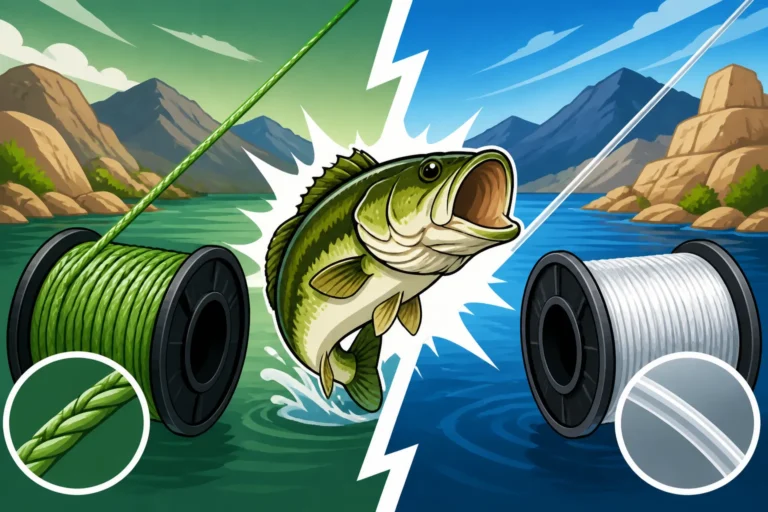
Now that we know what properties to look for, let's dive into the three main types of fishing line you'll encounter and how they stack up for desert reservoir angling. Each has its strengths and weaknesses, making them suitable for different situations.
Monofilament Line: The All-Around Workhorse
Monofilament (mono) line is arguably the most common and longest-standing type of fishing line. Made from a single strand of nylon, it's generally affordable and incredibly versatile, making it a favorite for many anglers, especially those just starting out or fishing on a budget.
Pros for Desert Reservoirs:
- Affordability: You can usually get a good amount of quality mono without breaking the bank. This means you can afford to respool more frequently, which is a good habit in UV-intense environments.
- Stretch/Forgiveness: Mono has a good amount of stretch, which acts as a shock absorber. This can be fantastic when a fish makes a sudden run or when you're using treble hooks, as it helps prevent hooks from tearing out and reduces line breaks on sudden impacts. It's also great for lighter tackle when targeting panfish or smaller trout where a gentle fight is key.
- Knot Strength: Monofilament is very forgiving when tying knots, and generally holds knots very well.
- Ease of Use: It's relatively soft and manageable, making it easy to cast and handle on both spinning and baitcasting reels. It also floats, which is a big plus for topwater lures or suspending baits.
- Abrasion Resistance (Good Quality Mono): While not as good as some fluorocarbons, a good quality monofilament can still offer decent abrasion resistance, especially thicker diameter lines.
Cons for Desert Reservoirs:
- Visibility: Mono is generally more visible in clear water than fluorocarbon. While clear mono is available, it still has a tendency to refract light more noticeably.
- UV Degradation: As a nylon-based product, monofilament is more susceptible to UV damage and heat degradation over time compared to other lines. This means you'll need to inspect it frequently and respool your reels more often if you fish regularly under the Nevada sun.
- Memory: Mono can develop "memory" from being spooled on a reel, leading to coils and tangles, especially with heavier lines or older line.
- Stretch (The Other Side): While a pro, too much stretch can be a con. It reduces sensitivity, making it harder to feel subtle bites, and can lead to weaker hooksets, especially when fishing at long distances or in deep water.
Best Use in Desert Reservoirs:
Monofilament shines as a main line for topwater fishing, crankbaits, or anything where some stretch is beneficial. It's also a great choice for live bait presentations, where the floating nature of the line helps keep your bait suspended. For general purpose angling, especially for Nevada fishing license age requirements or those using spinning gear for bass and trout, it’s a solid, reliable option. You can find excellent quality monofilament lines at places like Bass Pro Shops or on Amazon, with options tailored for various fishing styles.
Fluorocarbon Line: The Invisible Advantage
Fluorocarbon (fluoro) line has gained immense popularity over the last few decades, primarily because of its reputation for being "invisible" underwater. Made from polyvinylidene fluoride (PVDF), it has a much denser molecular structure than mono.
Pros for Desert Reservoirs:
- Low Visibility: This is fluorocarbon's superpower. It has a refractive index very close to that of water, meaning light passes through it with minimal bending, making it incredibly difficult for fish to see. In the gin-clear waters of Lake Tahoe or Lake Mead, this is a massive advantage for wary fish.
- Abrasion Resistance: Fluorocarbon is generally much more abrasion-resistant than monofilament. Its denser, harder composition stands up better to rocks, docks, and other underwater structures, which is crucial in our rugged reservoirs.
- Sensitivity: Fluorocarbon has very little stretch, giving you excellent sensitivity to feel subtle bites and bottom structure. This is ideal for finesse techniques or when fishing deep.
- Sinks Quickly: Unlike monofilament, fluorocarbon sinks. This can be a huge advantage for crankbaits, jigs, or soft plastics, helping them get down to the strike zone faster and stay there.
Cons for Desert Reservoirs:
- Cost: Fluorocarbon is significantly more expensive than monofilament. This can be a deterrent for some, but many anglers view it as a worthwhile investment for its unique properties.
- Stiffness/Memory: Fluorocarbon tends to be stiffer and have more memory than mono, especially in heavier pound tests. This can lead to more coils and make it a bit trickier to cast, particularly on spinning reels.
- Knot Tying: It requires careful knot tying. Its stiffer, harder nature means knots need to be cinched slowly and lubricated well to prevent weakening due to friction. Some knots that work perfectly for mono may not hold as well with fluoro.
- Less Forgiving: The low stretch, while great for sensitivity, means less forgiveness. If your drag isn't set right or a fish makes a sudden, powerful surge, fluoro is more prone to snapping than mono.
Best Use in Desert Reservoirs:
Fluorocarbon excels as a main line for finesse techniques, bottom contact baits like jigs and Texas rigs, or anywhere extreme stealth and sensitivity are required. It's also the go-to choice for leaders when you're using braided main line, combining the best of both worlds. For trout in highly pressured areas or ultra-clear lakes, a light fluorocarbon leader can be a game-changer. If you're targeting Nevada largemouth bass minimum size limit or Nevada bass and trout combined possession limit, fluorocarbon can certainly help your presentation.
Braided Line: Strength Without Stretch
Braided line is a completely different beast. It's made by weaving together multiple strands of synthetic fibers, usually Spectra or Dyneema. This construction gives it some very distinct characteristics.
Pros for Desert Reservoirs:
- Incredible Strength-to-Diameter Ratio: For a given breaking strength, braid has a much smaller diameter than mono or fluoro. This means you can spool a much stronger line onto your reel, or simply fit more line. The thin diameter also cuts through wind better for longer casts and offers less resistance in current.
- Zero Stretch/Maximum Sensitivity: Braid has virtually no stretch. This makes it incredibly sensitive, allowing you to feel every bump, tick, and subtle bite. It also delivers incredibly powerful hooksets, even at extreme distances or in deep water. This is crucial when trying to detect a bite from a deep-water Mackinaw at Lake Tahoe or a timid striper at Lake Mead.
- Extreme Abrasion Resistance (When New): While not as "cut-resistant" as some might think, its woven nature provides excellent resistance to fraying against many types of abrasive structures. It can withstand repeated rubbing better than mono in many cases.
- Durability: Braid is extremely durable and resists UV degradation very well. A single spool can last for years if properly cared for.
- Casting Distance: Its thin diameter and smooth texture (on higher quality braids) can lead to exceptional casting distance.
Cons for Desert Reservoirs:
- Visibility: Braided line is highly visible in clear water. It often comes in bright colors, and even dark colors stand out due to their opaque nature. This is why it's almost always paired with a fluorocarbon or monofilament leader.
- No Stretch/Less Forgiving: While a pro for sensitivity, the lack of stretch means there's no shock absorption. This can lead to hooks tearing out of a fish's mouth, or break-offs if your drag isn't meticulously set or if you set the hook too aggressively. It also makes it easier for fish to gain leverage on you near structure if you're not careful.
- Cost: Braid is the most expensive of the three lines, but its longevity can balance this out over time.
- Wind Knots/Tangling: Braid's lightweight, soft nature can sometimes lead to wind knots (especially on spinning reels) or tangles if not spooled tightly or managed correctly.
- Cutting Issues: Braid requires very sharp scissors or clippers to cut cleanly. It can also "dig into" itself on the spool under heavy pressure, which can cause issues on future casts.
Best Use in Desert Reservoirs:
Braided line is fantastic as a main line when paired with a leader for nearly all desert reservoir applications. It excels for pitching and flipping into heavy cover, punching through vegetation (if you find any!), or any technique where maximum sensitivity and power are needed. It’s the go-to for many striped bass anglers on Lake Mead, where powerful hooksets and fighting capability are crucial. Many anglers looking for Best line test for striped bass fishing often opt for braid. For situations where you need to feel everything your lure is doing or when fishing in strong current or deep water, braid with a fluoro leader is hard to beat. You can often find great deals on various braided lines, including high-visibility options, from reputable retailers like Bass Pro Shops or via online platforms such as Amazon.
Hybrid Lines and Leaders
While the three main types have distinct characteristics, modern fishing often involves mixing and matching to create the optimal setup.
- Fluorocarbon-Coated Monofilament: These lines attempt to blend the best of both worlds. They have a monofilament core for flexibility and knot strength, with an outer coating of fluorocarbon to reduce visibility and improve abrasion resistance. They offer a good compromise for anglers who want some of the benefits of fluoro without the higher cost or stiffness, but they typically don't perform as well as pure fluorocarbon in terms of stealth.
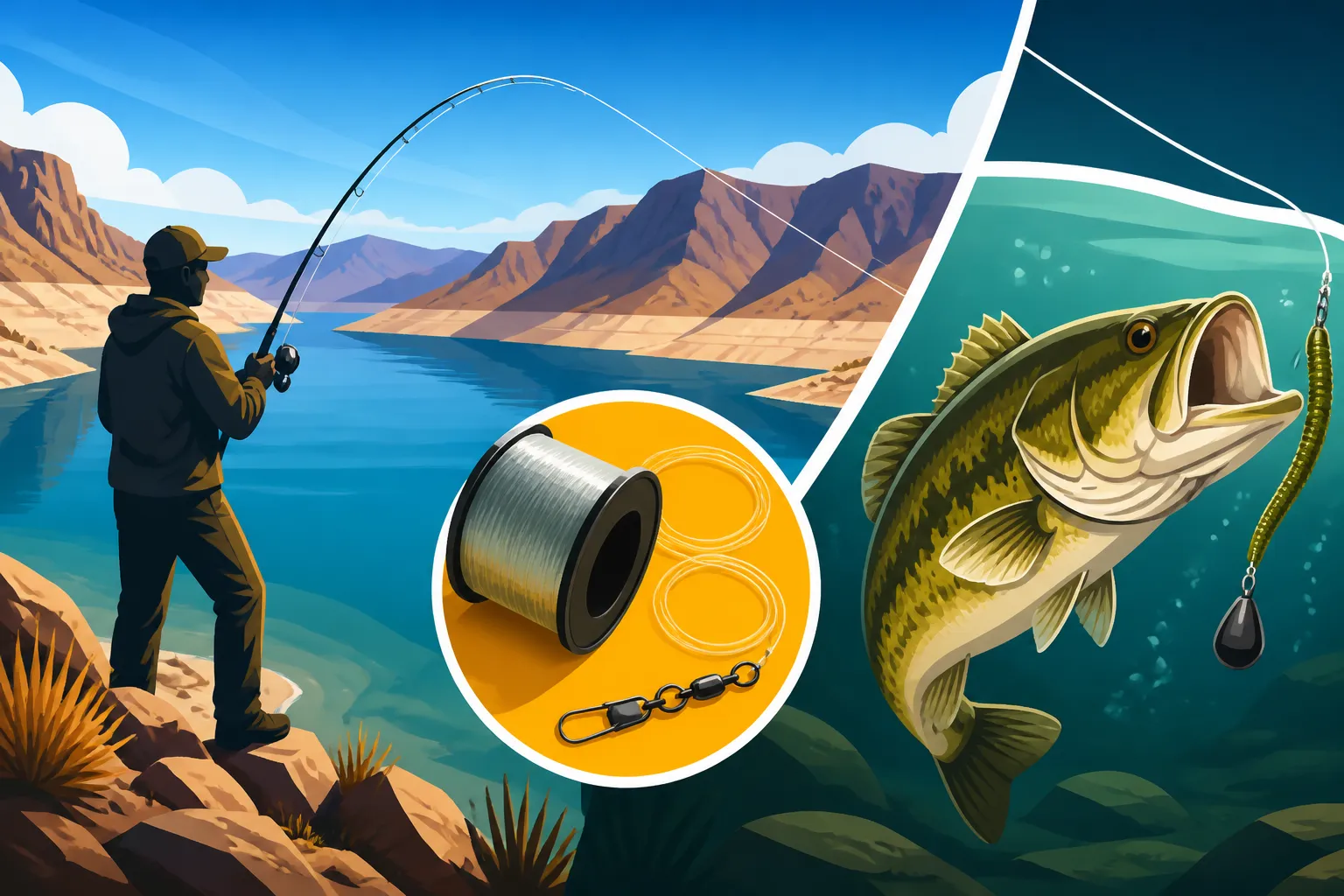
- The Braid-to-Leader System: This is arguably the most popular and effective hybrid setup for desert reservoir fishing. You spool your reel with braided line as your main line, and then attach a shorter section (3-10 feet) of fluorocarbon or monofilament as a leader using a strong knot like the FG knot or a double uni knot.
- Why it works: The braid gives you incredible sensitivity, casting distance, and brute strength, while the leader provides the low visibility and abrasion resistance where it matters most – near your lure. This setup is incredibly versatile and allows you to quickly adjust your leader material or strength based on conditions or target species without respooling your entire reel. It’s particularly effective when Fishing after a Nevada cold front when fish can be very lethargic and light bites are common.
Matching Line to Your Target Species and Technique
The "best" line isn't a one-size-fits-all answer. It's a strategic decision based on what you're trying to catch and how you're trying to catch it.
Bass Fishing: Power and Precision
Whether you're after largemouth in the coves of Lake Mead or smallmouth on the rocky points of Lake Mohave, bass fishing demands a versatile approach to line. Nevada Bass Daily Limit and Size Rules require you to know what you're catching, and your line choice will affect your success.
- Largemouth Bass: Often found around cover like brush, docks, or submerged trees. For power fishing techniques like pitching jigs, Texas rigs, or heavy swimbaits into cover, many anglers opt for braided line (30-50 lb test) as their main line, tied to a fluorocarbon leader (12-20 lb test). The braid helps cut through vegetation and provides immediate power for hooksets, while the fluoro leader offers invisibility and abrasion resistance when the fish digs into structure. For crankbaits or topwater, some prefer heavy monofilament (12-17 lb test) for its stretch and floating properties. If you're how to fish for bass in shallow coves, a less visible line will be key.
- Smallmouth Bass: These hard-fighting fish often inhabit clearer, rockier areas. Finesse techniques like drop-shotting, shaky heads, or Ned rigs are popular. Here, fluorocarbon (6-12 lb test) as a main line is excellent for its sensitivity and invisibility. Alternatively, braid (10-20 lb test) with a fluorocarbon leader (6-10 lb test) offers the best of both worlds, providing long-casting ability and superior feel. Consider using Best Lures for Nevada Bass in conjunction with appropriate line.
Trout Fishing: Finesse and Stealth
Nevada's trout, from the stocked rainbows in urban ponds to the wild browns in mountain streams, are often line-shy, especially in clear water. Nevada statewide trout daily limit applies, but catching them requires finesse.
- Stocked Trout (Ponds/Lakes): For freshly stocked trout, you can sometimes get away with lighter monofilament (4-6 lb test). However, for more wary fish, or when using subtle baits like PowerBait or small worms, fluorocarbon (4-6 lb test) is a much better choice for its invisibility. If fishing with ultralight spinning gear, a braided main line (6-10 lb test) with a fluorocarbon leader (2-4 lb test) provides incredible casting distance for small lures and maximum sensitivity for light bites.
- Wild Trout (Streams/High Lakes): These fish are incredibly wary. Ultralight presentations and minimal line visibility are crucial. Light fluorocarbon (2-4 lb test) or a braided main line (4-8 lb test) with a very fine fluorocarbon leader (2-4 lb test) are the preferred choices. This setup allows for natural drifts with flies or tiny spinners. If you're using Best Bait for Nevada Trout, you'll want line that doesn't hinder its presentation. For first-timers, places like Best fishing spot for a first-timer in Nevada will also benefit from lighter, less visible line.
Striped Bass: Strength for Big Fish
Lake Mead is famous for its striped bass, powerful, schooling predators that can grow quite large. Fighting a big striper requires strong, durable line.
- Boating/Trolling: For trolling with planer boards or downriggers, or simply casting large lures from a boat, braided line (30-50 lb test) as a main line with a heavy monofilament (15-30 lb test) or fluorocarbon leader (15-30 lb test) is the standard. The braid handles the power and depth, while the leader provides some shock absorption or invisibility, depending on the material. If you're How to jig for striped bass at Lake Mead, you'll appreciate the direct contact braid offers.
- Shore Fishing/Bait Fishing: When casting from shore or fishing with bait, you still need strength and good casting distance. Heavy monofilament (15-25 lb test) can work, but many prefer braided line (20-40 lb test) with a monofilament or fluorocarbon leader (15-25 lb test) for its castability and lack of stretch for solid hooksets on large fish. Consider using Best Lures for Striped Bass in conjunction with appropriate line strength.
General Purpose Reservoir Fishing
If you're heading out to a desert reservoir for a day of casual fishing, not necessarily targeting one specific species or technique, a versatile setup is key.
- A good all-around choice for spinning gear would be 8-10 lb test monofilament. It's easy to use, has good knot strength, and offers enough forgiveness for most panfish, smaller trout, and even average-sized bass.
- For more serious all-around angling, especially if you're comfortable tying leaders, a 15-20 lb braided main line with an 8-10 lb fluorocarbon leader is incredibly versatile. It allows you to fish a wide range of lures and baits effectively, with the benefits of both sensitivity and low visibility.
| Line Type | Key Strengths (Desert Res.) | Key Weaknesses (Desert Res.) | Best Use Cases (Desert Res.) |
|---|---|---|---|
| Monofilament | Forgiveness, affordability, knot strength, floats | UV degradation, visibility, stretch, memory | Topwater, crankbaits, live bait, general purpose, beginner setups |
| Fluorocarbon | Low visibility, abrasion resistance, sensitivity, sinks | Cost, stiffness, knot tying difficulty, less forgiving | Finesse, jigs, soft plastics, leaders, clear water trout |
| Braided | Strength-to-diameter, sensitivity, casting, durability | Visibility, cost, wind knots, no stretch, cuts | Main line with leader, heavy cover, deep water, powerful fish |
Line Care and Maintenance in Nevada's Harsh Climate
Choosing the right line is only half the battle. In Nevada's unforgiving desert environment, how you care for your line is just as important for its performance and longevity. Skipping these steps is a surefire way to experience frustrating break-offs and reduced casting efficiency.
Protecting Your Line from UV Damage
As we've covered, the sun is line's nemesis. UV rays degrade the material, making it brittle and weak.
- Storage: Always store your fishing rods and reels out of direct sunlight when not in use. A garage, a rod locker, or even a rod bag will help shield your line from harmful UV exposure. Don't leave your reels sitting in the back of your truck or on a patio, even for a few days.
- Line Conditioners: There are various fishing line conditioners on the market (often sprays) that contain UV inhibitors and lubricants. Applying these regularly can help protect your line from sun damage and keep it supple, reducing memory and improving casting performance. Think of it as sunscreen for your fishing line!
- Respool Regularly: Even with the best care, line will degrade over time. Get in the habit of respooling your reels, especially the top 50-100 yards, every few months if you're fishing actively in the sun. Monofilament, in particular, benefits from frequent replacement. This is why having options like Bass Pro Shops or Amazon for readily available bulk line is so helpful.
Regular Inspection and Replacement
Your fishing line is your direct connection to the fish. It's only as strong as its weakest point.
- Pre-Fishing Check: Before every fishing trip, pull off a few feet of line from your reel and run it through your fingers, feeling for nicks, abrasions, or rough spots. These weak points are prime candidates for break-offs. If you find any, cut back a few feet until you hit pristine line. This is especially important if you were fishing around Best lake for fishing from a dock in Nevada or other abrasive structures on your last outing.
- Post-Battle Inspection: After landing a particularly hard-fighting fish or getting snagged and pulling free, always inspect the last few feet of your line. Fish teeth, rocks, and pulling against resistance can all cause damage. It's much better to snip off a compromised section and re-tie a fresh knot than to lose your next big fish.
- When to Respool Entirely:
- Monofilament: Depending on usage, respool every 2-6 months for active anglers, or at least once a year for casual use.
- Fluorocarbon: Generally lasts longer than mono, but still benefits from a full respool every 6-12 months, especially the section that sees the most sun and abrasion.
- Braided Line: Braid can last for years. However, the first 50-100 yards can still fray or degrade. Many anglers simply reverse their braid on the spool after a year or two (using the untouched bottom portion as the new working line) or cut off the top section. The underlying braid is typically still in excellent condition.
Knot Tying and Strength
A perfect line is useless if your knot isn't sound. The knot is almost always the weakest point in your fishing system.
- Practice Makes Perfect: Learn a few reliable knots (e.g., Palomar, Improved Clinch, Uni for mono/fluoro; FG, Alberto, or Double Uni for braid-to-leader connections) and practice tying them until they are second nature. A poorly tied knot can reduce your line's breaking strength by 50% or more.
- Lubricate Your Knots: Before cinching down a monofilament or fluorocarbon knot, always moisten it with saliva or water. This reduces friction and heat, preventing the line from "burning" and weakening as it tightens. This is particularly crucial with fluorocarbon due to its harder, stiffer nature.
- Check Your Knots: After tying, always give your knot a firm tug to ensure it's properly seated and strong. Also, visually inspect it for any twists or tag ends that could compromise its integrity.
By diligently following these line care and maintenance tips, you'll ensure your fishing line performs optimally, reducing lost fish and maximizing your enjoyment on Nevada's beautiful, yet challenging, desert reservoirs. This often gets overlooked in Nevada Fishing Gear Essentials discussions, but it's truly foundational.
Putting It All Together: Recommended Setups
Let's distill all this information into practical recommendations for various fishing scenarios in Nevada's desert reservoirs. Remember, these are starting points; feel free to adjust based on your specific experiences and preferences.
All-Around Desert Reservoir Setup
This setup is perfect if you're targeting a mix of species like smaller bass, panfish, and stocked trout, or if you're a beginner looking for a versatile option.
- Main Line: 8-10 lb Monofilament (clear or light green) OR 10-15 lb Braided Line (high-vis yellow or green)
- Leader (if using braid): 6-8 lb Fluorocarbon leader (3-5 feet long)
- Why it works: Monofilament provides ease of use, forgiveness, and good knot strength for various baits. If you go with braid, you gain sensitivity and casting distance, while the fluorocarbon leader keeps your presentation stealthy in clear water. This combo allows you to fish a wide array of lures, from spinners and spoons for trout to small crankbaits and soft plastics for bass, without constantly changing your main line.
Specialized Bass Setup
For dedicated bass anglers who want to target largemouth and smallmouth effectively, especially around structure or with specific techniques. Whether you're after Nevada state record largemouth bass or just a fun day, this setup will serve you well.
- Power Fishing (Jigs, Texas Rigs, Heavy Swimbaits, Frogs):
- Main Line: 30-50 lb Braided Line (dark green or grey)
- Leader: 12-20 lb Fluorocarbon leader (3-6 feet long)
- Why it works: The heavy braid cuts through vegetation and provides unmatched strength for dragging fish out of cover. The fluorocarbon leader adds crucial invisibility and abrasion resistance when working around rocky or woody structure. The near-zero stretch of braid gives you instant hooksets.
- Finesse Fishing (Drop Shots, Shaky Heads, Ned Rigs):
- Main Line: 6-10 lb Fluorocarbon OR 10-15 lb Braided Line (with a 6-10 lb Fluorocarbon leader)
- Why it works: Maximum sensitivity and invisibility are paramount for these subtle presentations. Fluorocarbon as a main line offers a direct, stealthy connection. Braid with a fluoro leader gives you superior casting distance and feel, especially in deeper water. This setup is perfect when fish are finicky or when fishing heavily pressured waters.
Finesse Trout/Panfish Setup
For those delicate bites from trout, crappie, or bluegill, especially in clear urban ponds or high mountain lakes. This setup would be excellent if you're trying to land fish in places like Floyd Lamb Park Fishing Ponds or any other Nevada urban pond fishing rules.
- Main Line: 4-6 lb Fluorocarbon OR 6-8 lb Braided Line (with a 2-4 lb Fluorocarbon leader)
- Why it works: Ultra-light lines are key here. Fluorocarbon provides the invisibility needed for wary fish and sufficient strength for panfish and average-sized trout. Braid with a light fluoro leader maximizes casting distance for tiny lures and baits while offering incredible sensitivity to detect the softest bites. This setup demands a good drag system and gentle handling. When focusing on Best fishing spot for a first-timer in Nevada with kids, a slightly heavier mono can be more forgiving.
Striped Bass Power Fishing Setup
For tackling the hard-fighting striped bass of Lake Mead or Lake Mohave, whether casting, jigging, or light trolling. This is your go-to when you're targeting Striped bass size at Lake Mead and want to make sure you can bring them in.
- Main Line: 30-50 lb Braided Line (any color)
- Leader: 20-40 lb Monofilament or Fluorocarbon leader (3-10 feet long)
- Why it works: Stripers are powerful, and they often hit hard. Heavy braid gives you the backbone to fight them and the sensitivity to feel their aggressive strikes. A sturdy leader is essential to withstand their rough mouths and any abrasive structure they might dive into. Monofilament leaders provide some stretch, which can be beneficial against hard runs, while fluorocarbon offers greater abrasion resistance if you're fishing near heavy rocks. This setup also works well if you're using Jigging Techniques for Lake Mead Stripers.
Choosing the best line for desert reservoir fishing in Nevada truly comes down to understanding the environment, the fish you're after, and the techniques you'll employ. By prioritizing attributes like abrasion resistance, low visibility, and the right amount of stretch (or lack thereof), you'll dramatically increase your chances of a successful and enjoyable day on the water. Don't be afraid to experiment and fine-tune your line choices; every angler's preference is a little different, and finding what works best for you is part of the fun!
Disclaimer
This article is for general informational purposes only and does not constitute professional advice. Laws, prices and regulations vary by location and change over time. Consult a qualified professional for guidance on your specific situation.